10 Chic Canopy Ideas
A canopy can change the whole mood of a bedroom, patio, nursery, reading nook, or outdoor lounge. It adds softness, height, privacy, and a little drama without always needing major renovation. For many USA homes, this idea works because it can fit different lifestyles. A canopy can make a primary bedroom feel more polished, turn a child’s corner into a cozy hideaway, shade a patio daybed, or give a rental bedroom a more finished look.
The best chic canopy designs are not only decorative. They solve real design problems. They soften harsh walls, frame furniture, filter light, create a sense of comfort, and make plain spaces feel layered. The materials matter too. Linen, cotton, sheer voile, canvas, bamboo, wood, metal, rope, and soft lighting can all change the final feeling.
This guide gives you practical canopy ideas that look beautiful on Pinterest but still work in real homes. Each section includes layout advice, material suggestions, styling logic, and simple ways to make the look feel intentional rather than messy. Use one idea as a small weekend update, or combine several details to create a soft, refined space that feels personal, cozy, and elevated.
1. Sheer Drapes
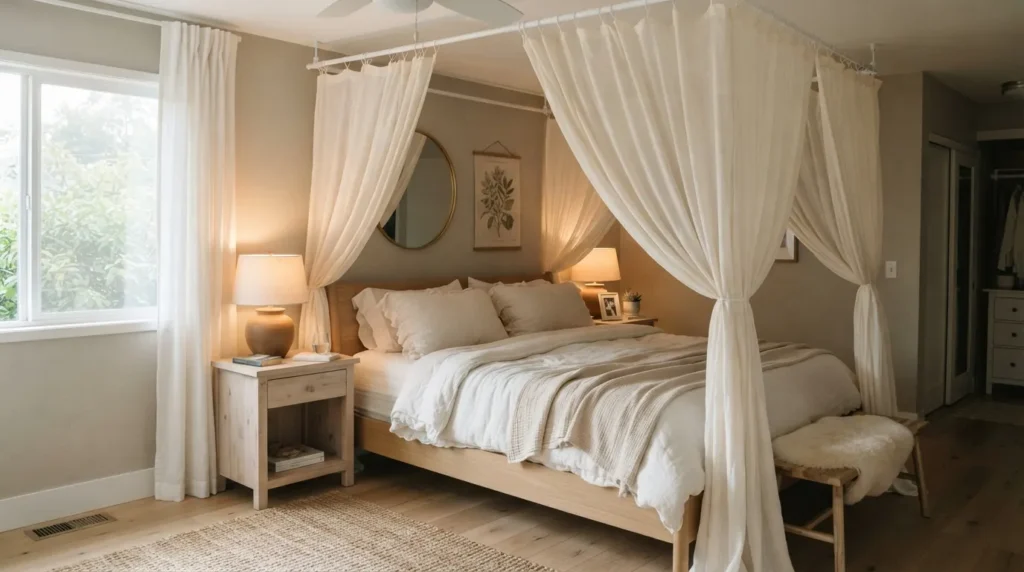
- Softens the room without blocking natural light
- Works beautifully around beds, reading corners, or daybeds
- Adds movement, height, and softness to plain walls
- Pairs well with linen bedding, wood furniture, and warm lighting
- Creates a romantic look without feeling heavy or old-fashioned
Sheer drapes are one of the easiest ways to make a canopy feel light, elegant, and relaxed. They filter sunlight instead of shutting it out, which makes the whole room feel softer during the day. White, ivory, oatmeal, or pale beige sheers work especially well because they blend with most bedroom styles. In my experience, this look feels best when the fabric hangs from ceiling-mounted rods or a simple frame, allowing the panels to fall naturally without looking stiff, forced, or overly formal.
The final result should feel airy, not tangled or crowded. Use enough fabric to create soft folds, but avoid so much fullness that the bed becomes hard to use. Tie panels loosely at the corners during the day, then let them fall at night for a cocoon-like feeling. Pair the drapes with neutral bedding, a textured rug, and warm bedside lamps to complete the look. This idea works especially well in apartments and smaller bedrooms because it adds drama without using bulky furniture or dark colors.
2. Wood Frame
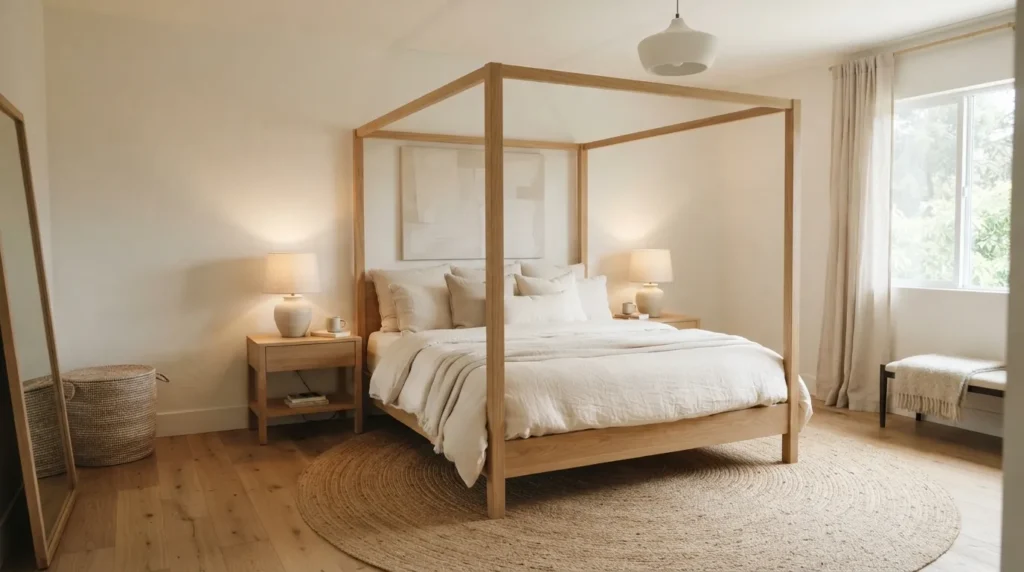
- Adds structure and warmth to the room
- Works with modern, rustic, coastal, and boho interiors
- Can be styled with fabric, string lights, or left bare
- Makes the bed feel more grounded and architectural
- Pairs well with oak, walnut, pine, rattan, and linen
A wood frame canopy gives a room instant presence because it makes the bed feel anchored. Unlike soft fabric-only styles, a frame adds architectural shape and visual strength. Light oak feels modern and airy, walnut looks rich, pine feels relaxed, and reclaimed wood brings rustic charm. That’s why many designers recommend wood when a bedroom needs more structure. It creates height, frames the sleeping area, and gives the room a custom feeling without needing built-in wall treatments or expensive paneling.
Keep the styling simple so the frame remains the main feature. You can leave it bare for a clean modern look, add sheer panels for softness, or wrap small warm lights around the top rail for evening glow. Avoid heavy fabric if the room is small, because it can make the space feel crowded. A wood frame works best with layered bedding, simple nightstands, and natural textures like jute, linen, ceramic, and wool. The finished room feels grounded, warm, and thoughtfully designed.
3. Corner Nook
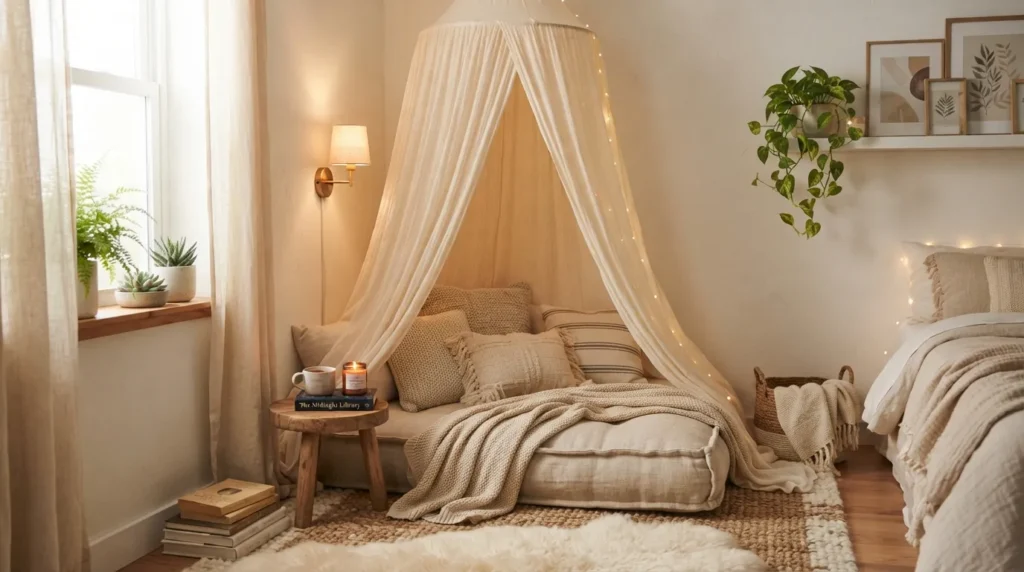
- Turns an empty corner into a cozy retreat
- Works for reading, journaling, kids’ rooms, or quiet seating
- Uses less space than a full bed canopy
- Adds softness to rental rooms or plain bedrooms
- Can be made with a ceiling hook, hoop, or wall-mounted rod
A corner canopy is perfect when you want charm without covering an entire bed. It can turn an unused corner into a reading nook, prayer space, nursery seat, or quiet journal spot. A ceiling-mounted hoop, curved rod, or simple fabric panel can create the shape, while a floor cushion, small chair, pouf, or bench gives it purpose. I’ve seen this work well in many homes because it uses awkward corners that often stay empty, making the room feel more personal and complete.
The key is making the nook useful, not just pretty. Add a washable cushion, small side table, soft rug, and wall light if the space will be used often. For a child’s room, choose durable cotton fabric and secure the canopy safely away from climbing areas. For an adult space, linen or gauze creates a more elevated look. Keep the color palette connected to the rest of the room so the nook feels intentional. The result is cozy, practical, and beautifully suited for small spaces.
4. Outdoor Shade

- Adds comfort to patios, decks, and backyard seating areas
- Helps soften strong sun during warmer months
- Works with pergolas, daybeds, hammocks, and lounge chairs
- Creates a resort-style feeling at home
- Uses canvas, outdoor curtains, bamboo, or weather-safe fabric
An outdoor canopy can make a patio feel more like a finished living space. It gives shade, softens hard surfaces, and creates a more inviting place to sit during spring, summer, and early fall. Use weather-resistant fabric, outdoor curtains, canvas panels, bamboo shades, or a pergola-style cover depending on the layout. In many USA backyards, this type of canopy works especially well above a daybed, dining table, lounge chair, or conversation area where people naturally gather.
Choose materials that can handle sun, wind, moisture, and seasonal changes. Outdoor-rated fabric lasts longer than regular indoor curtains, and removable panels are easier to wash or store during storms. Use sturdy hardware, rust-resistant rods, and tiebacks that keep fabric from blowing into furniture. Style the area with outdoor pillows, a washable rug, lanterns, and potted plants so it feels complete. The finished setup creates shade and comfort while making the patio feel more polished, peaceful, and ready for relaxed hosting.
5. Minimal Rails
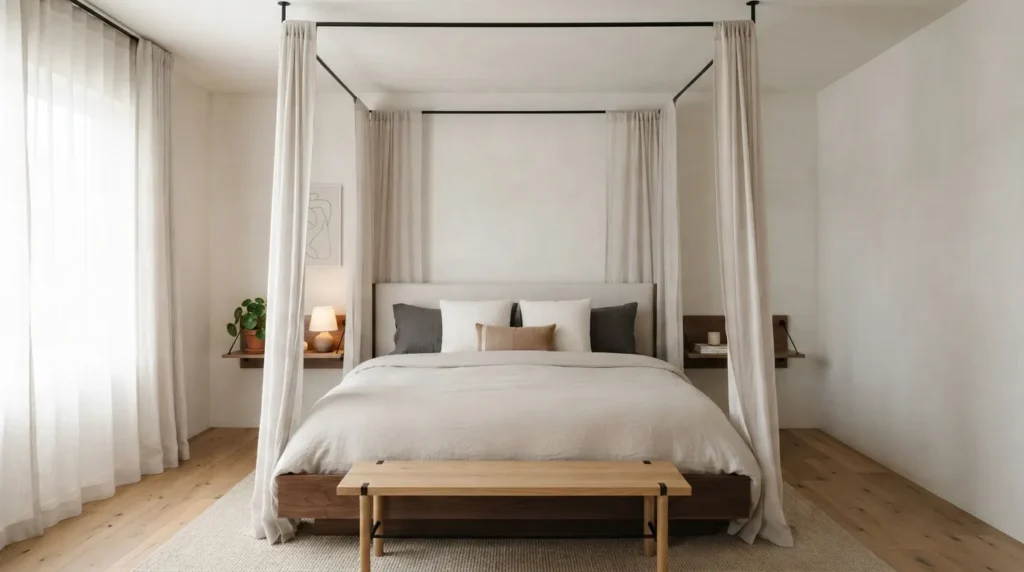
- Creates a clean modern canopy look
- Works with metal rods, ceiling tracks, or slim wood rails
- Keeps the room open while still framing the bed
- Pairs well with neutral bedding and simple furniture
- Ideal for small rooms that need softness without bulk
Minimal rails give the canopy effect without making the room feel overly decorated. Instead of a heavy frame or dramatic drapes, slim rods or ceiling tracks create clean lines around the bed. This style works well in modern apartments, compact bedrooms, and homes with simple architecture. Black metal feels sharp, brass adds warmth, and white rails disappear into the ceiling for a quiet look. In my experience, this option is best for people who want softness but still prefer a neat, uncluttered room.
The fabric should be light and controlled so the design stays refined. Use linen panels, cotton voile, or sheer curtains that can slide open easily. Keep the bedding simple with a smooth duvet, textured pillows, and one folded throw. Avoid too many competing patterns near the canopy because the rails already create a strong outline. This setup gives the bed a finished frame while preserving floor space and natural light. It feels polished, grown-up, and easy to live with every day.
6. Boho Layers
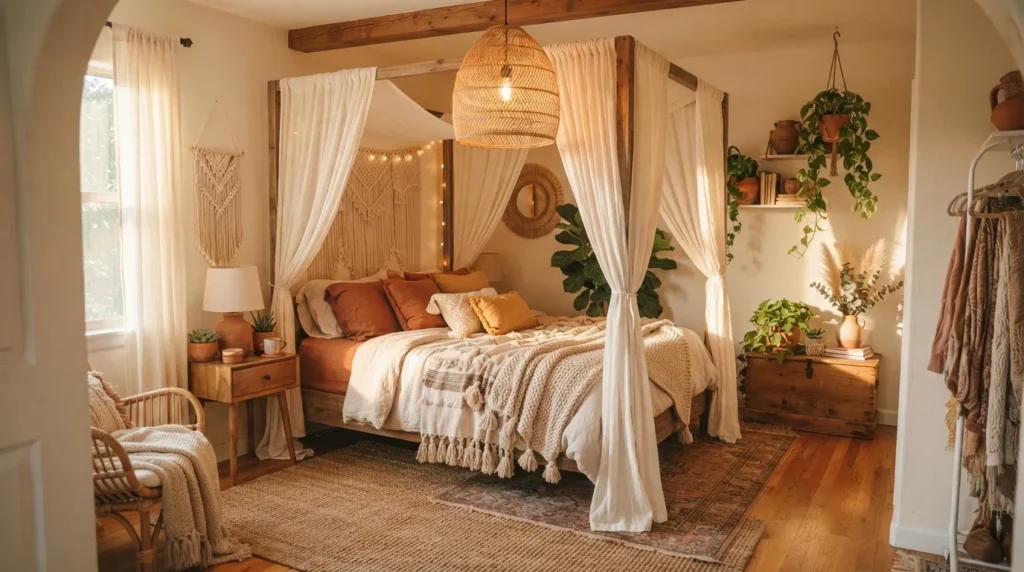
- Adds texture, warmth, and relaxed personality
- Works with macrame, rattan, linen, cotton, and fringe
- Creates a cozy bedroom or lounge corner
- Pairs well with plants, woven rugs, and earthy colors
- Makes the canopy feel collected instead of overly formal
Boho layers make a canopy feel warm, creative, and personal. Instead of crisp symmetry, this look uses natural fabrics, woven textures, relaxed bedding, plants, and soft lighting. A cotton canopy over a low bed, floor mattress, or daybed can feel inviting without needing a large budget. Add rattan lamps, a jute rug, clay vases, fringe pillows, and muted colors like terracotta, cream, olive, and sand. The best version feels collected, not cluttered, with each texture adding comfort and depth.
To keep the style chic, choose fewer pieces with better texture. One woven wall hanging, one layered rug, and a few natural pillows can look more refined than too many small accessories. If using patterned fabric, keep the bedding quieter so the space does not feel busy. Add trailing plants or dried stems for height, but leave walking space clear around the bed. This approach creates a cozy retreat that feels relaxed, artistic, and functional. It works well for bedrooms, guest rooms, and casual lounge corners.
7. Canopy Lights
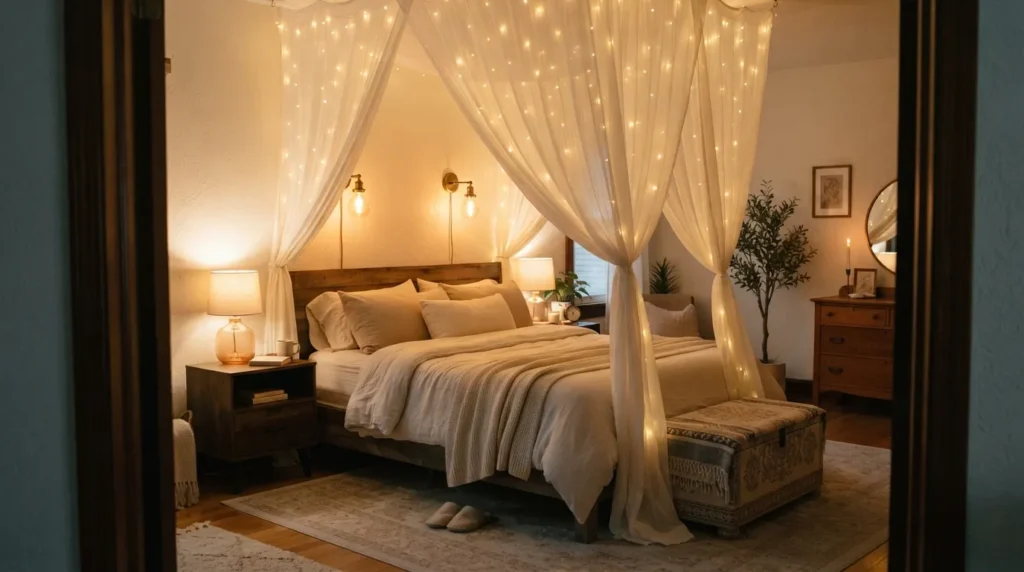
- Adds warmth and atmosphere at night
- Works with string lights, lanterns, sconces, or LED strips
- Makes fabric and texture glow softly
- Creates a cozy mood without harsh overhead lighting
- Looks beautiful in bedrooms, patios, and reading nooks
Lighting can turn a simple canopy into the most inviting part of the room. Warm string lights, small lanterns, plug-in sconces, or hidden LED strips can highlight fabric folds and create a soft evening glow. Avoid bright white lights because they can make the setup feel cheap or harsh. Choose warm bulbs and place them where they feel intentional. A chic canopy looks best when lighting supports the shape instead of overpowering it with tangled cords or uneven brightness.
Safety and neat installation matter. Keep lights away from loose fabric if they produce heat, and choose LED options whenever possible. Use cord clips, fabric ties, or hidden channels to keep wires tidy. For renters, battery-operated fairy lights or rechargeable lamps can add glow without drilling. In outdoor spaces, use weather-rated lights only. The result is a canopy that feels magical at night but still polished during the day. It adds atmosphere, comfort, and a stronger sense of design to the entire space.
8. Nursery Canopy
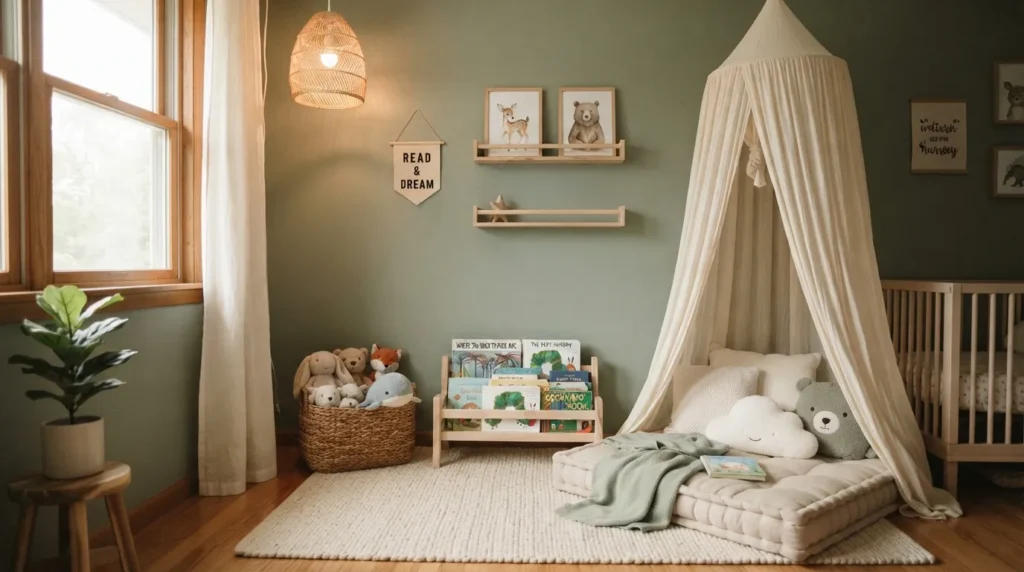
- Creates a soft focal point in a baby or child’s room
- Works above reading chairs, play mats, or toddler floor beds
- Adds gentle texture without bold wallpaper
- Pairs well with muted colors, cotton rugs, and soft toys
- Must be installed safely and kept away from cribs
A nursery canopy can make a child’s room feel gentle, warm, and beautifully finished. It works best above a reading corner, play mat, or toddler floor bed rather than directly over an infant crib. Soft cotton, muslin, or linen creates a calm look, especially in colors like ivory, blush, sage, warm gray, or oatmeal. Parents often love this idea because it adds softness and height without covering every wall in pattern. It also creates a sweet little space for books, cuddles, and quiet play.
Safety should guide every design choice. Install the canopy securely into ceiling studs or proper anchors, keep cords and ties out of reach, and avoid placing loose fabric where babies can pull it into a crib. Use washable materials because nursery decor needs regular cleaning. Add a small rug, floor cushion, low bookshelf, and basket of soft toys to make the space practical. The finished nook feels calm, photogenic, and useful while still respecting the everyday needs of a child’s room.
9. Daybed Draping
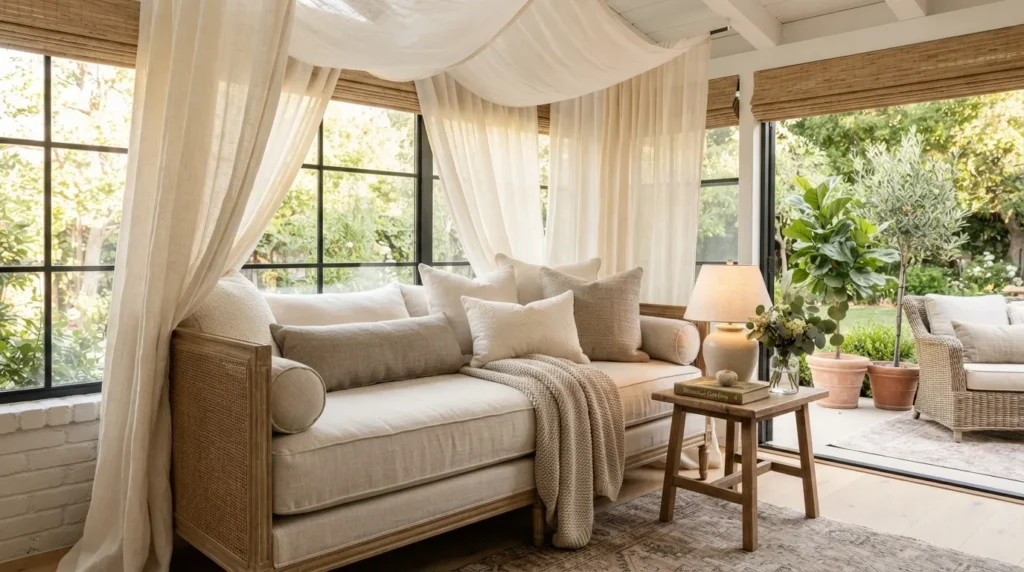
- Makes a daybed feel cozy and intentional
- Works in guest rooms, sunrooms, offices, or patios
- Adds privacy and softness for lounging or sleeping
- Pairs well with bolsters, throws, and layered pillows
- Creates a relaxed hotel-inspired look
Daybed draping is perfect for spaces that serve more than one purpose. A guest room, office, sunroom, or covered patio can feel more finished when the daybed is framed with soft fabric. Use ceiling-mounted panels, a wall rod, or a simple frame to create a cozy sleeping and lounging zone. This style works beautifully because the canopy gives the daybed importance, making it feel less like spare furniture and more like a designed feature within the room.
Layer the daybed with comfort in mind. Use a fitted cover, bolsters, sleeping pillows, a textured throw, and two larger back pillows so it works for sitting and sleeping. Sheer fabric feels airy, while heavier linen adds privacy. If the daybed sits near windows, choose fade-resistant textiles and easy-wash covers. Add a side table and lamp so the space feels complete for guests or afternoon reading. The final look is soft, useful, and elegant without requiring a full room makeover.
10. Ceiling Swag
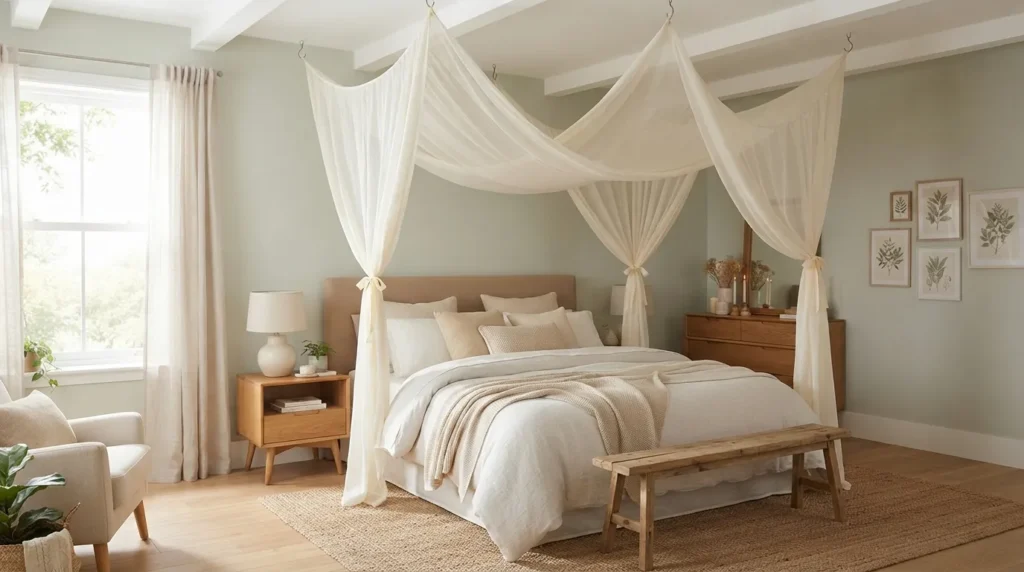
- Adds a romantic canopy effect without a full frame
- Works with ceiling hooks, fabric panels, and soft tiebacks
- Creates movement above beds, sofas, or lounge areas
- Uses less material than a full enclosure
- Ideal for renters when installed with care
A ceiling swag creates a canopy effect with fabric that drapes gracefully overhead. Instead of enclosing the bed on all sides, it uses one or more panels attached to ceiling hooks, beams, or rods. This gives the room movement, height, and softness without the cost of a full canopy bed. Sheer voile, gauze, linen, or lightweight cotton works best because the fabric needs to fall naturally. The style feels romantic, but it can still look modern when the lines stay simple.
Plan the swag carefully before installing hooks. The fabric should clear ceiling fans, lights, doors, and walking paths. Use proper anchors and lightweight textiles so the setup stays secure. Let the center dip gently, then tie the ends near the wall, bedposts, or side hooks. Keep the surrounding decor simple so the overhead fabric remains the main detail. This idea can soften a plain bedroom, frame a lounge corner, or add charm to a rental space without making permanent structural changes.