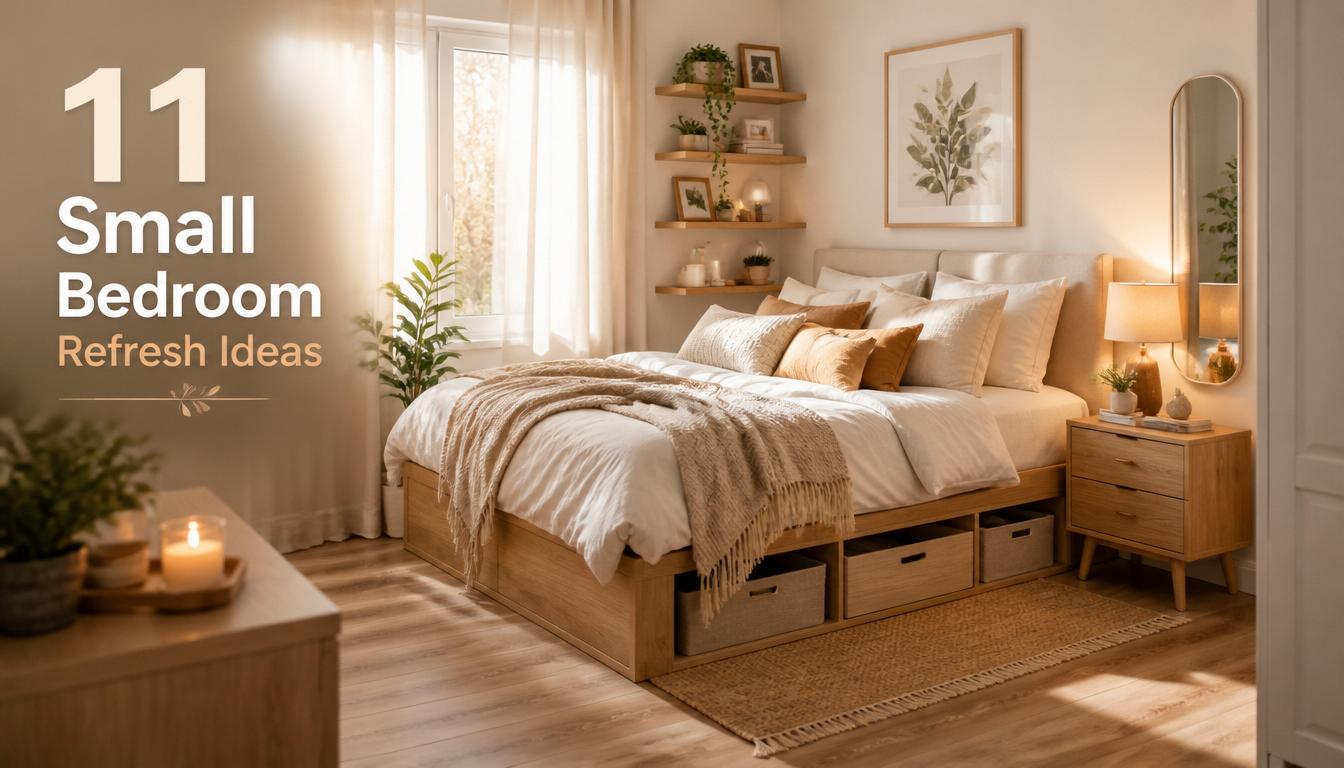
11 Small Bedroom Refresh Ideas
A small bedroom can feel calm, stylish, and surprisingly spacious when every detail has a clear purpose. The challenge is not always the room size. It is often the way furniture, lighting, storage, bedding, and decor compete for attention. A compact room can quickly feel crowded when the bed is too bulky, nightstands are too wide, curtains hang too low, or everyday items have no simple place to land.
The right refresh can change the whole feeling of the room without a major remodel. You can make the space feel brighter with lighter bedding, taller with better curtain placement, cleaner with underbed storage, and more polished with wall lighting or slim furniture. These ideas are designed for USA apartments, guest rooms, teen bedrooms, dorm-style spaces, rentals, townhomes, and cozy primary bedrooms.
Each idea below gives you practical styling steps, material suggestions, layout advice, and real-life design logic. Use one idea for a quick weekend update, or combine several to create a bedroom that feels restful, organized, and Pinterest-ready.
1. Light Palette
- Makes the room feel brighter and more open
- Works with white, cream, beige, soft gray, and pale wood
- Helps bedding, curtains, and walls feel connected
- Creates a calm base for seasonal decor
- Makes compact rooms feel less visually crowded
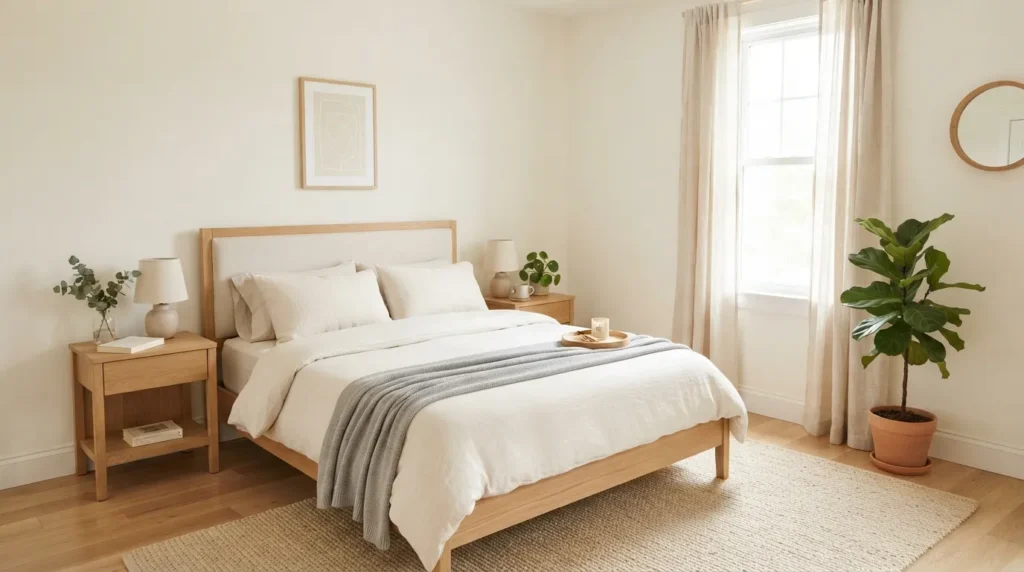
A lighter color palette can make a compact bedroom feel cleaner before you buy anything new. Soft white, warm cream, pale beige, oatmeal, and gentle gray reflect more light and reduce visual heaviness. In my experience, this works best when the largest surfaces stay close in tone, including bedding, curtains, walls, and rugs. The room does not need to be all white. A few warmer wood details, clay accents, or muted green pieces can keep the space from feeling flat or cold.
The transformation comes from creating one calm color story instead of many small contrasts. Choose bedding in cream or warm white, add a pale rug, and keep curtains close to the wall color. If you love color, bring it in through one throw pillow, artwork, or a small vase rather than several loud pieces. Light palettes also photograph beautifully for Pinterest because shadows soften and textures show clearly. The finished room feels fresh, breathable, and easier to style throughout the year.
2. Floating Nightstands
- Frees up floor space beside the bed
- Makes tight walkways feel more open
- Works with shelves, wall drawers, or slim ledges
- Adds function without bulky furniture
- Gives the bed wall a cleaner modern look
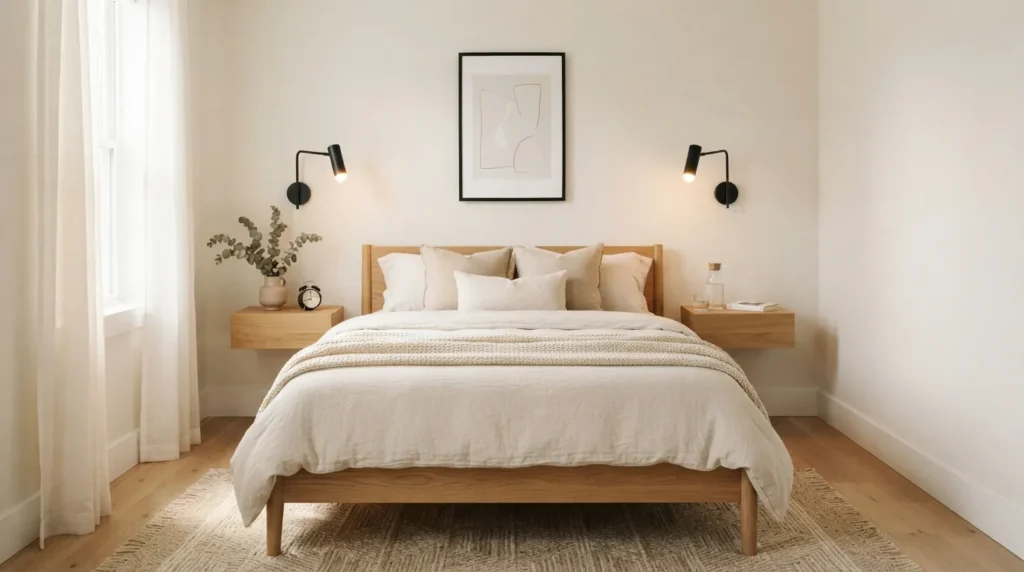
Floating nightstands are perfect when the space beside the bed feels too tight for standard furniture. A small wall-mounted drawer, narrow ledge, or floating shelf can hold a book, phone, lamp, water glass, or candle without taking up floor area. That open space underneath makes the room feel lighter and easier to clean. I’ve noticed this works especially well in apartment bedrooms where every inch near the bed matters. The look feels simple, modern, and practical without sacrificing bedside function.
Measure carefully before installing so the nightstand sits at a comfortable height beside the mattress. It should be easy to reach while lying down, but not so low that it looks awkward. Choose finishes that match the room’s style, such as warm oak, painted white, black metal, or cane-front drawers. If drilling is not ideal, try a slim freestanding table with open legs for a similar effect. The final setup keeps essentials close while making the sleeping area feel less cramped and more intentional.
3. Layered Bedding
- Adds comfort without adding bulky furniture
- Makes the bed feel styled and inviting
- Works with quilts, duvets, coverlets, and throws
- Adds texture while keeping the room soft
- Helps the bed become the main design feature
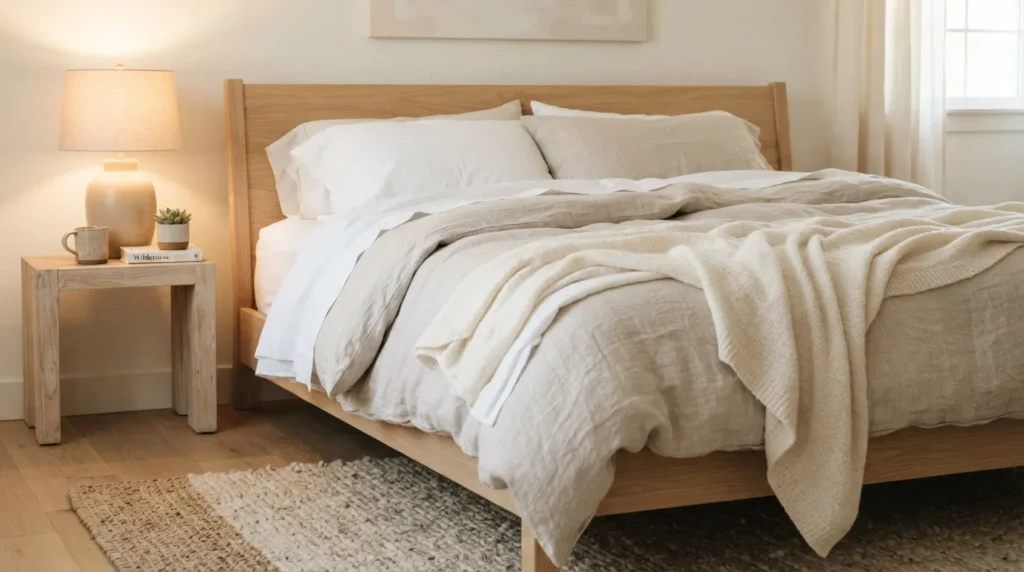
Layered bedding makes a simple bedroom feel finished because the bed is usually the largest visual element. Start with breathable sheets, then add a quilt, coverlet, duvet, or soft throw at the foot. Use texture instead of too many colors. Cotton, linen, waffle weave, gauze, and knit fabrics can create depth without making the room feel busy. In my experience, compact bedrooms look better when bedding feels relaxed but not messy, with soft folds and a limited color palette.
Keep the layers practical so the bed is easy to make each morning. Two sleeping pillows, two decorative pillows, and one folded throw are often enough. If the room is narrow, avoid oversized pillow stacks that spill over the mattress. Choose washable fabrics, especially in guest rooms, rentals, or homes with pets. A pale duvet with a textured throw can make the whole space feel softer and more expensive. This update is simple, but it creates a cozy focal point that refreshes the room instantly.
4. Vertical Storage
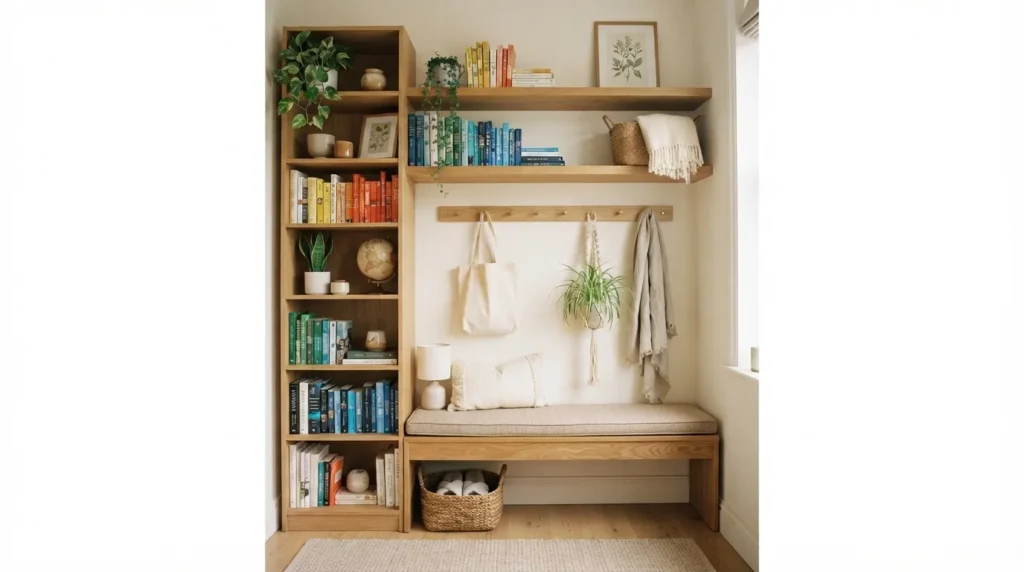
- Uses wall height instead of valuable floor space
- Works with shelves, hooks, peg rails, and tall bookcases
- Keeps daily items organized and visible
- Helps tiny rooms feel more functional
- Adds style when storage is edited carefully
Vertical storage helps a tight bedroom work harder without adding another bulky piece of furniture. Wall shelves, peg rails, tall narrow bookcases, hooks, and mounted baskets use height that often goes unused. This is especially helpful for books, hats, bags, jewelry, plants, folded blankets, or small decor. That’s why many designers recommend looking up when floor space feels limited. The goal is not to cover every wall, but to give specific items a clear home off the floor.
Keep vertical storage light and edited so the room still feels calm. Use one tall bookcase instead of several short pieces, or install two simple shelves above a dresser. Hooks near the door can hold a robe, tote, or tomorrow’s outfit without creating chair clutter. Baskets can hide small items while adding texture. Leave some empty wall space around the storage so the room does not feel packed. When planned well, vertical storage adds function, height, and visual order without stealing walking space.
5. Mirror Placement
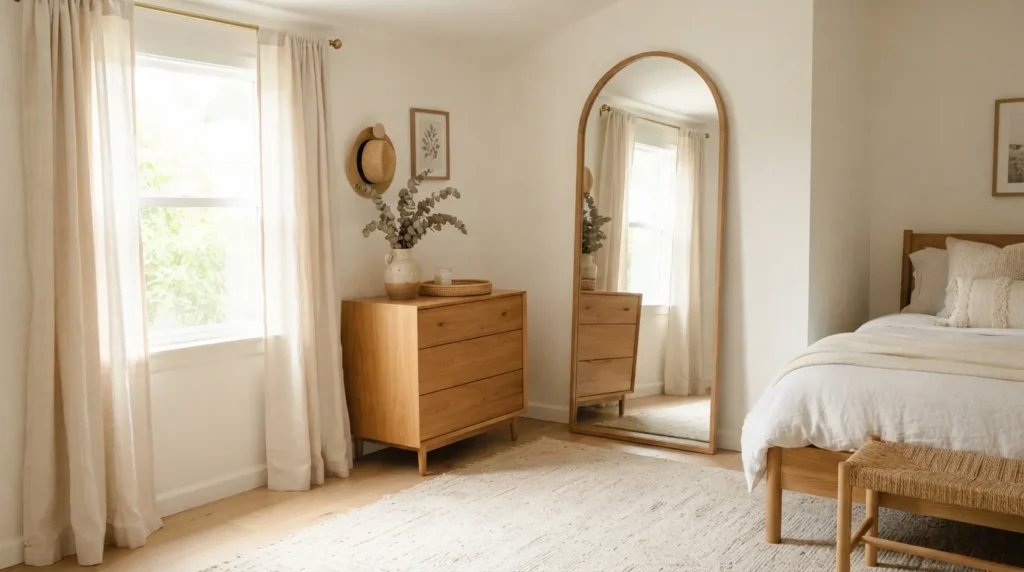
- Reflects light and makes the room feel larger
- Works with floor mirrors, dresser mirrors, or wall mirrors
- Adds style while serving a daily function
- Helps brighten dark corners
- Makes narrow rooms feel more open
A mirror can visually expand a bedroom when it is placed with intention. Instead of hanging it randomly, position it where it reflects natural light, a clean wall, soft curtains, or a styled corner. A tall mirror near a window can bounce daylight deeper into the room, while a mirror above a dresser can create a polished focal point. I’ve seen this work well in many homes because mirrors add brightness and function without needing more square footage.
Choose the mirror shape based on what the room needs. A tall floor mirror adds height and helps with getting dressed. A round mirror softens square furniture and small walls. A slim arched mirror feels elegant without taking much space. Avoid reflecting clutter, laundry baskets, or crowded shelves because the mirror will double the visual mess. Pair it with a simple lamp, tray, or vase nearby for a styled look. The result feels brighter, cleaner, and more open with one practical decor piece.
6. Curtain Height
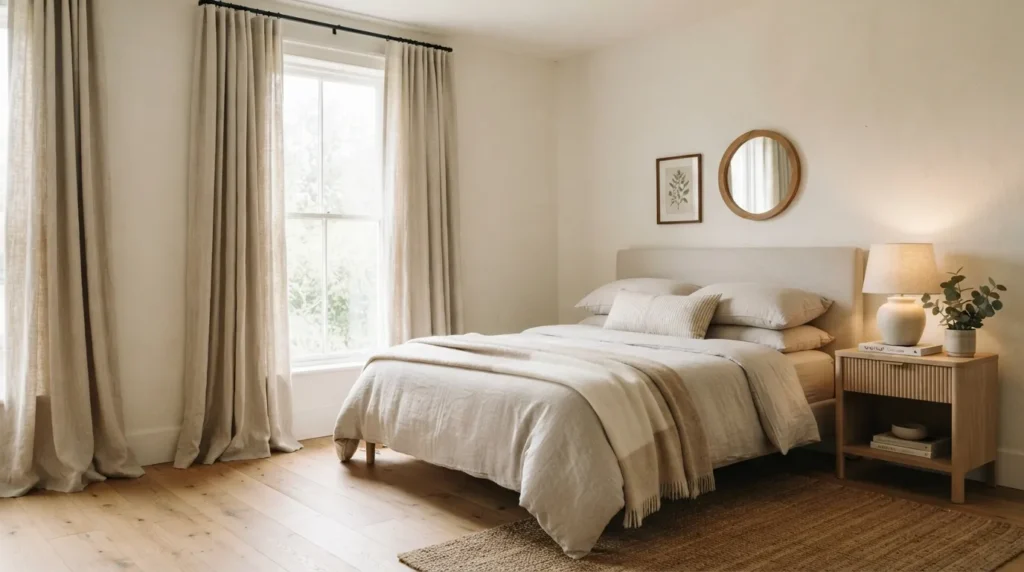
- Makes ceilings feel taller
- Softens windows and wall edges
- Helps control privacy and light
- Works with linen, cotton, sheers, or blackout panels
- Creates a polished designer-style finish
Curtain height can change the proportions of a bedroom faster than most people expect. Hanging curtains too close to the window frame can make walls look shorter and windows look smaller. Instead, mount the rod closer to the ceiling and extend it wider than the window. This simple adjustment draws the eye upward and lets more daylight show when the curtains are open. In my experience, this trick works beautifully in rentals and older homes where architecture feels plain.
Choose fabric that supports the mood of the room. Linen and cotton panels feel relaxed, sheers soften daylight, and blackout curtains help with sleep. If privacy matters, layer bamboo shades with simple panels for texture and control. Let the fabric kiss the floor or lightly puddle if you want a softer look. Avoid short curtains unless they are truly necessary near heaters or built-ins. Taller curtains make the room feel more finished, more vertical, and more thoughtfully designed without taking up extra floor space.
7. Underbed Storage
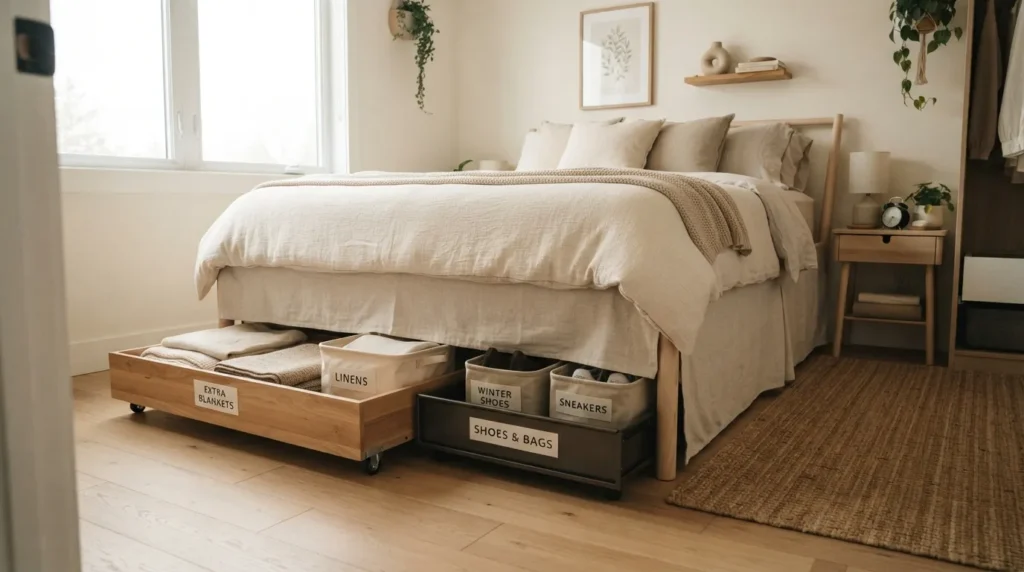
- Uses hidden space that often goes wasted
- Works with drawers, bins, bags, and lift-up frames
- Keeps seasonal items out of sight
- Helps reduce closet pressure
- Makes the room easier to reset quickly
Underbed storage is one of the smartest ways to add function without changing the room layout. The space beneath the bed can hold seasonal clothing, extra bedding, shoes, keepsakes, or guest linens when it is organized properly. Use low rolling drawers, fabric zip bags, clear bins, or a storage bed frame depending on your budget. In my experience, this works best when the containers are easy to pull out, clearly labeled, and not overfilled. Hidden storage should simplify life, not create another forgotten zone.
Keep underbed storage neat by choosing categories before buying containers. Store winter sweaters together, extra sheets together, or shoes in separate bins. Avoid using this space for random clutter because it becomes hard to manage. If dust is an issue, choose covered containers or zippered bags. If the bed is low, bed risers can help, but choose sturdy ones that match the room. This idea makes a compact bedroom feel calmer because fewer items need to sit in visible baskets, chairs, or closet overflow piles.
8. Wall Lighting
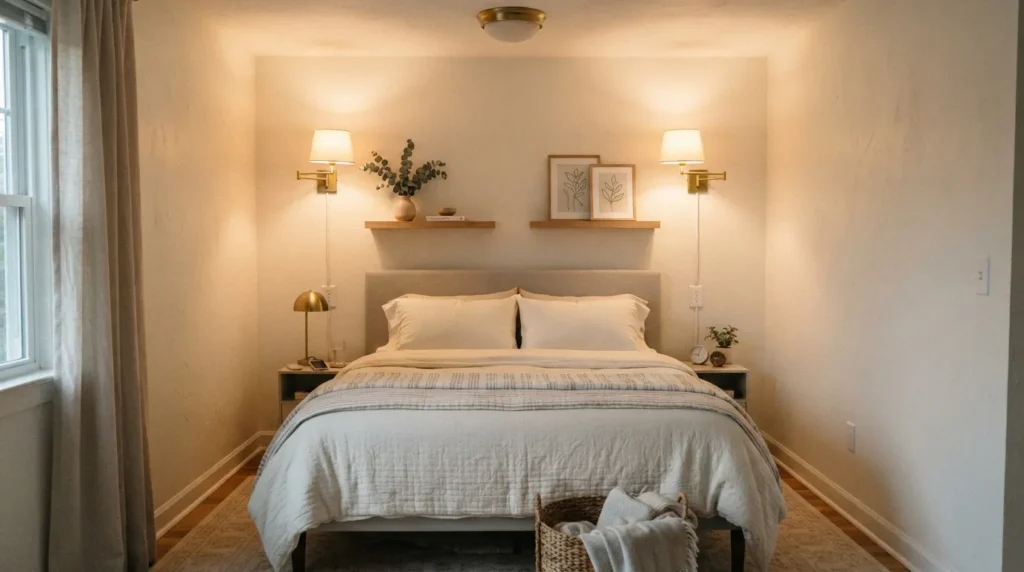
- Frees up nightstand surface space
- Adds a polished hotel-style detail
- Works with plug-in sconces, swing arms, or mounted lamps
- Improves reading light without bulky table lamps
- Makes the bed wall feel more designed
Wall lighting makes a bedroom feel more refined while freeing up precious bedside space. Instead of using large lamps on tiny nightstands, install plug-in sconces, swing-arm lights, or mounted reading lamps beside the bed. This gives the room a custom feeling without needing much furniture. Plug-in options are especially helpful for renters because they can add style without hardwiring. I’ve noticed that bedrooms feel more expensive when lighting is placed at eye level rather than relying only on a ceiling fixture.
Choose warm bulbs and fixtures that match the room’s style. Brass feels cozy and classic, matte black feels modern, and white or linen shades feel soft. Position lights so they are comfortable for reading but not shining directly into your eyes. Use cord covers if the fixture plugs in, so the wall looks tidy. Pair wall lighting with simple bedding and slim nightstands for a cleaner layout. This update improves nighttime function and gives the bed area a polished, intentional look.
9. Slim Furniture
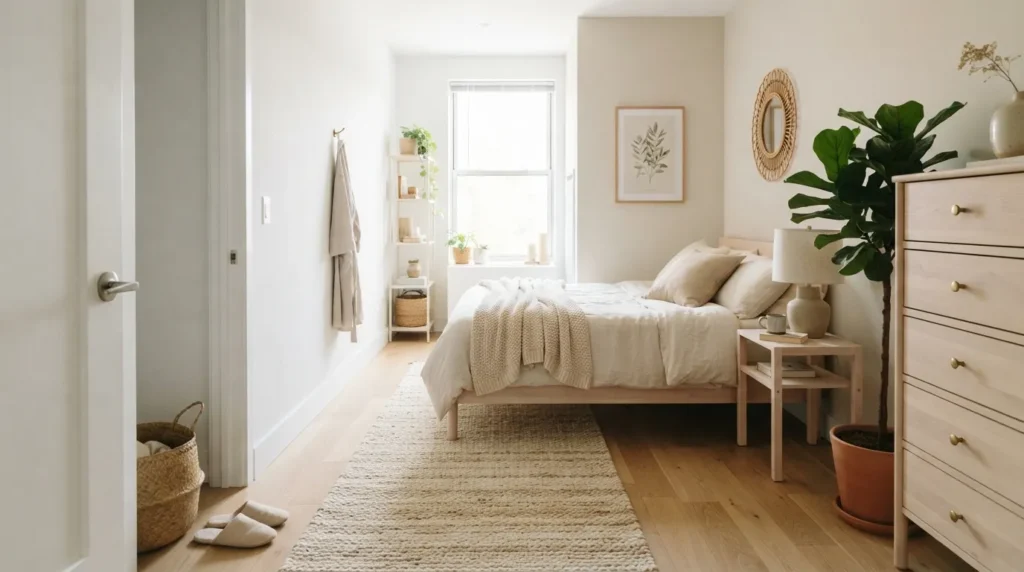
- Keeps walkways clear and comfortable
- Works with narrow dressers, low beds, and open-leg tables
- Reduces visual weight in tight rooms
- Makes the layout feel easier to move through
- Helps the room look less crowded
Slim furniture can make a tight bedroom feel more usable almost immediately. Oversized dressers, deep nightstands, bulky bed frames, and heavy benches can eat up walking space and make the room feel smaller. Choose pieces with clean lines, open legs, shallow depth, or vertical height instead. A narrow dresser, platform bed, wall shelf, or slim bench can still provide function without dominating the room. That’s why many designers recommend measuring floor clearance before falling in love with a piece online.
Think about how the room moves, not just how it looks. Leave enough space to open drawers, walk around the bed, and access the closet comfortably. If a full nightstand does not fit, try a small stool or floating shelf. If a dresser is too wide, choose a taller chest instead. Furniture in lighter wood or painted finishes can also feel less heavy. The final layout feels more breathable, easier to clean, and better suited to everyday routines in a compact space.
10. Cozy Corner
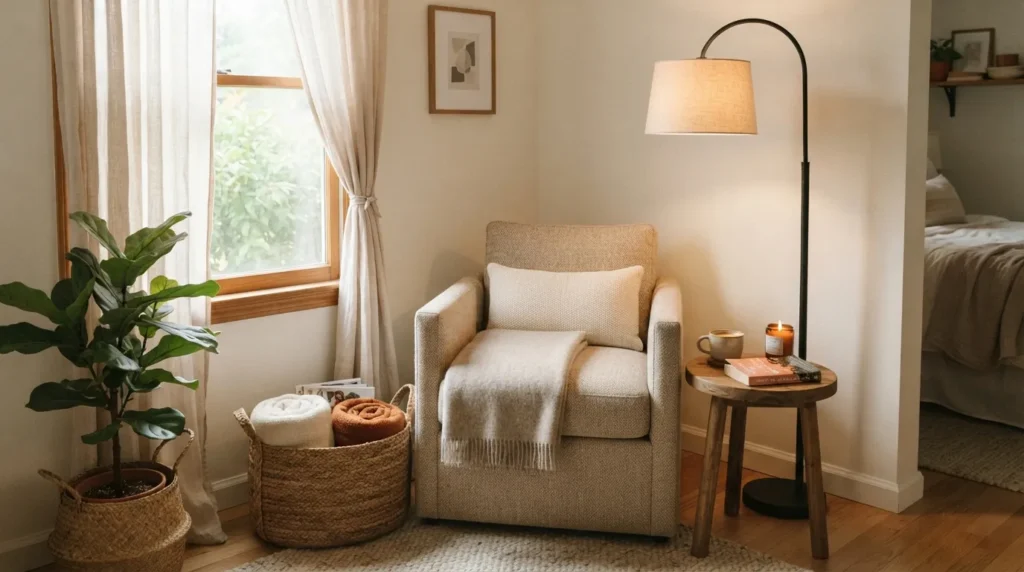
- Turns an unused corner into a useful feature
- Works with a chair, pouf, floor cushion, or small bench
- Adds comfort without overwhelming the room
- Creates space for reading, journaling, or morning coffee
- Makes the room feel more personal
A tiny corner can become the most charming part of the room when it has a clear purpose. Add a small chair, pouf, floor cushion, or narrow bench beside a window, dresser, or empty wall. The goal is not to create a full lounge area, but to offer one soft place to pause. This works well in guest rooms and apartments because it makes the room feel considered. Even one seat with a small pillow can add warmth and function.
Style the corner lightly so it does not become a clothes pile. Add a small wall hook, lamp, basket, or side table only if there is room. A floor cushion with a folded throw can work better than a chair in very tight spaces. If the corner gets natural light, place a plant nearby for freshness. Keep the colors connected to the bed so the room feels unified. This little zone gives the bedroom personality and makes it feel more inviting without requiring much space.
11. Quiet Styling
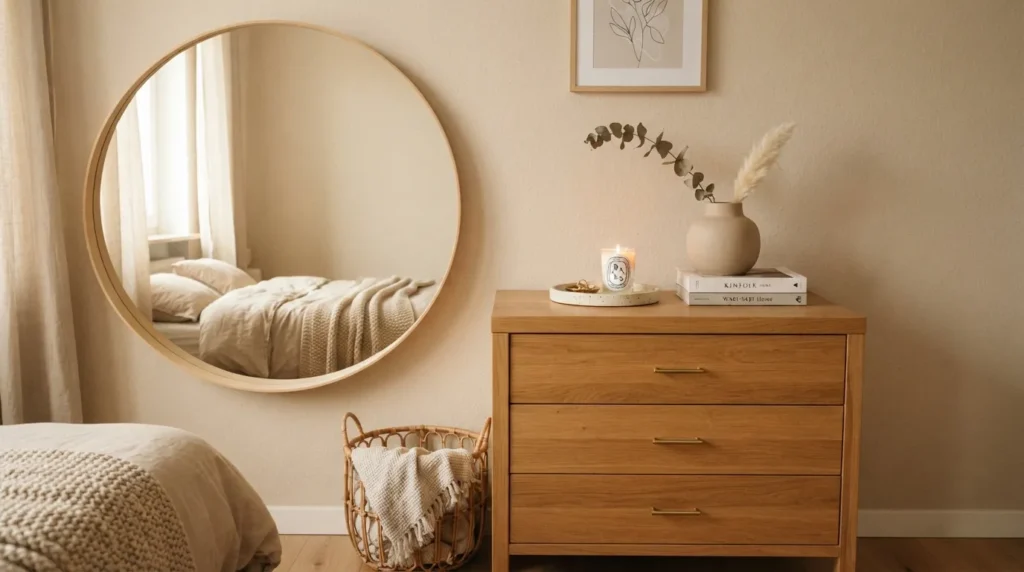
- Reduces visual clutter and makes decor feel intentional
- Works with trays, baskets, art, plants, and simple textiles
- Helps the room feel calmer at night
- Makes surfaces easier to clean
- Creates a more polished Pinterest-ready finish
Quiet styling is what makes a refreshed room feel peaceful instead of simply decorated. In a compact bedroom, too many small objects can make surfaces feel crowded. Choose fewer pieces with stronger impact: one framed artwork, one plant, one tray, one lamp, or one textured basket. In my experience, the best styling starts by removing items that do not serve a purpose or add beauty. Then the remaining pieces have enough space to be noticed.
Focus on surfaces that affect daily life. Keep the nightstand simple with a book, lamp, and small dish. Style the dresser with a mirror, vase, and tray instead of scattered products. Use baskets for extra blankets or items that need a quick home. Keep artwork calm in color if the room already has pattern in bedding or rugs. This final layer pulls the entire refresh together. The bedroom feels cleaner, more restful, and easier to maintain after busy mornings or late nights.