10 Aesthetic Entryway Looks Ideas
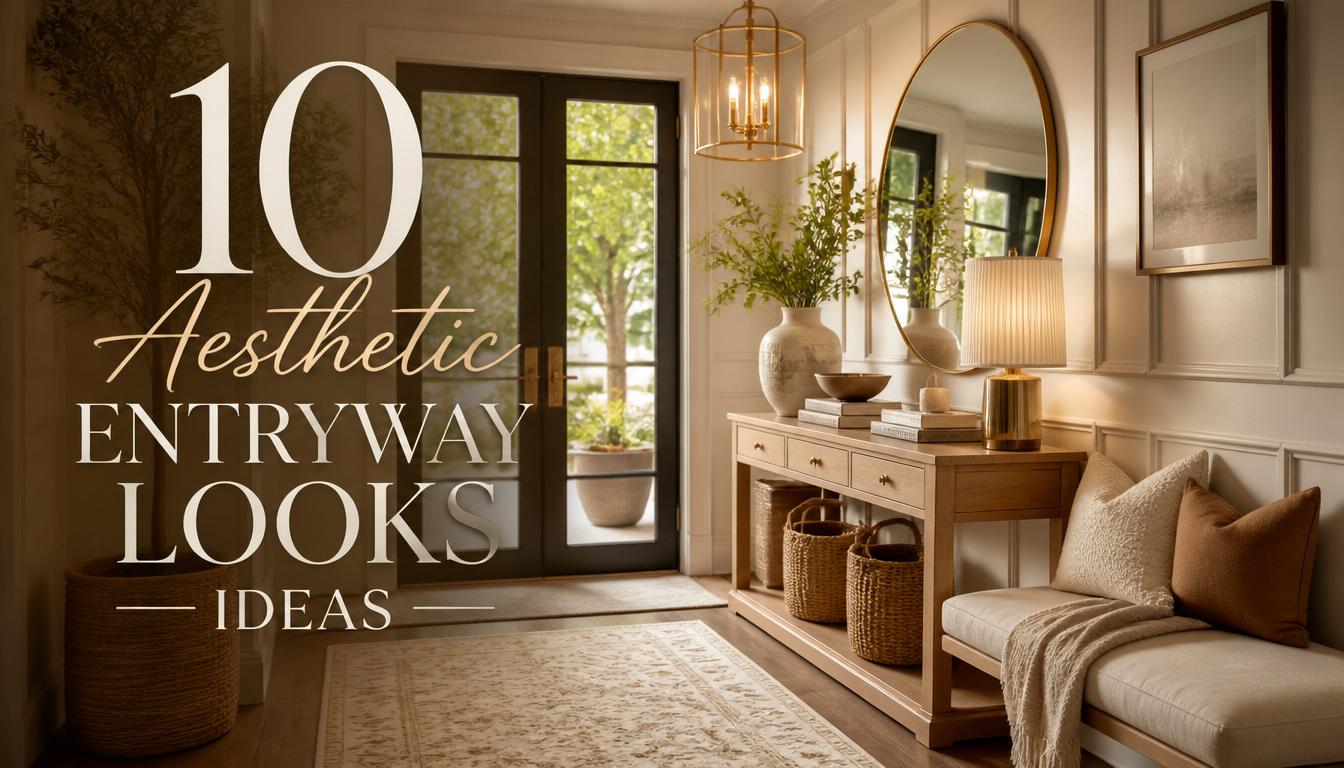
An entryway sets the mood before anyone fully steps inside your home. It is the first glimpse of your style, your routine, and the feeling you want your space to give. Even if your doorway is small, narrow, rented, or part of an open living area, it can still look thoughtful, calm, and beautifully styled with the right details.
Aesthetic entryway design is not about filling the space with random decor. It is about balance, function, texture, lighting, and small pieces that make daily life easier. A mirror can brighten a dark hallway, a bench can make shoes easier, a tray can organize keys, and a rug can create instant warmth.
These 10 ideas are made for USA apartments, townhomes, small houses, and modern family homes where the entry needs to look pretty but still work hard every day.
- Soft Neutral Console
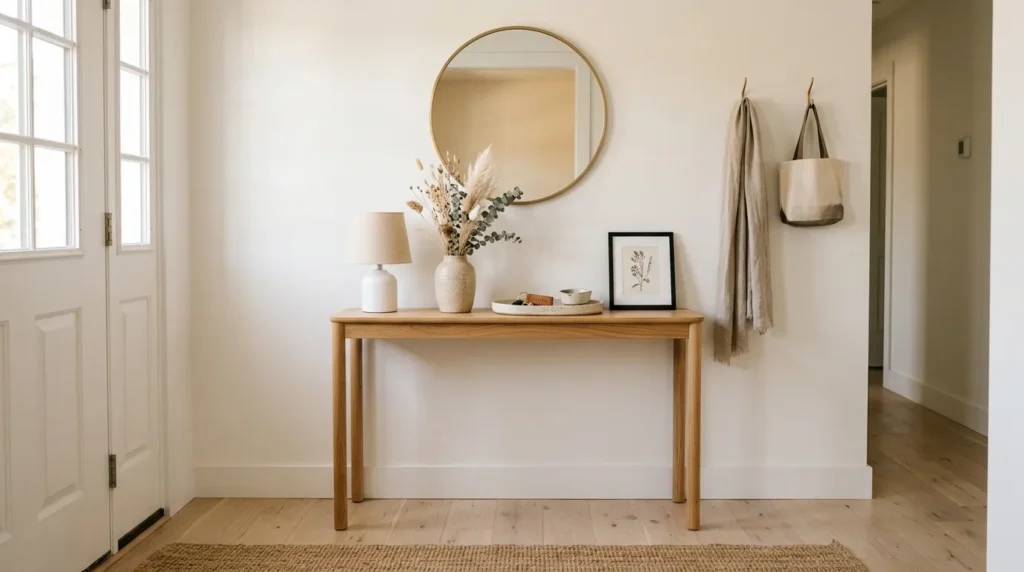
- Creates a calm first impression with simple colors and clean styling.
- Works well with beige, cream, white, oak, tan, and soft gray tones.
- Uses a narrow console, ceramic tray, lamp, vase, and framed art.
- Keeps keys, mail, and daily essentials organized without visual clutter.
A soft neutral console can make even a plain doorway feel calm, polished, and welcoming. This look works because the colors stay gentle while the textures add interest. Choose a slim console table in white, oak, light wood, or matte black if you want contrast. Add a ceramic tray for keys, a small lamp for warmth, and one vase with greenery or dried stems. Keep the surface simple so the entry feels styled, not crowded, especially if the walkway is narrow.
The finished space feels peaceful because every item has room to breathe. In my experience, neutral entryways look best when they include at least three textures, such as wood, ceramic, glass, woven fiber, or linen. A framed print above the console can anchor the whole setup without needing heavy decor. Use a shallow bowl for sunglasses or wallets, and clear it weekly so it does not become a drop zone for clutter. The result feels clean, useful, and easy to maintain.
- Arched Mirror Wall
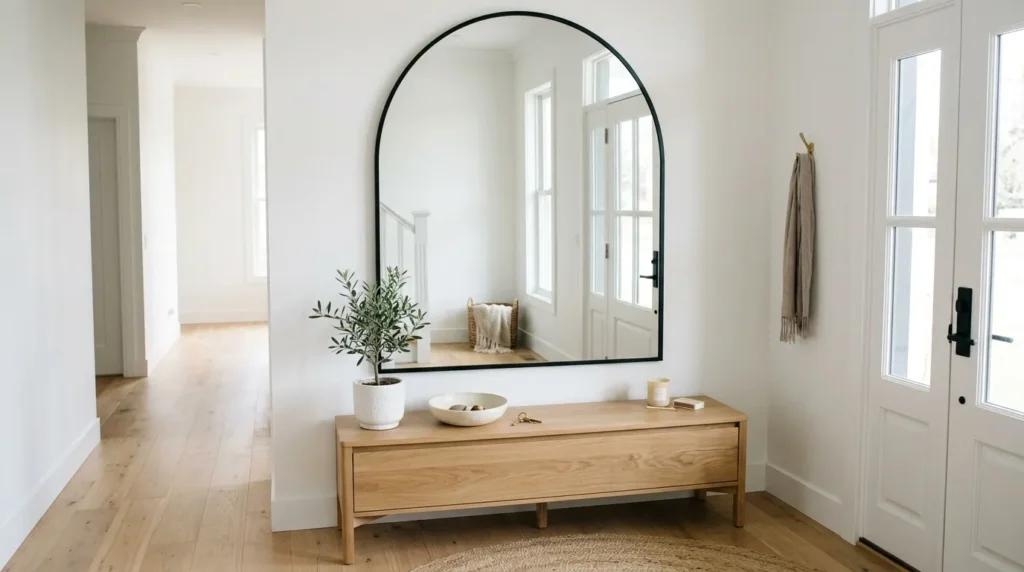
- Reflects light and makes the entry feel larger.
- Adds soft architectural shape without remodeling.
- Works above benches, cabinets, consoles, or floating shelves.
- Helps with quick outfit checks before leaving home.
An arched mirror wall instantly adds shape, height, and brightness to an entryway. The curve softens sharp corners, which is especially helpful in narrow hallways, apartment entrances, and boxy foyers. Hang the mirror above a slim cabinet, bench, or console so it feels grounded instead of floating. A black frame creates modern contrast, wood adds warmth, and brass gives a softer elevated finish. Place it where it reflects light, art, or greenery instead of clutter from another room.
The transformation feels bigger than the actual change because mirrors visually expand small spaces. I’ve noticed arched mirrors work beautifully when paired with simple furniture, since the mirror itself becomes the main feature. Add one lamp, a small plant, or a tray underneath to complete the vignette. If your entry is very compact, choose a mirror with a thin frame so it does not overpower the wall. This idea brings function and beauty together in a way that feels effortless.
- Woven Basket Storage
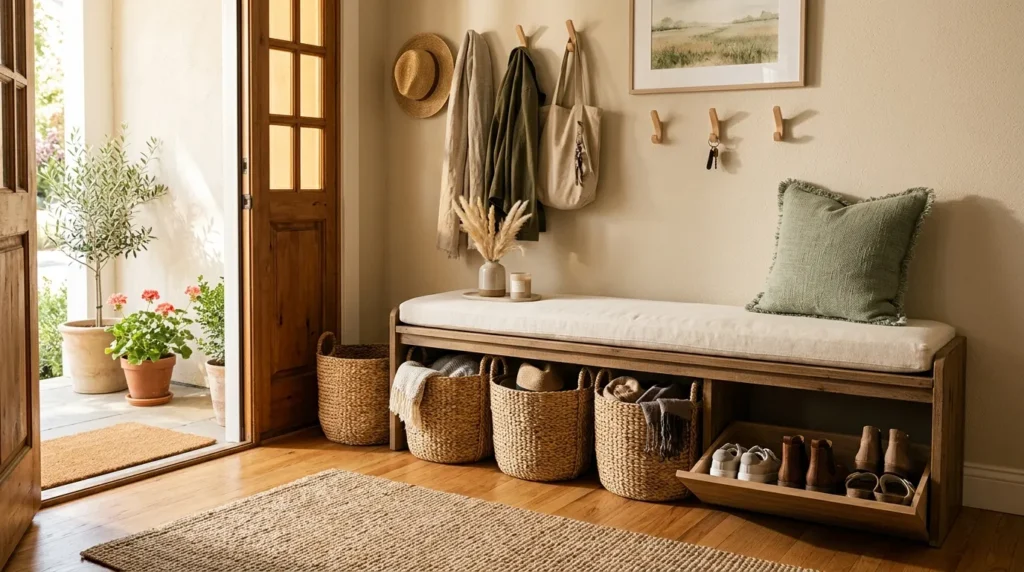
- Adds hidden organization with warm natural texture.
- Works for shoes, scarves, gloves, pet supplies, and reusable bags.
- Looks beautiful under benches, beside consoles, or inside cubbies.
- Softens modern furniture and makes the entry feel more inviting.
Woven basket storage brings warmth into the entry while hiding the everyday things that usually make it messy. Shoes, dog leashes, umbrellas, gloves, and reusable shopping bags all need a place, but they do not need to be visible. Choose baskets made from seagrass, rattan, water hyacinth, felt, or canvas depending on your style. Slide them under a bench, place them beside a console, or use them inside open shelving so the storage looks intentional.
The finished look feels relaxed, organized, and natural. That’s why many designers recommend baskets in small entryways; they add texture while solving clutter problems. In family homes, assign one basket per person or one basket per category so cleanup becomes easier. For a more polished look, choose baskets in similar tones instead of mixing too many colors. Add small labels if needed, but keep them simple. This idea makes a hardworking doorway feel softer, calmer, and much easier to reset.
- Floating Shelf Layers
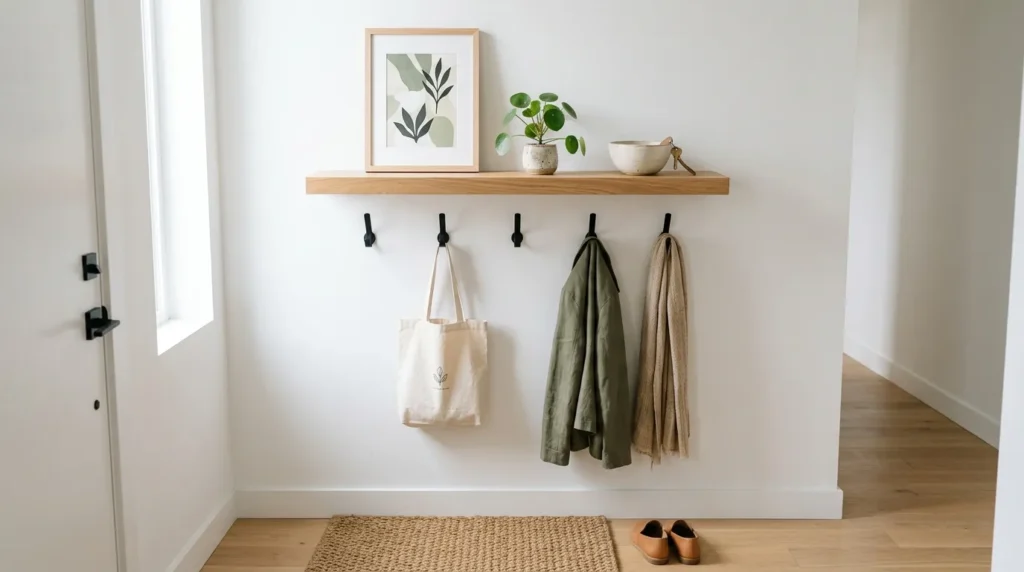
- Adds storage without using floor space.
- Works well for apartments, rentals, and narrow entry walls.
- Holds keys, small plants, framed art, candles, and mail trays.
- Creates a styled wall moment with minimal furniture.
Floating shelf layers are perfect when your entryway has almost no floor space. A slim shelf gives you a landing spot for essentials while keeping the walkway open. Install one shelf above a hook row, small stool, or shoe mat to create a functional vertical zone. Use it for a key bowl, tiny vase, framed print, or narrow mail tray. Keep the depth modest so it does not stick out too far near the door or become easy to bump.
The finished entry feels light and practical because the wall does the work instead of bulky furniture. In my experience, floating shelves look best when styled with fewer pieces that have stronger shapes. Try one round bowl, one small plant, and one framed artwork rather than many tiny objects. If you rent, consider removable wall shelves only when they are rated properly and safe for the weight. This setup feels modern, affordable, and especially useful for compact homes.
- Vintage Rug Moment
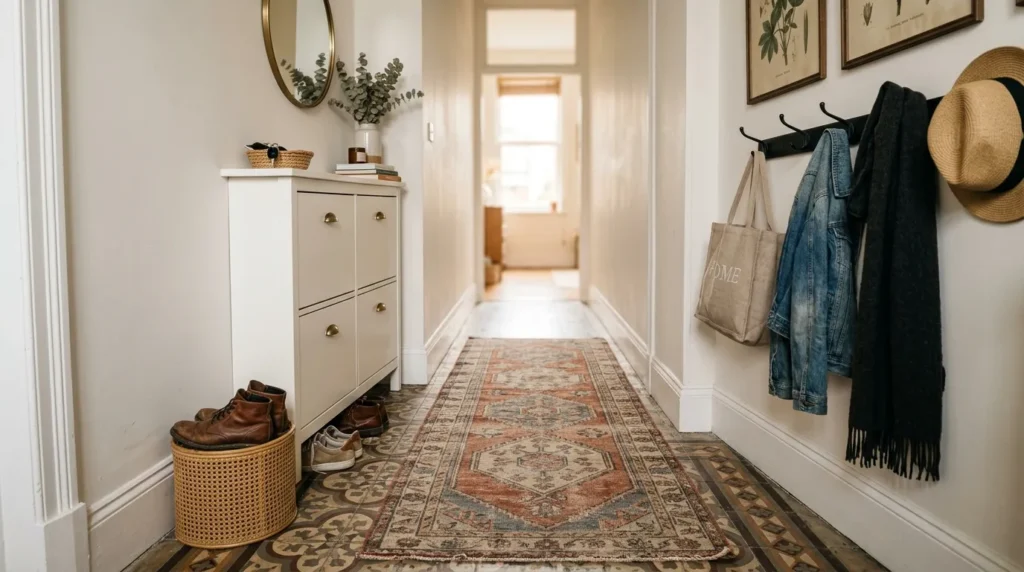
- Adds color, softness, and character to a plain entry.
- Works with washable runners, low-pile rugs, and distressed patterns.
- Helps define the doorway in open layouts.
- Protects flooring from shoes, dirt, and daily traffic.
A vintage-style rug can make an entryway feel collected, warm, and instantly more personal. This idea works because the rug anchors the floor and adds pattern without needing extra furniture. Choose a washable or low-pile runner if the entry gets heavy traffic, pets, kids, or wet shoes. Muted red, faded blue, olive, beige, rust, or charcoal patterns can hide dirt better than plain light rugs. Always use a non-slip rug pad so the runner stays safe near the door.
The finished look feels layered and lived-in, especially when the walls and furniture are simple. I’ve noticed vintage rugs are helpful in open-concept homes because they visually mark where the entry begins. Pair the rug with a wood bench, black hooks, or a small cabinet for balance. If the doorway is narrow, choose a long runner instead of a wide rug. The color and pattern bring personality while still keeping the space practical for everyday shoes and traffic.
- Minimal Hook Rail
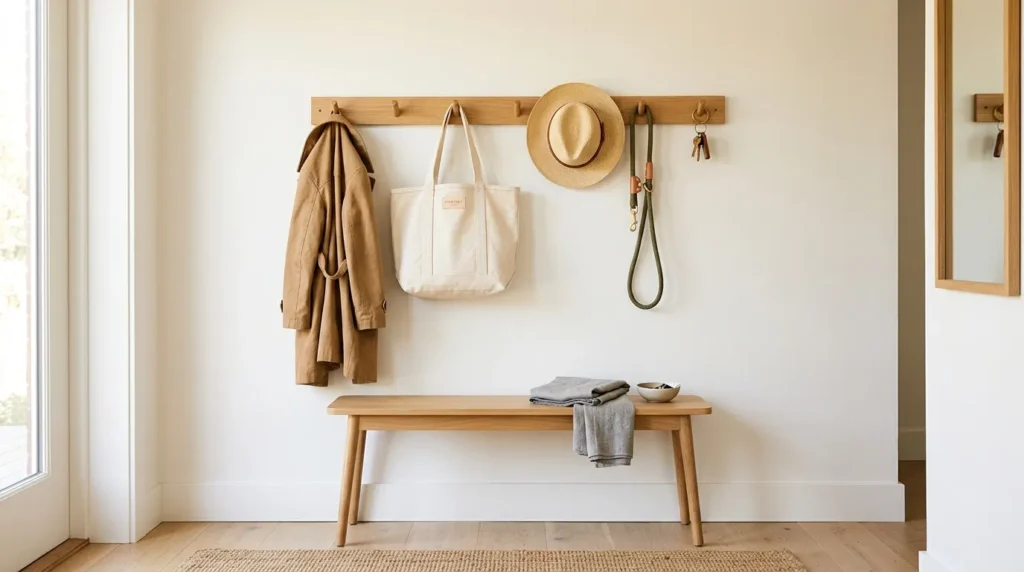
- Keeps coats, bags, hats, and leashes off the floor.
- Uses vertical wall space instead of bulky storage.
- Works above benches, shoe cabinets, or simple floor mats.
- Creates a clean grab-and-go station for daily routines.
A minimal hook rail makes the entryway more useful without taking over the room. Hooks are simple, but they solve one of the biggest entry problems: where to put the things you use every day. Choose a rail in wood, black metal, white, brass, or matte nickel depending on your home style. Place it where coats and bags can hang without blocking the door. Keep the spacing even so each item has room and the wall does not look overcrowded.
The result feels organized because daily essentials finally have a proper landing place. In my experience, hook rails look best when they are not overloaded. Keep only current-season coats, one bag, a hat, or a leash on display, then store extras elsewhere. Add a bench or shoe mat underneath to complete the practical zone. This idea works especially well for rentals and small houses because it adds function quickly. The whole entry becomes easier to use and easier to clean.
- Statement Door Color
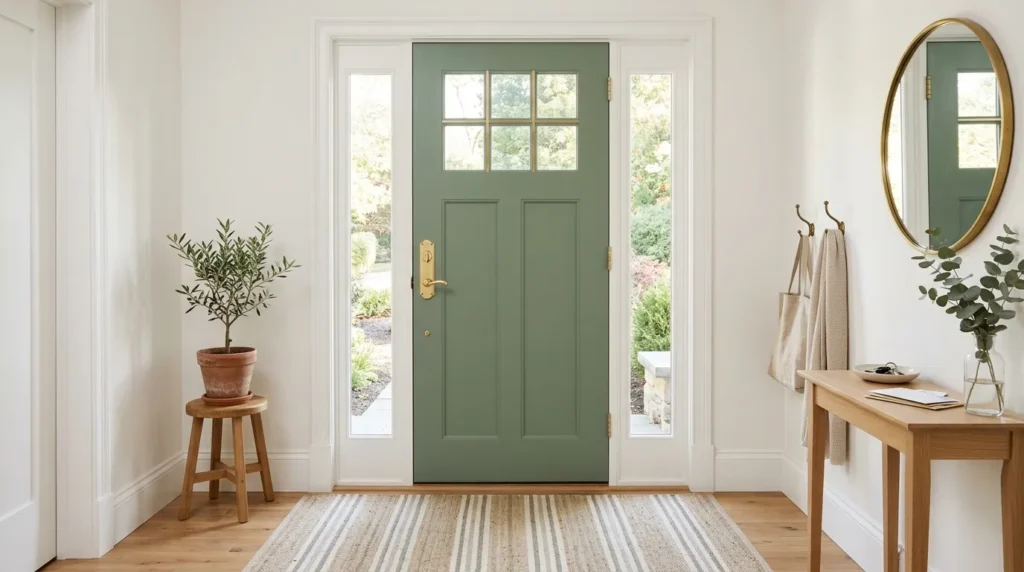
- Creates a strong focal point without adding furniture.
- Works with sage, black, navy, terracotta, cream, or soft blue.
- Makes small entries feel styled even with minimal decor.
- Pairs well with updated hardware, rugs, wreaths, and plants.
A statement door color can transform the whole entry without needing much space or decor. Paint is powerful because it changes the mood immediately while keeping the floor clear. Sage green feels calm, black looks modern, navy feels classic, terracotta adds warmth, and soft blue brings a fresh cottage mood. Use interior or exterior paint based on the side of the door you are updating, and clean the surface well before painting so the finish looks smooth.
The transformation feels bold but still practical because the door becomes the main design feature. I’ve noticed that once the door color feels intentional, the rest of the entry can stay very simple. Add updated hardware, a clean mat, and one plant or basket nearby. If you rent, use removable peel-and-stick panels or focus on hardware and wreath styling instead of paint. This idea gives the entry personality without making the space feel crowded or hard to maintain.
- Greenery Corner Styling
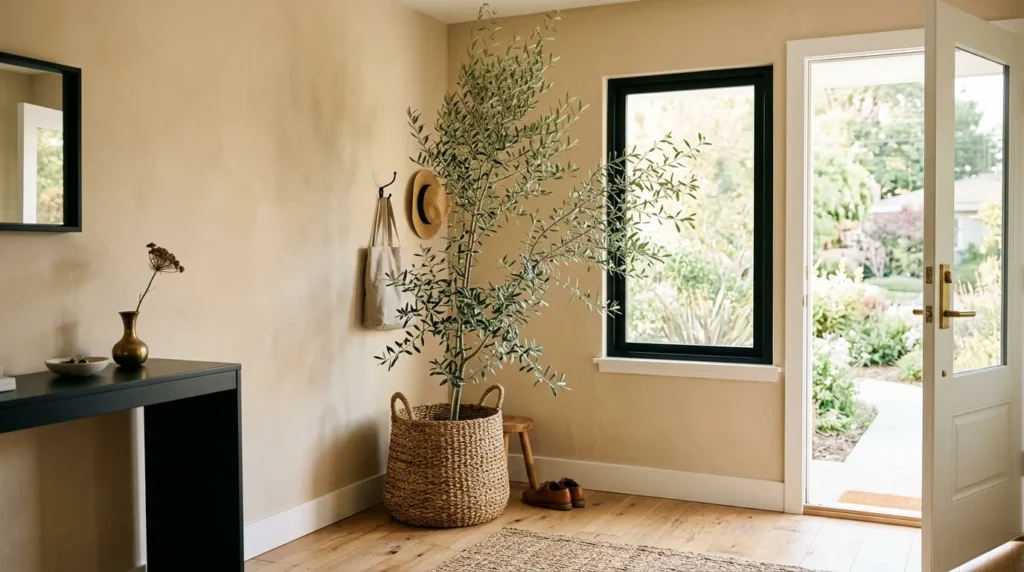
- Adds life, softness, and freshness to empty corners.
- Works with faux trees, real plants, plant stands, and woven baskets.
- Helps balance hard surfaces like tile, wood, metal, and painted walls.
- Makes the entry feel more welcoming and natural.
Greenery corner styling brings life into an entryway that might otherwise feel flat or unfinished. A plant adds height, color, and softness without needing many accessories. Choose a snake plant, olive tree, pothos, ZZ plant, fern, or realistic faux tree depending on your lighting and maintenance needs. Place the plant in a woven basket, ceramic pot, or simple black planter so it connects with the rest of the decor. Keep the size proportional to the corner.
The finished look feels fresh and welcoming as soon as the door opens. I’ve seen this work well in many homes where the entry has one awkward blank corner that cannot fit furniture. A taller plant draws the eye upward, while a small plant on a stand adds charm without blocking movement. If the area gets little natural light, high-quality faux greenery is a smart choice. This detail makes the space feel softer, more styled, and less empty.
- Cozy Bench Nook
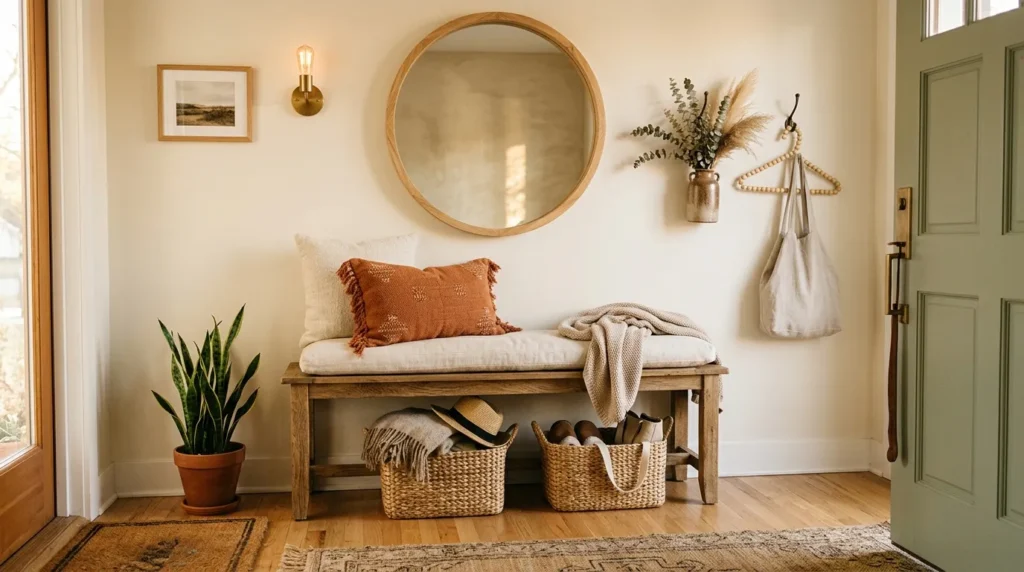
- Adds seating and makes the entry feel more complete.
- Works with narrow benches, storage benches, cushions, and pillows.
- Helps with putting on shoes, setting down bags, and styling baskets.
- Creates a warm, homey feeling near the front door.
A cozy bench nook turns a basic entry into a useful little landing zone. Even a narrow bench can make daily routines easier by giving you a place to sit, set down a bag, or tie shoes. Choose a bench that fits the wall without blocking the door swing or walking path. Add a washable cushion, one small pillow, and baskets underneath if storage is needed. Wood benches feel warm, black benches feel modern, and upholstered benches feel softer.
The finished nook feels inviting because it suggests comfort right at the front door. In my experience, benches work best when they are styled simply and not covered with too many pillows. One cushion and one accent pillow are usually enough for a small entry. Add hooks above for coats or a mirror above for light and height. The bench becomes both decorative and practical, which is exactly what a small entry needs to look good and function well.
- Warm Lighting Glow
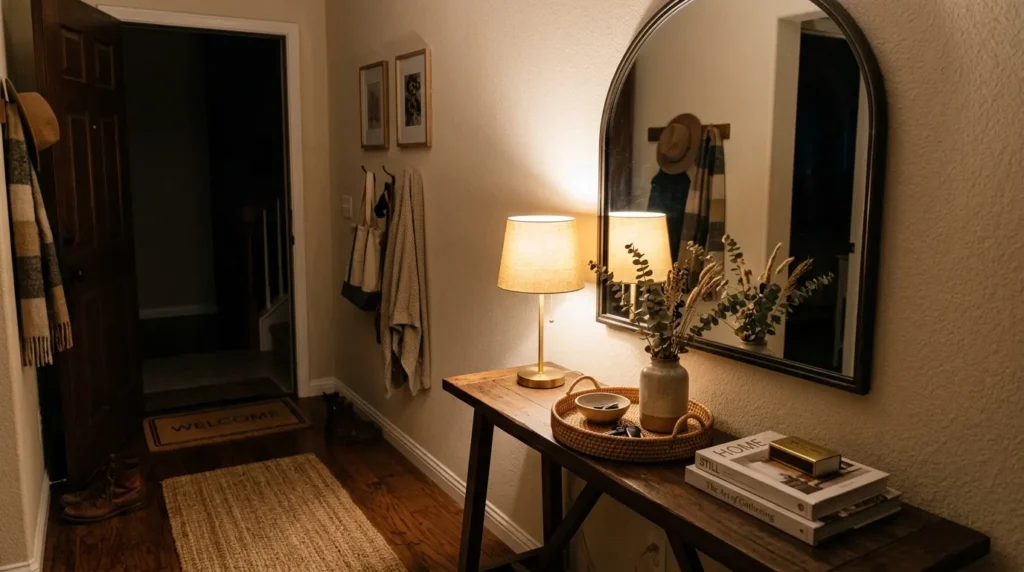
- Makes the entry feel cozy during evenings and early mornings.
- Works with table lamps, sconces, plug-in lights, and battery lamps.
- Highlights mirrors, artwork, plants, and textured decor.
- Creates a softer mood than harsh overhead lighting.
Warm lighting can make an entryway feel completely different, especially at night. Many doorways rely on harsh ceiling lights, which can make the space feel flat or cold. A small table lamp on a console, a plug-in wall sconce, or a battery-operated lamp can add a softer glow. Choose warm white bulbs instead of cool blue light for a more welcoming feel. Lighting should highlight your best entry details, such as a mirror, tray, plant, or textured wall.
The finished space feels more expensive because layered lighting always creates depth. That’s why many designers recommend adding a lamp even in small entryways. It makes the home feel calm when you walk in and gives guests a warmer first impression. If you do not have an outlet nearby, rechargeable lamps are a useful option. Pair the light with a mirror to reflect the glow, and keep the surrounding decor simple. This final layer makes the whole entry feel intentional.
Final Styling Tips
A beautiful entryway should never make daily life harder. Before decorating, think about what the space needs to handle every day: shoes, keys, coats, bags, mail, pet items, umbrellas, or school supplies. Once those needs are clear, styling becomes much easier. Function should come first, then texture, color, and decorative details.
For a polished aesthetic entryway, choose a simple color palette and repeat it through the rug, basket, hardware, mirror frame, and accessories. Warm neutrals, black accents, natural wood, soft greenery, and gentle lighting usually work well in both small and large homes. Avoid overcrowding surfaces, especially near the door.
The best entry design feels calm, useful, and personal. It welcomes you home, helps you leave faster, and gives guests a beautiful first impression without needing a huge budget or large foyer.