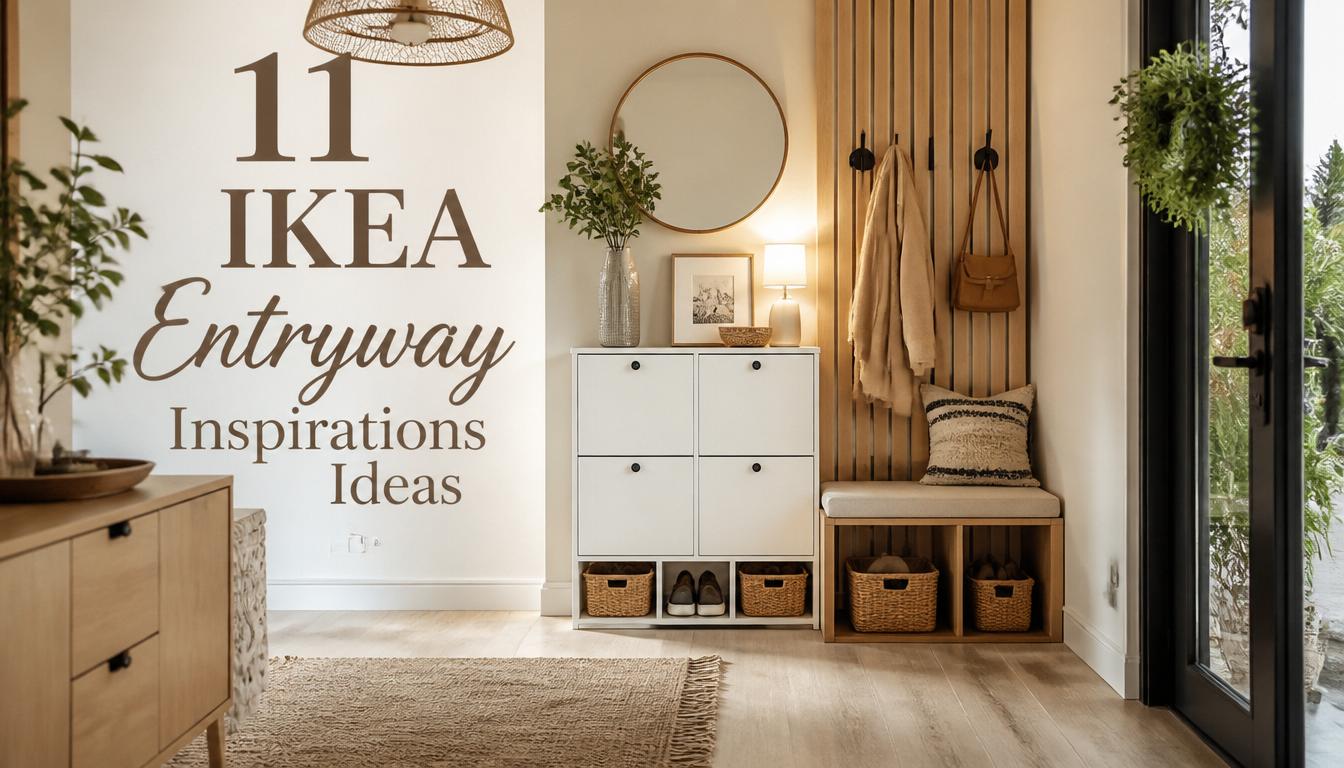
11 Ikea Entryway Inspirations Ideas
An entryway is one of the hardest-working spaces in a home, even when it is tiny. It catches shoes, bags, keys, mail, coats, umbrellas, dog leashes, school items, and all the little things people drop the second they walk through the door. For USA apartments, townhomes, small houses, and busy family homes, this area needs to look good and function even better.
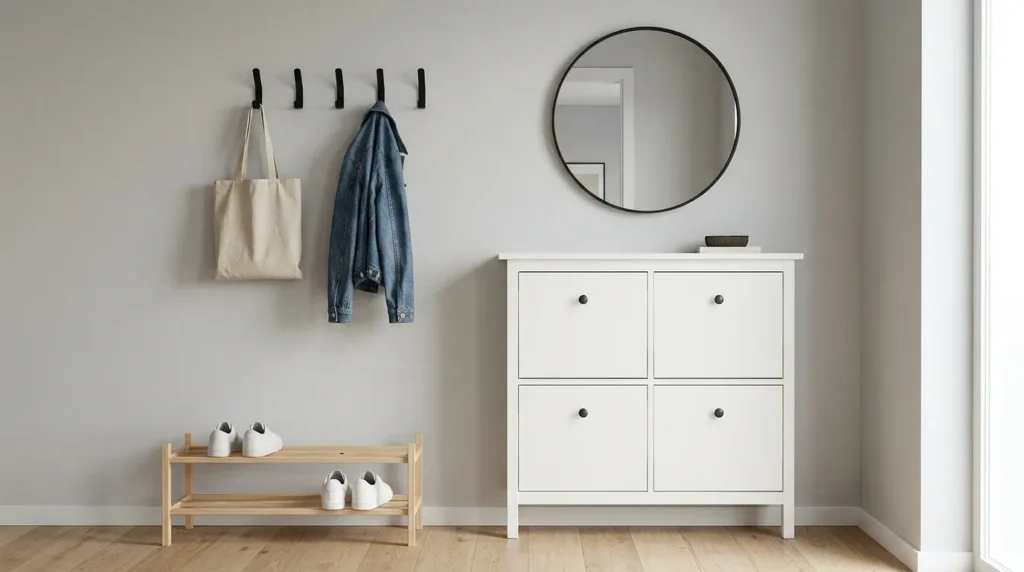
That is why an ikea entryway style works so well for Pinterest-inspired homes. It usually focuses on clean lines, smart storage, neutral colors, modular furniture, and simple pieces that can be styled in many different ways. Instead of making the doorway feel crowded, the goal is to create a calm landing zone that feels organized, bright, and easy to maintain.
These 11 ideas are practical, stylish, and realistic. You will find inspiration for shoe storage, benches, wall hooks, mirrors, baskets, floating shelves, narrow consoles, and cozy finishing touches that make even the smallest entry feel polished.
- Slim Shoe Cabinet
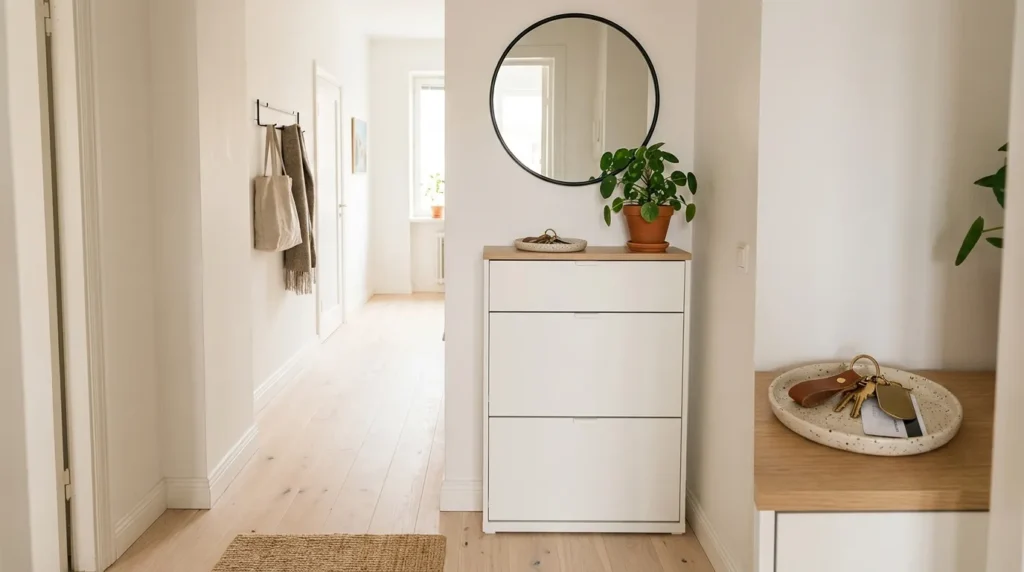
- Keeps shoes hidden while saving floor space.
- Works well in apartments, narrow hallways, and small foyers.
- Creates a clean wall-hugging storage solution.
- Can be styled with lamps, trays, mirrors, or artwork on top.
A slim shoe cabinet can completely change the way a narrow entryway functions. Shoes are often the first thing that makes a small doorway feel messy, so hiding them behind clean cabinet fronts creates instant calm. Choose a shallow cabinet that sits close to the wall and allows the walkway to stay open. The top surface can hold a small tray for keys, a ceramic bowl, a lamp, or seasonal decor. This setup gives you storage and styling without needing a large furniture piece.
The finished look feels clean, organized, and much more intentional than a pile of shoes near the door. In my experience, slim storage works best when each person has a clear section or drawer, especially in busy homes. Add a mirror above the cabinet to reflect light and make the entry feel bigger. Keep the decor simple on top so the cabinet does not become a clutter zone. A small plant, framed print, and catchall tray are usually enough.
- Bench Drop Zone
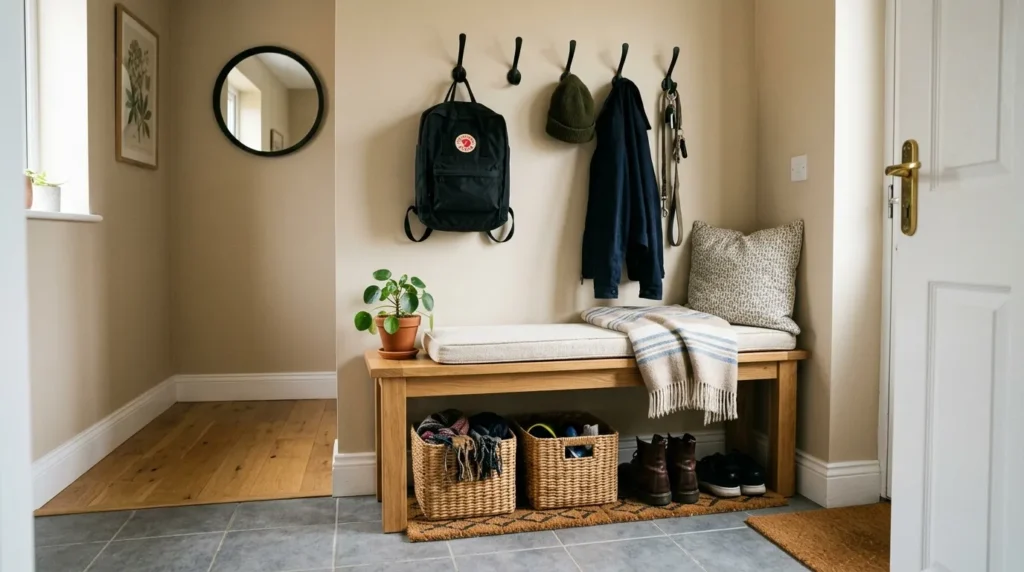
- Adds seating for putting on shoes.
- Creates a landing spot for bags, backpacks, and daily items.
- Works with storage benches, open cubbies, or simple wooden seats.
- Makes the entry feel warmer and more useful.
A bench drop zone makes the entryway feel more welcoming because it gives people a real place to pause. Even a small bench can make daily routines easier, especially when shoes, bags, and coats come in and out all day. Choose a narrow bench that fits against the wall without blocking the door swing. If possible, pick one with cubbies, drawers, or space underneath for baskets. Add a washable cushion for comfort and a little softness against harder entryway surfaces.
The transformation is practical and visual at the same time. I’ve noticed benches work especially well in family homes because they create a natural place for kids and adults to sit while getting ready. Use baskets underneath for shoes, sports gear, scarves, or pet supplies. Keep the cushion color connected to the rest of the home, such as beige, gray, black, sage, or warm tan. This makes the entry feel designed instead of looking like random storage near the door.
- Wall Hook Row
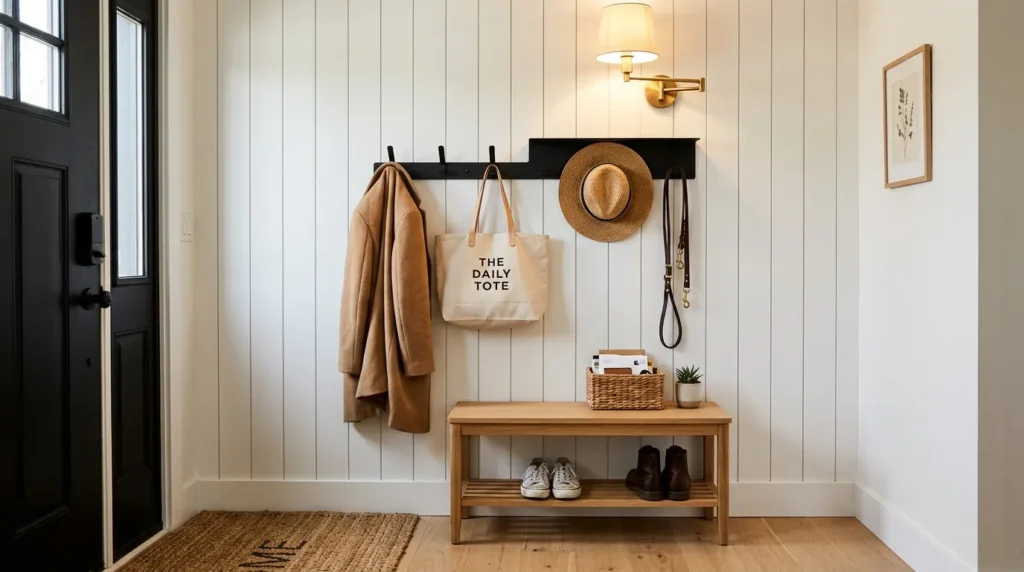
- Keeps coats, bags, hats, and leashes off the floor.
- Uses vertical wall space instead of adding bulky furniture.
- Works above benches, cabinets, or narrow entry tables.
- Makes daily grab-and-go items easier to find.
A wall hook row is one of the smartest upgrades for a small entry because it uses space that often goes unused. Instead of adding another freestanding piece, install hooks directly on the wall or on a mounted rail. Keep the placement high enough for coats but low enough for everyday use. Hooks can hold jackets, tote bags, scarves, hats, umbrellas, and dog leashes. A clean row of black, wood, white, or brass hooks can look stylish while solving a real storage problem.
The finished entry feels more organized because frequently used items finally have a home. That’s why many designers recommend vertical storage for tight spaces; it keeps the floor open and makes the room feel less crowded. For a polished look, limit the number of items hanging at once and rotate seasonal pieces. Add a bench or shoe cabinet below the hooks to create a complete drop zone. The combination feels simple, practical, and very easy to maintain through busy weekdays.
- Mirror Wall Moment
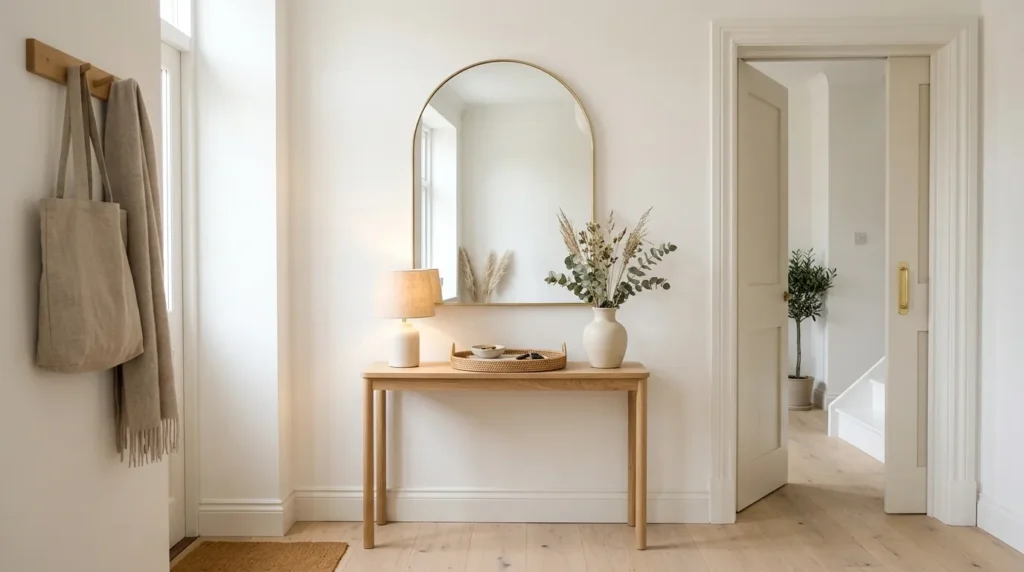
- Reflects light and makes the entry feel larger.
- Gives a final check spot before leaving home.
- Works with round, arched, rectangular, or full-length mirrors.
- Adds style without taking up floor space.
A mirror wall moment can make a compact entryway feel brighter, taller, and more finished. Mirrors are especially helpful in apartments or hallways where natural light is limited. A round mirror softens sharp corners, an arched mirror adds elegance, and a rectangular mirror feels clean and modern. Hang it above a cabinet, bench, or console to anchor the space visually. Make sure the mirror is placed where it reflects something pleasant, like a plant, artwork, or light source, instead of clutter.
The result feels open and practical, which is exactly what an entry needs. In my experience, mirrors also help small spaces feel more styled because they create a clear focal point without adding visual weight. Pair the mirror with a narrow shelf or cabinet below for keys and mail. If the entry is very small, choose a mirror with a slim frame so it does not feel heavy. A black frame feels modern, wood feels warm, and brass adds a soft elevated touch.
- Basket Storage Layers
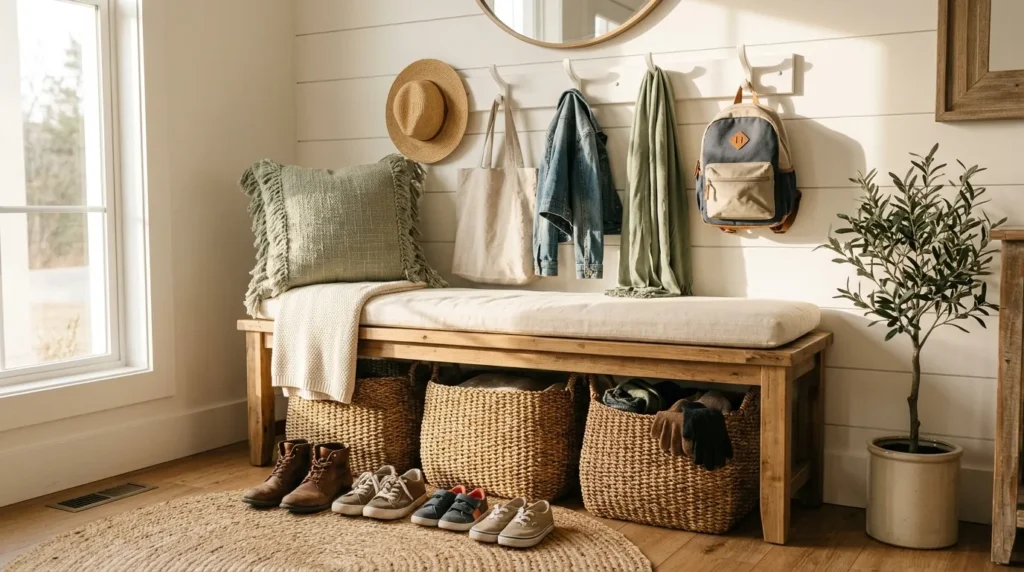
- Adds hidden storage with warm texture.
- Works for shoes, scarves, gloves, pet items, and kids’ accessories.
- Looks good under benches, inside cubbies, or beside cabinets.
- Softens clean furniture with natural woven detail.
Basket storage layers bring warmth and function into an entryway without making it feel crowded. Woven baskets are especially useful because they hide everyday clutter while adding texture to simple furniture. Use them under a bench, inside open cubbies, on a lower shelf, or beside a shoe cabinet. Choose baskets that fit the exact space instead of guessing, because oversized baskets can make a small entry feel cramped. Natural seagrass, rattan, felt, canvas, and black wire baskets all create different moods.
The finished look feels organized but still cozy, which is important in a hardworking doorway. I’ve seen this work well in many homes because baskets make cleanup easy for families, renters, and busy households. Label them if several people use the same entry, or assign one basket to each category. Keep colors consistent so the space feels calm. When the baskets match or coordinate, even practical items like winter gloves, dog leashes, and reusable bags look intentionally stored instead of hidden in a rush.
- Floating Shelf Setup
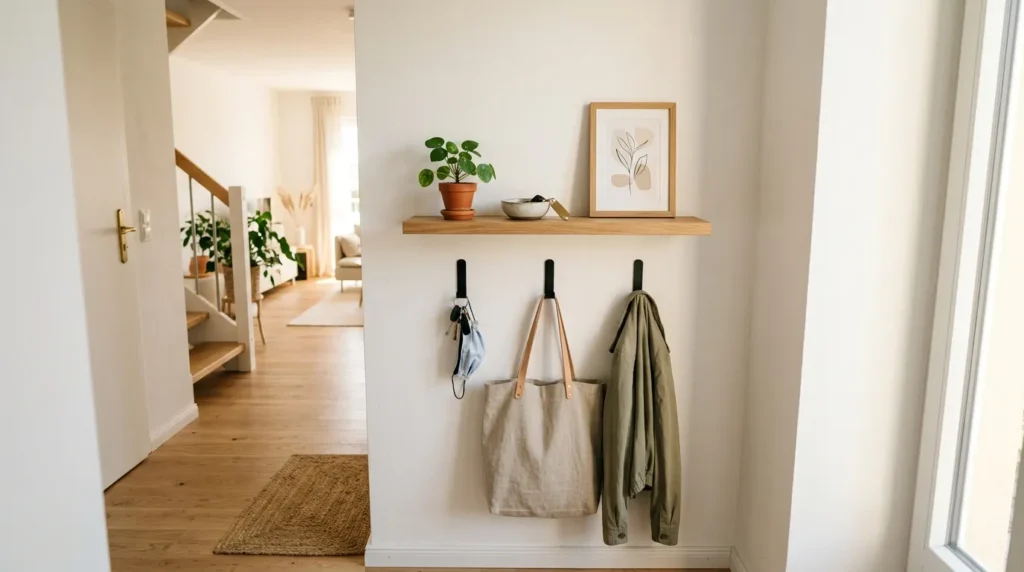
- Adds storage without taking up floor space.
- Works above hooks, benches, cabinets, or small consoles.
- Holds keys, decor, mail trays, small plants, and framed art.
- Keeps the entry light, open, and visually clean.
A floating shelf setup is perfect when the entryway has almost no room for furniture. A slim shelf gives you a place for small essentials while keeping the floor completely open. Install it above a hook row, narrow bench, or shoe cabinet to create a layered wall arrangement. Use the shelf for a key bowl, tiny plant, framed print, or narrow mail tray. Keep the depth modest so it does not stick out too far into the walkway or feel awkward near the door.
The finished wall feels styled but not heavy, which is ideal for renters and small homes. In my experience, floating shelves look best when they hold fewer items with stronger shapes. Try one framed print, one small vase, and one tray instead of many tiny objects. If the shelf is near the door, choose sturdy materials and secure installation. A wood shelf adds warmth, white blends into the wall, and black creates contrast. The result feels light, useful, and Pinterest-clean.
- Narrow Console Table
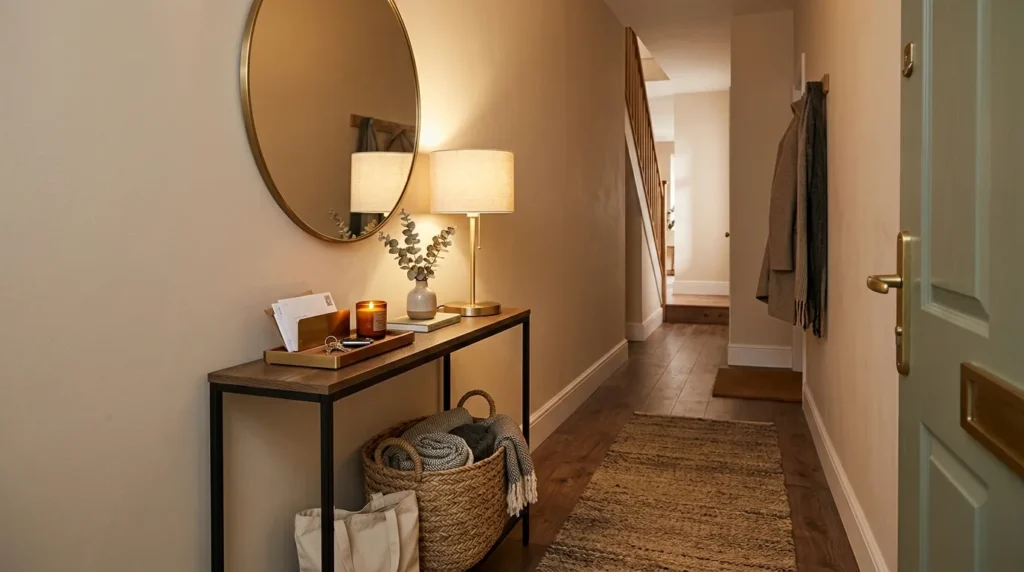
- Creates a stylish surface for keys, lamps, and decor.
- Works well in long hallways and small foyer walls.
- Adds polish without needing deep furniture.
- Can be paired with baskets, stools, mirrors, and trays.
A narrow console table gives an entryway a finished look when there is enough wall space for a slim surface. The best console for a small doorway is shallow, sturdy, and visually light. Open-leg designs feel less bulky than solid pieces, while drawers add hidden storage for keys, sunglasses, and mail. Place a tray on top to catch small items, then add a lamp, vase, or framed print. Keep the surface edited so it does not become a dumping place.
The result feels polished and welcoming, especially in homes where the front door opens directly into a hallway or living room. I’ve noticed narrow consoles help define the entry even when there is no separate foyer. Add baskets underneath for shoes or seasonal items if the table has open space below. A mirror above creates height, while a small stool can tuck underneath for function. Choose wood for warmth, black metal for contrast, or white for a clean Scandinavian-inspired look.
- Cozy Rug Runner
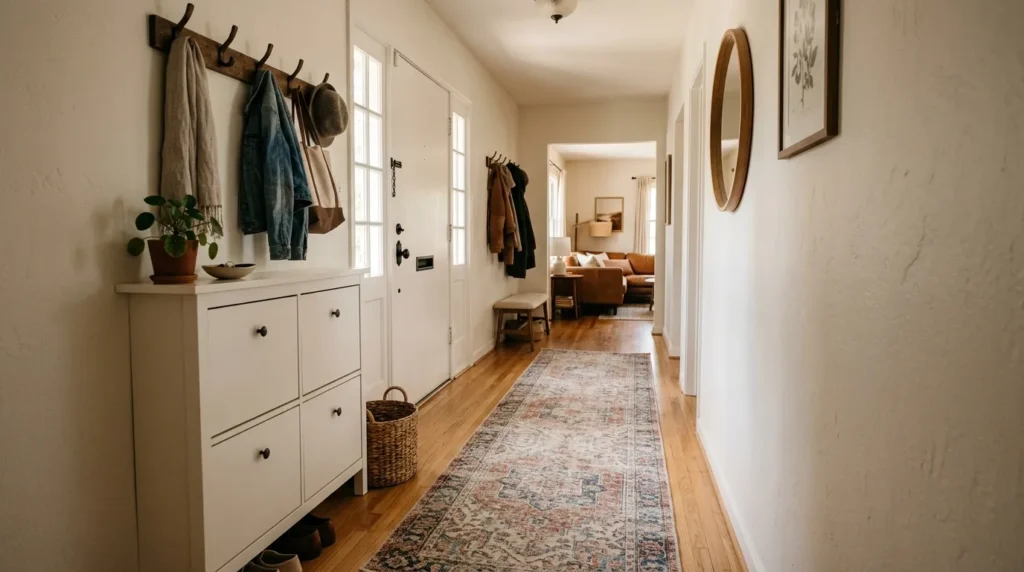
- Defines the entry and protects the floor.
- Works in narrow hallways, small foyers, and apartment entrances.
- Adds color, pattern, texture, and warmth.
- Helps connect the doorway to the rest of the home.
A cozy rug runner can make an entryway feel warmer the second you step inside. Hard floors near the door often feel cold and unfinished, especially in apartments or narrow halls. A runner adds softness while protecting floors from shoes, rain, snow, and daily traffic. Choose a washable or low-pile rug so it is easy to clean and does not catch under the door. Patterns like stripes, vintage motifs, checks, or soft neutrals can add personality without overwhelming the space.
The finished entry feels more like a designed area and less like a pass-through. In my experience, runners work best when they are long enough to guide the eye but narrow enough to leave breathing room on each side. Use a non-slip rug pad underneath for safety, especially near the front door. If the furniture is simple, a patterned rug can add interest. If the space already has many details, choose a solid woven texture for balance and calm.
- Closed Storage Cabinet
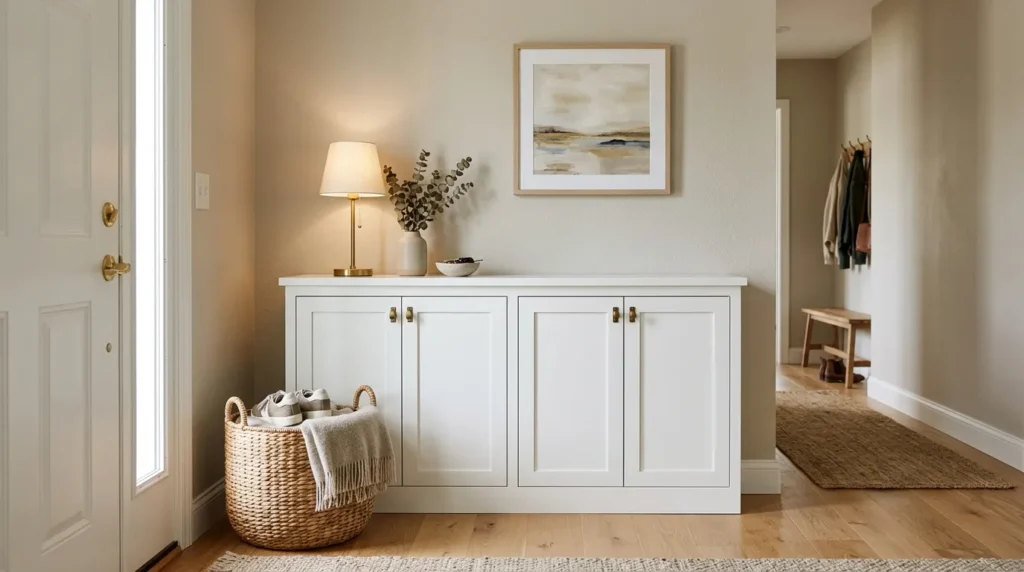
- Hides clutter behind clean doors.
- Works for shoes, bags, cleaning supplies, and seasonal accessories.
- Creates a calmer look than open shelving.
- Useful for families, renters, and busy entryways.
A closed storage cabinet is ideal when the entryway needs to look neat fast. Open shelving can be beautiful, but it also shows every shoe, bag, and random item. A cabinet with doors hides the mess while giving the entry a clean furniture look. Choose a slim cabinet if space is narrow or a taller cabinet if you have vertical wall room. Inside, use bins, dividers, or labeled boxes so the hidden storage stays functional instead of becoming a crowded catchall.
The finished result feels calm, especially in homes where the front door opens into the main living space. That’s why many designers recommend closed storage for busy households; it reduces visual noise immediately. Style the top with one lamp, one tray, and one decorative object to keep the surface intentional. If the cabinet is tall, add hooks or a mirror nearby to complete the entry system. This option works beautifully for people who want a clean look without having to display every daily essential.
- Minimal Coat Stand
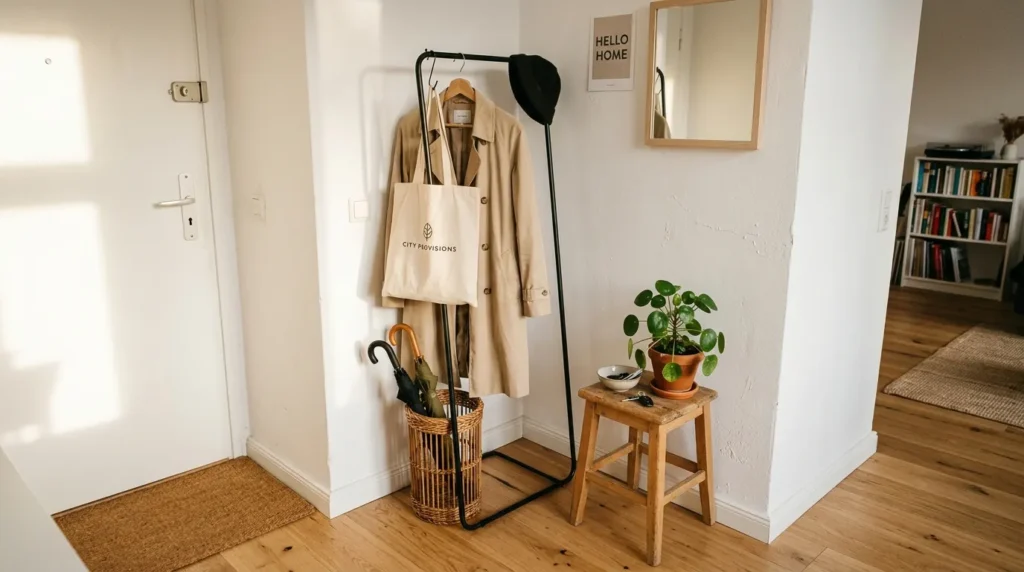
- Adds flexible storage without permanent wall installation.
- Works well for renters, apartments, and temporary layouts.
- Holds jackets, hats, bags, scarves, and umbrellas.
- Can be moved when the entry layout changes.
A minimal coat stand is a smart choice when you need storage but cannot drill into the walls. This is especially helpful for renters, dorm-style apartments, or homes where the entry layout may change. Choose a stand with a sturdy base, simple lines, and enough hooks for daily items. Wood feels warm, black metal feels modern, and white looks clean in a light entry. Place it in a corner or beside a cabinet so it feels intentional instead of floating awkwardly.
The finished look gives the entry function without needing built-in storage. I’ve noticed coat stands work best when they are edited carefully, because too many items can make them look messy. Keep only current-season jackets, one bag, or a couple of hats on display. Add a small umbrella basket nearby if needed. If the entry is very compact, choose a stand with a narrow base and vertical shape. It brings flexibility, function, and style without a permanent commitment.
- Styled Key Station
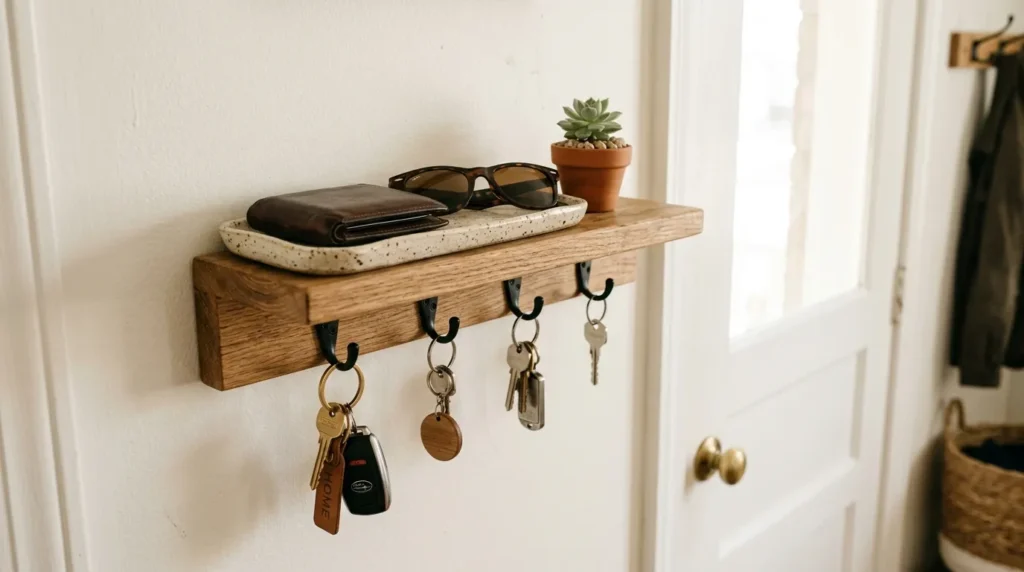
- Keeps keys, wallets, sunglasses, and mail easy to find.
- Works with trays, wall pockets, hooks, bowls, and small shelves.
- Helps reduce clutter on counters and dining tables.
- Makes leaving the house faster and less stressful.
A styled key station may be small, but it can make daily routines feel much smoother. The entryway often becomes the place where keys, wallets, mail, sunglasses, and headphones disappear. A dedicated station solves that problem with one clear landing spot. Use a small tray on a console, a wall-mounted pocket, a shallow bowl, or tiny hooks near the door. Keep it close enough to use naturally, but not so crowded that it becomes another pile of clutter.
The finished setup feels practical and polished because every small essential has a clear home. In my experience, key stations work best when they are paired with a simple habit: empty the tray once or twice a week. Keep only daily items there, and move old receipts, mail, or loose change elsewhere. A ceramic tray feels elegant, a wooden bowl feels warm, and black metal hooks feel modern. This little detail can make the whole entry feel more organized and peaceful.
Final Styling Tips
A stylish entryway does not need to be large, expensive, or filled with furniture. It needs a clear purpose. Start by deciding what your doorway actually needs to handle every day. Shoes, coats, keys, mail, bags, pet supplies, school items, and umbrellas all need different storage solutions. Once you know the problem, the decorating becomes much easier.
For a clean IKEA-inspired look, focus on simple furniture shapes, hidden storage, light colors, natural textures, and easy routines. A narrow cabinet, wall hooks, baskets, mirror, and washable runner can create a complete system even in a small apartment entry. Keep surfaces edited and repeat two or three colors so everything feels connected.
The best ikea entryway setup should make leaving and coming home easier. It should look calm, but it should also work hard in the background. When every item has a place, the whole home feels more organized from the moment you walk in.