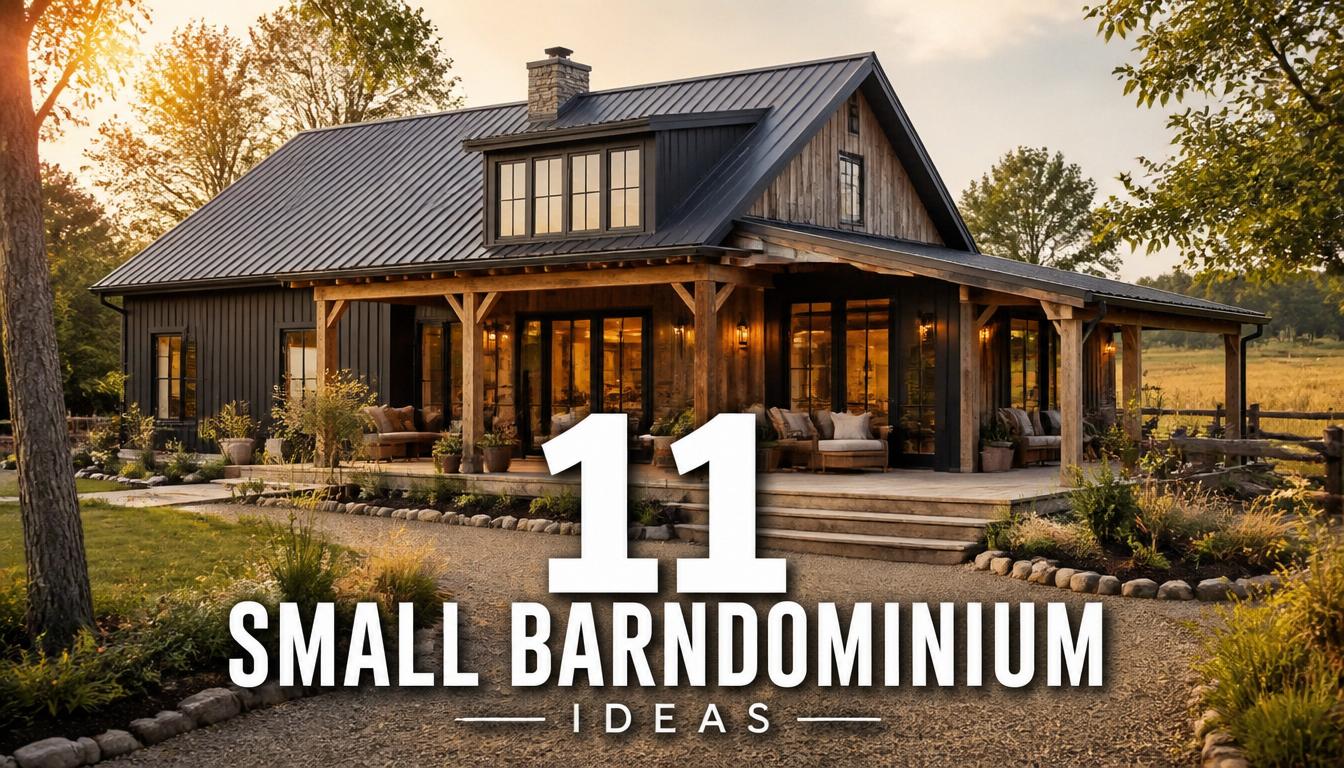
11 Small Barndominium Ideas
A barndominium can feel spacious, warm, and full of character even when the footprint is compact. Many USA homeowners love barndo living because it blends rustic charm, open layouts, metal or wood exterior details, and flexible interiors that can feel both practical and beautiful. But when the space is limited, every design choice matters more. The layout, storage, ceiling height, lighting, furniture scale, and outdoor connection all need to work together.
A small barndominium should never feel cramped or unfinished. With the right ideas, it can feel airy, cozy, efficient, and stylish at the same time. Think vaulted ceilings, sliding barn doors, built-in storage, open kitchen layouts, loft sleeping areas, covered porches, and warm wood accents that make the home feel intentional.
These 11 ideas are designed for Pinterest-friendly inspiration and real-life planning. Each one focuses on comfort, storage, visual space, and practical design so a compact barndo can feel beautiful, livable, and full of personality.
- Open Living Layout
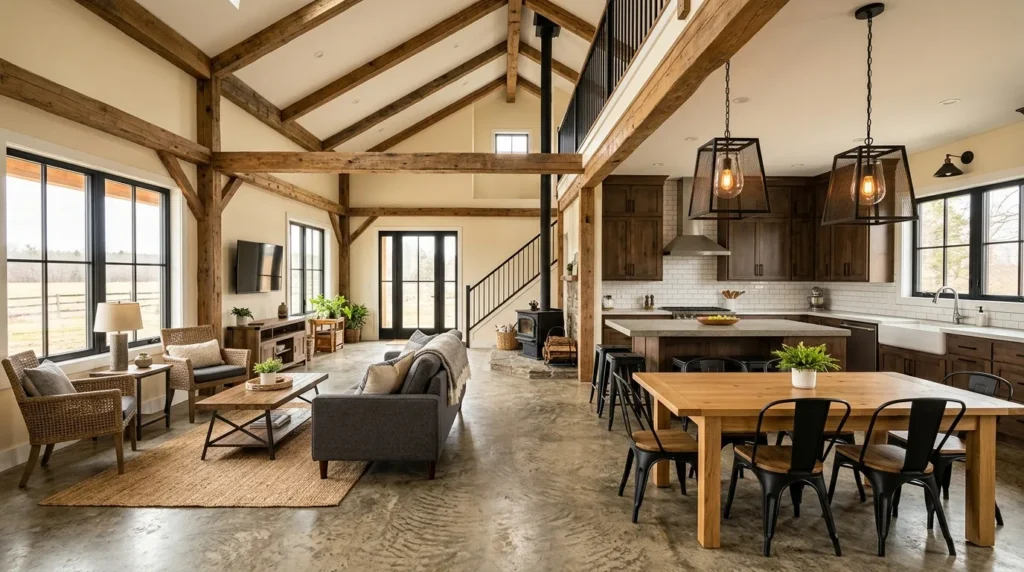
- Creates a spacious feeling without adding square footage.
- Works well with combined kitchen, dining, and living zones.
- Uses rugs, lighting, furniture placement, and ceiling beams for definition.
- Helps the home feel bright, connected, and easy to move through.
An open living layout can make a compact barndo feel much larger than it really is. This idea works because removing unnecessary walls allows light, movement, and conversation to flow across the main living area. Instead of separating the kitchen, dining, and living room into tight rooms, let them share one open zone. Use a sofa, rug, island, or dining table to create gentle boundaries. Exposed beams, pendant lights, and ceiling fans can help define each area without closing the space visually.
The finished layout feels practical for everyday life because one central room can handle cooking, relaxing, entertaining, and family time. In my experience, open plans work best when furniture is scaled carefully, not oversized. Choose a comfortable sofa, a narrow dining table, and stools that tuck under the island. Keep walkways clear between zones so the space feels breathable. This approach makes a smaller home feel flexible, welcoming, and easy to live in without sacrificing comfort or style.
- Loft Sleeping Zone
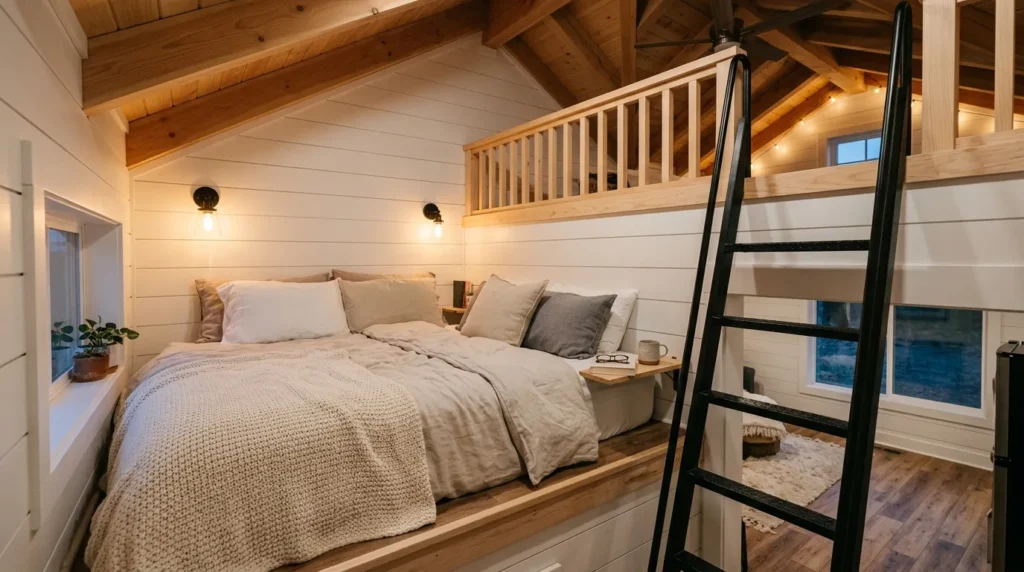
- Uses vertical space for sleeping, guests, or storage.
- Works well under vaulted ceilings or tall rooflines.
- Creates separation without needing a full extra room.
- Can include ladders, railings, built-ins, and cozy lighting.
A loft sleeping zone is a smart way to use height when floor space is limited. Many barndo-style homes have tall ceilings or rooflines, which makes vertical planning especially useful. A loft can serve as a bedroom, guest area, reading nook, or bonus storage space depending on your needs. The key is keeping the design safe and comfortable with sturdy stairs or a secure ladder, proper railing, and enough headroom. Soft lighting and warm wood finishes can make the loft feel cozy instead of cramped.
The transformation adds function without expanding the footprint, which is why lofts are so helpful in compact layouts. I’ve noticed loft areas feel best when they are visually light, with simple railings and low-profile furniture. Use built-in drawers under stairs, wall sconces instead of table lamps, and neutral bedding to keep the area calm. If the loft is used for sleeping, add ventilation and privacy curtains where possible. This creates a practical retreat that feels charming, useful, and intentionally designed.
- Sliding Barn Doors
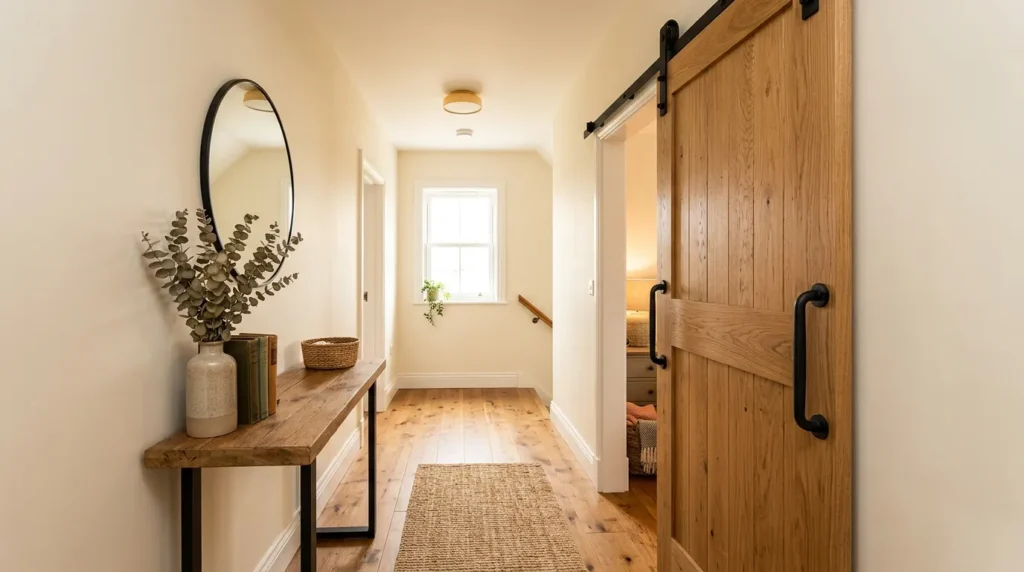
- Saves swing space compared to traditional doors.
- Adds rustic character while keeping rooms flexible.
- Works for bathrooms, pantries, closets, laundry rooms, and bedrooms.
- Uses wood, black hardware, frosted glass, or painted panels.
Sliding barn doors are both decorative and practical in a smaller home. Traditional doors need room to swing open, which can waste valuable floor space in hallways, bedrooms, bathrooms, and closets. A sliding door moves along the wall, giving the room more usable space while adding instant barndo character. Choose natural wood for warmth, painted panels for a clean look, or frosted glass if you want light to pass through while still giving privacy.
The finished effect feels stylish and space-saving at the same time. That’s why many designers recommend sliding doors in compact floor plans where every inch matters. Make sure there is enough clear wall space beside the doorway for the door to slide fully open. Use quality hardware so the door moves smoothly and feels sturdy. For bathrooms or bedrooms, choose a design with better privacy and proper closure. This small architectural detail can make the whole home feel more custom.
- Built-In Storage
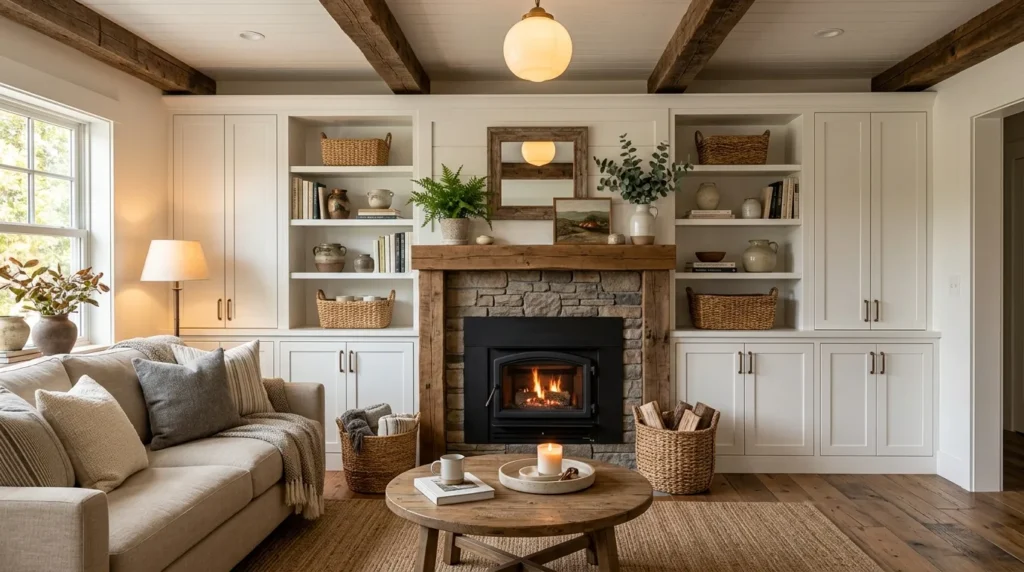
- Reduces clutter without adding bulky furniture.
- Works under stairs, around beds, beside fireplaces, or near entryways.
- Uses drawers, cabinets, benches, shelves, and hidden compartments.
- Makes small rooms feel cleaner, calmer, and more functional.
Built-in storage can make a compact barndo feel organized from the beginning. Freestanding furniture often takes up more room than expected, especially in narrow bedrooms, entryways, and living areas. Built-ins use awkward spaces more efficiently, such as under stairs, beside windows, around beds, or along short hallway walls. A built-in bench with drawers, a wall of cabinets, or open shelving around a fireplace can create storage that looks like part of the architecture instead of extra clutter.
The result feels cleaner because everyday items have a place to disappear. In my experience, built-ins work best when they combine closed storage with a few open display areas. Use cabinets for practical items like shoes, cleaning supplies, linens, and tools, then leave shelves for baskets, books, plants, or decor. Paint built-ins the same color as the wall for a seamless look, or use warm wood for contrast. This creates a practical foundation that keeps the home feeling calm and polished.
- Covered Front Porch
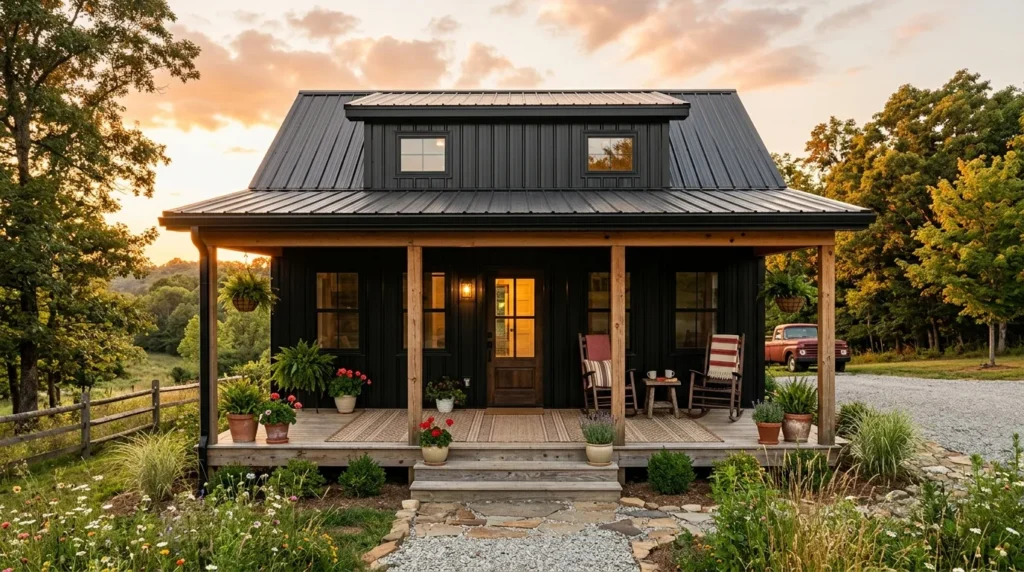
- Extends living space without changing the interior footprint.
- Adds curb appeal, shade, and a welcoming entrance.
- Works with rocking chairs, benches, planters, and outdoor lighting.
- Helps connect the home to land, views, and outdoor routines.
A covered front porch can make a smaller barndo feel much more generous. Even if the interior is compact, an outdoor sitting area gives the home extra living space for morning coffee, evening conversations, or quiet views. A simple roof extension, wood posts, metal railings, and warm lighting can create a welcoming first impression. Choose narrow furniture if the porch is shallow, such as slim rocking chairs, a small bench, or two compact outdoor chairs with a shared table.
The finished porch adds charm, function, and curb appeal at the same time. I’ve seen this work well in many rural and suburban homes because it softens the metal or simple exterior and makes the entry feel more personal. Add planters, lanterns, an outdoor rug, and a seasonal wreath for warmth. Keep the walkway open and choose weather-friendly materials like treated wood, powder-coated metal, and washable cushions. The porch becomes an outdoor room that supports everyday living beautifully.
- Warm Wood Accents
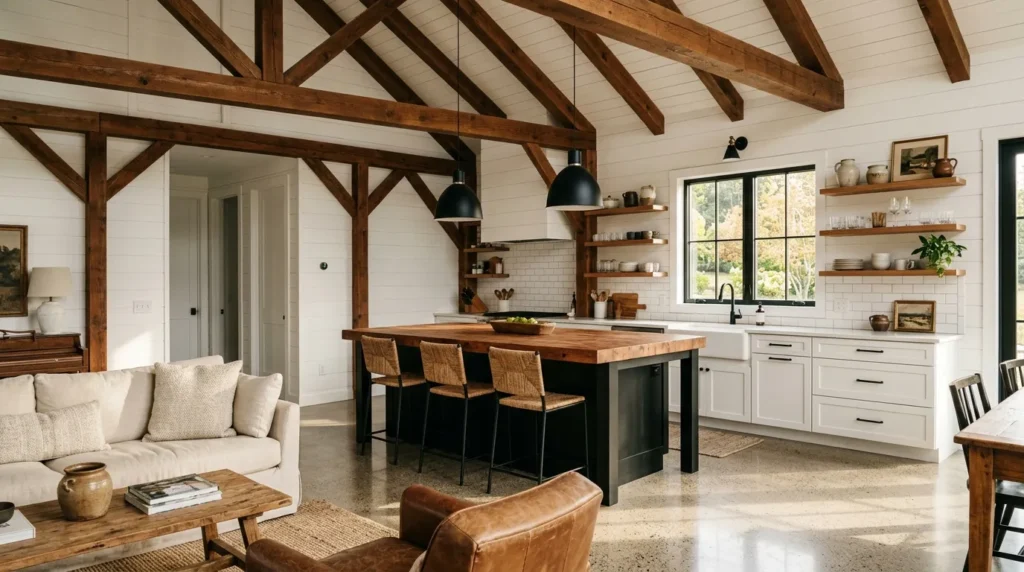
- Adds texture and comfort to metal or neutral interiors.
- Works with beams, trim, shelves, doors, floors, and furniture.
- Balances modern finishes with rustic character.
- Makes the space feel cozy without adding visual clutter.
Warm wood accents are essential when a barndo interior starts to feel too plain or industrial. Metal siding, concrete floors, white walls, and open spaces can look beautiful, but they need natural texture to feel inviting. Wood beams, floating shelves, butcher block counters, interior doors, stair treads, or window trim can add warmth without overwhelming the design. Choose tones that match the mood, such as light oak for airy spaces, walnut for richness, or reclaimed wood for rustic personality.
The transformation makes the home feel grounded and comfortable. In my experience, wood works best when repeated in several small places instead of appearing as one random feature. For example, connect ceiling beams with wood shelves, a dining table, or a bathroom vanity. Keep the stain consistent so the room feels intentional. If the space is small, avoid very dark wood everywhere because it can feel heavy. Balanced wood details make the home feel cozy, natural, and visually connected.
- Compact Kitchen Island
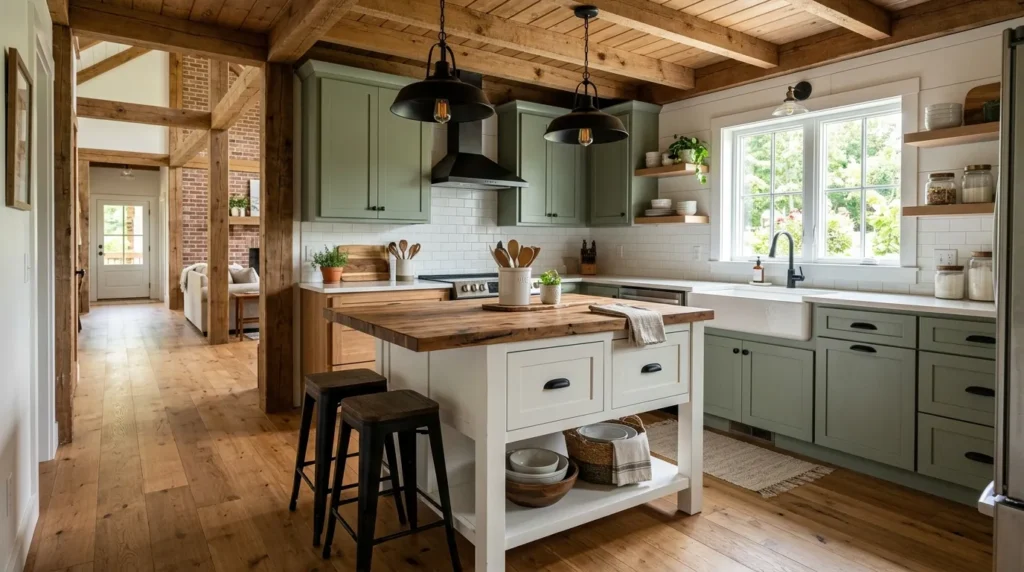
- Adds prep space, seating, and storage in one feature.
- Works with open kitchens and shared living layouts.
- Uses drawers, stools, pendant lights, and durable countertops.
- Helps define the kitchen without closing it off.
A compact kitchen island can become the hardest-working feature in a small barndo. It gives you more counter space, storage, seating, and visual structure without adding walls. Choose an island that fits the room with enough clearance on all sides so cooking and walking still feel easy. Drawers, shelves, and cabinets underneath can hold cookware, pantry items, or small appliances. A durable countertop like butcher block, quartz, or sealed concrete can handle daily use while still looking stylish.
The finished kitchen feels more functional because the island becomes a natural gathering point. I’ve noticed smaller islands work best when stools tuck fully underneath, keeping walkways open. Use two or three pendant lights above the island to create a visual anchor and warm glow. If space is extremely tight, consider a rolling island or narrow worktable instead. This idea helps the kitchen feel complete, social, and practical without making the open layout feel crowded or difficult to move through.
- Vaulted Ceiling Focus
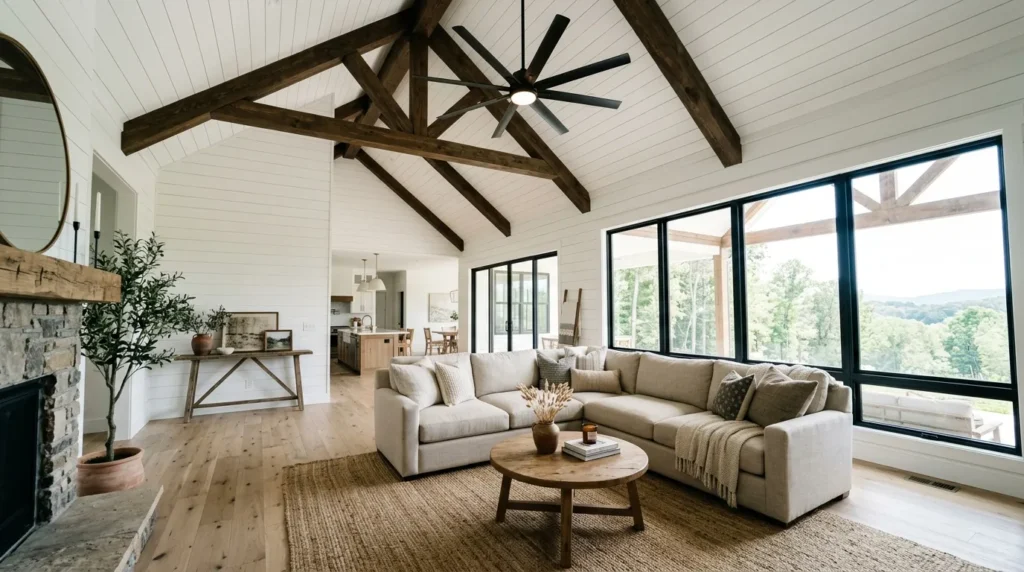
- Makes compact rooms feel taller, brighter, and more open.
- Works with exposed beams, skylights, fans, and statement lighting.
- Adds architectural interest without using floor space.
- Helps the home feel larger without expanding the footprint.
A vaulted ceiling can completely change how a smaller barndo feels inside. Height creates visual breathing room, making the home feel more spacious even when the square footage is modest. Exposed beams, tongue-and-groove paneling, skylights, or a large ceiling fan can turn the ceiling into a design feature. Keep the walls lighter if the ceiling has heavy wood, or use natural beams against white paint for a balanced rustic-modern look. Good lighting is important so the height feels warm, not empty.
The result feels airy and impressive without adding more rooms. That’s why many designers recommend emphasizing vertical space in compact homes; it draws the eye upward and reduces the sense of tightness. Use tall curtains, vertical artwork, or high windows to enhance the effect. Avoid oversized chandeliers unless the room can handle the scale. A well-designed vaulted ceiling makes the living area feel open, custom, and much more luxurious than the footprint might suggest.
- Mudroom Entry Nook
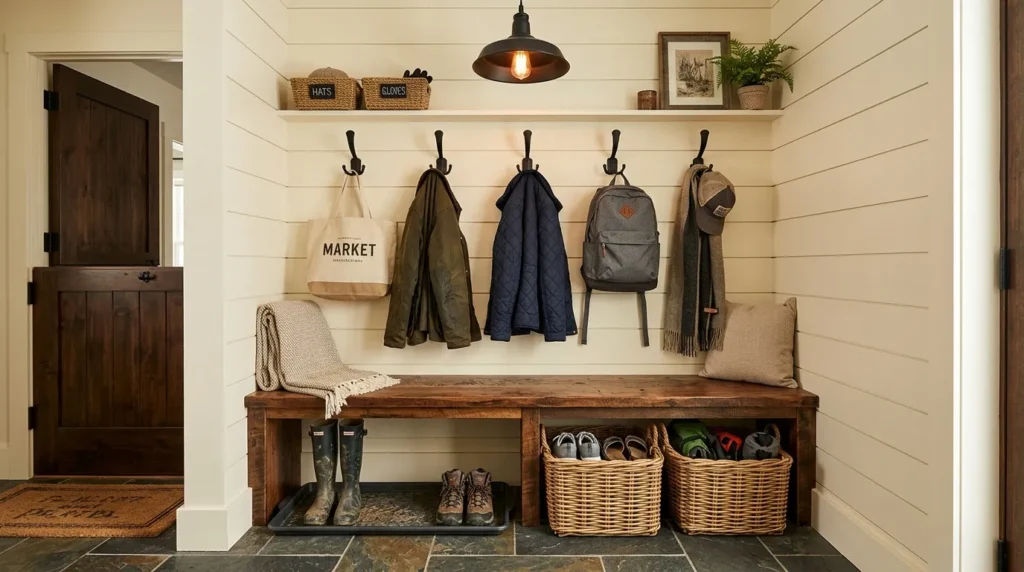
- Keeps shoes, coats, bags, and outdoor gear organized.
- Works near front, side, or garage-style entries.
- Uses hooks, benches, cubbies, baskets, and washable flooring.
- Supports rural, family, pet, and outdoor lifestyles.
A mudroom entry nook is extremely useful in a barndo, especially if the home sits on land or has outdoor activities nearby. Even a small wall near the door can become a hardworking drop zone with hooks, a bench, baskets, and shoe storage. Use washable flooring, durable paint, and easy-clean materials because this area handles dirt, rain, boots, coats, pets, and bags. A narrow bench with cubbies underneath can make the entry feel organized without needing a separate room.
The finished nook keeps mess from spreading into the living space. In my experience, this is one of the most practical upgrades for families, pet owners, and anyone who spends time outside. Assign baskets by person or category so daily items are easy to find. Add wall hooks at different heights for adults and kids. If the space is visible from the main room, keep colors neutral and storage baskets matching. The result feels tidy, durable, and naturally connected to real barndo living.
- Light Color Palette
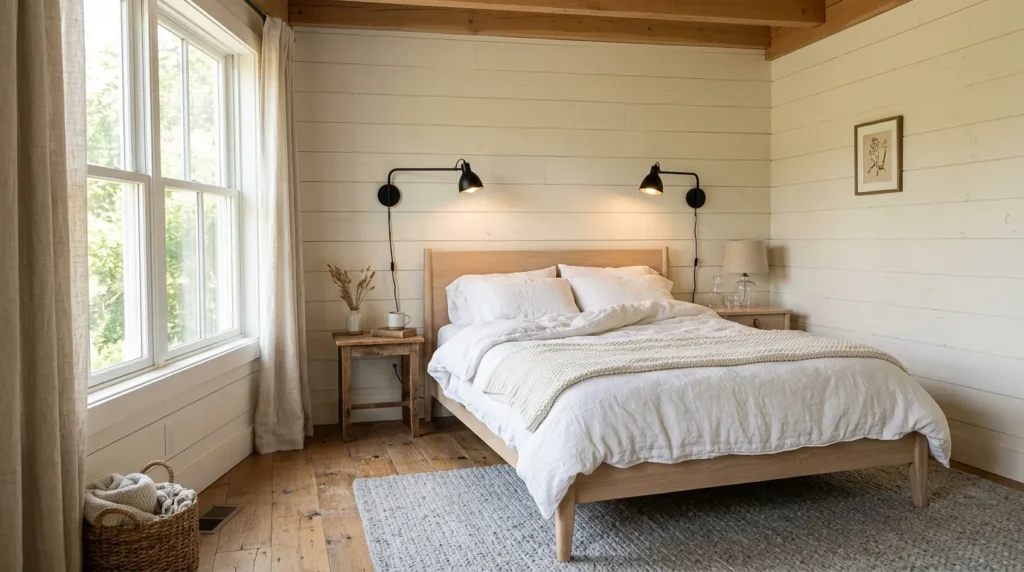
- Makes rooms feel larger, brighter, and more open.
- Works with white, cream, greige, soft gray, warm beige, and pale wood.
- Helps balance darker metal, rustic wood, and concrete finishes.
- Creates a calm base for furniture, rugs, and decor.
A light color palette can make a compact home feel more open and peaceful. Soft wall colors reflect natural light, which is especially helpful in barndo interiors with deep porches, metal exteriors, or limited windows. White, cream, warm beige, greige, soft gray, and pale wood tones create a clean backdrop that visually expands the room. This does not mean the home has to feel plain. Texture from rugs, wood, woven baskets, linen curtains, and black hardware can add contrast and depth.
The finished space feels brighter and easier to decorate because the base stays calm. I’ve noticed light palettes work best when they include warm undertones, especially in rustic homes where too much stark white can feel cold. Add black accents for definition, brass for warmth, or sage green for softness. Use darker tones in small doses, such as light fixtures, cabinet pulls, or furniture legs. This approach keeps the home airy while still giving it character and visual balance.
- Outdoor Living Extension
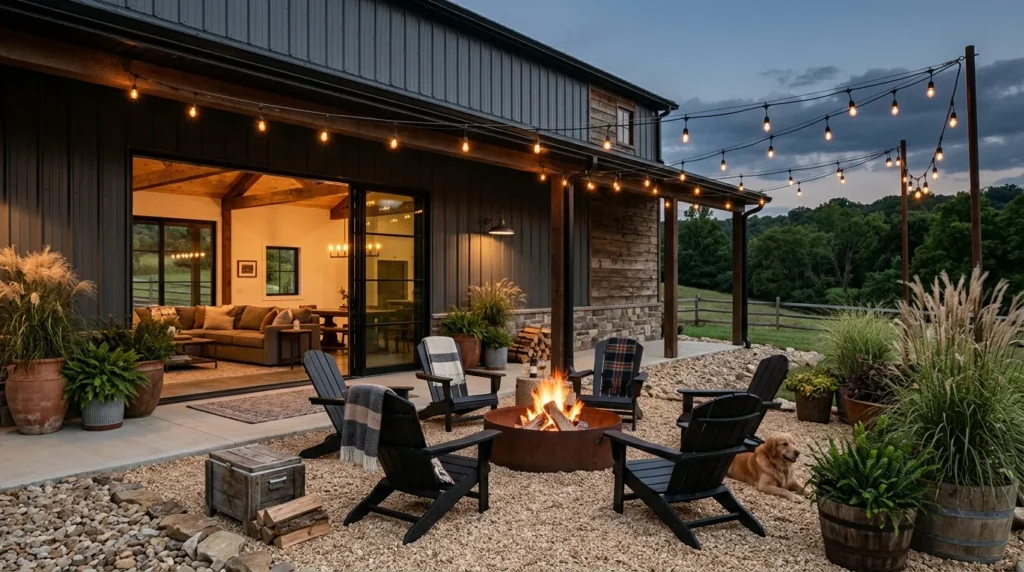
- Adds usable space for relaxing, dining, and entertaining.
- Works with patios, fire pits, gravel areas, decks, and pergolas.
- Helps compact interiors feel larger through indoor-outdoor flow.
- Uses outdoor rugs, string lights, seating, planters, and durable materials.
An outdoor living extension can make a smaller home feel much more flexible. When the interior footprint is limited, a patio, deck, gravel seating area, or covered side porch gives you another place to relax and entertain. Use outdoor furniture scaled to the space, such as a loveseat, two chairs, a bistro table, or a fire pit circle. String lights, planters, and an outdoor rug can make the area feel like a true room rather than an empty slab.
The final setup supports everyday living, especially in areas with mild evenings or scenic land views. A small barndominium can feel twice as useful when the outdoor space is planned with the same care as the interior. Choose weather-resistant materials, easy-clean cushions, and lighting that makes the area usable after sunset. In my experience, even a simple gravel patio with chairs and a fire bowl can create a beautiful gathering place. This extension adds comfort, lifestyle value, and visual charm.
Final Styling Tips
A compact barndo works best when the design feels intentional from the start. Focus on layout first, then storage, lighting, materials, and outdoor connection. Open plans, lofts, porches, built-ins, and multi-use furniture can help the home feel larger without wasting space. Every piece should have a reason, whether it adds comfort, storage, beauty, or daily function.
For a polished look, repeat materials throughout the home. Wood beams can connect to shelves, doors, or furniture. Black metal hardware can repeat in lighting, railings, and cabinet pulls. Soft neutrals can carry through walls, rugs, bedding, and upholstery. This consistency makes the home feel cohesive instead of pieced together.
The best small barndominium design should feel warm, practical, and easy to live in. With thoughtful planning, even a smaller footprint can feel open, cozy, and beautifully connected to the land around it.