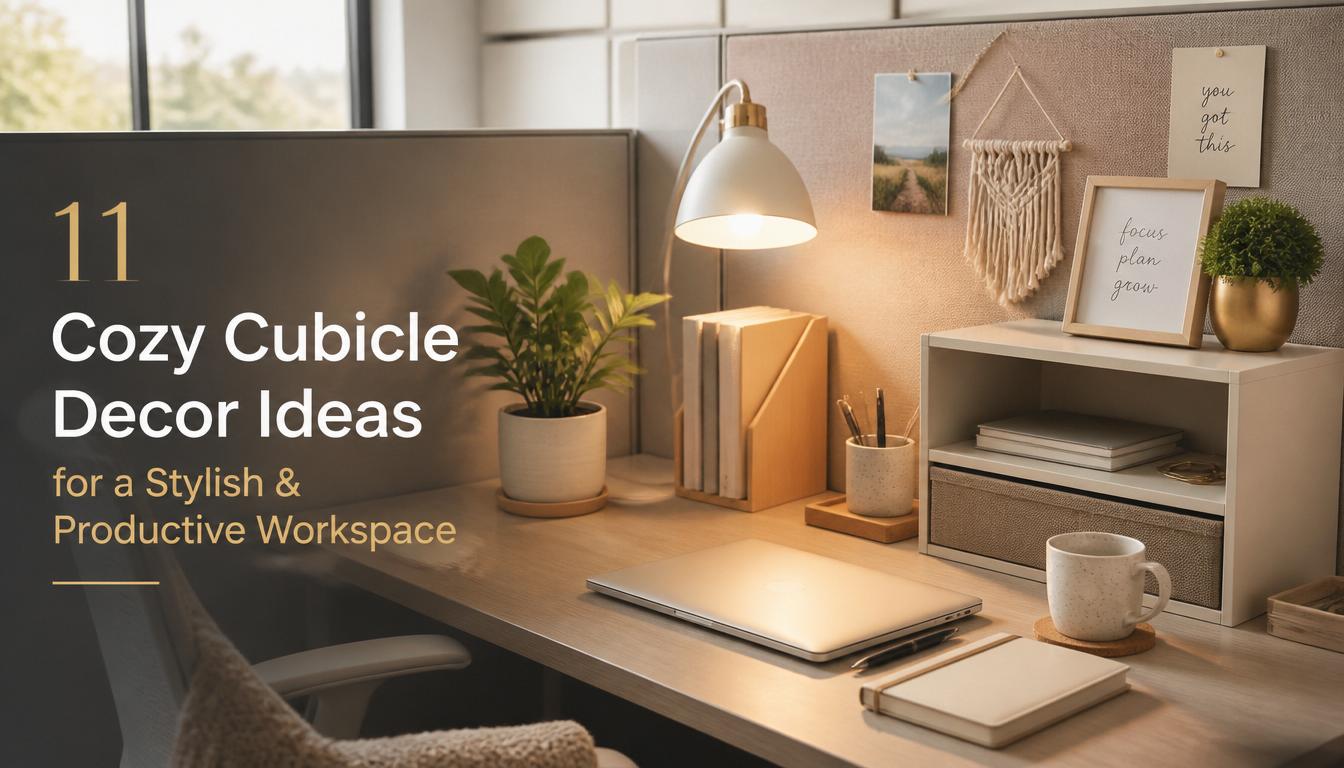
11 Decor Ideas for a Cozy Cubicle Ideas
A cubicle can feel cold when it only has gray panels, harsh lighting, office supplies, and a computer screen. But with the right details, even a small workstation can feel calmer, warmer, and more personal without looking unprofessional. Many office workers across the USA spend long hours at their desks, so the space around them matters. A cozy cubicle can help make workdays feel less draining, more organized, and more visually pleasant.
The best cubicle updates are small, practical, and easy to remove. You do not need to bring in oversized decorations or anything that breaks office rules. A soft desk mat, warm lamp, tidy supply cup, small plant, framed photo, pinboard, chair layer, or drawer organizer can change the whole mood. These decor ideas focus on comfort, focus, and style while keeping the workspace neat enough for a professional office.
Before decorating, check your workplace guidelines. Some offices limit lighting, scents, wall attachments, or personal items. The goal is to create a cozy, polished cubicle that helps you feel more settled during the day without creating clutter or distracting coworkers.
1. Soft Desk Mat
- Adds warmth and texture to a plain desktop
- Helps define your keyboard, mouse, and writing area
- Works with leather, felt, cork, or washable fabric
- Makes the cubicle feel cleaner and more intentional
- Protects the desk surface from daily wear
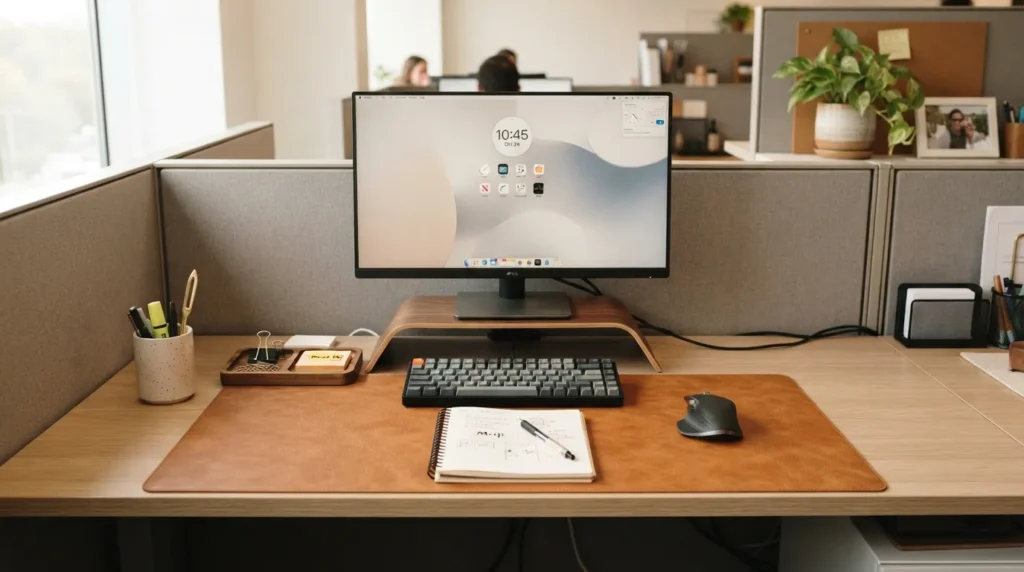
A soft desk mat can make a cubicle feel more finished almost immediately. Most office desks are hard, cold, and visually plain, so adding one large surface layer creates warmth without taking up extra space. Choose a mat in leather, vegan leather, felt, cork, or washable fabric depending on your office style. In my experience, neutral shades like taupe, camel, charcoal, cream, olive, or soft brown look more polished than loud prints. The mat quietly frames your laptop, keyboard, mouse, notebook, and coffee cup.
The best desk mat should support daily work, not just look pretty. Make sure it is large enough for smooth mouse movement and sturdy enough to stay flat during typing. If you eat lunch at your desk, choose a material that wipes clean easily. Pair it with a matching pen cup, small tray, or notebook for a pulled-together look. This simple update makes the workspace feel warmer, softer, and more personal while keeping the surface organized and professional for meetings, calls, and everyday tasks.
2. Warm Task Lamp

- Softens harsh overhead office lighting
- Adds a cozy glow during early mornings or late afternoons
- Works with small LED lamps, clip lights, or rechargeable lamps
- Helps reduce the cold feeling of gray cubicle panels
- Creates a more comfortable focus zone
A warm task lamp can change the whole mood of a cubicle because office lighting is often too bright and flat. A small lamp gives your desk a softer glow, especially during winter mornings, cloudy days, or late work hours. Choose a compact LED lamp with a warm bulb, adjustable arm, or dimmer if your office allows it. That’s why many workspace designers recommend layered lighting, even in small offices. It helps your area feel less sterile and more comfortable without needing major changes.
Keep the lamp practical and safe for a shared office setting. Pick one with a small base, stable shape, and simple cord placement so it does not crowd your work area. Warm white light around 2700K to 3000K usually feels more pleasant than cool blue light. If outlets are limited, a rechargeable lamp can work well. Place it near your notebook, keyboard, or reading area instead of directly in your eyes. The result is a cubicle that feels calmer, more focused, and easier to work in.
3. Mini Plant Corner
- Adds life, color, and softness to the workspace
- Works with real or high-quality faux plants
- Helps break up gray, beige, or white office surfaces
- Fits on shelves, desktops, file cabinets, or window ledges
- Makes the space feel fresher without clutter
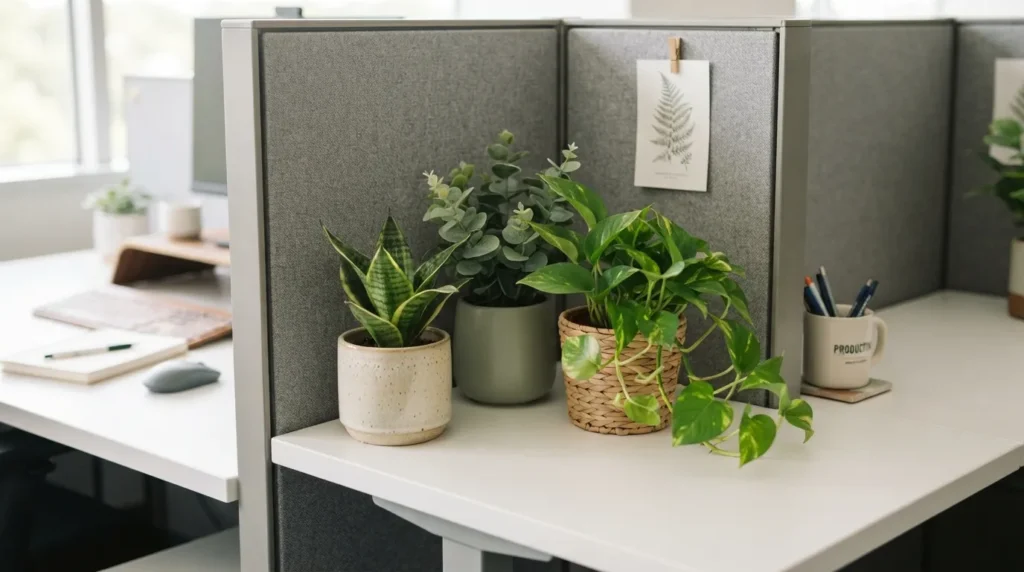
A small plant can make a cubicle feel more alive without taking over the desk. Plants soften office lines, add natural color, and bring a little outdoor feeling into a space that may not have much personality. Snake plants, pothos, ZZ plants, succulents, and small philodendrons are popular because they can handle lower light better than many delicate plants. I’ve noticed that one healthy plant in a simple pot often looks better than several tiny plants scattered everywhere.
Choose the plant based on your office conditions, not only the photo you like online. If your cubicle has no natural light, use a realistic faux plant in a ceramic, stone, or woven-look planter. If you use a real plant, place a small saucer underneath to protect office furniture from water marks. Keep the pot color connected to your desk accessories for a cleaner look. A mini plant corner adds freshness, calm, and visual warmth while staying professional enough for a shared workplace.
4. Photo Grid
- Makes the cubicle feel personal without looking messy
- Works with family photos, travel prints, quotes, or small art
- Adds color to plain cubicle walls
- Can be arranged with clips, pins, frames, or removable strips
- Keeps meaningful memories in one organized display
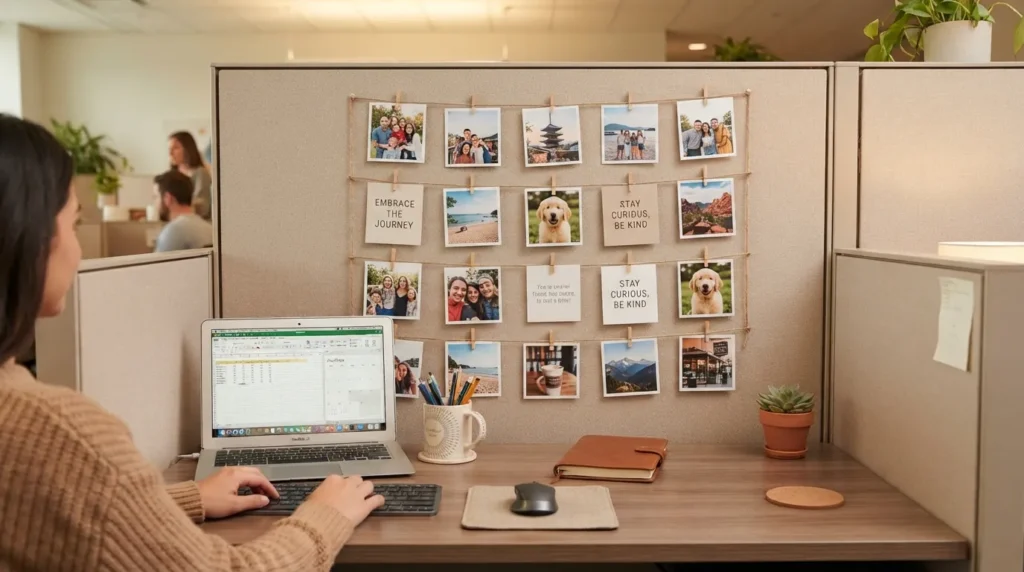
A photo grid is a thoughtful way to personalize a cubicle while keeping it neat. Instead of taping random photos around the workspace, arrange a small set of images in a clean grid on one panel or board. Use family pictures, pet photos, travel snapshots, postcards, small art prints, or calming quotes. In my experience, the display feels more polished when the photo sizes match and the colors share a similar mood. Black-and-white prints, warm neutrals, or soft pastels can look especially tidy.
Keep the grid small enough that it feels intentional, not overwhelming. Four, six, or nine images are usually enough for a cozy personal touch. Use removable clips, push pins, magnetic strips, or a small cork board depending on your cubicle surface and office rules. Leave space between each photo so the arrangement can breathe. This setup gives you something personal to look at during long workdays while keeping the cubicle clean, organized, and appropriate for a professional environment.
5. Chair Layer
- Adds comfort to a standard office chair
- Works with lumbar pillows, seat cushions, or soft throws
- Makes long desk hours feel easier
- Adds color and texture without using desk space
- Helps the workstation feel warmer and more personal
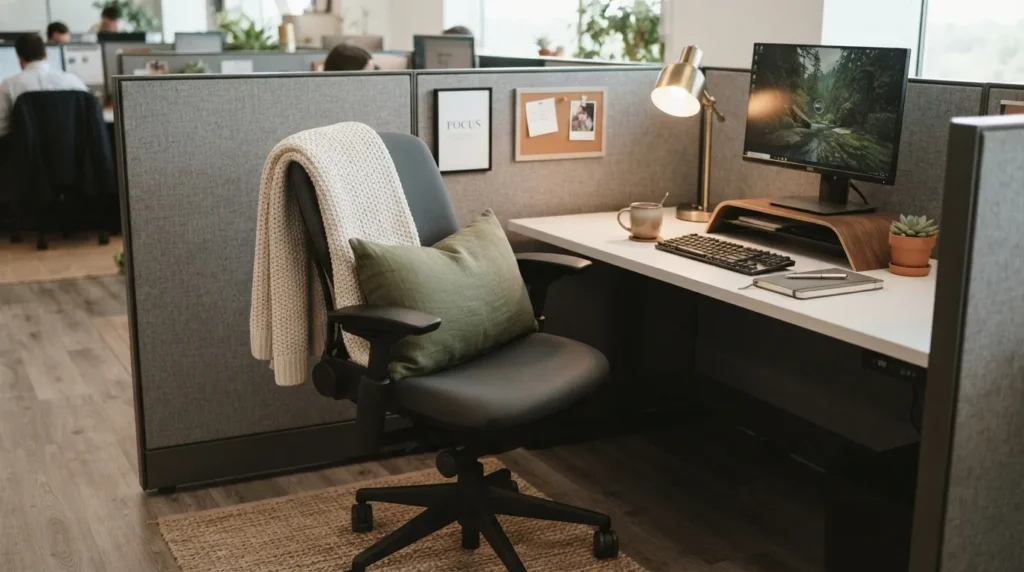
A cozy chair layer can make a major difference when your office chair feels plain or uncomfortable. Many cubicle chairs are practical but not inviting, so a supportive lumbar pillow, seat cushion, or soft throw can improve comfort and style. Choose fabrics that look professional, such as boucle, linen-look cotton, knit, velvet, or smooth woven material. In my experience, one good pillow looks better than several small ones because it supports your back and keeps the chair from feeling cluttered.
The chair layer should never interfere with posture, movement, or office safety. Pick a cushion that stays in place and does not make the seat too high for your desk. If you add a throw, drape it neatly over the back instead of letting it fall onto the floor. Soft neutrals, muted green, rust, navy, or gray can add warmth without looking too casual. This small comfort upgrade makes the cubicle feel more welcoming while helping your body feel better through long work sessions.
6. Supply Cups
- Turns basic office tools into a styled desktop moment
- Keeps pens, scissors, markers, and clips easy to reach
- Works with ceramic cups, metal holders, acrylic bins, or wood organizers
- Reduces clutter in drawers and on the desktop
- Adds personality without taking much space
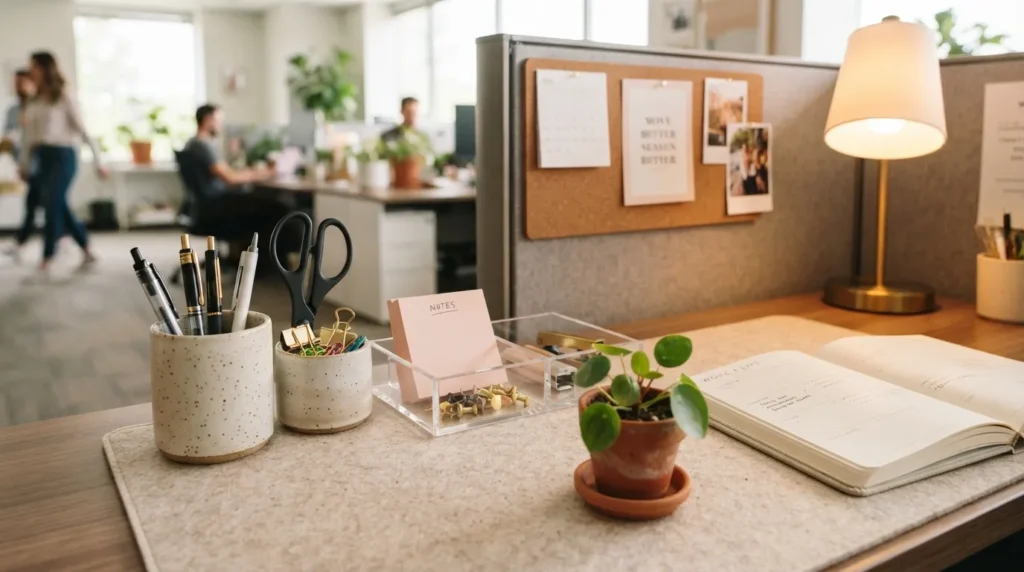
Supply cups can make a cubicle look organized instead of scattered. Pens, highlighters, scissors, sticky notes, paper clips, and markers often end up loose across the desk or buried in drawers. A few coordinated holders can keep those essentials visible and easy to grab. Ceramic cups feel warm, metal holders look clean, acrylic organizers feel modern, and wood pieces add natural texture. That’s why many organizers recommend grouping small items by purpose instead of storing everything in one crowded container.
Keep desktop supplies edited so the area does not feel busy. Store only what you use every day on the desk, then move backups into a drawer or cabinet. Use one cup for pens, one small tray for clips, and one low container for sticky notes if needed. Match the finishes to your desk mat, lamp, or file organizer for a cohesive look. This simple system improves daily workflow and gives your cubicle a polished, Pinterest-friendly feel without adding unnecessary decoration.
7. Pinboard Wall
- Adds a practical focal point above or beside the desk
- Works with cork, fabric boards, grid panels, or felt boards
- Keeps notes, calendars, reminders, and visuals organized
- Adds texture to plain cubicle panels
- Helps separate useful items from visual clutter
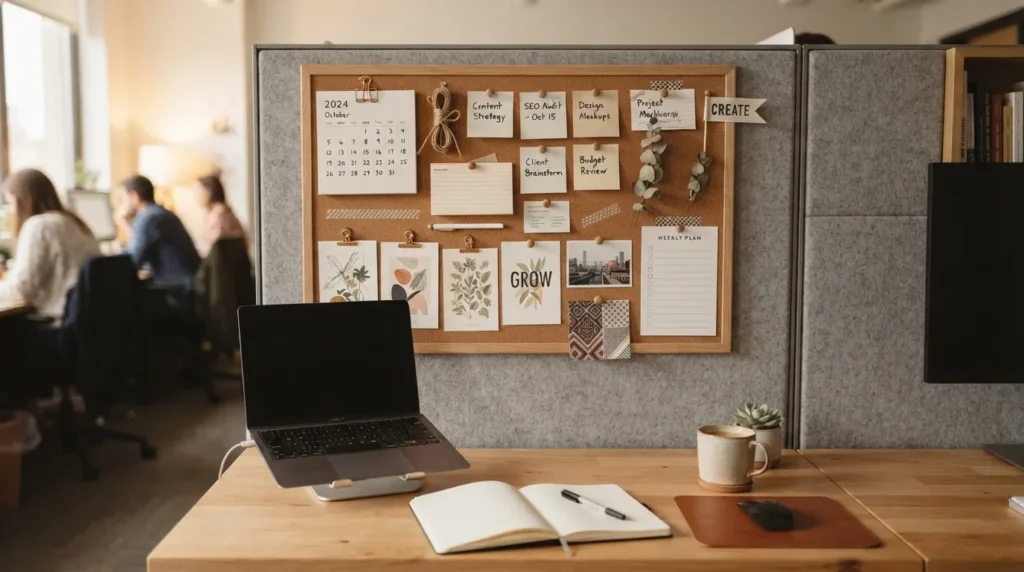
A pinboard wall gives your cubicle structure because it creates one clear place for notes, reminders, and inspiration. Instead of covering several panels with loose paper, use a cork board, fabric board, felt board, or wire grid to hold everything neatly. This can include a small calendar, project reminders, color swatches, motivational cards, or personal prints. I’ve seen this work well in many office spaces because it keeps information visible while preventing the cubicle from looking chaotic.
Style the board in zones so it stays useful during busy weeks. Place urgent reminders near eye level, keep decorative cards to one side, and leave space for changing notes. Use matching push pins, small clips, or neutral sticky notes to make the board feel cleaner. If your office does not allow pins, choose a magnetic board or removable adhesive grid. A well-styled pinboard wall adds function, texture, and personality while helping you stay organized through meetings, deadlines, and daily tasks.
8. Drawer Reset
- Keeps personal items, snacks, and supplies out of sight
- Makes the desktop feel cleaner and calmer
- Works with drawer trays, bins, pouches, and dividers
- Helps separate work tools from comfort items
- Makes busy mornings and quick cleanup easier
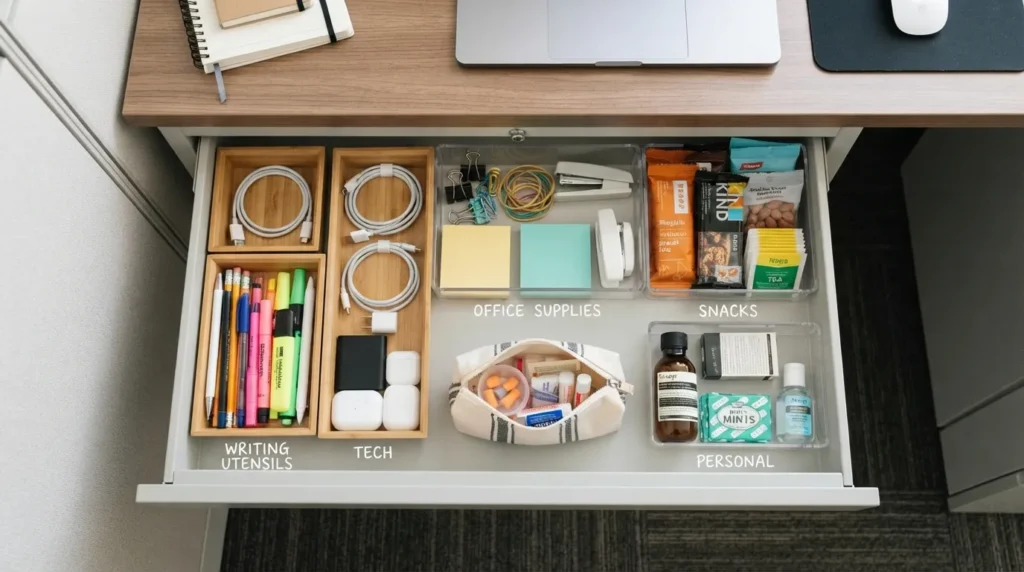
A tidy drawer can make the entire cubicle feel more peaceful because hidden clutter still affects how the workspace functions. When drawers are full of random receipts, tangled cords, loose snacks, and old pens, daily work feels more frustrating. Use small bins, drawer dividers, zipper pouches, or trays to create zones for office supplies, tech items, personal care, and snacks. In my experience, the best drawer setup includes only what you actually use at work, not everything you might need someday.
Start by emptying the drawer completely and removing expired snacks, dried pens, duplicate tools, and unnecessary papers. Place small daily items near the front and less-used supplies toward the back. Keep one pouch for personal items like lip balm, hand cream, medicine, or hair ties. Use another space for chargers, earbuds, and cords. A clean drawer makes it easier to reset your desk before leaving, which helps your cubicle look cozy and organized instead of crowded by the end of the day.
9. Cable Control
- Reduces visual clutter from chargers and office cords
- Works with clips, sleeves, trays, ties, and cord boxes
- Makes the desk easier to clean
- Helps tech-heavy workstations look more polished
- Prevents cords from tangling around chair wheels or feet
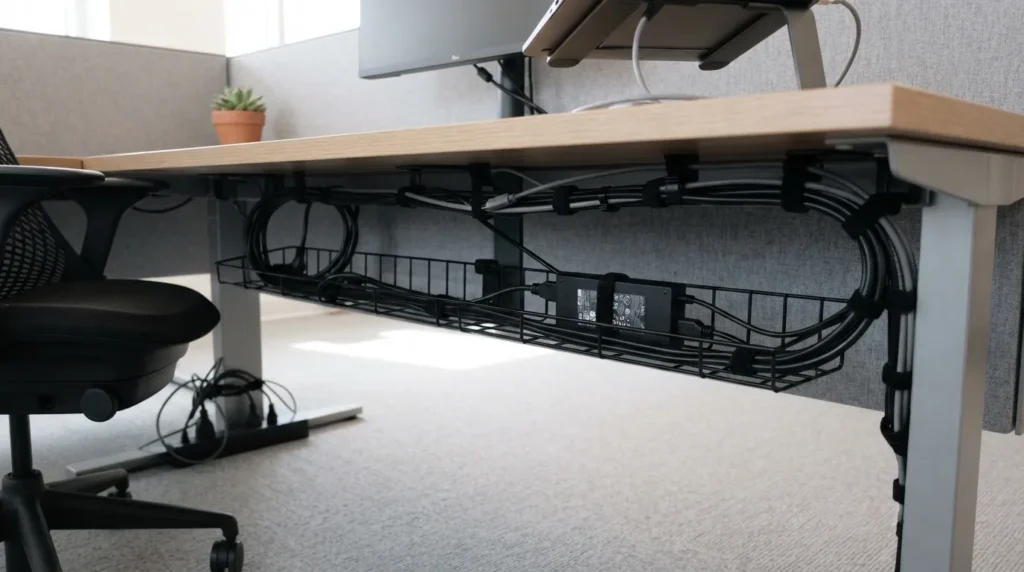
Cable control is one of the least glamorous but most powerful cubicle upgrades. Cords from monitors, chargers, lamps, keyboards, mice, and headphones can make even a nicely decorated workspace look messy. Use cord clips, Velcro ties, cable sleeves, under-desk trays, or small cord boxes to guide wires neatly. I’ve noticed that once cords are controlled, every other design detail looks better. The desk feels cleaner, and the workspace becomes easier to wipe, move around, and use.
Keep cord organization simple enough to maintain. Label chargers if you often unplug devices, and leave enough slack for moving your keyboard or laptop comfortably. Attach clips along the back edge of the desk rather than across the main work surface. If cords run to the floor, bundle them safely so they do not catch on your chair or shoes. A tidy cable setup makes the cubicle feel more professional, improves daily function, and helps the cozy details stand out instead of competing with tech clutter.
10. Quiet Comforts
- Adds warmth without bothering coworkers
- Works with unscented hand cream, soft textiles, mugs, and small trays
- Keeps comfort items professional and workplace-friendly
- Helps long workdays feel less draining
- Avoids strong scents, noisy items, or distracting decor
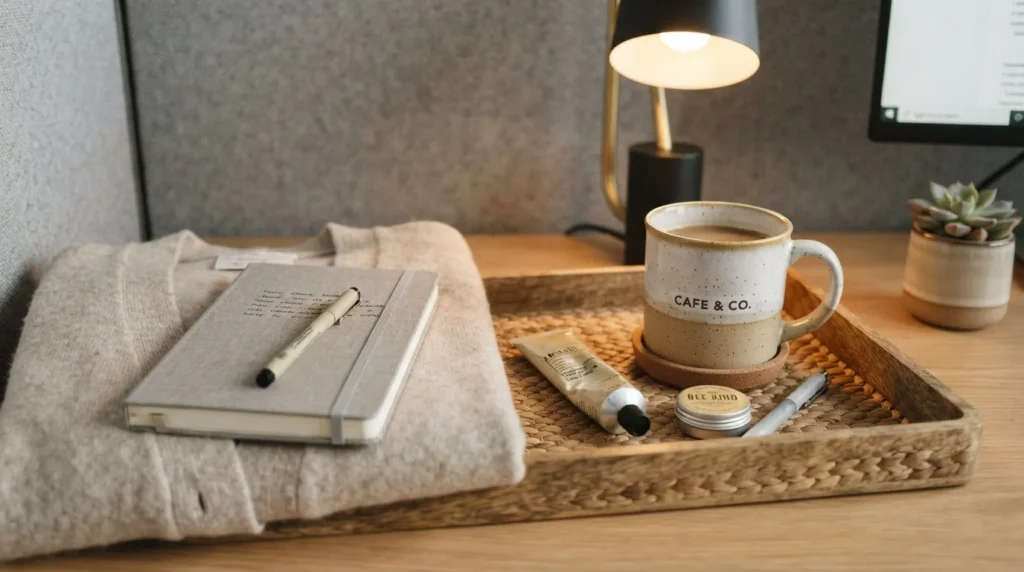
Quiet comforts make a cubicle feel cozy in a way that respects shared office space. Instead of candles, diffusers, loud gadgets, or large decorations, choose subtle items that support your workday. An unscented hand cream, favorite mug, soft coaster, small snack jar, warm cardigan, or tidy personal tray can make the desk feel more human. These details are especially helpful in offices with strict fragrance policies or shared air systems. Comfort should feel personal, but never intrusive to nearby coworkers.
The best comfort items are easy to store and simple to clean. Keep a small tray for your mug, lip balm, hand cream, and daily jewelry. Choose a washable coaster, soft wrist rest, or neatly folded cardigan if the office gets cold. Avoid anything with strong fragrance unless you know your workplace allows it. This approach gives you daily ease without making the cubicle look crowded. It also helps your space feel calm and cared for while still fitting professional office expectations.
11. Seasonal Touches
- Refreshes the cubicle without a full redesign
- Works with small calendars, postcards, flowers, or desk accents
- Keeps the workspace feeling current and personal
- Adds color in a controlled, professional way
- Easy to change for holidays, seasons, or new goals
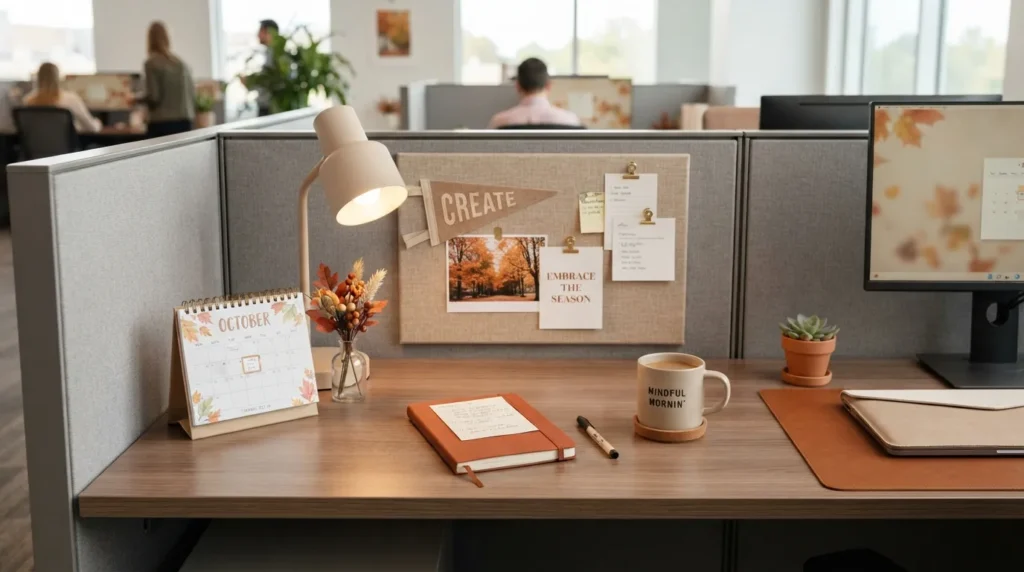
Seasonal touches keep a cubicle from feeling stale, but they should stay small and edited. A new desk calendar, tiny faux stems, framed postcard, seasonal mug, or soft colored notebook can refresh the mood without overwhelming the workspace. For fall, try rust, olive, or warm beige. For winter, use cream, navy, or soft metallics. For spring, bring in pale green or blush. These decor ideas work best when they change one or two details at a time instead of covering the cubicle in themed items.
Keep seasonal styling appropriate for your office culture. A tiny vase, one small garland, a patterned mouse pad, or a new print can be enough. Avoid blocking sightlines, covering safety notices, or taking over shared surfaces. Store off-season items in one small box or pouch so your drawer does not become cluttered. Seasonal updates make the workspace feel fresh and intentional throughout the year. They also give you a simple creative reset when work routines start to feel repetitive.