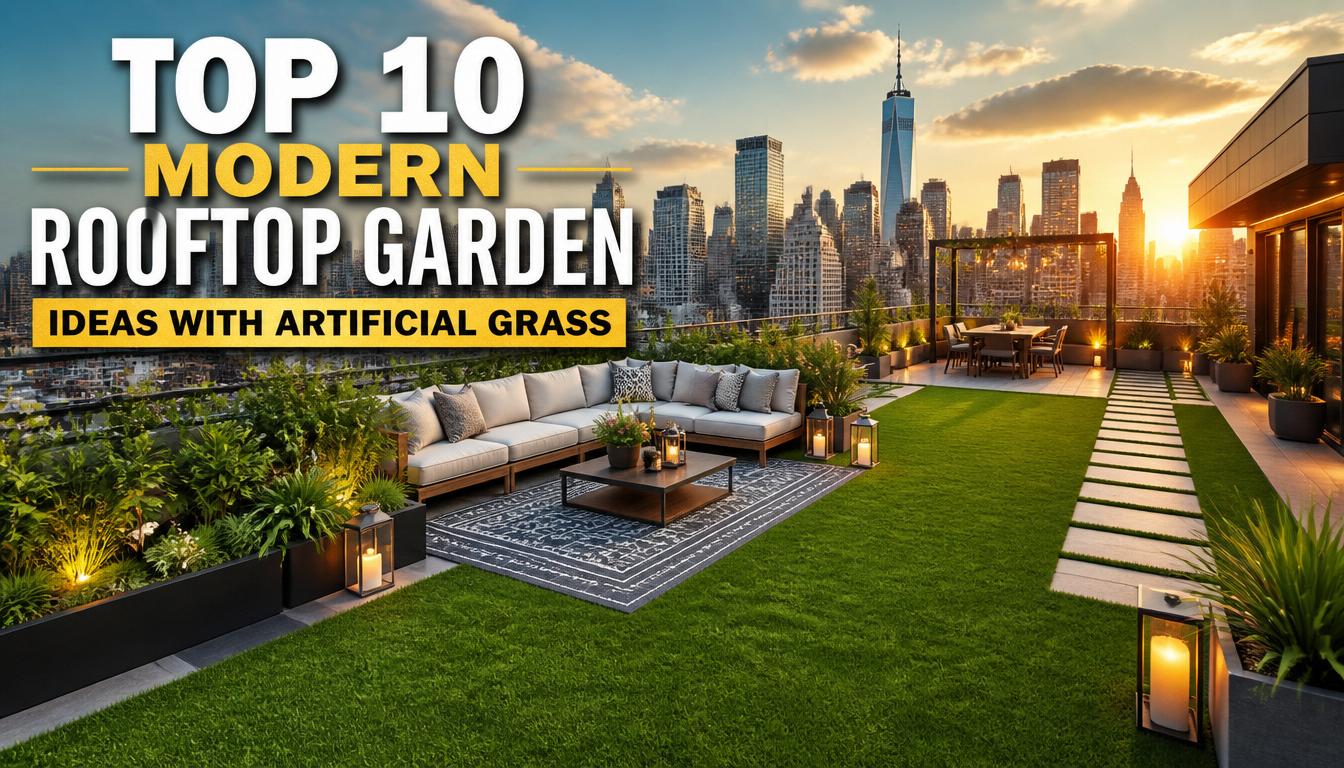
Top 10 Modern Ideas: Do Rooftop Garden with Artificial Grass
Introduction
A rooftop garden can turn unused space into one of the most beautiful areas of a home, apartment building, townhouse, or city condo. With artificial grass, the space feels greener, softer, and more inviting without the watering, mowing, and soil depth that real grass often requires. This is especially useful for USA rooftops where weight limits, heat, drainage, HOA rules, and building guidelines can affect every design choice.
The key is to make the rooftop feel intentional, not just covered with turf. You need zones for seating, dining, privacy, plants, lighting, and movement. A smart layout can help the roof feel like a real outdoor room. These ideas focus on style, comfort, safety, and practical materials so your rooftop garden looks polished, Pinterest-worthy, and easy to enjoy.
1. Artificial Turf Lounge
- Creates a soft green base for rooftop seating.
- Works well with sectionals, lounge chairs, and low tables.
- Choose UV-resistant turf with drainage holes.
- Add cushions, planters, and lighting for a finished look.
- Best for relaxing, hosting, and sunset views.
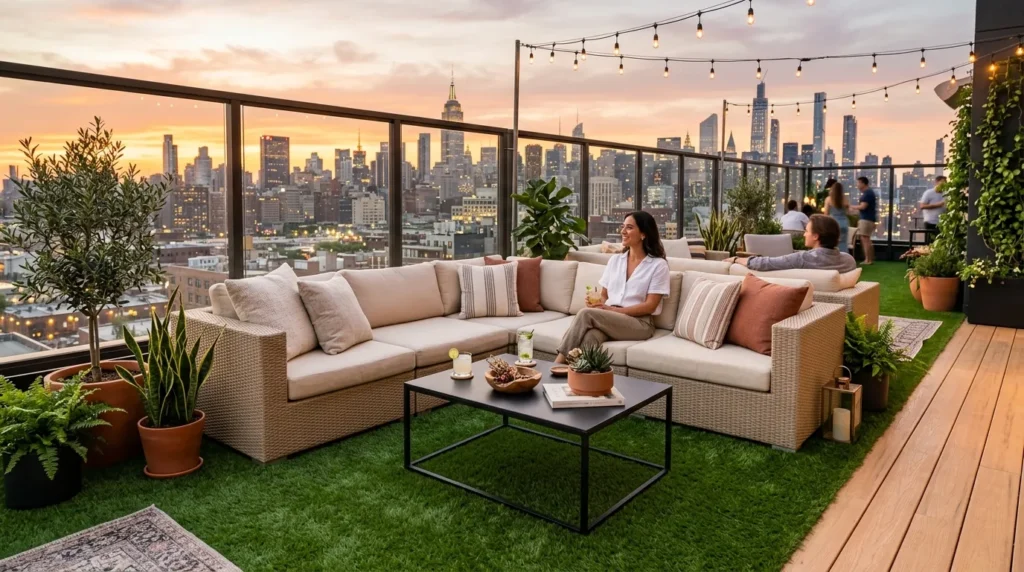
A rooftop lounge feels instantly softer when artificial grass becomes the main floor layer. Instead of leaving the surface bare concrete, turf adds color, texture, and a relaxed garden feeling without the maintenance of real lawn. This works especially well for city homes, townhouses, condos, and apartment rooftops where soil depth and watering are limited. In my experience, the best rooftop lounges use turf as a visual base, then layer furniture, planters, cushions, and lighting over it for a complete outdoor room. It also feels welcoming from rooftop doors and nearby windows.
The transformation depends on choosing turf that is durable, drainable, and comfortable under bare feet. Look for UV-resistant artificial grass with drainage holes, then install it over a clean, prepared rooftop surface with proper water flow. Add a weather-friendly sectional, low coffee table, and outdoor pillows in neutral shades. Keep the furniture legs stable so they do not damage the surface below. The result is a comfortable rooftop retreat that feels green, polished, and usable for morning coffee, sunset views, or relaxed weekend hosting. This balance keeps the space stylish without sacrificing daily comfort.
2. Modular Deck Tiles
- Adds contrast between grass and hard flooring.
- Works under dining sets, grills, and lounge furniture.
- Uses interlocking wood, composite, or stone-look tiles.
- Helps protect high-traffic rooftop areas.
- Gives the layout a clean designer finish.
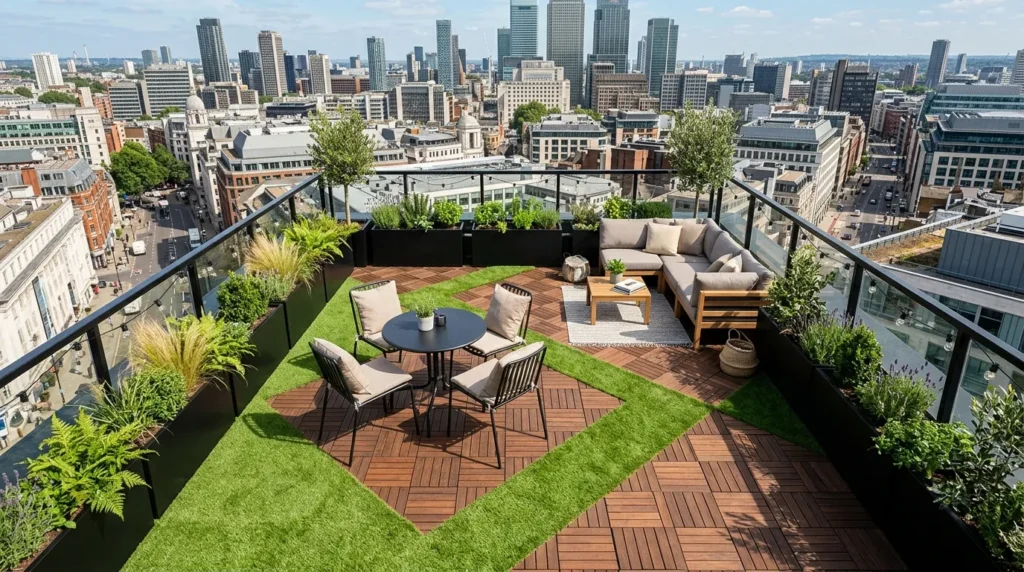
Deck tiles can make artificial grass look more expensive by adding structure and contrast. When turf covers the whole rooftop, the space may feel too flat or casual. By mixing grass with wood-look, composite, or stone-look deck tiles, you create zones that feel designed and practical. That’s why many designers recommend combining materials outdoors instead of using one surface everywhere. The contrast between green turf and clean tile lines gives the rooftop a sharper, more modern layout without requiring a full construction project. It also photographs well from above, which matters for Pinterest.
Use deck tiles under dining furniture, lounge chairs, grills, or high-traffic walking areas where extra stability matters. Interlocking tiles are popular because they are easier to place, remove, and adjust than permanent flooring. Choose composite wood for warmth, porcelain-look tiles for a sleek finish, or dark gray pieces for a city rooftop mood. Leave turf around the edges or between zones to keep the garden feeling soft. This mix improves drainage, protects busy areas, and makes the rooftop feel more like a planned outdoor living space. This balance keeps the rooftop easy to clean after gatherings.
3. Raised Planter Borders
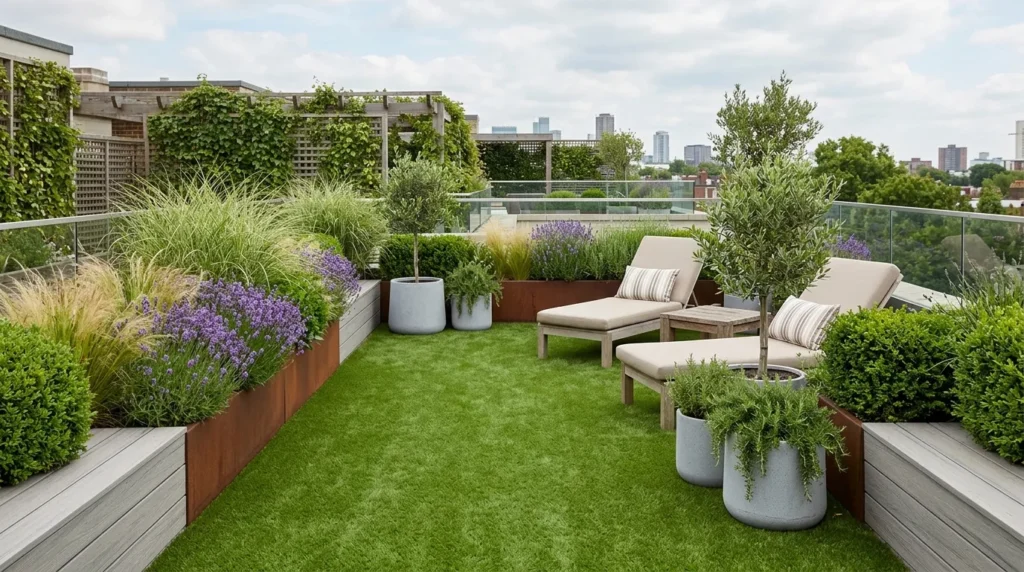
- Frames the rooftop garden with real greenery.
- Adds privacy, height, and natural texture.
- Works with lightweight planters and climate-friendly plants.
- Softens railings, walls, and hard rooftop edges.
- Helps the turf feel more realistic and lush.
Raised planter borders make a rooftop garden feel lush, private, and carefully framed. Artificial grass gives the floor a fresh green base, but planters add height, depth, and real plant texture. This combination helps the rooftop avoid looking too flat or synthetic. Use long rectangular planters along railings, walls, or seating edges to create soft boundaries. I’ve noticed that rooftops feel more finished when greenery surrounds the furniture instead of sitting randomly in small pots around the space. They also make lounge photos look fuller, greener, and more finished overall.
Choose lightweight planters whenever rooftop weight is a concern, and always consider drainage before adding soil and plants. Fiberglass, resin, metal, and composite planters can look stylish without being as heavy as concrete. Fill them with ornamental grasses, lavender, boxwood, dwarf evergreens, herbs, or climate-friendly plants suited to your city. Planter borders also help guide movement, hide unattractive edges, and create privacy from nearby buildings. The result feels like a real garden room, not just a roof with turf placed on top. This layered edge also makes seating areas feel calmer and protected.
4. Pergola Seating Zone
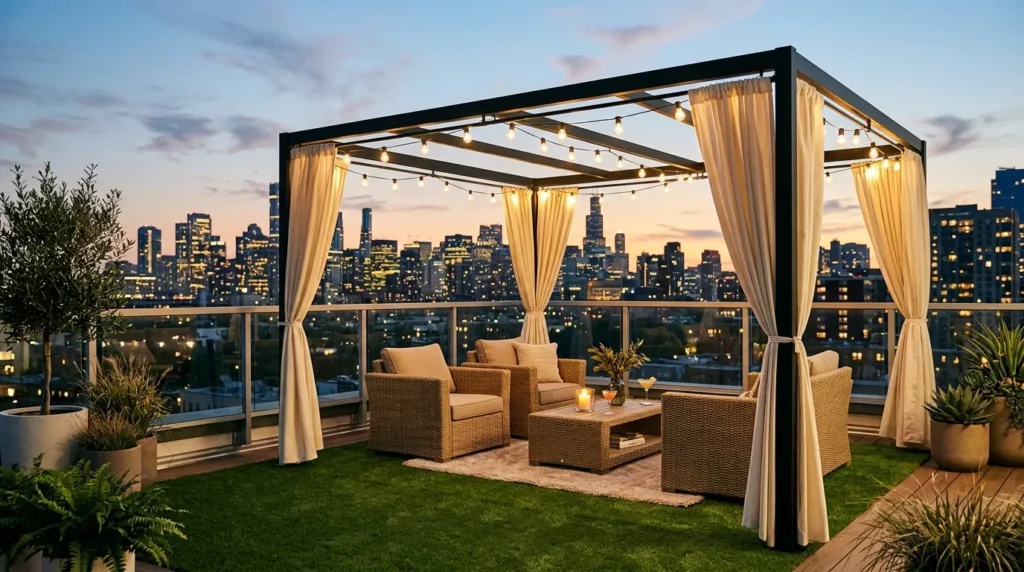
- Adds shade and structure to the rooftop.
- Works with metal, wood, or freestanding pergolas.
- Pairs well with curtains, string lights, and climbing plants.
- Defines the main seating or dining area.
- Helps the rooftop feel like an outdoor room.
A pergola can turn a rooftop with artificial grass into a true outdoor destination. It adds height, shade, and structure, which makes the space feel less exposed and more intentional. This is especially useful on rooftops where open sky, wind, and surrounding buildings can make the area feel unfinished. A slim metal pergola feels modern, while warm wood creates a softer resort-inspired mood. These Modern Ideas work best when the pergola frames a clear seating zone instead of floating without purpose. It also gives lighting, shade fabric, and greenery a clear home.
Place the pergola over a sofa, two lounge chairs, or a compact dining setup, then keep the turf visible around the base. Add outdoor curtains for softness, a shade canopy for sun control, or string lights for evening atmosphere. If rooftop rules limit permanent structures, consider freestanding options that meet building guidelines. Keep furniture low and stable so the area feels safe and comfortable in breezy weather. The finished zone becomes a shaded, stylish spot for reading, entertaining, or enjoying skyline views. This keeps the design comfortable without making the roof feel heavy.
5. Mini Dining Corner
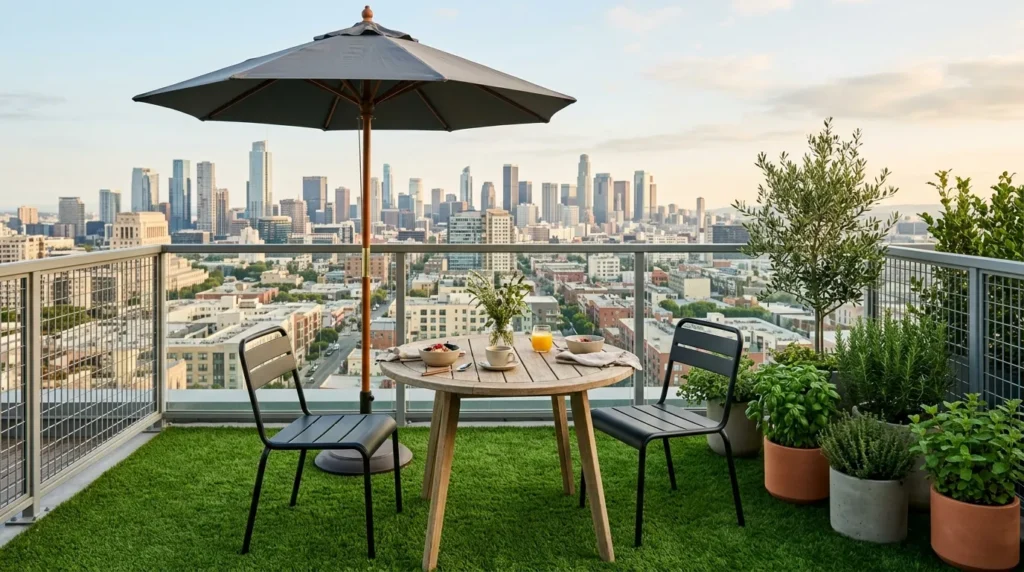
- Creates a useful place for meals and coffee.
- Works with round tables, bistro sets, and stackable chairs.
- Add deck tiles or pavers under the table for stability.
- Use umbrellas, planters, and lanterns for comfort.
- Great for brunch, takeout nights, and casual dinners.
A mini dining corner brings daily function to a rooftop garden without overwhelming the layout. Even a small table with two to four chairs can make the space feel more useful and inviting. Artificial grass softens the look underfoot, while a stable dining surface keeps meals comfortable. This idea works beautifully for brunch, takeout nights, summer dinners, and coffee breaks. In my experience, the most successful rooftop dining corners feel simple, open, and easy to move around, rather than packed with oversized furniture. It also makes the rooftop feel like part of the home.
For better usability, place the dining set near the rooftop entrance, outdoor kitchen area, or best view. Use a round table for tight spaces because it improves movement and softens hard rooftop lines. If the turf feels uneven under chair legs, add deck tiles or flat pavers below the table. Choose stackable chairs if storage is limited, and use outdoor-safe cushions for comfort. A small umbrella, planter, or battery lantern can complete the look. The space becomes practical enough for everyday meals and pretty enough for photos. This balance keeps meals comfortable without making the layout feel tight.
6. Rooftop Fire Feature
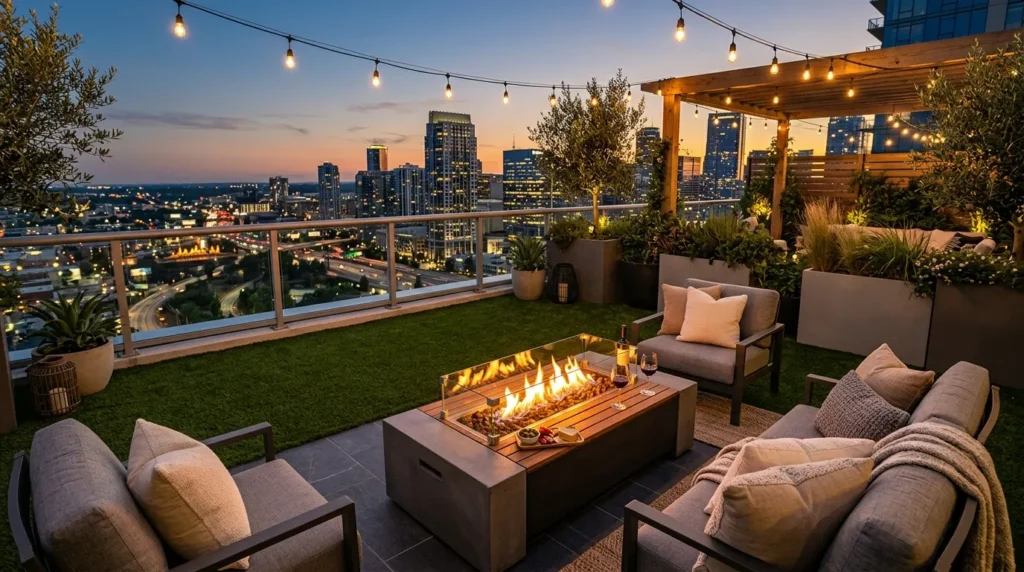
- Adds warmth and evening atmosphere.
- Requires a fire-safe base, not direct turf placement.
- Works with propane fire tables or approved electric options.
- Check rooftop, HOA, lease, and local fire rules.
- Best for cozy nights and small gatherings.
A small fire feature can make a rooftop garden feel warm, social, and beautifully finished. It creates a natural gathering point, especially in the evening when city lights, soft seating, and green turf come together. Safety is the first priority, so never place fire equipment directly on artificial grass unless the manufacturer and building rules clearly allow it. That’s why many designers use a fire-safe base, such as stone, metal, porcelain tile, or concrete pavers, to separate heat from surrounding materials. It also helps cooler nights feel more usable and inviting.
Choose a compact propane fire table or approved electric feature if open flames are restricted in your building or city. Leave generous space around the fire area, keep furniture at a safe distance, and follow rooftop, HOA, lease, and local fire rules. A square fire table can double as a coffee table, while a slim linear feature feels more upscale. Add weather-resistant chairs and simple side tables for drinks. When planned correctly, this corner turns the rooftop into a cozy evening lounge without feeling crowded. This setup feels polished while still supporting casual conversation.
7. Vertical Green Wall
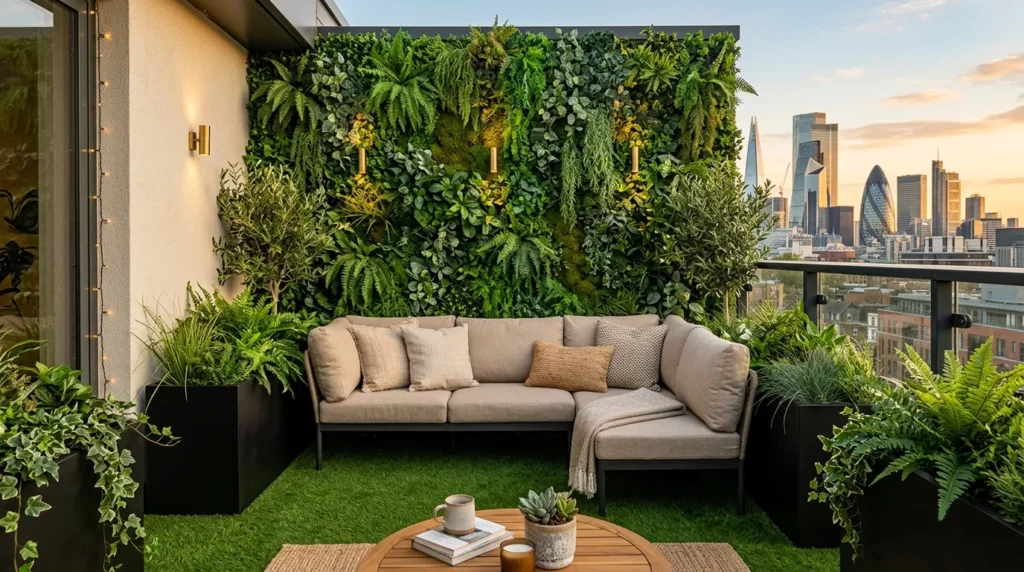
- Adds greenery without using floor space.
- Works behind sofas, dining corners, or lounge zones.
- Can use real plants, faux panels, or trellis systems.
- Creates privacy and a strong photo backdrop.
- Makes the rooftop feel layered and garden-like.
A vertical green wall adds garden drama without taking up valuable rooftop floor space. This is ideal when the rooftop is narrow, compact, or already filled with seating and planters. Against artificial grass, vertical greenery creates a layered outdoor look that feels lush from floor to wall. You can use real plants, faux greenery panels, trellis systems, or a mix of both depending on sunlight and maintenance. I’ve seen this work well in many homes because it creates a strong backdrop for photos and relaxing. It also gives the space a beautiful focal point from indoors.
Install the wall where it can hide a blank surface, soften a fence, or frame the main seating area. If using real plants, choose a system with proper drainage and access for watering. If using faux panels, select UV-resistant greenery so the color lasts longer outdoors. Add wall sconces, string lights, or narrow planters at the base for a more finished design. The result gives the rooftop privacy, texture, and a stronger garden feeling while leaving the turf area open for movement, furniture, and entertaining. This vertical layer makes the garden feel taller and more immersive.
8. Cozy Floor Seating
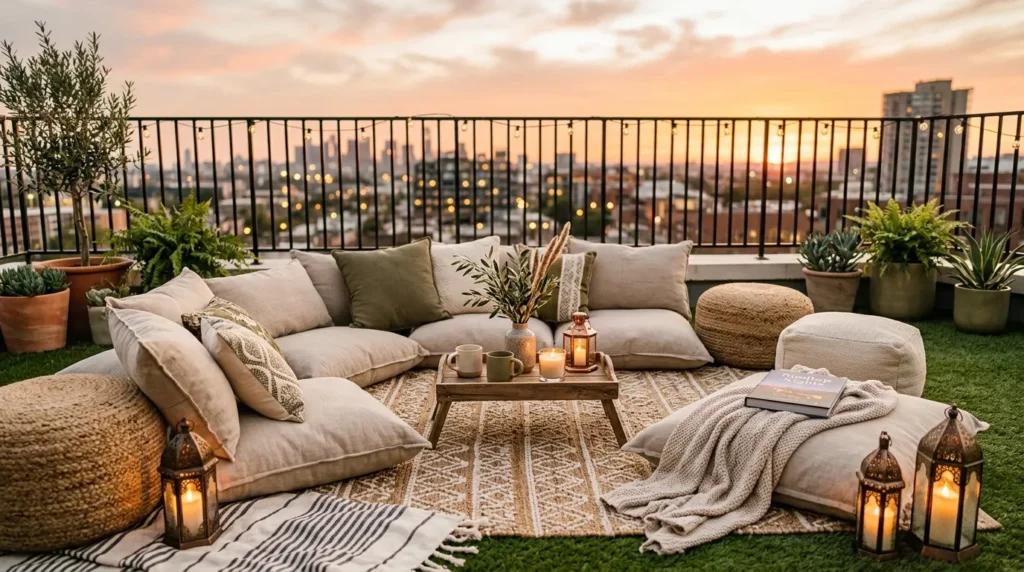
- Creates a relaxed lounge area on artificial grass.
- Uses cushions, poufs, rugs, and low tables.
- Works well for renters and flexible layouts.
- Keep soft items stored during rain or wind.
- Best for casual gatherings, reading, and skyline views.
Floor seating makes a rooftop garden feel casual, cozy, and perfect for relaxed gatherings. Artificial grass already creates a soft visual base, so adding cushions, poufs, low tables, and outdoor rugs can make the area feel like a laid-back lounge. This idea works especially well for renters, small rooftops, and people who want flexible furniture that can move easily. I’ve noticed that low seating also keeps skyline views open, which is important when the rooftop has a beautiful city, sunset, or neighborhood view. It also makes the area feel less formal and more personal.
Use weather-resistant floor cushions, washable covers, outdoor poufs, and a low tray table for snacks or drinks. Keep a storage bench or deck box nearby so soft items can be put away during rain or heavy wind. Layering a flat outdoor rug over part of the turf can help define the sitting area and add pattern. Choose calming colors like beige, olive, charcoal, terracotta, or cream. The finished setup feels inviting, budget-friendly, and flexible enough for reading, chatting, stretching, or casual weekend hangouts. This flexible setup is easy to refresh as seasons change.
9. Pathway Turf Strips
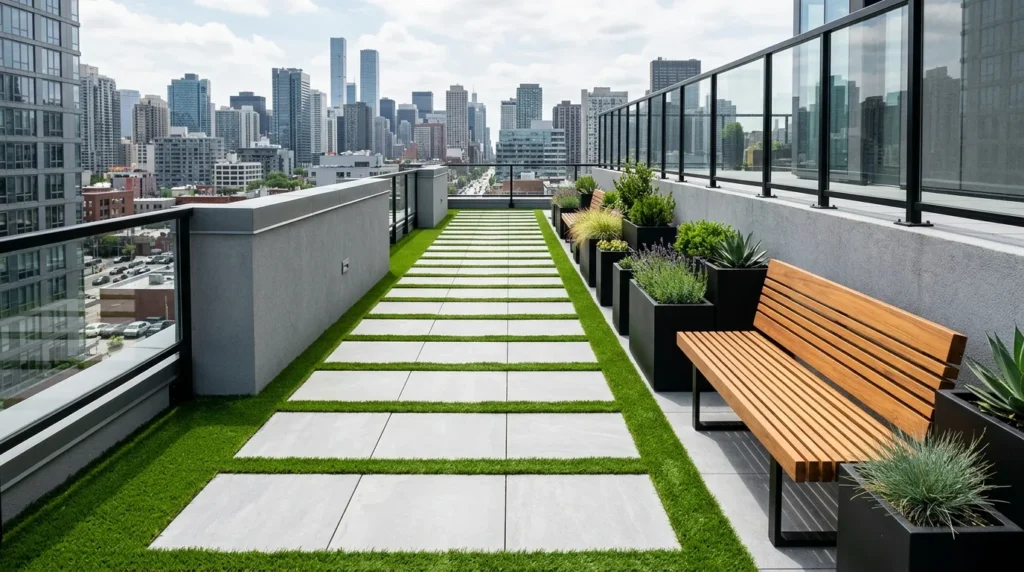
- Uses grass as a clean design detail.
- Works between pavers, tiles, gravel, or concrete.
- Creates movement and visual direction.
- Helps small rooftops feel more organized.
- Reduces the amount of turf needed overall.
Pathway turf strips create a clean modern layout by using grass as a design detail instead of a full floor covering. Narrow strips of artificial grass can run between pavers, deck tiles, gravel areas, or concrete sections, adding color and rhythm to the rooftop. This is a smart option when you want greenery but also need stable walking surfaces. These Modern Ideas help small rooftops look longer, wider, and more organized because the lines naturally guide the eye through the space. They also reduce the amount of turf needed overall, saving money.
Keep the strips straight and evenly spaced for a polished architectural finish. Use them between porcelain pavers near the entrance, around a dining area, or along the path to a lounge zone. Choose turf with good drainage and secure edges so it does not lift in wind or curl over time. Pair the layout with minimal furniture, black planters, and warm wood accents for contrast. The result feels sleek, low-maintenance, and visually fresh, especially for urban rooftops where every square foot needs a purpose. This keeps the design beautiful while supporting daily rooftop traffic.
10. Night Lighting Layers
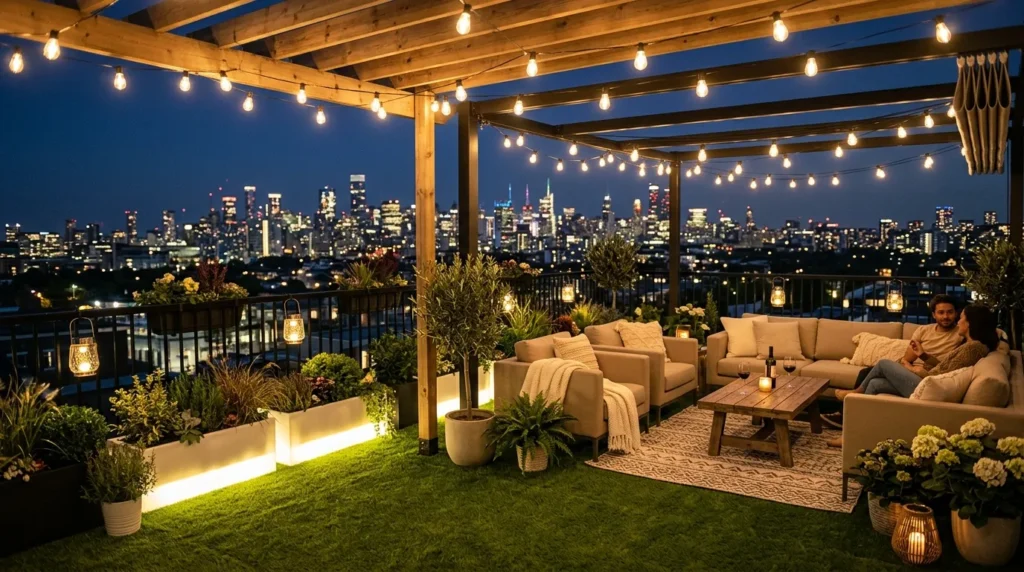
- Adds mood, safety, and evening usability.
- Use string lights, solar lanterns, LEDs, and battery lamps.
- Warm white lighting feels softer than cool blue light.
- Highlight seating, pathways, planters, and railings.
- Best for nighttime entertaining and cozy rooftop views.
Layered lighting can make a rooftop garden feel magical after sunset. Artificial grass brings daytime color, but lighting gives the space mood, safety, and evening function. Instead of relying on one bright fixture, mix several soft sources across different heights. Use string lights, solar lanterns, LED strips, battery lamps, step lights, or planter uplights. In my experience, warm white lighting looks more flattering than cool blue light outdoors, especially when paired with greenery, cushions, wood, and city views. This is one of the most practical choices for entertaining after dark outside.
Place lights where people walk, sit, eat, and gather so the rooftop feels comfortable instead of dim or harsh. String lights can define a pergola or railing, while small lanterns make tables and corners feel cozy. LED strips under benches or planters create a subtle high-end glow without taking up space. Make sure all lighting is rated for outdoor use and protected from weather. The final result extends the rooftop’s usability into the evening and turns a simple garden setup into a polished outdoor escape. It also makes the rooftop feel safer when guests move around.