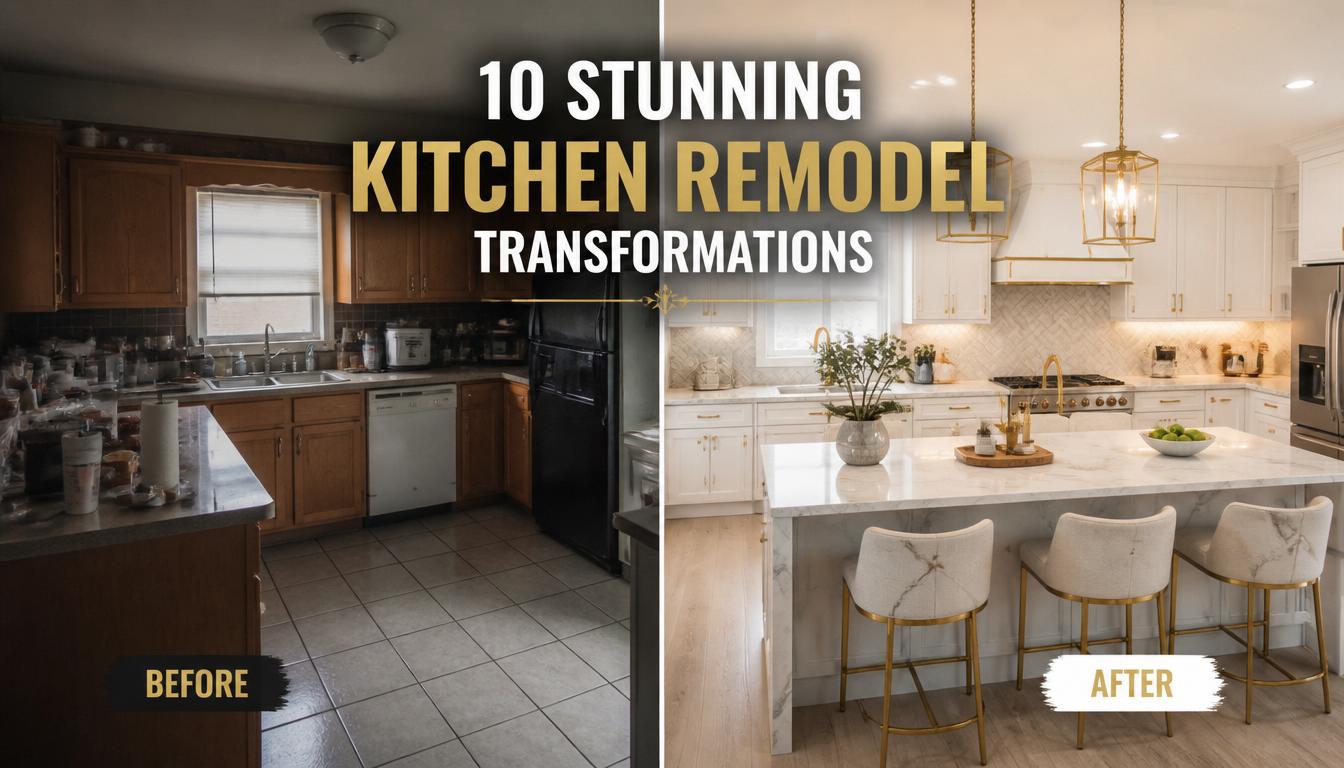
10 Before and After Kitchen Remodels Ideas
Kitchen remodels are some of the most satisfying home projects because the results are easy to see and feel every day. A dark, cramped, dated kitchen can become brighter, calmer, easier to clean, and more enjoyable for cooking, hosting, and family routines. For USA homeowners, kitchens often carry a lot of daily traffic. They handle school mornings, coffee breaks, weeknight dinners, holiday meals, groceries, homework, and casual conversations. That is why a thoughtful remodel should do more than look pretty in photos.
The best transformations usually start with one clear problem. Maybe the cabinets make the room feel heavy. Maybe the island blocks movement. Maybe the backsplash feels outdated, or the lighting makes the space look dull at night. A good kitchen update solves those real issues while also creating a beautiful remodel reveal. That balance matters because the room still needs to work after the photos are taken.
This guide is written for homeowners, renters planning inspiration boards, DIY planners, and anyone saving kitchen ideas on Pinterest. Each idea explains what changes visually, why the update works, what materials to consider, and how to make the finished space feel practical. You will find design details for cabinets, counters, lighting, storage, floors, seating, and finishing touches. Use these ideas to build a stronger vision before talking with a contractor, cabinet painter, designer, or countertop supplier.
1. Cabinet Color
- Brightens dark kitchens without changing the full layout
- Works with shaker, flat-panel, raised-panel, or older wood cabinets
- Helps dated kitchens feel cleaner and more current
- Pairs well with new hardware, lighting, counters, and tile
- Can create contrast through a darker island or lower cabinets
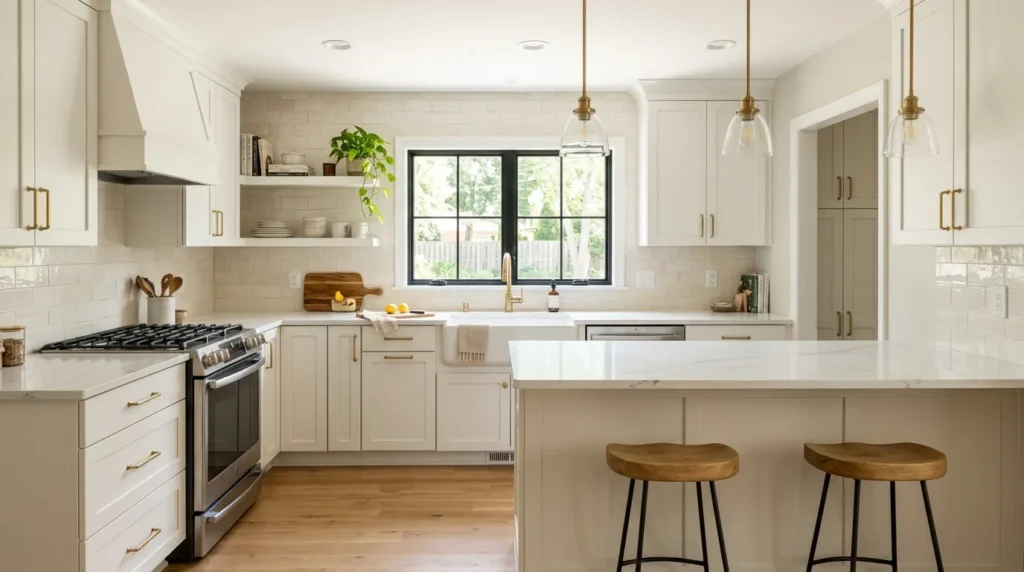
Cabinet color is often the fastest way to make a kitchen transformation feel dramatic. Dark cherry, orange oak, and worn builder-grade finishes can make the room feel smaller, especially when natural light is limited. Painting, staining, or refacing cabinets in warm white, greige, mushroom, sage, navy, or charcoal can reset the whole space. In my experience, the best cabinet updates happen when homeowners test colors beside countertop, backsplash, flooring, and hardware samples instead of choosing from a tiny paint card under store lighting.
The finished kitchen should feel fresh, but it also needs to survive daily use. Choose cabinet-grade enamel, professional spraying, or quality refacing if the budget allows, because doors and drawers take constant contact from hands, water, food, and cleaning products. New pulls and knobs can make the color change feel more complete. Brass warms white cabinetry, black sharpens soft neutrals, and nickel keeps a timeless feel. If painting everything feels too plain, use a darker island or lower cabinet color for depth.
2. Island Focus
- Adds prep space, seating, storage, and stronger room flow
- Creates a natural gathering point for family and guests
- Works with pendant lighting, stools, drawers, and outlets
- Can make an open kitchen feel more balanced
- Helps organize cooking, serving, homework, and casual meals
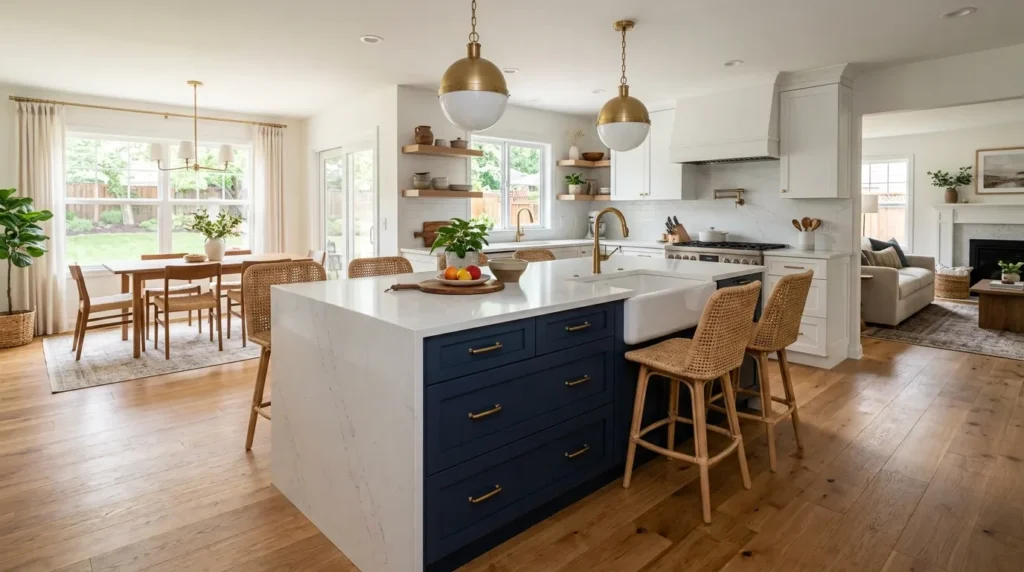
A better island can change how the whole kitchen functions from morning to night. Many older islands are too small, too bulky, or placed where they block traffic between the sink, stove, and refrigerator. A smarter island starts with clearance. People need room to open appliances, pull out stools, unload groceries, and move around each other without bumping hips. That’s why many designers recommend planning the island around movement first, then choosing the countertop, color, lighting, and seating style.
The strongest island remodels look beautiful because they solve real problems. Deep drawers can hold pots, lunch containers, baking sheets, or serving pieces. Built-in outlets make mixers, laptops, and slow cookers easier to use. A waterfall quartz top feels modern, while butcher block brings warmth to a classic home. Add two or three pendants above the island to make it feel like a centerpiece. When proportions are right, the kitchen becomes more social, more organized, and easier to use during everyday cooking.
3. Backsplash Reset
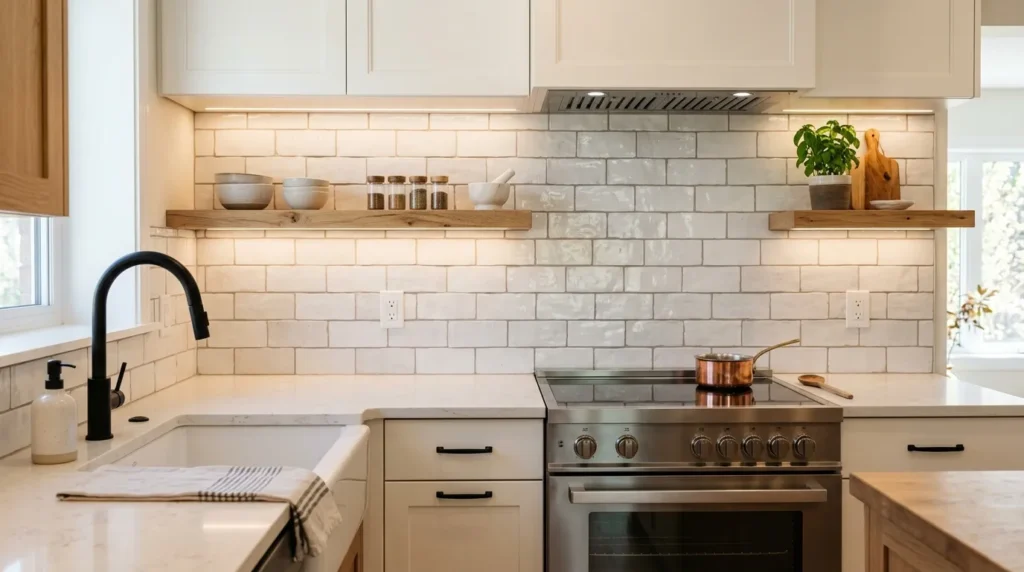
- Updates a highly visible wall surface
- Protects cooking and prep areas from splashes
- Works with ceramic, porcelain, marble, zellige, or subway tile
- Helps connect cabinets, countertops, and fixtures
- Can make a simple kitchen feel more custom
A backsplash refresh can make an older kitchen feel cleaner without touching every surface. Dated glass mosaics, beige strips, busy patterns, or cracked grout often pull attention away from otherwise nice cabinets and counters. A new tile in handmade-look ceramic, stacked porcelain, classic subway, marble, or soft zellige adds texture and protection. The key is choosing tile that supports the rest of the kitchen instead of competing with it. Quiet texture often creates a more expensive-looking result than a loud pattern.
Tile layout matters as much as the tile itself. Taking backsplash tile up to the ceiling behind a range hood or open shelf can make the wall feel taller and more designed. Warm gray grout hides daily splashes better than bright white grout, while high-contrast grout creates a stronger graphic look. If the countertop has bold veining, keep the backsplash simple. If the counter is plain, the backsplash can carry more texture. This update adds visual polish while making cooking areas easier to wipe clean.
4. Countertop Upgrade
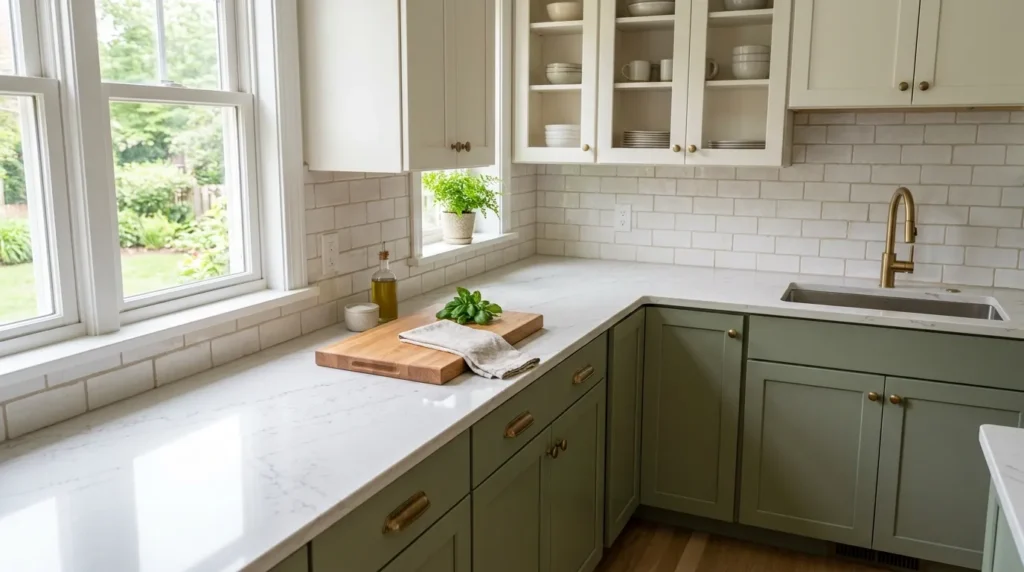
- Replaces worn, stained, busy, or dated surfaces
- Adds durability for cooking, baking, and cleanup
- Works with quartz, granite, marble, butcher block, or solid surface
- Creates contrast with cabinet color and flooring
- Gives the kitchen a cleaner, more finished look
Countertops carry a lot of visual weight because they run through the entire kitchen. Old laminate, cracked tile, stained grout, or overly busy granite can make the room feel dated even after other upgrades. A calmer countertop surface can make cabinetry, backsplash, and lighting look more intentional. Quartz is popular for its lower maintenance, while butcher block adds warmth. Granite, marble, and quartzite bring natural movement, though each material has different care needs and price points.
The right countertop should match the way the household actually cooks. Families who prepare meals daily may need stain resistance, easy cleanup, and durable edges. Homeowners who bake often may prefer a cooler stone surface. If you love natural stone, ask about sealing, etching, and maintenance before choosing. Always bring large samples home and view them beside cabinets in morning and evening light. A good countertop upgrade makes the kitchen feel brighter, cleaner, and more useful without needing excessive decor.
5. Lighting Layers
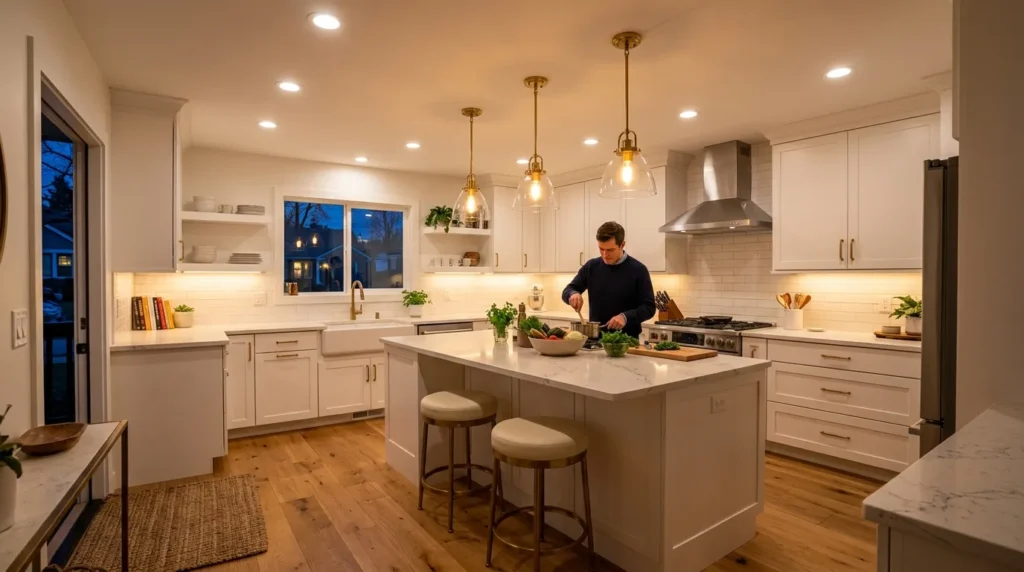
- Replaces harsh single fixtures with flexible lighting zones
- Improves cooking, cleaning, dining, and evening mood
- Works with pendants, recessed lights, sconces, and under-cabinet strips
- Makes cabinet color, tile, and countertops look better
- Helps the kitchen feel warm instead of flat
Lighting can decide whether a remodeled kitchen feels finished or disappointing. Many older kitchens rely on one ceiling fixture that creates shadows over counters and makes the room look flat. A layered plan uses recessed lights for general brightness, pendants for island focus, under-cabinet strips for prep work, and sconces for warmth near shelves or windows. In my experience, lighting should be planned early because bulb temperature can change how cabinet paint, tile glaze, and countertop veining look after sunset.
The finished result is both practical and atmospheric. Under-cabinet lighting helps with chopping, cleaning, and reading recipes. Pendants add style at eye level and make an island feel anchored. Dimmers allow the kitchen to shift from bright morning routine to soft evening dinner. Most homes feel best with warm white bulbs around 2700K to 3000K, though cooler modern kitchens may vary. Good lighting makes the remodel look more expensive, improves daily tasks, and keeps the room welcoming during darker winter months.
6. Storage Wall
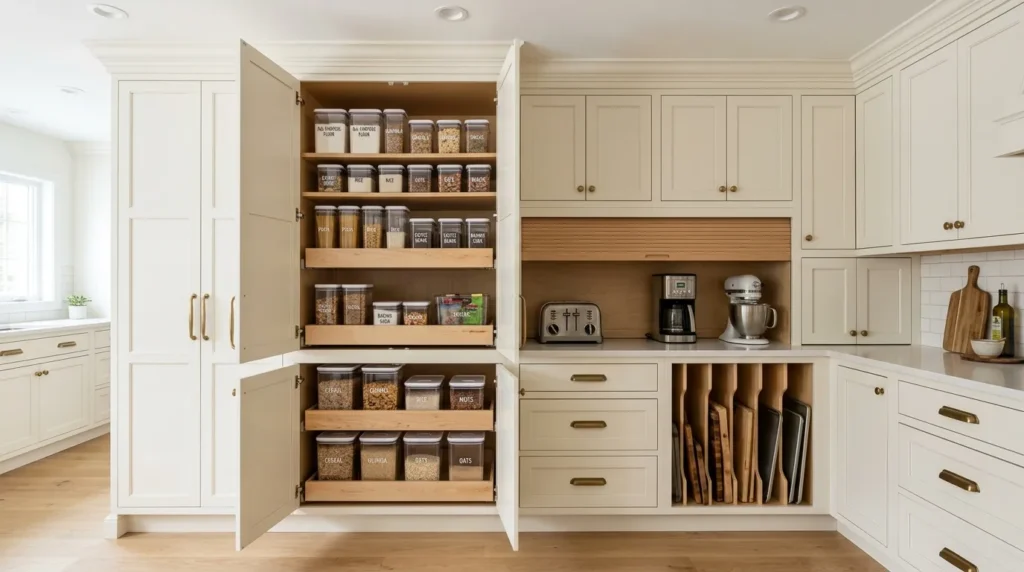
- Adds organization without always needing a walk-in pantry
- Works with tall cabinets, pullouts, drawers, and appliance garages
- Keeps small appliances and groceries from crowding counters
- Helps busy families manage daily kitchen routines
- Makes the room feel cleaner and more planned
A storage wall can solve the clutter that makes many kitchens feel stressful. Before remodeling, food, small appliances, baking supplies, and lunch items often end up spread across random cabinets. A tall storage area brings those items into one planned zone. It can include pullout shelves, deep drawers, spice inserts, tray dividers, broom storage, or an appliance garage. I’ve seen this work well in many homes because it supports real routines like school lunches, meal prep, bulk grocery shopping, and quick cleanup.
For the best result, make the storage wall look built into the kitchen rather than added later. Match the cabinet door style to the rest of the room, or use a slightly deeper color for a custom furniture effect. Add interior outlets if the toaster, blender, or coffee maker will stay hidden. Use adjustable shelves so the system can change with the household. Clear bins and simple labels help everyone keep it organized. Better storage makes counters calmer and the whole remodel feel more spacious.
7. Breakfast Nook
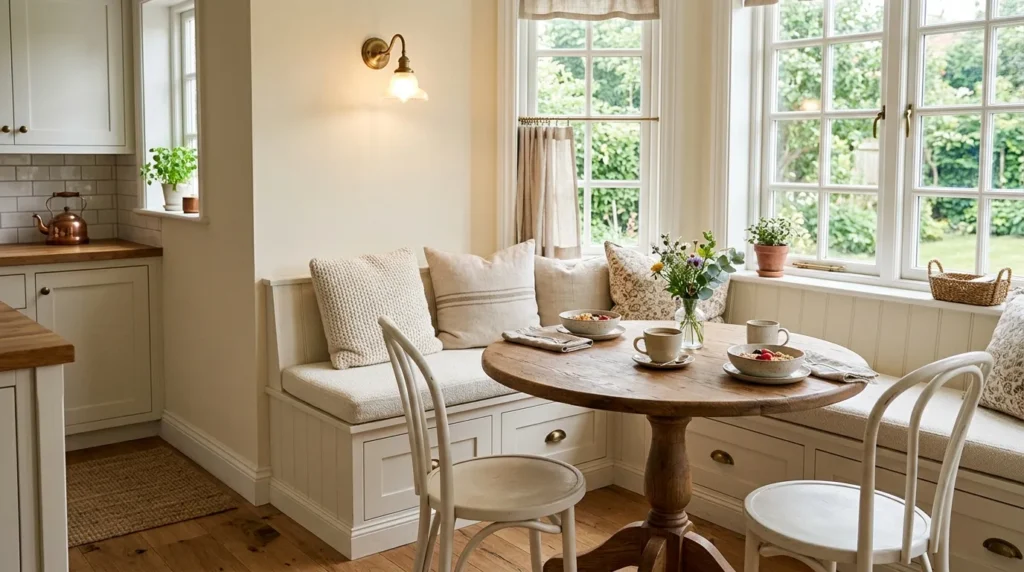
- Turns unused corners into practical seating
- Works with benches, round tables, cushions, and wall sconces
- Adds warmth without needing a formal dining room
- Creates a spot for coffee, homework, snacks, and quick meals
- Can include hidden storage under built-in benches
A breakfast nook can turn an awkward kitchen corner into a favorite daily spot. Many older kitchens have unused space near a window, half wall, or empty corner that does not serve a clear purpose. A built-in bench, small table, soft cushion, and wall light can make that space feel intentional. This works especially well in smaller USA homes where formal dining rooms are used less often. The nook creates a casual place for morning coffee, kids’ snacks, laptop work, or quiet weekend breakfast.
The materials should be pretty but forgiving. Performance fabric, wipeable cushions, painted wood, washable pillows, and easy-clean table surfaces matter because kitchen seating collects crumbs, spills, and fingerprints. A round table softens tight corners and improves movement, while a rectangular table suits longer walls. Add drawers or lift-up bench storage for placemats, games, lunch bags, or seasonal linens. The final look feels charming and useful, giving the kitchen a softer living-space feeling without taking away from the main cooking zone.
8. Flooring Flow
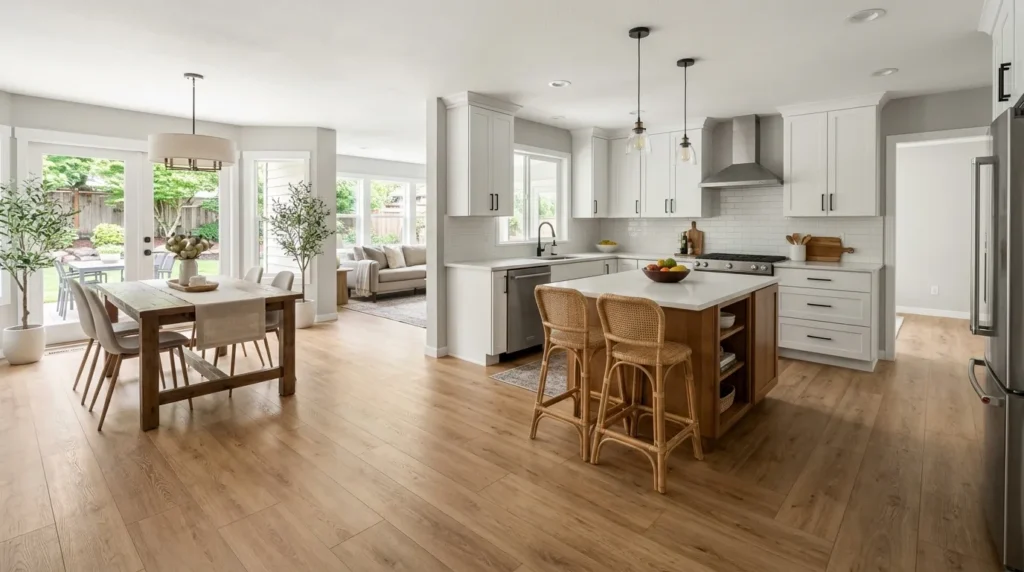
- Connects the kitchen with nearby dining and living spaces
- Replaces cracked tile, dated vinyl, or mismatched transitions
- Makes open layouts feel larger and calmer
- Works with hardwood, engineered wood, tile, or luxury vinyl plank
- Improves the overall remodel from every viewing angle
Flooring can make a kitchen feel connected or visually chopped apart. Old square tile, dark grout, peeling vinyl, or awkward thresholds can date a space even after cabinets and counters are improved. Continuous flooring from the kitchen into nearby dining or living areas creates a smoother, more open feeling. Many homeowners choose hardwood, engineered wood, large-format tile, or luxury vinyl plank based on budget, pets, climate, and maintenance needs. The right floor becomes the quiet foundation for the entire remodel.
Durability should guide the decision as much as color. Kitchens handle dropped utensils, spilled water, muddy shoes, pet bowls, and constant foot traffic. Wood adds warmth but needs the right finish and care. Luxury vinyl plank can be budget-friendly and forgiving. Large-format tile looks clean and reduces grout lines, but it may feel harder underfoot. Bring samples home and view them against cabinet colors throughout the day. When flooring flows well, the kitchen looks larger, calmer, and more finished from every doorway.
9. Hardware Details
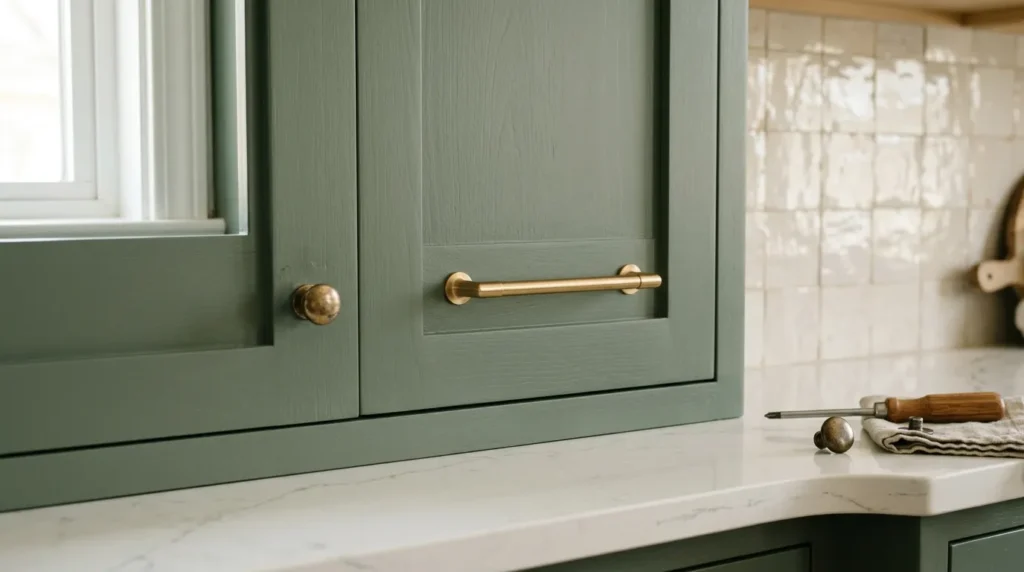
- Updates cabinet style quickly and affordably
- Adds contrast, warmth, shine, or a modern edge
- Works with knobs, pulls, cup pulls, latches, and appliance handles
- Helps connect faucets, lighting, and cabinet colors
- Improves daily comfort when drawers and doors are used often
Hardware may be small, but it can change the whole personality of a kitchen. Old knobs, worn pulls, or mismatched finishes often make cabinets look older than they are. Switching to matte black, brushed brass, polished nickel, bronze, or stainless steel can sharpen the entire design. Scale matters. Large drawers usually need longer pulls, while smaller doors may look better with simple knobs. This is one of the easiest remodel details to test before making a permanent choice.
The most polished result happens when hardware relates to nearby finishes without matching everything exactly. Brass can warm up white or green cabinets. Black can add structure to oak, greige, or cream cabinetry. Nickel feels classic in traditional kitchens, especially with marble-look counters. Before drilling new holes, tape sample pulls onto doors and live with them for a day. Open and close drawers to test comfort, not just appearance. Good hardware improves function while giving the kitchen a clean, finished look in photos and daily life.
10. Range Feature
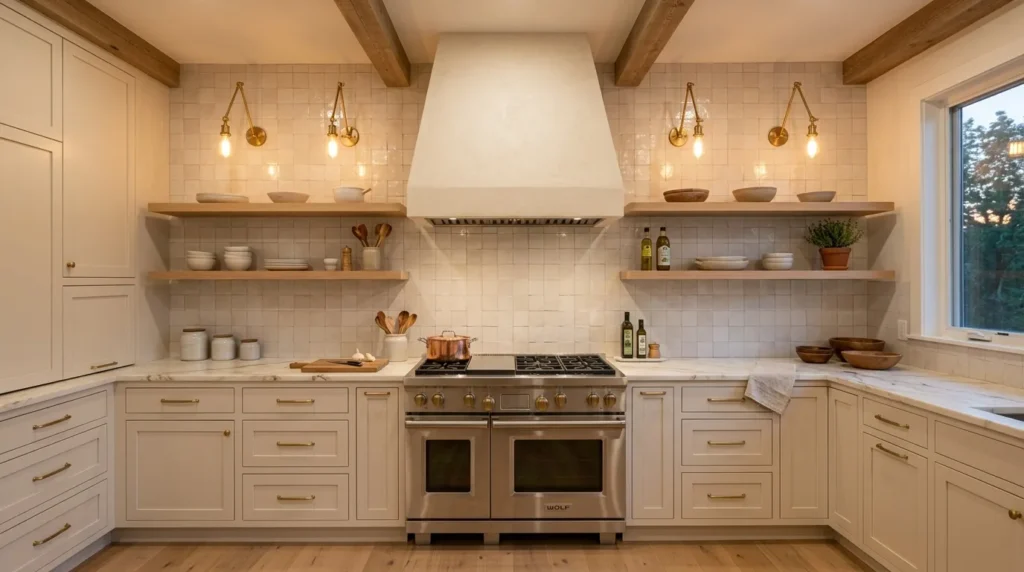
- Creates a strong focal point on the cooking wall
- Works with a statement hood, tile wall, shelves, or sconces
- Makes the kitchen feel more custom and planned
- Adds visual balance in open-concept layouts
- Helps highlight the cooking zone without adding clutter
The range wall is a natural place to create a strong remodel moment. In many dated kitchens, the cooking area feels hidden under a basic microwave, short backsplash, or plain cabinet run. Replacing that setup with a statement hood, full-height tile, simple shelves, or balanced sconces can make the room feel custom. That’s why many designers recommend giving the range wall special attention. It is often the first surface people notice when they enter an open kitchen.
The final design should feel beautiful but not overbuilt. A plaster-style hood, wood trim hood, stainless hood, or painted cabinet hood can all work depending on the home’s style. Keep nearby shelves edited with practical dishes, oils, or a small plant. If tile runs to the ceiling, choose a finish that will not fight with counters or cabinet color. Add task lighting if the area feels dim while cooking. A thoughtful range feature gives the kitchen a clear focal point and a stronger remodel reveal.