11 Boho Bedroom Ideas
Introduction
A relaxed bedroom should feel like the one place in your home where everything slows down. That is why the boho bedroom style keeps showing up on Pinterest, Instagram saves, and real-life home updates across the USA. It feels warm without being heavy, creative without being messy, and personal without needing a full designer budget. The look works beautifully in apartments, small bedrooms, guest rooms, college spaces, rental homes, and primary suites because it relies on layers, texture, lighting, and meaningful details instead of expensive built-ins.
The best part is that bohemian style does not require every item to match. A woven lamp, linen bedding, vintage nightstand, patterned rug, clay vase, leafy plant, and soft wall hanging can all work together when the colors and textures feel connected. This style gives you permission to mix old and new, polished and handmade, simple and collected. The goal is not perfection. The goal is a room that feels warm, restful, grounded, and lived in.
These ideas are written for people who want a bedroom that looks beautiful in photos but still works in everyday life. Each section includes practical styling advice, materials to consider, layout ideas, and small details that can make a big difference. Use these ideas one at a time, or combine several to create a soft, layered retreat that feels personal and easy to maintain.
1. Layered Bedding
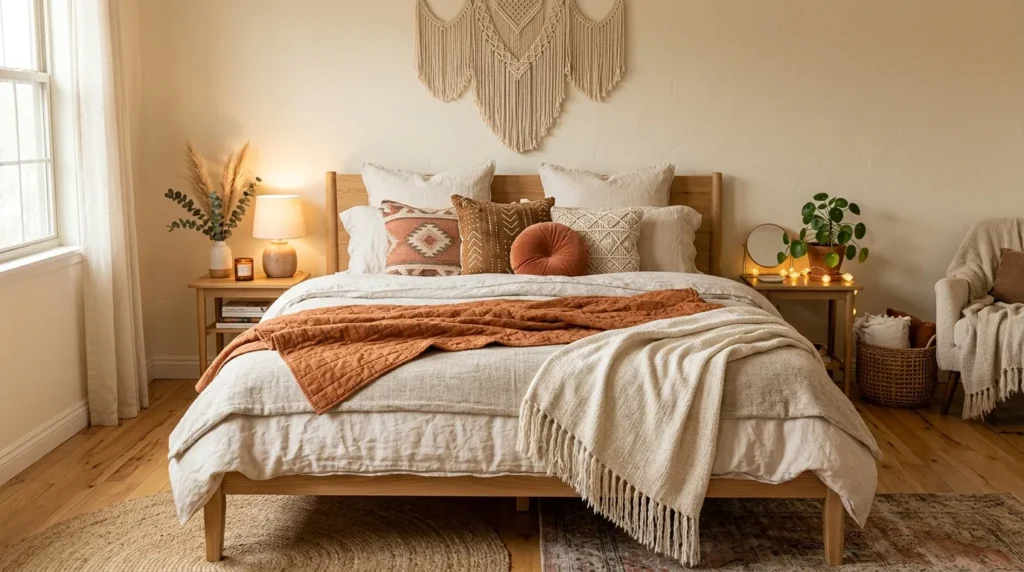
- Creates the soft, relaxed center of the room
- Works with quilts, linen duvets, throws, and mixed pillows
- Adds comfort without needing new furniture
- Makes the bed look styled but not overly perfect
Layered bedding is the easiest way to make the whole room feel warmer and more inviting. Start with soft cotton or linen sheets, then add a quilt, duvet, lightweight blanket, or textured throw at the foot of the bed. The goal is to make the bed feel collected instead of stiff. In my experience, bohemian bedrooms look best when the bedding has movement, soft folds, and mixed textures. Cream, clay, oatmeal, rust, sage, and warm white all create a calm base.
The finished bed should feel comfortable enough to use every night, not just pretty for a photo. Choose breathable fabrics if you live in a warmer state, and add heavier woven layers if your winters are cold. Mix two or three pillow sizes, but avoid piling so many that the bed becomes annoying to make. A washed linen duvet, cotton quilt, and fringe throw can create depth without clutter. This simple update gives the room softness, comfort, and that relaxed Pinterest look people love saving.
2. Earthy Palette
- Builds a calm color story for the entire room
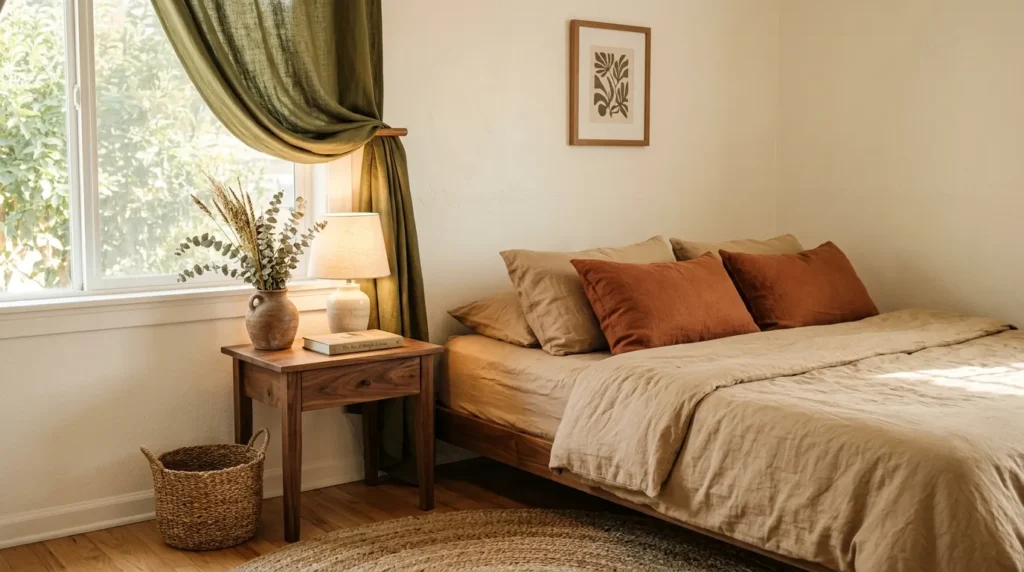
- Works with beige, terracotta, olive, rust, cream, and brown
- Helps mixed decor feel intentional
- Makes small bedrooms feel warm instead of crowded
An earthy color palette gives the room a grounded feeling before you add any decor. Instead of bright, sharp colors, choose tones inspired by clay, sand, wood, stone, dried grass, and soft greenery. Warm white walls, tan bedding, terracotta pillows, olive curtains, and walnut furniture can all work together beautifully. That’s why many designers recommend choosing three main colors before shopping. It keeps the room from becoming random, especially when you love vintage pieces, handmade decor, and layered patterns.
The transformation happens when every detail feels connected without matching too closely. A rust pillow can repeat the color of a clay vase, while a woven rug can echo the tone of a rattan chair. If the room feels too brown, add cream bedding or pale curtains to lift the look. If it feels too plain, bring in one deeper accent like charcoal, forest green, or burnt orange. This palette makes the bedroom feel cozy, natural, and peaceful while still leaving room for personality.
3. Woven Headboard
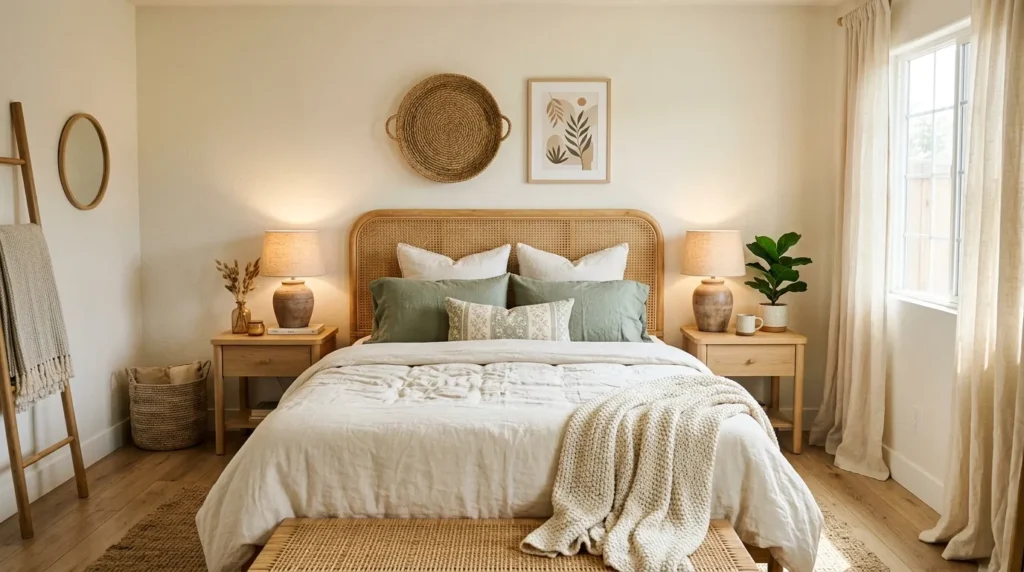
- Adds instant texture behind the bed
- Works with rattan, cane, wicker, wood, or bamboo
- Creates a strong focal point without heavy furniture
- Pairs well with neutral bedding and wall decor
A woven headboard can make a simple bed look finished without overwhelming the room. Rattan, cane, wicker, bamboo, or carved wood adds natural texture that feels light, warm, and relaxed. This is especially useful in rental bedrooms where you may not want to paint or install permanent wall treatments. I’ve noticed that woven headboards photograph beautifully because they create shadow, pattern, and depth behind plain bedding. They also soften the hard lines of a basic bed frame.
To style it well, keep the bedding slightly simpler so the headboard can stand out. White, cream, beige, clay, or sage bedding works especially well with natural woven materials. Add wall sconces, small pendant lights, or framed art on each side if the bed wall feels empty. In smaller rooms, choose a low-profile woven headboard to avoid crowding the wall. The result feels airy, textured, and intentional, giving the bedroom a finished focal point without needing bulky furniture or expensive remodeling.
4. Vintage Nightstands
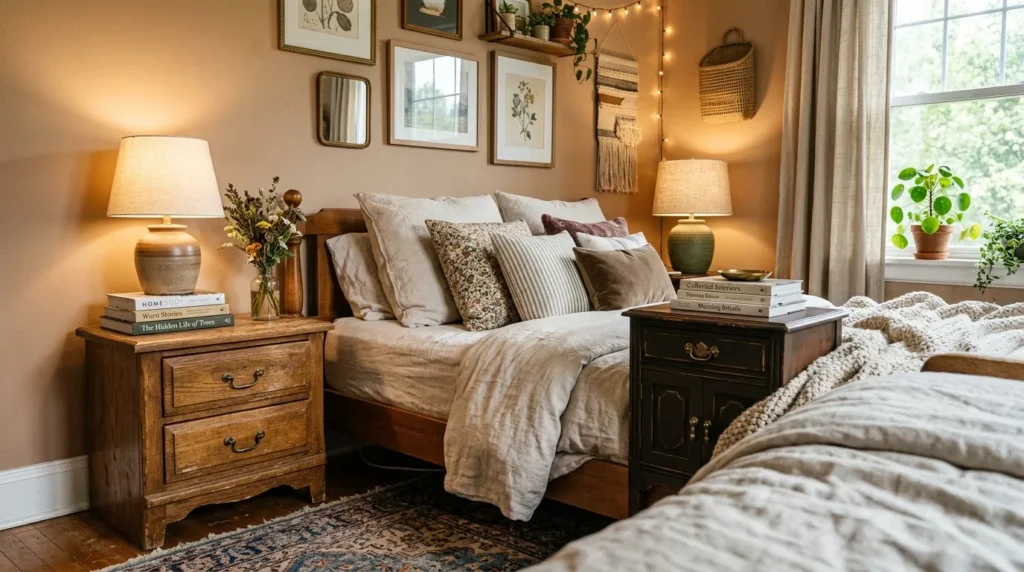
- Adds character beside the bed
- Works with wood, cane, painted, or thrifted pieces
- Makes the room feel collected instead of showroom-perfect
- Provides storage for books, lamps, and personal items
Vintage nightstands bring soul into a bedroom because they make the space feel gathered over time. A small wood chest, cane-front table, painted thrift-store piece, or mismatched pair can work beautifully when the heights feel balanced. In my experience, the best rooms often have at least one older piece because it keeps the design from feeling flat. Look for warm wood tones, curved legs, brass handles, carved details, or simple drawers that add function without looking too polished.
The key is to style the nightstand with restraint so it feels useful, not cluttered. Add a lamp, small dish, book stack, candle, or ceramic vase, then leave some empty space for a phone or glass of water. If your bed is tall, make sure the nightstand reaches close to mattress height. If the room is small, choose pieces with drawers to hide everyday items. A vintage nightstand makes the room feel personal, grounded, and charming while still supporting your nightly routine.
5. Patterned Rugs
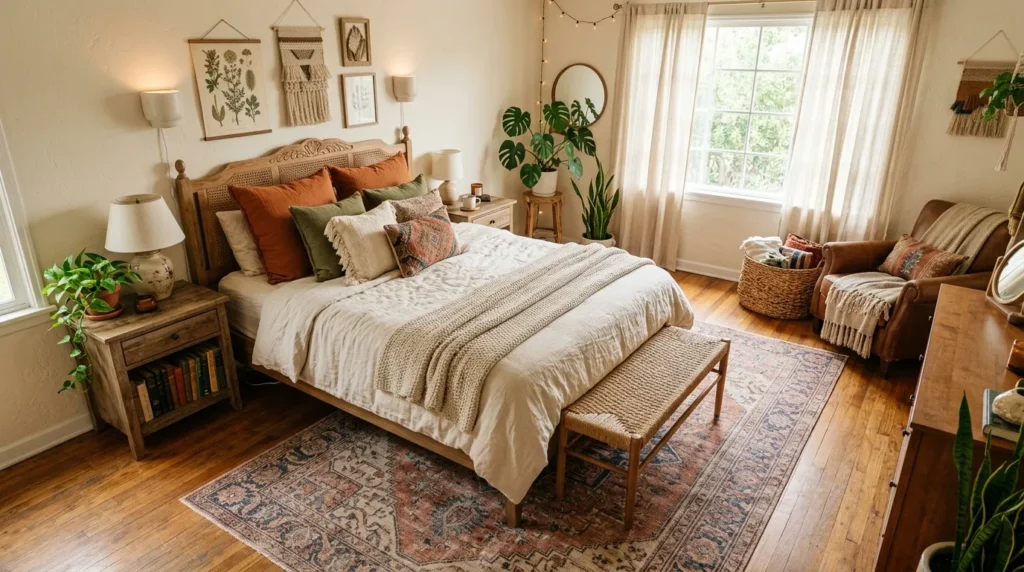
- Anchors the bed and seating areas
- Adds color, softness, and visual movement
- Works with vintage, Moroccan, Turkish, or washable styles
- Helps plain bedrooms feel finished
A patterned rug can pull the whole room together faster than almost any other decor piece. Vintage-style, Moroccan-inspired, Turkish, tribal, or faded floral rugs bring color and movement to the floor without needing busy walls. Choose colors that repeat in your bedding or pillows so the rug feels connected. I’ve seen this work well in many homes because a rug makes the bed feel anchored, especially in rooms with hardwood, laminate, or plain apartment carpet.
Size matters more than many people realize. A rug that is too small can make the bed look disconnected, while a larger rug creates a softer landing when you step out of bed. For queen beds, try placing the rug under the lower two-thirds of the bed. For smaller rooms, runners on each side can work well. Washable rugs are practical for pets, rentals, and busy homes. The right rug adds comfort, pattern, and warmth while making the bedroom feel thoughtfully styled.
6. Plant Corners
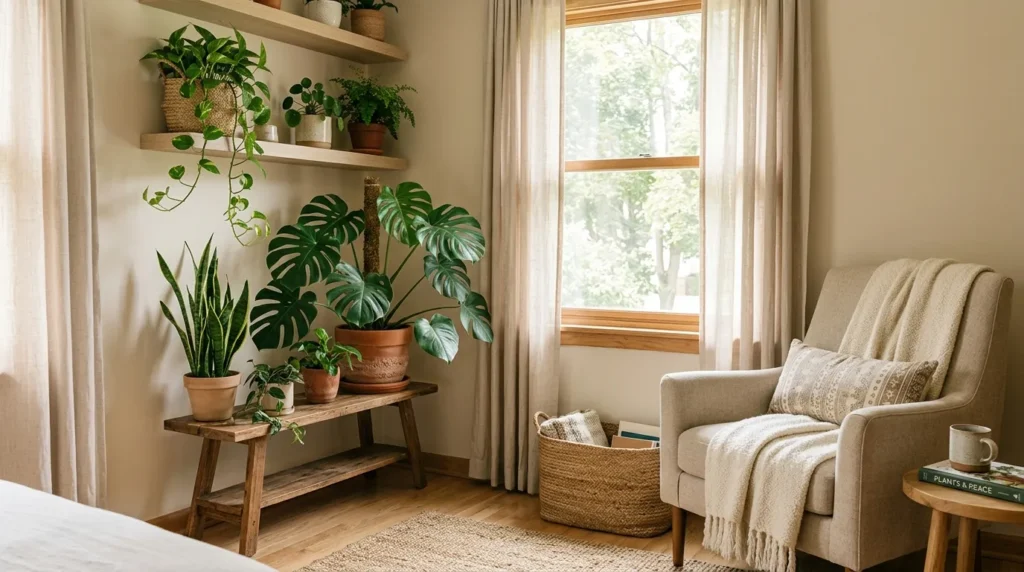
- Brings life, height, and natural color into the room
- Works with planters, baskets, stands, and hanging pots
- Softens corners that feel empty or awkward
- Adds freshness without adding visual clutter
Plants make a bedroom feel alive in a way that decor alone cannot. A leafy corner with a snake plant, pothos, rubber plant, monstera, or ZZ plant can soften hard edges and bring natural shape into the room. Choose plants based on your light conditions, not just what looks pretty online. Many USA homes have bedrooms with indirect light, so low-maintenance plants often work best. Use woven baskets, clay pots, wood stands, or simple ceramic planters to support the overall style.
The best plant corners have height variation, so the eye moves naturally through the space. Place one tall plant on the floor, one trailing plant on a shelf, and one small plant on a nightstand or dresser. If you do not have a green thumb, high-quality faux greenery can still add softness when styled thoughtfully. Keep pots in similar tones so the corner does not feel scattered. This idea brings freshness, texture, and calm energy into the room while filling empty areas beautifully.
7. Macrame Walls
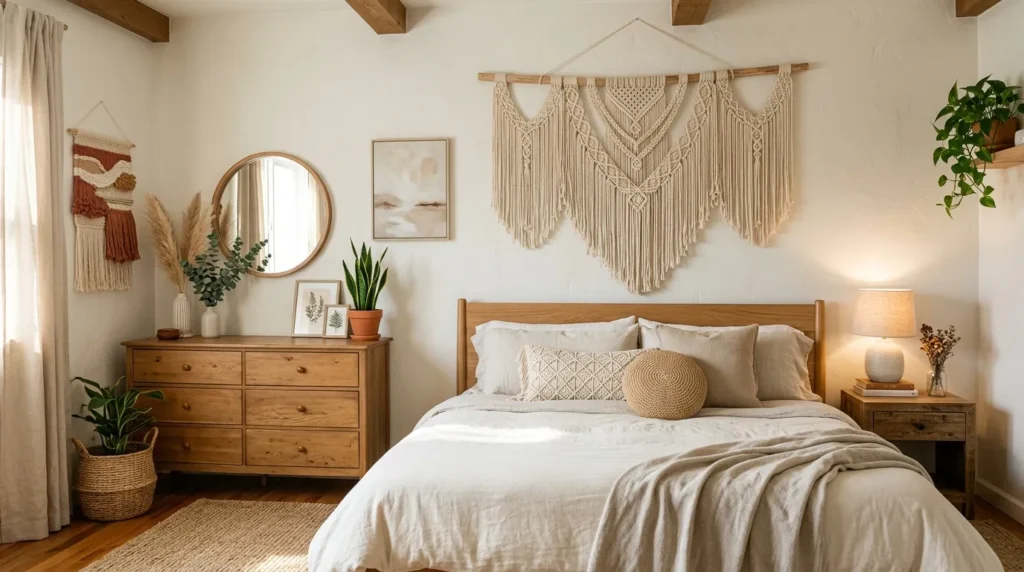
- Creates handmade texture above beds or dressers
- Works with macrame hangings, woven art, or fiber pieces
- Adds softness without using framed prints
- Makes plain walls feel warm and personal
Macrame wall decor gives the room handmade softness without needing bold color or expensive art. A large wall hanging above the bed can replace a traditional headboard, while smaller pieces work well above a dresser, reading chair, or vanity. Cotton rope, wool fibers, wood dowels, and fringe bring texture that feels relaxed and tactile. This works especially well in neutral rooms because the fibers create depth without making the wall feel busy. The look feels warm, personal, and easygoing.
To keep the room from feeling too themed, choose one strong fiber piece instead of covering every wall. If the macrame is large, keep nearby bedding and curtains simple. If the wall hanging is small, layer it with framed art, a mirror, or floating shelf. Dust it gently and avoid placing it near candles or humid windows. The finished wall feels softer, taller, and more styled. It also gives the room a handcrafted detail that fits beautifully with layered bedding and natural materials.
8. Low Lighting
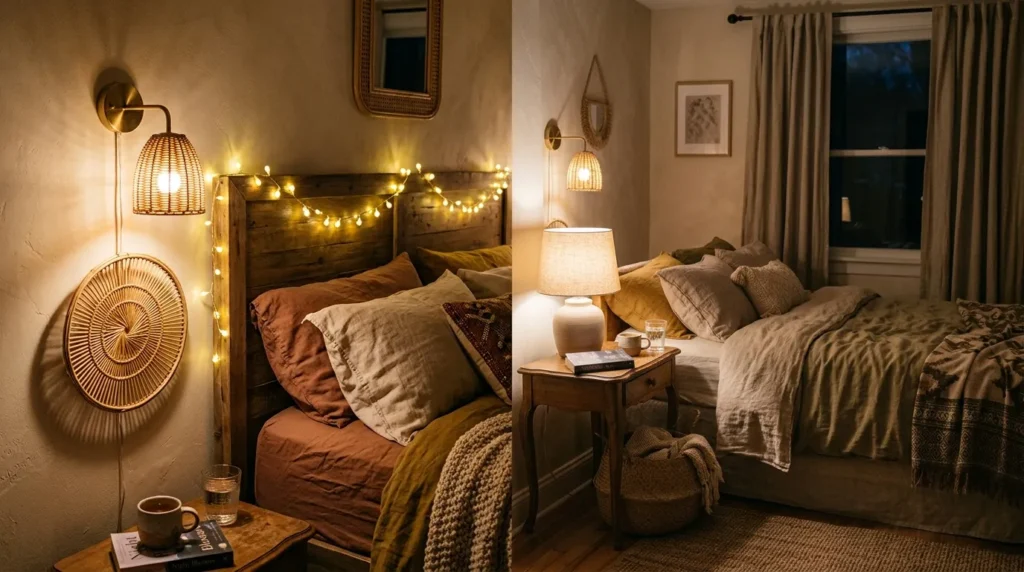
- Creates a cozy evening mood
- Works with lamps, sconces, string lights, and pendants
- Softens shadows and makes textures glow
- Helps the room feel restful at night
Low lighting is what makes a bedroom feel calm after sunset. Instead of relying only on a bright ceiling fixture, use warm lamps, plug-in sconces, paper lanterns, woven pendants, or soft string lights. Choose bulbs around 2700K for a cozy glow that flatters natural textures like wood, linen, rattan, and clay. In my experience, lighting is one of the biggest differences between a room that looks decorated and a room that actually feels relaxing at night.
Place light sources at different heights so the room feels layered. A lamp on each nightstand gives balance, while a floor lamp near a chair creates a reading spot. String lights can work when they look subtle, not tangled or overly bright. If you rent, plug-in sconces are useful because they add style without hardwiring. Use dimmers or smart bulbs if possible. Soft lighting makes the bedroom feel warmer, more intimate, and more peaceful, especially when paired with textured bedding and natural wall decor.
9. Curtain Layers
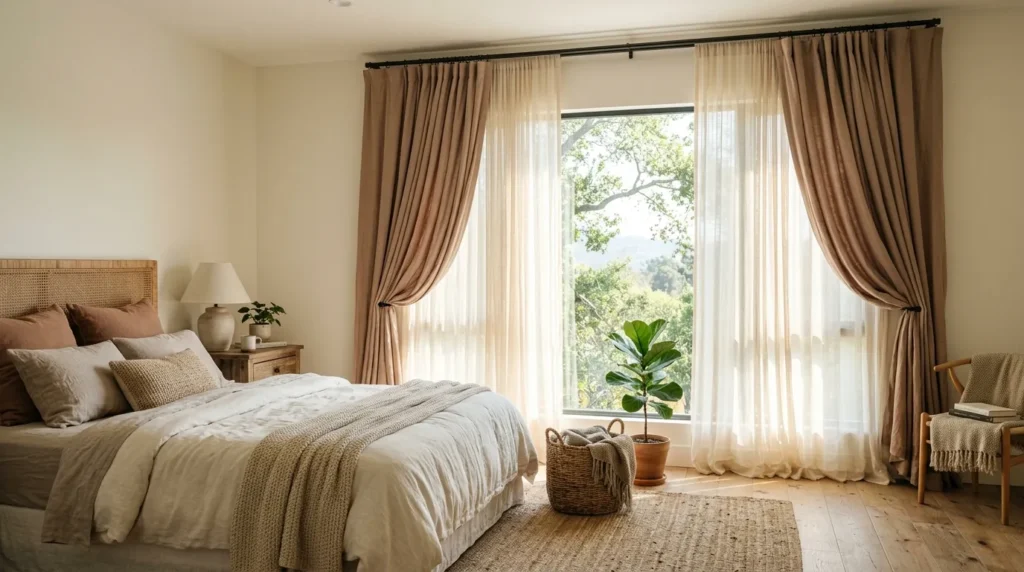
- Softens windows and improves the room’s mood
- Works with linen, cotton, gauze, bamboo, or blackout panels
- Adds height when hung close to the ceiling
- Helps control privacy, light, and temperature
Curtains can change the entire feeling of a bedroom because they frame the light. Lightweight linen, cotton, gauze, or sheer panels make sunlight feel softer, while bamboo shades add texture and privacy. For bedrooms that face the street or get early morning sun, layer sheers with blackout panels. Many designers recommend hanging curtains higher and wider than the window frame because it makes the ceiling feel taller. This simple trick gives even modest bedrooms a more polished, airy look.
Choose curtain colors that support the room instead of stealing attention. Cream, oatmeal, warm white, clay, olive, or soft tan panels work beautifully with bohemian decor. If the bedding already has pattern, keep curtains plain. If the room feels too simple, a subtle woven stripe or textured fabric can add interest. Let the panels touch or slightly puddle on the floor for a relaxed look. Good window layers make the space feel private, soft, and finished while helping control glare and temperature.
10. Artful Dressers
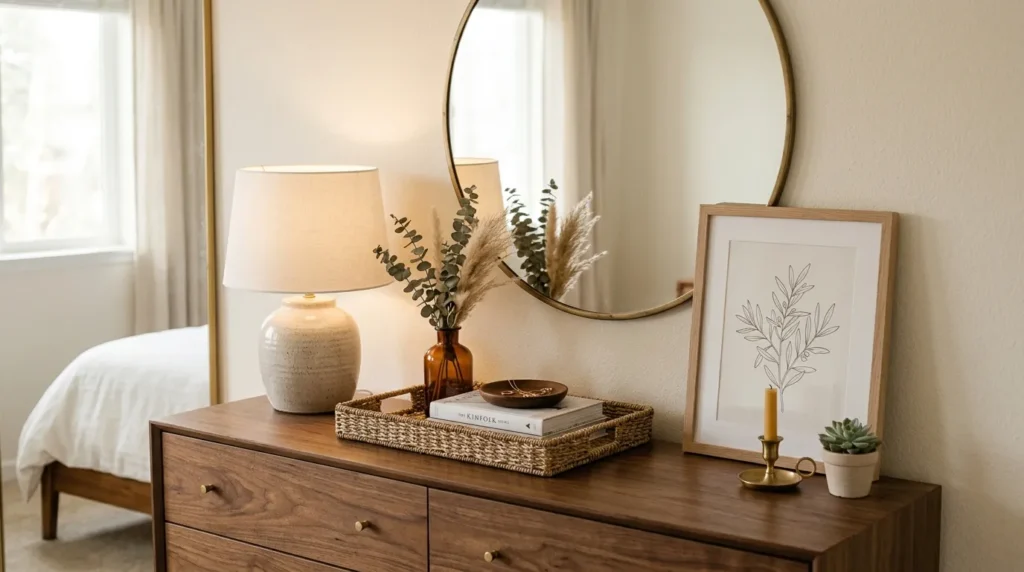
- Turns storage into a styled focal point
- Works with mirrors, lamps, trays, vases, and framed art
- Helps daily items look organized
- Adds personality without cluttering the room
A dresser can become one of the prettiest moments in the room when it is styled with purpose. Instead of letting it collect random items, create a simple arrangement with a mirror, lamp, tray, vase, framed print, or jewelry bowl. Use the dresser surface to repeat the room’s materials, such as wood, ceramic, woven grass, brass, stone, or glass. I’ve noticed that dressers look best when there is one taller object, one medium object, and one low tray or bowl.
The setup should still support your morning and evening routine. Use a tray for perfume, lotion, watches, or everyday jewelry, and keep less attractive items inside drawers or baskets. A round mirror softens square furniture, while framed art adds color without taking up much space. If the dresser is dark, brighten it with a pale runner or ceramic lamp. If it is light wood, add deeper accents for contrast. This turns necessary storage into a styled feature that feels personal and calm.
11. Cozy Seating
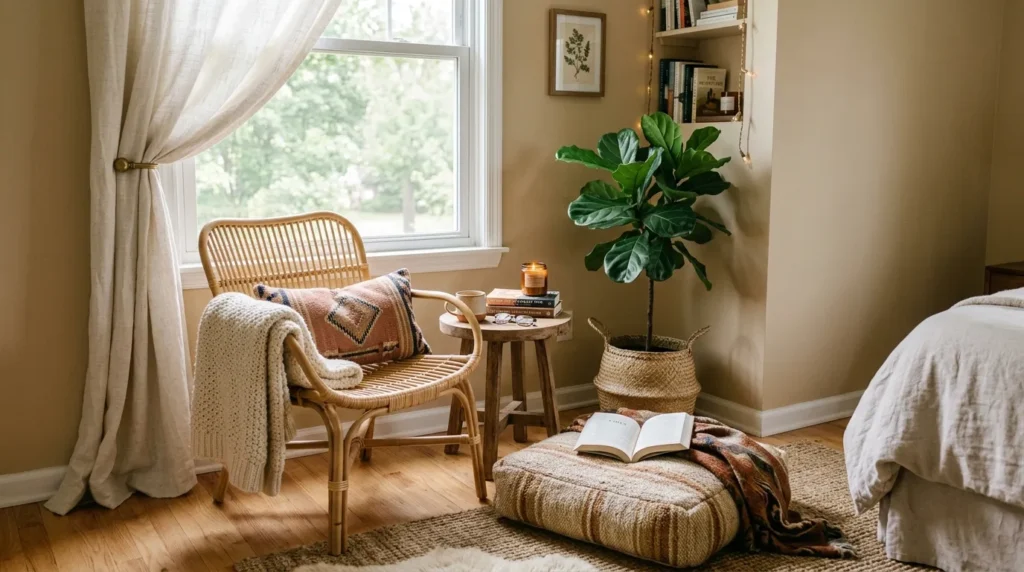
- Adds a relaxing corner beyond the bed
- Works with accent chairs, poufs, benches, or floor cushions
- Creates space for reading, dressing, or morning coffee
- Makes larger bedrooms feel more complete
A small seating area makes the bedroom feel more like a retreat than just a place to sleep. This could be a rattan chair, upholstered slipper chair, storage bench, pouf, or floor cushion beside a window. The goal is to create a spot where you can read, put on shoes, drink coffee, or pause at the end of the day. Even in a small room, one chair with a tiny side table can make the space feel more intentional and comfortable.
Style the seating area with comfort and scale in mind. A bulky chair can crowd a small room, while a slim woven chair or bench may fit better. Add a pillow, folded throw, and small lamp if the corner needs warmth. If the seating is near a window, pair it with a plant or textured curtain for softness. In larger bedrooms, place a bench at the foot of the bed for balance. This final layer makes the room feel finished, inviting, and easy to enjoy daily.