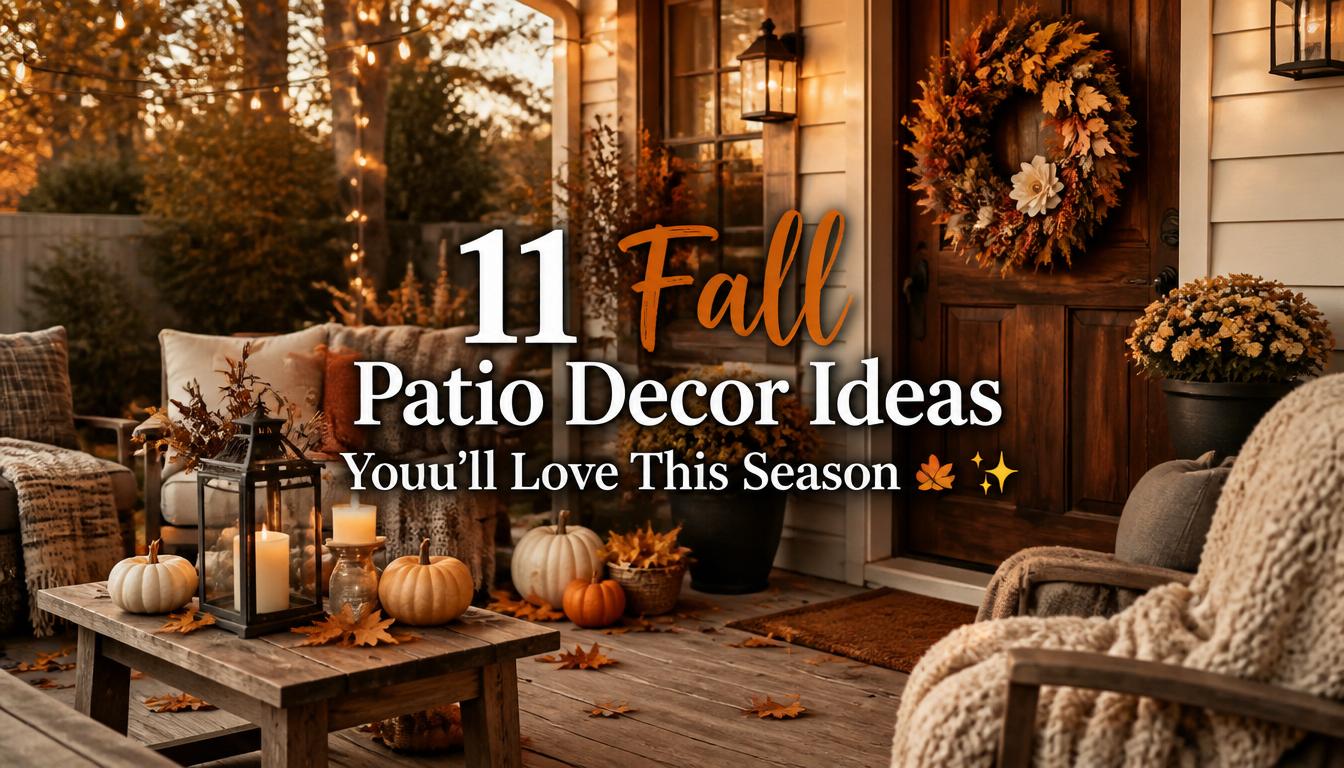
11 Fall Patio Decor IdeasPrimary
Autumn is the season when outdoor spaces start feeling softer, warmer, and more personal. The air gets crisp, the light turns golden, and even a simple chair outside can feel special with the right layers around it. For many homes across the USA, the patio becomes a natural gathering place during this time. It is where coffee tastes better in the morning, blankets come out after dinner, and small seasonal details make everyday moments feel more thoughtful.
A well-styled fall patio does not need to look expensive or overdone. The best spaces usually feel collected, comfortable, and easy to actually use. Think warm throws, lanterns, weather-friendly pillows, pumpkins in natural colors, mums in sturdy planters, woven textures, and a layout that invites people to sit down instead of just admire it from the door. This guide focuses on practical ideas that work for backyards, covered porches, apartment balconies, decks, townhomes, and small suburban patios.
You will find styling ideas that are visual enough for Pinterest but realistic enough for daily life. Each section includes simple decor logic, materials to consider, layout suggestions, and details that make the space feel finished. The goal is not to copy a showroom. The goal is to create an outdoor area that feels warm, seasonal, and welcoming every time you step outside.
1. Layered Seating
- Adds warmth without replacing outdoor furniture
- Makes chairs feel more comfortable during chilly weather
- Works with benches, sectionals, bistro sets, and porch rockers
- Creates a styled look using pillows, throws, and cushions
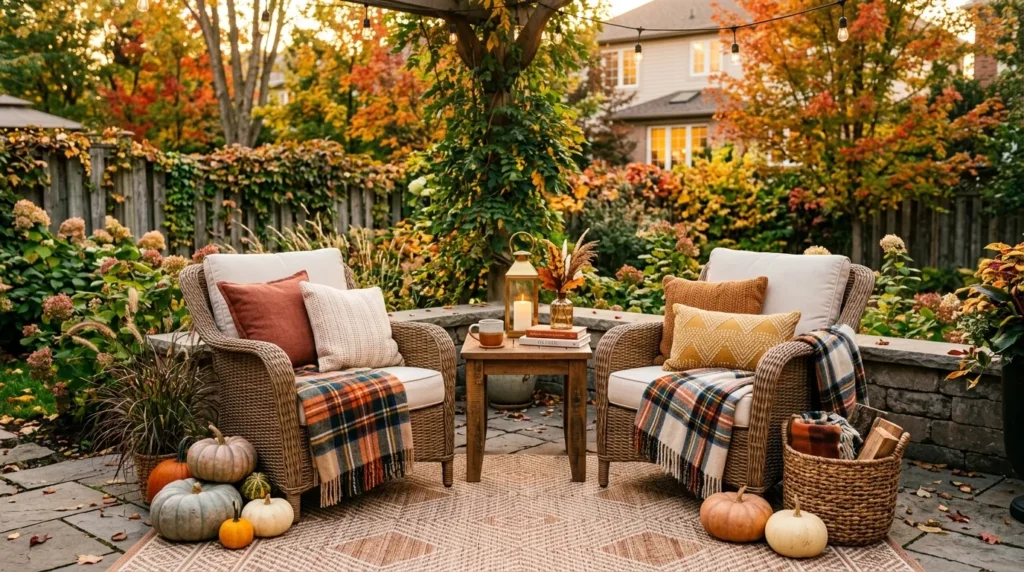
Comfort starts with layers, especially when outdoor seating begins to feel cold in the evening. A plain patio chair can look inviting with a weather-resistant cushion, a plaid throw, and two textured pillows in rust, cream, olive, or caramel. In my experience, seating looks best when the colors repeat nearby through planters, pumpkins, or a rug. Use outdoor-rated fabrics when possible, because fall weather can bring damp mornings, wind, and surprise rain in many parts of the country.
The transformation is instant because layered seating tells people the space is meant to be used, not just decorated. Place a throw over one arm of a chair instead of folding it too perfectly, and mix one patterned pillow with one solid pillow for balance. If you have a small balcony, use one deep chair and a footstool rather than too many pieces. For larger patios, create conversation zones with seating facing inward. The result feels cozy, practical, and ready for slow evenings outside.
2. Pumpkin Clusters
- Creates a classic seasonal look without much effort
- Works well near steps, planters, doors, and seating areas
- Adds color, shape, and texture to empty corners
- Can be styled rustic, neutral, modern, or farmhouse
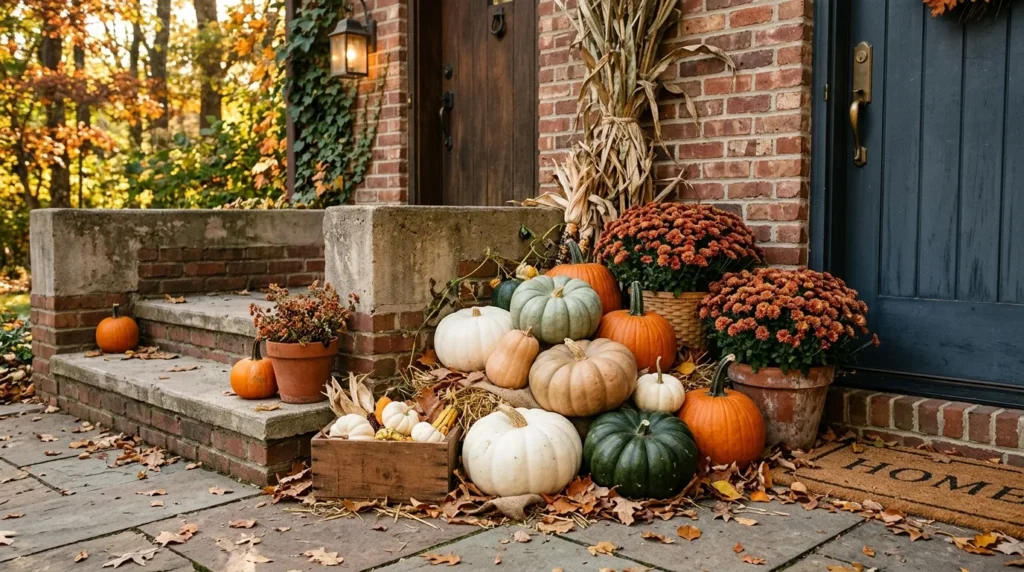
Pumpkins look more natural when they are grouped instead of lined up like decorations from a store shelf. Use odd numbers, such as three, five, or seven, and mix sizes for a relaxed collected look. White, sage, tan, orange, and deep green pumpkins can all work together when the surrounding colors stay warm and simple. I’ve noticed that clusters look best when they sit near something grounded, such as a planter, lantern, bench leg, doormat, or porch step.
To make the arrangement feel styled, vary the height and texture around it. Place one pumpkin on a small wood crate, tuck a mini pumpkin into a planter, and let a larger one sit directly on the ground. Add dried corn stalks, mums, or ornamental cabbage if the area feels bare. For covered spaces, faux pumpkins can be mixed with real ones to stretch the look through the season. This gives your outdoor area a full harvest feel without requiring a complicated setup.
3. Cozy Firelight
- Adds warmth, movement, and evening atmosphere
- Works with fire pits, tabletop fire bowls, or lanterns
- Makes the space useful after sunset
- Creates a strong gathering point for family and guests
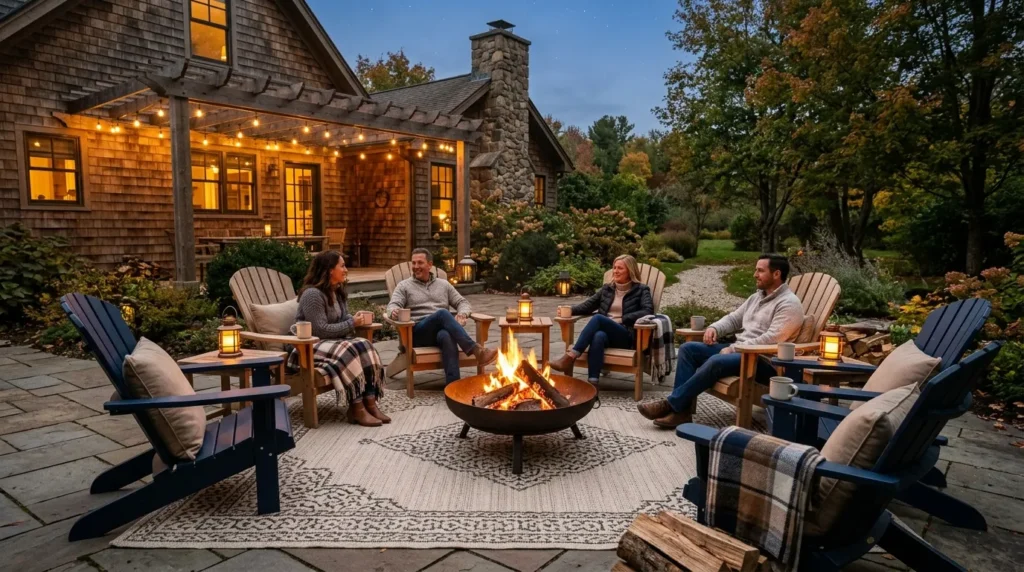
Firelight changes the whole mood of an outdoor space once the sun starts dropping earlier. A fire pit, tabletop fire bowl, chiminea, or group of lanterns can give the patio a natural focal point. For suburban backyards, a round fire pit surrounded by chairs feels classic and easy to use. For small patios or rentals, battery candles inside metal lanterns can give a similar glow without open flame. That’s why many designers recommend lighting as part of the layout, not an afterthought.
Safety and placement matter as much as style when you add warmth outdoors. Keep real flames away from cushions, dry leaves, overhanging branches, and low ceilings. Use heat-safe surfaces, follow local rules, and choose sturdy pieces that will not tip in wind. Style the area with a washable outdoor rug, side tables for mugs, and a basket of folded blankets nearby. The glow makes the whole space feel more welcoming, especially during casual dinners, weekend football nights, or quiet evenings with hot cider.
4. Harvest Planters
- Adds living color that lasts beyond one weekend
- Works with mums, kale, grasses, pansies, and cabbage
- Makes entry areas and corners feel fuller
- Helps connect patio decor with the surrounding yard
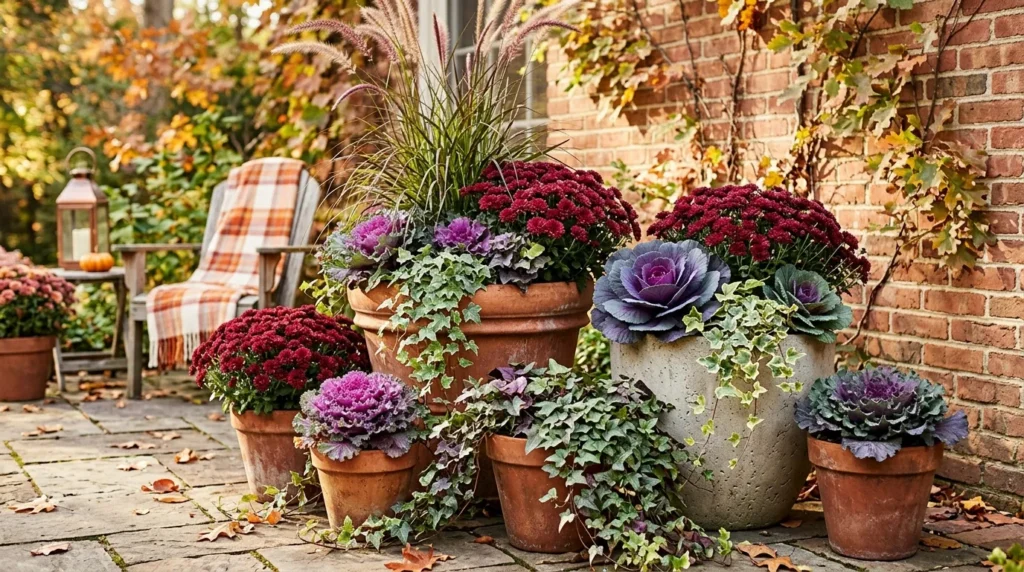
Seasonal planters bring life to a patio in a way that decor alone cannot. Mums are a classic choice, but they look more polished when paired with ornamental kale, purple cabbage, pansies, trailing ivy, or fountain grass. Use containers in terracotta, concrete, black metal, woven resin, or aged ceramic for texture. In my experience, planters look more expensive when you repeat one container style in different sizes. This creates rhythm without making the space feel overly matched.
Think about height before you buy plants, because strong planters need layers just like indoor arrangements. Tall grasses can go in the back, mums or cabbage in the center, and trailing vines near the edge. Place planters near seating, stairs, railings, or the patio door so they frame the space naturally. Water needs change with cooler weather, so check soil before assuming plants are dry. With the right mix, your patio feels lush, colorful, and seasonal for weeks instead of just looking decorated for one afternoon.
5. Outdoor Rugs
- Defines the sitting area and makes furniture feel connected
- Adds softness underfoot during cooler weather
- Helps small spaces look more finished
- Works with neutral, plaid, striped, or vintage-style patterns
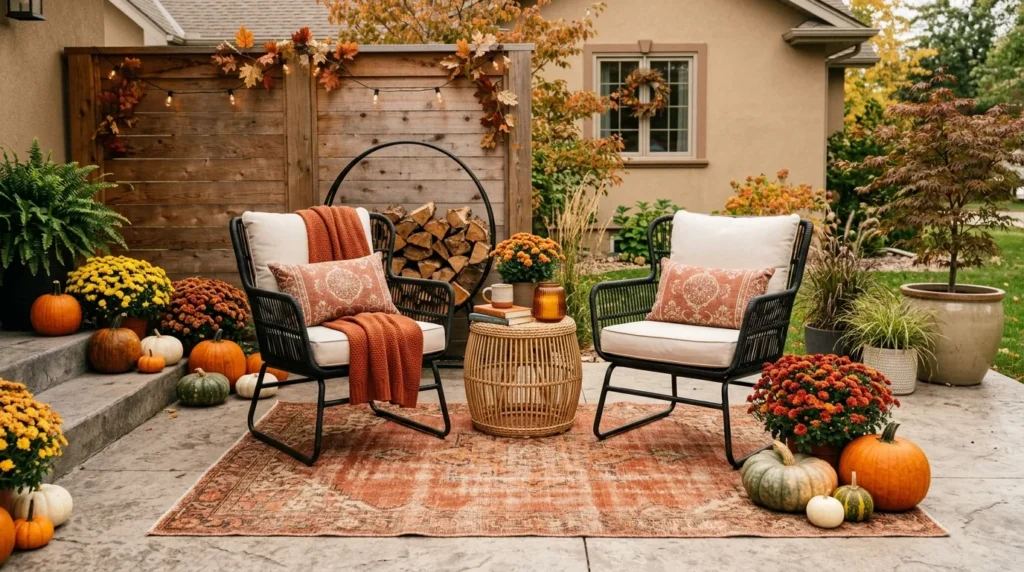
A rug can make outdoor furniture look like a real room instead of a few pieces sitting on concrete. Choose an outdoor-rated rug that can handle moisture, dirt, and foot traffic, especially if your patio is uncovered. Warm neutrals, faded rust, charcoal, tan, or muted plaid patterns work beautifully for autumn without feeling too themed. I’ve seen this work well in many homes because a rug visually pulls chairs, tables, pillows, and planters into one organized space.
Size is the detail that makes the biggest difference. If the rug is too small, the seating area can feel awkward and unfinished. Aim for the front legs of chairs or sofas to sit on the rug, even in compact spaces. For apartment balconies, a narrow runner can create the same cozy effect without covering the whole floor. Shake it out often during leaf season and let it dry fully after rain. The right rug adds comfort, color, and structure while making the patio easier to style.
6. Lantern Lines
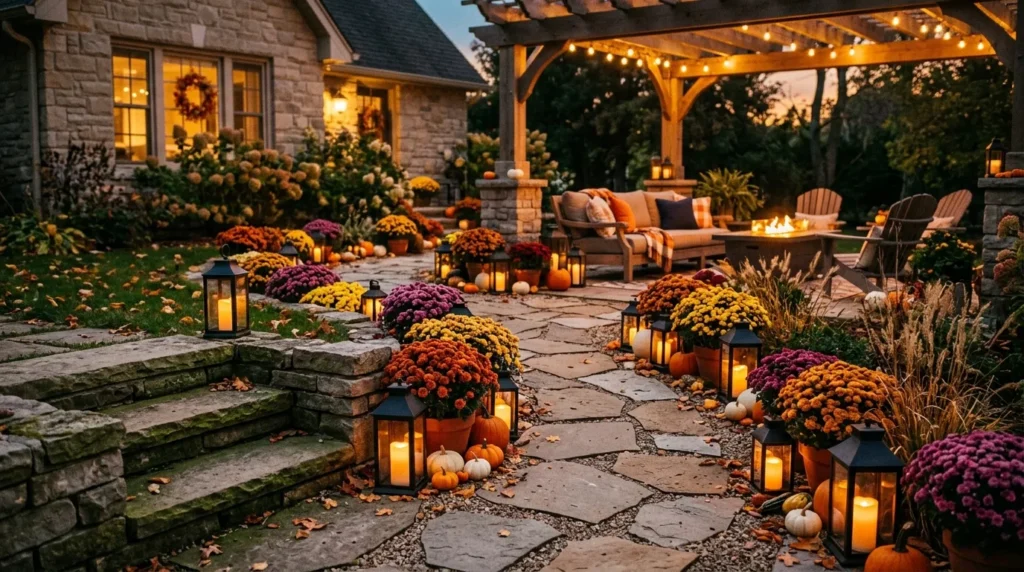
- Adds soft lighting along walkways, steps, and walls
- Makes the patio safer and prettier after dark
- Works with metal, wood, glass, or woven lanterns
- Creates structure without permanent installation
Lanterns are one of the easiest ways to make an outdoor space feel finished after sunset. Line them along steps, place them beside planters, or group them near a seating area for a warm layered glow. Black metal lanterns feel classic, brass adds warmth, and woven lanterns bring a softer rustic texture. Use battery-operated candles if wind, pets, children, or rental rules make real candles difficult. The light should feel gentle, not bright enough to flatten the mood.
For the most natural look, mix two or three lantern heights instead of using identical pieces everywhere. Place the tallest lantern near a door or wall, then let smaller ones guide the eye toward seating. If your patio has a pergola, hang lanterns at different levels for a relaxed outdoor dining feel. Add timers so the lights turn on before guests arrive or before you step outside with dinner. This simple lighting layer makes the space feel intentional, safe, and inviting during crisp autumn evenings.
7. Plaid Accents
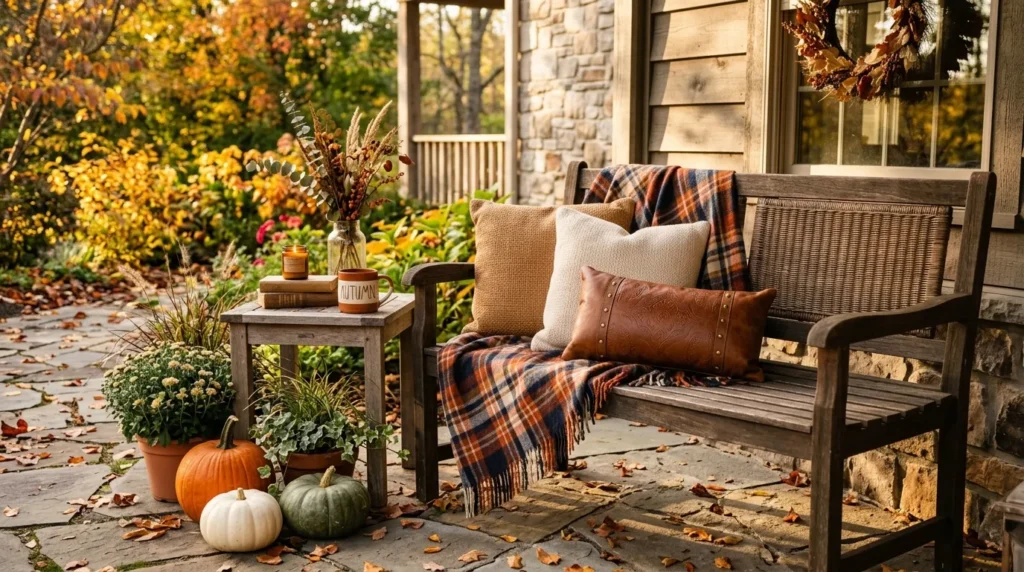
- Brings a classic autumn pattern into the space
- Works with pillows, throws, napkins, cushions, and table runners
- Adds visual interest without changing the whole layout
- Pairs well with leather, wood, wicker, and pumpkins
Plaid adds instant seasonal character, but it works best when used with a light hand. One plaid throw, two patterned pillows, or a table runner can be enough to give the patio a cozy autumn look. Choose colors that connect with your existing furniture, such as camel, cream, forest green, navy, burgundy, or soft orange. In my experience, plaid looks more elevated when paired with solid textures like leather, wicker, wool, and wood rather than several competing patterns.
Use plaid where people naturally gather or sit, not on every surface. A blanket over a rocking chair, plaid napkins on an outdoor table, or a single lumbar pillow on a bench can add warmth without looking busy. If your furniture is dark, use lighter plaid for contrast. If your cushions are cream, try deeper tones for depth. Keep nearby pumpkins and planters simpler so the pattern can breathe. The result feels classic, cozy, and picture-friendly without turning the patio into a themed display.
8. Dining Corners
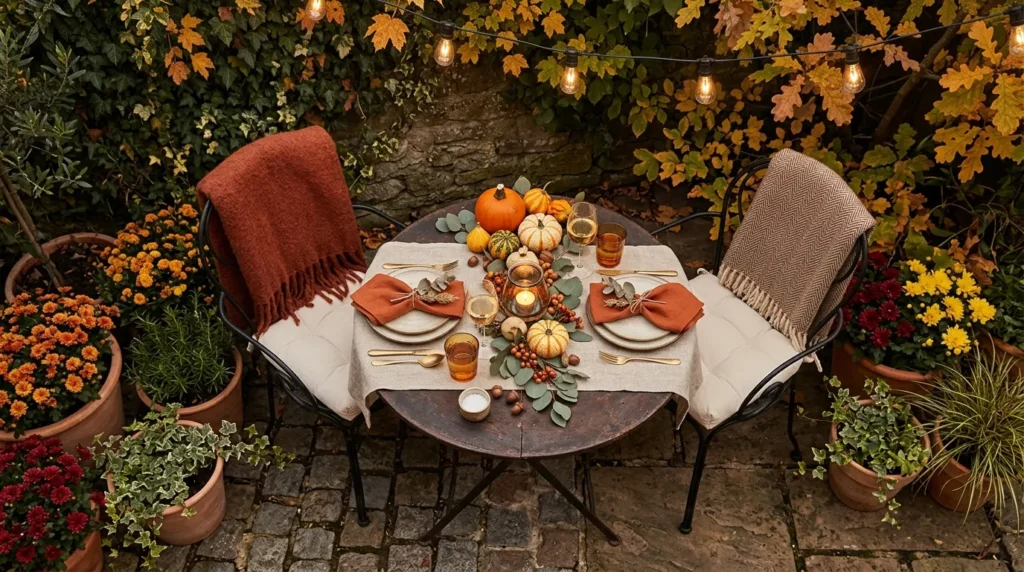
- Turns the patio into a seasonal eating space
- Works for coffee, weekend brunch, dinner, or snacks
- Adds charm with linens, candles, dishes, and centerpieces
- Makes even small outdoor tables feel special
An outdoor dining corner can make ordinary meals feel memorable during the cooler months. You do not need a large table; even a small bistro set can feel seasonal with linen napkins, amber glasses, a pumpkin centerpiece, and a warm throw on each chair. Keep the setup practical by choosing washable table linens and sturdy dishes that can handle outdoor use. Many designers recommend using one repeated color across the table, cushions, and nearby decor to create a pulled-together look.
Focus on comfort first, because people will not linger if the chairs are cold, the lighting is harsh, or the table feels crowded. Add seat cushions, a small lantern, and a tray for serving drinks or dessert. For larger patios, place the dining area near the kitchen door so carrying food is easier. For small spaces, use a folding table that can be stored after meals. This setup turns the patio into a useful seasonal room, perfect for soup nights, game-day snacks, or weekend breakfast outdoors.
9. Basket Styling
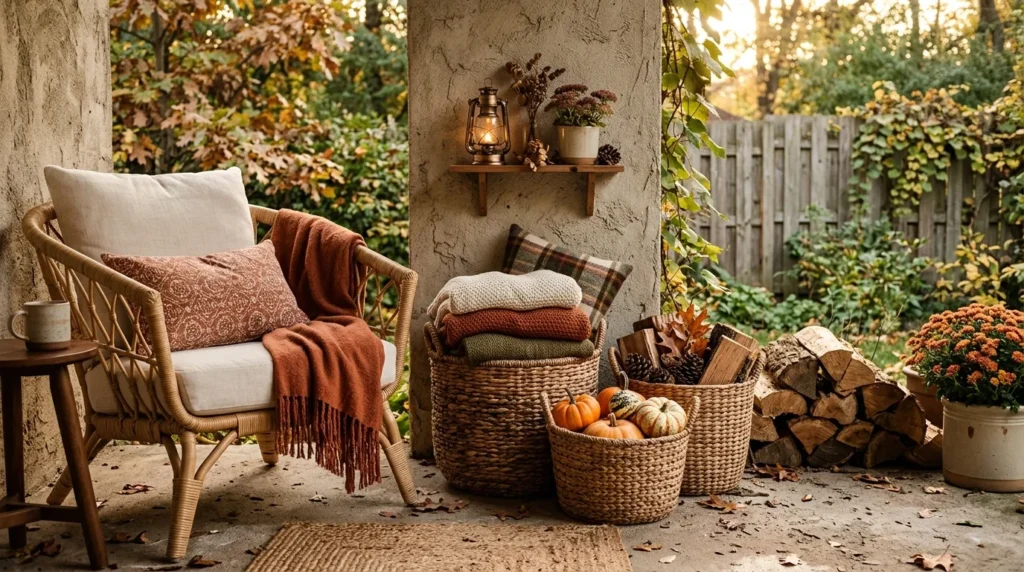
- Adds storage and texture at the same time
- Works for blankets, pillows, firewood, mums, or pumpkins
- Softens hard patio surfaces like concrete or brick
- Makes the space feel collected and lived-in
Baskets bring warmth to outdoor spaces because they add texture without feeling heavy. Use woven, seagrass, rattan-look resin, or wire baskets to hold blankets, pillows, firewood, pumpkins, or garden tools. For uncovered patios, choose weather-resistant materials or keep natural baskets in a protected corner. I’ve noticed basket styling works especially well when the patio has a lot of hard surfaces, such as concrete, brick, stone, or metal furniture. The woven texture softens everything around it.
Place baskets where they solve a real problem, not just where they fill space. A tall basket near the door can hold folded throws, while a low basket beside the fire pit can store kindling or flameless candles. A handled basket filled with mini pumpkins can move from table to steps when you need more room. If the space feels messy, limit baskets to two or three styles. This keeps the look warm and intentional while making the patio easier to reset after guests leave.
10. Warm Metals
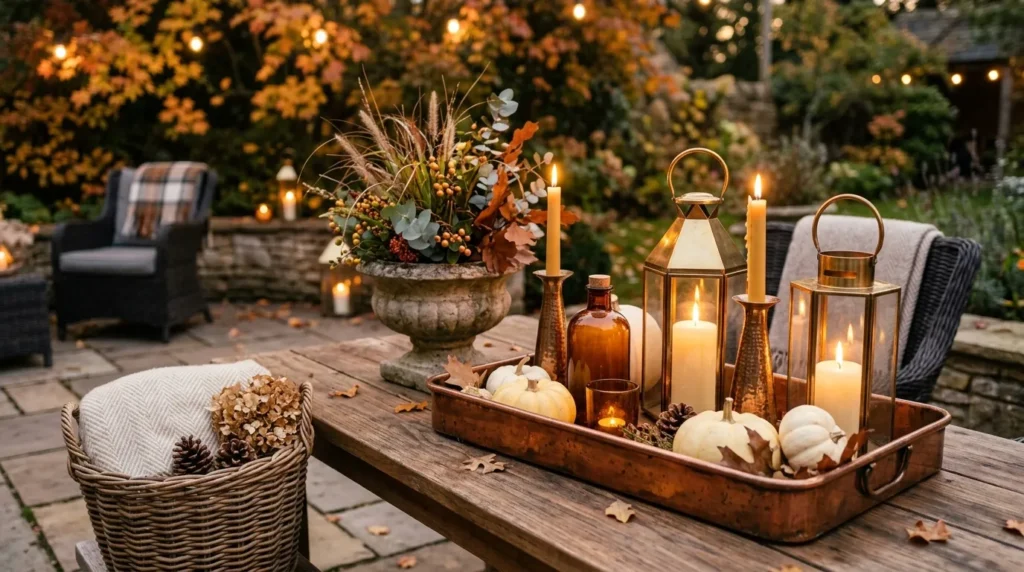
- Adds a subtle glow without using more fabric
- Works through lanterns, trays, planters, and candle holders
- Pairs well with orange, brown, cream, green, and black
- Helps the space feel richer and more finished
Warm metal accents can make a seasonal patio feel richer without adding clutter. Brass, copper, bronze, and aged gold catch autumn light beautifully, especially near candles, fire bowls, and amber glass. Use these finishes in small ways, such as lantern handles, trays, planter rims, side tables, or candle holders. The key is restraint. Too much shine can feel forced outdoors, while a few metal details can brighten wood, wicker, concrete, and darker fall colors.
The best part is that warm metals transition easily from September through Thanksgiving. A copper tray can hold mugs in October and greenery in November. Bronze lanterns can stay out all season, even when pumpkins are gone. Pair metal accents with matte textures so the look feels balanced: woven baskets, stone planters, linen pillows, and rough wood all work well. This gives your outdoor seating area a polished finish while still feeling relaxed, natural, and comfortable for everyday use.
11. Welcome Steps
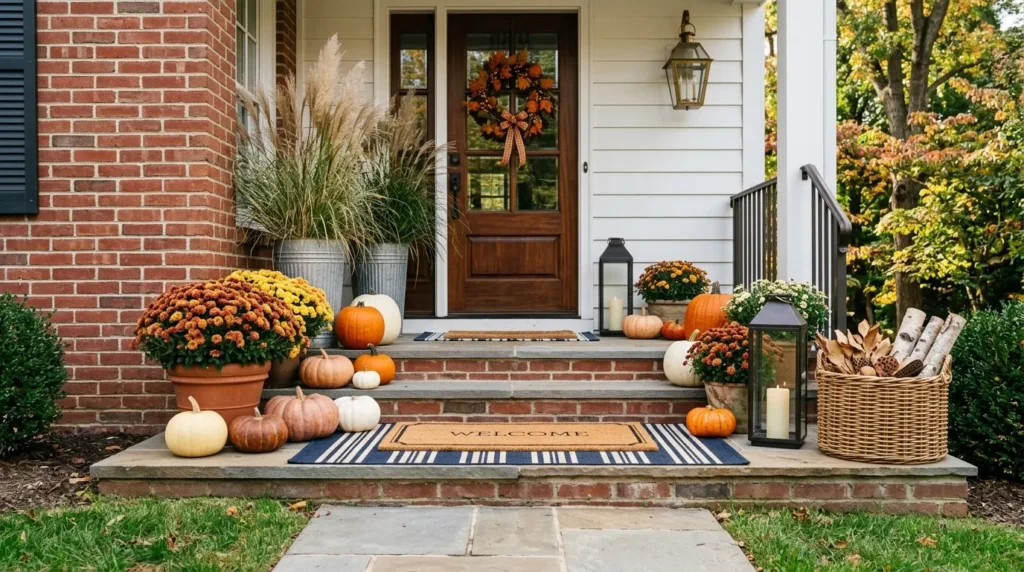
- Creates a strong first impression near the door
- Works with doormats, mums, pumpkins, lanterns, and baskets
- Makes small porches feel fuller and more styled
- Adds seasonal charm before guests reach the patio
Steps and entry points are often the first place guests notice, so they deserve thoughtful styling. Layer a coir doormat over a larger outdoor rug, then add pumpkins, mums, lanterns, and a basket or crate to one side. Keep the path clear so the display looks beautiful but still functions safely. For narrow entries, style vertically with tall grasses, stacked pumpkins, or slim lanterns. This gives the space charm without blocking foot traffic or making the doorway feel crowded.
Balance matters when decorating steps because too many small items can look scattered. Choose two main colors, such as cream and rust or green and copper, then repeat them through plants, pumpkins, and textiles. Place heavier items on lower steps and lighter pieces near the top. If your home has brick, lean into warm tones; if it has white siding, use deeper accents for contrast. This creates a welcoming transition from the yard to the patio and makes the whole outdoor area feel seasonal.