10 Healing Room Ideas
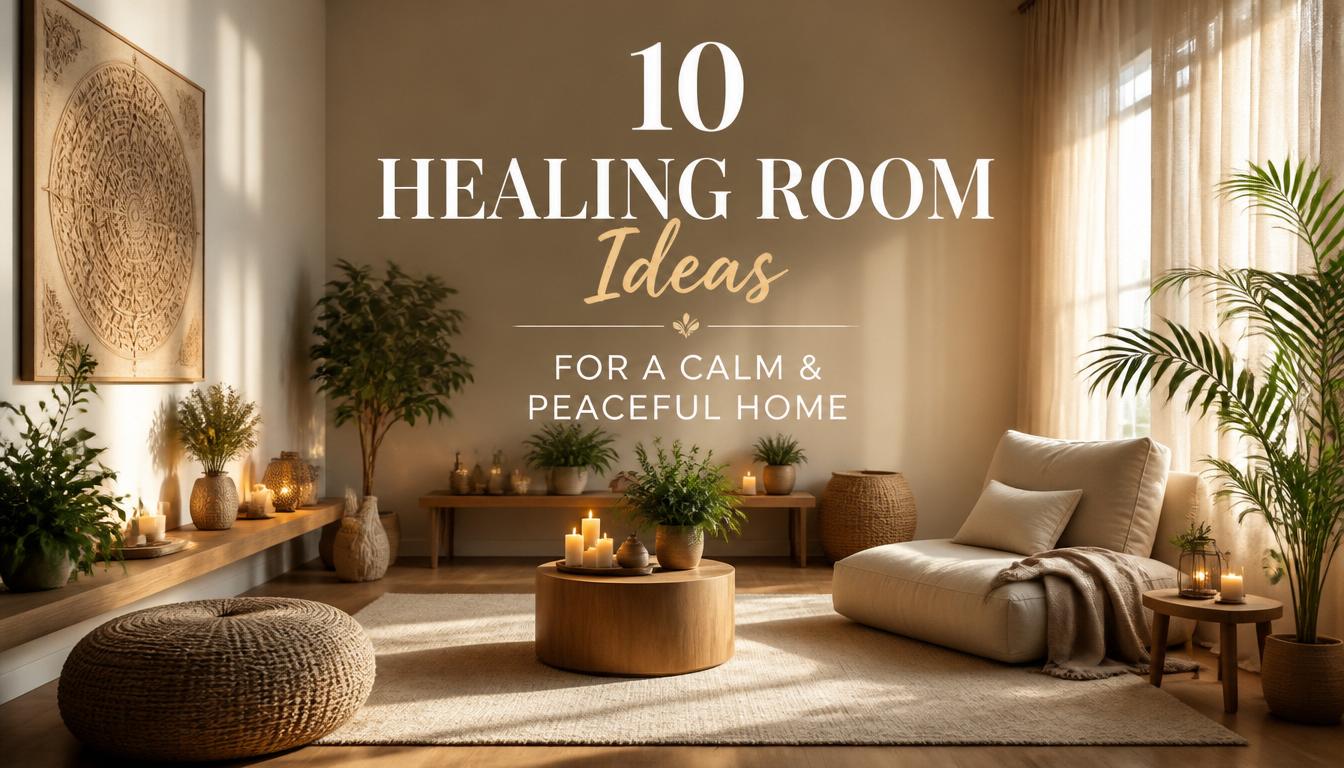
A peaceful room can change the way your whole home feels after a long day. Many USA homes are busy, bright, loud, and filled with screens, so having one soft place to slow down can feel deeply refreshing. This does not need to be a luxury spa room or a perfectly styled Pinterest corner. A healing room can be a spare bedroom, sunroom, basement nook, apartment corner, or quiet area beside a window.
The goal is to create a space that helps your body and mind settle. That can mean softer lighting, natural textures, gentle storage, quiet seating, tea rituals, calming scents, or meaningful decor. These ideas are designed to look beautiful, but they are also practical for real homes, real budgets, pets, kids, rentals, and everyday routines. Use one idea or combine several to build a space that feels personal, peaceful, and easy to maintain.
1. Soft Neutrals
- Creates a quiet, breathable base for the room
- Makes small rooms feel lighter and more open
- Works with linen, wood, wool, clay, and stone finishes
- Helps the space feel calm without looking plain
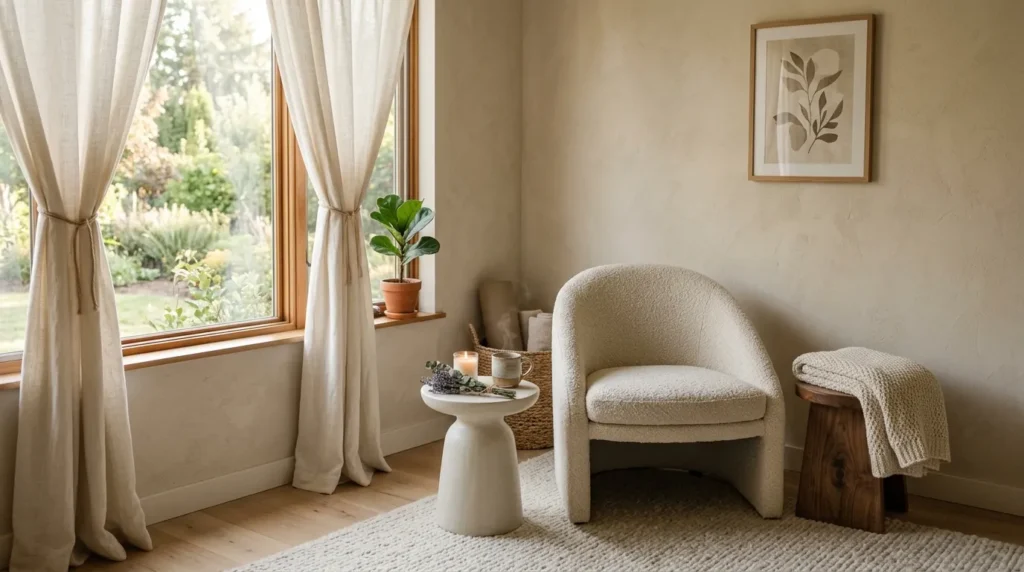
Soft color is often the fastest way to make a room feel safe, open, and easy to enter. Warm white, oatmeal, mushroom, pale taupe, and muted clay tones reduce visual noise without making the space feel empty. In my experience, rooms meant for rest work best when the walls, rug, curtains, and larger furniture stay close in tone. That gentle layering keeps the eye from jumping around. Add one deeper accent, such as walnut, olive, or charcoal, so the room still has structure.
The transformation comes from making the room feel breathable before adding decor or buying anything new. A creamy wool rug, linen drapes, a low-profile chair, and a matte ceramic side table can make even a small room feel composed. Use washable slipcovers if kids or pets use the space, and choose paint with a soft eggshell finish for easy cleaning. This palette also photographs beautifully for Pinterest because shadows look softer, textures show clearly, and natural light feels warmer. The result feels restful, livable, and polished.
2. Grounding Textures
- Adds depth without using loud colors
- Makes the room feel warmer and more touchable
- Works well in apartments, bedrooms, and sunrooms
- Helps plain walls feel more intentional
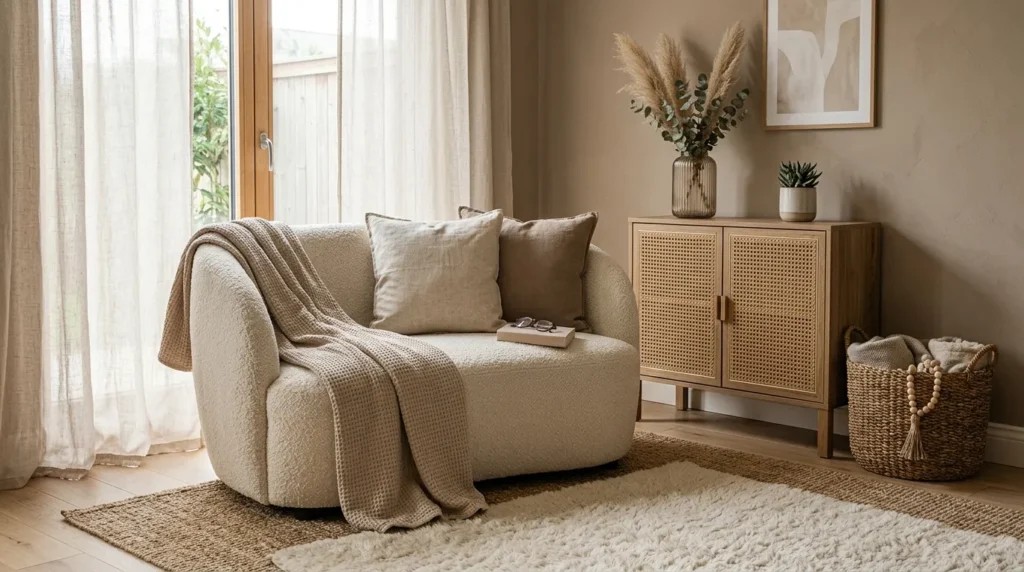
Texture gives a quiet room warmth when you do not want bold color or busy pattern. Think of a boucle chair, cotton quilt, woven seagrass basket, ribbed glass vase, linen pillow, or hand-knotted rug under bare feet. These materials invite touch, which makes the room feel less like a styled display and more like a place your body can settle. That’s why many designers recommend layering textures before buying extra wall art. The right mix adds depth, comfort, and visual softness without making the room look crowded.
Start with the largest surface, usually the rug, then repeat natural textures at different heights. A jute rug can sit under a plush wool runner, while a cane cabinet adds storage without heaviness. Add a cotton throw over a reading chair and place rough stone coasters near a tea tray. I’ve noticed this works well in apartments because texture makes plain rental walls feel intentional. Keep patterns simple, and let the materials do the work. The space feels grounded, layered, and calming without demanding major renovation.
3. Filtered Light
- Softens harsh daylight and overhead lighting
- Makes the room feel warmer during morning and evening
- Helps the space look better in photos
- Supports reading, journaling, stretching, or quiet prayer
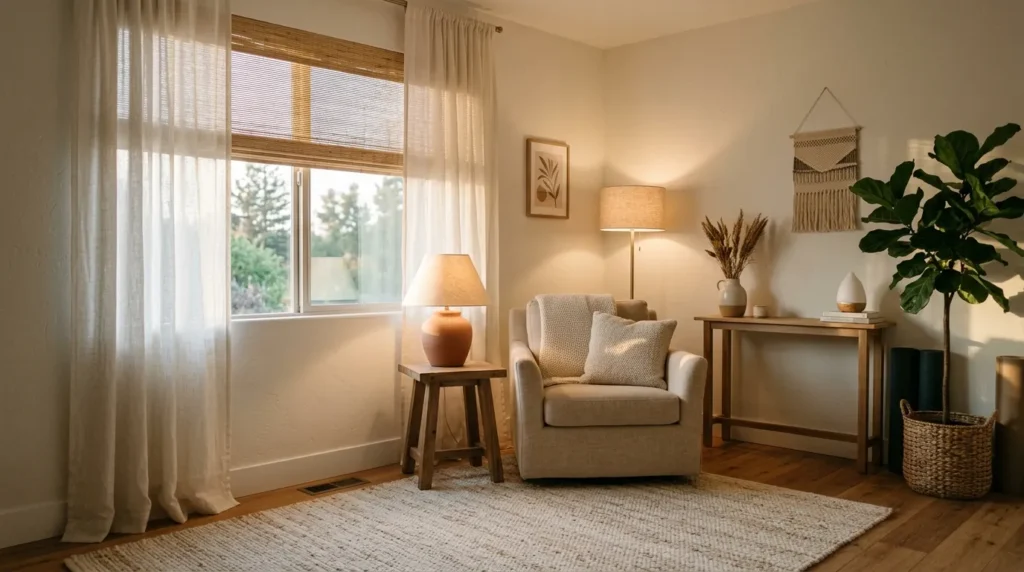
Light decides whether a quiet room feels peaceful or strangely flat from the moment you enter. Harsh overhead bulbs can make even beautiful furniture feel tense, while filtered daylight creates a softer rhythm. Use sheer linen curtains, bamboo shades, or light-filtering Roman shades to blur strong sun without making the room dark. In west-facing rooms, add heavier drapes behind sheers so afternoon glare does not overheat the space. Good lighting supports the mood you want, especially if the room is used for reading or reflection.
Layering light makes the space useful from morning to night in every season of the year. Place a warm table lamp beside a chair, a dimmable floor lamp near a mat, and a small rechargeable lamp on a shelf or tray. Choose bulbs around 2700K for a cozy glow, and avoid cool blue light that feels too clinical. If the room has no window, use shaded lamps, mirrors, and pale walls to bounce light gently. This simple change can make a spare room feel calmer, more flattering, and easier to use.
4. Quiet Reading
- Turns an unused corner into a daily reset spot
- Encourages screen-free time after work or school
- Adds function without needing a full room redesign
- Works with a chair, lamp, small table, and basket
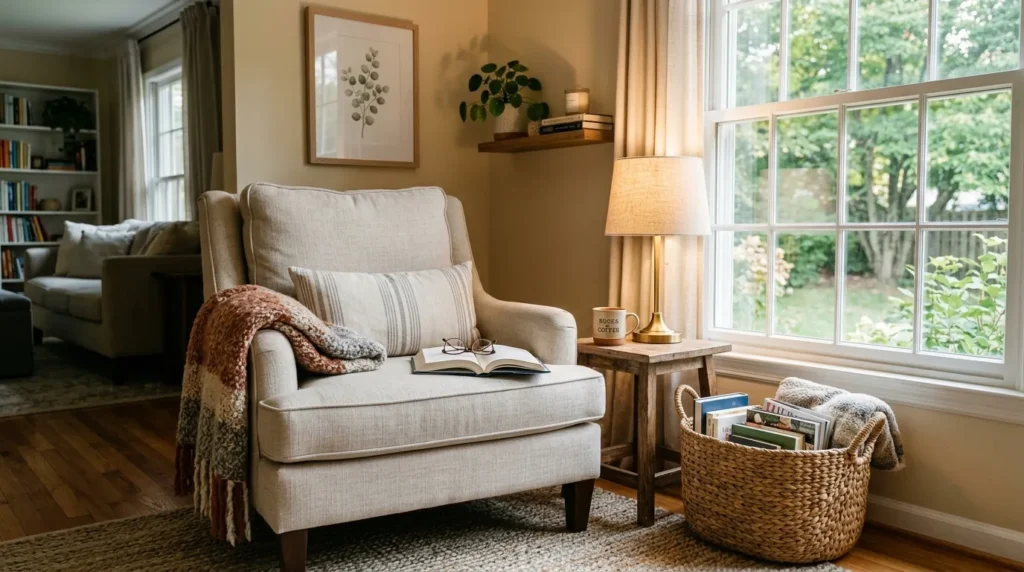
A reading corner turns unused space into a daily reset without requiring a full room makeover. Choose a chair that supports your back, a side table wide enough for a book and drink, and a lamp that shines over your shoulder instead of into your eyes. Add a small basket for current reads, a soft throw, and noise-reducing curtains if the room faces a street. I’ve seen this work well in many homes because it gives rest a clear destination instead of leaving it as an idea for someday.
For the best layout, place the chair near natural light but not directly in a glare path. Keep the table close enough to reach easily, and leave space for a footstool if you like longer evening sessions. A narrow book ledge, framed quote, or small plant can make the corner feel finished without cluttering it. Use a rug to visually anchor the zone, especially in open rooms. The result is a calm landing spot that supports slower habits, screen breaks, and comforting routines after work or school.
5. Tea Ritual
- Adds a peaceful routine to the room
- Makes the space feel warm and welcoming
- Works with herbal teas, mugs, trays, and jars
- Helps create a slow morning or evening habit
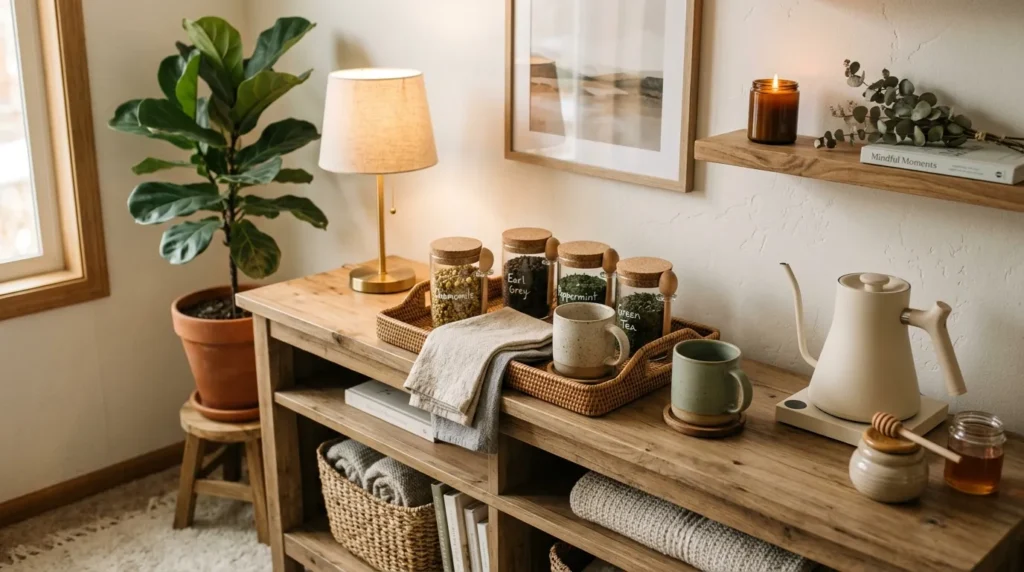
A small tea station can make rest feel practical instead of complicated after a demanding day. You do not need a full kitchenette, only a tray, electric kettle, mugs, herbal tea tins, honey, linen napkins, and a covered jar for small snacks. Place everything on a console, bar cart, or low cabinet so the setup feels intentional. This idea works because it gives the room a simple ritual. When the body repeats a quiet action, such as pouring tea, the space starts to feel associated with slowing down.
Keep the station beautiful but easy to maintain so it never becomes another household chore. Use matching jars or labeled tins, a wipeable tray, and a small basket for used spoons or wrappers. In a guest room, this detail feels generous without taking much space. In a personal wellness corner, it encourages a pause before journaling, reading, or stretching. Choose calming materials like ceramic, wood, rattan, and glass instead of shiny plastic. The finished look feels warm, useful, and quietly luxurious, especially when paired with soft lighting
6. Nature Wall
- Creates a calm focal point without clutter
- Brings outdoor colors into the room
- Works with botanical prints, murals, or woven art
- Makes the space feel personal and rooted
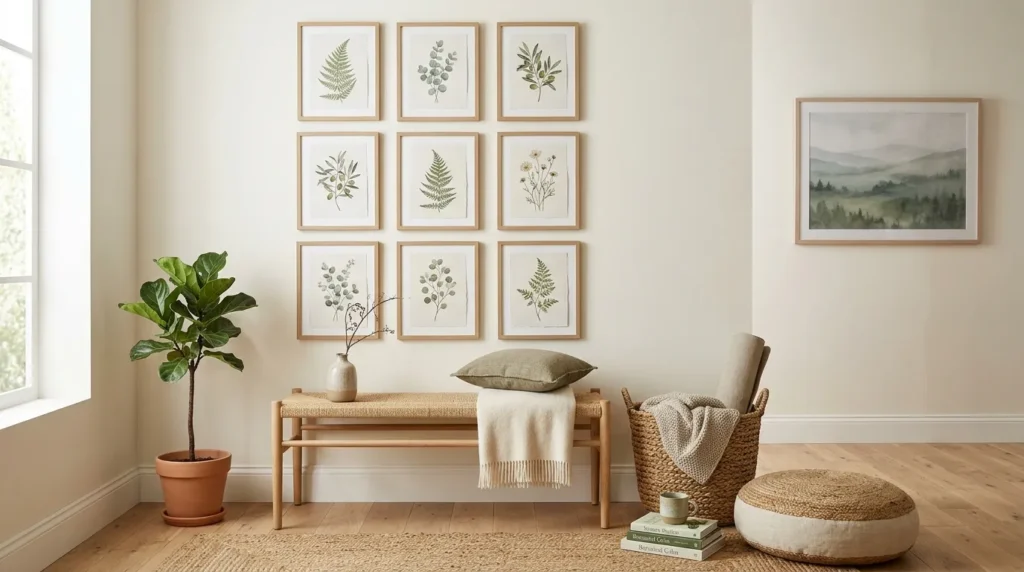
A nature-inspired wall creates focus without overwhelming the senses or filling the room with clutter. Instead of covering every surface, choose one area for botanical prints, pressed flowers, landscape photography, woven art, or a muted mural. Greens, browns, creams, and soft blues usually work best because they echo outdoor colors many people already find comforting. In my experience, this idea feels strongest when the art connects to a real place, such as coastal Maine, Arizona desert tones, Pacific Northwest forests, or a favorite national park.
Use consistent frames or a simple hanging system so the display feels calm, not scattered or busy. Three large prints can look cleaner than twelve tiny pieces, especially in smaller rooms. Add a bench, slim console, or floor cushion below the wall to turn it into a natural focal point. If you rent, removable wallpaper or peel-and-stick murals can give a similar effect without permanent changes. This visual anchor makes the room feel rooted and personal while still staying soft enough for rest, journaling, stretching, or quiet conversation.
7. Floor Cushions
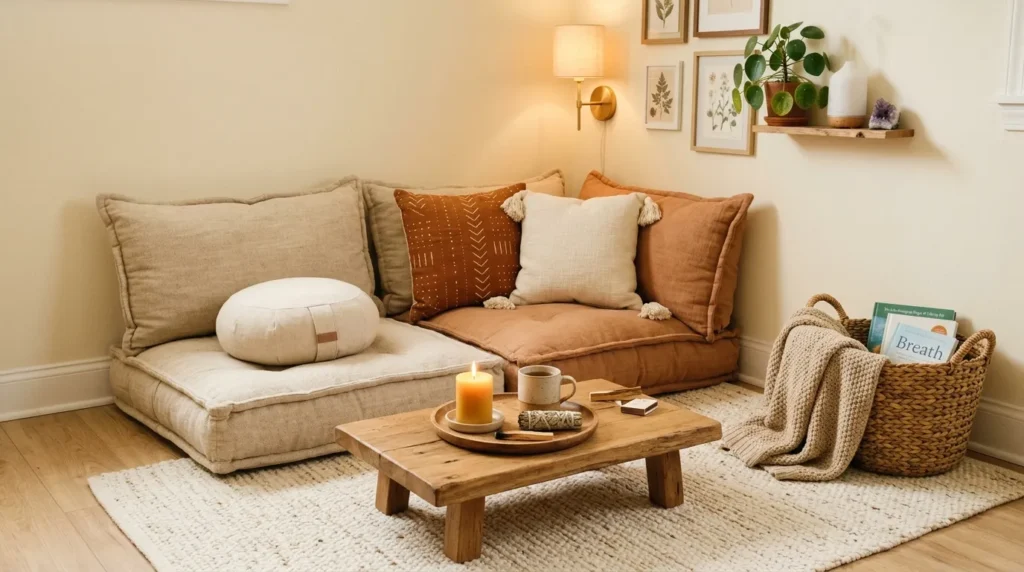
- Creates flexible seating for small spaces
- Supports stretching, breathing, journaling, or meditation
- Adds a casual, cozy look to the room
- Can be moved or stacked when not in use
Low seating changes the posture of a room and makes it feel more relaxed almost immediately. Oversized floor cushions, a meditation pillow, a low pouf, or a folded cotton mat can create a flexible zone for stretching, breathing, journaling, or sitting with kids. Choose firm cushions with removable covers so they hold shape and clean easily. This setup works especially well in smaller homes because floor seating can be stacked, moved, or tucked beside a cabinet when the space needs to serve another purpose during the week.
To make low seating feel designed rather than temporary, place it on a soft rug and add a low table, candle tray, or woven basket nearby. Keep the color palette connected to the rest of the room, and mix round shapes with square pillows for visual balance. A wall sconce or low lamp helps the area feel cozy at night. The result is informal but intentional, giving the room a grounded place for quiet movement, conversation, prayer, or simple breathing breaks without bulky furniture or expensive built-ins.
8. Scented Corners
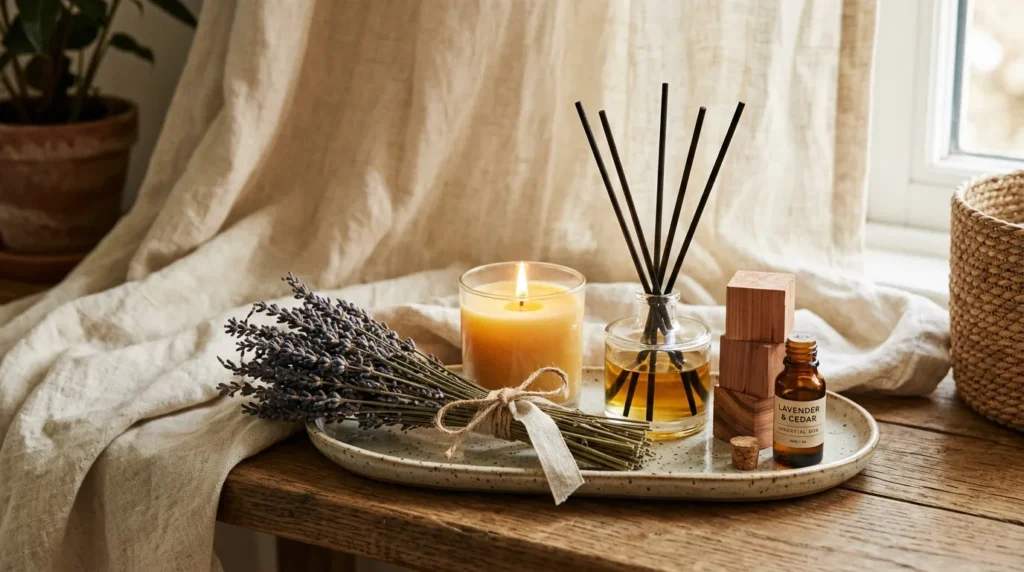
- Adds a gentle sensory layer to the space
- Works with dried herbs, candles, oils, or diffusers
- Makes the room feel distinct from the rest of the home
- Can be adjusted by season or mood
Scent can shape memory faster than almost any decorative choice, so use it with care. A small corner with essential oil, dried lavender, cedar blocks, beeswax candles, or a reed diffuser can make the room feel distinct from the rest of the house. Keep scents gentle and natural, especially if guests, children, or pets use the space. Strong fragrance can become distracting, while a subtle lavender, eucalyptus, vanilla, sandalwood, or citrus note can support a softer atmosphere without overwhelming anyone in small rooms.
Create a safe setup with a ceramic tray, matches in a closed container, and enough space around candles or warmers. For apartments or dorms where flames are not allowed, use a diffuser, linen spray, or dried herb sachets tucked into baskets. Rotate scents by season: citrus for spring, herbal notes for summer, cedar for fall, and soft vanilla for winter. This corner adds a sensory layer that photographs beautifully and makes the room feel complete, especially when paired with natural textures and low lighting.
9. Calm Storage
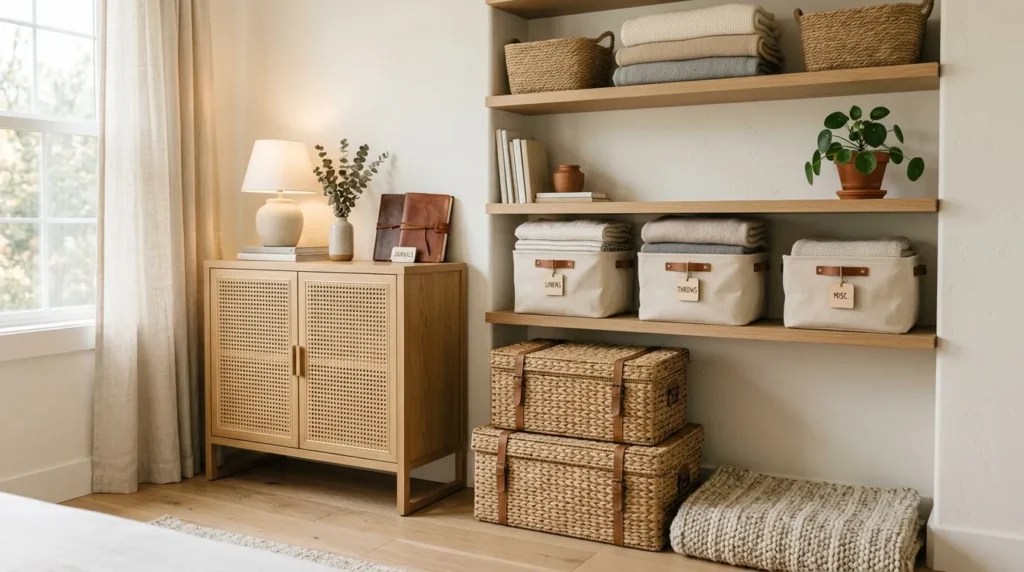
- Keeps the room peaceful and easy to reset
- Hides practical items without ruining the mood
- Works with baskets, benches, cabinets, and shelves
- Makes the space usable, not just decorative
Clutter is one of the quickest ways to break the calm feeling you are trying to build. Storage does not have to look like office organization; it can be part of the design. Use closed cabinets, woven trunks, canvas bins, floating shelves, or a storage bench to hide yoga props, books, blankets, journals, chargers, and craft supplies. I’ve noticed that restful rooms work better when every object has a clear place, because the eye can relax and the mind stops scanning unfinished tasks every time you sit down.
Choose storage that matches the room’s materials, not random plastic bins that fight the mood. A cane-front cabinet, oak bookshelf with baskets, or upholstered bench can hold practical items while keeping the room soft. Label hidden bins if multiple family members use the space, and keep one open basket for daily essentials. Do a five-minute reset each evening so the room stays ready for tomorrow. This turns the space into something usable and sustainable, not a perfect photo corner that falls apart after one week.
10. Personal Altar
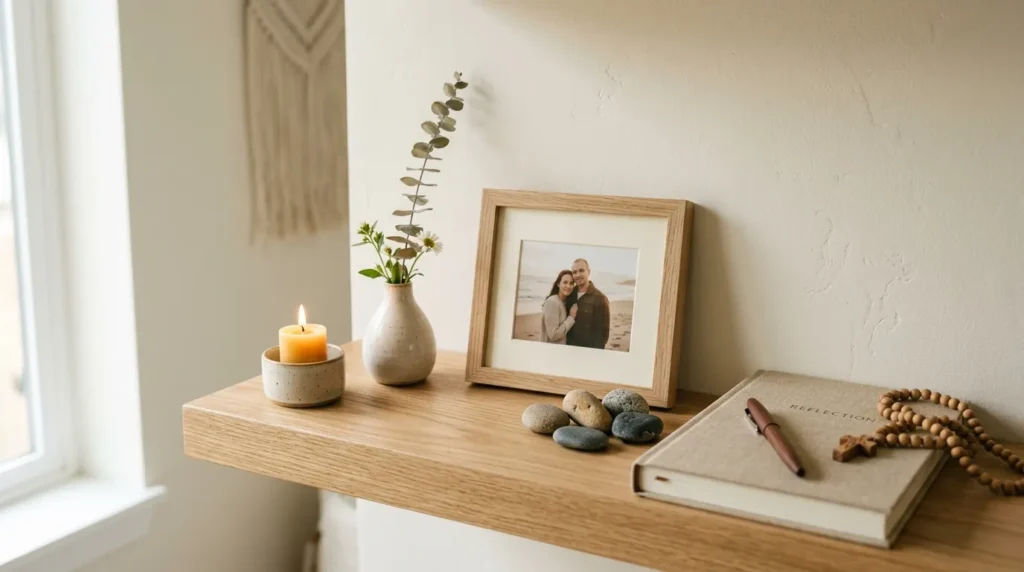
- Gives the room emotional meaning
- Works with candles, photos, stones, flowers, or journals
- Creates a quiet place for gratitude or reflection
- Keeps decor personal without adding clutter
A small reflective surface can give the room emotional meaning without making it feel crowded. This could be a shelf, console, window ledge, or wall niche holding a candle, framed photo, stone, prayer beads, journal, flower vase, or meaningful object from travel. The point is not to impress anyone; it is to create a gentle place for attention. In many homes, this kind of personal display helps the room feel connected to memory, gratitude, faith, or intention in a quiet and grounded way.
Keep the arrangement simple and edited so it feels peaceful rather than decorative for decoration’s sake. Use a tray to group small objects, vary height with a vase or lamp, and leave empty space around each item. Fresh flowers, dried branches, or a small bowl of stones can change with the seasons. If the space is shared, choose objects that feel respectful and inclusive. The result is a meaningful focal point that encourages reflection while still blending with a clean, modern, and comfortable home style.