Top 10 Tips Do Balcony Plants Ideas
Introduction
A balcony does not need to be large to feel fresh, useful, and beautiful. For many USA renters, apartment owners, and small-home lovers, the balcony is the only outdoor area available, which makes every plant choice important. This guide uses 10 Tips: Do Balcony as a practical theme for turning a plain outdoor corner into a green, relaxing, Pinterest-worthy space. You will learn how to choose plants by sunlight, arrange containers, improve drainage, add color, and create a balcony that feels easy to maintain. The goal is simple: make your small outdoor area look better, feel calmer, and work beautifully for real daily life.
1. Sunlight Mapping
- Helps you choose plants that match your balcony conditions
- Prevents wasting money on plants that will not survive
- Makes watering and placement easier to manage
- Improves long-term plant health and growth
- Helps you plan furniture, shelves, and containers correctly
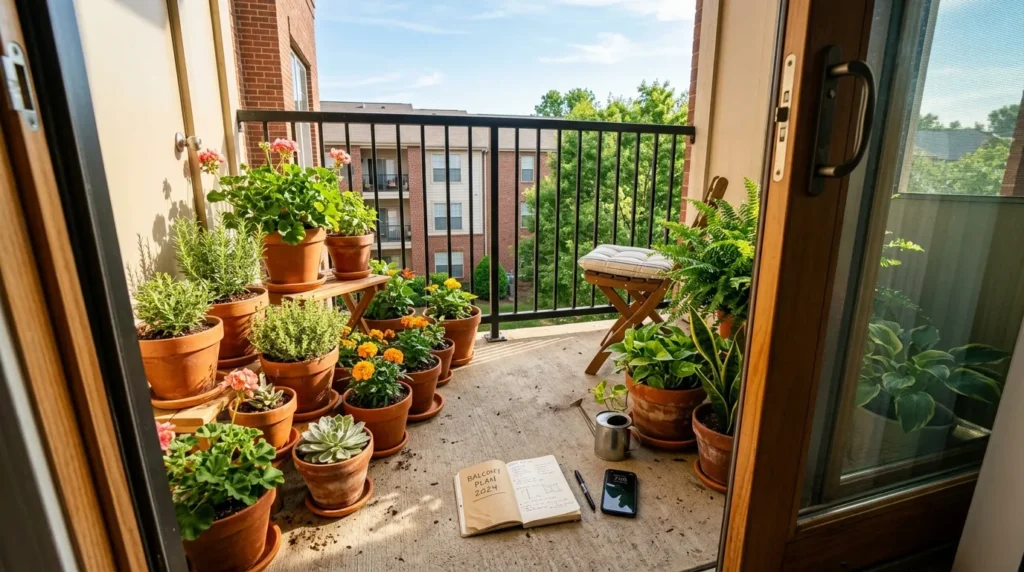
A healthy balcony plant setup begins with knowing exactly how sunlight moves across your space. Before buying containers or flowers, spend one day checking the balcony in the morning, afternoon, and early evening. Most USA balconies fall into full sun, partial sun, bright shade, or deep shade, and each condition changes what will survive. I’ve noticed that many failed plant corners come from choosing pretty plants before understanding light. Once you know your exposure, you can choose greenery that grows naturally instead of fighting the environment every week or replacing stressed plants again.
Use your phone to take photos at different times, then mark where light is strongest and where shade stays longest. South-facing balconies often support lavender, geraniums, tomatoes, and succulents, while north-facing spaces usually work better with ferns, caladiums, pothos, and begonias. East-facing balconies are gentle and great for herbs, while west-facing ones need heat-tolerant choices. This simple planning step saves money, reduces plant stress, and helps the balcony feel fresh longer. It also makes every later design choice easier, from pot placement to watering rhythm, furniture positioning, and plant shopping.
2. Plant Mix
- Creates a fuller, more designed balcony look
- Combines height, color, texture, and movement
- Works well for both small and medium balconies
- Prevents the space from looking flat or empty
- Makes simple containers feel more expensive
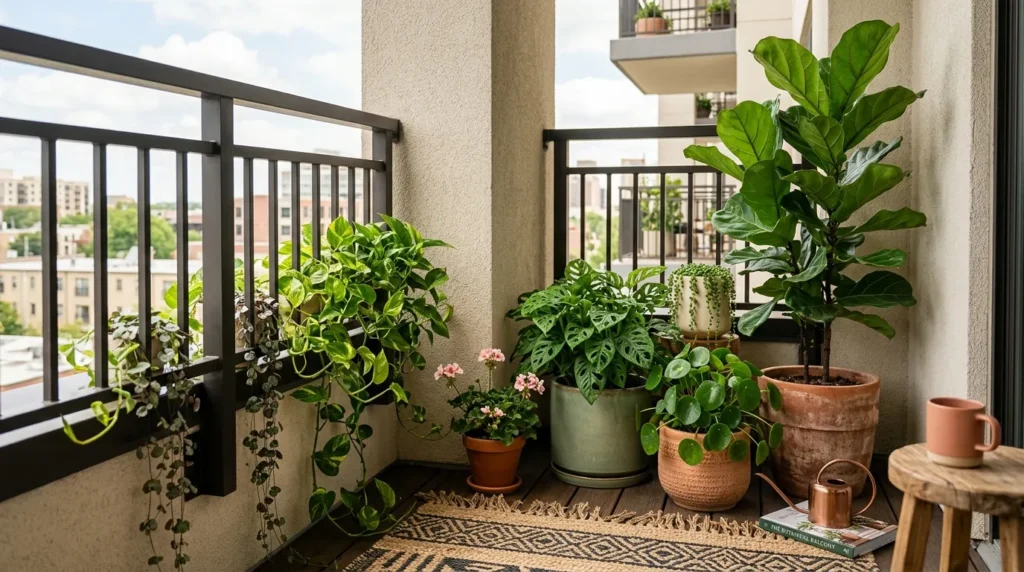
A balanced plant mix makes a balcony feel styled instead of randomly filled with containers. The easiest formula is to combine tall plants, medium leafy plants, trailing greenery, and one or two flowering accents. This creates height, softness, movement, and color without needing a large outdoor area. In my experience, this layered approach works well for both renters and homeowners because it looks full quickly. Choose plants with different leaf shapes, like round, narrow, glossy, and textured foliage, so the space feels visually rich even before flowers bloom in season.
Think of each plant as part of a small outdoor composition, not just a separate pot. Place taller plants near corners or walls, medium plants around seating, and trailing plants along shelves or railing edges. If your balcony is narrow, keep the plant palette simple with three main greens and one accent color. This prevents the space from feeling busy. A thoughtful mix also improves usability because pathways stay open and plants receive better airflow. The final result feels calm, organized, and much closer to a designer balcony arrangement overall.
3. Smart Drainage
- Protects plant roots from water damage
- Helps containers stay cleaner and easier to manage
- Reduces balcony floor stains and water mess
- Works with saucers, trays, raised feet, and quality soil
- Makes plant care easier for beginners
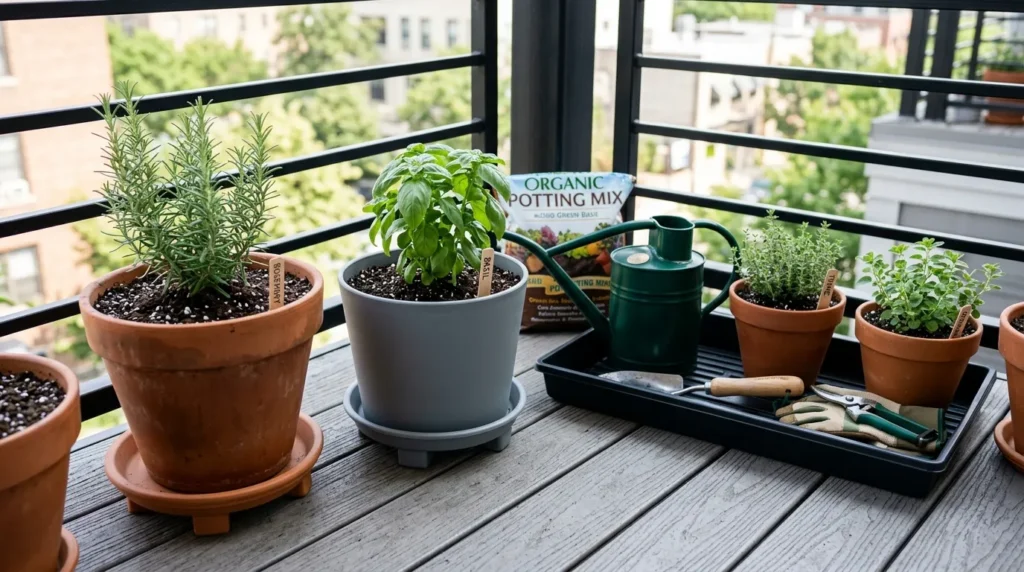
Good drainage is one of the quiet details that decides whether balcony plants thrive or struggle. Containers must have drainage holes, because trapped water can damage roots faster than most beginners expect. Use lightweight pots with saucers, raised feet, or trays to protect flooring, especially in apartments with concrete or wood surfaces. That’s why many designers recommend checking both style and function before buying planters. Terracotta breathes well, resin is lightweight, ceramic looks polished, and fabric grow bags work beautifully for vegetables in sunny outdoor corners and narrow spaces for easier long-term plant care.
Create a simple drainage layer by using quality potting mix instead of heavy garden soil, which can compact inside containers. Add saucers where needed, but empty standing water after rain so mosquitoes and root rot do not become problems. If your balcony has strict building rules, use self-watering planters with overflow control for cleaner maintenance. Matching your container size to the plant also matters, because tiny pots dry too quickly and oversized pots hold excess moisture. This practical step keeps the entire plant arrangement healthier and easier through the season.
4. Vertical Greenery
- Saves floor space on narrow balconies
- Adds height and a fuller garden feeling
- Works with shelves, wall grids, ladders, or hanging rails
- Creates a strong Pinterest-style visual backdrop
- Helps hide plain walls or empty corners
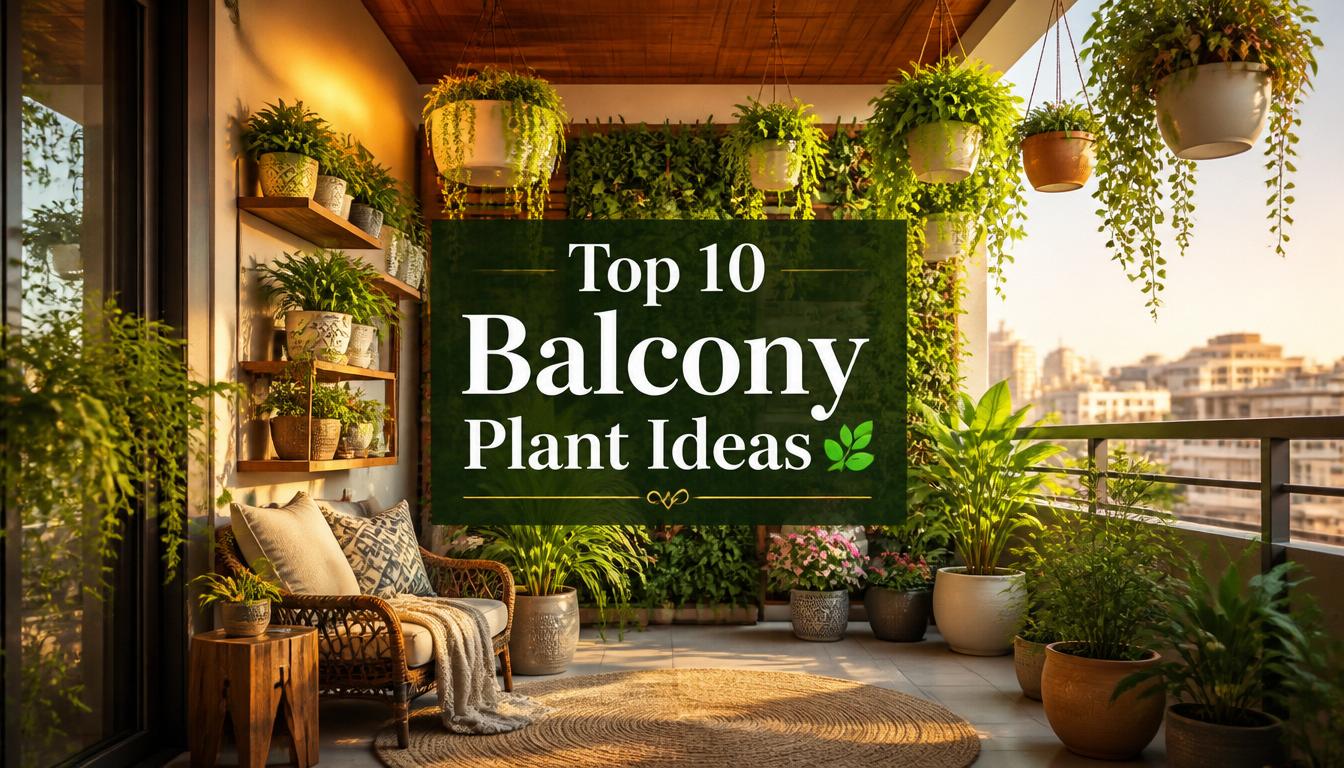
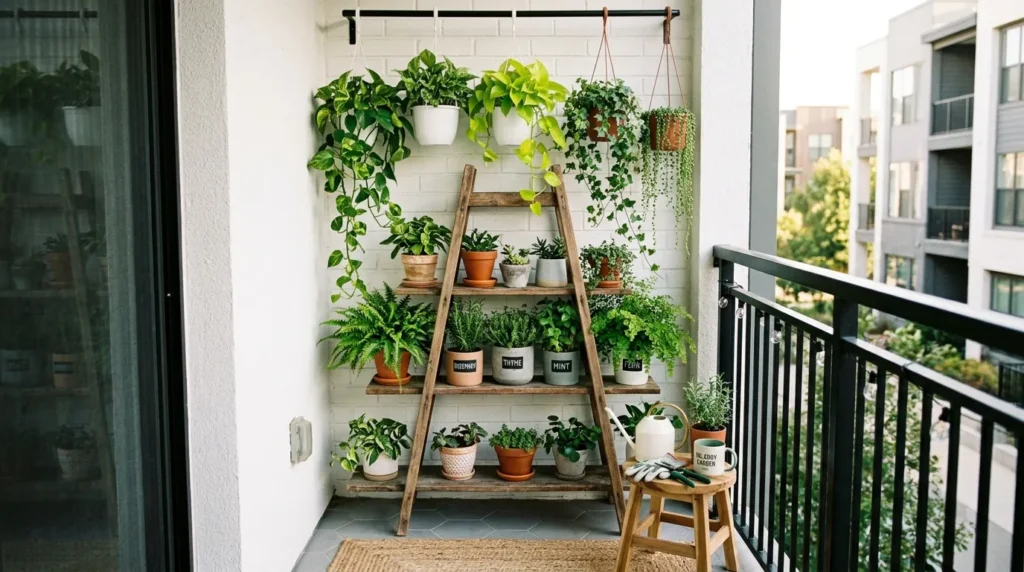
Vertical greenery gives small balconies a lush look while keeping valuable floor space open. A wall grid, ladder shelf, hanging rail system, or stackable planter can hold several plants without crowding your walking area. This is especially useful for apartment balconies where chairs, tables, and storage already compete for space. Choose lighter containers for upper levels and reserve heavier pots for the bottom. I’ve seen this work well in many homes because the height makes the balcony feel fuller, softer, and more finished from inside the room or patio door.
Use vertical space with intention so the display stays easy to maintain. Place thirsty plants at reachable levels, trailing plants near the top or sides, and smaller decorative pots where they can be seen clearly. Metal grids feel modern, wood ladders feel warm, and white shelves create a clean cottage look. Add hooks for small tools or watering cans if you want function built in. A vertical setup can also hide plain walls, improve photos for Pinterest, and create a fresh green backdrop for relaxing outside after work comfortably through every small seasonal refresh.
5. Railing Planters
- Adds color without using balcony floor space
- Makes the view from indoors feel brighter
- Works well for flowers, herbs, and trailing greenery
- Gives the railing a soft finished border
- Great for renters with limited outdoor room
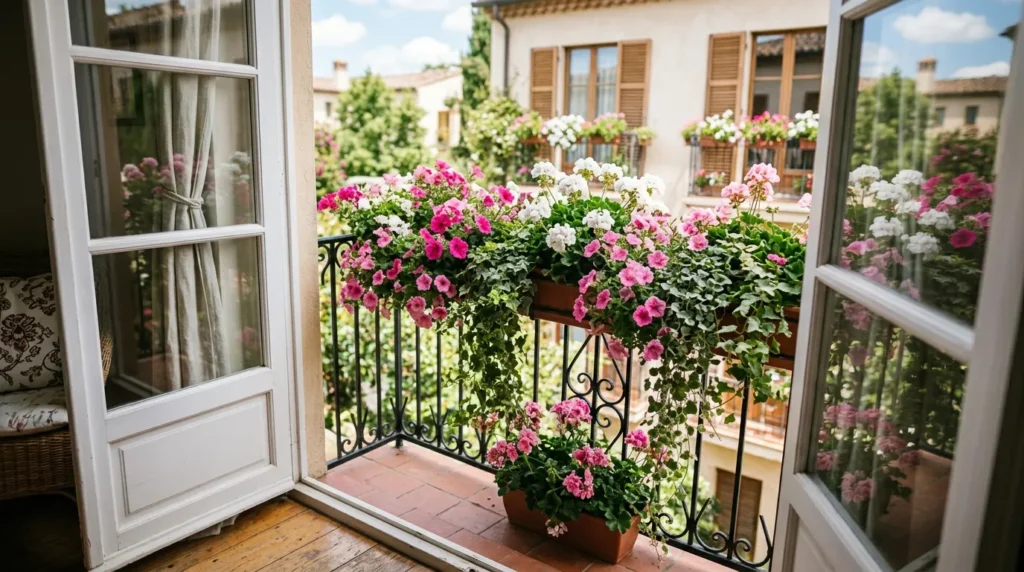
Railing planters are perfect when you want color and greenery without losing floor space. They frame the balcony beautifully and make the view from indoors feel brighter. Choose secure railing boxes or saddle planters designed for your railing size, and always consider weight after soil and water are added. Flowers like petunias, geraniums, pansies, lantana, and calibrachoa work well in many American climates. For greenery, try trailing vines, compact herbs, or ornamental grasses that bring movement and texture without needing oversized pots on the floor area or blocking comfortable movement outside.
The best railing displays use repetition, not random color in every container. Try white flowers with green foliage for a clean modern look, or coral, pink, and yellow blooms for a cheerful summer mood. Place sun-loving plants where light is strongest, and choose shade-friendly blooms if your balcony is covered. Self-watering boxes help during hot weeks, especially for busy households. When styled carefully, railing planters create a beautiful border that feels polished, seasonal, and welcoming every time you open the balcony door from the living room from the living room.
Remaining 5 Ideas
6. Herb Station
- Adds beauty and practical cooking value
- Works well near the kitchen door
- Brings fragrance to a small outdoor area
- Easy to grow in pots, shelves, or rolling carts
- Great for beginners who want useful plants
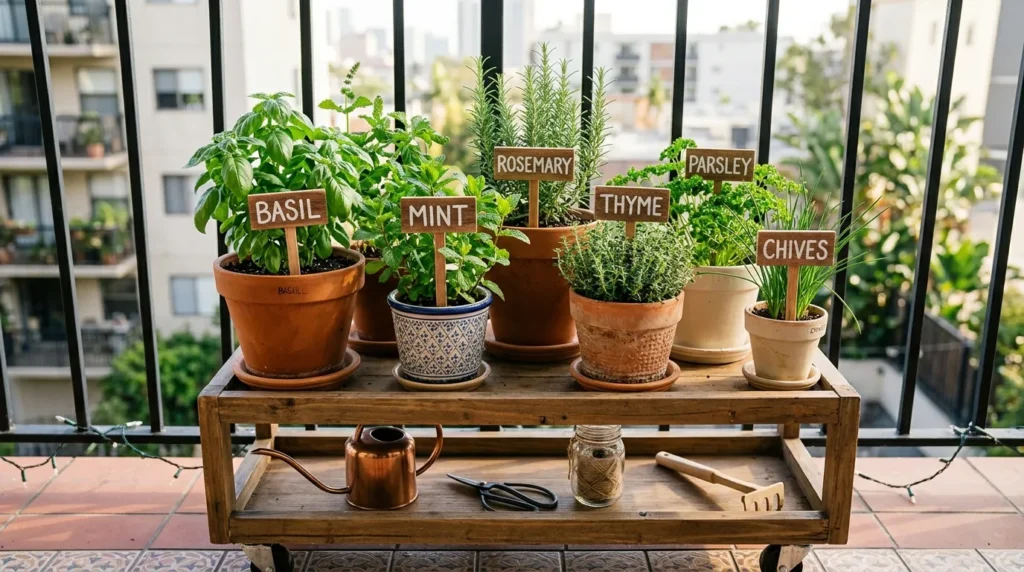
An herb-focused balcony is practical, beautiful, and surprisingly easy to maintain when the layout is simple. Basil, mint, parsley, thyme, chives, rosemary, and cilantro can grow well in containers if their light needs are respected. Keep mint in its own pot because it spreads aggressively, even in small spaces. Use terracotta for Mediterranean herbs that prefer drier soil, and glazed or resin pots for herbs that like steadier moisture. This is one of the most useful balcony plant ideas for everyday cooking and natural fragrance at home in your everyday routine.
Place the herbs you use most near the doorway so clipping leaves becomes part of your normal kitchen routine. A narrow shelf, rolling cart, or tiered stand can hold several small pots without crowding the balcony. Label each herb with simple wooden markers if you want a Pinterest-friendly detail that also feels practical. Harvest lightly and often to encourage bushier growth. Over time, the balcony becomes more than decoration; it supports fresh meals, iced drinks, weekend brunches, and small daily rituals that make home feel more alive during the week.
7. Seasonal Color
- Keeps the balcony fresh throughout the year
- Makes simple plant layouts feel updated
- Works with flowers, grasses, and decorative foliage
- Lets you refresh the space without major spending
- Adds strong Pinterest appeal through color themes
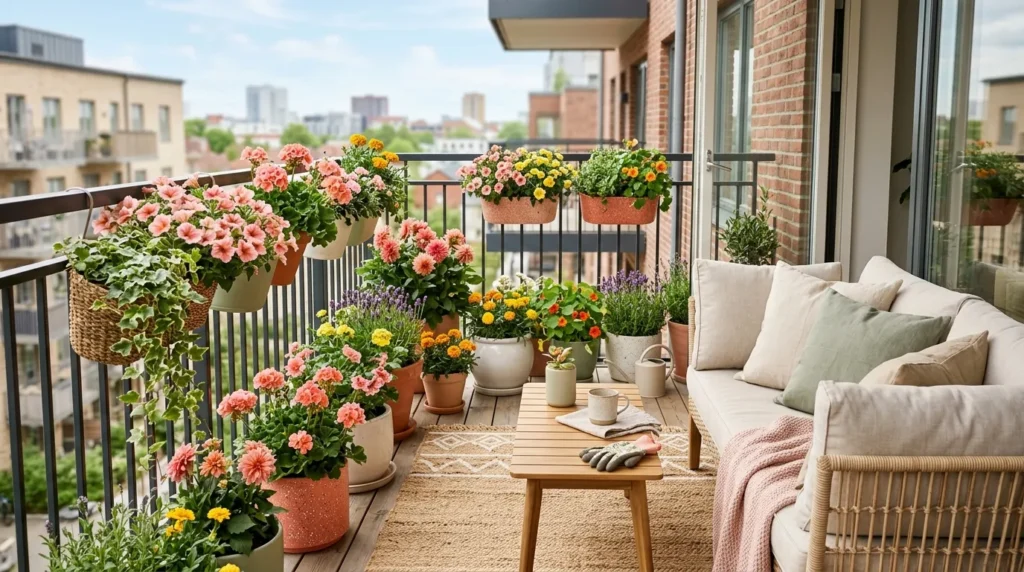
Seasonal color keeps a balcony feeling fresh because the space changes naturally throughout the year. Instead of expecting one set of plants to look perfect forever, plan small updates for spring, summer, fall, and mild winter areas. Spring can feature pansies, snapdragons, and tulips in containers, while summer works well with zinnias, geraniums, lantana, and petunias. Fall can bring mums, ornamental kale, and warm-toned grasses. This approach is popular because it keeps the balcony visually interesting without requiring a full redesign every few months or wasting money while keeping maintenance simple.
Use seasonal color as an accent, not the entire foundation of the design. Keep reliable greenery in larger containers, then swap smaller flower pots as the weather changes. This saves money and makes updates easier. Choose colors that connect with nearby cushions, rugs, or outdoor décor so the balcony feels coordinated. For a softer USA apartment look, try cream, blush, sage, and terracotta. For a brighter style, use red, yellow, purple, and deep green. Small seasonal changes can make the balcony feel renewed again quickly without changing every planter today.
8. Privacy Plants
- Makes the balcony feel calmer and more personal
- Softens nearby buildings, railings, or neighbor views
- Works with tall grasses, trellises, vines, and bamboo
- Adds greenery without fully blocking airflow
- Helps create a relaxing outdoor corner
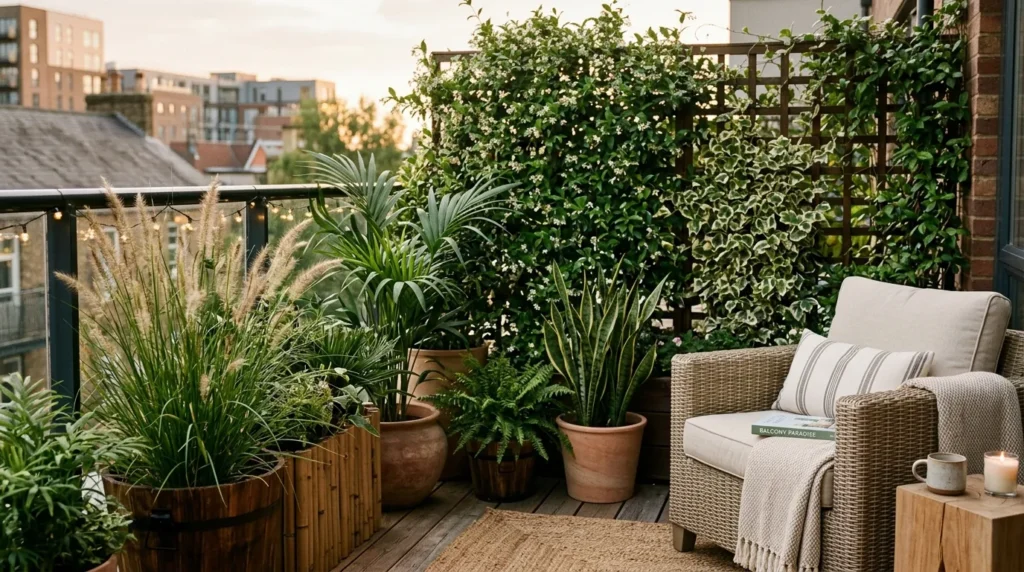
Plant-based privacy is one of the most attractive ways to make a balcony feel comfortable without closing it off completely. Tall grasses, bamboo in containers, climbing vines, dwarf evergreens, and trellised plants can soften nearby views while keeping the space breathable. This works well in apartments, condos, and townhomes where neighbors may be close. Choose containers with enough depth so taller plants stay stable in wind. A natural privacy layer looks softer than plastic screens and gives the whole outdoor area a calmer, more welcoming feeling through spring, summer, and fall.
Build privacy gradually so the balcony still gets light and airflow. Place taller plants where you need coverage most, such as one side railing or a corner facing another window. Add a trellis for climbing jasmine, clematis, or star vine if your climate allows. For shade, use leafy plants like palms, ferns, or large pothos in protected areas. The result is not just visual screening; it creates a peaceful outdoor pocket where reading, phone calls, coffee, and evening relaxation feel more comfortable and personal during warm evenings outside at home.
9. Watering Rhythm
- Keeps plants healthier during hot weather
- Prevents overwatering and underwatering mistakes
- Helps beginners create a simple care routine
- Works better when similar plants are grouped together
- Makes daily maintenance feel less stressful
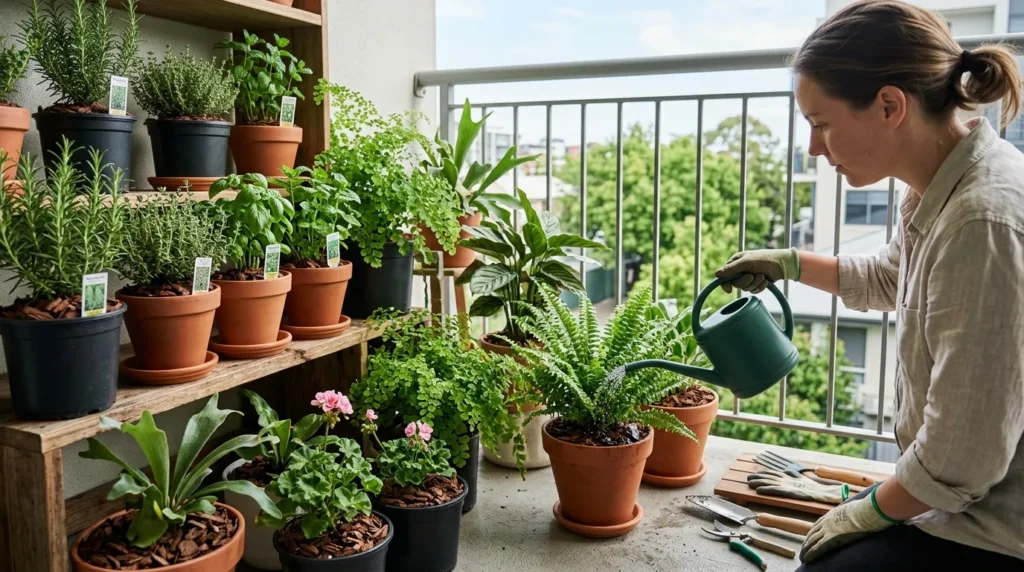
A balcony watering routine should fit real life, not an ideal schedule that becomes impossible to follow. Containers dry faster than garden beds, especially on windy, sunny, or high-rise balconies. Check soil with your finger before watering, because the surface can look dry while the lower soil is still moist. Morning watering usually works best because plants absorb moisture before heat builds. In my experience, consistent checking matters more than watering every plant the same way, since different containers and materials dry at different speeds and daily weather changes outdoors.
Make watering easier by grouping plants with similar moisture needs together. Herbs like rosemary and thyme prefer drier soil, while ferns and many flowers need more consistent moisture. Use a lightweight watering can with a narrow spout to avoid spills on neighbors below. Self-watering pots are useful for busy people, but they still need checking during extreme heat. Add mulch, moss, or decorative stones to slow evaporation in larger containers. A simple routine keeps plants healthier and makes the balcony easier to enjoy without stress through the growing season easily.
10. Styled Lighting
- Makes plants look beautiful after sunset
- Adds warmth without major renovation
- Works with string lights, lanterns, and solar stakes
- Creates a cozy outdoor mood for evenings
- Helps the balcony feel like a finished room
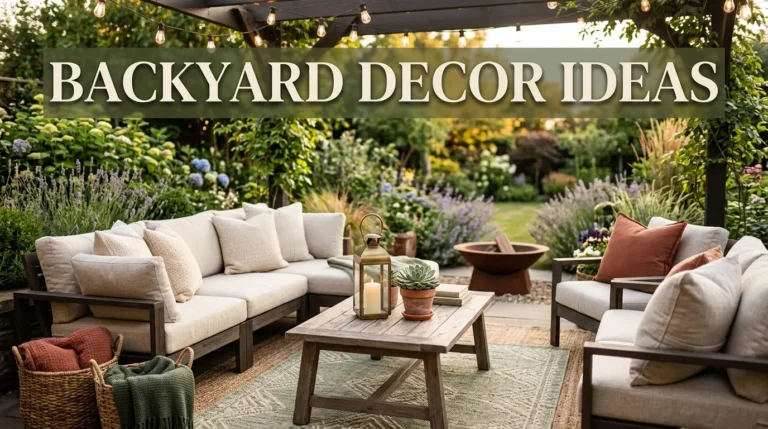
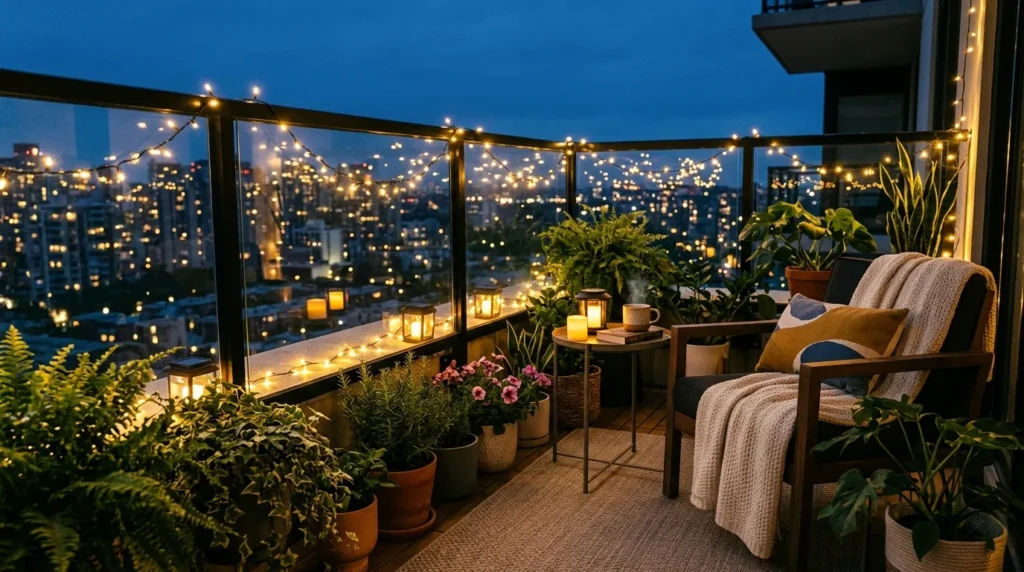
Evening lighting helps balcony plants look beautiful after sunset and makes the space usable for more than daytime gardening. Use outdoor-rated string lights, solar lanterns, LED candles, or small rechargeable lamps to create a soft glow around foliage. Warm white light is usually more flattering than bright cool light, especially near green leaves and neutral furniture. Wrap lights along railings, place lanterns beside floor pots, or tuck solar stakes into larger containers. This gentle layer adds comfort without needing electrical work or permanent changes for renters and owners today outside.
Lighting also helps define zones on a small balcony. A glowing lantern near a chair suggests a reading corner, while string lights above planters create a cozy garden frame. Avoid overloaded cords, harsh bulbs, or anything not rated for outdoor use. Battery and solar options work well for renters who cannot install fixtures. When paired with healthy plants and simple furniture, evening light creates a warm outdoor retreat for dinner, quiet talks, or relaxing after work. It makes the whole balcony feel more valuable throughout the entire year at home.