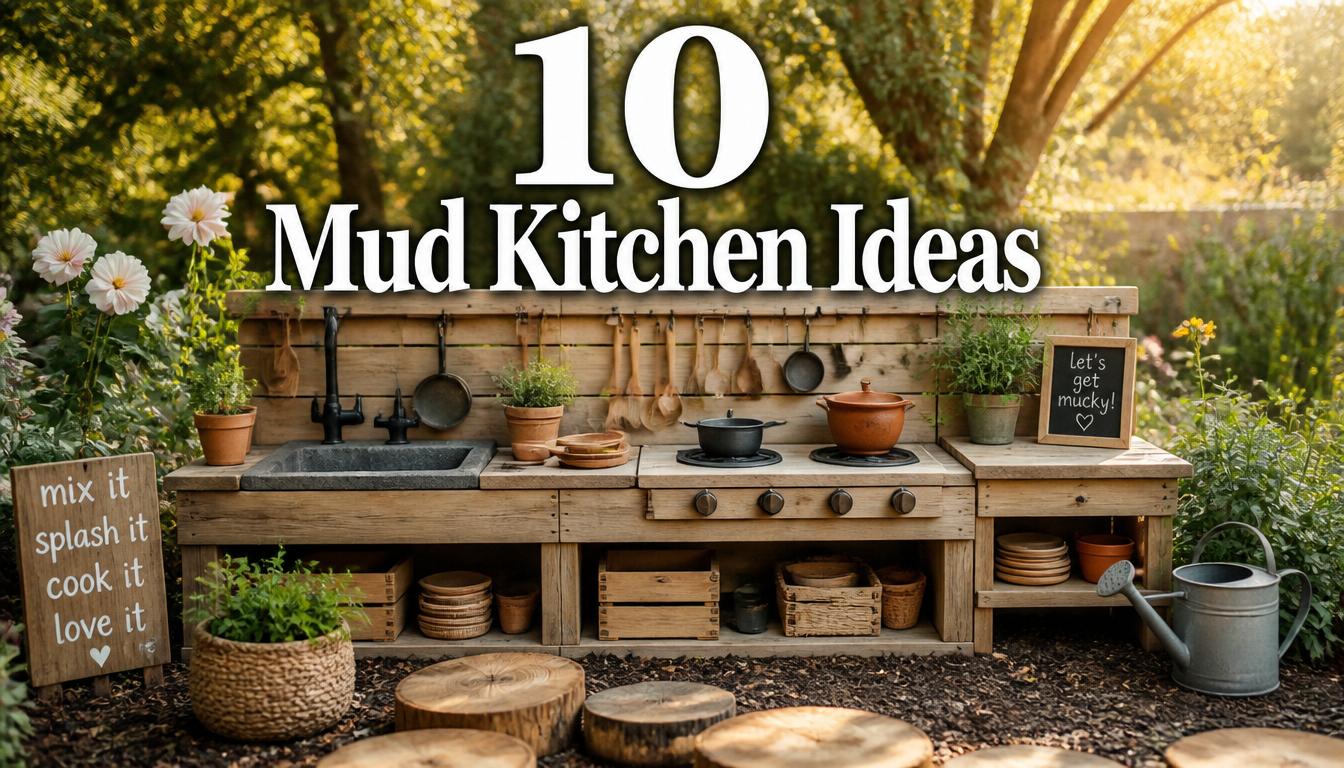
10 Mud Kitchen Ideas
A backyard play space becomes far more exciting when children can touch, mix, pour, collect, and create with real outdoor materials. That is why a mud kitchen has become such a favorite idea for parents, preschool teachers, homeschool families, and backyard DIY lovers across the USA. It gives kids a place to be messy in a useful way. They can scoop soil, stir water, decorate leaf pies, make flower soup, and invent their own little outdoor world.
The best part is that this kind of play setup does not need to be expensive. A few wood boards, crates, bowls, thrifted pans, buckets, hooks, and natural materials can create a charming play corner that feels both practical and beautiful. It can fit beside a fence, under a tree, near a patio, or in a garden corner. The goal is to create a space that encourages imagination while keeping the mess outside and easy to manage.
These ideas are written for real homes, real yards, and real family routines. Each section includes practical styling advice, material suggestions, layout details, and safety-minded tips. Use one idea for a simple weekend project, or combine several to build a complete outdoor sensory play station that looks Pinterest-worthy and works beautifully for everyday play.
1. Rustic Pallet Station
- Creates a sturdy outdoor play counter on a budget
- Works well with pallets, reclaimed wood, or cedar boards
- Adds a natural handmade look to the backyard
- Gives children a clear place to mix, scoop, and pretend cook
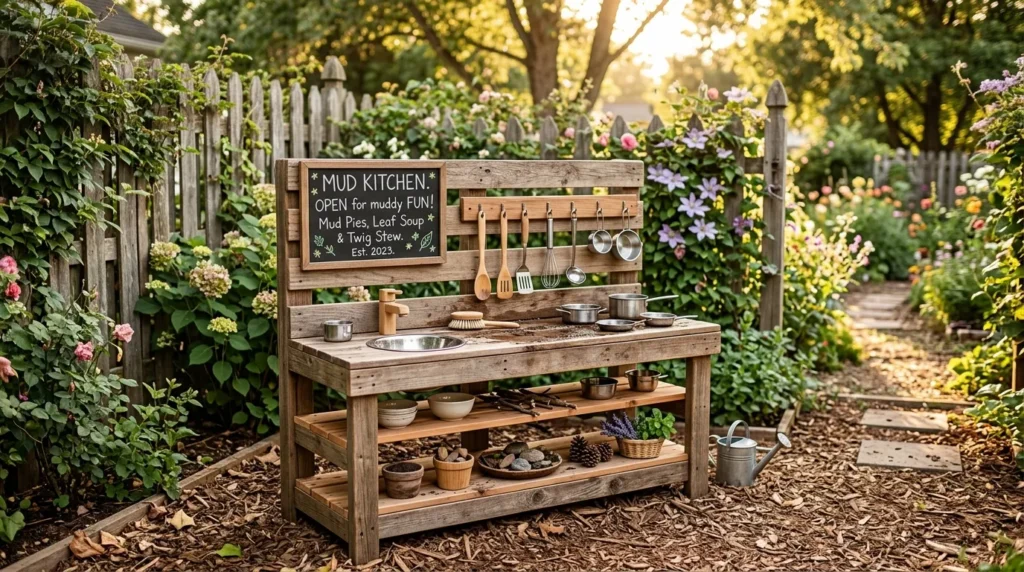
Outdoor play feels more meaningful when the setup looks like something children can truly use. A rustic pallet station gives kids a sturdy counter, shelves, and pretend cooking space without requiring an expensive store-bought set. Sanded pallet boards, cedar planks, or reclaimed fence wood can create a charming backyard feature with natural character. In my experience, the best versions have a simple worktop, lower shelf, and hooks for utensils. The look feels handmade, practical, and perfectly suited for messy outdoor creativity. It also photographs beautifully against grass, mulch, garden beds, and wood fencing.
Before building, focus on safety and smooth surfaces. Remove loose nails, sand every edge, seal the wood with an outdoor-safe finish, and raise the station to a height children can reach comfortably. Add a stainless bowl as a pretend sink, a few thrifted pans, and a small chalk sign for charm. Place it near shade or a fence so it feels like part of the yard. The finished station encourages imaginative play while giving the backyard a warm, Pinterest-worthy focal point families can enjoy for years. Parents also get a play feature that looks intentional rather than cluttered.
2. Child-Safe Sink
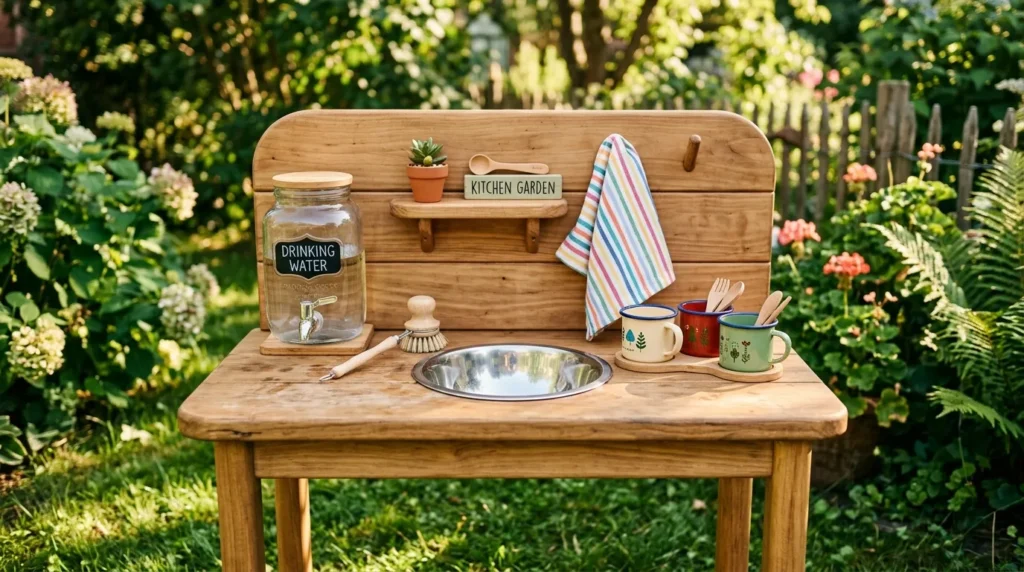
- Makes outdoor pretend cooking feel more realistic
- Works with stainless bowls, enamel basins, tubs, or old sinks
- Helps children rinse, pour, and mix during play
- Adds function without requiring real plumbing
A small sink area makes pretend cooking feel real, which keeps children engaged longer. You can use a stainless mixing bowl, enamel basin, plastic tub, or thrifted bar sink set into a wooden counter. The sink does not need plumbing to be useful. A nearby water jug, hand pump, or refillable dispenser gives kids enough water for mixing, rinsing leaves, and washing spoons. That little bit of function turns simple outdoor play into a richer sensory experience without making the project complicated. It also helps children practice pouring, measuring, and caring for their tools.
Keep the sink easy to clean because muddy water can get messy quickly. Drill a small drainage hole if the basin sits outside all season, or choose a removable bowl that can be dumped and rinsed after play. Add a short backsplash from wood slats or outdoor tile to protect the wall behind it. Store cups, ladles, and scrub brushes nearby so children can manage cleanup as part of the game. This design teaches practical habits while making the play space feel complete and realistic. The result feels playful, tidy, and much easier to maintain between backyard sessions.
3. Nature Ingredient Bar
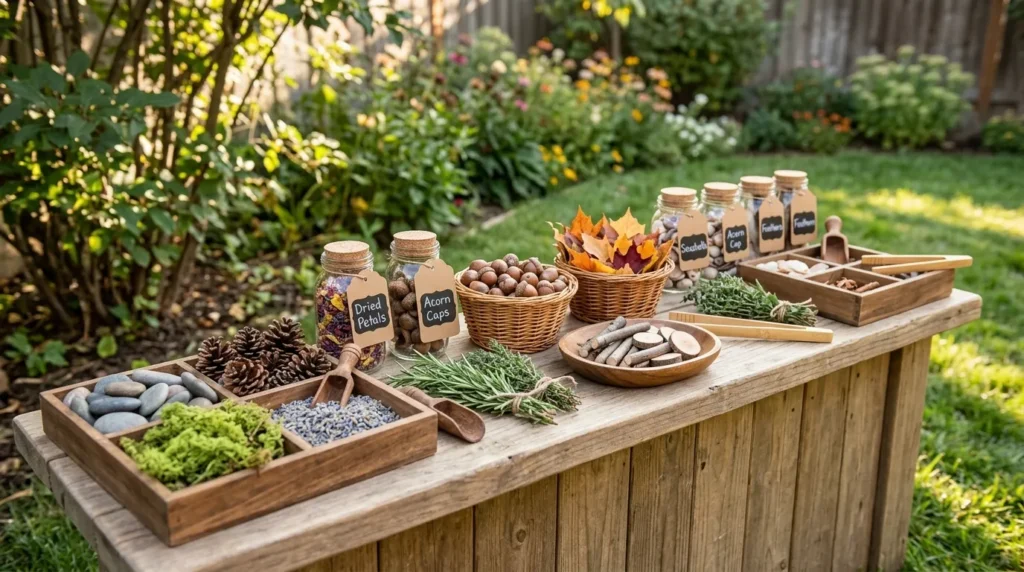
- Adds seasonal materials for creative play
- Encourages children to explore textures, colors, and shapes
- Works with trays, baskets, jars, tins, and small bowls
- Makes the setup look beautiful without plastic clutter
Natural ingredients make the whole play area feel more creative than plastic toys alone. Set up a small ingredient bar with pinecones, leaves, smooth stones, flower petals, acorns, sticks, herbs, shells, and seed pods. Use divided trays, muffin tins, little baskets, or labeled jars so children can choose materials like they are cooking from a real pantry. I’ve noticed that kids return to spaces more often when the supplies change with the season, because every week feels slightly new. It also gives the setup color and texture without buying more toys.
Choose items that are safe, clean, and easy to replace. Avoid poisonous plants, sharp shells, thorny branches, or anything treated with chemicals. In spring, use petals and herbs; in summer, add sand, grass, and seed heads; in fall, bring in acorns, leaves, and mini gourds. Keep one basket empty so children can collect their own ingredients from the yard. This adds independence and observation, while the ingredient bar gives the setup a beautiful, nature-rich look parents love saving on Pinterest. Everything feels seasonal, affordable, and connected to the child’s own outdoor world.
4. Chalkboard Menu
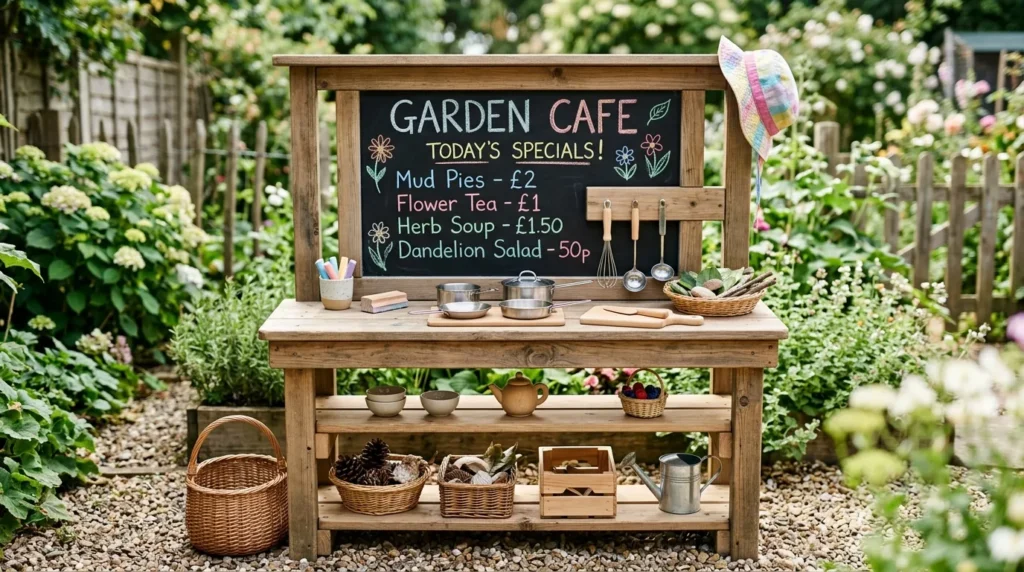
- Adds writing, drawing, and pretend restaurant play
- Works with outdoor chalkboard paint or mounted boards
- Helps children create menus, recipes, and signs
- Makes the play area feel styled and personal
A chalkboard menu turns pretend play into storytelling, drawing, early writing, and creative decision-making. Mount a small outdoor chalkboard above the counter or paint a sealed plywood panel with chalkboard paint. Children can write soup names, pie specials, garden recipes, or silly prices for leaf tacos and stone cupcakes. This simple detail gives the space personality while helping kids invent roles, menus, and little restaurant scenes. That’s why many play-based designers recommend adding open-ended prompts rather than finished toys. It also makes the corner feel finished without adding bulky furniture or expensive accessories.
Make the menu board weather-friendly so it lasts through changing seasons. Use exterior plywood, outdoor paint, rust-resistant screws, and a slight overhang if the area gets rain. Hang a small metal cup or basket nearby for chalk, erasers, and washable markers if you use a whiteboard instead. Add simple words like “today’s special” or “garden cafe” to inspire play without controlling it. The board becomes a rotating piece of decor and gives children a reason to refresh the scene every time they play. This keeps the space fresh, personal, and easy to update for different ages.
5. Water Play Zone
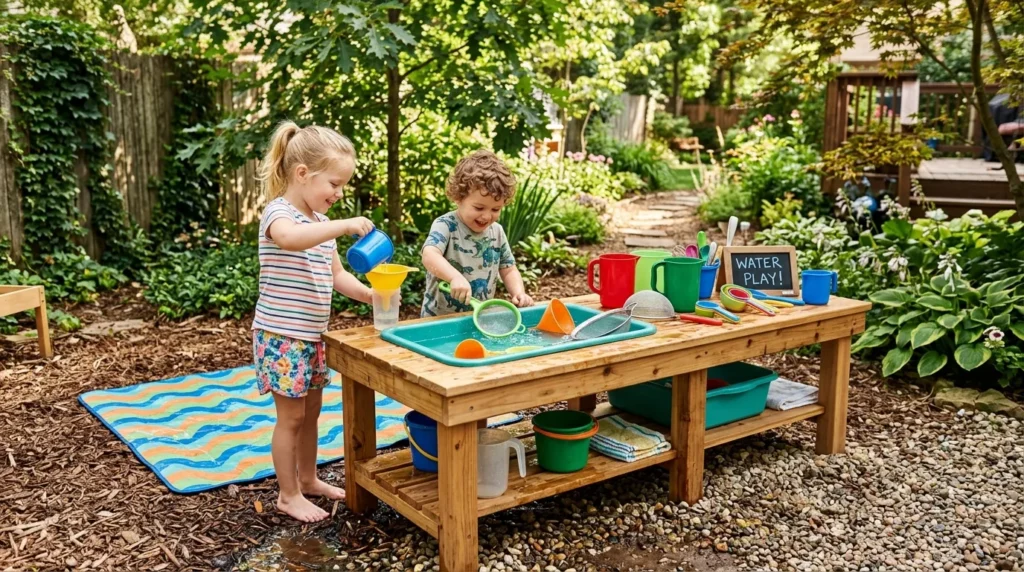
- Adds pouring, measuring, and mixing activities
- Works with pitchers, funnels, cups, strainers, and tubs
- Keeps wet play in one planned area
- Helps children explore cause, effect, texture, and movement
Water play brings movement, sound, and discovery into the outdoor cooking setup. A simple pour-and-mix zone can include measuring cups, funnels, ladles, pitchers, strainers, and a shallow tub. Children love transferring water between containers, watching it flow, and seeing how dirt, sand, and petals change texture. In my experience, this is often the part they use the longest, so it deserves a clear area where spills are expected. Place it on gravel, mulch, grass, or pavers instead of slick concrete. The area feels active, educational, and easy to supervise from nearby seating.
Plan the water zone so it feels fun but not chaotic. Use a small refillable dispenser rather than a constantly running hose, especially in areas where water conservation matters. Keep towels, a bucket, and a rinse bowl nearby for easy reset. If toddlers use the area, choose shallow containers and supervise closely. Add a splash mat or stepping stones if the ground gets muddy. This setup gives children hands-on sensory play while keeping the backyard easier for parents to manage after outdoor fun. Parents get better control, while kids still enjoy plenty of hands-on exploration.
6. Mini Garden Cafe
- Turns the play area into a social pretend cafe
- Works with small stools, crates, signs, and serving trays
- Encourages language, counting, sharing, and role-play
- Adds a sweet Pinterest-style look to the backyard
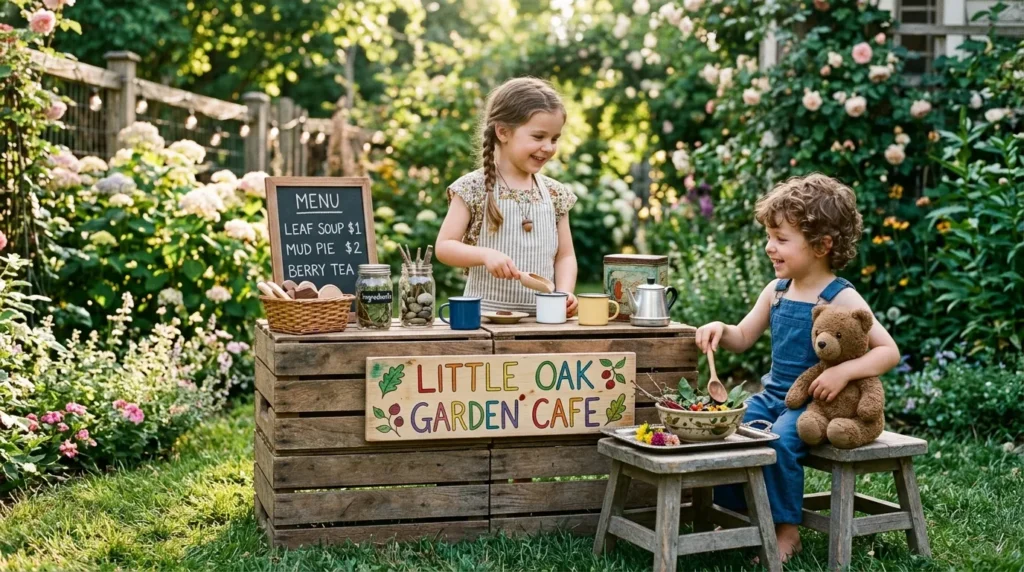
A tiny cafe theme makes the play station feel charming, social, and easy to decorate. Add a small sign, two child-size stools, a crate counter, and a pretend serving window if the structure backs against a fence. Children can serve leaf soup, flower tea, bark cookies, or sand muffins to siblings, friends, and parents. This idea works beautifully for birthday parties and weekend playdates because it gives children a shared storyline. The style feels whimsical without needing bright plastic pieces. It also makes the backyard feel more inviting for photos and family gatherings.
Use simple materials that can handle real outdoor use. Wood crates, enamel cups, thrifted trays, washable tablecloths, and metal bowls all suit the cafe feeling. Add a small basket for pretend money, notepads, or laminated menus if older kids enjoy role-play. Keep seating light enough to move but sturdy enough to stay safe. A cafe-style setup encourages turn-taking, language, counting, and confidence, while the visual look adds a sweet backyard feature that blends with garden beds, patios, and porch areas. The finished area feels friendly, useful, and full of open-ended play possibilities.
7. Storage Crate Wall
- Keeps tools, bowls, and ingredients organized
- Works with crates, shelves, peg rails, hooks, and bins
- Helps children clean up independently
- Makes the play corner look tidy and intentional
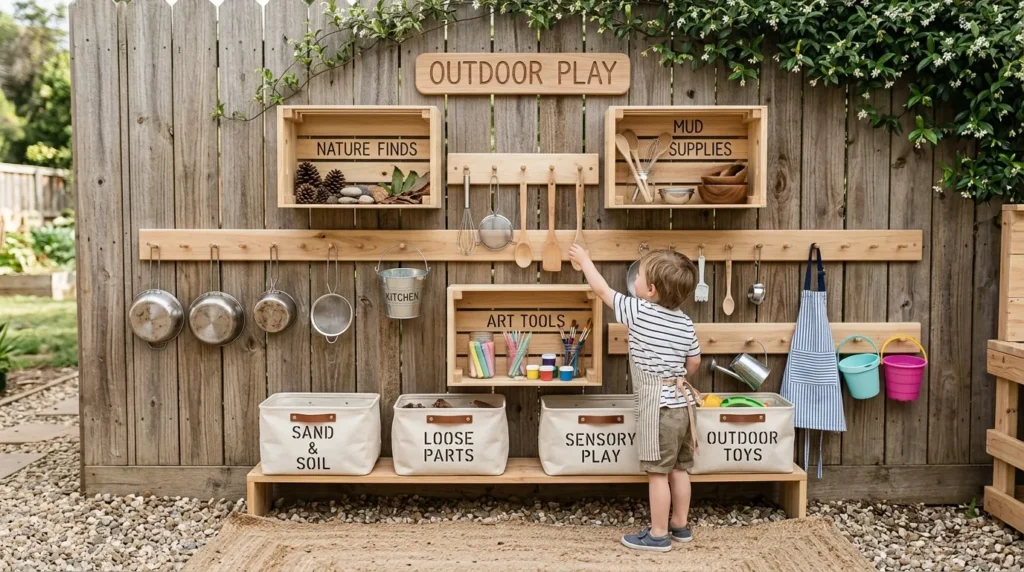
Good storage keeps the play area inviting instead of turning into a pile of muddy tools. A crate wall can hold pans, spoons, buckets, bowls, chalk, pinecones, and small garden supplies in one easy-to-reach place. Use wood crates, wall-mounted boxes, peg rails, or open shelves attached securely to a fence or station frame. I’ve seen this work well in many homes because children can see what they have, choose independently, and help put items back after play. It also prevents favorite tools from disappearing under leaves, mulch, or patio furniture.
Keep storage low, open, and simple enough for children to use without constant help. Label crates with words or small picture tags so pre-readers know where things belong. Use one bin for natural ingredients, one for utensils, one for bowls, and one for cleaning tools. Drill drainage holes in outdoor bins if rain reaches the area. This system makes the station look more organized and extends the life of the supplies, while giving kids responsibility for maintaining their own creative space. The whole area feels calmer, cleaner, and much easier to reset quickly.
8. Sensory Mixing Table
- Gives children a wider surface for messy play
- Works with bowls, scoops, trays, mashers, and natural materials
- Supports touch, movement, creativity, and experimentation
- Lets multiple children play together more easily
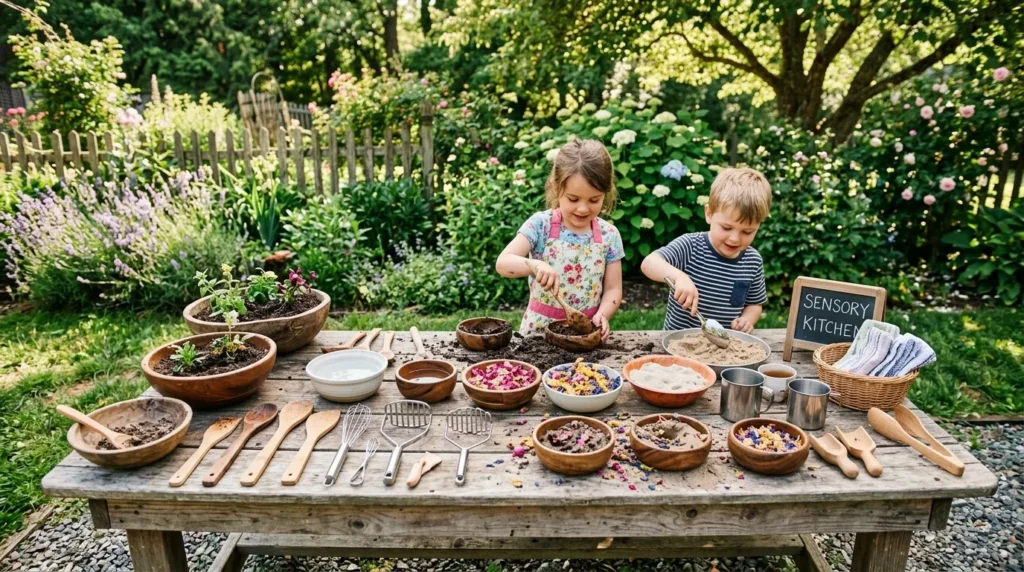
A mixing table gives children room to mash, stir, scoop, pour, and experiment with textures. Instead of a narrow counter, use a wider low table where several kids can stand together. Add bowls, muffin tins, potato mashers, wooden spoons, scoops, and safe natural materials like soil, sand, petals, leaves, and water. This setup supports sensory development because children learn through touch, pressure, weight, smell, and movement. It also keeps the busiest activities contained in one clear zone. This gives messy play a purpose while still leaving room for imagination.
Choose a table surface that can take rough play. Sealed wood, plastic outdoor tables, metal trays, or removable sensory bins work well because they are easy to rinse. Leave enough space around the table so children can move without bumping into each other. If siblings of different ages play together, provide larger tools for older kids and chunkier scoops for toddlers. The mixing table turns the backyard into a hands-on discovery area where mess is expected, useful, and easier to clean. Kids get freedom, while adults get a clearer place for the mess.
9. Weatherproof Setup
- Helps the outdoor play station last longer
- Works with sealed wood, exterior paint, galvanized screws, and covers
- Reduces damage from rain, snow, sun, and humidity
- Keeps the space safer and easier to maintain
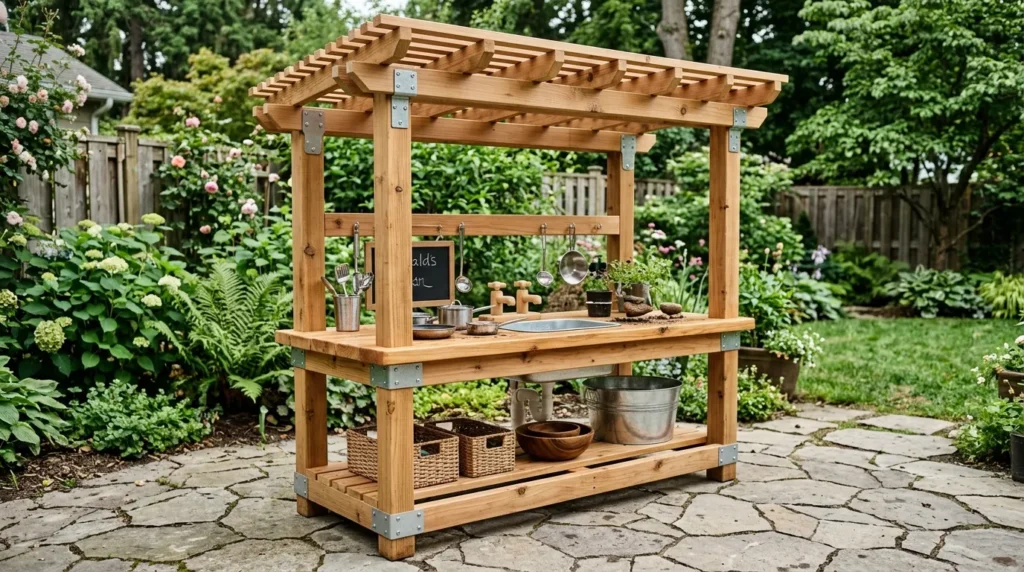
Outdoor play pieces need weather protection if you want them to last longer than one season. Sun, rain, snow, and humidity can damage untreated wood, fade accessories, rust cheap hardware, and make fabric pieces mildew. A weatherproof setup starts with sealed lumber, exterior paint, galvanized screws, outdoor-rated hooks, and removable accessories. In colder states, think about where pieces will go during winter. In warmer regions, shade matters because plastic tubs, metal pans, and wood surfaces can get hot. Strong materials help the space stay safe, sturdy, and good-looking through repeated use.
Design the setup so maintenance is simple. Lift the station slightly off the ground with pavers or feet to reduce moisture damage. Use a tarp, small roof panel, pergola cover, or fence overhang for protection if the spot is exposed. Store chalk, fabric, and delicate baskets indoors after play. Check screws, splinters, and stability every few weeks, especially after storms. A durable setup keeps children safer, saves money over time, and helps the outdoor kitchen corner stay attractive in every season. The result is less repair work and more consistent outdoor fun for everyone.
10. Cleanup Corner
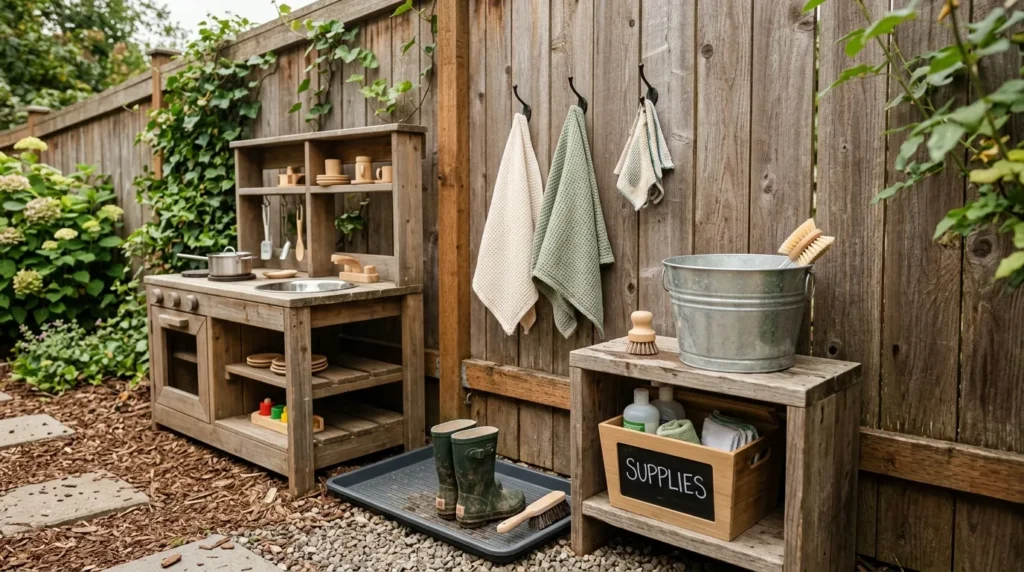
- Makes messy play easier for parents to manage
- Works with towel hooks, rinse buckets, boot trays, and brushes
- Teaches children simple cleanup habits
- Keeps mud, water, and tools from spreading indoors
A cleanup corner makes messy outdoor play feel less stressful for parents. Add a small hand-washing bucket, towel hooks, boot tray, brush, rinse bowl, and storage basket near the play station. Children can rinse spoons, wipe counters, shake out aprons, and place tools back before going inside. This teaches responsibility in a natural way, without turning play into a chore. I’ve noticed that families use outdoor sensory spaces more often when cleanup feels built into the design. It also keeps muddy hands from heading straight toward doors, rugs, and furniture.
Keep the cleanup area close enough to be useful but separate from the main mixing zone. A small gravel patch, stepping stones, or washable mat can mark the spot. Use quick-dry towels, a lidded bin for muddy items, and a basket for tools that need rinsing later. If your yard has a hose nearby, add a gentle spray nozzle and child-safe access rules. This final detail makes the whole setup easier to maintain, so kids can enjoy messy play without creating indoor chaos. The space feels complete, practical, and ready for another round of play tomorrow.