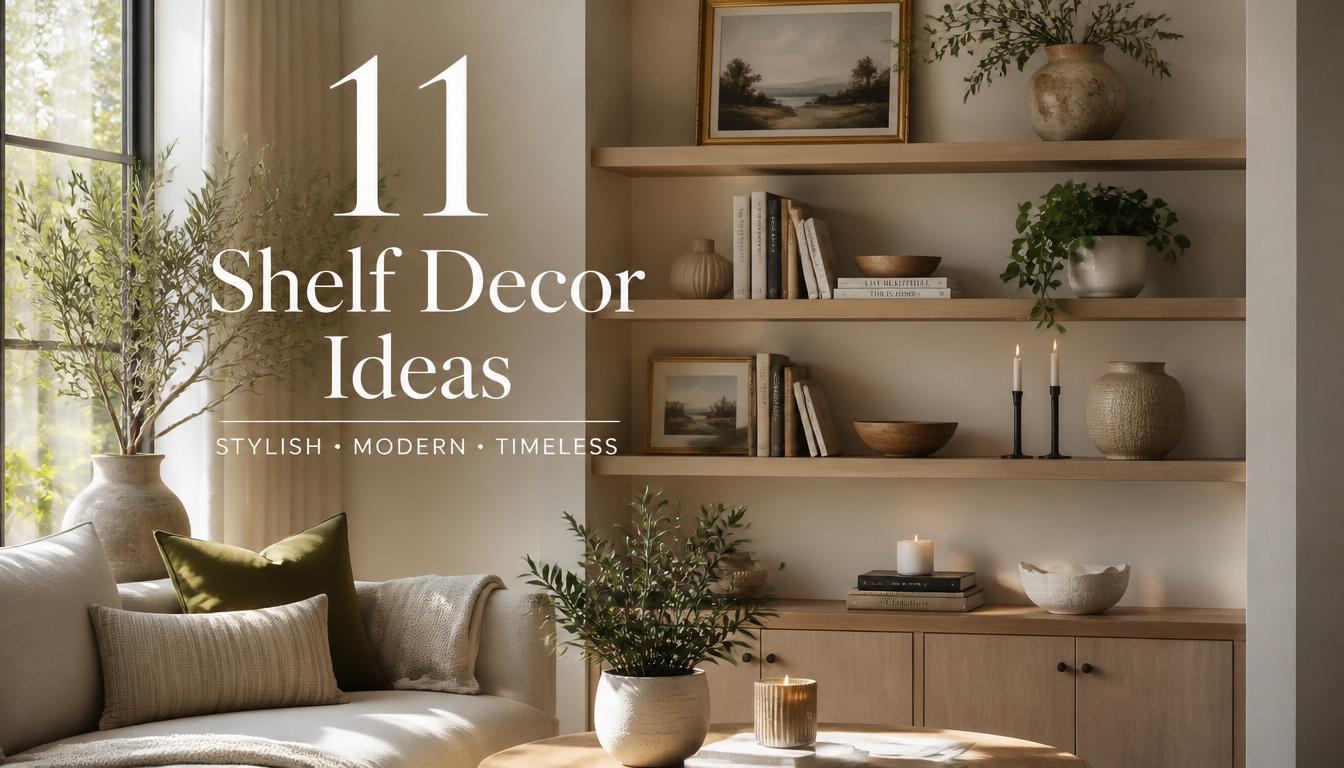
11 Shelf Decor Ideas
A beautifully styled shelf can make an ordinary room feel finished, cozy, and intentionally designed. In many USA homes, shelves are not just places to store books or extra dishes anymore. They act like mini design moments inside living rooms, kitchens, bedrooms, entryways, bathrooms, and home offices. The right shelf decor can add personality, soften blank walls, create storage, and make a space feel more collected without requiring a full room makeover.
What makes shelves so popular on Pinterest is that they are easy to refresh. You can change one vase, rotate seasonal pieces, add framed art, stack books differently, or bring in baskets for hidden storage. A small shift can make the entire wall feel new. The secret is knowing how to balance height, texture, color, negative space, and useful objects so the final look feels styled instead of crowded.
These 11 ideas are practical, visual, and easy to recreate with pieces you may already own. Whether you have floating shelves, built-ins, open kitchen shelving, a bookcase, or a small wall shelf, these tips will help you create a polished look that feels warm, personal, and Pinterest-ready.
1. Layered Books
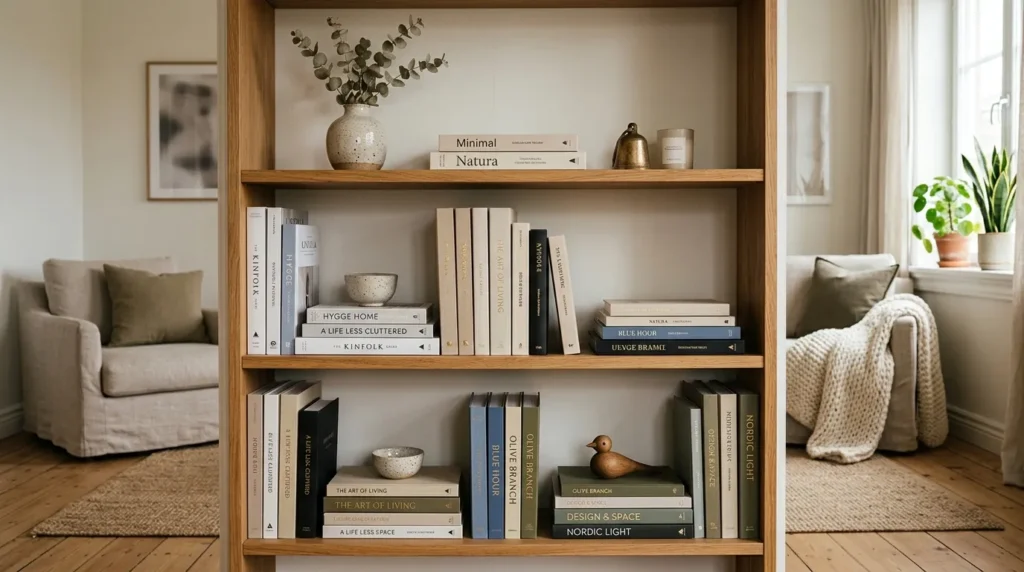
- Use hardcover books, coffee table books, vintage books, or neutral paperbacks to create height and structure.
- Stack some books horizontally and keep others vertical so the arrangement feels relaxed, not like plain storage.
- Choose covers that match your room palette, or turn bright covers backward for a softer visual effect.
- Place candles, small bowls, beads, or ceramic objects on top of horizontal stacks for a designer-style finish.
- Mix book heights and thicknesses carefully so the shelf feels collected, balanced, and easy to restyle.
Books are one of the easiest ways to make shelves feel warm, grounded, and genuinely lived-in. They work because they add both structure and personality, especially when mixed with pieces that reflect your taste. In my experience, books are the best starting point because they help lift smaller objects and create natural groupings. A short stack can support a candle, a ceramic knot, or a tiny framed photo, making the whole display feel intentional instead of randomly filled with decorative objects.
The transformation comes from treating books as styling tools instead of simple storage. Try placing three to five books horizontally on one side, then balancing them with a vertical row somewhere else. Leave open space around each stack so the look does not feel heavy. For a modern farmhouse, coastal, traditional, or organic style, choose covers in cream, beige, black, muted blue, olive, or warm brown. This makes the shelves feel curated while still staying personal, useful, and easy to update.
2. Ceramic Vases
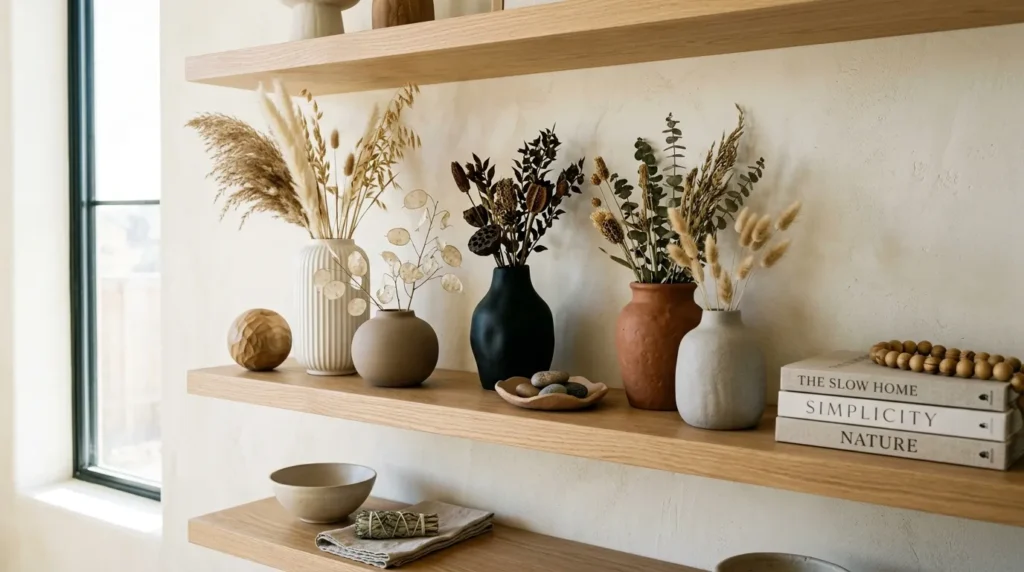
- Choose ceramic vases in different heights, shapes, and finishes to create movement across the shelf.
- Use matte white, stone, terracotta, taupe, black, or glazed pieces depending on the room style.
- Style vases empty for a sculptural look, or add dried stems, faux branches, or seasonal greenery.
- Group vases in odd numbers, especially sets of three, for a more natural designer arrangement.
- Place taller vases near the back or outer edges so they frame smaller items without blocking them.
Ceramic vases bring softness, shape, and quiet elegance to almost any shelving arrangement. They work especially well because their curves break up the straight lines of shelves, books, frames, and storage boxes. That’s why many designers recommend mixing rounded, narrow, handled, and ribbed vases when styling built-ins or floating shelves. Even one beautiful vase can become the anchor piece when placed beside stacked books, a framed print, or a woven basket, giving the entire shelf a calmer rhythm.
The best part is how easily this idea changes with the season. In spring, add eucalyptus, faux blossoms, or fresh branches. In fall, use dried wheat, pampas, or muted stems. During winter, leave the vase empty for a sculptural, clean look. Choose pieces with texture, like speckled stoneware, handmade-style clay, or soft matte glazing, so the display feels rich up close. This approach makes your shelves look collected, relaxed, and expensive without requiring many accessories or constant rearranging.
3. Woven Baskets
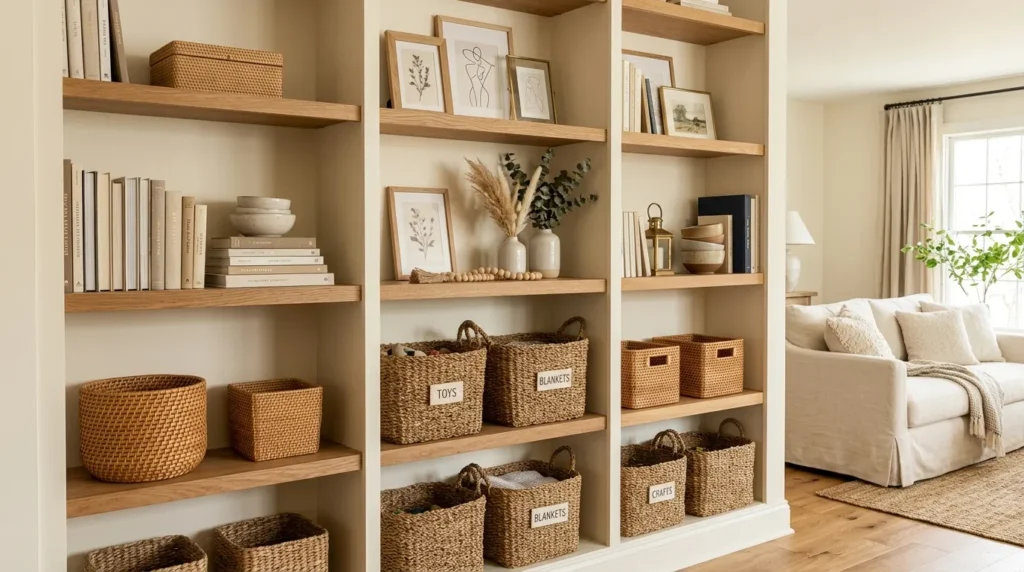
- Add small woven baskets, lidded boxes, or seagrass bins to create hidden storage with natural texture.
- Use baskets for remotes, chargers, mail, craft supplies, pet items, toys, cords, or everyday clutter.
- Choose materials like rattan, water hyacinth, jute, cane, bamboo, wicker, or thick rope.
- Mix woven pieces with ceramics, glass, books, and metal accents so the texture does not feel overwhelming.
- Keep basket sizes proportional to the shelf depth so they look neat and do not hang awkwardly.
Woven baskets are perfect when you want shelves to look beautiful but still work hard for daily life. They add warmth, texture, and function at the same time, which is especially helpful in family rooms, entryways, laundry rooms, playrooms, and home offices. I’ve noticed that shelving often looks more expensive when at least one natural woven texture is included. The basket softens harder materials like painted wood, glass, metal, and ceramic, making the whole display feel more comfortable and grounded.
The practical benefit is just as important as the visual upgrade. A lidded basket can hide cords, remotes, paperwork, gaming accessories, candles, or seasonal items that usually create visual clutter. For open shelves, choose baskets in one repeated tone, such as honey rattan or pale seagrass, so the display feels unified. Place heavier baskets on lower shelves and lighter decorative baskets higher up. This gives the overall wall a grounded look while keeping useful items close, organized, and easy to reach.
4. Framed Artwork
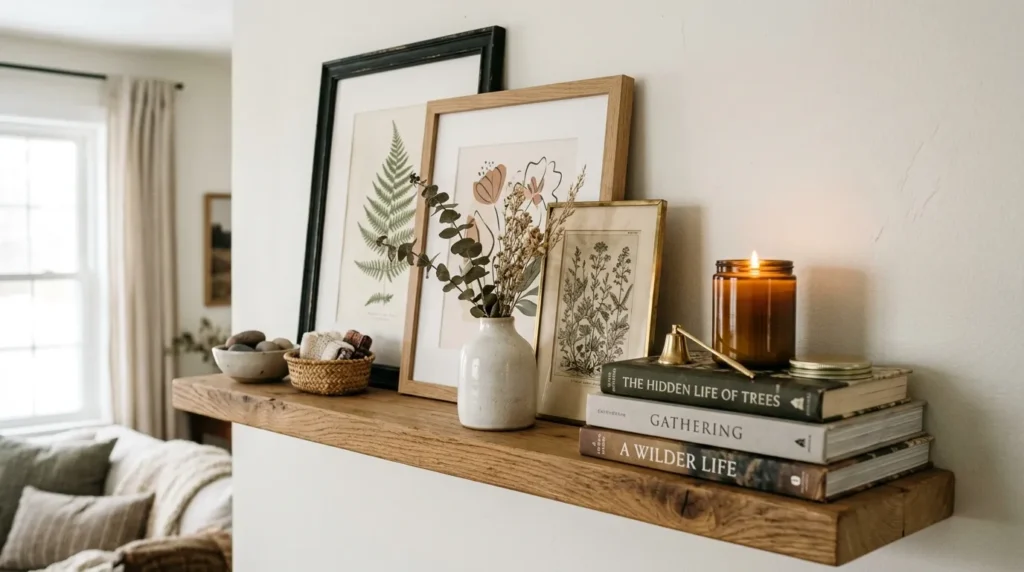
- Use small framed prints, family photos, sketches, botanicals, landscape art, or simple abstract pieces.
- Lean frames against the wall instead of hanging them for a relaxed, layered shelf display.
- Mix frame materials like wood, black metal, brass, white paint, antique gold, or natural oak.
- Place smaller frames slightly in front of larger pieces to create depth without using extra space.
- Keep the artwork palette connected to the room so the shelves feel like part of the design.
Framed artwork makes shelves feel personal and finished because it adds height behind smaller objects. Instead of filling every inch with accessories, a leaned frame creates a backdrop that visually pulls the display together. This works beautifully on living room built-ins, bedroom shelves, kitchen ledges, hallway shelves, and office bookcases. Choose artwork that reflects the mood of the room, whether that is coastal, vintage, modern, earthy, minimal, traditional, or playful. The frame itself becomes part of the styling.
The real transformation happens when you layer art with objects in front of it. A small vase, candle, bowl, or stack of books can overlap the bottom corner of a frame, creating depth that looks casual but carefully considered. For a softer look, use wood frames and muted prints. For contrast, try black frames and simple line art. This method is especially useful for renters because leaned artwork adds personality without extra holes in the wall or permanent installation.
5. Greenery Touches
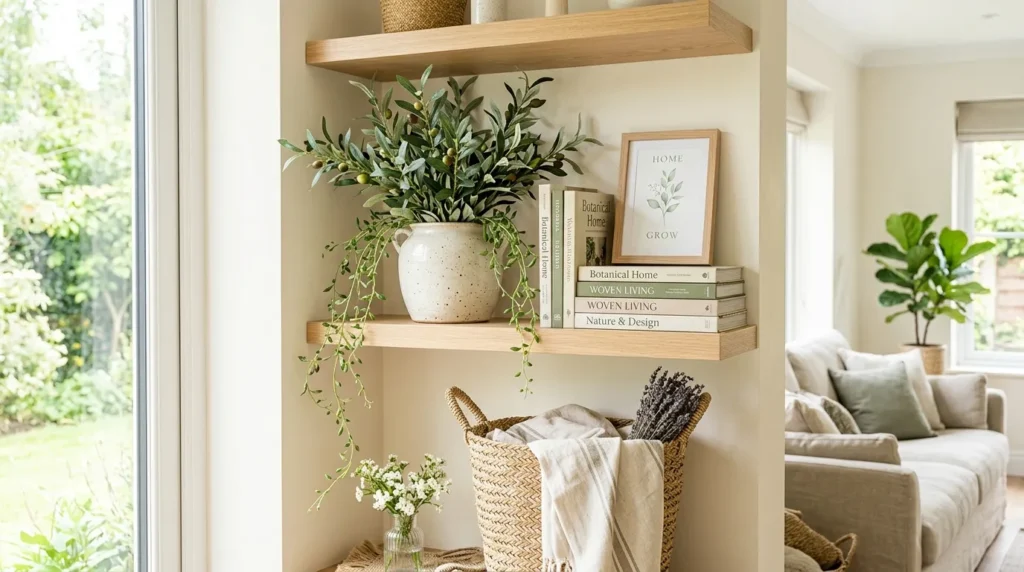
- Add faux plants, trailing vines, dried stems, preserved moss, eucalyptus, olive branches, or small potted herbs.
- Choose realistic greenery with natural color variation instead of overly shiny plastic leaves.
- Use planters made from ceramic, terracotta, stone, brass, glass, or woven materials for added texture.
- Place trailing plants on higher shelves and compact plants on lower shelves for better visual balance.
- Mix greenery with books, bowls, and frames so the shelves feel fresh without looking crowded.
Greenery brings life to shelves in a way few other decorative pieces can. Even one small plant can soften sharp corners, brighten a dark bookcase, and make a room feel more welcoming. This idea works because organic shapes naturally break up straight shelf lines and add movement. If your room does not have strong natural light, high-quality faux stems or preserved greenery can still create the same fresh feeling without maintenance. Many American homes use faux greenery for exactly this reason.
To make the look feel realistic, choose greenery that fits the season and the room. Olive stems work beautifully in neutral living rooms, eucalyptus feels calm in bathrooms, and small herbs look charming on kitchen shelves. Avoid placing plants on every shelf; one or two well-positioned pieces are usually enough. Pair greenery with natural containers, like terracotta pots or stone planters, for a grounded finish. The result feels fresh, balanced, and easy to maintain through every season.
6. Statement Bowls
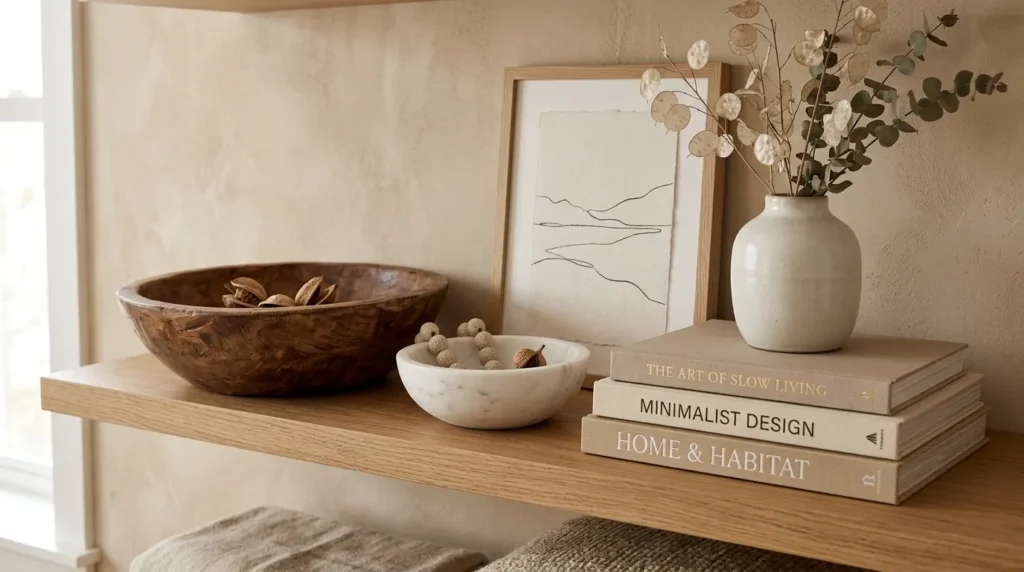
- Use decorative bowls in wood, marble, ceramic, glass, metal, or woven materials to add shape.
- Choose shallow bowls for styling and deeper bowls for practical storage in busy everyday spaces.
- Fill bowls with beads, pinecones, matchbooks, keys, shells, ornaments, or leave them empty.
- Place bowls near books or framed art so they feel connected to the larger arrangement.
- Use one larger bowl instead of several tiny bowls when you want a cleaner, elevated look.
A statement bowl can make shelves feel grounded, especially when the surrounding pieces are tall or narrow. Bowls work because their low, wide shape contrasts beautifully with books, vases, candlesticks, and frames. In my experience, one beautiful bowl often does more for a shelf than several small accessories. It gives the eye a place to rest and helps the display feel intentional. A wooden, marble, or ceramic bowl can also add texture without making the shelf look busy.
The usability depends on where the shelf is located. In an entryway, a bowl can hold keys, sunglasses, or small daily items. In a living room, it can display wooden beads or seasonal accents. In a kitchen, it can hold fruit, napkins, or folded linens. Choose materials that match your home’s mood: marble for elegance, wood for warmth, ceramic for softness, and woven fibers for casual texture. This simple addition can make ordinary shelves feel balanced, useful, and styled.
7. Candle Groupings
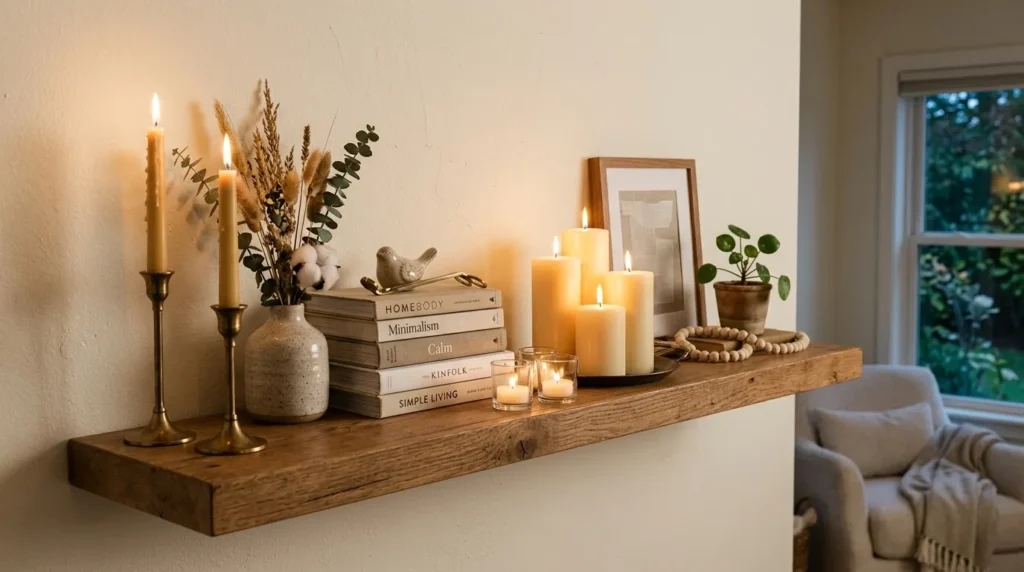
- Use pillar candles, taper candles, votives, glass jar candles, or flameless candles for warmth.
- Mix candle holders in brass, ceramic, wood, glass, stone, matte black, or antique metal finishes.
- Choose unscented candles for shelves near books, dining spaces, or small rooms where fragrance may feel strong.
- Group candles at different heights so the arrangement looks layered instead of flat or repetitive.
- Use battery-operated candles on high shelves or near delicate materials for safer everyday styling.
Candles add a cozy glow that makes shelves feel more inviting, even when they are not lit. They work because they introduce warmth, softness, and a calm atmosphere, especially in living rooms, bedrooms, bathrooms, and dining areas. I’ve seen this work well in many homes where shelves need a little mood but not more clutter. A simple candle grouping can make a bookcase look styled, seasonal, and relaxing without requiring a big design change or expensive accessories.
The key is choosing candle shapes and holders that match the rest of the room. Brass taper holders feel traditional and elegant, while matte ceramic holders look modern and quiet. Glass jars are casual and easy, especially for farmhouse or coastal spaces. Place taller holders near frames or vases, then add shorter votives nearby for balance. If you have children, pets, or high shelves, flameless candles are a smart option. The finished look feels warm, layered, practical, and easy to refresh.
8. Sculptural Objects
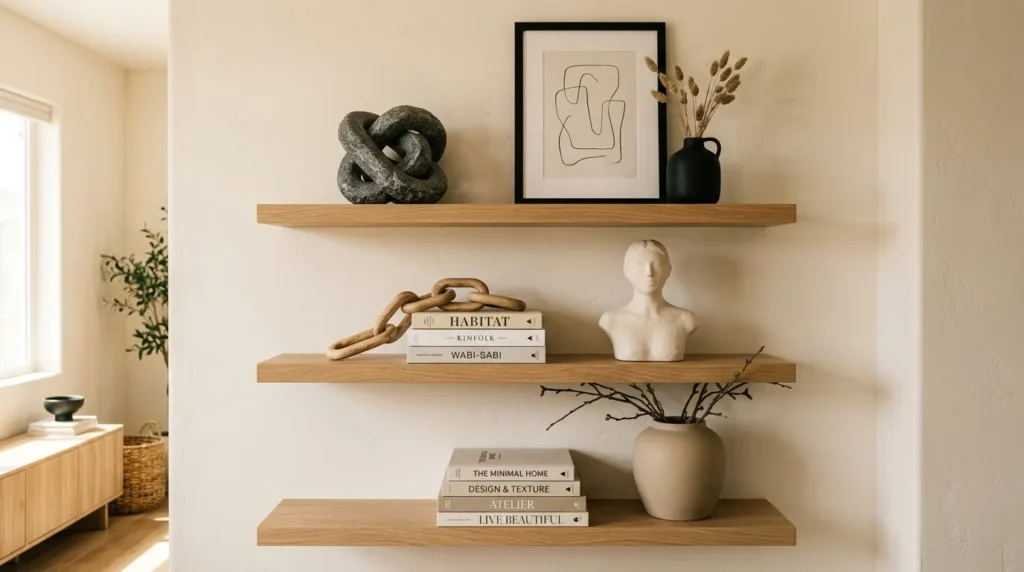
- Add decorative knots, small busts, stone links, wooden chains, metal objects, or handmade artisan pieces.
- Choose one or two sculptural pieces per shelf area so the display does not feel crowded.
- Look for shapes that contrast with books, straight frames, rectangular boxes, and storage baskets.
- Use neutral colors for a refined look or bold finishes for a modern statement.
- Place sculptural objects on book stacks, beside vases, or in open spaces where they stand out.
Sculptural objects are the finishing pieces that make shelves feel designed rather than simply filled. They work because they add shape, shadow, and personality without needing a specific function. This is where you can bring in a little art, whether your style is modern, organic, vintage, coastal, or minimalist. A stone knot, wooden chain, ceramic figure, or small metal object can create a focal point that catches the eye and makes the arrangement feel more custom.
The best styling approach is restraint. Choose pieces with strong shapes, then give them enough breathing room to be noticed. A sculptural object looks most expensive when it is not competing with too many small accessories. Place it on top of stacked books for height, or let it sit alone in an open shelf section for a gallery-like effect. Neutral shelves often benefit from texture, while colorful rooms may need simple matte shapes. This creates a collected, polished display.
9. Seasonal Accents
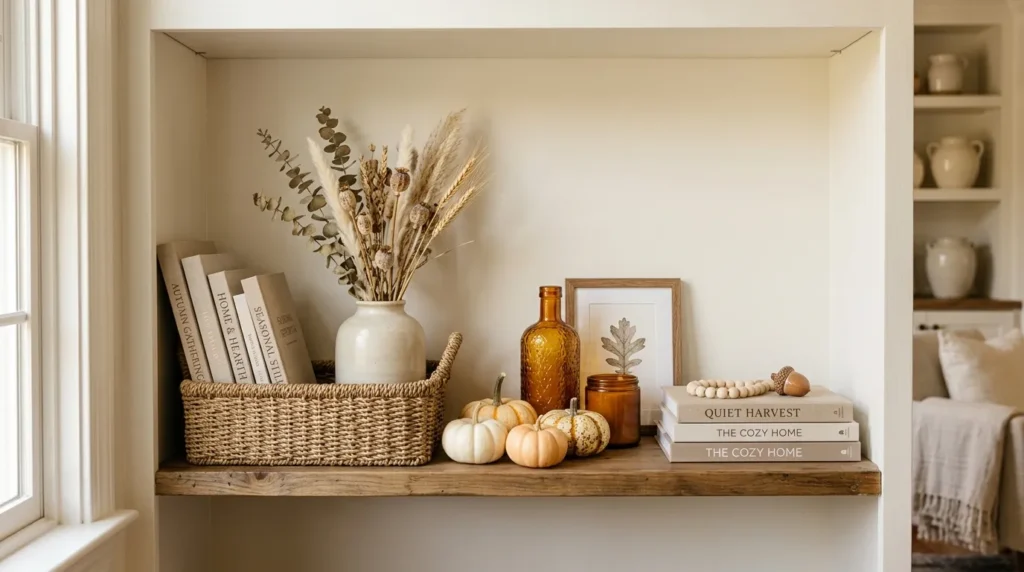
- Rotate small seasonal pieces like pumpkins, pinecones, florals, ornaments, shells, flags, or spring branches.
- Keep the base items neutral so seasonal updates are easy, affordable, and quick to style.
- Choose two or three seasonal colors instead of using every holiday color at once.
- Add texture through ribbons, greenery, small signs, dried stems, ceramic houses, or tiny figurines.
- Store seasonal pieces in labeled bins so shelf updates stay simple and organized each year.
Seasonal accents keep shelves feeling fresh without requiring a full room makeover. This idea works well because your foundation pieces, like books, baskets, vases, and frames, can stay in place while only a few details change. For fall, you might add small pumpkins and amber glass. For Christmas, use greenery, bells, ornaments, or ceramic houses. For spring, try blossoms, pastel pottery, or woven textures. The shelves feel updated, but the process stays manageable and budget-friendly.
The secret is not decorating every shelf from edge to edge. Choose a few focal spots and repeat the season through color, shape, or texture. For example, a small pumpkin beside a vase, a velvet ribbon on a basket, or a pine branch in a ceramic pot can be enough. This method keeps the display elegant instead of crowded. It also helps you reuse favorite pieces each year. The final look feels festive, clean, and ready for Pinterest inspiration.
10. Mixed Metals
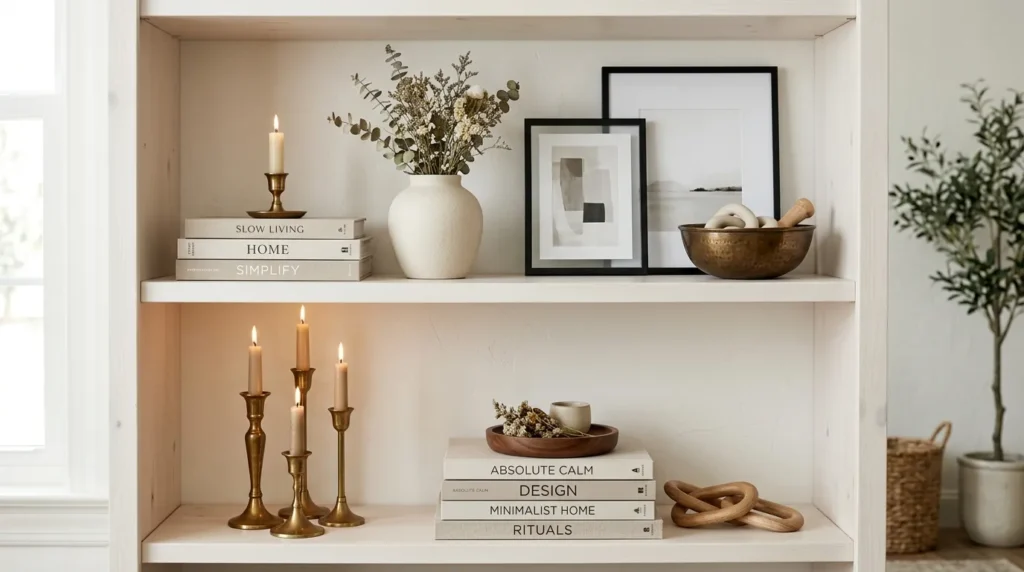
- Use brass, black metal, antique bronze, chrome, or brushed nickel accents for shine and contrast.
- Add metal through frames, candle holders, bookends, trays, bowls, small clocks, or decorative objects.
- Limit the mix to two metal finishes if you want a cleaner, more intentional look.
- Repeat each metal finish at least twice so the combination feels connected instead of accidental.
- Balance shiny metals with matte ceramics, books, wood, or woven baskets for warmth.
Mixed metals can make shelves look polished, layered, and more expensive when used thoughtfully. They work because metal adds reflection and contrast, especially in rooms with mostly wood, fabric, painted surfaces, and soft neutral colors. A brass frame, black candle holder, or antique bronze bowl can create just enough shine to wake up a quiet display. That’s why many designers recommend repeating finishes instead of using one random metallic piece that feels disconnected from everything else.
The most practical way to use this idea is to choose a dominant metal and a supporting metal. For example, brass can be the warm accent while matte black adds structure. In a modern home, chrome and black may feel cleaner. In a traditional room, antique brass and bronze feel softer. Keep the larger shelf pieces simple so the metal accents stand out without taking over. This creates a balanced, collected look that feels stylish, livable, and easy to maintain.
11. Open Space
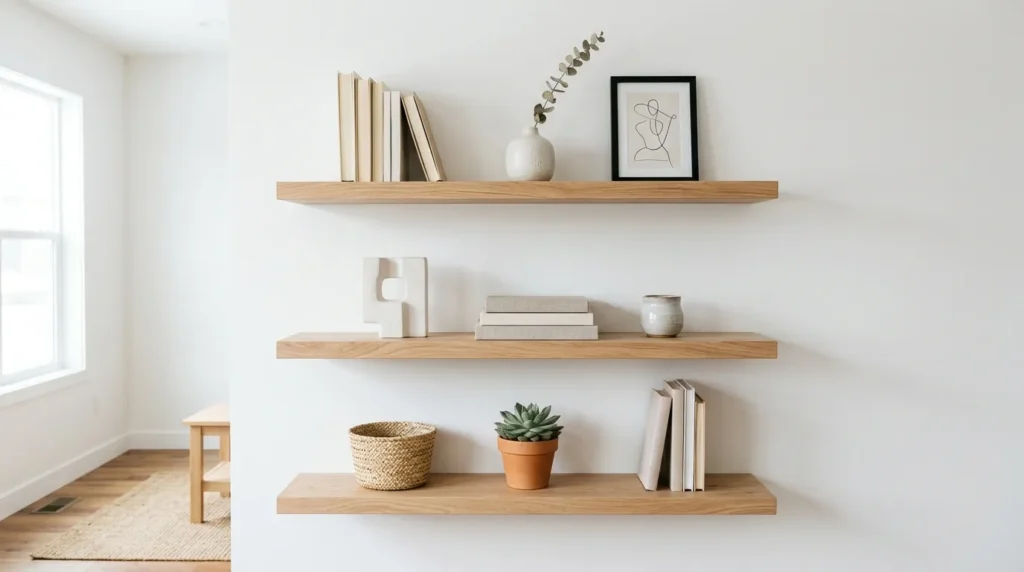
- Leave open areas between objects so each piece has room to breathe and be noticed.
- Avoid filling every shelf from edge to edge, especially on floating shelves or built-ins.
- Create small groupings, then leave intentional blank space beside them for a cleaner look.
- Use fewer, larger pieces instead of many tiny decorations when the shelf feels busy.
- Step back often and check the entire wall before adding more items or changing the layout.
Open space is what makes styled shelves look calm instead of cluttered. It may feel strange to leave empty areas at first, but those blank sections are what allow your favorite pieces to stand out. Without them, even beautiful objects can start to look like visual noise. This idea is especially important in smaller USA homes, apartments, and open-concept spaces where shelves are visible from several angles. A little breathing room can make the whole room feel lighter and more intentional.
To use open space well, style in small groups and pause before adding more. Try one stack of books, one vase, and one framed piece, then leave the next section quiet. Repeat this rhythm across the shelves so the wall feels balanced. If something looks crowded, remove the smallest item first. This approach makes cleaning easier, improves visibility, and helps every object feel chosen. The final display feels airy, modern, comfortable, and much less staged than an overfilled arrangement.