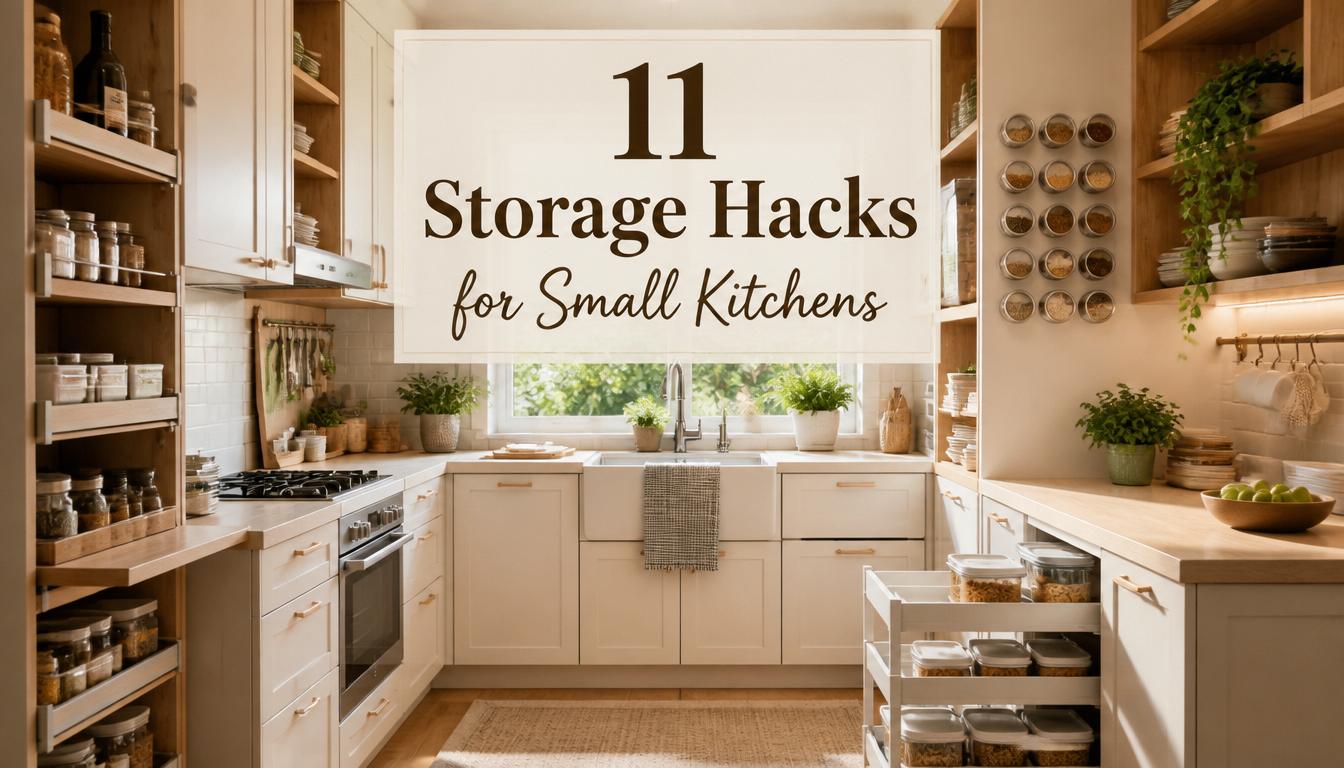
11 Storage Hacks for Small Kitchens Ideas
Small kitchens can work beautifully when every inch has a clear job. Many homes, apartments, condos, townhouses, and rentals across the USA have kitchens that feel tight, but the problem is not always square footage. Often, the real issue is unused wall space, crowded counters, deep cabinets, awkward corners, and tools stored far from where they are used.
The best small-kitchen organization ideas make daily cooking easier without making the room feel packed. A smarter shelf, rail, drawer divider, rolling cart, or pantry system can change how the kitchen feels every morning. These storage hacks for small kitchens are designed to help you create more space, reduce visual clutter, and make the room feel cleaner, brighter, and easier to use.
You do not need a full remodel to improve a compact kitchen. The right storage changes can make an old layout feel more thoughtful. This guide focuses on practical, Pinterest-worthy ideas that look good and work in real homes. Each section includes simple styling tips, material ideas, and real-life ways to make a small kitchen feel more organized without losing warmth or personality.
1. Wall Rails
- Frees up drawer and counter space
- Keeps daily tools within easy reach
- Works with hooks, baskets, cups, and magnetic clips
- Adds a clean, functional look to blank walls
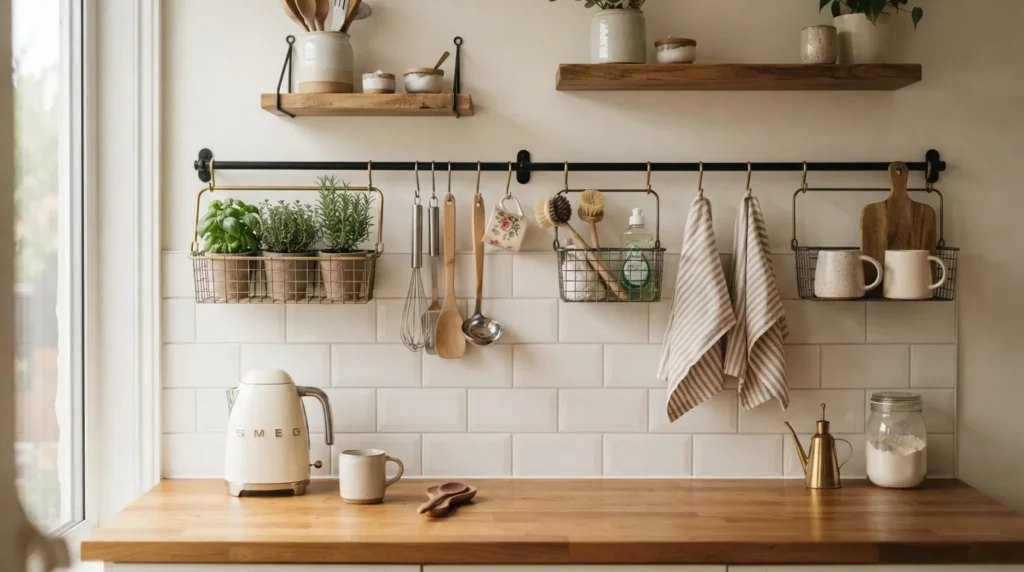
Wall rails make a small kitchen feel more efficient because they move everyday tools off crowded counters. A simple metal or wood rail can hold mugs, measuring cups, small pans, utensils, towels, or a hanging basket for garlic and onions. In my experience, this works best near the stove, sink, or prep area where those items are already used. The rail should feel useful, not decorative only. Choose black, brass, stainless steel, or wood finishes that match your faucet, cabinet hardware, or lighting for a cleaner look.
The biggest transformation comes from giving awkward wall space a real purpose. A narrow strip under cabinets, beside the range, or near a coffee station can suddenly hold things that used to jam drawers. Use S-hooks for flexible storage, small cups for spoons, and wire baskets for lightweight pantry items. Renters can look for tension rails or removable mounting options, depending on wall type and weight. Keep only attractive, frequently used items on display so the space feels organized, not busy. The result is practical, stylish, and easy to maintain.
2. Cabinet Risers
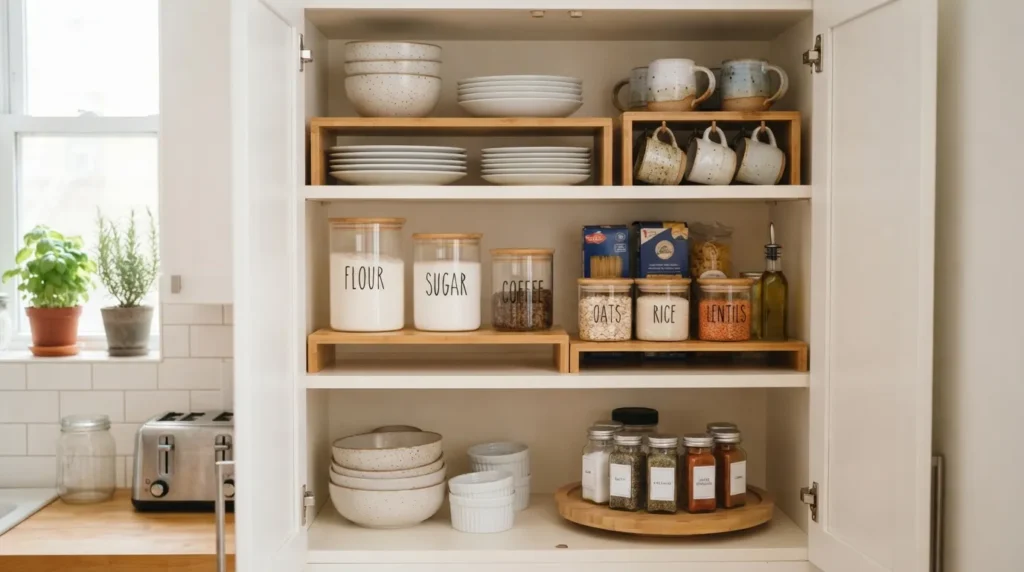
- Doubles vertical space inside cabinets
- Helps separate plates, bowls, mugs, and pantry items
- Works well in rentals and older kitchens
- Makes deep shelves easier to use
Cabinet risers are small but powerful because most cabinets waste vertical space. When plates, bowls, mugs, cans, or spice jars are stacked too high, the cabinet becomes frustrating fast. A riser creates a second level so items are visible and easier to grab. That’s why many organizers recommend starting inside cabinets before buying more furniture. Wire, bamboo, acrylic, or metal risers all work, but the best choice depends on your cabinet finish and the weight of what you store.
Use risers where items are similar in size and used often. Place dinner plates below, salad plates above, or mugs underneath with bowls on top. In a pantry cabinet, use risers for cans, jars, tea boxes, or baking supplies. Measure the cabinet height before buying, because tall mugs and oversized bowls need extra clearance. This idea makes old cabinets feel more custom without permanent changes. It also helps prevent duplicate buying because you can finally see what you already own before adding more to the kitchen.
3. Drawer Dividers
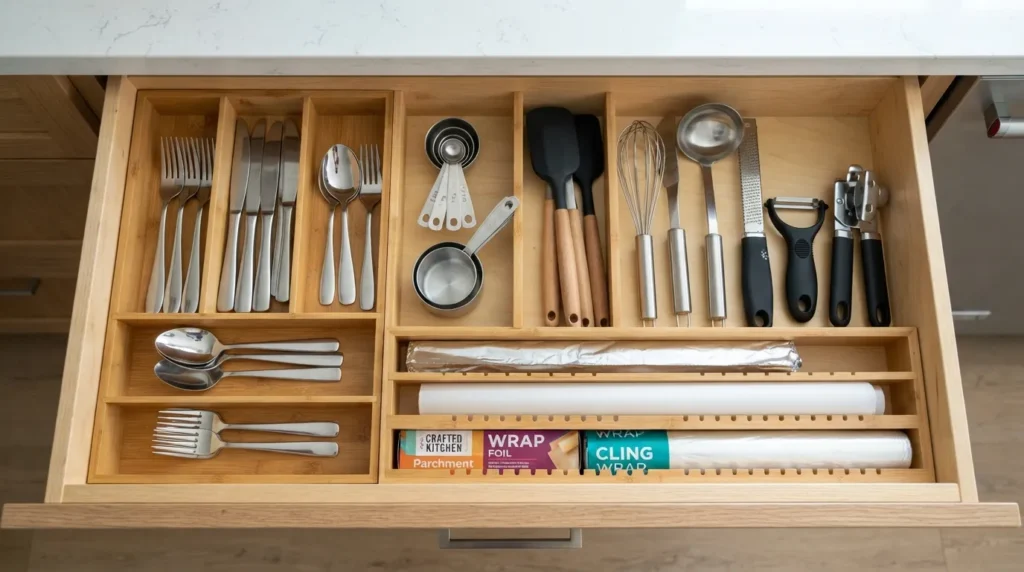
- Stops utensils from sliding into messy piles
- Works for flatware, cooking tools, wraps, and gadgets
- Makes shallow drawers more useful
- Helps daily cooking feel faster and calmer
Drawer dividers create order where small kitchens often feel most chaotic. A drawer packed with spatulas, peelers, measuring spoons, and random gadgets wastes time every time you cook. Adjustable bamboo, acrylic, or metal dividers let you create zones based on what you actually use. In my experience, the best drawer setup keeps everyday tools near the prep surface and moves rarely used items elsewhere. This keeps the kitchen from feeling overstuffed, even when storage is limited.
The key is to edit before organizing. Empty the drawer, remove duplicates, and group tools by purpose before adding dividers. Keep flatware together, cooking utensils together, and small gadgets in separate sections. For wraps and bags, use a slim organizer that holds foil, parchment, plastic wrap, and zip bags neatly. This makes the drawer look cleaner and function better. A divided drawer may seem simple, but it changes daily rhythm because everything has a place and cleanup becomes much quicker after meals.
4. Door Organizers
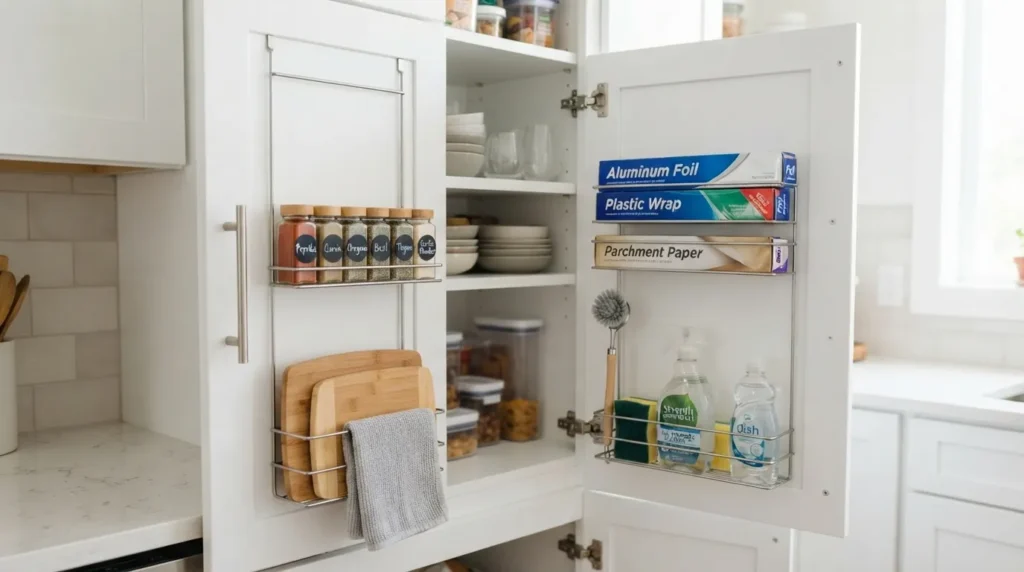
- Uses hidden space behind cabinet or pantry doors
- Works for spices, wraps, cutting boards, lids, and cleaners
- Keeps small items from cluttering shelves
- Adds storage without taking floor space
The back of a cabinet door is often wasted space, especially in compact kitchens. Slim racks, adhesive bins, hooks, and mounted holders can store spices, pot lids, cutting boards, foil, cleaning cloths, or dish brushes. This idea works well because it uses storage that does not take over counters, drawers, or floors. I’ve noticed it is especially helpful under the sink, inside pantry cabinets, and on narrow doors near cooking zones. The trick is choosing low-profile organizers that allow the door to close fully.
Before installing anything, check hinge clearance and measure the depth between the door and interior shelf. Heavy items need screws, while lightweight items may work with strong adhesive strips. Use door storage for items you reach for often but do not want on display. A wrap holder near the prep zone, lid rack near pots, or cleaning caddy under the sink can make the kitchen feel instantly more functional. It also keeps shelves clearer, which makes small cabinets easier to scan and use every day.
5. Clear Containers
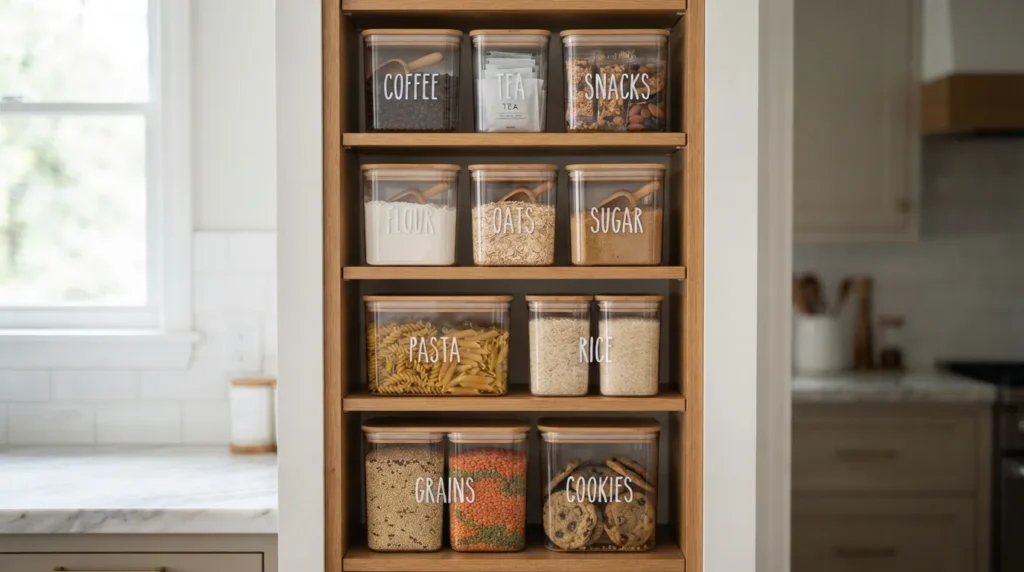
- Makes pantry items easier to see and refill
- Reduces bulky packaging in cabinets
- Works with dry goods, snacks, baking items, and coffee supplies
- Creates a cleaner, more uniform pantry look
Clear containers can make a small pantry or cabinet feel calmer because they reduce package clutter. Cereal boxes, pasta bags, flour sacks, snack wrappers, and half-open bags take up more space than people realize. Airtight containers in clear plastic or glass make food easier to see, stack, and refill. In my experience, this works best when containers are chosen for real cabinet dimensions, not just because they look pretty online. Measure shelves before buying a full set.
Use containers for items your household buys regularly, such as rice, pasta, oats, flour, sugar, coffee, crackers, or snacks. Label each one clearly, and keep expiration details on the bottom or back if needed. Square and rectangular containers usually save more space than round jars. Keep a small basket for half-used packets that do not fit neatly. This system makes the kitchen look more polished, but it also helps grocery planning because you can quickly see what is low before shopping.
6. Floating Shelves
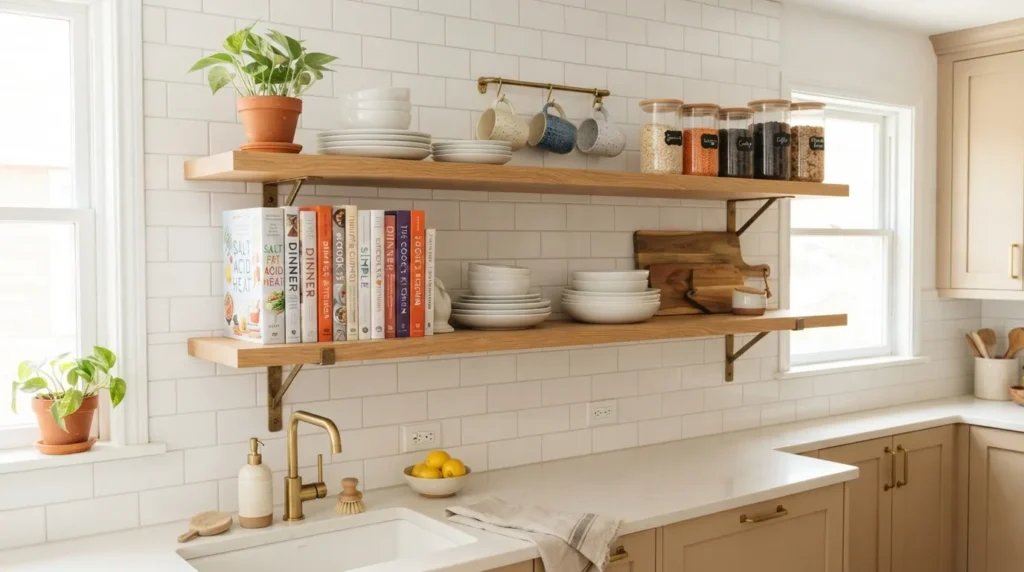
- Adds storage to blank walls without bulky cabinets
- Works for dishes, jars, cookbooks, mugs, and decor
- Makes small kitchens feel lighter and more open
- Creates a styled focal point when kept simple
Floating shelves are useful when upper cabinets feel too heavy or when a blank wall needs purpose. A narrow shelf can hold everyday plates, bowls, glass jars, cookbooks, coffee mugs, or small plants without closing in the room. Wood shelves add warmth, while painted shelves blend into the wall for a quieter look. That’s why many designers recommend open shelving in small doses. It gives the kitchen function and personality without making the room feel boxed in.
The best floating shelves are edited, sturdy, and placed where they support real habits. Install them near the coffee maker for mugs, above a small counter for plates, or beside the stove for oils and spices. Use brackets or hidden supports rated for the weight you plan to store. Avoid filling every inch, because negative space helps the shelves look calm. A mix of dishes, jars, and one warm decorative piece can feel practical and beautiful. This makes the kitchen look intentional without needing a full remodel.
7. Rolling Carts
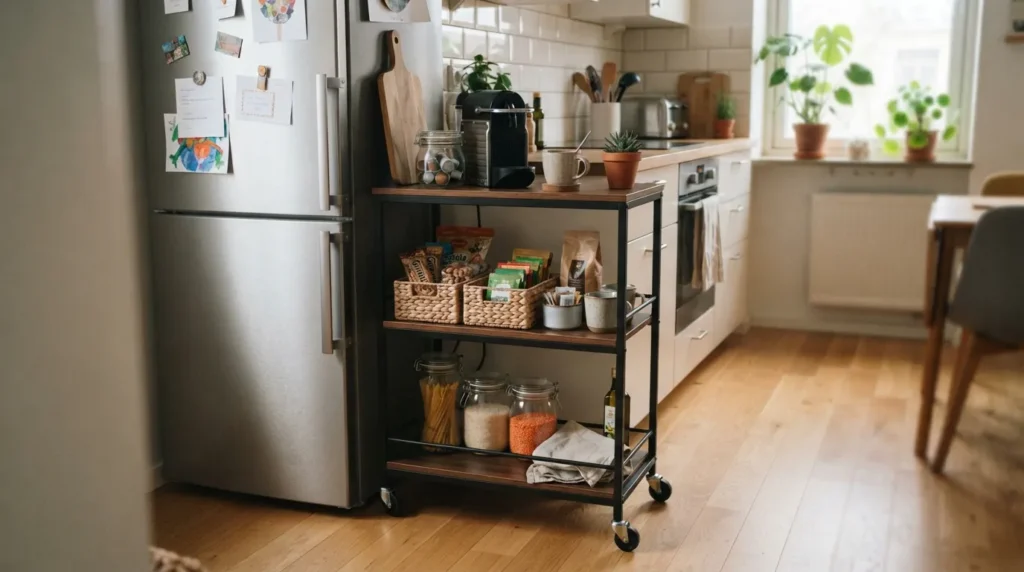
- Adds flexible storage without permanent installation
- Works for renters, apartments, and narrow kitchens
- Holds pantry items, coffee supplies, produce, or baking tools
- Can move wherever extra prep space is needed
A rolling cart gives a small kitchen movable storage that can change with your routine. Use it as a coffee station, baking cart, produce stand, snack station, or extra prep surface when counter space is limited. Slim carts can slide between appliances, beside a fridge, or against an unused wall. I’ve seen this work well in many apartments because it gives renters more function without drilling holes or changing cabinets. Choose a cart with locking wheels so it stays stable during daily use.
Style the cart with clear zones so it does not become a clutter magnet. Put heavier items like jars, appliances, or mixing bowls on the bottom shelf. Keep daily items at hand level, such as mugs, coffee pods, spices, or lunch supplies. Use small baskets to group loose packets and napkins. If the cart is visible from the living area, choose finishes that match the kitchen, such as black metal, white enamel, stainless steel, or warm wood. This gives extra storage while still looking clean and intentional.
8. Magnetic Strips
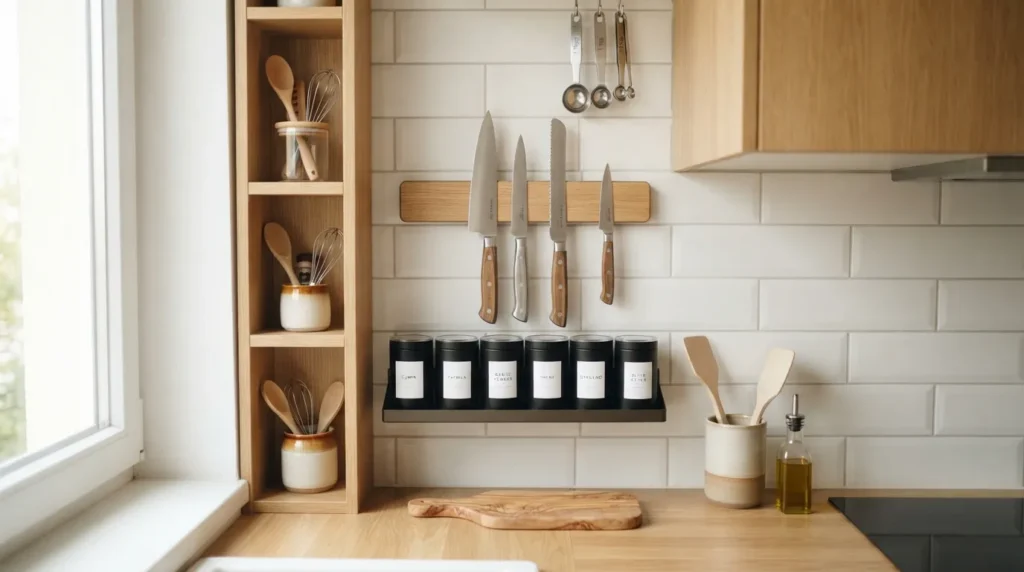
- Frees drawer space by holding metal tools vertically
- Works for knives, spice tins, measuring spoons, and scissors
- Keeps frequently used items visible and reachable
- Adds a sleek, professional kitchen feel
Magnetic strips are excellent for small kitchens because they turn vertical space into practical storage. A wall-mounted strip can hold knives, metal measuring spoons, kitchen scissors, or magnetic spice tins. This clears drawer space and keeps important tools close to the prep area. For safety, place knife strips away from children’s reach and install them securely into studs or with proper anchors. In my experience, magnetic storage works best when it holds a limited number of items, not every metal object in the kitchen.
The visual effect is clean when the strip is placed with intention. Install it on a backsplash wall, side of a cabinet, or narrow area beside the stove. Stainless steel feels professional, black looks modern, and wood-faced magnetic strips feel warmer. If using spice tins, label the lids clearly so you can identify them quickly. Keep the strip wiped clean because cooking residue can build up nearby. This simple addition helps free drawers, improves cooking flow, and makes a tiny kitchen feel more organized and efficient.
9. Corner Storage
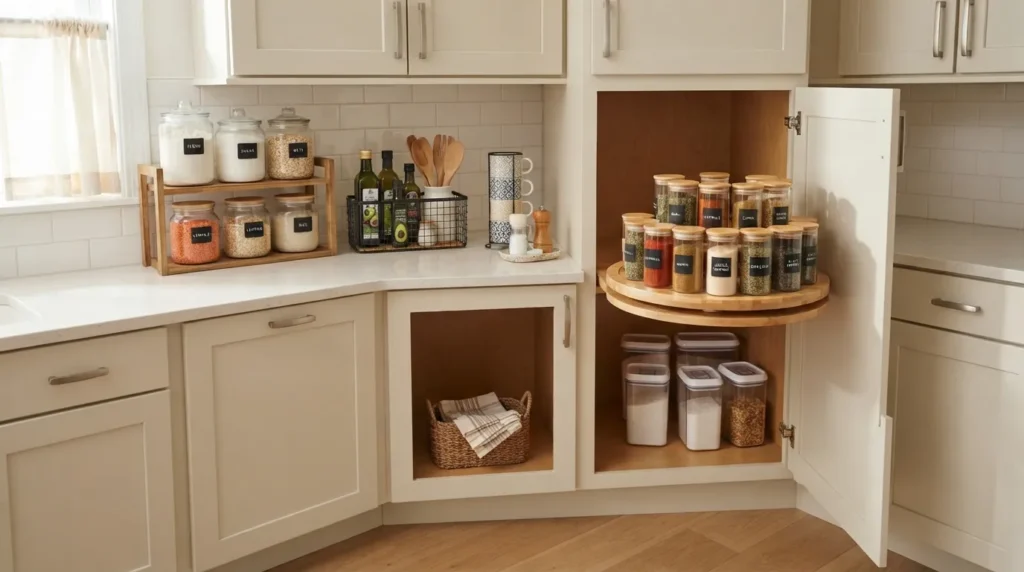
- Makes awkward cabinet and counter corners more useful
- Works with lazy Susans, tiered shelves, baskets, and turntables
- Helps prevent items from disappearing in deep spaces
- Adds function to areas that usually feel wasted
Corners can become dead zones in small kitchens if they are not planned carefully. Deep cabinet corners swallow mixing bowls, lids, appliances, and pantry items until they are forgotten. A lazy Susan, tiered turntable, pullout basket, or corner shelf can make these awkward areas easier to use. I’ve noticed that round turntables work especially well for oils, sauces, spices, vitamins, or coffee supplies because everything comes forward with one spin. This keeps items visible instead of buried.
Use each corner based on how often you need the items stored there. Daily items should be easy to reach, while seasonal tools can go deeper or higher. For countertops, a small corner shelf can hold mugs, plants, jars, or a toaster without spreading clutter across the prep area. For lower cabinets, use bins with handles so you can pull everything forward. Good corner storage makes a compact kitchen feel smarter because it turns frustrating space into reliable function. It also reduces the urge to add bulky furniture.
10. Under-Sink Zones
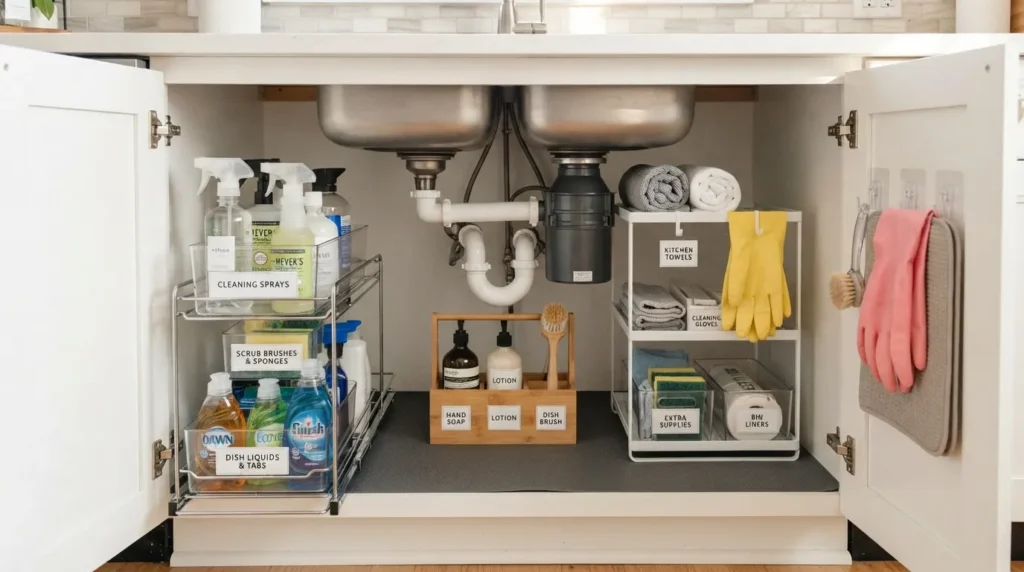
- Organizes cleaning supplies in one practical area
- Works with bins, caddies, hooks, tension rods, and trays
- Protects cabinets from leaks and spills
- Makes daily cleanup faster and less frustrating
The cabinet under the sink can become messy fast because pipes create awkward shapes. Instead of tossing supplies inside, create clear zones for dish soap, sponges, trash bags, dishwasher pods, towels, and cleaning sprays. Use a waterproof liner or tray first to protect the cabinet floor from leaks. Then add stackable bins, a pullout caddy, hooks, or a tension rod for spray bottles. This is one of the most practical storage hacks for small kitchens because it improves a space people use daily.
Keep only kitchen-related cleaning items under the sink so the cabinet does not become a household catchall. Store backups in a laundry room, garage, or hallway closet if possible. Use one handled caddy for supplies you carry around the kitchen and one bin for refills. Attach a small holder to the door for gloves or scrub brushes. Check the area monthly for leaks, expired products, or sticky spills. A clean under-sink zone makes dishwashing, wiping counters, and resetting the kitchen feel much easier.
11. Ceiling Storage
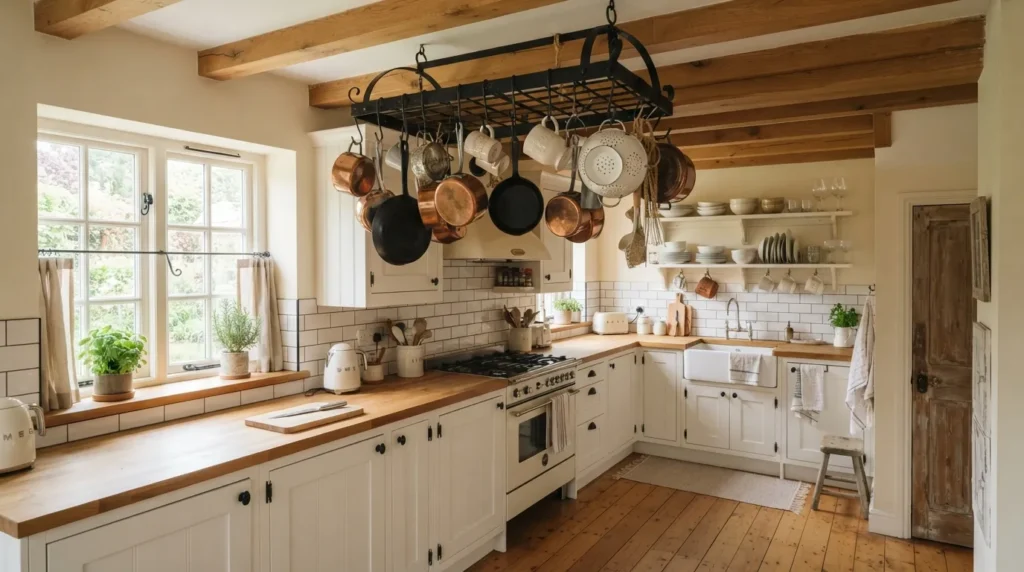
- Uses overhead space when walls and cabinets are full
- Works with pot racks, hanging baskets, and ceiling hooks
- Adds charm when styled carefully
- Best for sturdy ceilings and frequently used cookware
Ceiling storage can be useful when wall and cabinet space are already maxed out. A hanging pot rack, ceiling hooks, or suspended basket system can hold pans, colanders, mugs, or lightweight produce baskets. This idea works best in kitchens with enough ceiling height, strong mounting points, and cookware worth displaying. That’s why many designers recommend using overhead storage selectively. It should help the room feel functional, not crowded above your head.
Installation matters because hanging storage must be secure. Use ceiling joists, proper anchors, and weight-rated hardware, especially for pots and pans. Keep heavier cookware lower and balanced, and avoid placing racks where people walk directly underneath if the ceiling is low. Choose finishes that match the room, such as black iron, brass, stainless steel, or natural wood. When styled carefully, ceiling storage adds character while freeing cabinets for food, dishes, and appliances. It works especially well in farmhouse kitchens, studio apartments, and older homes with limited cabinet runs.