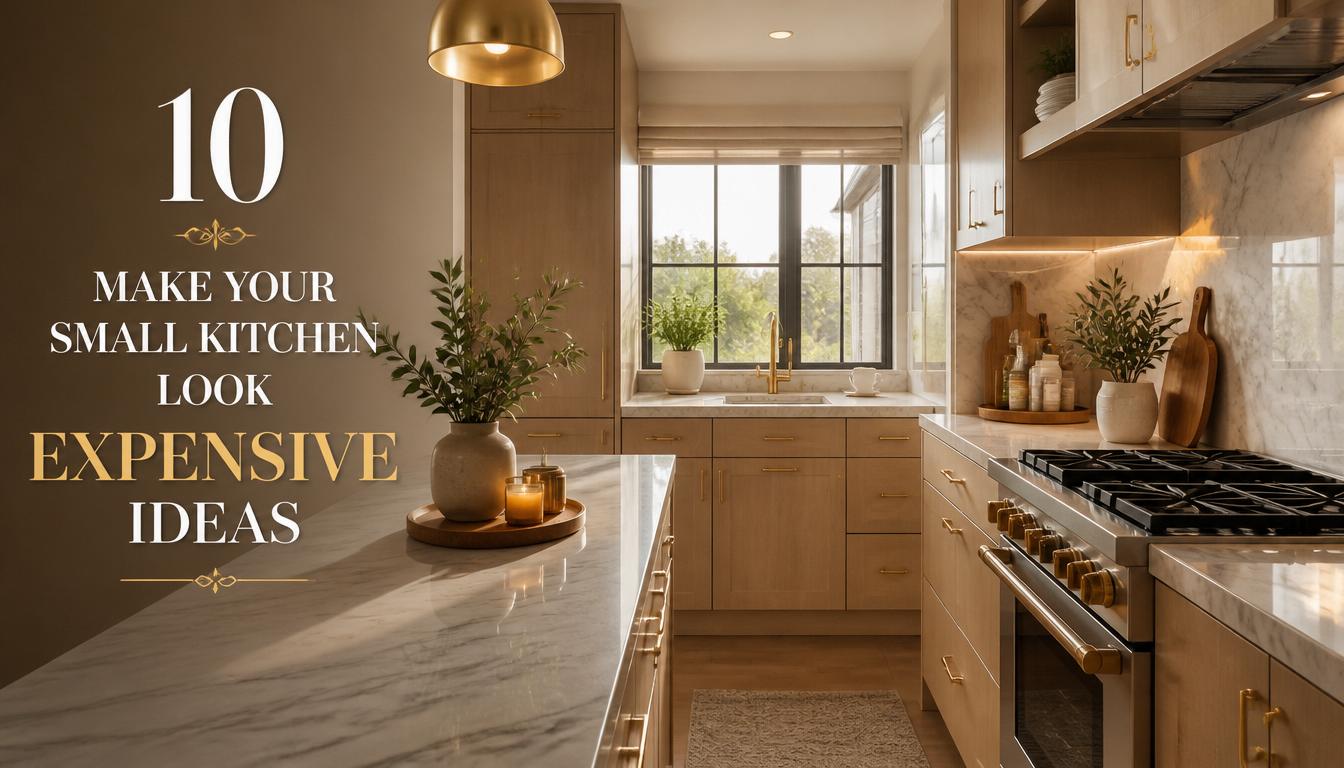
10 Make Your Small Kitchen Look Expensive Ideas
A small kitchen can look high-end without a full renovation, custom cabinets, or a luxury budget. The secret is not filling the room with more decor. It is choosing cleaner finishes, better lighting, smarter storage, and a few polished details that make the space feel intentional. Many compact kitchens across the USA struggle with the same issues: crowded counters, dull lighting, builder-grade hardware, dated backsplashes, mixed clutter, and cabinets that make the room feel smaller than it really is.
The good news is that a small space can look expensive faster than a large one because every detail has more visual impact. A new faucet, warmer cabinet color, hidden storage, under-cabinet lighting, or styled shelf can shift the entire mood. The goal is to make your small kitchen feel refined, calm, functional, and thoughtfully designed without making it look stiff or overdecorated.
These ideas are practical for apartments, condos, townhouses, starter homes, rentals, and older kitchens. Some are budget-friendly weekend updates, while others can guide a larger refresh. Each section includes styling logic, material suggestions, and real-life ways to create a polished kitchen that feels more spacious, more useful, and more beautiful every day.
1. Clean Counters
- Makes the kitchen feel larger and calmer
- Highlights beautiful surfaces instead of daily clutter
- Works with trays, crocks, baskets, and hidden storage
- Helps small kitchens look more polished in photos
- Improves cooking space and daily cleanup
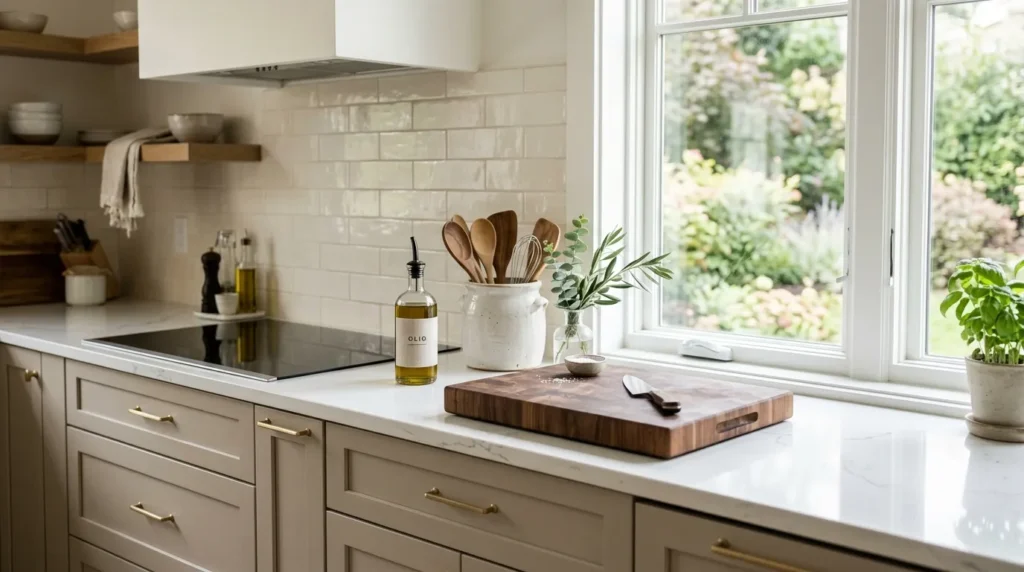
Clear counters instantly make a compact kitchen feel more expensive because they create visual breathing room. Small kitchens often look crowded when appliances, mail, spices, oils, mugs, and cleaning supplies sit everywhere at once. In my experience, the best counter styling starts by removing anything that is not used daily. Keep only useful and attractive pieces visible, such as a wood cutting board, ceramic utensil crock, glass oil bottle, or small tray. The goal is not emptiness. It is controlled simplicity that lets the finishes stand out.
The transformation feels strongest when every visible item looks intentional. Place coffee supplies on a tray, store extra appliances in cabinets, and move paper clutter away from food prep zones. If storage is limited, use a rolling cart, pantry basket, or cabinet shelf riser so the counters stay open. Choose one small decorative moment, such as a vase with greenery or a bowl of lemons, instead of several random items. This makes the kitchen feel cleaner, larger, and more designed while also making daily cooking much easier.
2. Statement Hardware
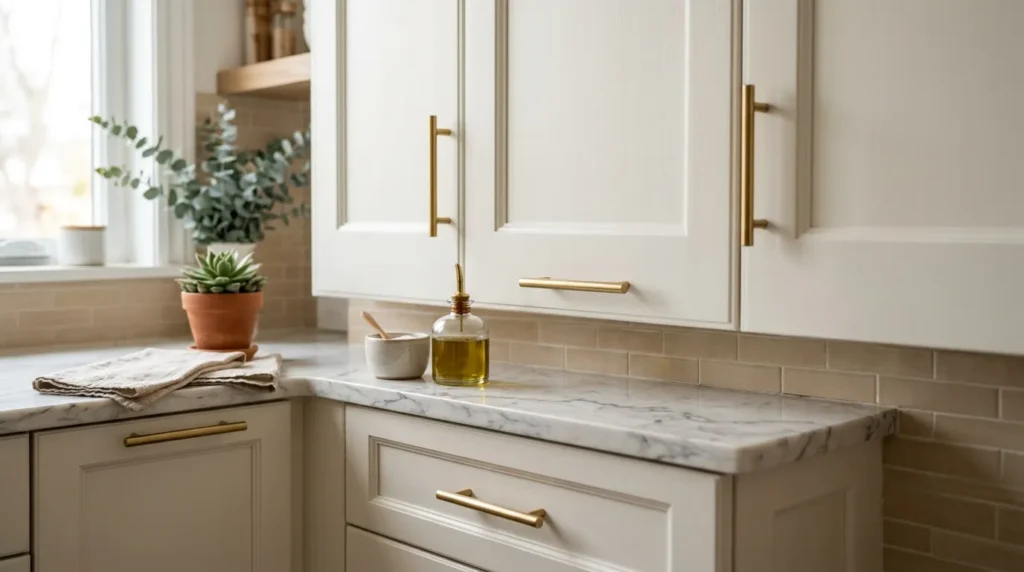
- Updates cabinets without replacing them
- Adds shine, contrast, or warmth
- Works with brass, black, nickel, bronze, or chrome
- Makes builder-grade cabinets feel more custom
- Improves daily function when drawers are opened often
Hardware is one of the smallest changes with the biggest visual payoff. Old knobs, tiny pulls, or mismatched finishes can make cabinets look dated, even when the cabinet doors are still in good condition. Swapping them for longer pulls, warm brass knobs, matte black handles, polished nickel, or soft bronze can instantly upgrade the room. That’s why many designers recommend hardware before more expensive updates. It gives the kitchen a finished look and adds a jewelry-like detail without changing the whole cabinet structure.
Choose hardware that matches the cabinet scale and the mood you want. Long pulls look sleek on wide drawers, round knobs feel classic on doors, and cup pulls add charm to older kitchens. Before drilling new holes, tape sample pieces to the cabinets and check how they look in morning and evening light. Also test how they feel in your hand. Good hardware should be pretty and comfortable. When the finish connects with the faucet or lighting, the entire kitchen feels more coordinated and expensive.
3. Warm Lighting
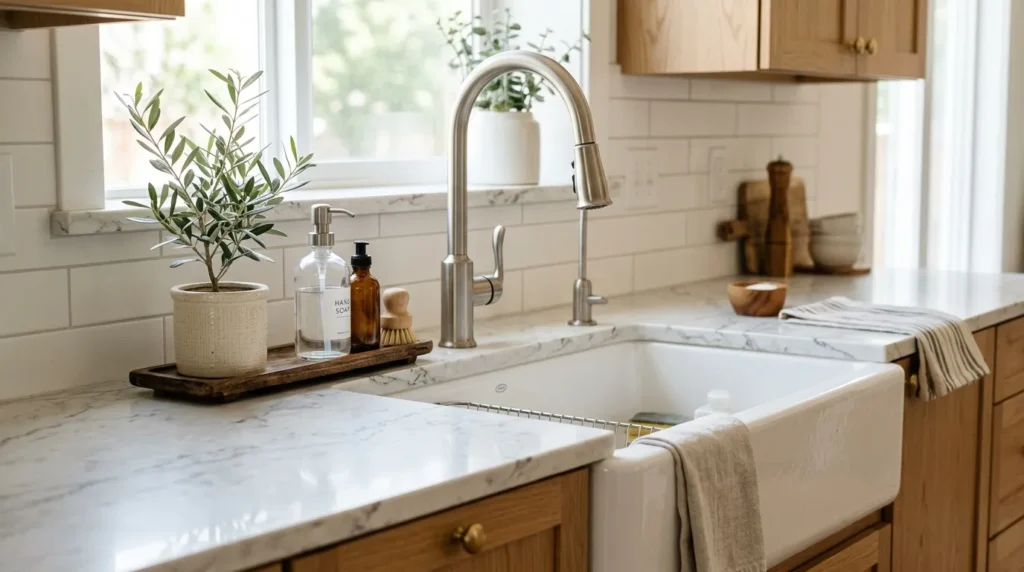
- Replaces harsh ceiling light with softer layers
- Makes cabinets, counters, and tile look better
- Works with pendants, sconces, lamps, and LED strips
- Creates a cozy evening mood
- Helps the kitchen feel more custom
Lighting can make a small kitchen look high-end or painfully flat. Many compact kitchens have one bright ceiling fixture that creates shadows, glare, and a cold feeling at night. Layered lighting changes that quickly. Under-cabinet LED strips brighten prep areas, pendants add focus, and a small lamp on a counter can make the room feel more like a styled living space. In my experience, warm white bulbs around 2700K to 3000K usually flatter wood, stone, tile, and painted cabinets best.
The best lighting plan supports both function and mood. Use brighter task lighting where you chop, cook, and wash dishes, then add softer lighting for evening atmosphere. Plug-in sconces can work well for renters, while rechargeable lamps add charm without wiring. If your kitchen feels dark, place light near reflective surfaces like tile, glass, or polished stone. Avoid cool blue bulbs because they can make even beautiful finishes look cheap. Good lighting makes the room feel warmer, cleaner, and more expensive with very little visual clutter.
4. Polished Faucet
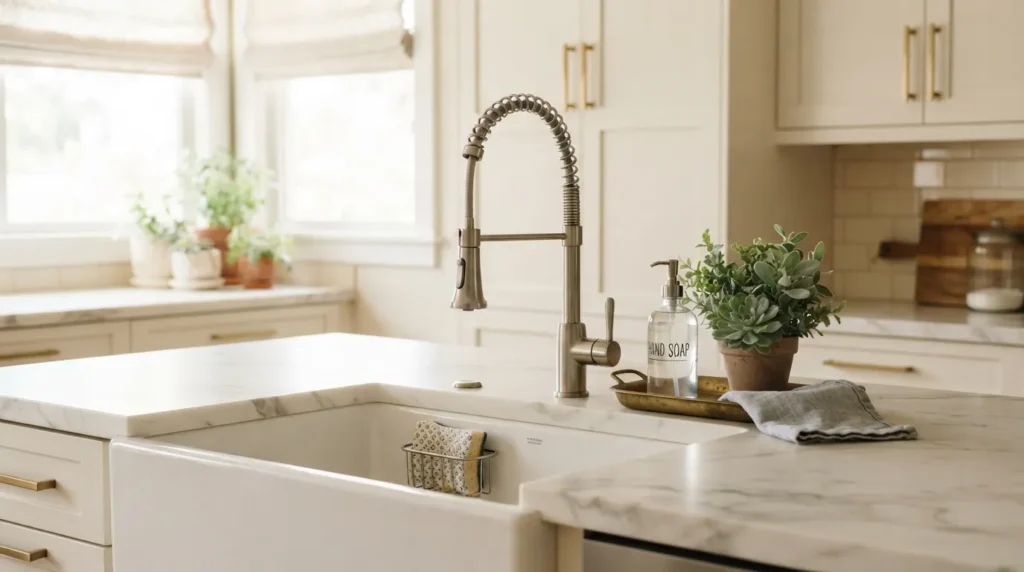
- Creates a high-impact focal point near the sink
- Works with stainless, brass, matte black, nickel, or bronze
- Makes daily dishwashing feel more upgraded
- Pairs well with new cabinet hardware
- Can refresh an older sink area quickly
A beautiful faucet can make the sink area feel instantly more refined. Since the faucet sits in a high-use, high-visibility spot, it naturally draws attention. A builder-grade faucet often looks thin, basic, or worn over time, while a taller pull-down faucet in stainless steel, brushed brass, matte black, or polished nickel adds presence. I’ve noticed this works especially well in small kitchens because one strong detail can lift the whole room. It gives the space a designer touch without needing a full renovation.
Function matters as much as the finish. Look for a faucet with a comfortable handle, pull-down sprayer, easy-clean surface, and height that works with your sink depth. If your kitchen has warm brass hardware, a brass faucet can feel cohesive. If the space is modern, matte black or stainless may look sharper. Pair the faucet with a clear soap dispenser, small tray, and simple sponge holder so the area stays tidy. This small sink upgrade can make everyday routines feel smoother and more polished.
5. Backsplash Shine
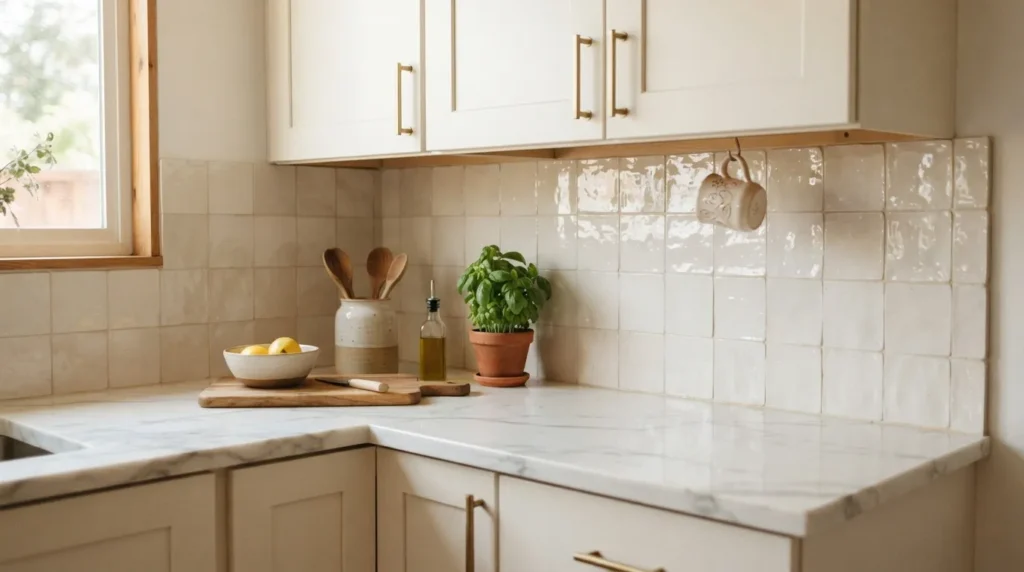
- Adds texture, light reflection, and wall protection
- Works with ceramic, glass, zellige, marble, or peel-and-stick tile
- Makes small kitchens feel brighter
- Helps connect cabinets and counters
- Can create a luxury look without using bold color
A reflective or textured backsplash can make a small kitchen feel brighter and more expensive. Flat painted walls behind counters often look unfinished, especially near the stove and sink. Tile adds protection, but it also adds depth, movement, and light. Glossy ceramic, handmade-look zellige, marble mosaic, glass tile, or even high-quality peel-and-stick tile can create a strong upgrade. The best choice depends on your cabinet color, counter pattern, and how much visual movement the room already has.
For a luxury effect, keep the backsplash clean and continuous. Taking tile from the counter to the underside of the cabinets looks neat, while extending it to the ceiling behind shelves or a range hood feels more custom. Use grout color carefully. Matching grout creates a softer look, while darker grout adds pattern and contrast. If you rent, removable tile can still make a major difference. A good backsplash makes the kitchen easier to clean while adding texture, shine, and a more finished designer feeling.
6. Hidden Storage
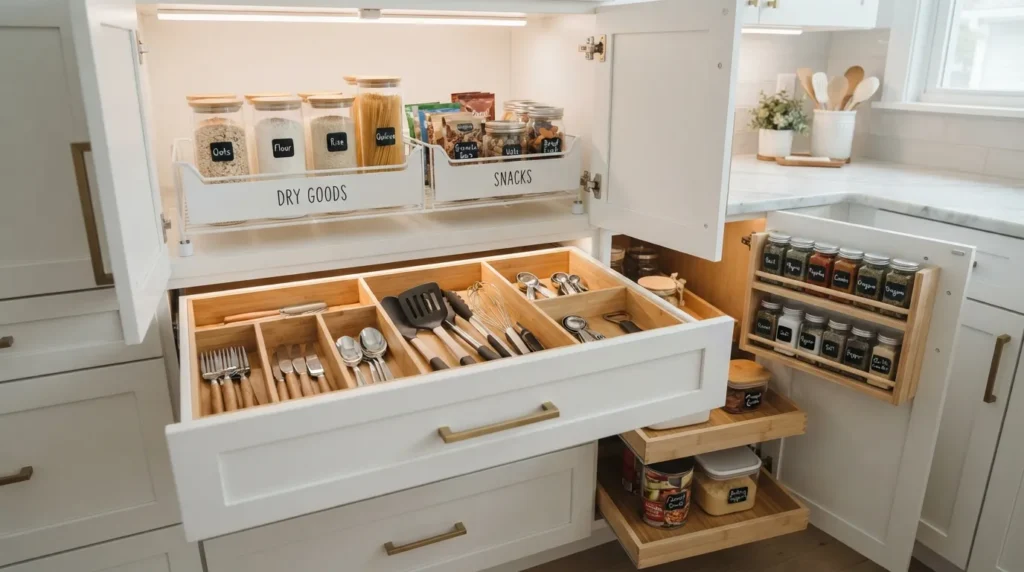
- Keeps visual clutter out of sight
- Works with bins, pullouts, cabinet inserts, and drawer organizers
- Helps small kitchens feel calmer and more spacious
- Makes daily cooking tools easier to find
- Gives the room a cleaner, higher-end look
Hidden storage is what makes a small kitchen look calm instead of crowded. Open surfaces may photograph well, but the real success comes from what is happening behind cabinet doors and drawers. Pullout bins, drawer dividers, shelf risers, lazy Susans, and under-sink caddies create order without showing everything. In my experience, hidden organization is one of the most practical ways to make a compact kitchen feel more expensive because the room looks cleaner and functions better at the same time.
Start with the areas that cause the most daily frustration. If pans are stacked badly, add a vertical rack. If spices fall over, use a tiered organizer. If cleaning products crowd the sink cabinet, use labeled bins and a waterproof liner. Keep similar items together and remove duplicates before buying organizers. The best storage systems are simple enough to maintain after a busy week. When clutter disappears behind clean cabinet fronts, the whole kitchen feels larger, quieter, and more thoughtfully designed.
7. Matching Containers
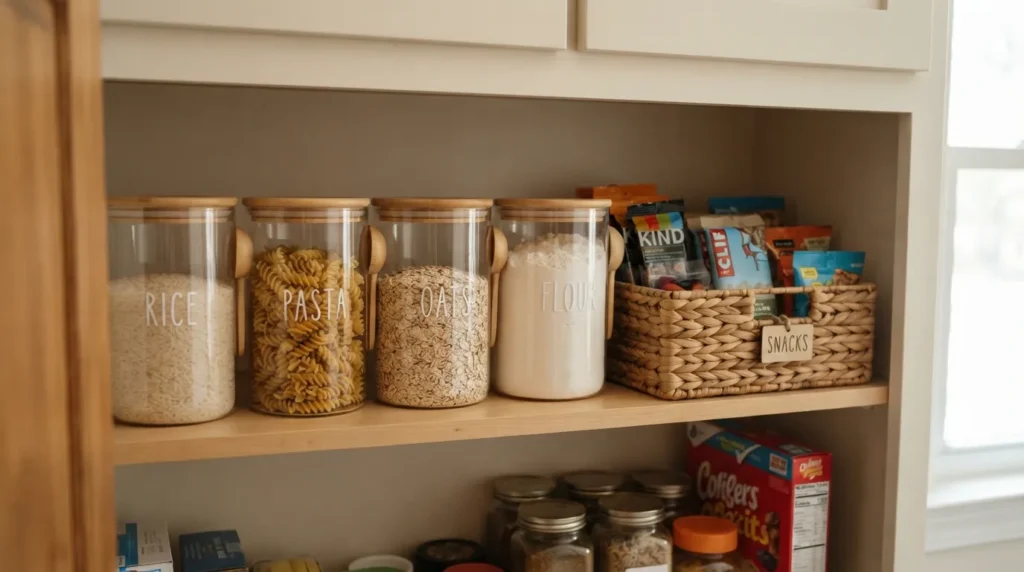
- Reduces pantry packaging clutter
- Creates a clean, uniform cabinet or shelf look
- Works with glass jars, clear bins, labels, and baskets
- Makes groceries easier to see
- Helps open shelving look more styled
Matching containers can make even basic pantry shelves look more custom. Bulky cereal boxes, torn pasta bags, snack wrappers, and half-used baking supplies create visual noise. Decanting everyday items into clear containers, glass jars, labeled bins, or matching baskets creates a cleaner look and makes food easier to find. I’ve seen this work well in apartments because it gives renters a polished pantry without changing cabinets. The key is choosing containers that fit your real shelves, not just the prettiest set online.
Use matching containers for foods you buy often, such as oats, rice, pasta, flour, sugar, coffee, tea, crackers, and snacks. Keep labels simple and readable, and store expiration details on the back or bottom if needed. Square and rectangular containers usually save more space than round jars. Add woven baskets for packets, backup spices, or lunch items that do not decant well. When shelves look unified, the kitchen feels more organized, more expensive, and easier to shop from before grocery trips.
8. Neutral Palette
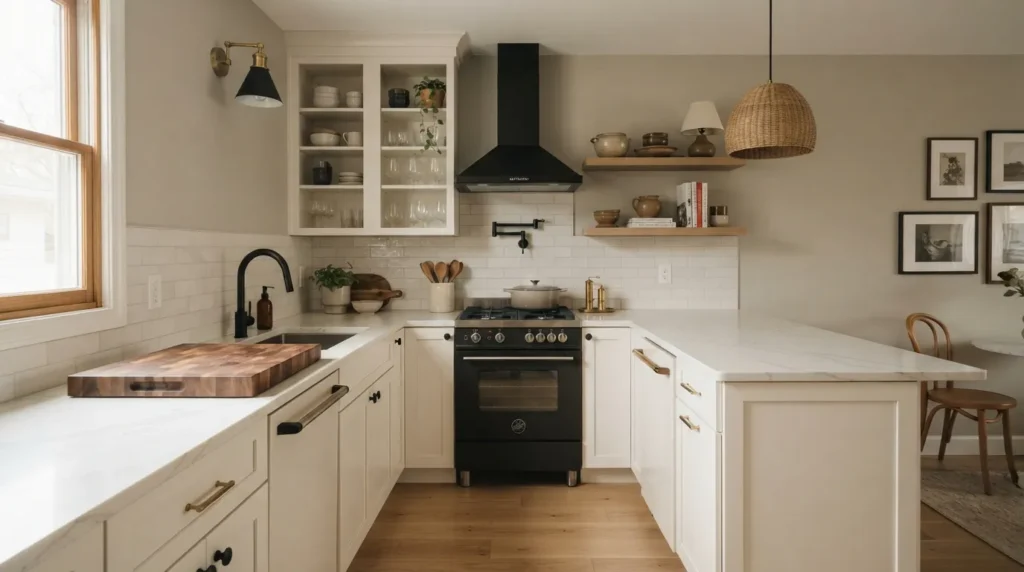
- Makes the space feel calm and cohesive
- Works with white, cream, greige, taupe, black, and wood tones
- Helps small kitchens feel brighter
- Makes affordable finishes look more refined
- Creates a strong base for seasonal decor
A controlled color palette makes a small kitchen feel more expensive because it removes visual chaos. Too many competing colors, finishes, and patterns can make a compact room feel smaller. Warm white cabinets, greige walls, light counters, black accents, and wood details can create a clean designer look. That’s why many designers recommend choosing two main colors and one accent finish. This keeps the room cohesive, even if the cabinets, flooring, and appliances are not brand new.
The palette should feel warm enough for daily life, not cold or sterile. Add wood cutting boards, woven shades, linen towels, ceramic bowls, or brass hardware to soften neutral cabinets and counters. If the kitchen feels too plain, bring in one deeper color through a runner, vase, framed print, or island stool. Avoid adding too many small colorful items on counters. A thoughtful palette can make your small kitchen look calmer, brighter, and more elevated without requiring expensive materials.
9. Styled Shelves
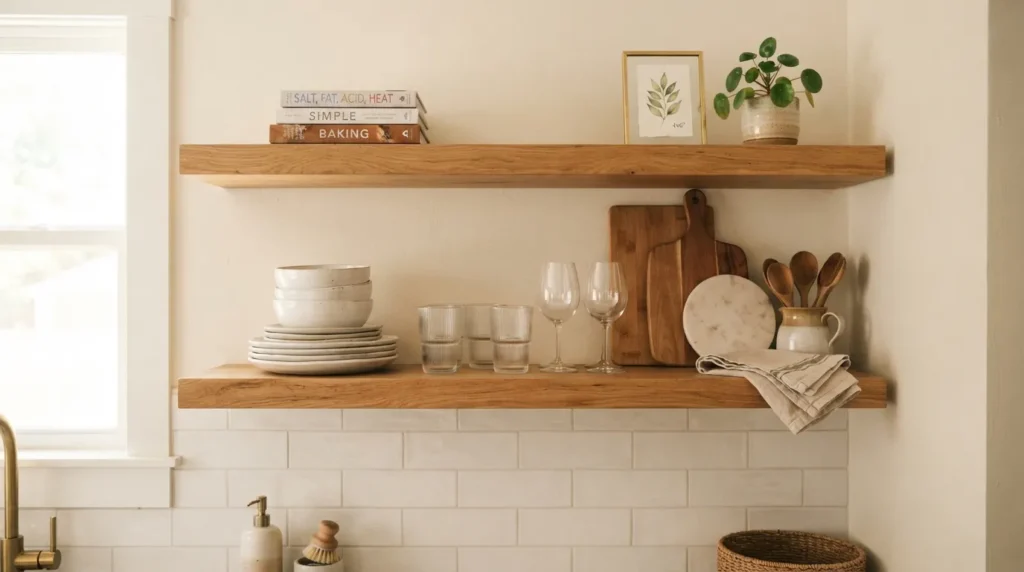
- Turns storage into a decorative feature
- Works with dishes, jars, cookbooks, art, and small plants
- Adds personality without crowding counters
- Makes blank walls feel useful
- Creates a Pinterest-friendly focal point
Open shelves can look expensive when they are edited and practical. The mistake is treating them like a place for every spare mug, random bowl, and decorative object. Instead, style shelves with items you actually use and a few warm accents. White dishes, clear glasses, wood boards, cookbooks, small framed art, and one plant can create a polished look. In my experience, shelves look best when the colors repeat from the rest of the kitchen, so the display feels connected.
Spacing is the secret to making shelves feel designer instead of cluttered. Leave some empty space between stacks, vary the height of objects, and keep heavier pieces on lower shelves. Wood shelves add warmth to white kitchens, while painted shelves blend into the wall for a quieter look. If dust is a concern, display daily-use dishes that are washed often. Styled shelves give a compact kitchen charm and function while keeping counters open. They also create strong Pinterest visuals without needing a major renovation.
10. Elegant Flooring
- Grounds the kitchen with a cleaner base
- Works with runners, peel-and-stick tile, vinyl plank, or refinished wood
- Helps hide dated flooring on a budget
- Adds warmth, pattern, and visual length
- Makes the whole room feel more finished
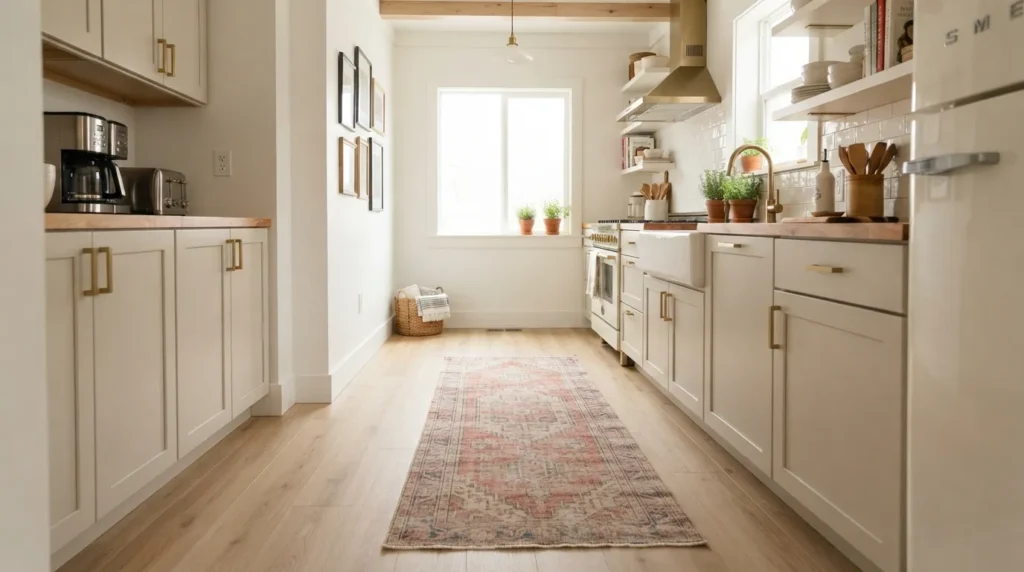
Flooring affects the entire kitchen because it is one of the largest visible surfaces. Dated vinyl, cracked tile, stained grout, or worn laminate can make the room feel tired even when cabinets are updated. If a full floor replacement is not possible, a washable runner can add warmth, pattern, and coverage. Peel-and-stick floor tiles may work in rentals or budget refreshes when installed carefully. For homeowners, luxury vinyl plank, engineered wood, or large-format tile can make the space feel much more polished.
Choose flooring or rugs that visually lengthen the room instead of chopping it up. A runner placed along the main walkway can guide the eye and make a galley kitchen feel longer. Neutral patterns, faded vintage designs, or subtle checkerboard styles can look expensive without overwhelming the space. Make sure rugs have non-slip backing, especially near the sink. If replacing flooring, bring samples home and compare them with cabinets in natural light. A refined floor finish can make the entire kitchen feel cleaner, warmer, and more complete.