
11 Ceiling Design Ideas
A ceiling can change the entire mood of a room, yet it is often the last surface people think about. Walls get paint, floors get rugs, windows get curtains, and furniture gets carefully chosen, while the ceiling stays plain white by default. In many USA homes, that missed opportunity makes bedrooms, living rooms, dining rooms, kitchens, and entryways feel unfinished. A thoughtful ceiling design can add height, warmth, texture, light, and architectural interest without crowding the room.
The best ideas do not always require a major renovation. Some ceilings need painted trim, simple beams, recessed lighting, wallpaper, paneling, or a statement fixture to feel complete. Others benefit from wood planks, coffered details, tray shapes, or soft color. The right choice depends on ceiling height, room size, natural light, budget, and the style of the home.
This guide shares practical ceiling ideas that look beautiful on Pinterest but still work in real homes. Each section includes styling advice, materials, layout tips, and real-life design logic. Use these ideas for a remodel, new build, rental-friendly inspiration board, or weekend refresh. The goal is to help you see the “fifth wall” as part of the room, not an afterthought.
1. Painted Trim
- Adds definition without lowering the room visually
- Works with crown molding, beams, medallions, and tray edges
- Creates contrast using soft neutrals or deeper tones
- Makes plain ceilings look more finished
- Great for bedrooms, dining rooms, and entryways
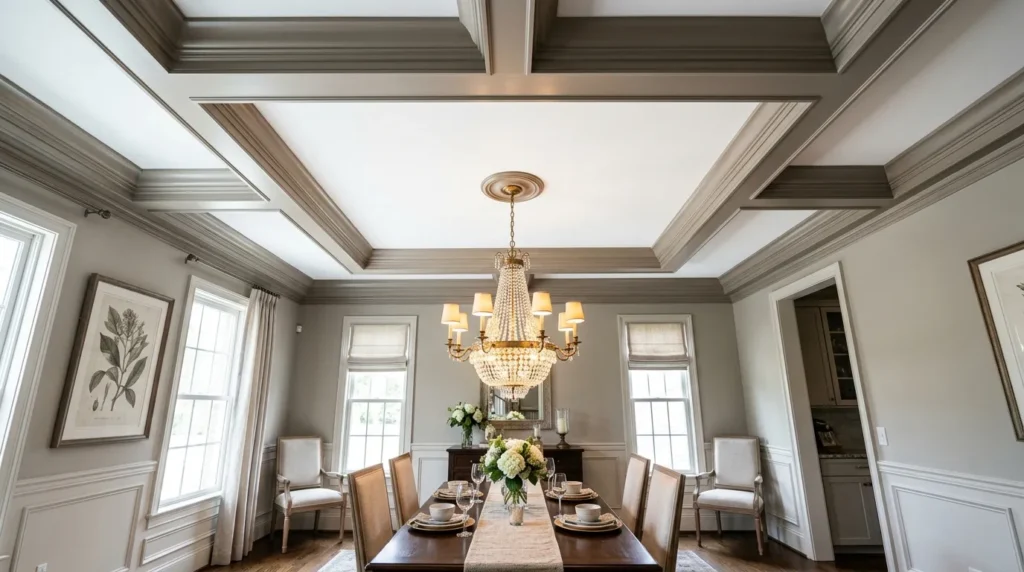
Painted trim can make a ceiling look intentional without requiring a full construction project. Crown molding, tray edges, beams, or ceiling medallions stand out more when painted in a thoughtful color. Soft greige, warm white, charcoal, sage, navy, or taupe can all create a refined effect depending on the room. In my experience, this works best when the trim color connects with something already in the space, such as cabinet hardware, wall color, furniture, or drapery.
The transformation is subtle but powerful because it frames the room from above. Painted trim can make a dining room feel more formal, a bedroom feel cozier, or an entryway feel more custom. Keep the ceiling field lighter if the room is small or low, then use contrast only on the molding. For higher ceilings, deeper trim tones can add drama. Use a durable paint finish that can be cleaned gently. This idea is practical, elegant, and easier to update later than permanent architectural changes.
2. Wood Beams
- Adds warmth, texture, and architectural character
- Works with farmhouse, rustic, modern, coastal, and transitional homes
- Can be real wood, faux wood, or boxed beams
- Helps large rooms feel more grounded
- Pairs well with white walls, stone, linen, and natural flooring
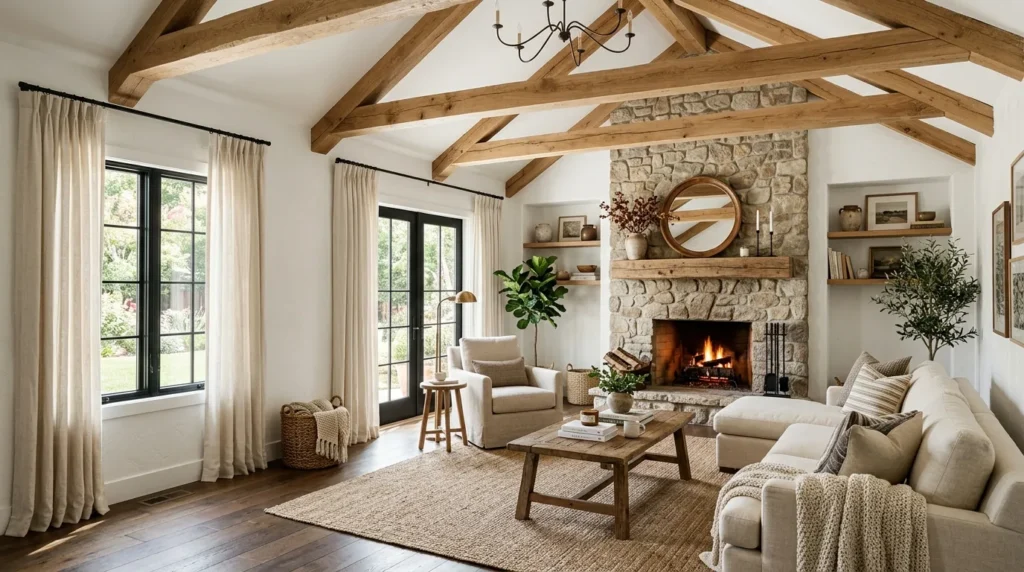
Wood beams bring instant character to a room because they make the ceiling feel connected to the architecture. Real wood beams look rich and authentic, while faux beams can be lighter, more affordable, and easier to install in many homes. Oak, pine, walnut, reclaimed wood, or whitewashed finishes all create different moods. That’s why many designers recommend beams when a large living room, kitchen, or vaulted space feels too empty. They add rhythm, warmth, and visual structure overhead.
Placement matters because beams should look like they belong. In long rooms, beams can run across the width to create balance. In vaulted ceilings, they can emphasize height and slope. In open kitchens, they can help define zones without walls. Pair wood beams with simple lighting so the ceiling does not feel crowded. If the room already has heavy wood floors or dark cabinets, choose a lighter beam finish. The finished space feels grounded, custom, and more inviting without needing extra furniture or wall decor.
3. Tray Ceiling
- Creates depth and architectural interest
- Works well in bedrooms, dining rooms, and formal living rooms
- Can include paint, molding, wallpaper, or lighting
- Adds elegance without covering the whole room
- Helps define a central area like a bed or dining table
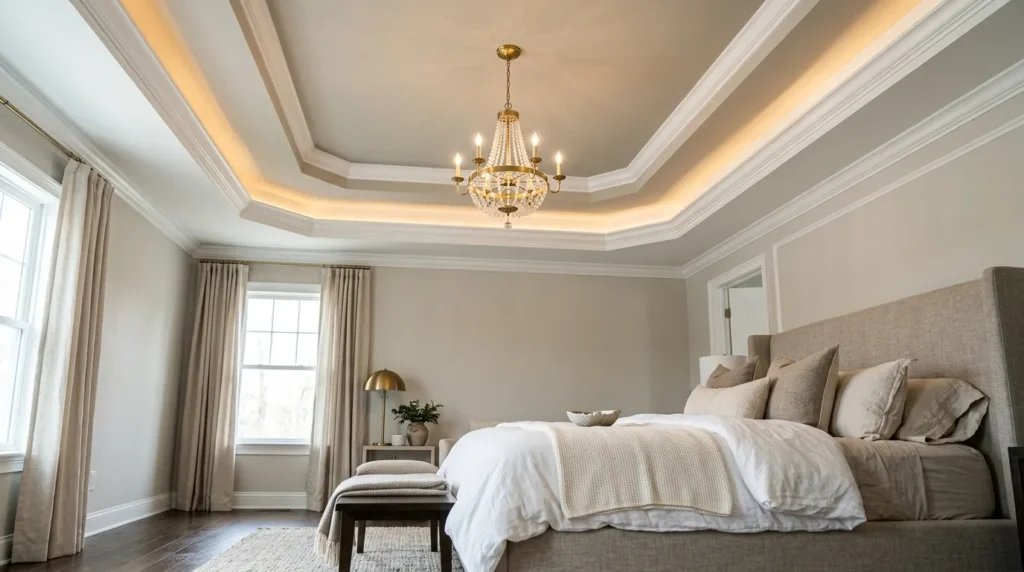
A tray ceiling gives a room built-in depth by raising or framing the center portion overhead. This detail is common in many newer American homes, but it often goes unnoticed when left plain white. Paint, trim, wallpaper, or cove lighting can make the shape feel purposeful. In my experience, tray ceilings look best when the center area connects with the room’s main feature, such as a bed, chandelier, dining table, or seating arrangement. It creates a natural focal point from above.
Keep the design balanced so it feels elegant instead of busy. A soft color inside the tray can add warmth, while white molding keeps the edges crisp. Wallpaper works beautifully in bedrooms or dining rooms when the walls stay simple. LED cove lighting can create a soft glow for evening atmosphere. If the room has low ceilings, avoid dark paint in the recessed area because it may feel heavy. A well-styled tray ceiling adds dimension, polish, and a custom look without changing the entire room layout.
4. Statement Lights
- Turns the ceiling into a visual focal point
- Works with chandeliers, pendants, flush mounts, or sculptural fixtures
- Adds style even when the ceiling stays simple
- Helps define dining, seating, and entry areas
- Improves both function and mood
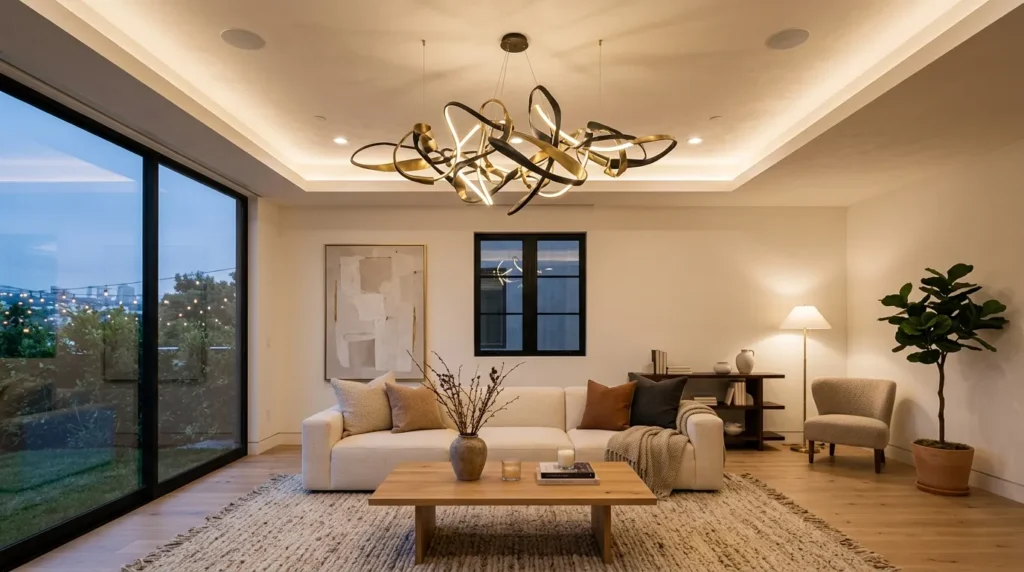
A statement light can transform a ceiling even when the surface itself stays plain. Chandeliers, sculptural pendants, oversized lanterns, modern flush mounts, and woven fixtures all draw the eye upward. This works especially well in dining rooms, living rooms, entryways, bedrooms, and kitchens where one strong light can define the zone. I’ve noticed that rooms often feel more expensive when the light fixture has the right scale. Too small, and it disappears. Too large, and it overwhelms the room.
Choose the fixture based on ceiling height, room width, and furniture placement. A dining chandelier should relate to the table, not just the room size. A bedroom fixture should allow comfortable walking clearance. In lower rooms, a stylish flush mount can feel polished without hanging too low. Use warm bulbs and dimmers so the light supports different moods throughout the day. The right fixture adds personality, improves usability, and makes the ceiling feel designed without adding paneling, beams, or expensive structural work.
5. Wallpaper Ceiling
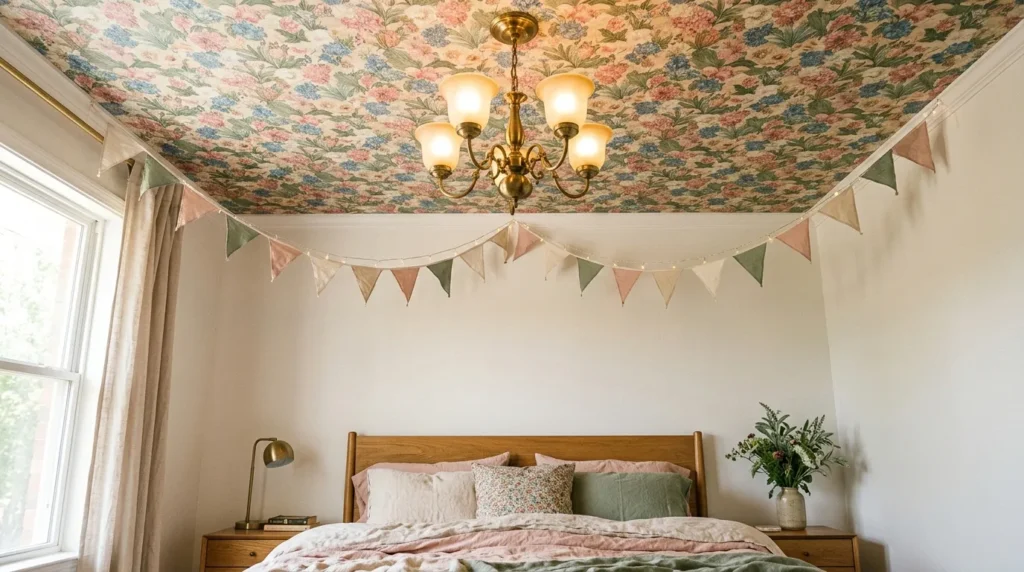
- Adds pattern in an unexpected place
- Works beautifully in bedrooms, powder rooms, nurseries, and dining rooms
- Makes simple walls feel more interesting
- Can be bold, subtle, floral, geometric, or textured
- Great for small rooms that need personality
Wallpaper on the ceiling creates instant personality because it treats the overhead surface like a real design feature. This idea works especially well in smaller rooms where a bold wall pattern might feel overwhelming. Powder rooms, nurseries, bedrooms, closets, and dining rooms can all benefit from pattern overhead. Soft florals, grasscloth textures, cloud prints, subtle stripes, or modern geometrics can create very different moods. The key is choosing a pattern that supports the room rather than fighting the furniture.
Installation needs planning because ceiling wallpaper is harder than wall application. Hire a professional for large rooms, detailed patterns, or textured papers. Peel-and-stick options can work for renters or small areas, but the surface must be clean, smooth, and dry. Keep walls simpler if the ceiling pattern is bold. Pair the look with a pretty light fixture or simple trim for a finished effect. A wallpaper ceiling makes the room feel custom, playful, and memorable while using very little floor or wall space.
6. Coffered Grid
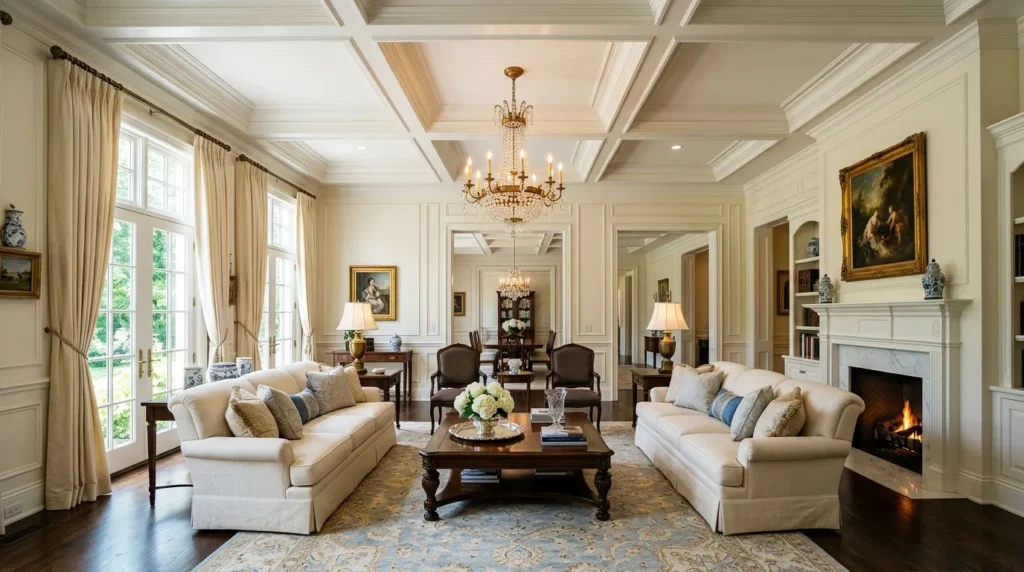
- Adds classic architectural depth and symmetry
- Works in living rooms, dining rooms, offices, and large bedrooms
- Creates a high-end built-in look
- Can be painted white, stained wood, or color-drenched
- Helps large ceilings feel structured and balanced
A coffered grid gives a room timeless detail by creating recessed ceiling panels with beams or molding. It is often seen in formal dining rooms, libraries, living rooms, and offices, but it can also work in modern homes when simplified. The grid adds rhythm and depth, making a large ceiling feel more structured. Many designers recommend this option when a room has enough height to handle added trim. It gives the space architectural presence without relying on busy furniture or wall decor.
The finish determines whether the look feels traditional or modern. White coffers feel classic and bright. Stained wood adds richness. A color-drenched ceiling, where beams and panels share one shade, feels more contemporary. Use careful measurements so the grid aligns with windows, doorways, lights, and furniture below. Recessed lights or a central chandelier can be integrated into the pattern. The finished room feels custom, balanced, and elevated, especially in spaces where the ceiling is large enough to become a major design feature.
7. Planked Wood
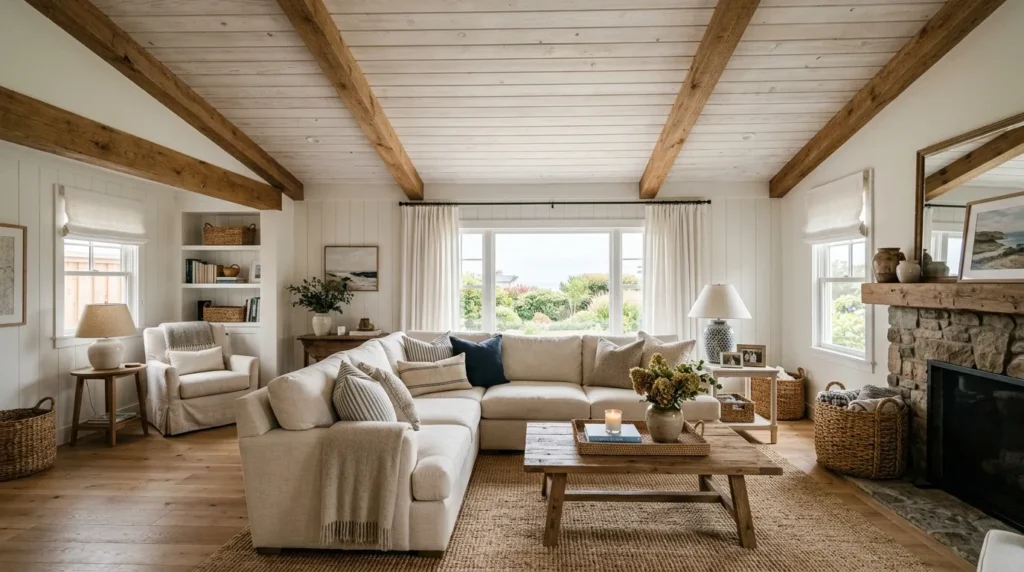
- Adds warmth and texture across the full ceiling
- Works with shiplap, tongue-and-groove, beadboard, or reclaimed boards
- Makes bedrooms, kitchens, and porches feel cozy
- Can be painted, stained, whitewashed, or natural
- Helps hide minor ceiling imperfections
Planked wood gives the ceiling texture across the entire surface, making the room feel warmer and more finished. Shiplap, tongue-and-groove boards, beadboard, reclaimed planks, or narrow wood slats can each create a different look. White planks feel coastal and bright, natural wood feels organic, and stained boards feel richer. In my experience, planked ceilings work beautifully in bedrooms, kitchens, porches, mudrooms, and family rooms where warmth matters. They also help distract from minor ceiling imperfections.
The direction of the planks affects how the room feels. Running boards lengthwise can make a room feel longer, while crosswise planks can make it feel wider. Keep seams clean and choose trim that hides edges neatly. In low rooms, lighter paint or whitewash keeps the ceiling from feeling heavy. In vaulted rooms, natural wood can add drama and warmth. Pair planked ceilings with simple lighting, linen textiles, and natural materials so the look feels refined. The final effect is cozy, architectural, and highly Pinterest-friendly.
8. Painted Color
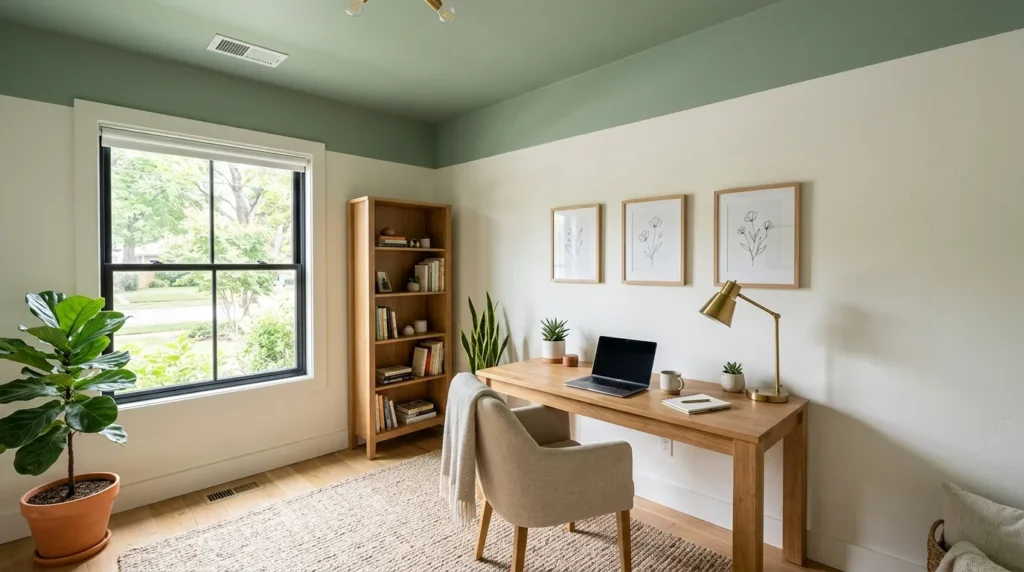
- Adds mood without taking up wall or floor space
- Works with soft blue, sage, terracotta, charcoal, or warm beige
- Can make a room feel cozy, fresh, or dramatic
- Pairs well with neutral walls and simple furniture
- Great for bedrooms, offices, dining rooms, and small spaces
Painting the ceiling a real color can completely change a room’s mood. Pale blue can feel airy, sage feels calm, terracotta adds warmth, charcoal creates drama, and warm beige softens harsh white walls. This idea is especially useful when the walls need to stay neutral but the room still needs personality. I’ve seen this work well in many homes because color overhead feels intentional and surprising without filling the room with extra decor.
Use color carefully based on ceiling height and natural light. Lighter colors can make the ceiling feel soft and open, while deeper shades create a cozy, enveloping effect. Bedrooms, offices, powder rooms, and dining rooms are excellent places to try this. Test paint samples on the ceiling itself because overhead light changes the color. Keep trim crisp and consider matching the ceiling color to a rug, pillow, or artwork below. This creates a connected palette and makes the room feel more designed.
9. Medallion Detail
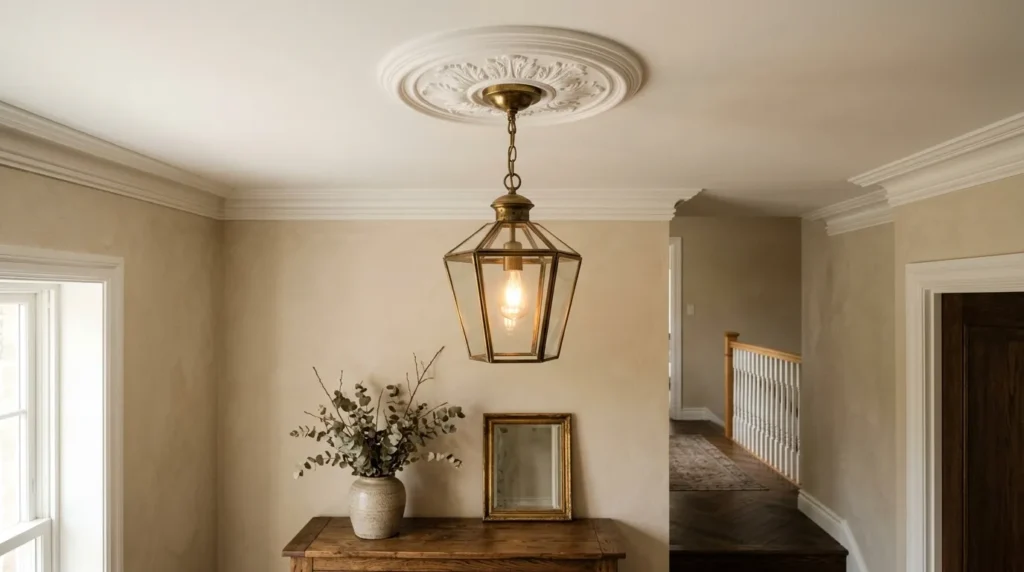
- Highlights chandeliers and ceiling fixtures
- Works in bedrooms, dining rooms, entries, and living rooms
- Adds vintage charm or modern elegance
- Can be simple, ornate, painted, or tone-on-tone
- Gives plain ceilings a quick architectural upgrade
A ceiling medallion is a small detail that can make a light fixture feel more special. It frames the fixture, adds architectural charm, and gives a plain ceiling a finished focal point. Medallions can be ornate for traditional homes or very simple for modern spaces. In my experience, this idea works best when the medallion scale matches the fixture and room size. A tiny medallion can look lost, while an oversized one can feel theatrical unless the room can support it.
Paint changes the personality of the medallion. Matching it to the ceiling creates subtle texture, while painting it in a soft contrast makes it stand out. A medallion can also be used without a chandelier in creative spaces, but it usually looks most natural around a fixture. Lightweight polyurethane options are common and easier to install than plaster. This upgrade is practical for dining rooms, bedrooms, and entries where one overhead detail can make the ceiling feel more thoughtful and custom.
10. Recessed Glow
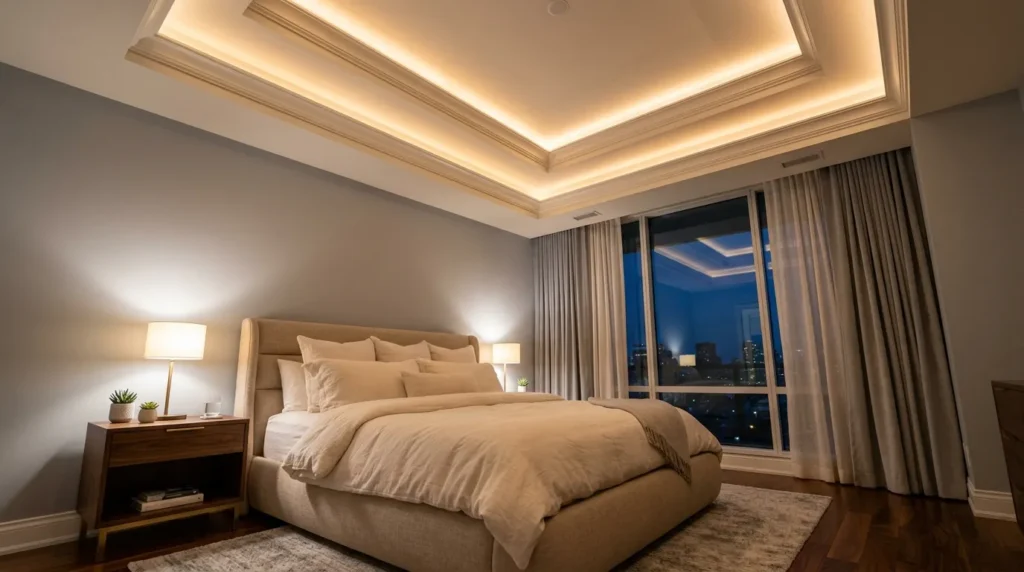
- Adds soft indirect lighting around ceiling edges
- Works with tray ceilings, coves, soffits, and modern rooms
- Creates mood without visible fixtures
- Makes evenings feel warmer and more relaxed
- Pairs well with dimmers and warm LED strips
Recessed glow lighting gives a room a soft, high-end atmosphere without relying on visible fixtures. LED strips hidden inside tray ceilings, coves, soffits, or dropped edges can wash the ceiling with gentle light. This is especially beautiful in bedrooms, living rooms, media rooms, and dining spaces where mood matters. That’s why many designers recommend indirect lighting for rooms that need flexibility. It can feel bright enough for gathering but soft enough for relaxing at night.
Plan the lighting early if construction or remodeling is involved. The strip placement, color temperature, dimmer quality, and power access all affect the final result. Warm LEDs usually feel better in living spaces than cool white options. Avoid visible dots or harsh lines by using diffusers or proper channels. Pair recessed glow with lamps and task lights so the room has layers. This ceiling treatment makes the space feel modern, calm, and polished while adding practical evening comfort.
11. Slatted Accent
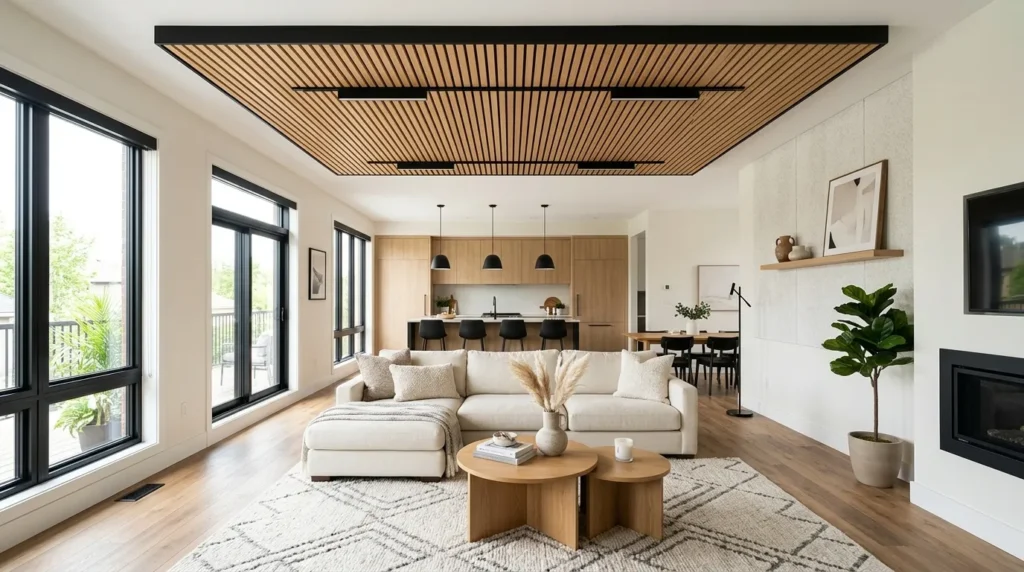
- Adds modern linear texture overhead
- Works with wood slats, acoustic panels, or painted strips
- Helps define zones in open-concept homes
- Adds warmth while keeping a clean contemporary look
- Can improve sound control when using acoustic backing
A slatted ceiling accent brings modern texture and rhythm to a room without feeling overly decorative. Narrow wood slats, acoustic panels, or painted strips can define a dining area, media zone, hallway, or kitchen island. This idea works especially well in open-concept homes where the ceiling can help separate spaces without adding walls. I’ve noticed slatted ceilings feel most refined when the lines are clean, evenly spaced, and connected to other wood tones in the room.
Materials and spacing matter for the final look. Natural oak slats feel warm and modern, walnut feels richer, and painted slats can blend into the ceiling for subtle dimension. If sound is an issue, acoustic backing can help soften echoes in large rooms. Keep lighting simple, such as recessed spots or slim linear fixtures, so the slats remain the focus. This ceiling idea adds texture, improves visual flow, and gives the room a custom architectural detail that feels current and useful.