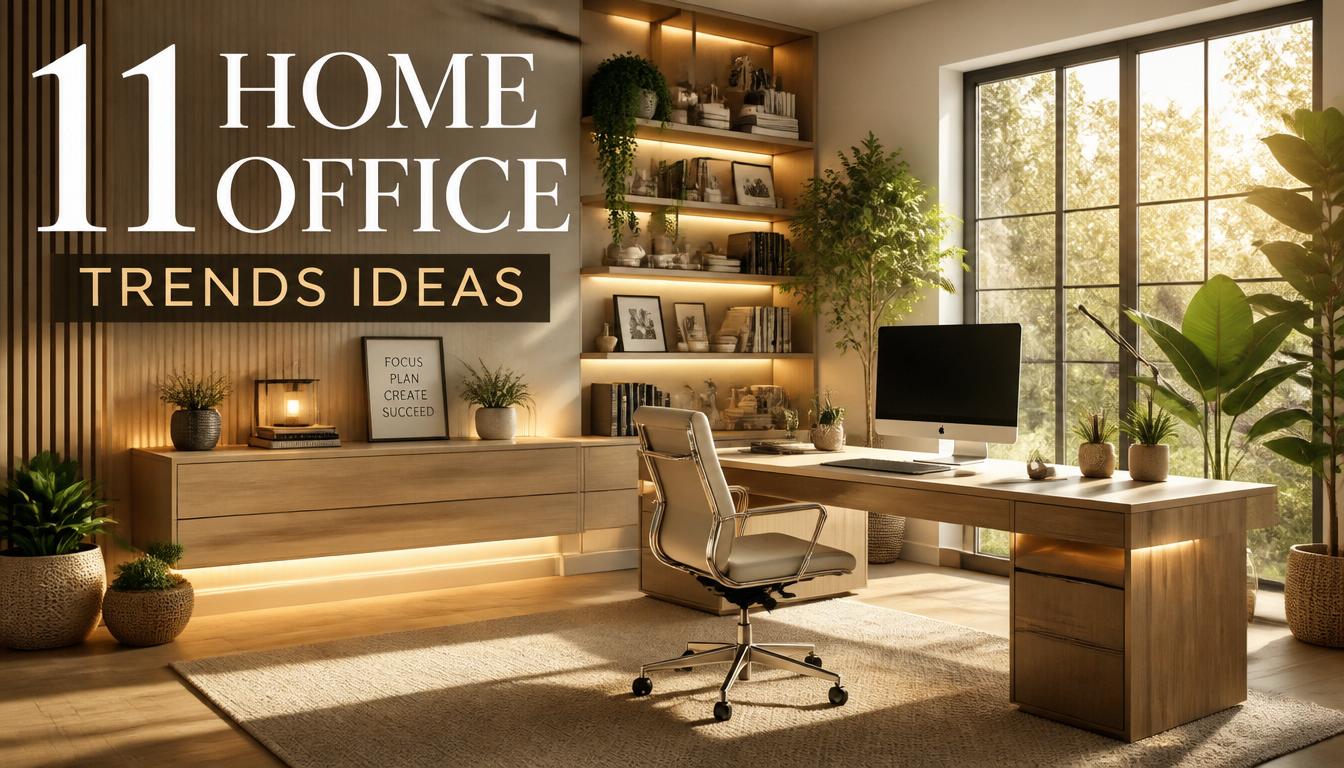
11 Home Office Trends Ideas
Workspaces at home are no longer treated like temporary corners with a desk and a chair. Across USA homes, apartments, condos, and shared family spaces, people want work areas that feel comfortable, organized, camera-ready, and easy to live with after the laptop closes. Current 2026 workplace design coverage points toward comfort, user control, movement, adaptability, wellness, and flexible layouts as major directions shaping work environments.
A modern home office should support focus without feeling cold. It needs good lighting, ergonomic furniture, storage that hides clutter, calming colors, soft sound control, and enough personality to feel inspiring. Wellness-focused interiors are also moving toward natural materials, better light, acoustic comfort, and calmer sensory details, which matters when your desk is part of daily life.
These ideas are practical for spare rooms, bedroom corners, living room walls, lofts, basement work zones, and small apartment setups. Each trend below is written to help you create a workspace that looks Pinterest-worthy but still works for real emails, video calls, paperwork, creative projects, and long workdays.
1. Ergonomic Desk
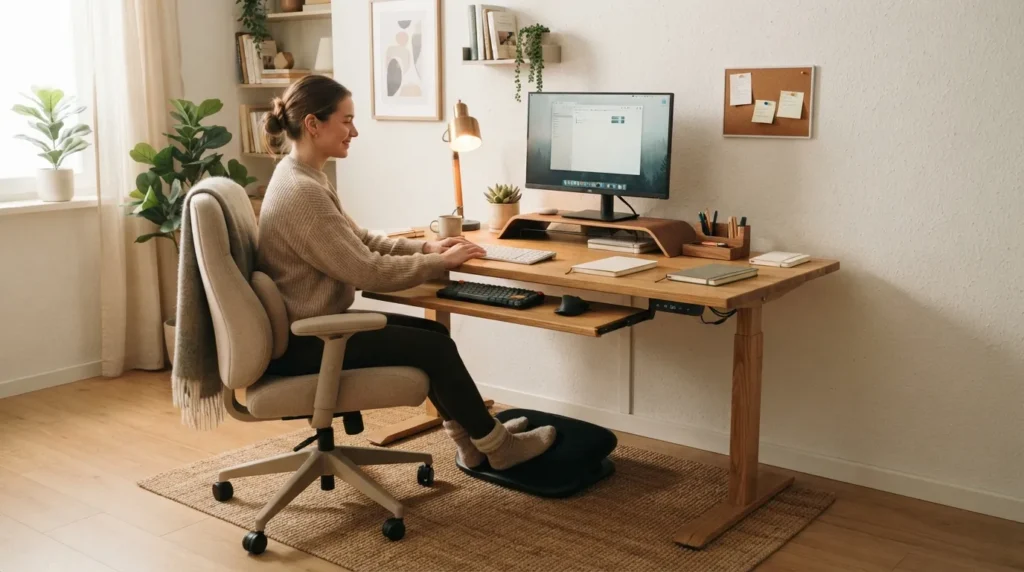
- Supports better posture during long work sessions
- Works with standing desks, adjustable chairs, monitor risers, and footrests
- Helps reduce strain from awkward desk setups
- Makes the room feel more intentional and professional
- Best when sized to your body and daily tasks
A beautiful workspace will not feel successful if your body feels tired by noon. Ergonomic desk setups are trending because people are paying closer attention to comfort, posture, and movement during long workdays. An adjustable chair, proper desk height, monitor riser, keyboard tray, footrest, or sit-stand desk can make the space more supportive. In my experience, the biggest improvement often comes from aligning the screen at eye level and keeping shoulders relaxed while typing, instead of buying every accessory at once.
Start with the basics before upgrading everything. Your chair should support your lower back, your feet should rest flat or on a footrest, and your elbows should sit comfortably near desk height. If your desk is too small, choose vertical storage instead of crowding the work surface. If you use a laptop daily, add a separate keyboard and mouse. The result is a work area that feels calmer, healthier, and more useful. Good design should help you work better, not just look good in photos.
2. Warm Minimalism
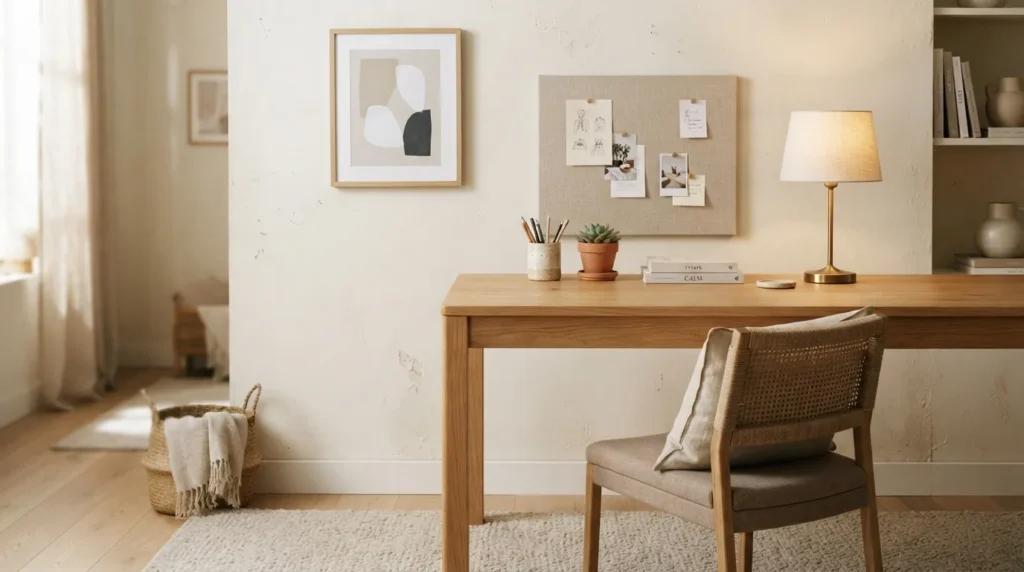
- Uses soft neutrals instead of cold white spaces
- Works with beige, cream, taupe, sage, clay, warm gray, and oak
- Keeps the desk area clean without feeling empty
- Pairs well with linen, wood, ceramic, and matte metal
- Creates a calm background for focus and video calls
Warm minimalism is replacing the stark, all-white desk look because people want work areas that feel calm but not sterile. This trend uses clean lines, fewer objects, and softer colors like cream, beige, mushroom, warm gray, sage, clay, and natural wood. I’ve noticed that this approach works well in small rooms because it reduces visual noise while still adding comfort. The space feels simple, but not bare, because texture and tone do more of the decorating.
To make it work, keep the desk surface limited to daily essentials. Use a warm wood desk, linen pinboard, ceramic pencil cup, neutral lamp, and one soft art print instead of many competing accessories. Hide cords, file papers, and choose storage pieces that blend with the wall or furniture. If the room feels too plain, add texture through a woven rug, boucle chair, or ribbed vase. This creates a focused workspace that still feels personal, cozy, and visually polished.
3. Built-In Storage
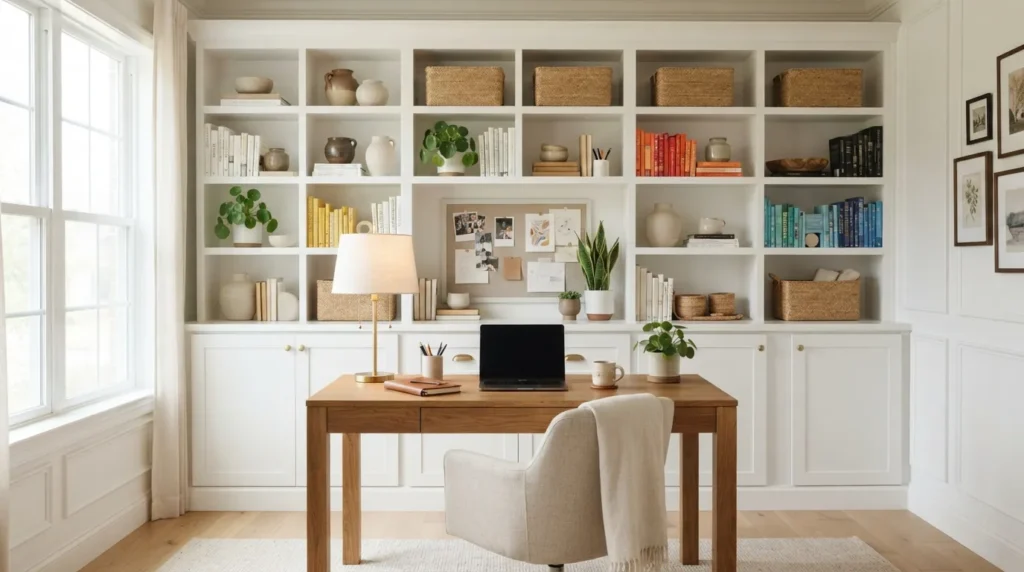
- Gives the workspace a custom, organized look
- Works with bookcases, cabinets, floating shelves, and modular units
- Hides office supplies, printer paper, files, and tech accessories
- Makes small work areas feel more finished
- Can be created with freestanding furniture if built-ins are not possible
Built-in-style storage is popular because most workspaces collect clutter quickly. Papers, chargers, notebooks, pens, printers, samples, books, and shipping supplies can make a room feel messy even when the desk is clean. True built-ins are beautiful, but you can get a similar look with bookcases, wall shelves, cabinets, drawer units, or modular furniture. That’s why many designers recommend planning storage before styling the desk. A room looks better when everyday items have a real place to go.
Think in zones instead of stuffing everything into one cabinet. Keep files near your chair, supplies in drawers, books on open shelves, and less attractive items behind doors. Use baskets or boxes for small categories so shelves do not look crowded. If you want a custom look, choose storage in the same finish or color as the walls. Add a few decorative items between practical pieces, such as a plant, framed photo, or ceramic bowl. The final result feels organized, elevated, and easier to maintain.
4. Video Backdrop
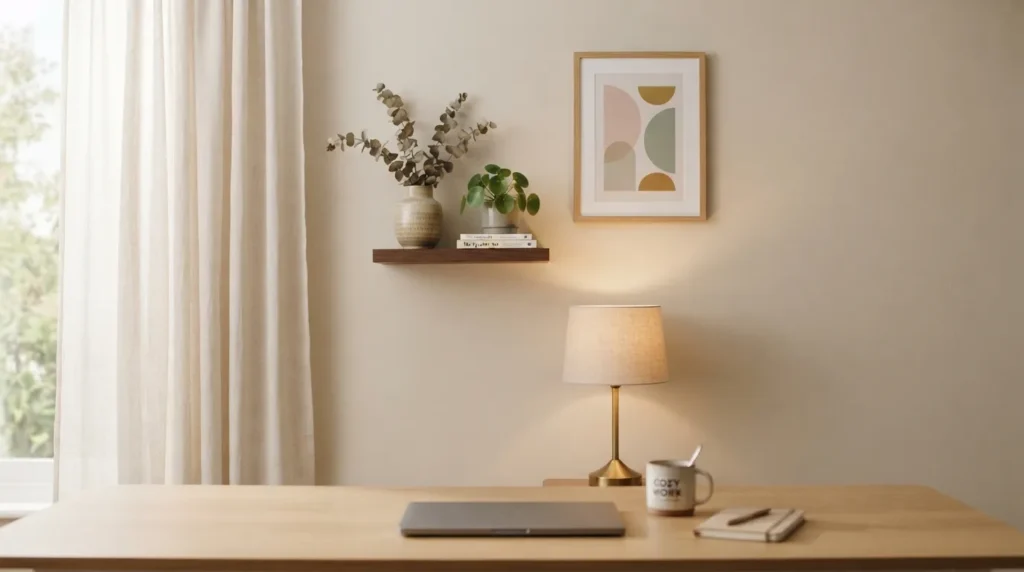
- Makes virtual meetings look cleaner and more professional
- Works with art, shelves, plants, lamps, curtains, or painted walls
- Keeps distracting clutter out of camera view
- Adds personality without overwhelming the screen
- Best with soft lighting and balanced spacing
Video backdrops matter because many workspaces are now seen through a camera as often as in person. A messy shelf, harsh window glare, or blank wall can make meetings feel less polished. A thoughtful backdrop does not need to be expensive. A framed print, simple shelf, plant, lamp, curtain panel, or warm painted wall can create a clean view behind you. In my experience, the best backdrops look natural and lived-in, not staged like a showroom.
Set up your camera and check the view before decorating. Keep the background simple enough that it does not distract from your face. Avoid cluttered shelves, bright reflections, and strong patterns directly behind your head. Add warm side lighting if the room feels dark, and use curtains to soften window light. A small plant, a few books, and one framed piece can be enough. This trend improves how the workspace looks online while also making the room feel more finished in daily life.
5. Flexible Zones
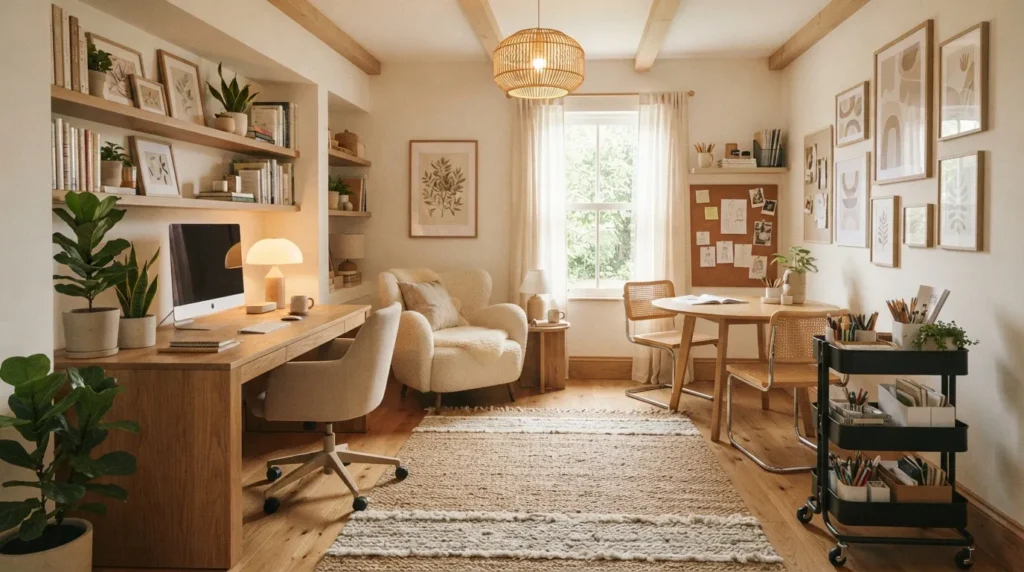
- Supports work, reading, planning, calls, and creative tasks
- Works with small tables, lounge chairs, rolling carts, and movable storage
- Helps shared rooms function better
- Makes the workspace feel less rigid
- Useful for hybrid schedules and multipurpose homes
Flexible zones are becoming important because one desk rarely supports every kind of work. You may need a main desk for computer tasks, a comfortable chair for reading, a small table for planning, or a clear surface for creative projects. In smaller homes, the same room may also serve as a guest room, bedroom, living room, or craft area. Current workplace design discussions continue to highlight adaptability and spaces that respond to different work modes. (Oktra)
Create flexibility with furniture that can move or serve more than one purpose. A rolling cart can hold supplies beside the desk, then tuck away later. A lounge chair can become a reading spot. A wall-mounted table can fold down for paperwork. Use rugs, lighting, or storage pieces to define each zone without adding walls. This approach makes the workspace feel more human because it supports movement, focus, and comfort. It also helps the room work better after office hours.
6. Biophilic Touches
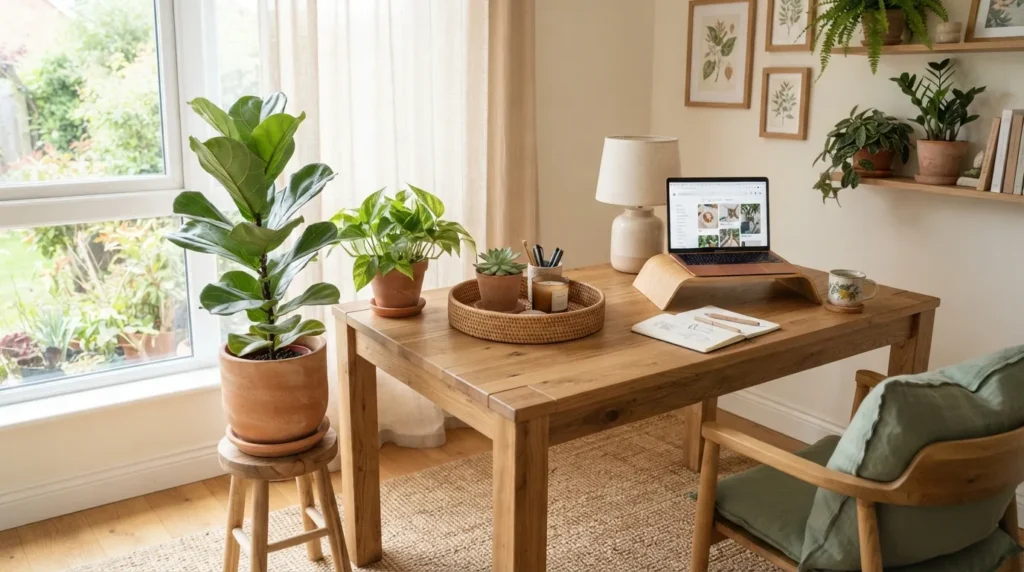
- Adds plants, natural textures, and outdoor-inspired colors
- Works with wood, stone, rattan, linen, greenery, and earthy palettes
- Helps soften technology-heavy desk areas
- Makes workspaces feel fresher and calmer
- Great for rooms with natural light or plant-friendly corners
Biophilic design is staying strong because people want workspaces that feel connected to nature, not just technology. Plants, wood furniture, stone accessories, woven baskets, linen curtains, natural light, and earthy colors can make a desk area feel calmer and more grounded. Even a small plant near a monitor can soften the look of screens, cords, and office equipment. I’ve seen this work well in many homes because natural elements make a work area feel less corporate.
Choose plants based on the light you actually have. Snake plants, pothos, ZZ plants, and faux greenery can work in lower-light rooms, while brighter spaces can support more options. Add natural textures through a wood desk, rattan tray, clay pot, linen pinboard, or jute rug. Keep plant care realistic so the space does not become another chore. The goal is a workspace that feels fresh, breathable, and visually balanced. A few organic details can change the mood of the entire room.
7. Acoustic Layers
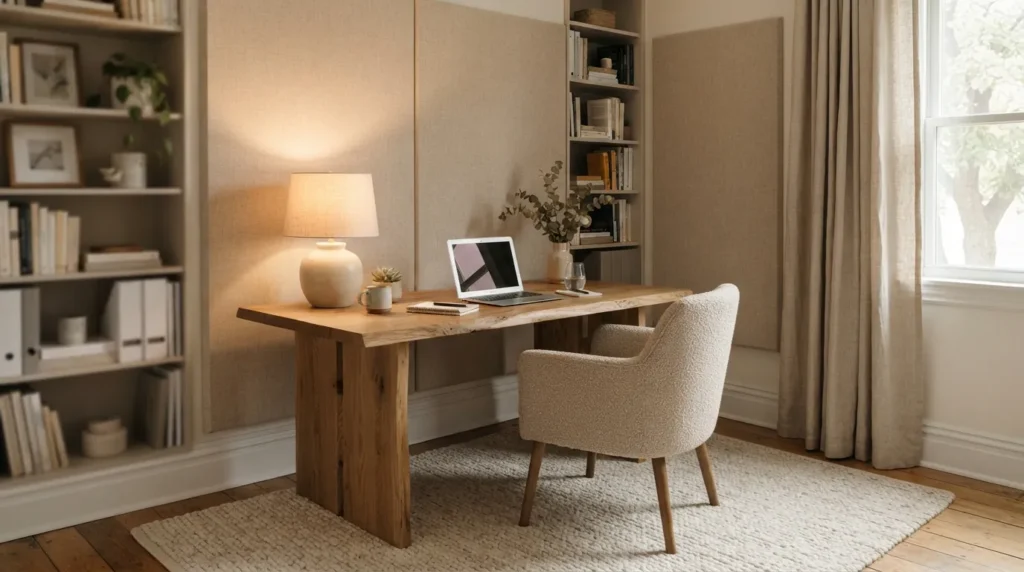
- Reduces echo from hard floors and bare walls
- Works with rugs, curtains, upholstered chairs, panels, and fabric boards
- Helps calls sound clearer and rooms feel calmer
- Useful in apartments, shared homes, and open layouts
- Adds softness while improving daily function
Acoustic layers are becoming more important because workspaces often double as call rooms. Bare walls, wood floors, tile, glass, and minimal furniture can make voices echo and meetings sound sharper than they should. Soft materials help absorb some of that sound while making the room feel more comfortable. Rugs, curtains, upholstered chairs, fabric pinboards, acoustic panels, and even bookshelves can improve the feel of a workspace. In my experience, sound comfort matters more than people expect until they fix it.
Start with the largest hard surfaces. Add a rug under the desk, hang curtains if the room has windows, and place a fabric board or wall hanging behind the chair. If the room still sounds hollow, add upholstered seating or acoustic panels that match the decor. Choose colors and textures that feel intentional, such as charcoal felt, linen panels, or warm woven fabric. This trend improves calls, softens the room, and makes long workdays feel less harsh on the senses.
8. Statement Lighting
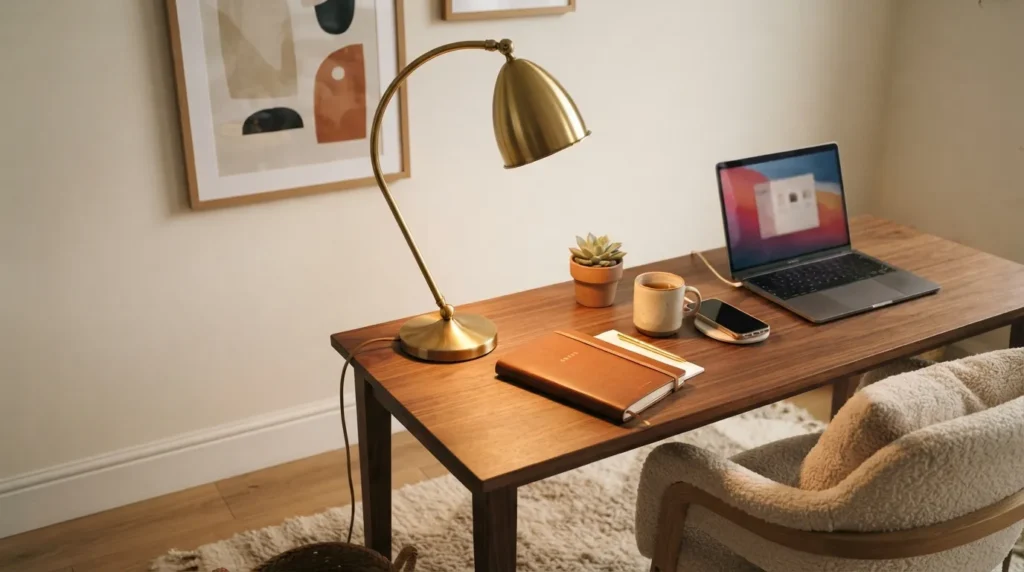
- Creates a strong design focal point
- Works with desk lamps, pendants, sconces, picture lights, and floor lamps
- Improves task visibility and room mood
- Helps the workspace look styled after hours
- Best with warm bulbs and adjustable brightness
Statement lighting can make a work area feel designed instead of leftover. A sculptural desk lamp, plug-in sconce, oversized pendant, picture light, or slim floor lamp adds shape and glow to the room. Good lighting is not only decorative. It helps reduce eye strain, improves video calls, and makes the space easier to use at different times of day. Current workspace and wellness trend coverage continues to connect lighting with comfort, atmosphere, and better daily function. (House Beautiful)
Layer lighting instead of relying on one ceiling fixture. Use a desk lamp for tasks, a floor lamp for ambient glow, and a small accent light on shelves if the room needs depth. Choose warm white bulbs for a softer feel, and add dimmers or smart bulbs when possible. Make sure the lamp does not reflect directly on your screen. A beautiful fixture can become the visual anchor of the room while making early mornings, late evenings, and focused work sessions more comfortable.
9. Compact Corners
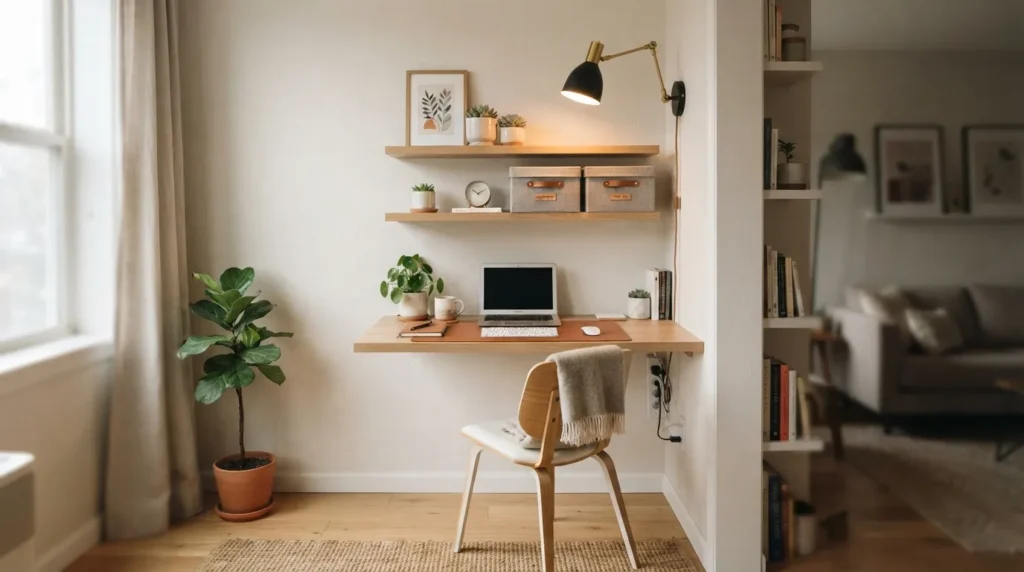
- Turns unused corners into practical work areas
- Works with wall desks, ladder desks, floating shelves, and narrow tables
- Ideal for apartments, bedrooms, studios, and guest rooms
- Saves space without sacrificing style
- Best with vertical storage and clean surfaces
Compact work corners are trending because not every home has a spare room. A bedroom corner, hallway niche, living room wall, closet area, or landing can become a polished workspace with the right scale. Wall-mounted desks, ladder desks, narrow tables, floating shelves, and compact chairs can create a useful setup without overwhelming the room. In my experience, small work corners look best when they match the surrounding decor instead of feeling like office furniture dropped into the space.
Use vertical space to keep the desktop clear. Add one shelf for books, a small wall organizer for papers, and a hook for headphones or bags. Choose a chair that tucks in fully so walkways stay open. If the corner is visible from the main living area, use closed storage boxes and a lamp that looks decorative. Keep the color palette simple, especially in apartments. A compact work corner can feel stylish, efficient, and comfortable when every item has a clear purpose.
10. Cable Control
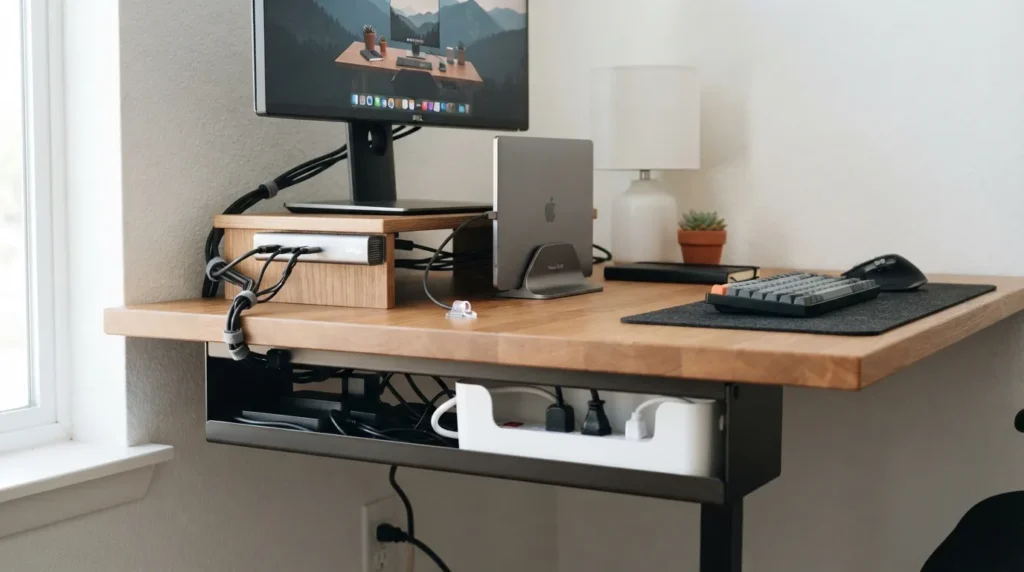
- Hides cords from monitors, chargers, lamps, and printers
- Works with trays, clips, sleeves, boxes, and furniture channels
- Makes the desk look cleaner and more professional
- Improves safety around walkways and pets
- Essential for small or camera-visible workspaces
Cable control is one of the least glamorous trends, but it makes a workspace look dramatically better. Cords from monitors, laptops, lamps, printers, chargers, speakers, and routers can make even a beautiful desk feel chaotic. A clean cable plan creates visual calm and makes the area easier to dust and maintain. I’ve noticed that cord clutter is especially distracting in small rooms because there is less space for the eye to ignore it.
Start by unplugging everything and deciding what you use daily. Use cable clips under the desk, a cord tray behind the surface, sleeves for grouped wires, and a cable box for power strips. Label cords if multiple devices share one area. Keep charging cords in a drawer or small cup instead of across the desktop. If the desk sits in front of a camera backdrop, hide cords before adding decor. This simple upgrade makes the workspace feel cleaner, safer, and more intentionally designed.
11. Personal Gallery
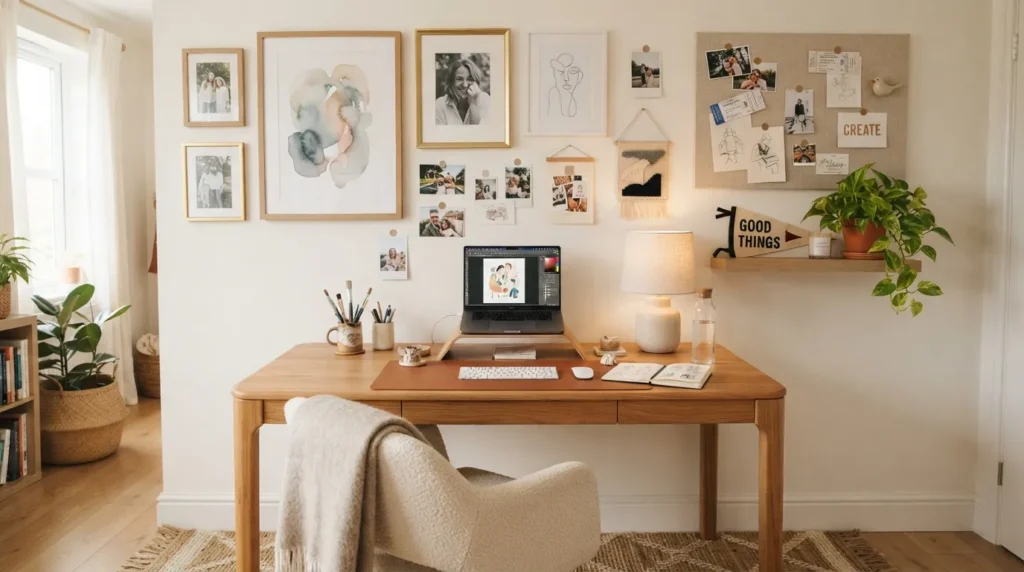
- Adds inspiration without overcrowding the desk
- Works with framed art, photos, pinboards, prints, shelves, and keepsakes
- Makes the room feel personal and creative
- Helps connect the workspace to the rest of the home
- Best with a focused color palette and clean spacing
A personal gallery makes a workspace feel less generic and more connected to your life. Instead of filling the wall with random prints, choose pieces that support the mood you want while working. Framed art, family photos, travel prints, favorite quotes, small shelves, pinboards, and meaningful keepsakes can make the area feel inspiring. In my experience, personal pieces work best when they are edited. A few well-placed items feel more powerful than a wall packed with distractions.
Create structure so the gallery looks intentional. Use matching frames, a shared color palette, or even spacing to keep everything connected. A pinboard can hold rotating notes and inspiration, while framed art keeps the overall look polished. Place the most visually active pieces to the side of your screen rather than directly in front of you. Add one small shelf for a plant, candle, or object with meaning. This final layer turns the workspace into a place that feels motivating, warm, and truly yours.