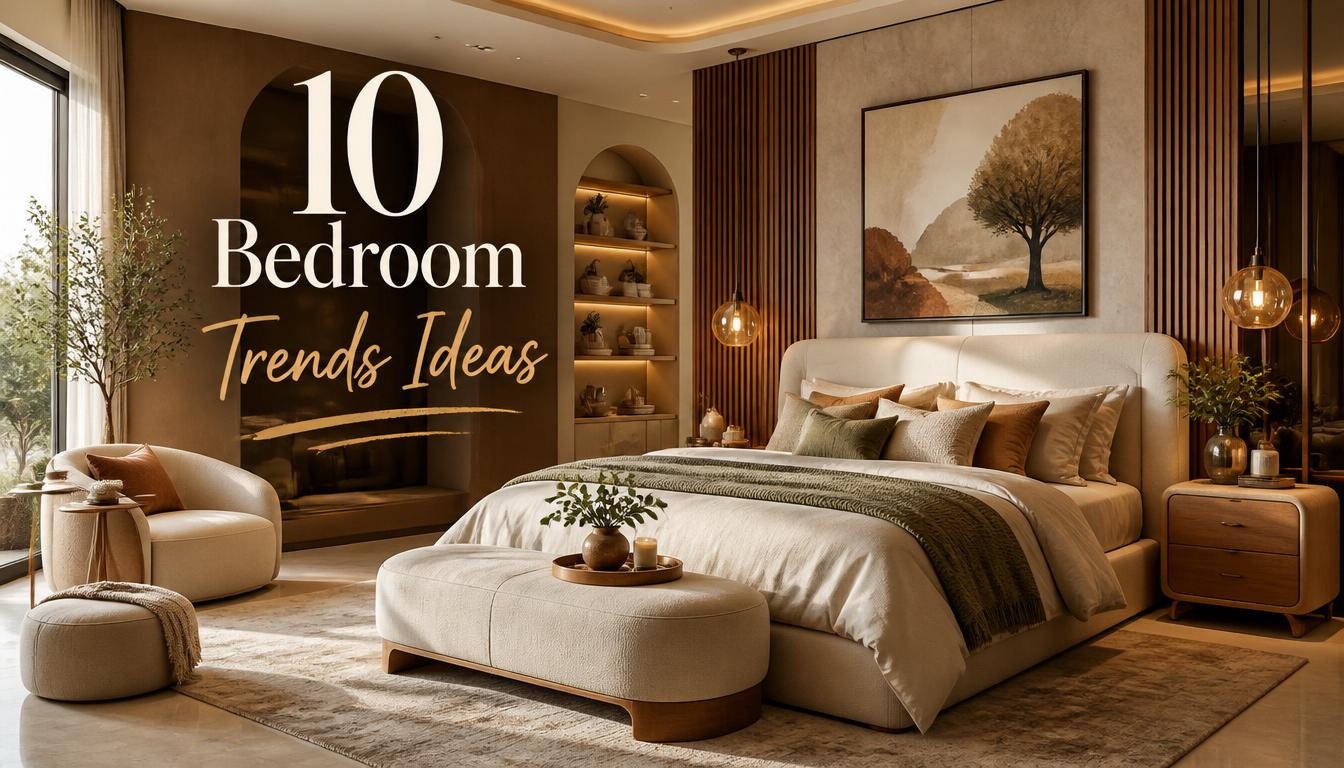
10 Bedroom Trends Ideas
Bedrooms are shifting away from cold, overly perfect styling and moving toward spaces that feel calm, layered, personal, and deeply restful. For USA readers, this matters because many bedrooms now serve more than one purpose. They are sleep spaces, reading corners, quiet retreats, morning reset zones, and sometimes even small work areas. The best bedroom trends are not only pretty for Pinterest. They help the room feel softer, easier to use, and more comfortable at the end of a long day
Current 2026 bedroom design coverage points toward cocooning colors, richer warm palettes, upholstered beds, layered textures, calming sleep-focused layouts, and more expressive but restful rooms. Designers are also moving away from lifeless cool tones and toward grounded shades with warmth and depth.
These ideas are practical for primary bedrooms, guest rooms, apartment bedrooms, small rooms, and shared spaces. You can start with bedding, lighting, wall color, curtains, or one strong furniture piece. The goal is to create a bedroom that looks beautiful, supports better rest, and feels like part of a thoughtful home rather than just a place to sleep.
1. Cocoon Colors
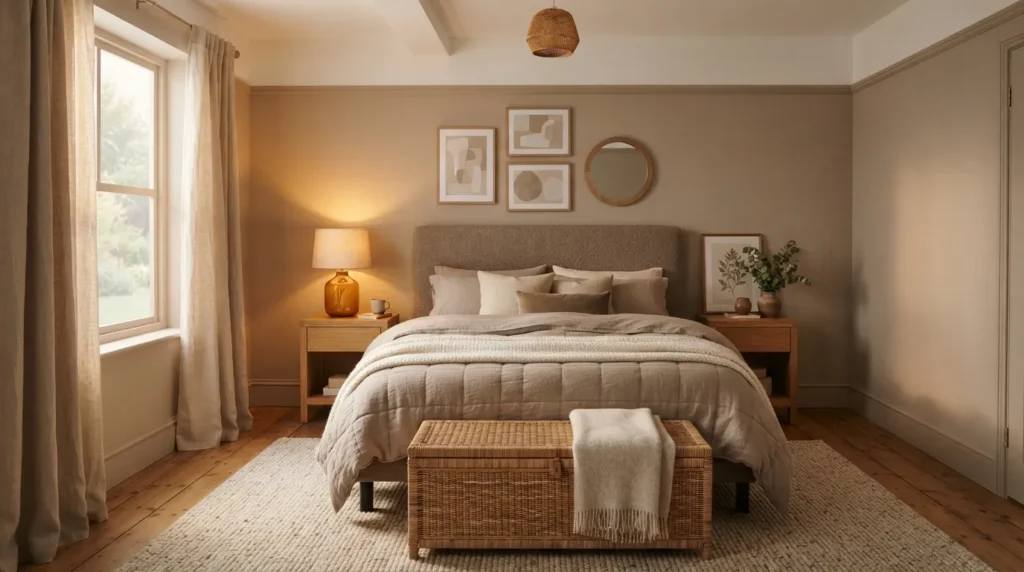
- Use soft, enveloping tones instead of stark white
- Try warm beige, mushroom, clay, olive, dusty blue, or cocoa
- Paint walls, trim, or ceiling for a calmer wrapped effect
- Works well with linen bedding, wood furniture, and soft lighting
- Helps the bedroom feel warmer without adding clutter
A cocoon color palette can make a bedroom feel calmer the moment you walk in. Instead of bright white walls that can feel sharp at night, warmer shades create a softer envelope around the room. Think mushroom beige, muted olive, clay, cocoa, dusty blue, soft taupe, or warm gray. In my experience, these colors work because they reduce visual noise while still giving the room personality. They also photograph beautifully for Pinterest because they create depth without needing busy patterns or too many accessories.
Start with one surface if you are nervous about color. Paint the wall behind the bed, choose a tonal headboard, or add curtains in a warm shade that connects to the bedding. For a bolder look, carry the color onto trim or the ceiling. Matte finishes usually feel more restful than shiny paint. Pair cocoon colors with warm bulbs, wood tones, woven baskets, and textured blankets. The result feels intimate, grounded, and easy to live with, especially in rooms that need more comfort than drama.
2. Layered Bedding
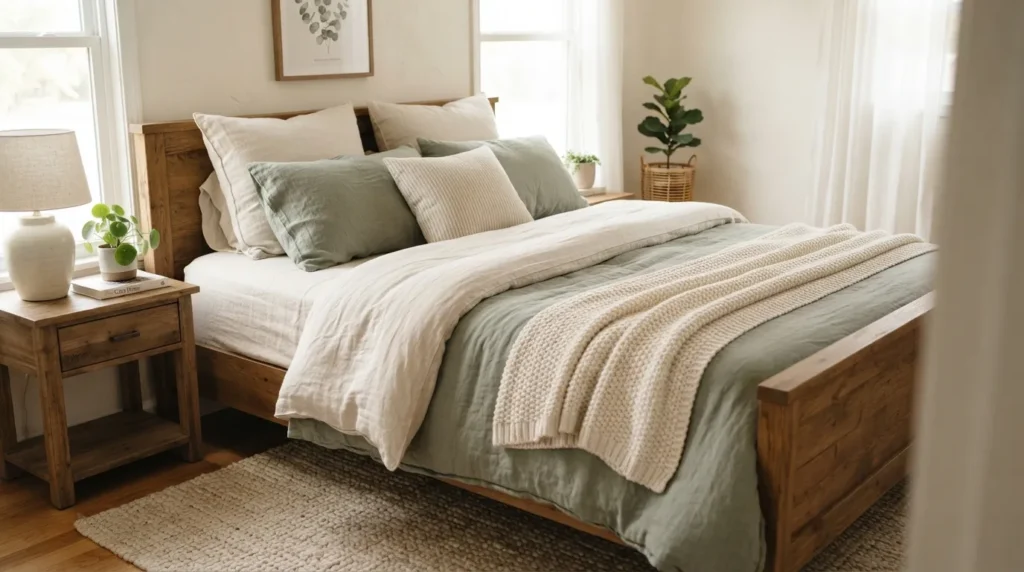
- Mix sheets, duvets, quilts, coverlets, and throws
- Use breathable fabrics like cotton, linen, percale, or bamboo blends
- Add texture through waffle weave, matelassé, velvet, or knit details
- Keep colors tonal for a softer designer look
- Makes the bed feel fuller, warmer, and more inviting
Layered bedding is one of the easiest ways to make a bedroom feel finished. A single duvet can look flat, but layers give the bed depth, softness, and that inviting hotel-meets-cottage feeling. Start with good sheets, then add a duvet, quilt, coverlet, or folded throw at the foot of the bed. I’ve noticed that tonal layers look more expensive than perfectly matched sets because they feel collected and relaxed. Cream, oatmeal, sage, rust, mocha, and dusty blue work especially well together.
Think about comfort as much as styling. Hot sleepers may prefer cotton percale, linen, or lightweight quilts, while colder climates may need flannel, heavier duvets, or wool throws. Use two to four sleeping pillows, then add decorative pillows in different sizes without overcrowding the bed. A lumbar pillow can give a cleaner look than many small cushions. Layered bedding makes the room feel softer, more restful, and easier to update seasonally. It is also a smart upgrade because it changes the whole mood without replacing furniture.
3. Upholstered Beds
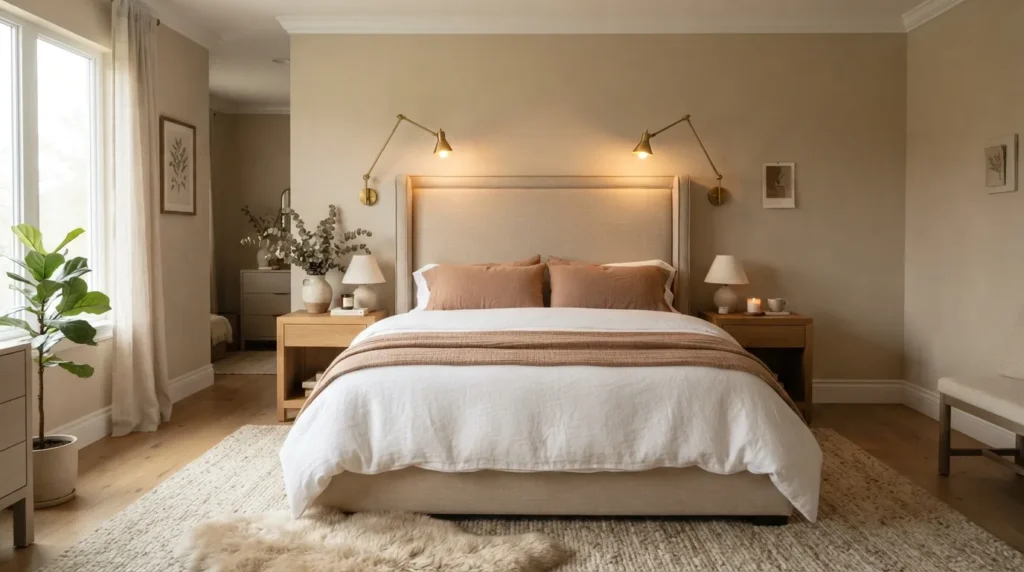
- Creates a soft focal point behind the bed
- Works with linen, velvet, boucle-style texture, suede, or performance fabric
- Adds comfort for reading, relaxing, and scrolling
- Helps soften rooms with hard floors or plain walls
- Looks polished in both small and large bedrooms
An upholstered bed can instantly make a bedroom feel more luxurious because it adds softness at the largest visual point in the room. Wood and metal beds can be beautiful, but fabric headboards feel warmer, quieter, and more comfortable for everyday use. Designers continue highlighting statement beds and upholstered headboards as strong bedroom directions for 2026, especially when paired with warmer colors and tactile fabrics. (Time4Sleep)
Choose fabric based on lifestyle. Linen-look upholstery feels casual and airy, velvet feels richer, and performance fabric is helpful for pets, kids, or frequent use. Tall headboards make a strong statement, while low curved styles feel softer and more modern. Keep nightstands balanced with the bed size so the wall does not feel crowded. Add wall sconces or lamps on both sides for symmetry. An upholstered bed can make even a simple bedroom feel intentional, cozy, and more comfortable for reading or winding down.
4. Quiet Luxury
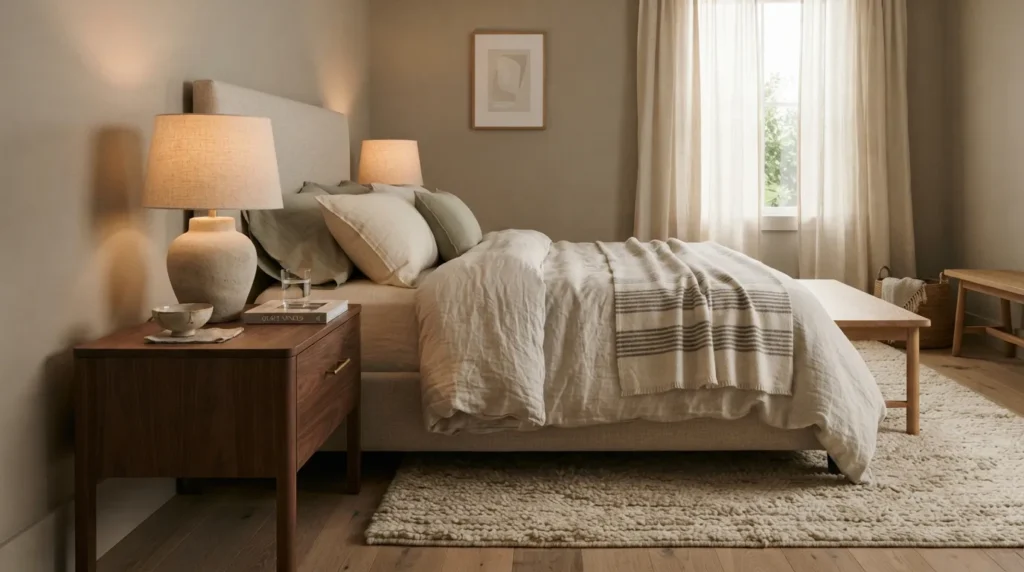
- Focuses on quality textures instead of loud decoration
- Works with wool rugs, linen curtains, stone lamps, wood furniture, and ceramic decor
- Uses calm color palettes with subtle contrast
- Keeps the room elegant but comfortable
- Best when surfaces stay uncluttered and purposeful
Quiet luxury in a bedroom is less about expensive labels and more about restraint, texture, and comfort. The room feels elevated because the materials look good together, not because every piece demands attention. A wool rug, linen curtains, stone lamp, wood nightstand, ceramic bowl, and soft bedding can create a refined look without feeling stiff. In my experience, this style works best when the palette stays calm and the details are chosen carefully. It is polished, but still easy to sleep in.
To create the look, remove extra clutter before adding anything new. Use fewer pieces, but choose items with better texture. Replace shiny polyester bedding with cotton or linen. Swap a tiny rug for one that sits under the bed properly. Add lamps with fabric shades instead of relying on overhead lighting. Keep nightstands simple with a book, lamp, small tray, and maybe a flower stem. Quiet luxury works because it supports rest. The room feels peaceful, useful, and grown-up without looking cold or overly designed.
5. Nature Textures
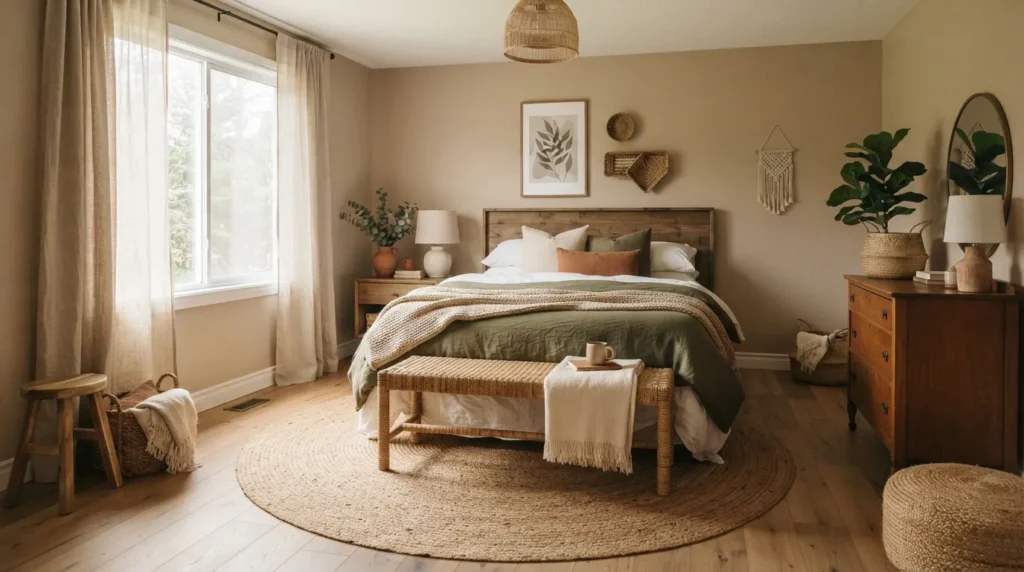
- Adds warmth through wood, rattan, jute, linen, stone, and clay
- Works beautifully with plants and earthy color palettes
- Makes modern rooms feel softer and more grounded
- Helps balance technology, screens, and hard surfaces
- Easy to add through furniture, baskets, rugs, lamps, and decor
Natural textures are staying popular because bedrooms need warmth more than visual noise. Wood furniture, rattan benches, jute rugs, linen curtains, stone lamps, clay vases, cotton bedding, and woven baskets can make a room feel grounded. These materials bring subtle variation through grain, weave, and surface texture. I’ve seen this work well in many bedrooms because it adds interest without relying on loud patterns. The space feels calmer, but not empty, because the materials do the decorating.
Start with one or two natural anchors. A wood nightstand, woven bench, jute rug, or linen curtain panel can shift the room quickly. Add smaller pieces like a clay vase, rattan tray, or textured lamp base to connect the look. If the room feels too beige, include deeper accents like olive, rust, charcoal, or walnut. Keep plant choices realistic based on your light. Natural textures make the bedroom feel warmer, more breathable, and more layered while still staying practical for everyday cleaning and use.
6. Statement Drapes
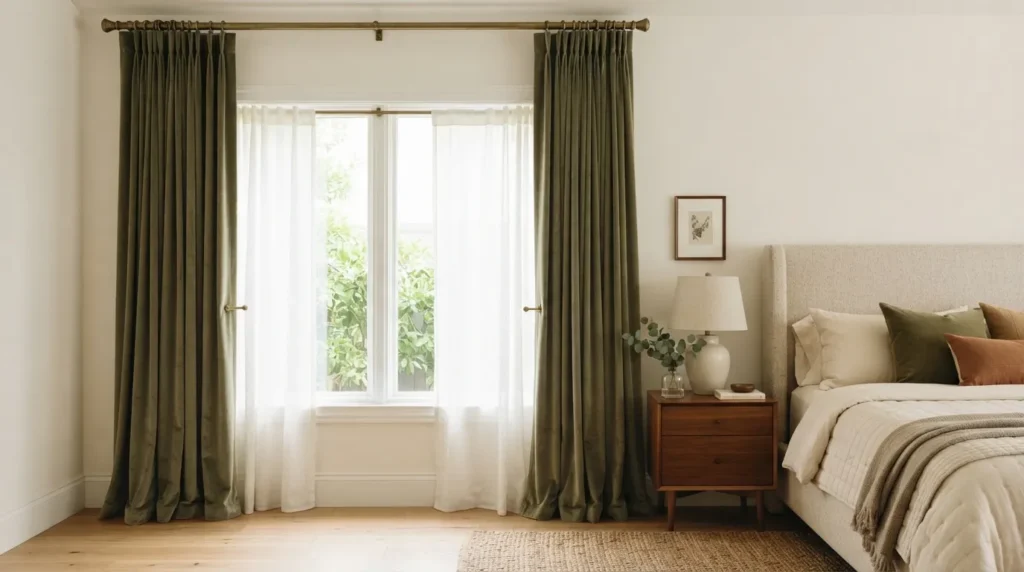
- Makes windows feel taller, softer, and more designed
- Works with linen, velvet, cotton, blackout panels, or textured blends
- Helps control light, privacy, and room temperature
- Adds color or pattern without changing furniture
- Best hung high and wide for a fuller look
Statement drapes can make a bedroom feel finished in a way blinds rarely do. Many rooms look incomplete because the windows feel bare or undersized, even when the bed and furniture are styled well. Curtains add height, softness, privacy, and movement. They can also make the room more sleep-friendly when you choose blackout lining or heavier fabric. In my experience, hanging curtains higher and wider than the window frame makes the entire wall look more graceful and intentional.
Choose fabric based on the mood you want. Linen-look panels feel relaxed, velvet feels dramatic, cotton feels clean, and patterned drapes can add charm without changing the whole room. Let the panels touch or slightly kiss the floor for a polished effect. Use sturdy rods in black, brass, bronze, or wood, depending on your hardware and furniture. If your bedroom gets strong morning light, layer sheers with blackout curtains. This upgrade improves comfort, privacy, and style while making the space feel more complete.
7. Bedside Sconces
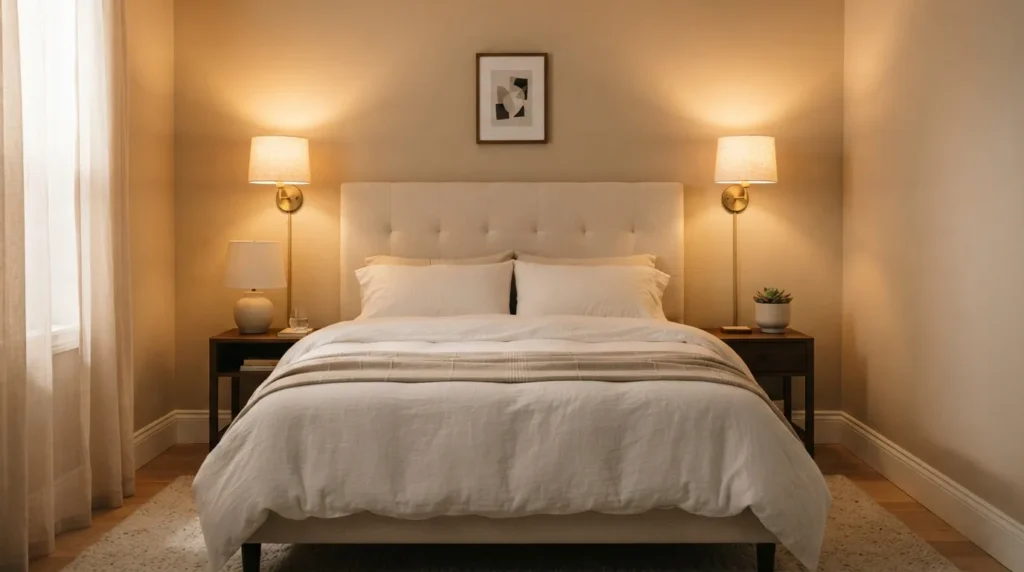
- Frees up nightstand space
- Adds hotel-style symmetry and warm evening light
- Works with plug-in, hardwired, or battery options
- Great for reading, relaxing, and small bedrooms
- Keeps the sleeping area cleaner and more functional
Bedside sconces are becoming a favorite bedroom upgrade because they save space and look polished. Table lamps are useful, but they can crowd small nightstands, especially when you also need room for a book, phone, water glass, or alarm clock. Sconces move the light onto the wall, making the bedside area feel cleaner. Plug-in and battery styles are especially helpful for renters or anyone who does not want electrical work. That’s why many designers recommend them for compact rooms.
Place sconces at a comfortable height for reading and relaxing. Swing-arm styles are practical if you read in bed, while shaded sconces create a softer glow. Choose warm bulbs so the light feels calming at night. Match the finish to nearby details, such as drawer pulls, curtain rods, or mirror frames. Use cord covers if the sconces are plug-in and visible. Bedside sconces make the room feel more custom, reduce surface clutter, and create a softer evening routine that supports winding down.
8. Vintage Touches
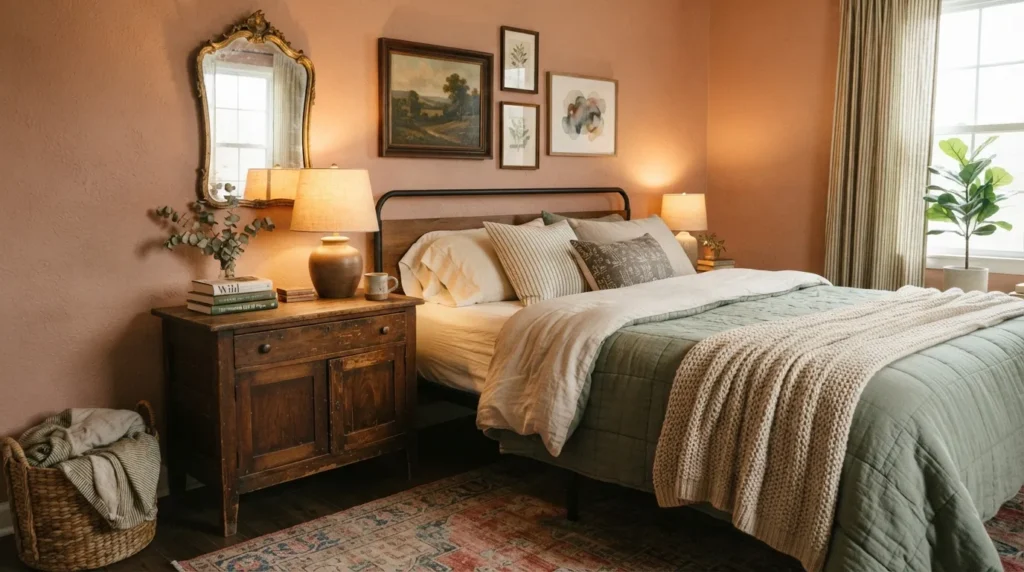
- Adds character and warmth to newer rooms
- Works with antique nightstands, old mirrors, framed art, benches, and lamps
- Prevents the bedroom from feeling too showroom-perfect
- Pairs well with modern bedding and clean wall colors
- Best when mixed with simple, updated pieces
Vintage touches make a bedroom feel personal instead of copied from a catalog. A carved wood nightstand, antique mirror, old bench, vintage lamp, framed landscape, or collected textile can bring soul into a simple room. Current design coverage continues to show a return toward traditional warmth, richer finishes, and character-filled details across interiors. (Veranda) In my experience, even one vintage piece can make the entire bedroom feel more interesting.
The key is balance. Too many old pieces can make the room feel heavy, while one or two can add charm. Pair an antique dresser with crisp bedding, or place a vintage landscape above a modern headboard. Use updated lampshades, fresh hardware, or clean styling to keep older furniture from feeling dusty. Look for pieces with real texture, such as aged wood, patinated brass, curved legs, or worn frames. Vintage details add story, warmth, and individuality, especially in bedrooms that otherwise feel plain.
9. Soft Zones
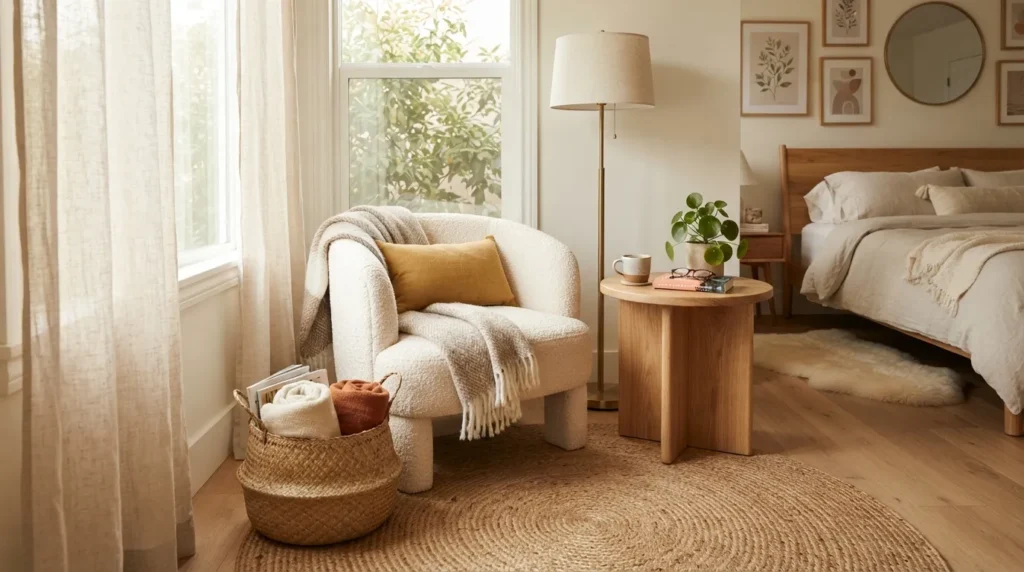
- Adds a reading, dressing, or morning coffee corner
- Works with small chairs, benches, poufs, stools, and floor cushions
- Makes large bedrooms feel more useful
- Helps small rooms feel more intentional when scaled carefully
- Creates a relaxing spot away from screens
Soft zones make bedrooms feel more livable because the room becomes more than a mattress and nightstands. A small chair by the window, bench at the foot of the bed, floor cushion near a bookshelf, or compact vanity stool can create a gentle pause point. This is especially useful if you like reading, journaling, dressing slowly, or drinking coffee before starting the day. I’ve noticed that even a tiny corner can change how people use the room.
Keep the zone scaled to the available space. A large lounge chair may overwhelm a small bedroom, but a slim slipper chair, ottoman, or narrow bench can work beautifully. Add a small side table, lamp, or basket only if the layout allows it. Use textiles to define the area, such as a soft rug, throw, or pillow. Avoid turning the zone into a laundry drop spot by giving it a clear purpose. A soft corner makes the bedroom feel thoughtful, calm, and more personal.
10. Personal Walls
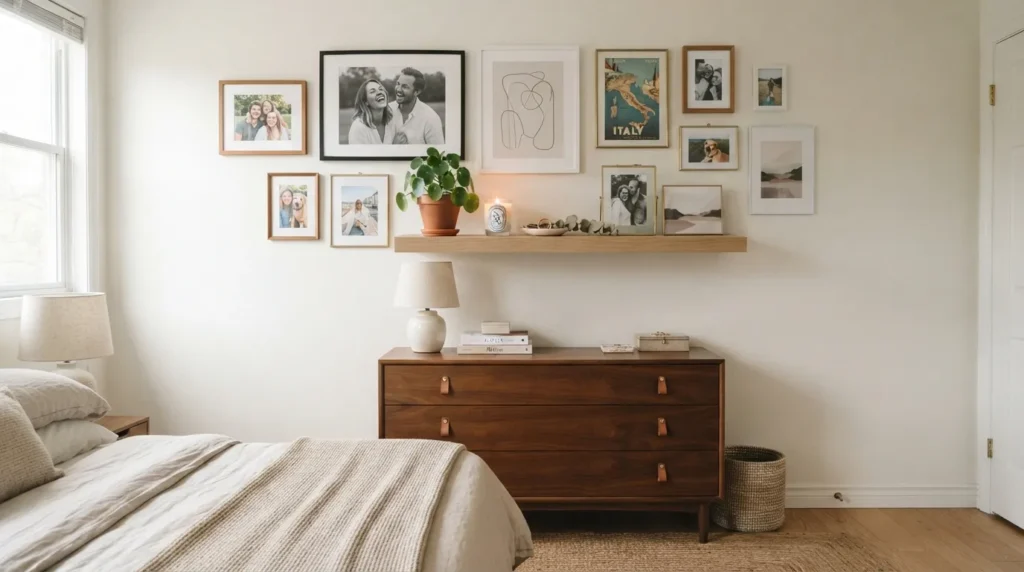
- Adds meaning through art, photos, shelves, and keepsakes
- Works above dressers, beside beds, or across empty walls
- Makes the bedroom feel less generic
- Best with a focused palette and clean spacing
- Can be updated seasonally without changing furniture
Personal walls are replacing generic decor because people want bedrooms that feel connected to their own lives. Instead of filling the space with random prints, choose art, photos, travel pieces, framed letters, small shelves, or meaningful objects that support the room’s mood. A personal display can be soft and quiet, not busy. In my experience, bedrooms feel more restful when meaningful pieces are edited carefully and given space. One thoughtful wall can say more than a crowded gallery.
Create structure before hanging anything. Use matching frames, similar colors, or an even grid if you like a clean look. For a collected style, mix art sizes but keep spacing consistent. Place active, detailed pieces away from direct sightlines if they feel too stimulating at bedtime. A small shelf with a plant, candle, or keepsake can add dimension without taking over the wall. Personal walls make the bedroom feel warm, expressive, and truly lived in while still supporting rest and comfort.