
11 cozy bedroom color schemes ideas
Color can completely change the way a bedroom feels. Before you buy new furniture, change your lighting, or order a full set of decor, the color scheme sets the emotional tone of the room. A bedroom with the right palette can feel calm, soft, warm, romantic, grounded, fresh, or deeply restful. That is why choosing colors is one of the most important steps when you want your sleeping space to feel more inviting.
A cozy bedroom does not need to be dark, crowded, or expensive. It can be light and airy, deep and moody, earthy and natural, or soft and feminine. The real secret is balance. Wall color, bedding, curtains, rugs, lamps, wood tones, artwork, and accent pieces should feel connected. When the colors work together, the whole room feels intentional instead of busy.
For many USA homes, bedrooms are now more than just sleeping spaces. They are reading corners, quiet retreats, small work zones, weekend rest spaces, and personal comfort rooms. A smart color scheme helps the room feel calmer after a long day. It can also make a small bedroom feel larger, a plain rental room feel styled, or a large primary suite feel warmer and more personal.
In my experience, the best bedroom color palettes usually start with one main mood. Do you want warm and simple? Soft and romantic? Earthy and organic? Clean and hotel-inspired? Once that mood is clear, the rest becomes easier. Bedding, furniture, lighting, and decor choices can all support that one feeling.
Below are 11 beautiful bedroom color scheme ideas you can use for inspiration. Each idea includes practical styling tips, texture suggestions, furniture pairings, and real-life decorating logic so the room looks good in photos and feels peaceful every day.
1. Warm Neutrals
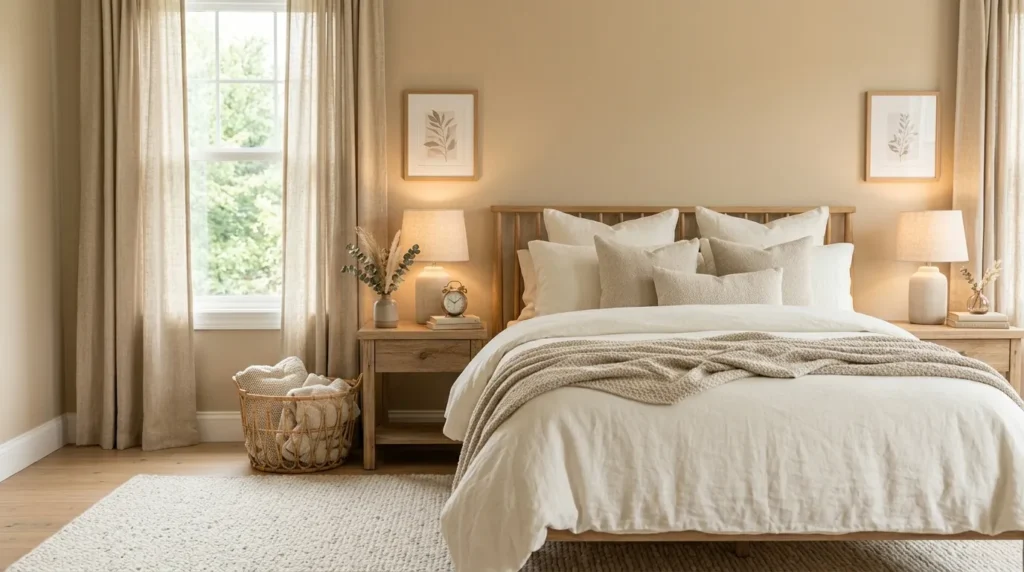
- Creates a soft, calm base that works in almost any room
- Pairs well with wood furniture, linen bedding, and woven decor
- Makes small bedrooms feel brighter without looking cold
- Works with cream, beige, oatmeal, ivory, and soft tan tones
- Easy to update with seasonal pillows or throws
Warm neutrals make a bedroom feel calm the moment you walk in. This palette works because it keeps the room light while adding enough warmth to avoid a plain or cold look. Start with ivory or soft beige walls, then layer oatmeal bedding, cream curtains, and warm wood nightstands. Add texture through linen sheets, boucle pillows, woven baskets, and a wool rug. The colors stay simple, but the room still feels rich because each material adds depth and softness.
The transformation comes from making the space feel peaceful without removing personality. Warm neutrals are especially useful for apartments, guest rooms, and primary bedrooms where you want flexibility. You can add black lamps for contrast, brass hardware for warmth, or natural greenery for freshness. If the room feels too flat, mix different shades of cream and beige instead of using one color everywhere. That’s why many designers recommend neutral palettes for people who want a timeless bedroom that still feels welcoming and lived-in.
2. Soft Sage
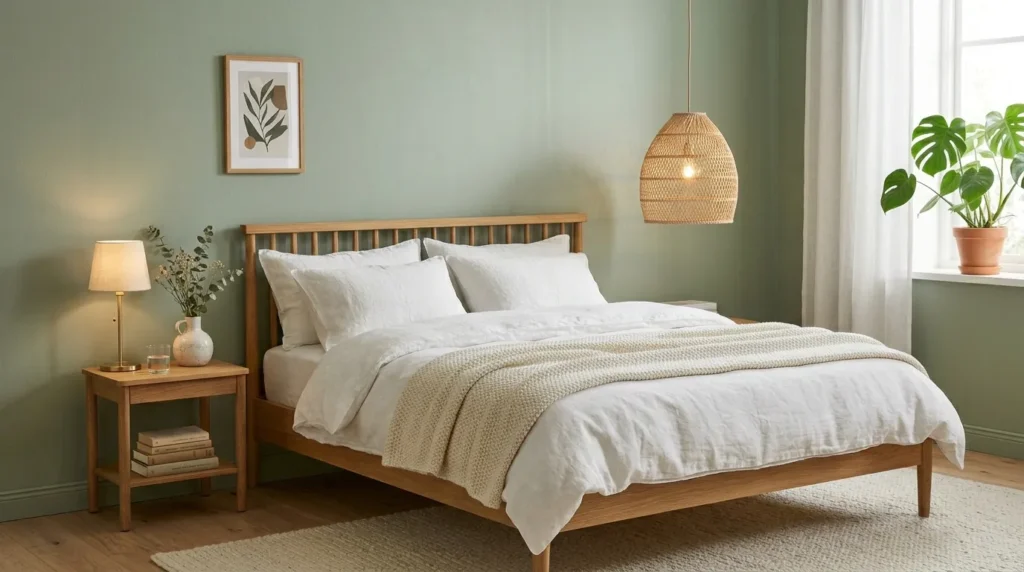
- Brings a gentle nature-inspired feel into the bedroom
- Pairs beautifully with white bedding and light oak furniture
- Works well with brass, rattan, cream, and clay accents
- Adds color without feeling loud or trendy
- Great for restful rooms with natural light
Soft sage gives a bedroom a fresh and peaceful mood without making it feel too bright. This color works because it sits between green and gray, so it feels natural, muted, and easy to style. Use sage on the walls, bedding, curtains, or an accent chair, then balance it with warm white sheets and light wood furniture. Add rattan lamps, ceramic vases, and soft beige pillows to keep the room relaxed. The result feels calm but not empty.
This palette is practical because sage works in both small and large bedrooms. It can make a sunny room feel cooler and a plain room feel more designed. For a modern look, pair it with matte black curtain rods and clean white bedding. For a softer cottage look, add floral artwork, linen curtains, and antique brass details. I’ve noticed sage bedrooms photograph beautifully because the color changes gently with the light, making the room feel layered throughout the day.
3. Dusty Rose
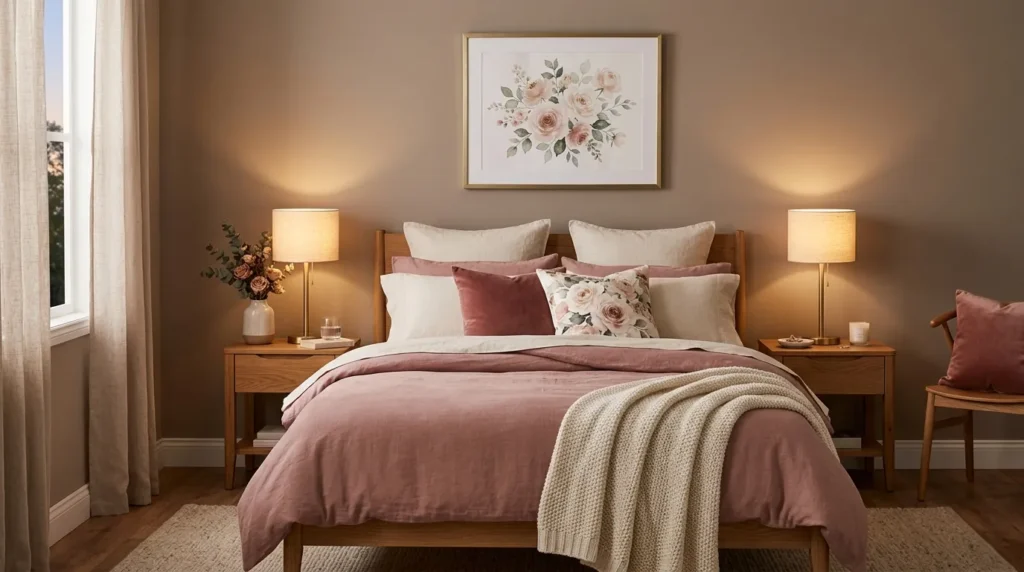
- Adds warmth, softness, and a romantic bedroom mood
- Works with cream, taupe, champagne, and soft brown tones
- Looks beautiful in bedding, pillows, curtains, or artwork
- Feels mature when paired with natural textures
- Great for feminine rooms without looking childish
Dusty rose can make a bedroom feel romantic without becoming overly sweet. This shade works because it has a muted undertone, so it feels softer and more grown-up than bright pink. Use it in a duvet cover, throw blanket, upholstered headboard, or accent pillows. Pair it with cream bedding, taupe walls, warm wood furniture, and brushed gold lamps. The key is keeping the surrounding colors calm so the rose tones feel elegant instead of overwhelming.
The transformation is gentle but noticeable, especially in rooms that feel too plain or cool. Dusty rose adds warmth to white bedrooms and softness to dark furniture. It also works beautifully with vintage mirrors, floral prints, velvet pillows, and soft lighting. For a more modern look, mix it with beige, black accents, and simple abstract art. This color scheme is useful for renters too because you can bring in rose tones through textiles instead of painting the walls.
4. Creamy Whites
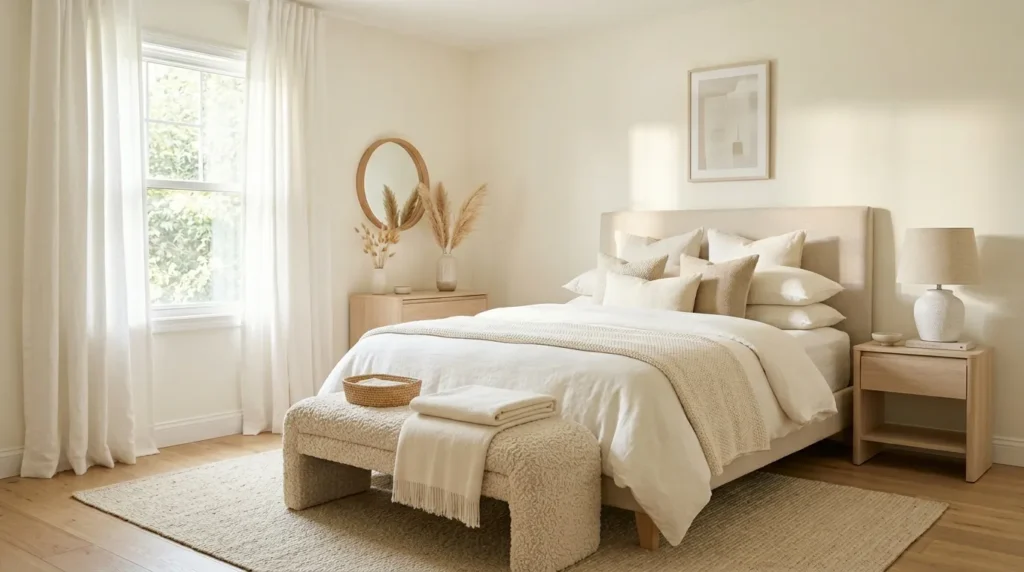
- Creates a clean, airy, and restful bedroom look
- Works well with layered bedding and soft lighting
- Makes small rooms feel open and bright
- Pairs with wood, rattan, brass, marble, and linen
- Best when mixed with texture to avoid flatness
Creamy whites create a soft hotel-inspired look without making the room feel sterile. This palette works because warm white tones reflect light while still feeling gentle and comfortable. Use creamy white walls, ivory bedding, white curtains, and a light area rug as the base. Then bring in texture through quilted blankets, linen pillowcases, woven shades, and a padded headboard. The room stays bright, but it feels relaxed because the whites have warmth instead of sharp blue undertones.
The biggest change happens when the room starts feeling clean, calm, and easy to breathe in. Creamy whites are perfect for small bedrooms, low-light spaces, and rooms with simple furniture. To keep the palette interesting, add wood nightstands, brass sconces, ceramic lamps, or a soft beige bench at the foot of the bed. Avoid using only flat white surfaces because the room can feel unfinished. The magic is in layers, texture, and warm lighting that makes the space glow at night.
5. Moody Charcoal
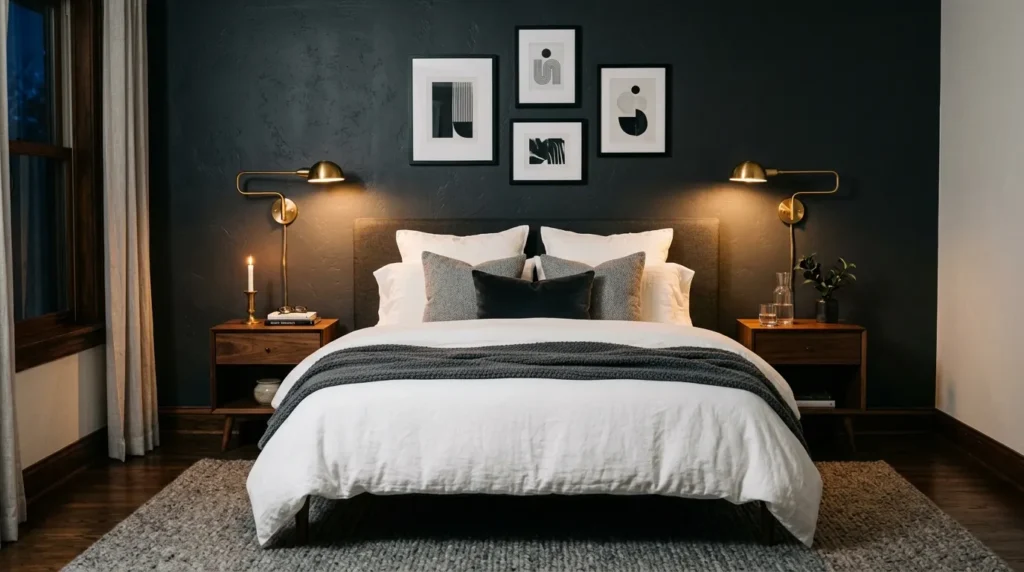
- Adds depth, drama, and a cocoon-like bedroom feel
- Works with white bedding, walnut furniture, and brass lighting
- Makes large rooms feel more intimate
- Creates a stylish backdrop for artwork and mirrors
- Best balanced with soft textiles and warm lamps
Moody charcoal gives a bedroom a deep, elegant feeling that feels calm rather than heavy. This palette works because charcoal adds richness while still staying more flexible than black. Use it on one accent wall, all walls, or through bedding and curtains if you do not want to paint. Balance the darkness with white sheets, cream pillows, walnut furniture, and warm metal lamps. Soft lighting matters here because it keeps the color from feeling flat or harsh.
The transformation is strongest in bedrooms that feel too large, plain, or unfinished. Charcoal can make the bed feel like the center of the room and create a restful, tucked-in atmosphere. It works especially well with leather benches, framed artwork, textured rugs, and layered blankets. For a modern look, add black hardware and clean lines. For a warmer look, use brass, cognac, and wood tones. This color scheme feels polished, private, and perfect for evening relaxation.
6. Earthy Terracotta
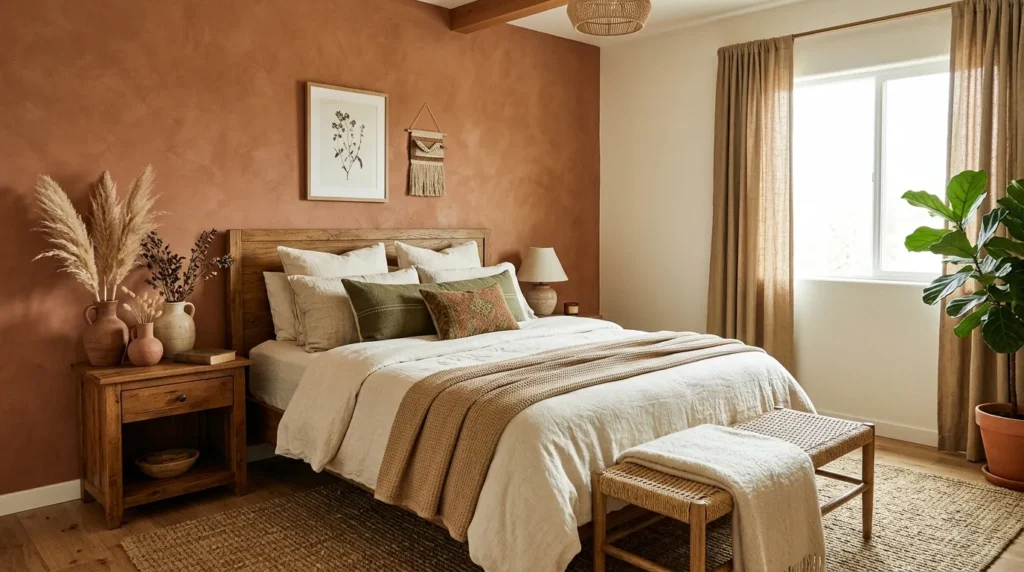
- Brings warmth, depth, and a grounded natural mood
- Pairs well with cream, olive, beige, tan, and wood tones
- Works beautifully with clay decor and woven textures
- Adds color without making the bedroom feel too bold
- Great for Southwest, boho, and organic modern styles
Earthy terracotta makes a bedroom feel warm, grounded, and full of character. This color works because it has natural clay-like depth that feels both rustic and modern. Use terracotta through an accent wall, bedding, pillows, artwork, or a textured throw. Pair it with cream sheets, tan curtains, wood furniture, and woven baskets. Add ceramic lamps, jute rugs, and linen textures to support the natural look. The palette feels rich but still restful when balanced with lighter tones.
The transformation is perfect for bedrooms that need warmth and personality. Terracotta looks beautiful in homes with sunlight, wood floors, or desert-inspired decor, but it can also warm up a simple rental room. To keep the palette refined, avoid using too many orange tones at once. Mix terracotta with beige, ivory, soft brown, and muted green. In my experience, this color feels especially beautiful during fall and winter, but it can work year-round when paired with breathable fabrics and simple styling.
7. Blue Gray
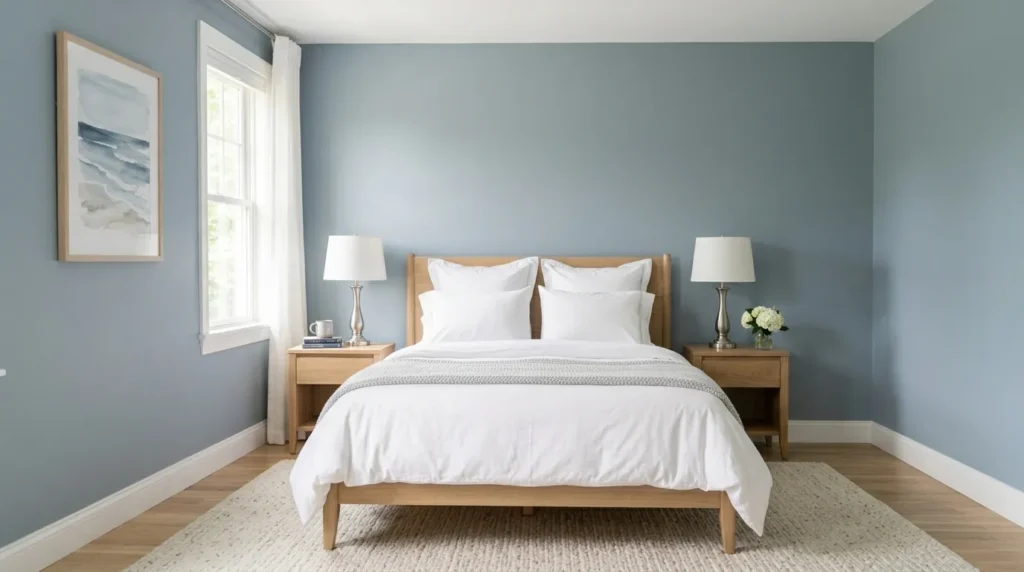
- Creates a cool, calm, and restful sleeping space
- Works with white bedding, silver accents, and light wood
- Feels softer than navy and warmer than icy blue
- Great for coastal, classic, and modern bedrooms
- Pairs well with cotton, linen, wool, and ceramic textures
Blue gray gives a bedroom a quiet, restful feeling that works beautifully for sleep. This palette works because it blends the calmness of blue with the softness of gray, creating a shade that feels gentle rather than bright. Use blue gray walls, a duvet cover, curtains, or a painted dresser. Pair it with crisp white bedding, light wood nightstands, and soft silver or brushed nickel lighting. Add a wool rug or textured throw to keep the room from feeling too cool.
The result feels fresh, peaceful, and slightly coastal without needing obvious beach decor. Blue gray works well in bedrooms that get strong sunlight because it can soften the brightness. It also helps a small room feel calm and pulled together. For a warmer version, add beige pillows, woven shades, or natural oak furniture. For a cleaner look, pair it with white trim and simple artwork. This color scheme is ideal when you want a room that feels quiet, polished, and easy to relax in.
8. Olive Linen
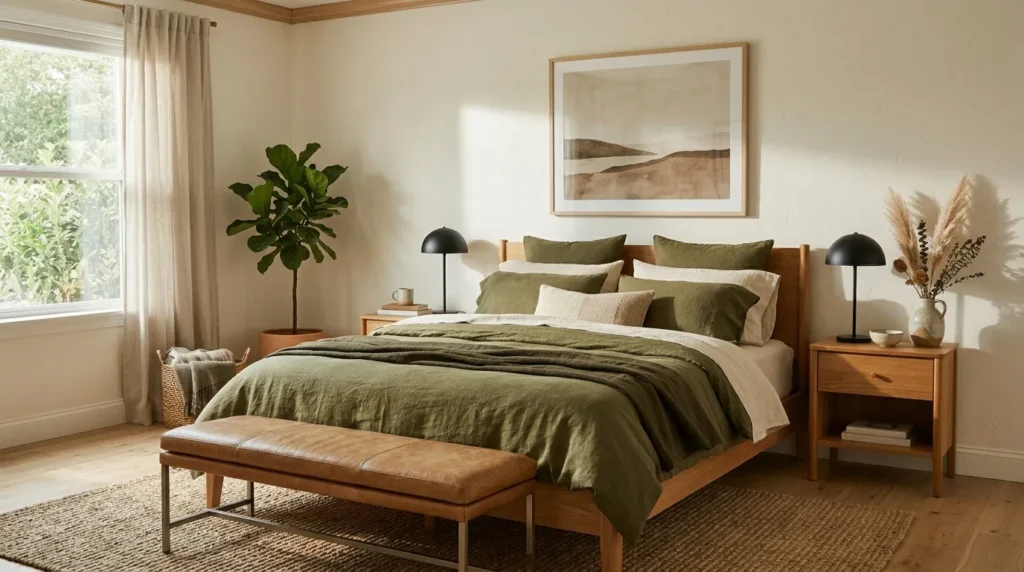
- Adds a grounded, organic feel to the bedroom
- Works with linen bedding, wood furniture, and black accents
- Feels deeper than sage but softer than forest green
- Pairs beautifully with cream, tan, clay, and brass
- Great for earthy, modern, and masculine-leaning rooms
Olive linen creates a bedroom that feels grounded, stylish, and naturally calm. This palette works because olive green has depth, while linen textures keep the room soft and breathable. Use olive bedding, curtains, or an accent wall, then balance it with cream sheets and warm wood furniture. Add black lamps or bronze hardware if you want contrast. Materials like linen, leather, jute, and ceramic fit this color story well because they feel earthy and relaxed.
The transformation feels mature and comfortable, especially in rooms that need more depth than beige can offer. Olive works beautifully for primary bedrooms, guest rooms, and gender-neutral spaces because it feels warm without being too soft. To keep the room from looking dark, add light bedding, natural shades, and warm bulbs. A few clay vases or tan pillows can soften the green even more. This palette is practical because it hides minor wear better than very pale colors while still looking refined.
9. Taupe Layers
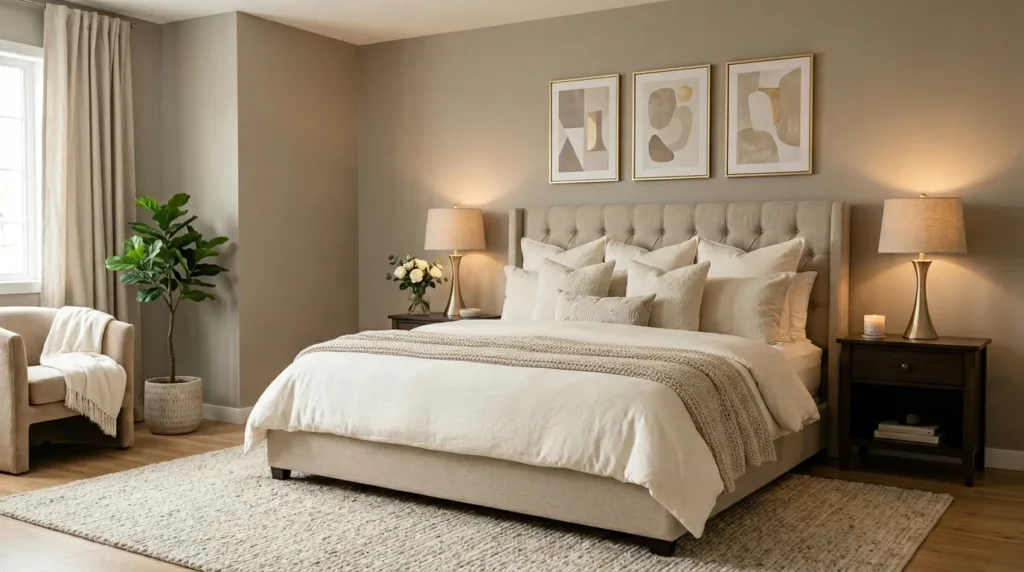
- Creates a warm and elegant neutral bedroom palette
- Works with cream, brown, black, ivory, and champagne accents
- Adds more depth than beige without feeling dark
- Looks beautiful with upholstered beds and soft rugs
- Ideal for modern, classic, and transitional bedrooms
Taupe layers make a bedroom feel refined, calm, and quietly expensive. This palette works because taupe sits between gray and brown, giving the room warmth and sophistication at the same time. Use taupe walls, bedding, curtains, or a padded headboard, then layer in cream sheets, ivory pillows, and soft brown accents. Add matte black lamps for contrast or champagne metal details for a softer finish. The key is mixing tones so the room does not feel one-dimensional.
The transformation is especially helpful when you want a neutral bedroom that feels richer than plain beige. Taupe works with many furniture styles, from modern platform beds to classic upholstered frames. It also pairs beautifully with textured rugs, velvet pillows, linen curtains, and abstract wall art. For small rooms, choose lighter taupe shades and keep the bedding bright. For larger rooms, deeper taupe can make the space feel more intimate. This is a polished palette that feels calm without looking boring.
10. Cocoa Brown
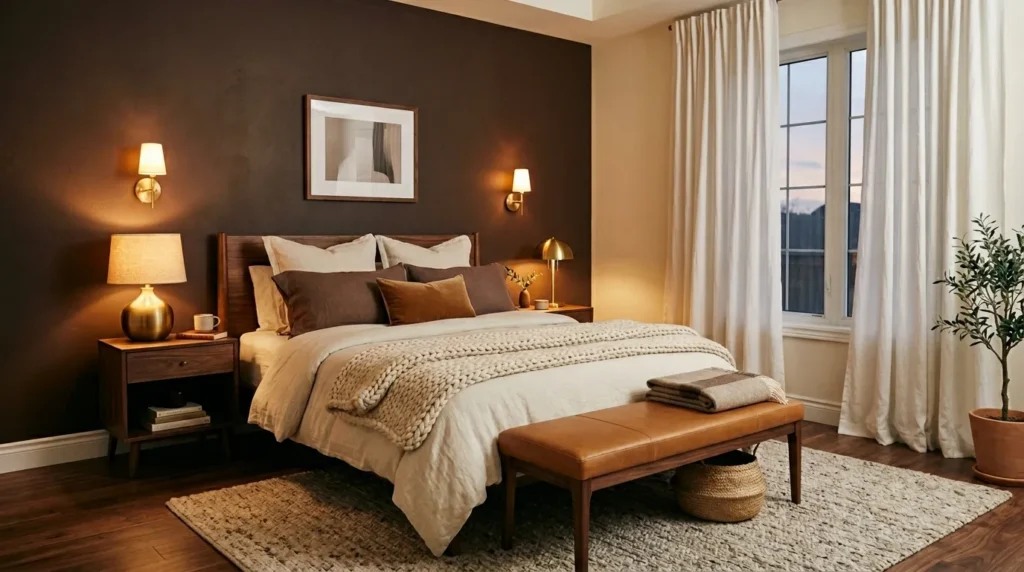
- Creates a warm, rich, and comforting bedroom mood
- Pairs with cream bedding, brass lighting, and wood furniture
- Works well through accent walls, blankets, rugs, or pillows
- Adds depth without using black or charcoal
- Great for autumn-inspired and luxury-style rooms
Cocoa brown brings warmth and comfort into a bedroom in a rich but gentle way. This palette works because brown feels natural, familiar, and grounding. Use cocoa on an accent wall, velvet pillows, a thick throw blanket, or a large area rug. Pair it with cream bedding, walnut furniture, brass lamps, and soft white curtains. The contrast between light bedding and deep brown accents keeps the room balanced. This color feels especially inviting when paired with warm lighting.
The room changes by feeling more layered, secure, and restful. Cocoa brown works beautifully in fall and winter, but it can also feel timeless when styled with simple furniture and breathable fabrics. To avoid a heavy look, mix it with ivory, beige, caramel, and natural wood. A leather bench or woven basket can add texture without adding clutter. This scheme is perfect for anyone who wants a cozy bedroom style that feels warm, mature, and quietly luxurious.
11. Blush Beige
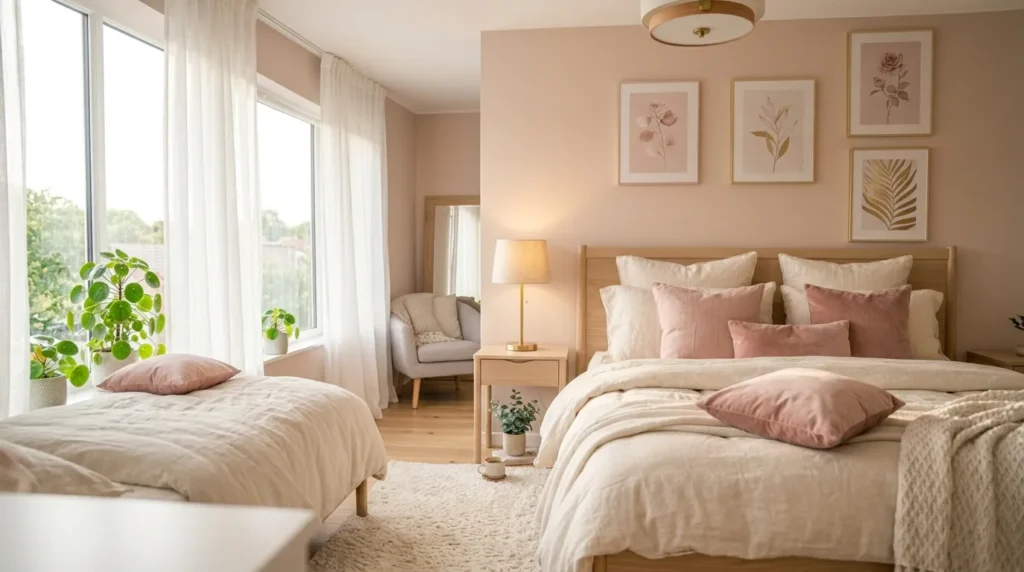
- Blends soft warmth with a gentle feminine feel
- Works with cream bedding, pale wood, and gold accents
- Looks beautiful in pillows, throws, curtains, or wall color
- Feels softer than plain beige but calmer than pink
- Great for romantic, modern, and light-filled bedrooms
Blush beige creates a soft and flattering bedroom palette that feels warm without becoming too pink. This color works because it combines the comfort of beige with a subtle rosy undertone. Use it on walls, bedding, curtains, or accent pillows, then balance it with cream sheets and pale wood furniture. Add brushed gold lamps, a soft rug, and simple artwork for a polished finish. The room feels gentle and pretty, but still grown-up and easy to live with.
The transformation is perfect for bedrooms that need softness but not strong color. Blush beige looks beautiful with morning light, sheer curtains, rounded furniture, and layered bedding. It can also make a plain rental room feel more personal without major changes. For a clean look, pair it with white and light oak. For a warmer look, add taupe, champagne, or muted rose accents. This palette is especially useful if you want a peaceful retreat that still feels stylish, feminine, and comfortable.