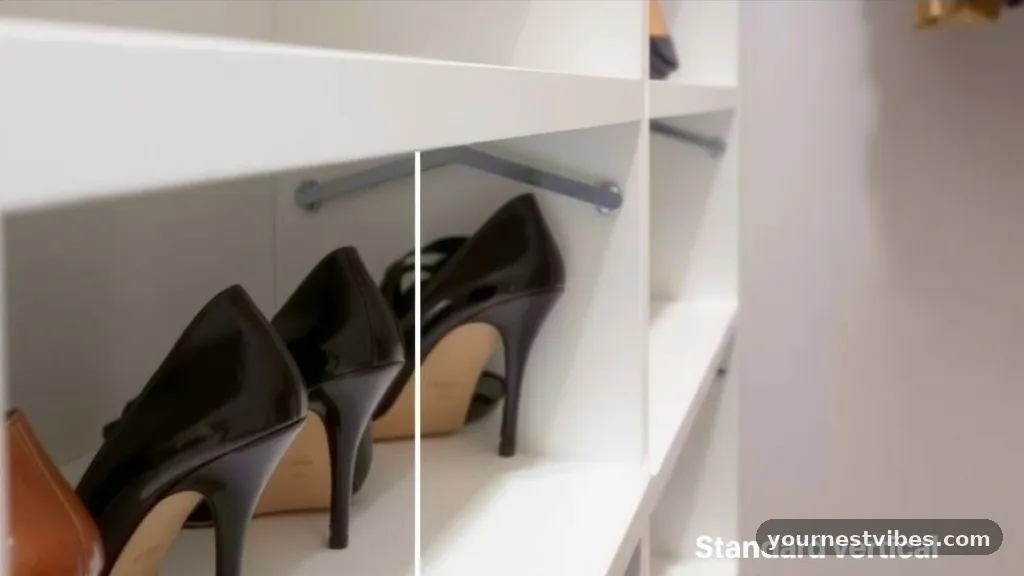
How Much Space Needed Between Slanted Shoe Shelves with Heel Catches?
Determining exactly how much space needed between slanted shoe shelves with heel catches is the most common hurdle when installing custom footwear storage. If you place your shelves too close together, your boots will scrape the underside of the shelf above, while too much space leads to wasted vertical capacity. For most standard collections, a vertical clearance of 8 to 10 inches is the ideal sweet spot.
This measurement accounts for the angle of the shelf while ensuring your heel catches function properly without obstruction. Mastering these dimensions allows you to maximize your closet efficiency while keeping your collection organized and accessible.
Standard Vertical Clearance Guidelines
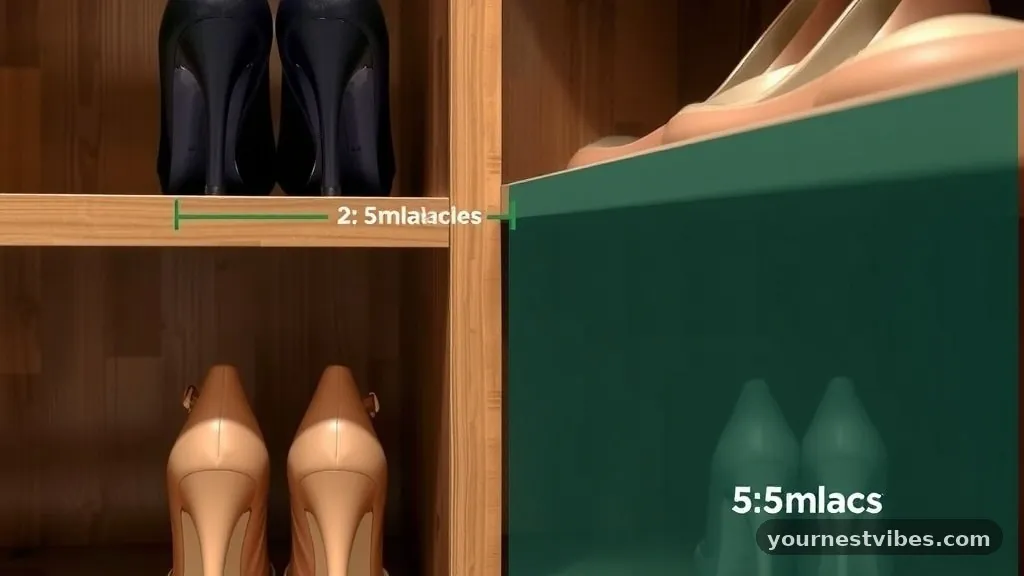
When planning your closet layout, you must account for the physical height of your footwear when it sits at an incline. While a flat shelf only needs to accommodate the height of the shoe, a slanted shelf with a heel catch forces the shoe into a specific orientation.
Most professionals recommend a minimum of 8 inches of vertical space for flats, sneakers, and sandals. This provides enough room to slide the shoe into the catch without jamming the toe against the shelf above.
If you store a mix of footwear, you should aim for a slightly more generous gap of 10 to 12 inches between shelves. This extra room is vital for booties or high-top sneakers that have a higher profile when tilted.
Without this buffer, you will find yourself constantly maneuvering shoes to avoid scuffing the materials. Always measure from the top of the heel catch on the lower shelf to the bottom of the shelf directly above it.
Understanding the Role of the Heel Catch
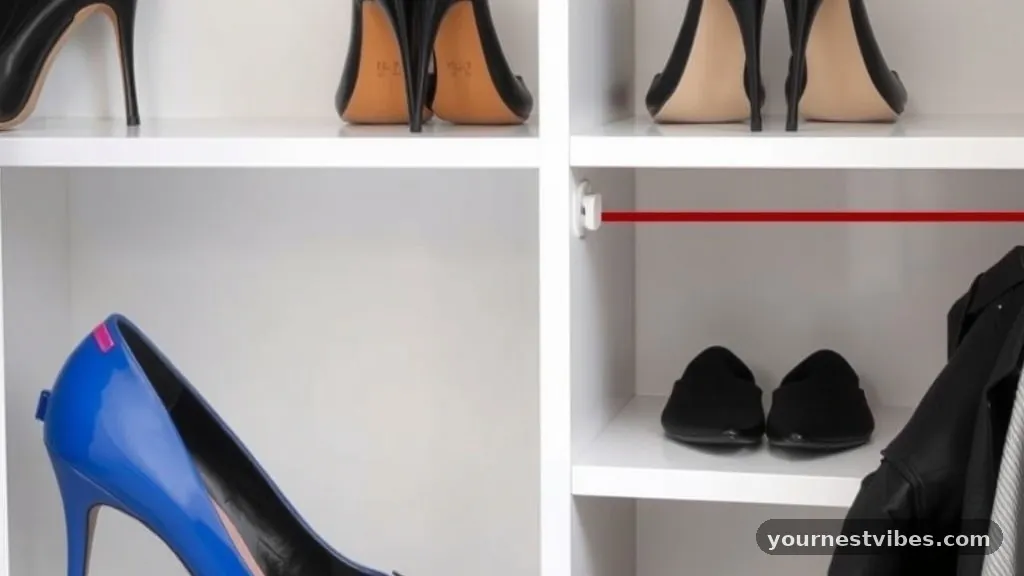
A heel catch is a small lip or rail designed to prevent footwear from sliding off an angled surface. Its presence dictates the minimum depth of your shelf and the required angle of inclination.
If the catch is too tall, it might interfere with the heel of a delicate dress shoe, effectively pushing the shoe further out into the aisle. You need to ensure the space you allocate accounts for the thickness of this hardware.
When installing these catches, verify that they are mounted securely to the front edge of the shelf board. The catch typically adds about 0.5 to 1 inch to the total height of the shelf assembly.
If you are working with a tight closet footprint, you can opt for thinner metal rails rather than thick wooden trim. This choice saves precious vertical inches that could be used for an extra row of storage.
Accounting for Footwear Variety
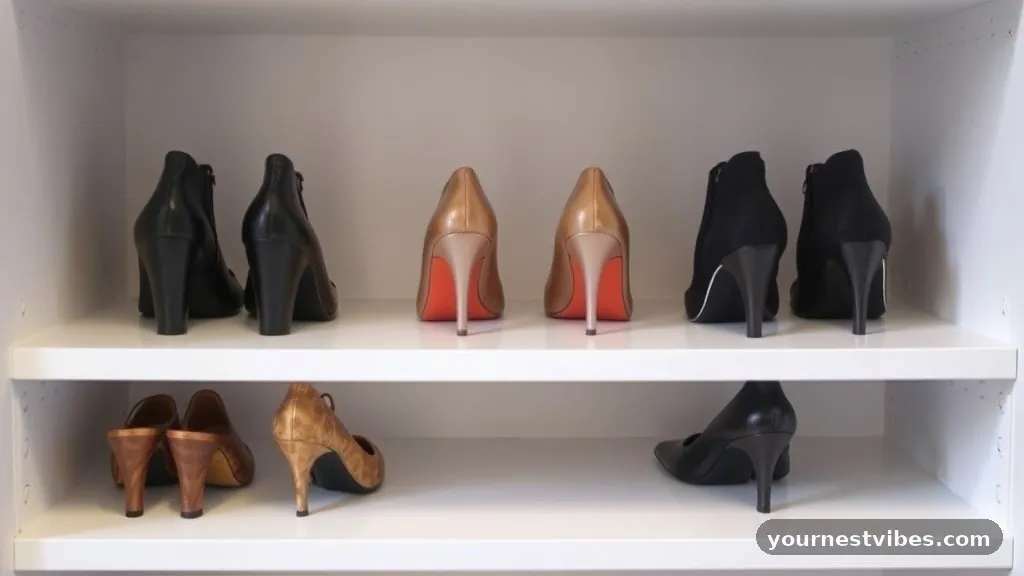
Your personal collection likely contains diverse styles, each requiring different amounts of room. A pair of flat ballet slippers requires significantly less vertical clearance than a pair of platform wedges or rugged winter boots.
Designing your storage based on an “average” shoe can lead to frustration when you try to store your larger items. It is often smarter to group footwear by height so you can adjust your shelf spacing accordingly.
For example, you might choose to dedicate the bottom section of your rack to taller boots, while the upper tiers house lighter items. Consider the following breakdown for your planning process:
- Standard flats and loafers: 7 to 8 inches of vertical clearance.
- Running shoes and trainers: 8 to 9 inches of vertical clearance.
- Ankle boots and wedges: 10 to 12 inches of vertical clearance.
- Tall riding or winter boots: 15+ inches or floor-level storage.
Shelf Depth and Angle Considerations
The angle of your shelves significantly affects the usable depth of your closet. A steeper angle, such as 30 to 45 degrees, makes it easier to view your shoes but consumes more horizontal depth.
Most standard shoe racks operate efficiently at a 20 to 25-degree angle. This slope is steep enough to display the shoes clearly but shallow enough that the heel catch doesn’t have to work too hard to keep them in place.
If your closet is very narrow, you may need to reduce the angle to save space. A shallower angle requires less depth, but it also means the shoes will sit further back on the shelf.
You must balance the viewing angle with the total depth available in your closet. For more technical details on interior layout, you can consult the Americans with Disabilities Act standards regarding reach ranges and accessibility to ensure your design remains functional for everyone.
The Impact of Closet Door Clearance
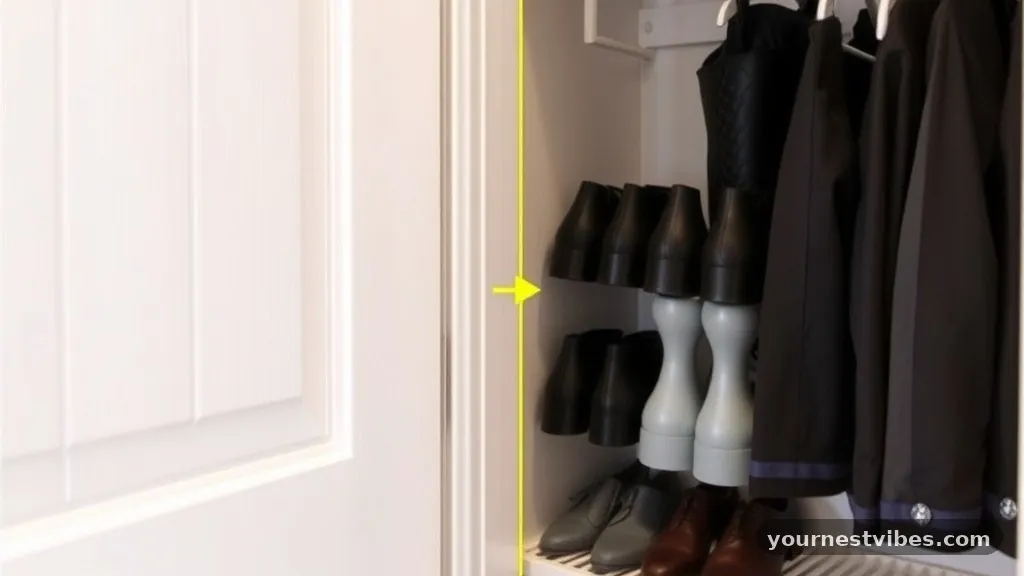
Many people forget to factor in the swing of the closet door when determining how much space needed between slanted shoe shelves with heel catches. If your shelves protrude too far into the doorway, the door might hit the heels of your shoes.
This is a common issue in small reach-in closets where every inch counts. You should measure the depth of your shelves, including the projection of the shoes, and subtract that from your available floor space.
If the door swing interferes with your shoes, you have two primary options. You can either reduce the angle of the shelves to make the shoes sit flatter, or you can switch to a sliding door system.
Placing your shelves on the side walls rather than the back wall of the closet is another effective way to avoid door clearance conflicts. Always perform a “dry run” with your bulkiest pair of shoes before finalizing your shelf spacing.
Calculating Total Vertical Capacity

To calculate how many shelves you can fit in a vertical section, divide the total available height by the spacing required for your footwear. For instance, if you have 72 inches of wall height and you need 10 inches per shelf, you can fit seven rows.
Remember to subtract the thickness of the shelf material itself from your total available height. If your shelves are 0.75 inches thick, seven shelves will consume 5.25 inches of vertical space.
Use a table to map out your capacity based on your specific needs:
| Shelf Spacing | Shelf Thickness | Total per Row | Rows in 72″ Height |
|---|---|---|---|
| 8 inches | 0.75 inches | 8.75 inches | 8 rows |
| 10 inches | 0.75 inches | 10.75 inches | 6 rows |
| 12 inches | 0.75 inches | 12.75 inches | 5 rows |
Materials and Installation Hardware
The materials you choose for your shelves will influence the structural integrity and the space required. Solid wood shelves are durable but thicker, which can eat into your vertical storage space.
Melamine or particleboard is a popular, cost-effective choice that is often thinner while remaining strong enough to hold heavy footwear. If you choose wire shelving, you will find that the “heel catch” is often built into the design of the wire itself.
For DIY projects, shelf pins and adjustable tracks are invaluable. They allow you to change the spacing between shelves as your collection evolves.
If you buy a new pair of tall boots, you can simply move one shelf down without having to rebuild the entire unit. Invest in high-quality steel hardware to ensure that your slanted shelves remain stable under the weight of your shoes.
Frequently Asked Questions
Can I use a universal spacing for all my shoes?
While you can try to standardize your shelves, it is rarely efficient. You are better off designating specific zones for different shoe heights to maximize your total storage capacity.
What happens if my heel catches are too short?
If your heel catches are not tall enough, your shoes will slide off the slanted surface. You can remedy this by adding a secondary strip of wood or a metal trim piece to increase the height of the lip.
Does the angle of the shelf change the required spacing?
Yes, a steeper angle makes the shoe profile taller relative to the shelf above. If you increase the angle, you will likely need to increase the vertical gap by 1 or 2 inches to maintain the same ease of access.
How deep should the shelves be for men’s shoes?
Men’s shoes are generally longer than women’s, so you should aim for a shelf depth of at least 14 to 16 inches. This ensures the entire shoe rests on the shelf without the heel or toe hanging over the edge.
Are there alternatives to slanted shelves for small closets?
Yes, you can use pull-out drawers or vertical cubbies if slanted shelves take up too much room. These options can be more space-efficient in very tight corners where a slanted display would be obstructed by a door.
Conclusion
Determining how much space needed between slanted shoe shelves with heel catches is a balance between aesthetic display and functional storage. By aiming for a vertical clearance of 8 to 10 inches, you create a versatile environment that accommodates most standard footwear. Always account for the thickness of your materials and the specific heights of your favorite boots or sneakers to avoid overcrowding.
Start by measuring your tallest pairs, then build your shelf layout from the bottom up to ensure every piece of your collection has a home. With these dimensions in mind, you can transform your closet into a well-organized space that makes getting ready in the morning much easier. Feel free to adjust these measurements slightly based on your specific closet architecture and personal collection size.