11 Small Outdoor Entryway Ideas
Introduction
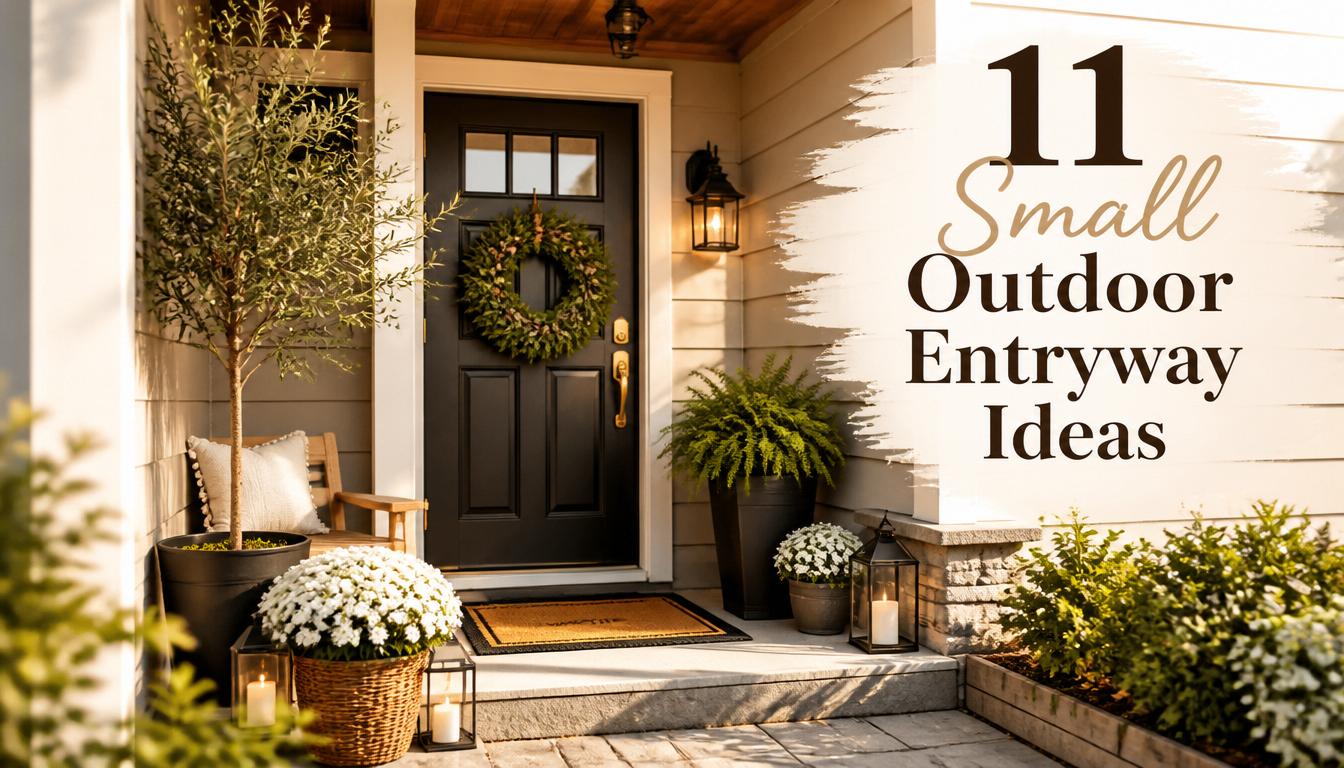
Your entryway is the first thing guests notice, even before they step inside your home. Whether you have a narrow porch, a tiny stoop, a townhouse front step, or a compact apartment entrance, the right styling can make the whole home feel more welcoming. A Small Outdoor space does not need to feel plain or forgotten. With smart layering, durable materials, useful storage, and warm details, even the simplest front door area can look polished.
This guide is made for USA homes where outdoor entry spaces often need to handle weather, deliveries, shoes, seasonal decor, and daily foot traffic. You will find practical ideas that improve curb appeal, make the entrance easier to use, and create a Pinterest-worthy first impression without requiring a full renovation.
1. Layered Doormat
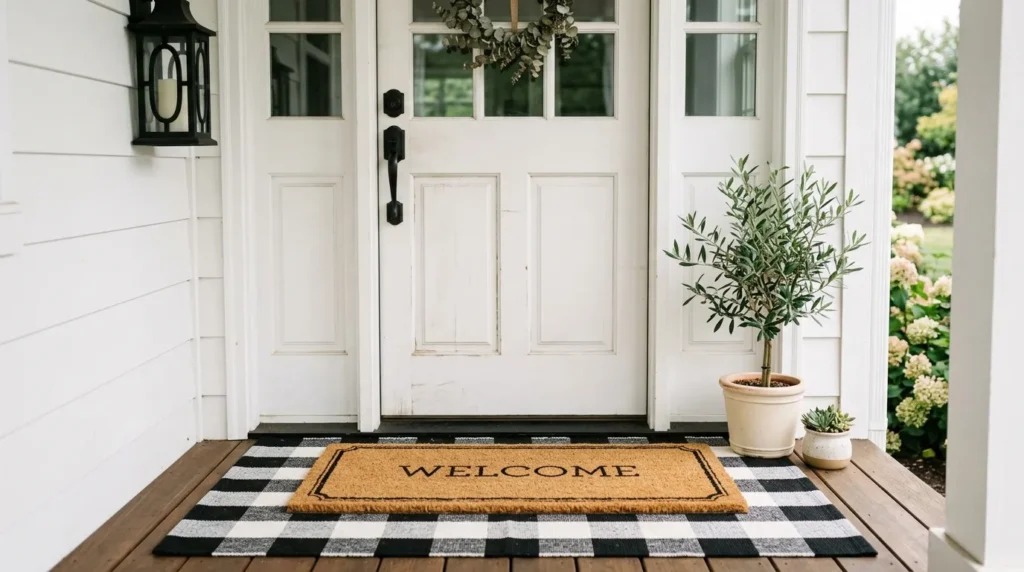
- Add a larger outdoor rug under a smaller welcome mat.
- Use natural fiber, plaid, stripe, or neutral woven textures.
- Choose weather-resistant materials for rain, dirt, and daily use.
- Match the colors with your door, planter, or porch decor.
A layered doormat instantly makes a front entry feel styled instead of bare. The look works because it creates depth, texture, and a clear landing zone right at the door. Start with a larger outdoor rug, then place a smaller welcome mat on top for contrast. In my experience, black and white patterns, warm jute tones, and simple stripes photograph beautifully for Pinterest while still feeling practical. Choose mats that can handle dirt, moisture, and heavy shoes, especially if your home gets snow, rain, or muddy yard traffic.
This idea is also one of the easiest ways to refresh an entry without painting, drilling, or buying furniture. A larger base rug visually widens a tiny stoop, while the top mat gives the door area a finished focal point. For a farmhouse look, try buffalo check under a coir mat. For a modern style, use a flat-weave outdoor rug with a simple graphic mat. Shake both pieces often and rotate them seasonally so the entry stays clean, fresh, and welcoming throughout the year.
2. Tall Planters
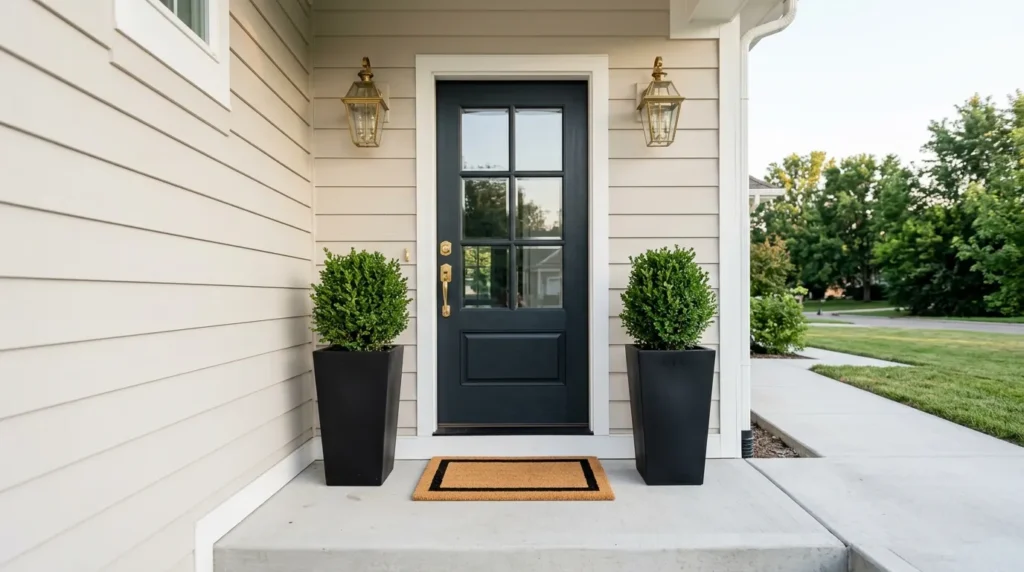
- Use two matching planters for a balanced front door look.
- Choose boxwood, ferns, grasses, evergreens, or seasonal flowers.
- Pick lightweight resin, ceramic-look, metal, or concrete-style pots.
- Place planters where they frame the door without blocking movement.
Tall planters can make even the smallest entry look structured and intentional. They add height where low steps, flat siding, and plain doors often feel unfinished. Matching planters on both sides of the door create symmetry, which is why many designers recommend them for quick curb appeal. If your space is narrow, choose slim square or tapered planters instead of wide round pots. Fill them with boxwood, ferns, ornamental grass, or seasonal flowers to bring color and life without overwhelming the walkway.
The best part is that tall planters work in almost every home style, from suburban porches to city townhouses. They help soften hard surfaces like brick, concrete, vinyl siding, and metal railings. Use lightweight resin pots if you need to move them often, or choose concrete-look planters for a more expensive feel. Add pot risers or drainage holes so water does not sit at the base. When planned well, the entry feels cleaner, greener, and more complete before anyone even rings the bell.
3. Wall Lanterns
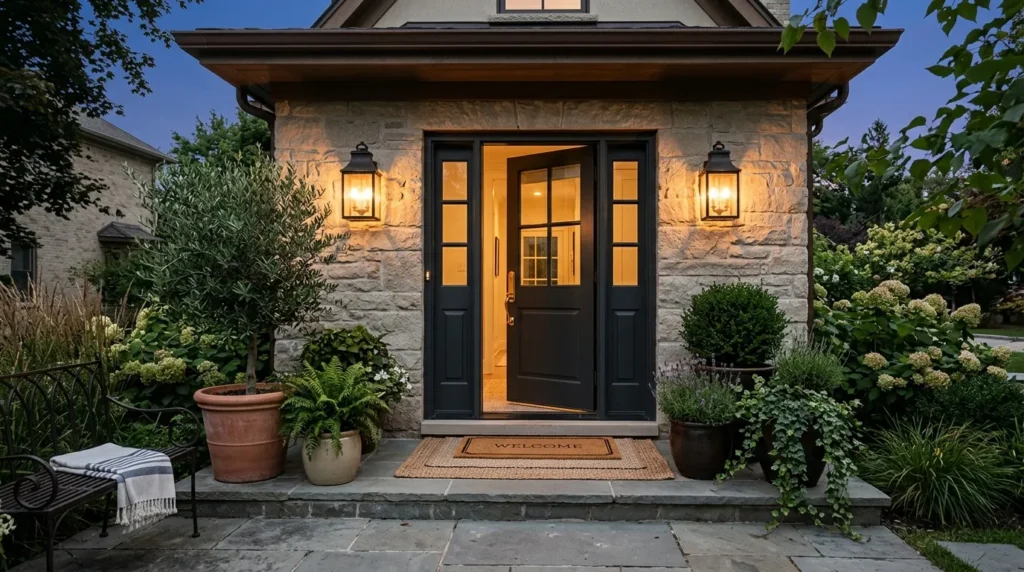
- Use warm outdoor lighting to soften the entry at night.
- Choose black, brass, bronze, or matte metal finishes.
- Add battery, solar, plug-in, or hardwired options where suitable.
- Keep the style consistent with your door hardware.
Wall lanterns bring warmth, safety, and a polished glow to a compact front entry. Good lighting makes the doorway easier to find at night, but it also adds style during the day. Black metal lanterns feel classic, while brass or bronze finishes add a softer traditional look. I’ve noticed that homes with warm entry lighting often feel more cared for, even when the porch itself is simple. If you cannot hardwire a fixture, look for battery or solar options that still create a similar mood.
Lighting also helps highlight the other details you add, including planters, mats, wreaths, and house numbers. Choose warm white bulbs instead of harsh blue-toned light for a cozier finish. If you have one fixture, balance it with a tall planter or wall accent on the opposite side. If you have two, keep them level and proportional to the door. Clean the glass covers regularly, because dusty fixtures quickly dull the look. A small lighting upgrade can make the entrance feel safer, brighter, and more expensive.
4. Door Wreath
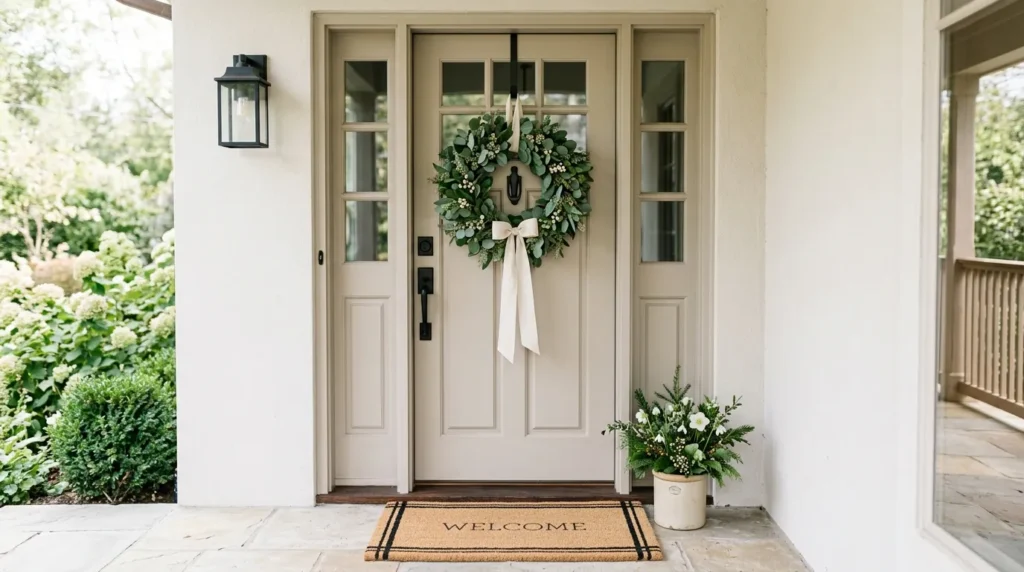
- Choose a wreath that suits the season and door color.
- Use eucalyptus, olive leaves, dried florals, berries, or pine.
- Hang it with a ribbon, hook, or magnetic hanger.
- Keep the size proportional to the door width.
A door wreath gives the entry an instant focal point without using floor space. This is especially helpful when your porch or step is too narrow for furniture. A simple greenery wreath can work year-round, while seasonal styles add personality for spring, fall, winter, and holidays. That’s why many decorators treat the front door like a vertical styling surface. Eucalyptus, olive branches, dried flowers, pine, and berry accents all bring texture while keeping the look soft and welcoming.
The key is choosing a wreath that feels balanced with your door color and hardware. A black door looks beautiful with green foliage or cream florals, while a white door can handle deeper tones like burgundy, rust, navy, or forest green. Use a wide ribbon for a more custom look, or a clean metal hanger for simplicity. Avoid oversized wreaths that cover the door handle or window. When the size and colors are right, the whole entry feels more charming and thoughtfully styled.
5. House Number Display
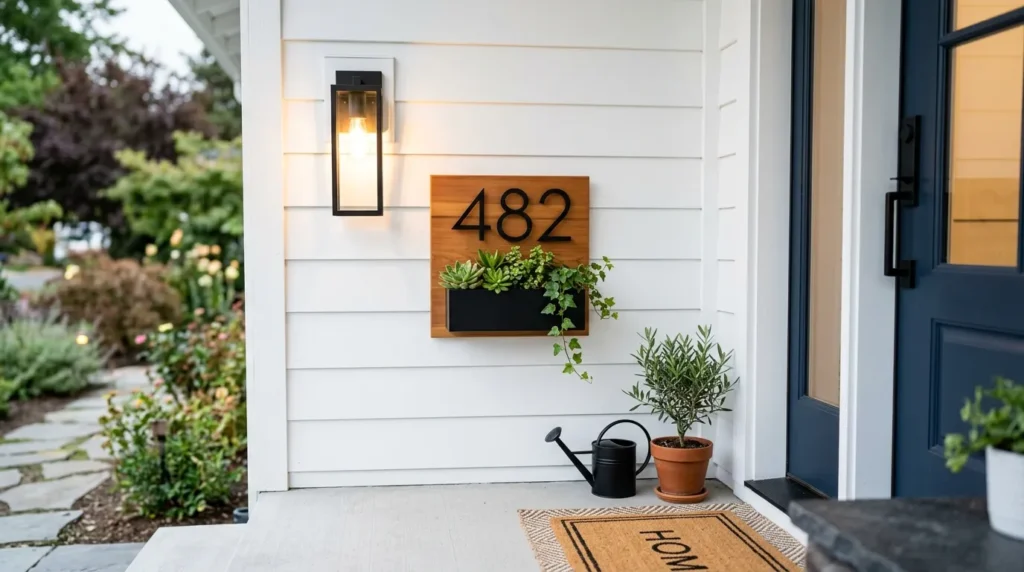
- Upgrade basic numbers with modern metal or wood finishes.
- Place numbers where delivery drivers and guests can see them.
- Pair them with a planter, mailbox, or wall-mounted plaque.
- Choose a style that matches your home exterior.
A stylish house number display can make a small entry look more finished and easier to navigate. Basic numbers are often too small, faded, or hidden by decor, which can make deliveries and guest visits frustrating. Replacing them with clean, visible numbers adds both beauty and function. Modern black metal, brushed brass, wood plaques, and backlit designs can all create a more intentional look. I’ve seen this work well in many homes because it upgrades the entrance without taking up valuable space.
Placement matters as much as style, especially for homes with steps, shared walkways, or darker porches. Mount the numbers near eye level if possible, or place them on a post, planter box, mailbox, or vertical plaque beside the door. Keep the font readable from the street, not just up close. If your exterior is busy, choose simple numbers with strong contrast. This small detail helps the entry look organized, practical, and polished while making everyday tasks easier for guests and delivery drivers.
6. Compact Bench
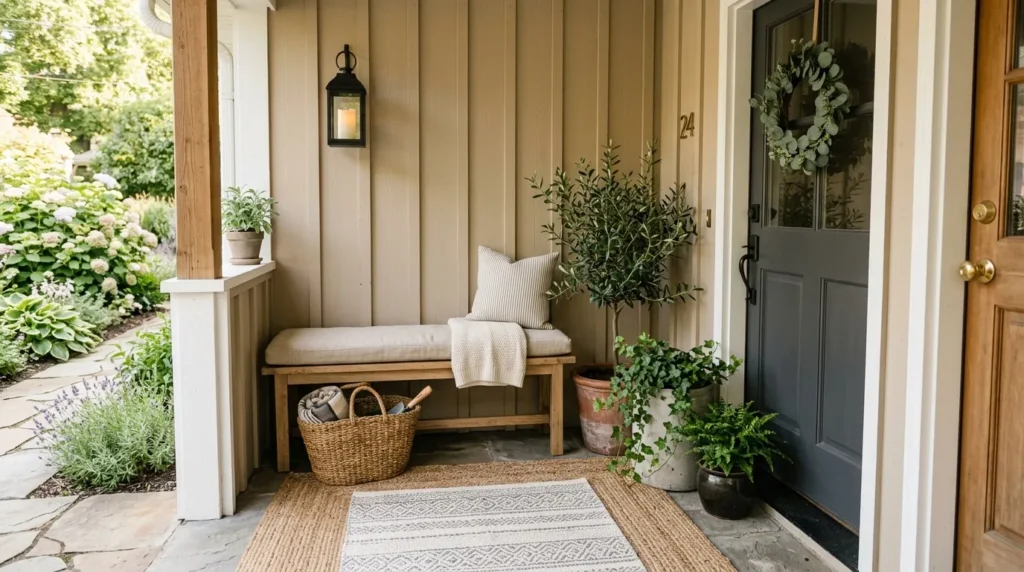
- Use a narrow bench for shoes, bags, or packages.
- Choose weather-resistant wood, metal, resin, or teak.
- Add a small outdoor cushion for comfort and style.
- Keep the bench slim so the walkway stays open.
A compact bench can turn a plain entry into a useful outdoor drop zone. Even a narrow bench gives you a place to set packages, tie shoes, rest groceries, or decorate with a small pillow. The trick is choosing a piece that fits the space without blocking the door swing or walkway. In my experience, benches with open legs feel lighter in tiny areas than bulky storage benches. Weather-resistant wood, powder-coated metal, teak, and resin are good options for outdoor use.
The bench also adds a welcoming, lived-in feeling that makes the home look more inviting from the sidewalk. Place it along a side wall, under a window, or beside the door if the layout allows. Add one outdoor cushion in a neutral or seasonal color, then style the corner with a lantern or small planter. If storage is needed, tuck a weather-safe basket underneath for garden gloves, dog leashes, or porch items. The entry becomes more practical without losing its clean, polished look.
7. Potted Greenery
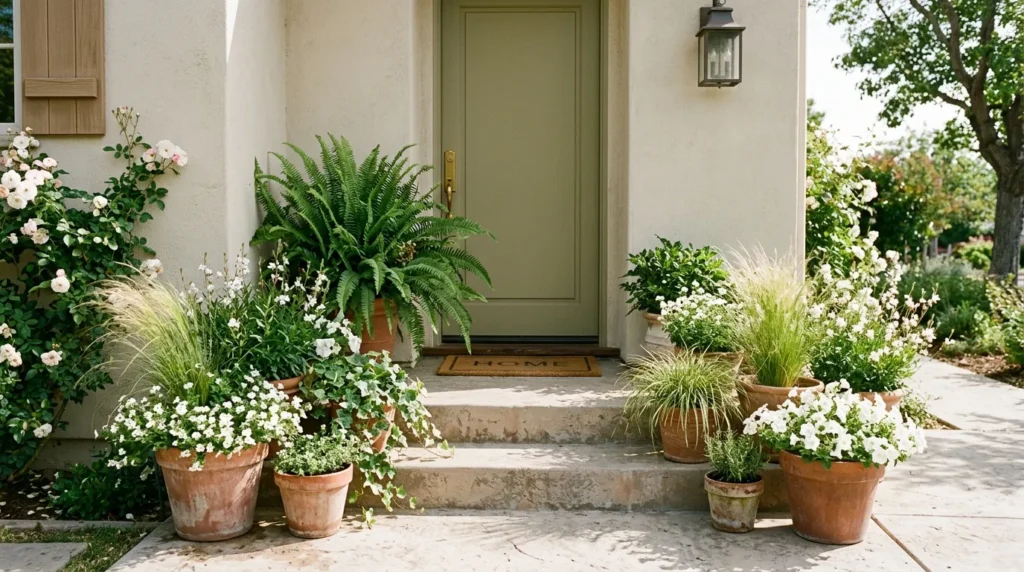
- Mix different plant heights for a natural layered look.
- Use low-maintenance plants suited to your climate.
- Combine greenery with flowers for seasonal color.
- Group pots in odd numbers for a relaxed designer feel.
Potted greenery softens the hard edges of steps, railings, siding, and concrete. It makes a small entrance feel fresh, cared for, and connected to the outdoors. You do not need a large porch to make plants work. Try one tall pot, one medium planter, and one small accent pot for a simple layered arrangement. I’ve noticed that odd-numbered plant groupings usually look more natural than perfectly even clusters. Choose plants based on your sun exposure so they stay healthy longer.
For sunny entries, consider lavender, rosemary, geraniums, petunias, or ornamental grasses. For shade, try ferns, hostas, caladiums, or impatiens. Use matching pots for a clean modern look, or mix terra cotta, black metal, and woven textures for a relaxed cottage feel. Add saucers carefully so water does not stain the porch surface. This idea improves curb appeal and makes the entrance feel alive, but it also gives you flexibility. You can refresh the plants by season without changing the whole setup.
8. Seasonal Lanterns
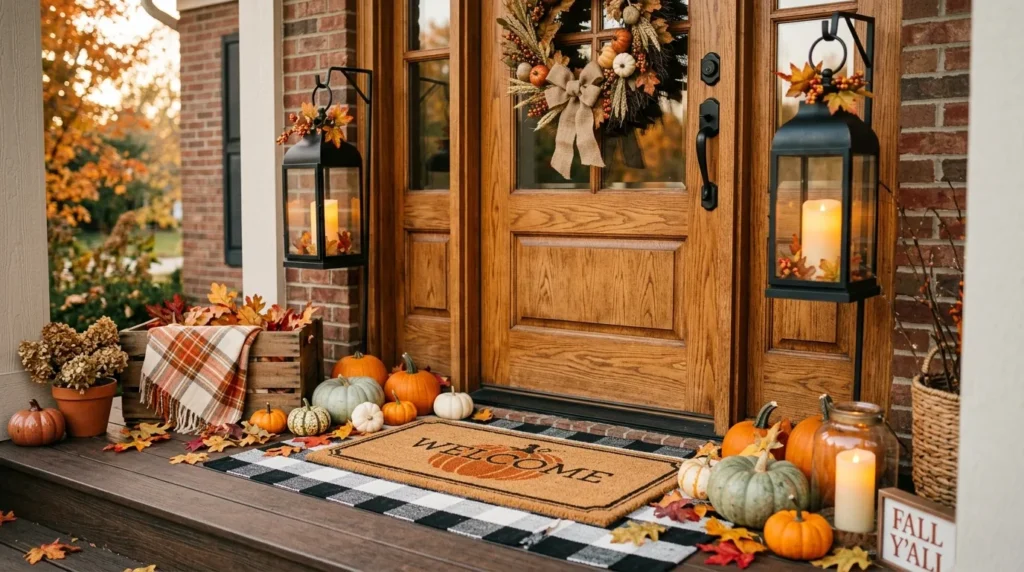
- Place outdoor lanterns beside the door, steps, or bench.
- Use battery candles for a safe evening glow.
- Mix metal, wood, glass, or woven lantern styles.
- Change fillers by season for a fresh look.
Seasonal lanterns add charm, light, and height without requiring a large porch. They work well beside a doormat, near a planter, on a step, or next to a compact bench. Use outdoor-safe lanterns with battery candles for a cozy glow that feels welcoming after sunset. Black metal lanterns look classic, while wood or woven styles feel warmer and more casual. That’s why many designers use lanterns to finish small exterior corners that otherwise look empty or flat.
The best thing about lanterns is how easy they are to update throughout the year. In fall, add mini pumpkins or dried leaves around the base. In winter, use pinecones, faux cedar, or simple white candles. In spring, pair them with soft flowers and fresh greenery. Keep the arrangement neat so it does not block steps or create a tripping hazard. With just one or two lanterns, the entry gets texture, mood, and a soft decorative layer that feels beautiful in photos and real life.
9. Painted Front Door
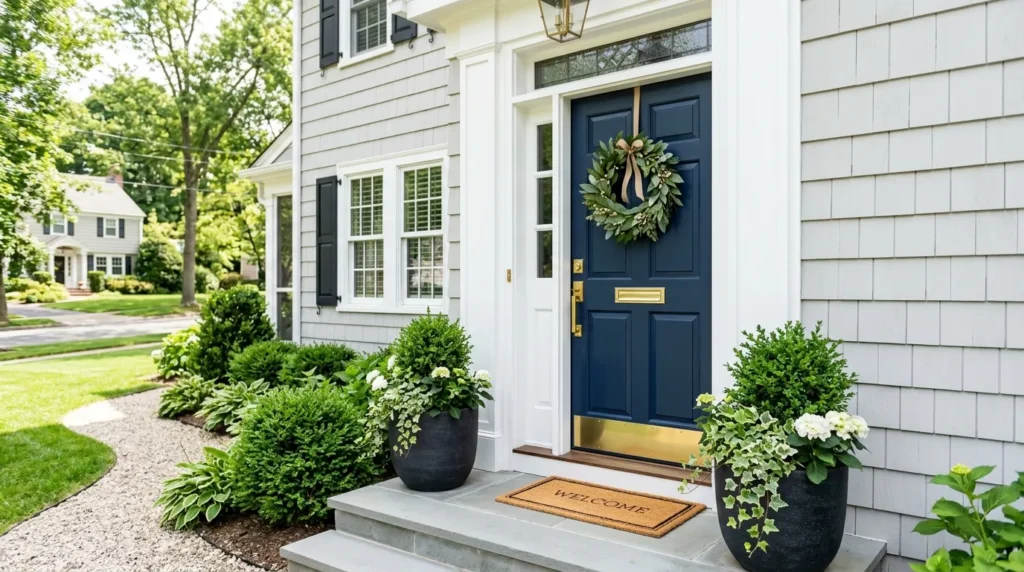
- Choose a door color that complements your exterior.
- Try black, navy, sage, red, charcoal, or warm white.
- Use exterior paint made for weather exposure.
- Add matching hardware for a more finished result.
A painted front door can completely change the personality of an entry. Color draws the eye, adds contrast, and makes even a simple exterior feel updated. Black and charcoal feel timeless, navy looks crisp, sage green feels calm, and deep red brings a traditional American charm. Before painting, check HOA rules, rental guidelines, or neighborhood requirements if they apply. When allowed, this upgrade gives a small entrance a strong focal point without adding extra furniture or decor.
Preparation is what makes the final result look professional. Clean the door, sand rough areas, tape hardware, and use exterior paint designed for changing weather. A satin or semi-gloss finish is usually easier to wipe clean than flat paint. If your hardware looks dated, consider replacing the handle, knocker, or lockset in a matching finish. The door will look more intentional, and every surrounding detail will feel more elevated. This is one of the highest-impact updates for a compact exterior entry.
10. Slim Storage
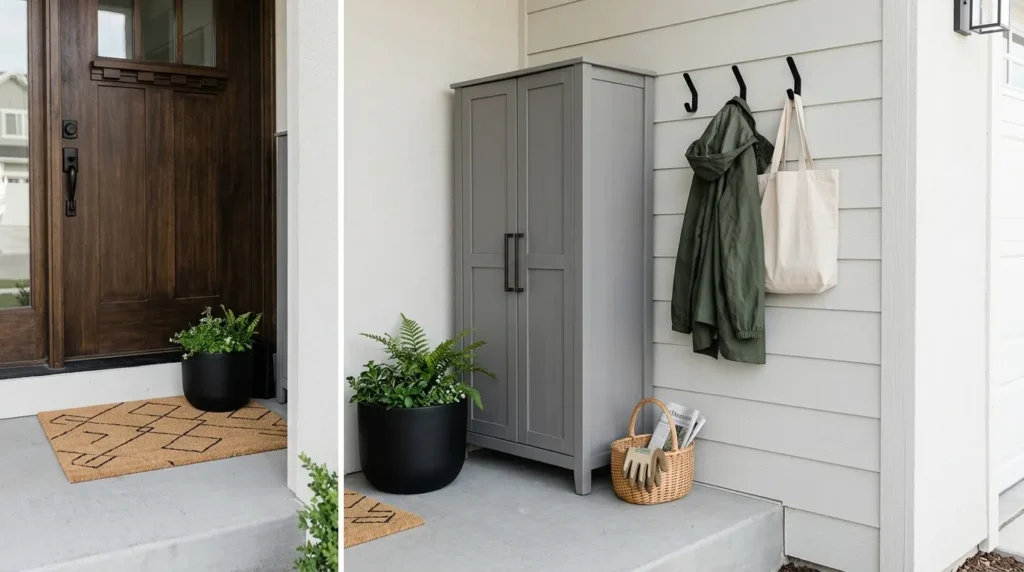
- Use narrow outdoor storage for shoes, tools, or packages.
- Choose weather-resistant cabinets, boxes, or baskets.
- Keep everyday items hidden but easy to reach.
- Match storage finishes with planters or furniture.
Slim storage helps a small entry stay beautiful and functional at the same time. Outdoor spaces often collect shoes, umbrellas, dog leashes, gardening tools, and delivery items, which can quickly make the entrance feel messy. A narrow storage cabinet, lidded box, wall-mounted basket, or small weather-safe bin can hide those items without crowding the walkway. In my experience, the most polished entries are not empty. They simply have smart places for the things people actually use every day.
Choose storage based on what your household needs most. If shoes pile up near the door, use a low bench with hidden storage or a slim outdoor shoe rack. If packages are the issue, try a lidded delivery box that blends with the exterior. If you need quick access to leashes or garden tools, use hooks inside a small wall cabinet. Keep materials durable, such as resin, treated wood, metal, or waterproof woven styles. The entry will feel cleaner, calmer, and easier to maintain.
11. Mini Sitting Corner
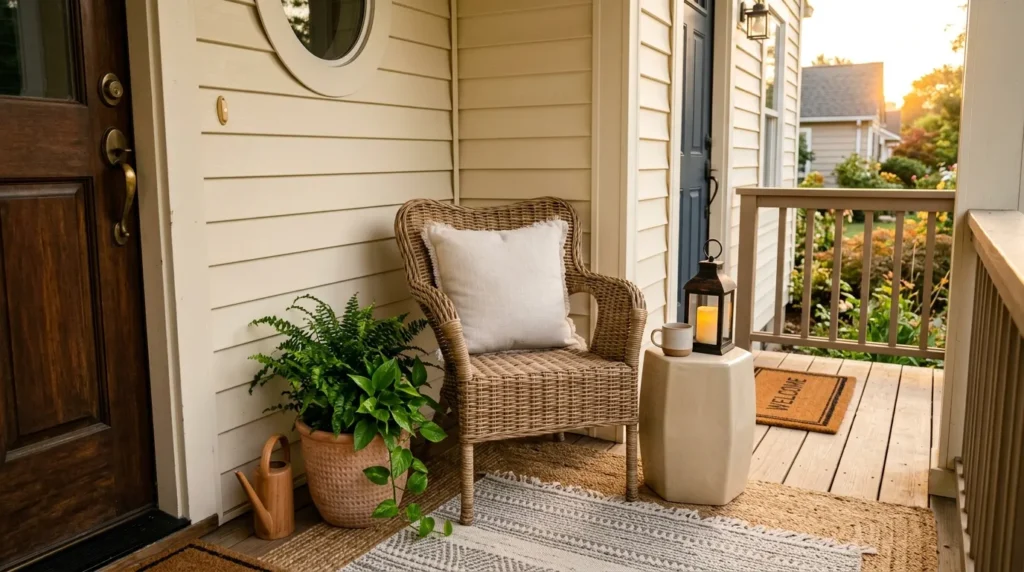
- Add one chair, one stool, or a tiny side table.
- Use outdoor-friendly cushions and washable fabrics.
- Keep furniture scaled to the size of the entry.
- Style with a plant, lantern, or small outdoor pillow.
A mini sitting corner makes a small entry feel warm, personal, and thoughtfully used. You do not need a full porch set to create the effect. One compact chair with a small stool or side table can be enough. This works especially well near a front window, side wall, or covered stoop. Choose weather-friendly materials like metal, wicker, resin, or treated wood. Add one cushion or pillow to bring softness, but keep the layout open so people can still move comfortably.
This idea gives the entry a cozy lifestyle feeling while still staying practical. It becomes a place to enjoy coffee, wait for a ride, watch kids play outside, or simply add charm to the home’s exterior. If the space is very tight, use a garden stool instead of a table. Add a small planter beside the chair and a lantern near the base for balance. The result feels relaxed, welcoming, and Pinterest-ready without making the entrance feel crowded or overdecorated.