Top 10 Inspirations: Do Garden Balcony Ideas
Introduction
A small outdoor space can still feel generous when every plant, container, and corner has a clear purpose. Across the USA, renters, condo owners, and busy homeowners are using balconies as mini retreats because they want greenery without a full backyard. A Garden Balcony can bring fresh herbs, flowers, privacy, seasonal color, and a calmer daily routine into a limited footprint. This guide gives you practical inspiration that looks beautiful on Pinterest but still works in real homes, with simple layout ideas, material suggestions, care logic, and styling tips you can actually use. Instead of filling the space randomly, you will learn how to shape it into a small outdoor area that feels balanced, useful, and easy to maintain.
1. Compact Herb Corner
- Adds everyday cooking value to a small outdoor area without needing a full backyard
- Works well near a kitchen door, sunny railing, or narrow apartment wall
- Brings fragrance, color, and fresh texture into daily routines
- Uses small pots, shelves, baskets, or rolling carts for flexible styling
- Helps beginners start with easy container plants that feel useful quickly
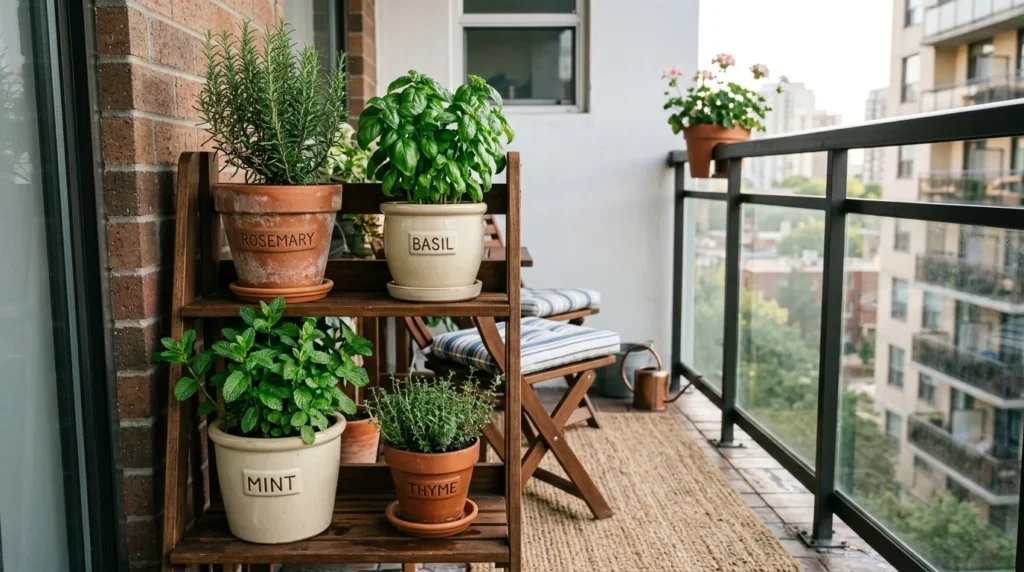
A compact herb corner turns a plain balcony into a fresh, useful extension of the kitchen. Start with herbs you already cook with, such as basil, mint, thyme, rosemary, parsley, and chives. They are small enough for containers, fragrant enough to improve the mood, and practical enough to use several times a week. In my experience, this idea works best near the balcony door because it makes harvesting easy. Choose terracotta for dry-loving herbs, glazed pots for moisture-loving herbs, and a narrow shelf if floor space is limited for beginners.
The finished setup feels charming because it adds life without creating clutter. Keep mint in its own container, place rosemary where it gets strong light, and group softer herbs where they are easier to water. A small tray, plant labels, and matching pots can make the corner look intentional instead of messy. This arrangement works especially well for apartment dwellers who want beauty and function in one place. Over time, the balcony becomes part of daily cooking, weekend brunches, homemade drinks, and small relaxing routines after work in every season.
2. Layered Pot Display
- Creates depth using different plant heights, pot sizes, and foliage textures
- Makes a small balcony feel fuller, styled, and more visually balanced
- Works with terracotta, ceramic, resin, concrete, or lightweight fiberglass pots
- Helps organize flowers, greenery, herbs, and statement plants in one corner
- Adds strong Pinterest appeal without major renovation or expensive furniture
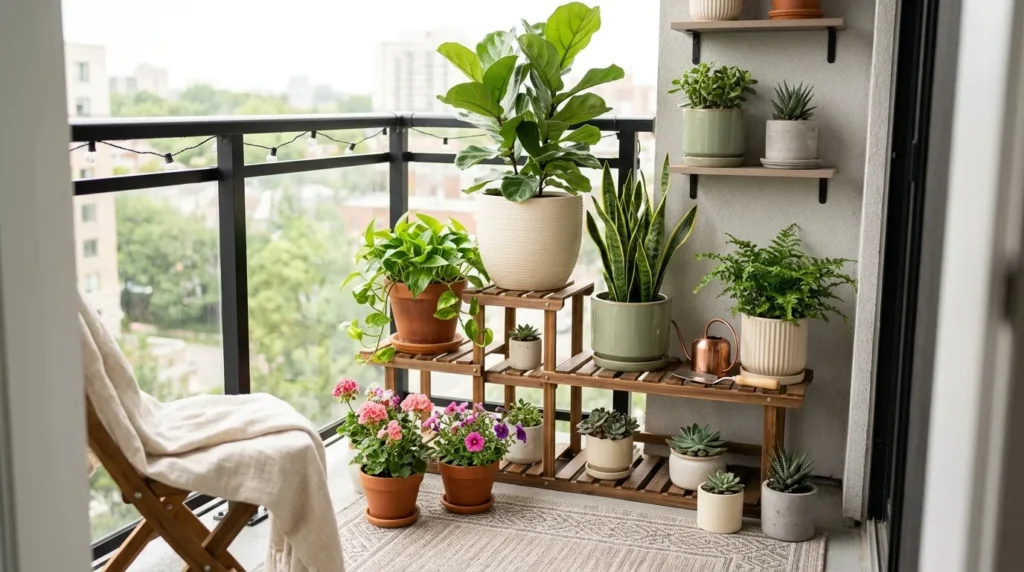
Layered pots can make even a narrow balcony look designed, not just decorated. The key is to avoid placing every container in one flat line. Use one tall anchor plant, two medium containers, and several smaller pots to create a natural rise and fall. I’ve noticed that mixed heights instantly make small spaces feel more expensive because the eye has different levels to follow. Choose pots in related colors, such as cream, clay, charcoal, or sage, so the plants remain the main visual feature throughout the arrangement for daily enjoyment.
This setup works because it adds depth while keeping the layout flexible. Put the tallest plant in a back corner, medium pots beside seating, and low flowers or herbs near the front. Use plant stands when you need height but do not want extra containers. For renters, lightweight resin or fiberglass pots are easier to move, while terracotta brings a warmer handmade feel. The result is a fuller balcony that still feels organized, walkable, and easy to refresh whenever the weather or your personal style changes through spring and summer.
3. Vertical Green Wall
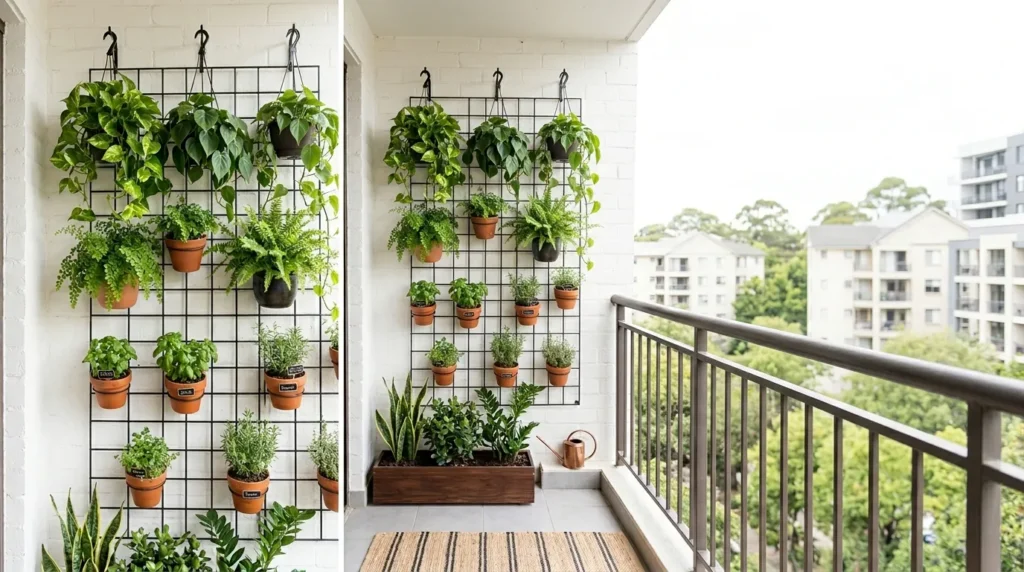
- Saves floor space on narrow balconies while adding a lush focal point
- Turns a plain wall into a practical visual feature for plants
- Works with wall grids, pocket planters, ladder shelves, or rail systems
- Adds height, texture, and soft greenery around seating areas
- Creates a strong backdrop for photos, dining corners, or reading nooks
A vertical green wall is one of the smartest ways to add plants when floor space is limited. Instead of crowding the balcony with containers, use the wall, railing, or a narrow freestanding shelf to build upward. Pocket planters, metal grids, wooden ladders, and modular wall pots all work well depending on building rules. That’s why many designers recommend vertical planting for apartments and condos. It creates a lush backdrop while leaving room for a chair, side table, or walking path in the center without feeling crowded or visually heavy.
The best vertical displays are easy to reach and simple to water. Place thirsty plants at shoulder height, trailing plants near the upper edges, and heavier pots near the bottom for stability. Pothos, ferns, succulents, herbs, and compact flowering plants can all work when matched with the right light. Add a drip tray, waterproof backing, or removable liners if the wall needs protection. With the right setup, a blank surface becomes a living feature that looks beautiful from inside the home and feels calming outside even during busy weekdays at home.
4. Railing Flower Boxes
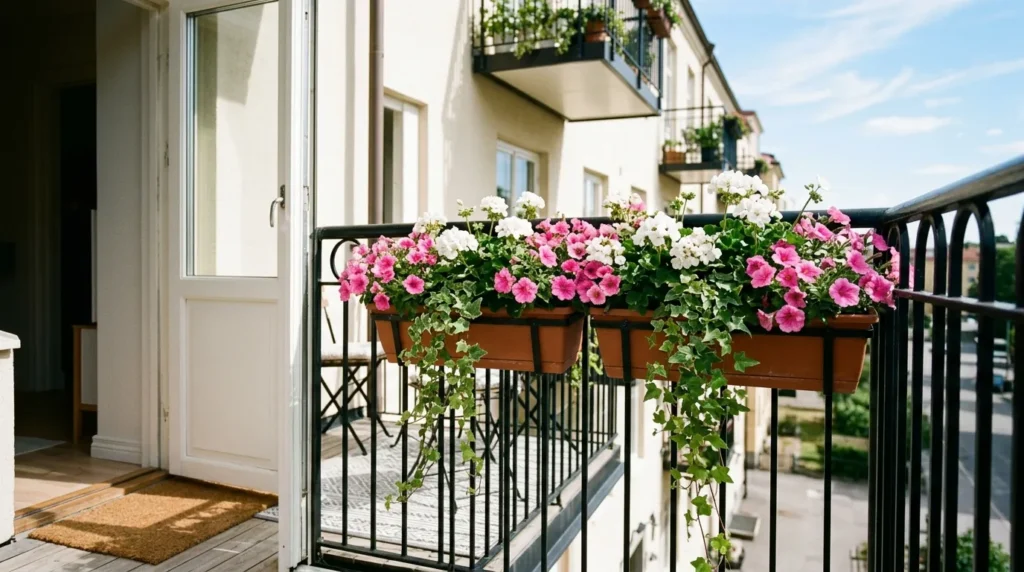
- Adds color without using valuable balcony floor space or blocking movement
- Softens metal, wood, glass, or concrete railings with seasonal blooms
- Looks beautiful from inside the home, especially near living room doors
- Works with flowers, trailing greenery, compact herbs, and ornamental grasses
- Creates a polished border around the balcony with very little furniture
Railing flower boxes bring instant charm because they place color exactly where the eye naturally looks. They are perfect for balconies with limited floor area, especially in apartments where every inch matters. Use secure railing planters that match your railing width, and always check weight after adding soil and water. Petunias, geraniums, calibrachoa, pansies, begonias, and trailing vines are popular choices in many USA climates. For a clean look, repeat the same planter style along the railing instead of mixing too many unrelated containers and look neat from the street.
The transformation feels immediate because the balcony gains a soft, colorful edge. Choose one main flower color and one supporting foliage texture for a designer-style arrangement. Self-watering boxes are helpful during hot weeks, especially for west-facing spaces that dry quickly. Keep the planters accessible for deadheading, trimming, and watering so maintenance stays realistic. From the living room, the railing begins to look like a framed outdoor view rather than an empty barrier. This small upgrade can make the whole space feel brighter, friendlier, and more finished through every warm month.
5. Cozy Seating Nook
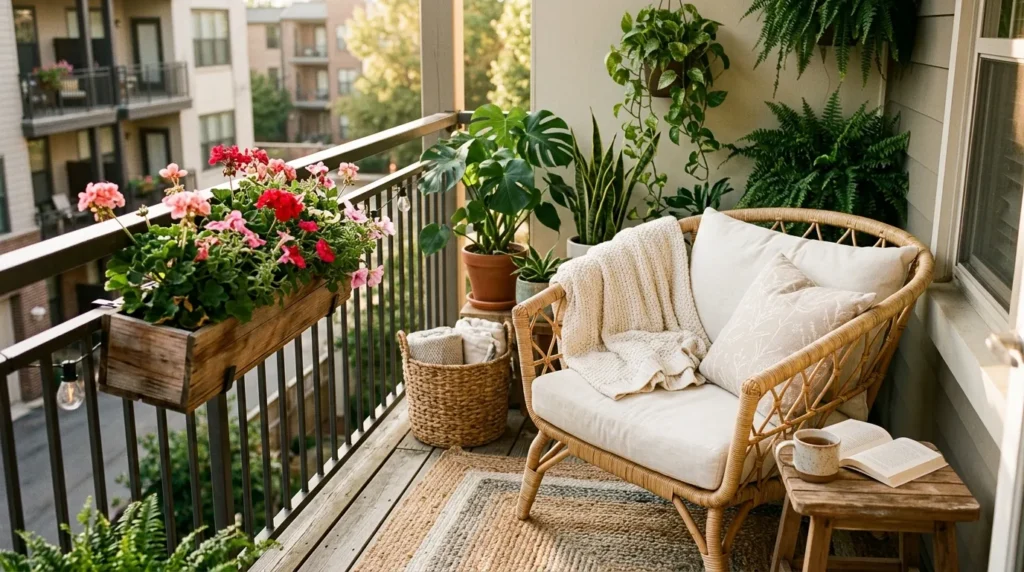
- Makes the balcony useful for relaxing, reading, or enjoying morning coffee
- Combines plants with practical furniture instead of separating the design
- Works with one chair, a storage bench, or a small bistro set
- Adds comfort through outdoor cushions, rugs, throws, and side tables
- Turns greenery into a complete outdoor experience for everyday living
A seating nook gives the balcony a real purpose beyond holding plants. Choose one comfortable chair, a slim bench, or a foldable bistro set based on the size of the space. Then build the plant layout around that seating area instead of adding furniture as an afterthought. I’ve seen this work well in many homes because it creates a clear destination for coffee, reading, or evening rest. Add a small side table, outdoor cushion, and one larger plant nearby to make the spot feel grounded without making the layout feel crowded.
Plants make the seating area feel more private, softer, and visually complete. Place leafy containers behind the chair, flowers along the railing, and a small herb or succulent pot on the table. Use weather-resistant cushions and an outdoor rug that can handle moisture and sun exposure. If the balcony is very narrow, choose foldable furniture that can be stored when needed. The result is a practical outdoor corner that invites daily use, not just occasional decorating. It becomes a small room with fresh air and greenery during warm mornings and evenings.
Remaining 5 Ideas
6. Privacy Plant Screen
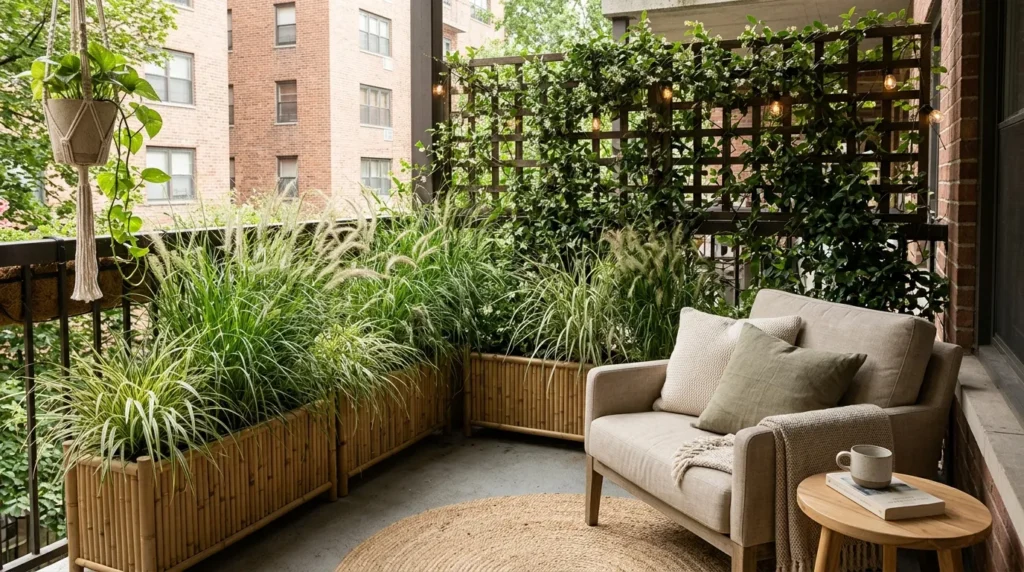
- Makes close apartment views feel softer, greener, and less distracting
- Works with tall grasses, bamboo, vines, trellises, or dwarf evergreens
- Adds greenery without fully blocking light, air, or the outdoor view
- Creates a calmer sitting, dining, or journaling area for daily use
- Helps the balcony feel more personal, comfortable, and thoughtfully styled
A plant-based privacy screen can make a balcony feel more peaceful without making it feel closed in. Tall grasses, bamboo in containers, climbing vines, dwarf evergreens, and trellised plants can soften nearby windows, buildings, or busy streets. This idea works especially well for city apartments and condos where outdoor areas often face neighbors. Choose deep, stable containers because tall plants need support in wind. Natural screening also looks warmer than plastic panels and blends beautifully with seating, rugs, and simple outdoor décor while still keeping the balcony breathable and bright.
Build the screen only where privacy is needed most, not around the entire balcony. This keeps light and air moving while still improving comfort. Place taller plants near one side railing, use a trellis behind a chair, or add climbing vines in a corner that receives enough sun. In shaded spaces, try palms, ferns, or large leafy plants instead of flowering vines. The result is a more usable balcony where phone calls, morning coffee, reading, and evening relaxation feel easier because the space feels gently protected during everyday use too.
7. Edible Plant Zone
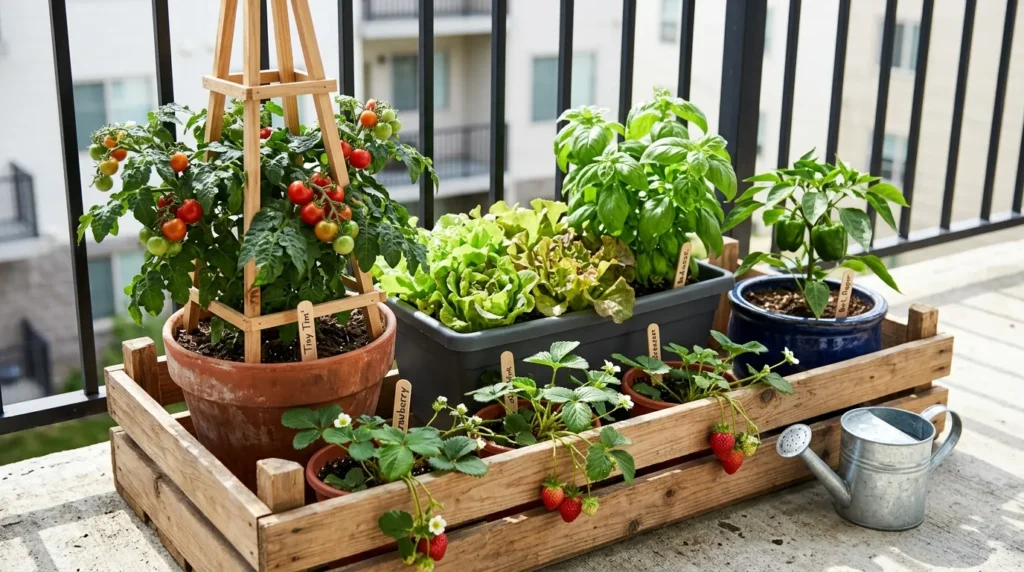
- Grows useful food in small containers without needing raised garden beds
- Works with herbs, tomatoes, lettuce, peppers, strawberries, and scallions
- Adds beauty while supporting everyday meals, snacks, and drinks
- Encourages a simple gardening routine that feels rewarding quickly
- Great for sunny balconies, beginner gardeners, and small households
An edible plant zone makes a balcony feel productive as well as beautiful. Start with compact crops that perform well in containers, such as cherry tomatoes, lettuce, basil, peppers, scallions, strawberries, and parsley. Sunny balconies are best for fruiting plants, while leafy greens can tolerate gentler light. Use food-safe containers, quality potting mix, and drainage holes to keep plants healthy. For beginners, it is better to grow three reliable crops than crowd the space with too many plants that need different care or feeling discouraged during the first growing season.
The most satisfying part is being able to harvest something small but useful from your own outdoor space. Place tomatoes or peppers near the brightest area, keep lettuce in a cooler spot, and position herbs close to the door for quick clipping. A compact trellis helps plants grow upward instead of spreading across the floor. Regular harvesting keeps growth tidy and encourages new leaves or fruit. This setup adds flavor to meals, color to the balcony, and a simple sense of accomplishment through the growing season from early summer through fall.
8. Seasonal Bloom Plan
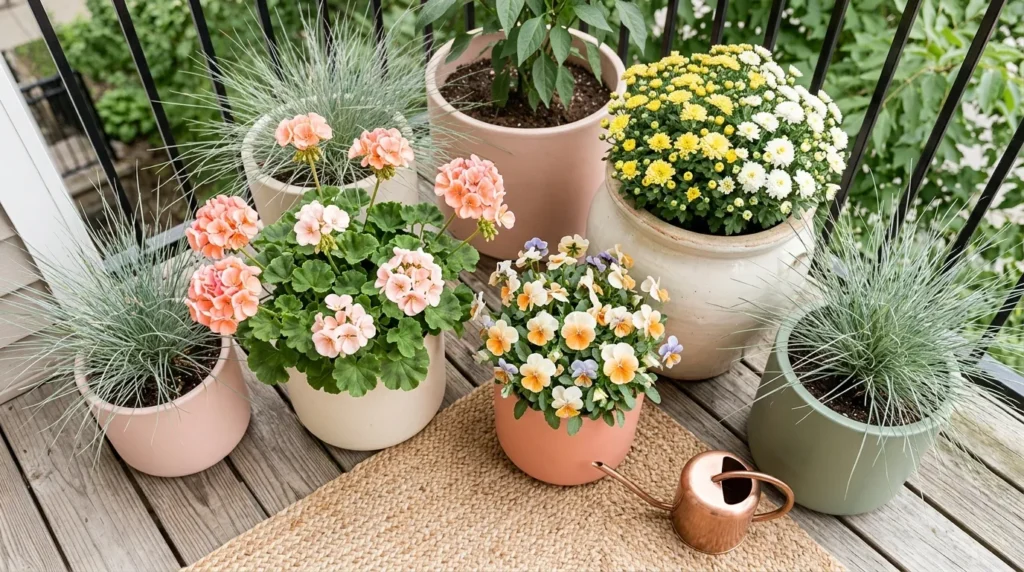
- Keeps the balcony fresh throughout the year with small updates
- Uses flowers and foliage that match each season and local climate
- Makes refreshes affordable by keeping the same main containers
- Works with existing pots, simple color themes, and reusable décor
- Adds strong visual appeal for Pinterest-style content and home photos
A seasonal bloom plan keeps the balcony from looking tired after one planting cycle. Instead of expecting every plant to last all year, build a foundation of reliable greenery, then swap smaller flower pots as the weather changes. Spring can feature pansies, snapdragons, tulips, and ranunculus. Summer works well with lantana, petunias, zinnias, geraniums, and marigolds. Fall can bring mums, ornamental kale, and warm grasses. This approach keeps the space visually fresh without forcing a complete redesign every few months or overspending on new décor, especially for renters on a budget.
Use color themes to make seasonal changes look intentional. Soft blush, cream, and sage feel calm and modern, while coral, yellow, and purple create a brighter summer mood. Keep larger containers neutral so they work with many flower palettes. In colder USA regions, use evergreen branches, decorative stems, or hardy planters during winter months. The balcony stays interesting because each season brings a small refresh. This is also helpful for content creators because the same space can produce new Pinterest visuals with only a few thoughtful updates without buying a full new setup.
9. Simple Care Routine
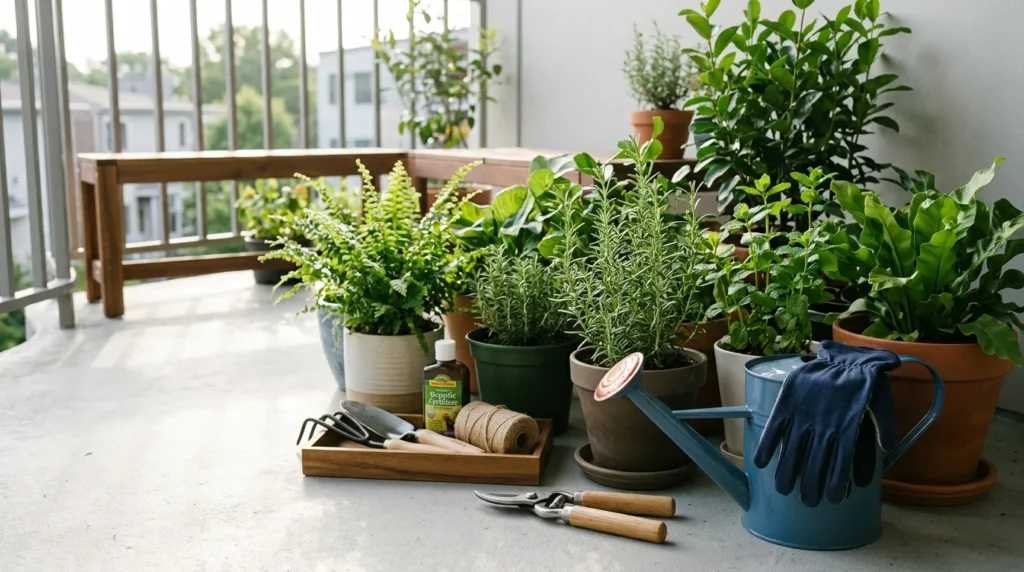
- Prevents overwatering and underwatering mistakes that damage container plants
- Helps plants stay healthier through heat, wind, shade, and seasonal changes
- Makes balcony gardening easier for busy people with limited time
- Works with grouped plants, simple tools, and weekly maintenance checks
- Keeps the outdoor area tidy, attractive, and stress-free for everyday use
A simple care routine is what keeps a beautiful balcony from becoming overwhelming. Container plants dry faster than garden beds, especially on sunny, windy, or high-rise balconies. Check soil with your finger before watering instead of following a fixed calendar. Morning watering usually works best because plants absorb moisture before the strongest heat arrives. In my experience, grouping plants by water needs makes care much easier. Keep dry-loving herbs together, moisture-loving flowers together, and shade plants in their own easy-to-check area through heat waves, windy days, and changing seasons outside.
The right tools also make maintenance feel manageable. A lightweight watering can, small pruners, plant food, gloves, and a compact tray are enough for most balcony gardeners. Remove yellow leaves weekly, trim spent flowers, and rotate pots if one side receives stronger light. Use saucers carefully, but empty standing water to avoid mosquitoes and root issues. A tidy routine protects the design you worked hard to create. It also makes the space more enjoyable because plant care becomes a small relaxing habit instead of a stressful chore all season long.
10. Evening Light Layers
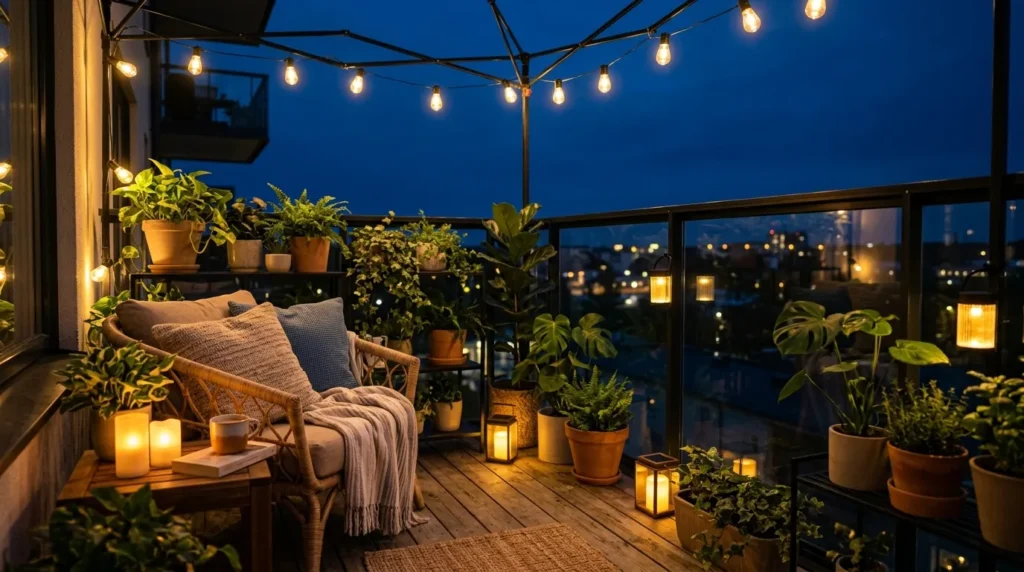
- Makes plants look beautiful after sunset with warm visual depth
- Creates a cozy mood for relaxing outdoors after work or dinner
- Works with string lights, lanterns, solar stakes, and LED candles
- Highlights texture, foliage, flowers, seating, and decorative containers
- Helps the balcony feel like a finished outdoor room at night
Evening lighting can make balcony plants look magical without requiring a major renovation. Use outdoor-rated string lights, solar lanterns, LED candles, or rechargeable table lamps to create a warm layered glow. Warm white light usually feels softer than bright cool light, especially around foliage and neutral furniture. Wrap lights along the railing, place lanterns near larger pots, or tuck solar stakes into container groupings. This simple styling layer makes the balcony more usable after sunset and helps plants remain part of the view at night without taking up extra floor space.
Good lighting also makes the entire outdoor space feel more finished. A lantern near a chair creates a reading corner, while string lights above plants form a cozy frame. Avoid harsh bulbs, overloaded cords, and indoor-only products that are not safe outside. Renters can use battery or solar options without permanent installation. When the glow reflects on leaves, ceramic pots, glass tables, and woven textures, the balcony feels calm and welcoming. It becomes a small evening retreat for quiet dinners, conversations, or restful moments after work throughout the entire warm season.