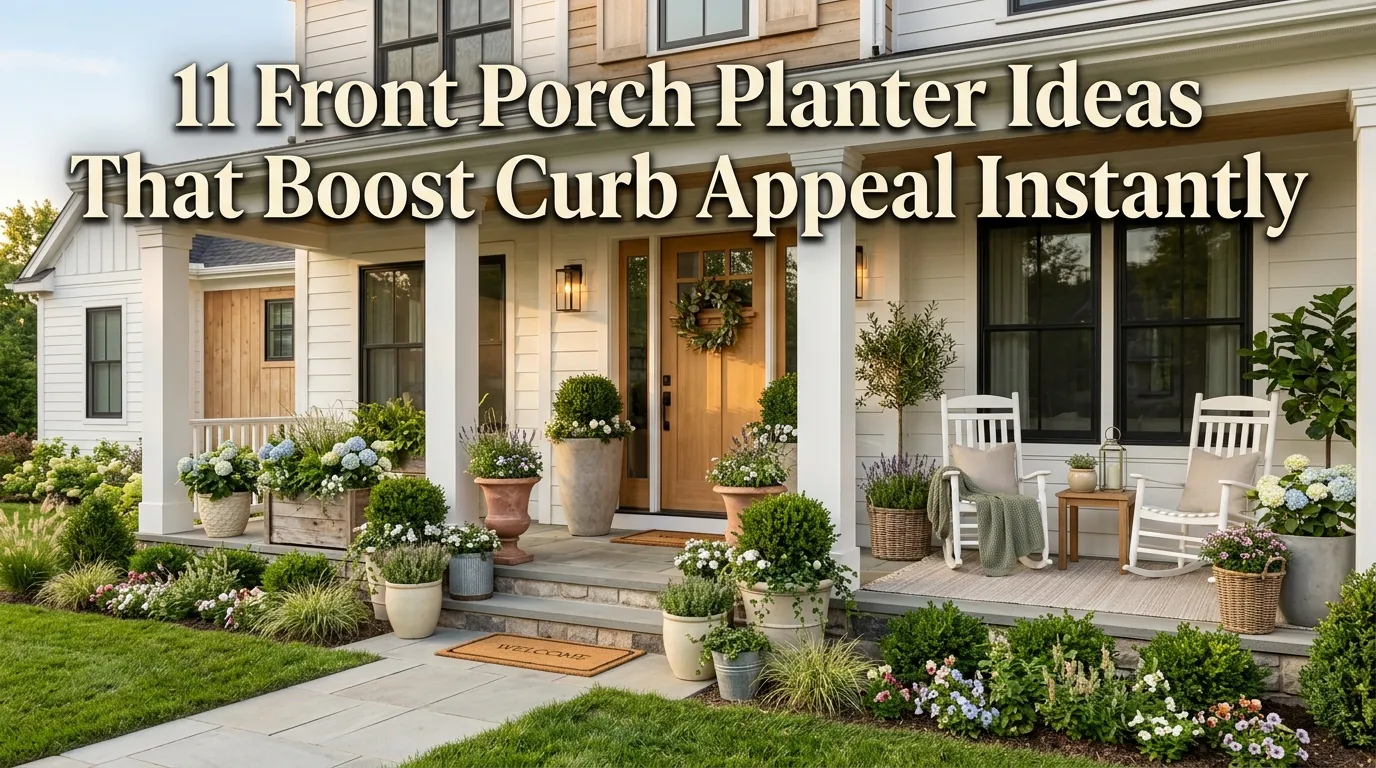
11 Front Porch Planter Ideas That Boost Curb Appeal Instantly
There’s a reason real estate agents talk so much about curb appeal — the front porch is the first thing anyone sees, and in my experience, planters do more heavy lifting for that first impression than almost any other single detail. A tired, empty porch can make even a beautifully maintained home feel unfinished, while the right planters can make a modest entryway feel warm and intentional within a single afternoon.
If you’re anything like me, you’ve probably stood at your front door at some point and felt like something was missing, without being able to pinpoint exactly what. More often than not, that “something” is scale and color at the entry — a pair of well-proportioned planters flanking the door, or a layered arrangement that catches the eye before a visitor even reaches the steps.
A mistake many homeowners make is choosing planters based on what’s available at the garden center that week, rather than thinking about proportion, color consistency, and seasonal change. That’s why many designers recommend planning a porch planter scheme the way you’d plan any other design element — with a clear color palette, a sense of scale relative to the doorway, and a plan for how it will look in more than one season.
I’ve noticed that the porches people save most often on Pinterest share a few common traits: consistent planter materials, a restrained color palette instead of a rainbow of mismatched blooms, and thoughtful placement that draws the eye toward the front door rather than competing with it.
In this guide, I’m walking through eleven front porch planter ideas that work across different home styles, budgets, and climates — from classic symmetrical urns to relaxed, layered container gardens. Each idea includes real styling guidance, not just inspiration, so you can picture exactly how to bring it to your own entryway.
Table of Contents
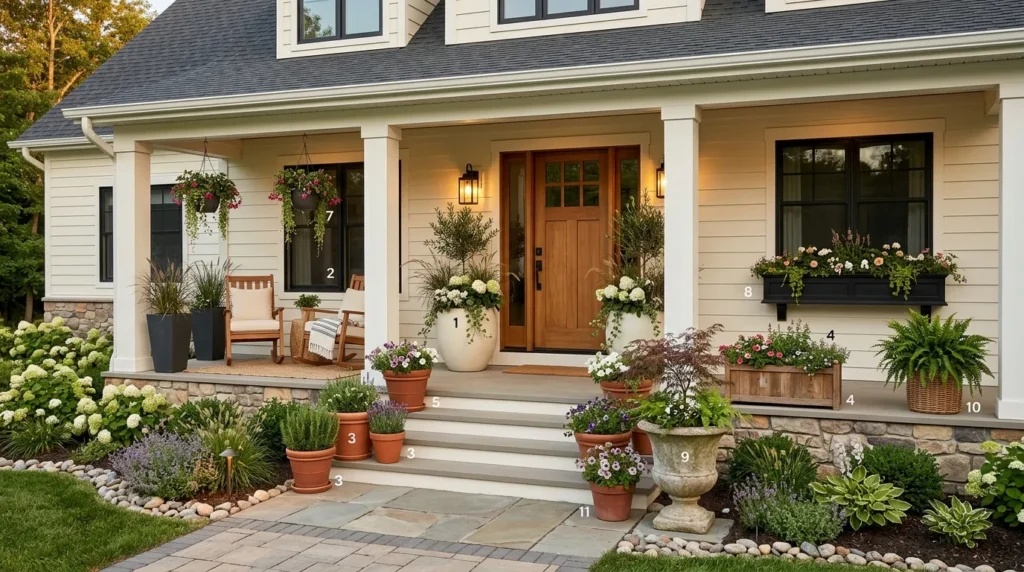
- Symmetrical Urn Pair A classic, balanced look anchoring either side of the front door.
- Layered Container Garden A mixed-height arrangement built for texture and depth.
- Seasonal Rotation Planters A flexible scheme that changes with the calendar.
- Modern Concrete Planters A clean, minimalist option for contemporary homes.
- Vintage Galvanized Planters A rustic, farmhouse-friendly container style.
- Hanging Planter Combo An overhead layer that adds vertical color.
- Wide Rectangular Window Box Planters A grounded option for porches with railings or ledges.
- Tiered Plant Stand Display A vertical arrangement for small porch footprints.
- Monochromatic Bloom Scheme A polished, color-coordinated planting style.
- Evergreen Structural Planters A low-maintenance, year-round green option.
- Cottage-Style Mixed Planters A relaxed, romantic arrangement full of texture.
1. Symmetrical Urn Pair
Quick Benefits
- Creates instant visual balance
- Works on nearly every home style
- Draws the eye directly to the front door
- Easy to replicate and maintain
- Classic look that never feels dated
Why It Works
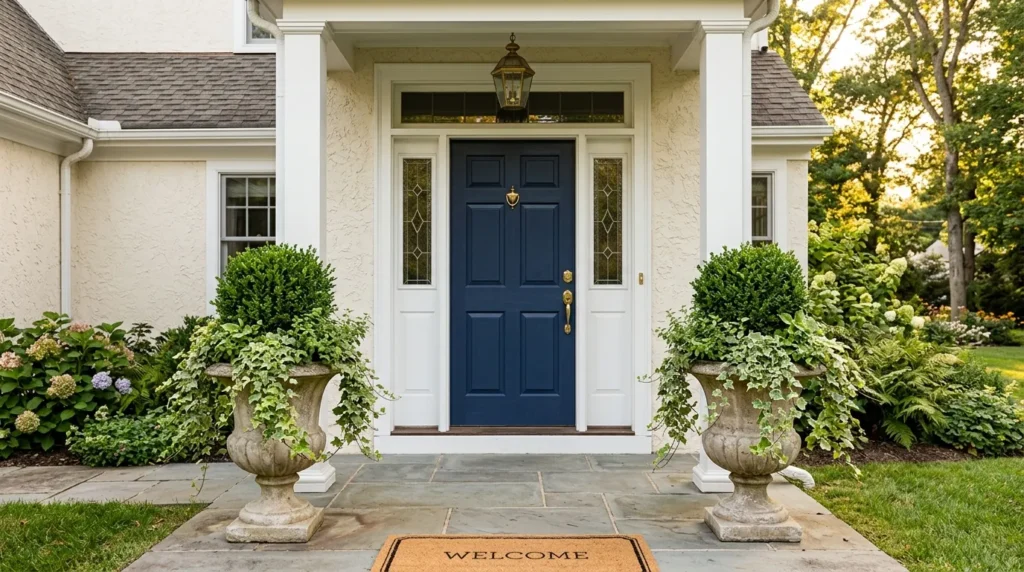
A matching pair of urns flanking the front door is one of the most reliable front porch planter ideas because symmetry reads as intentional design, even to someone who’s never thought about landscaping in their life. In my experience, this is the single easiest upgrade for homeowners who want a polished look without overthinking the arrangement — two identical planters automatically frame the entryway and pull the eye exactly where you want it to go. It’s a formula that works on colonial, craftsman, traditional, and even some modern homes, which is part of why it remains such a popular choice.
How To Style It
Choose urns in a material and finish that complements your door color and trim — cast stone, fiberglass, or glazed ceramic are all popular choices. Fill each with a simple, upright centerpiece plant like boxwood, a small evergreen, or a spike plant, surrounded by a low, spilling filler such as sweet potato vine or trailing ivy. One simple trick I always suggest is keeping both planters identical in size, plant selection, and color — even small inconsistencies between the two sides undercut the symmetry that makes this look work in the first place.
2. Layered Container Garden
Quick Benefits
- Adds depth and visual interest
- Works well in wider porch spaces
- Extends bloom season across varieties
- Highly photogenic for Pinterest
- Flexible for different budgets
Why It Works
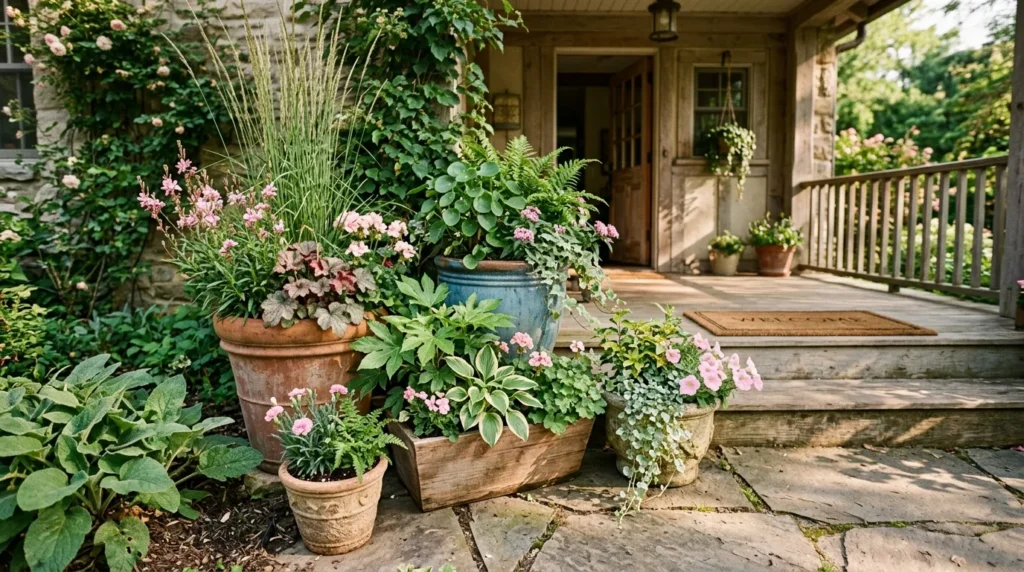
A layered container garden takes the classic “thriller, filler, spiller” planting formula and applies it across multiple pots of varying heights, creating a fuller, more dimensional look than a single planter can achieve alone. I’ve seen this idea transform flat, one-note porches into arrangements that look like they belong in a magazine spread, simply by varying pot height and plant texture. That’s why many designers recommend this approach for wider porches or homes with a deep entry landing, where a single planter pair can feel a little lost in the space.
How To Style It
Group three to five planters of varying heights near the entry, using a tall upright plant in the back or center pot, medium mounding plants in the middle-height containers, and trailing varieties in the shortest pots. Stick to a cohesive color palette across all containers — mixing too many pot styles and plant colors at once is the fastest way to make a layered arrangement feel cluttered instead of curated. Group odd numbers of planters together for the most natural-looking arrangement, and leave a little breathing room between groupings rather than crowding them all together.
3. Seasonal Rotation Planters
Quick Benefits
- Keeps the porch fresh year-round
- Signals seasonal changes to guests
- Extends usability beyond a single bloom cycle
- Budget-friendly with smaller plant swaps
- Highly shareable seasonal content
Why It Works
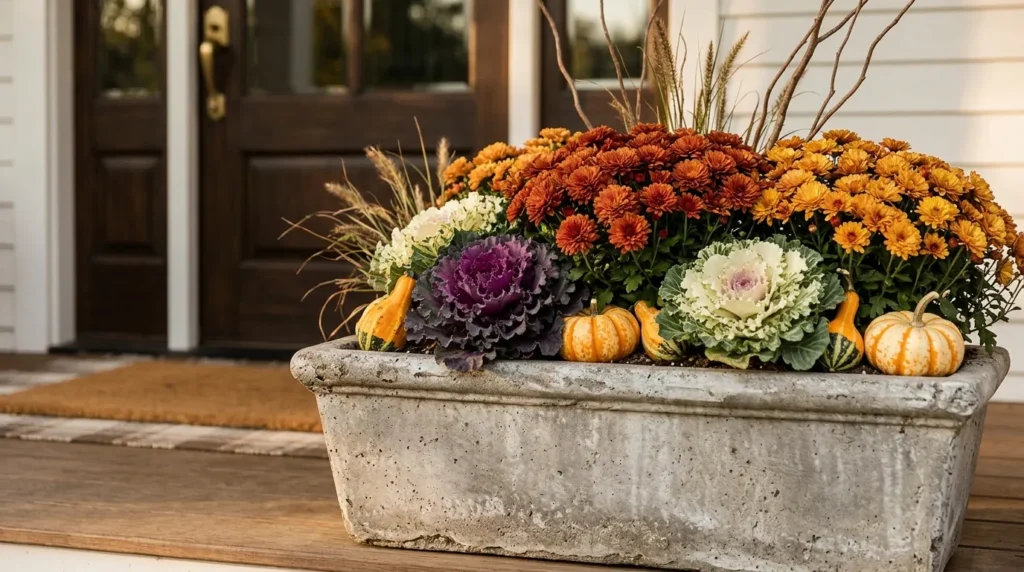
Seasonal rotation planters solve the biggest complaint people have about container gardening: the letdown when a beautiful summer arrangement fades and the porch sits empty or wilted for months at a time. One thing that works especially well is keeping the planter itself — the material, size, and color — consistent year-round, and only swapping the plants and accents seasonally. That’s why many designers recommend investing in a higher-quality, neutral planter upfront, since it becomes the reliable base for every seasonal refresh going forward rather than something you replace each time.
How To Style It
In spring, fill planters with tulips, pansies, or daffodils in soft pastel tones. Summer calls for heat-tolerant options like geraniums, petunias, or lantana in bolder colors. For fall, swap in mums, ornamental kale, and small pumpkins or gourds tucked into the soil. Winter planters can rely on evergreen clippings, red twig dogwood branches, and pinecones for texture without needing live blooms at all. A mistake many homeowners make is over-planting each seasonal refresh — a few well-chosen elements usually look more polished than an overstuffed pot.
4. Modern Concrete Planters
Quick Benefits
- Sleek, minimalist aesthetic
- Extremely durable in most climates
- Pairs well with contemporary architecture
- Low visual clutter
- Available in a range of geometric shapes
Why It Works
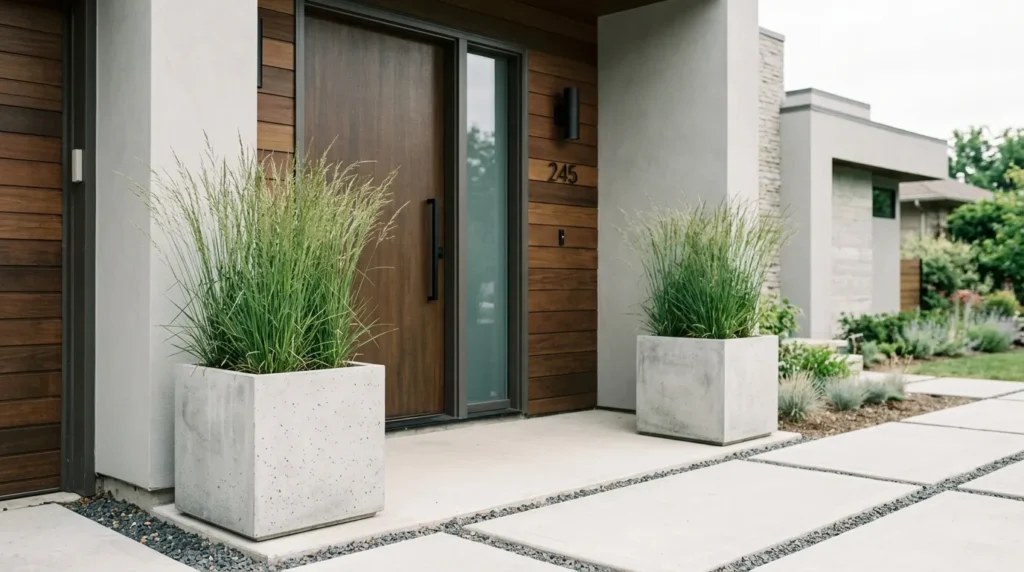
Concrete planters have become a go-to choice for modern and transitional homes because the material itself reads as intentional and architectural, letting the plants provide the softness and color instead of a decorative pot competing for attention. In my experience, this pairing — a stark, geometric planter with loose, textural greenery spilling out — is one of the most visually satisfying contrasts in porch styling, which explains why it performs so well on Pinterest boards focused on modern curb appeal.
How To Style It
Choose a light gray or warm taupe concrete planter in a square or rectangular shape, and keep the plant selection simple — one or two varieties per pot rather than a busy mix. Ornamental grasses, upright junipers, or a single sculptural succulent all pair beautifully with the clean lines of concrete. Keep the surrounding porch decor minimal to let the planters read as a design statement rather than one element among many. This style works especially well flanking a solid or glass front door with simple, unfussy trim.
5. Vintage Galvanized Planters
Quick Benefits
- Rustic, farmhouse-appropriate look
- Budget-friendly and widely available
- Lightweight and easy to move
- Pairs well with wood and brick exteriors
- Ages with character over time
Why It Works
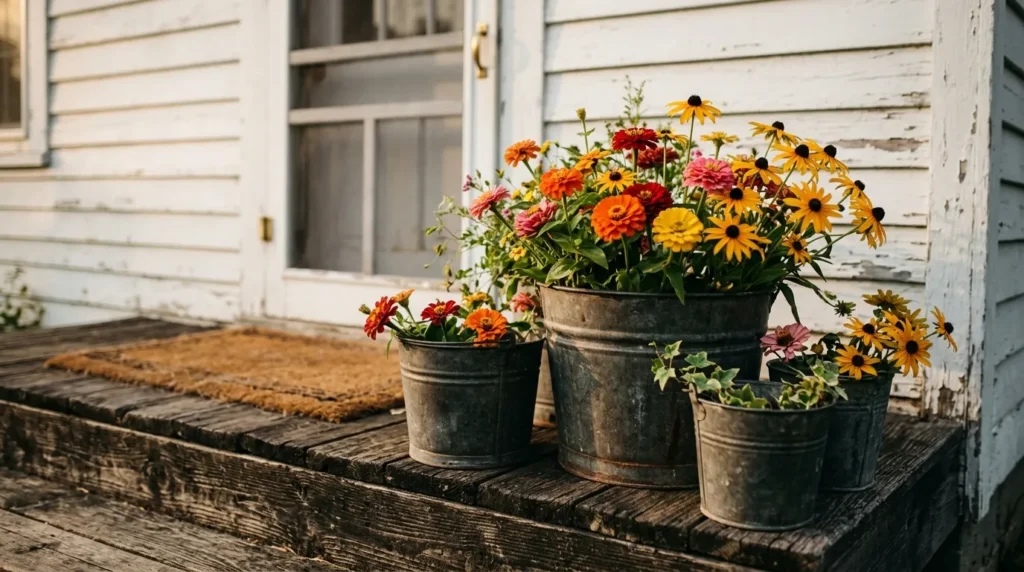
Galvanized metal planters have become a farmhouse porch staple because of their easy, unpretentious charm — they look equally at home holding a tidy row of herbs or an overflowing mix of wildflowers. A mistake many homeowners make is assuming galvanized containers only work with a full farmhouse exterior, but in reality, the warm metallic finish pairs just as well with brick, painted siding, or natural wood trim. I’ve noticed these planters photograph particularly well in natural light, which is part of why they show up so often in porch styling content.
How To Style It
Use galvanized buckets, troughs, or repurposed washtubs in varying sizes, and fill them with a relaxed mix of cottage garden flowers like zinnias, black-eyed Susans, or marigolds. Drill drainage holes in the bottom before planting if the container doesn’t already have them. Group a few different sizes together near the steps or door for a collected, gathered-over-time look rather than lining them up too formally, which can undercut the casual charm that makes this style work.
6. Hanging Planter Combo
Quick Benefits
- Adds height without taking up floor space
- Works well on porches with overhangs
- Pairs nicely with ground-level planters
- Ideal for small entryways
- Adds movement and softness overhead
Why It Works
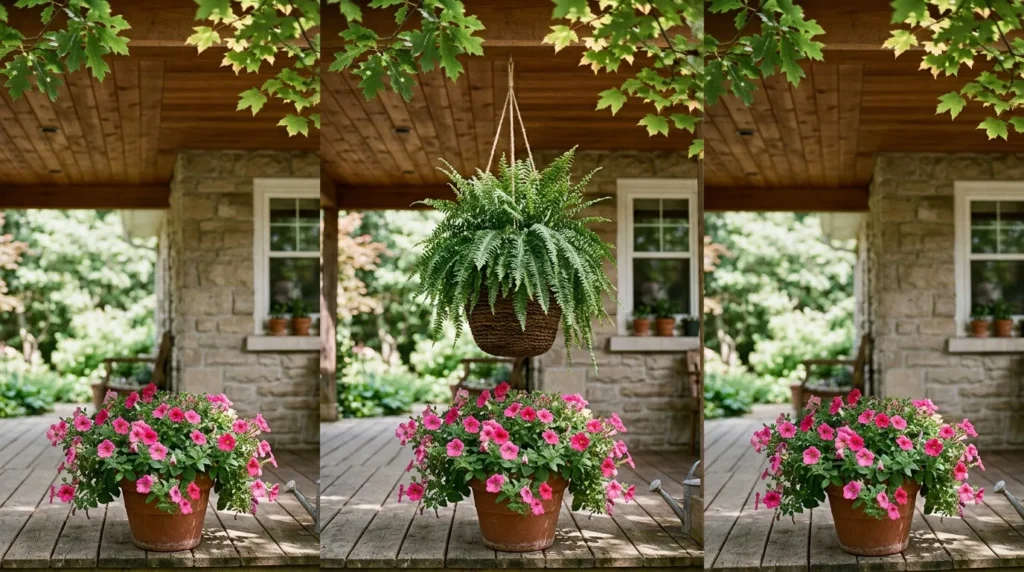
Hanging planters add a layer of greenery at eye level and above, which is especially valuable on smaller porches where floor space for large containers is limited. One simple trick I always suggest is pairing hanging baskets with ground-level planters rather than using either alone — the combination creates a fuller, more finished look by filling both the upper and lower portions of the entryway. I’ve seen this idea transform narrow, cramped porches into spaces that feel intentionally layered rather than tight on room.
How To Style It
Hang baskets from porch overhangs or install a decorative bracket if there’s no existing hook. Choose trailing plants like Boston fern, trailing petunias, or fuchsia for a soft, cascading effect, and coordinate the hanging basket’s bloom color with whatever is planted in the ground-level containers below. Keep hanging planters at a height where they won’t interfere with foot traffic or block the view of the front door from the street. This idea works especially well on covered porches, since most hanging plants prefer some protection from direct, intense sun and heavy rain.
7. Wide Rectangular Window Box Planters
Quick Benefits
- Grounds a porch railing or ledge
- Adds continuous color along a horizontal line
- Works on porches without much floor space
- Complements window box styling for a cohesive look
- Easy to mount and remove seasonally
Why It Works
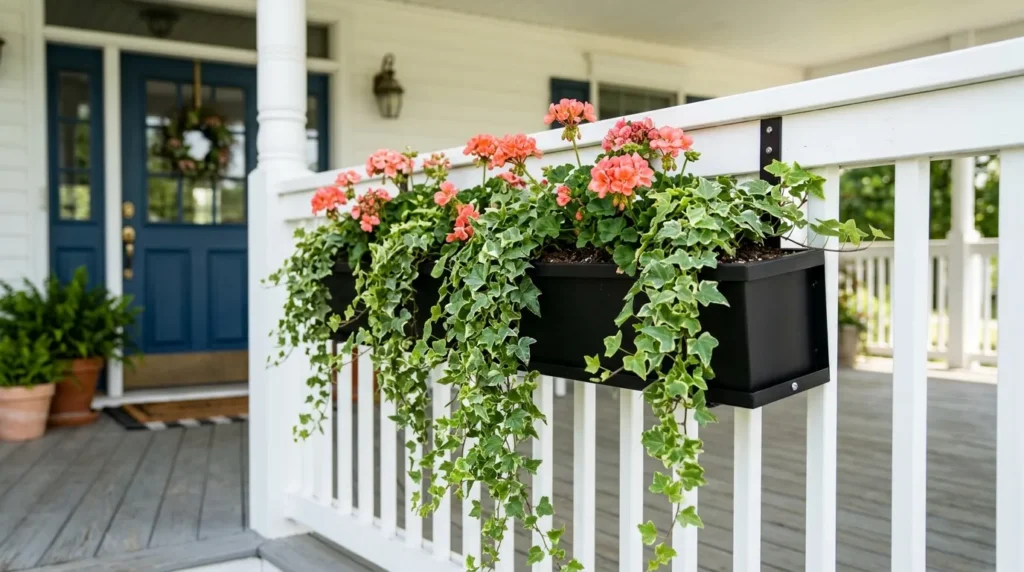
Wide rectangular planters mounted along a porch railing or ledge create a continuous line of color that ties the whole entry together, rather than relying on isolated pots scattered around. That’s why many designers recommend this option for porches with existing railings, since the planter uses space that would otherwise go unused. It’s also a particularly good fit for homes that already have window boxes elsewhere on the facade, since matching the porch railing planters to those boxes creates a cohesive, whole-house design moment.
How To Style It
Choose a planter box in a material that matches your railing — painted wood, PVC composite, or black metal are all common choices — and secure it with brackets rated for outdoor use. Fill with a mix of upright and trailing plants, keeping the trailing varieties generous enough to soften the hard edge of the railing itself. Coordinate the box color with your shutters or door for a pulled-together look. A mistake many homeowners make is under-filling these boxes — because they’re viewed from a distance more often than up close, a fuller, denser planting reads much better than a sparse one.
8. Tiered Plant Stand Display
Quick Benefits
- Maximizes a small porch footprint
- Adds vertical visual interest
- Easy to rearrange and refresh
- Works well with a mix of plant types
- Budget-friendly compared to large planters
Why It Works
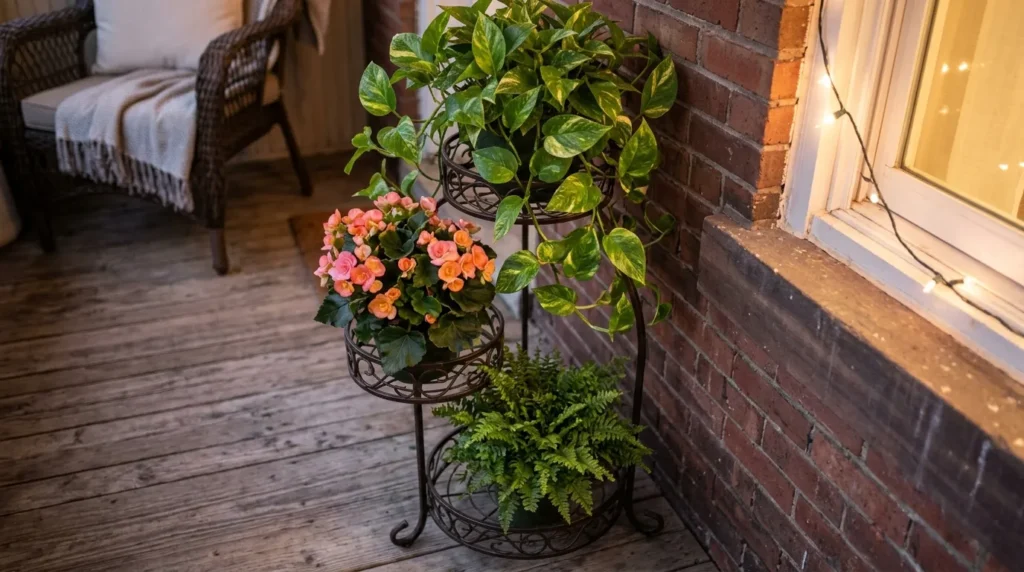
A tiered plant stand solves the classic small-porch problem: wanting a lush, layered look without the floor space that multiple large planters require. I’ve noticed this is one of the most practical front porch planter ideas for apartment entries, townhomes, and porches with limited square footage, since the vertical structure does the work that spreading pots across the floor would otherwise require. It also makes for an easy, low-commitment way to experiment with plant combinations, since individual pots can be swapped out without disturbing the whole display.
How To Style It
Choose a wood, metal, or wrought iron plant stand with three to four tiers, and vary the plant types across levels rather than repeating the same variety on every shelf. Trailing plants look best on the top tier where they can cascade down, while more compact, mounding plants suit the lower levels. Place the stand to one side of the entry rather than directly in the walking path, and keep the surrounding area simple so the display doesn’t feel crowded. This idea pairs particularly well with a small porch that doesn’t have room for a full symmetrical arrangement.
9. Monochromatic Bloom Scheme
Quick Benefits
- Polished, coordinated aesthetic
- Easier to style than mixed-color arrangements
- Makes a small porch feel more sophisticated
- Works with nearly any planter material
- Highly cohesive with home exterior colors
Why It Works
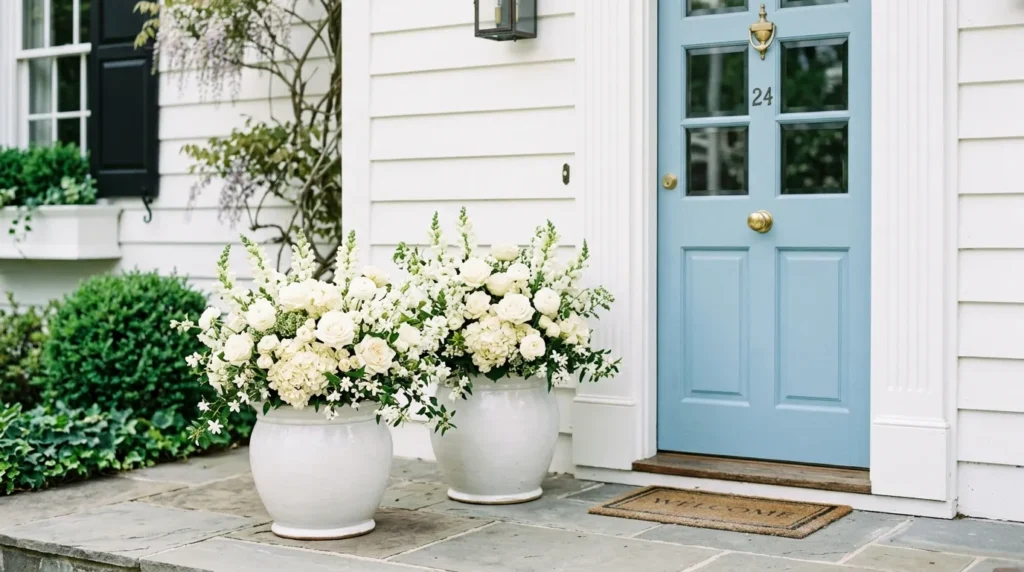
A monochromatic bloom scheme — sticking to a single color family across all porch planters — is one of the easiest ways to make an entryway feel curated rather than accidental. In my experience, homeowners who struggle to make their porch “look right” are often mixing too many competing bloom colors rather than committing to a restrained palette. That’s why many designers recommend choosing one or two colors max and building the entire scheme around them; the result reads as far more intentional than a wider mix, even with the exact same number of plants.
How To Style It
Pick a single color family — soft whites, warm corals, or deep purples all work well — and select every bloom, from the tallest centerpiece plant to the smallest filler, within that range. Vary the shades slightly for depth rather than using one flat tone throughout, and let foliage color provide contrast instead of introducing additional bloom colors. This scheme works especially well for homeowners who want their porch to coordinate with their front door color, since matching the blooms to the door creates an even more pulled-together look.
10. Evergreen Structural Planters
Quick Benefits
- Provides year-round greenery
- Extremely low maintenance
- Works in nearly every climate
- No seasonal replanting required
- Adds structure without demanding upkeep
Why It Works
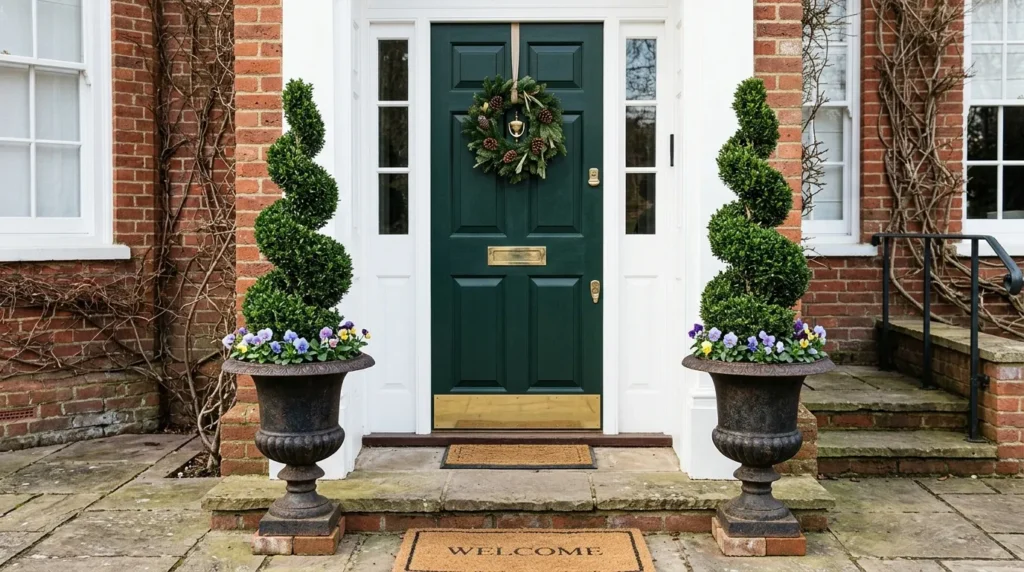
Evergreen structural planters are the answer for homeowners who want their porch to look put-together without the ongoing maintenance that seasonal blooms require. A mistake many homeowners make is assuming a planter has to be full of flowers to look finished — a well-chosen evergreen, like a dwarf boxwood or small conifer, provides structure and color twelve months a year with minimal watering or upkeep. This idea works particularly well as a low-maintenance base layer, which can then be paired with small seasonal accents for color without requiring a full seasonal overhaul each time.
How To Style It
Choose compact evergreen varieties suited to container growing, such as dwarf boxwood, dwarf Alberta spruce, or boxwood topiary spirals, and plant in a substantial pot that won’t tip easily in wind. Add a thin layer of seasonal color around the base — small pansies in spring, mini pumpkins in fall — without disturbing the evergreen centerpiece itself. This approach is ideal for homeowners who travel often or simply want a porch that still looks good without constant attention, and it pairs beautifully with the symmetrical urn pair idea above for a formal, tailored entry.
11. Cottage-Style Mixed Planters
Quick Benefits
- Warm, relaxed, romantic aesthetic
- Highly personalized look
- Great for cottage and traditional homes
- Encourages a “collected over time” feel
- Budget-flexible depending on plant selection
Why It Works
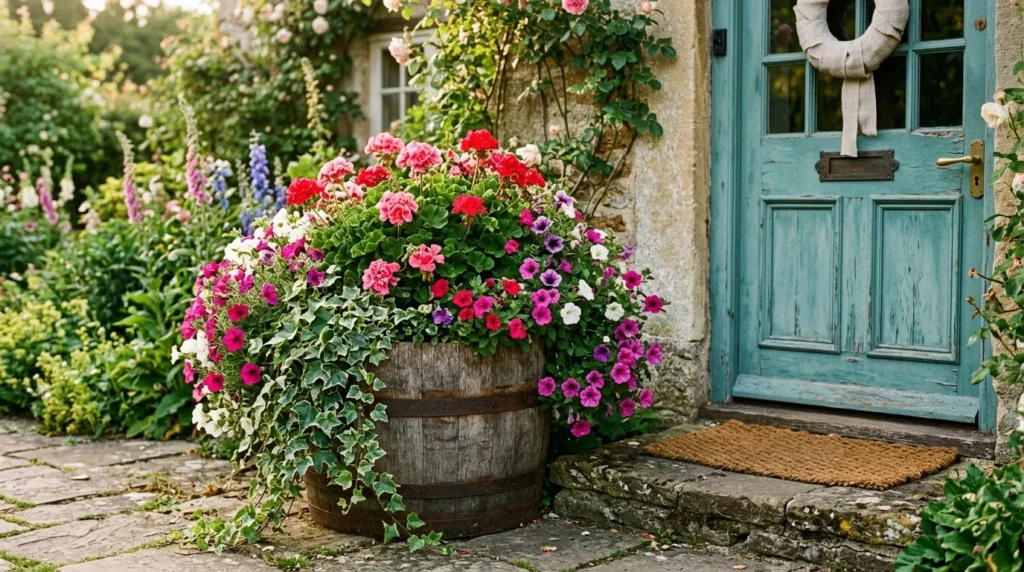
Cottage-style mixed planters lean into abundance rather than restraint, layering different textures, heights, and bloom types into a single generous arrangement. I’ve seen this idea transform plain, builder-grade porches into spaces that feel like they’ve been lovingly tended for years, even when the whole arrangement was planted in a single afternoon. One thing that works especially well is embracing a slightly imperfect, overflowing look rather than a tightly controlled one — the charm of this style comes from its relaxed abundance.
How To Style It
Fill large planters or half whiskey barrels with a generous mix of cottage garden favorites — geraniums, petunias, sweet alyssum, and trailing ivy all work well together. Don’t worry about strict color coordination the way you would with a monochromatic scheme; a slightly varied palette actually supports the relaxed, gathered look this style is going for. Add a few unexpected textural elements, like ornamental grasses or trailing herbs, for extra dimension. This idea pairs beautifully with vintage galvanized containers or terracotta pots for an authentic, lived-in cottage feel.
Frequently Asked Questions
What size planters work best for a front porch? For most standard front doors, planters between 16–24 inches in diameter or width strike the right proportion — large enough to feel substantial, but not so big they overwhelm a smaller entry. Wider porches can handle taller, larger containers.
What flowers last the longest in front porch planters? Heat-tolerant options like geraniums, lantana, and vinca tend to bloom the longest through summer with minimal deadheading, while pansies and violas are reliable long-bloomers in cooler months. Evergreen structural plants provide color year-round with no bloom cycle at all.
How often should porch planters be watered? Most porch planters need watering every one to three days in warm weather, depending on pot size, material, and sun exposure, since containers dry out faster than in-ground beds. Terracotta pots in particular dry out more quickly than plastic or glazed ceramic.
Should front porch planters match on both sides of the door? Matching planters on either side of the door creates a classic, symmetrical look that works well on traditional homes, though an asymmetrical arrangement can look intentional and modern if styled consistently. The key is a cohesive plan either way, not necessarily an identical one.
What’s the best low-maintenance front porch planter idea? Evergreen structural planters require the least ongoing care, since they don’t need seasonal replanting or frequent deadheading the way flowering annuals do. A drought-tolerant succulent arrangement is another strong low-maintenance option in warmer climates.
Can front porch planters be left out over winter? Concrete, fiberglass, and metal planters generally handle winter well, though the material should be checked for freeze-thaw durability in colder climates. Terracotta is more prone to cracking in freezing temperatures and is often better brought indoors or emptied for winter.
How do I choose a front porch planter color scheme? A good starting point is pulling one or two accent colors already present on the home — the door, shutters, or trim — and building the bloom palette around those tones. This creates a cohesive look that feels connected to the house rather than added on separately.
Final Thoughts
A front porch doesn’t need an elaborate landscaping budget to feel welcoming — often it just takes a thoughtful planter arrangement that considers scale, color, and the season ahead. Whether you’re drawn to the polished symmetry of matching urns or the relaxed abundance of a cottage-style mix, the goal is the same: an entry that feels considered the moment someone walks up.
Start with one or two ideas and gradually build a look that reflects your style and supports easy, ongoing upkeep. Even a single well-styled pair of planters can change how the whole front of a home feels — long before anyone reaches the door.
Related Articles
- Small Front Yard Landscaping Ideas
- Modern Front Door Color Ideas
- Farmhouse Porch Decor Inspiration
- Seasonal Wreath Ideas for Every Month
- Cozy Backyard Seating Ideas for Small Spaces