
11 Best Color Options for a Bedroom Ideas
Bedroom color has a bigger effect than most people expect. It changes how the room feels in the morning, how restful it feels at night, how your bedding looks, and even how expensive your furniture appears. For USA homes, apartments, guest rooms, and small bedrooms, the right palette can make a basic space feel calm, fresh, warm, moody, romantic, or polished without a full remodel.
Current 2026 bedroom and interior color coverage is leaning toward warm neutrals, muted greens, powder blues, earthy mauves, burgundy, terracotta, chocolate, and layered natural tones rather than flat gray or cold white rooms. Designers are also favoring richer, more expressive bedroom palettes that still feel restful and livable.
Below are 11 bedroom color ideas that work well for real homes. Each one includes styling tips, materials, furniture pairings, and practical design logic so the room feels beautiful on Pinterest and comfortable in everyday life.
1. Warm Beige
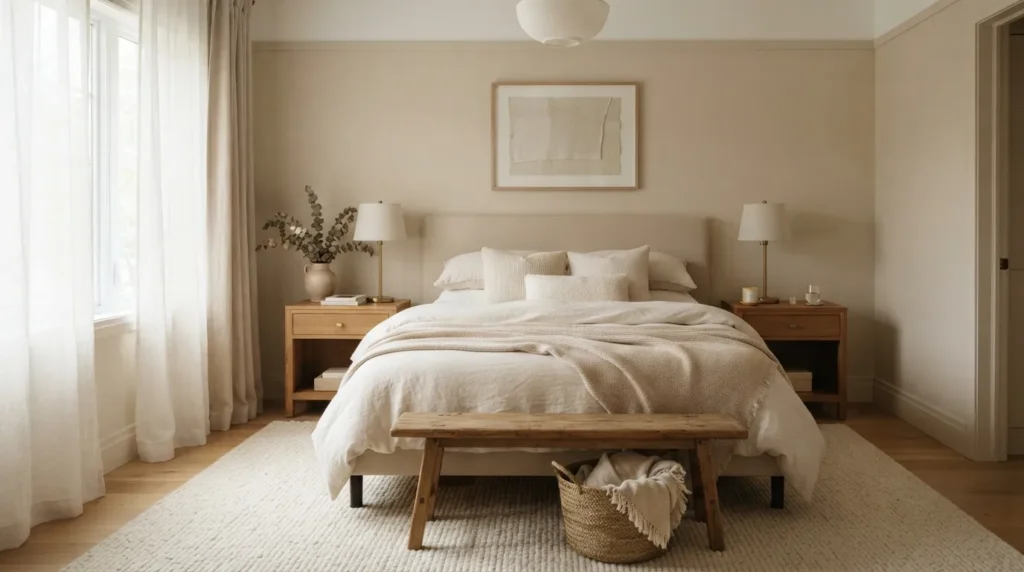
- Creates a soft, calm bedroom base
- Works with white, cream, taupe, oak, walnut, and brass
- Looks beautiful with linen bedding and textured rugs
- Helps small bedrooms feel open without looking cold
- Easy to refresh with seasonal pillows and artwork
Warm beige makes a bedroom feel calm without leaving the room looking plain or unfinished. Unlike cold gray or bright white, beige has a softer undertone that works beautifully with natural morning light and warm evening lamps. In my experience, beige bedrooms look strongest when the shade has depth, such as oatmeal, sand, mushroom, or light taupe. These tones make bedding, wood furniture, and soft textures feel more connected while keeping the space bright enough for small rooms.
To style warm beige well, avoid using only one flat tone across everything. Mix cream sheets, oatmeal curtains, a jute or wool rug, wood nightstands, and brass or ceramic lamps. Add contrast through black picture frames, walnut furniture, or deeper brown pillows if the room needs structure. Warm beige is also renter-friendly because you can bring it in through textiles instead of paint. The finished space feels relaxed, clean, and timeless without looking empty or overly simple.
2. Soft Sage
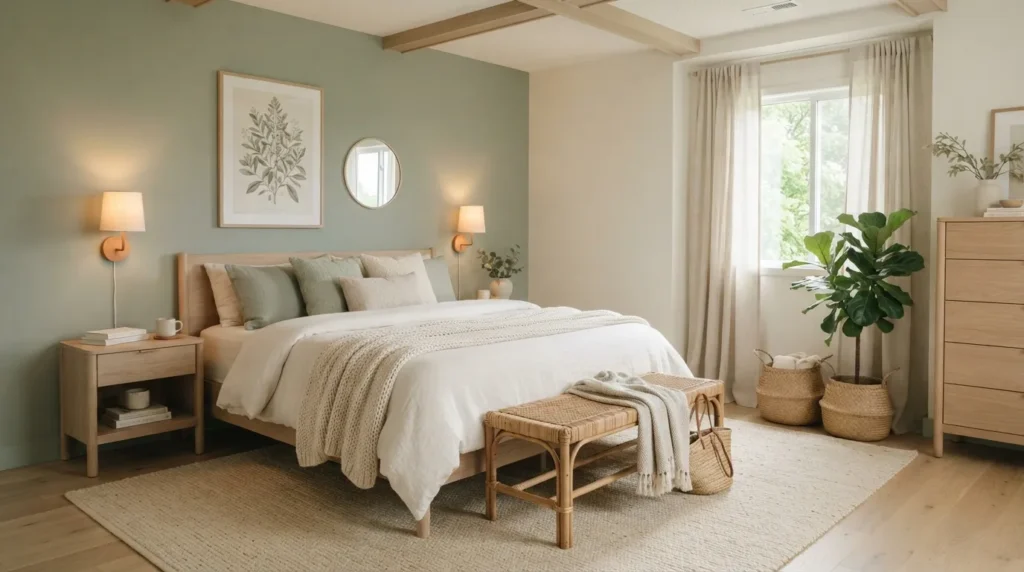
- Adds gentle nature-inspired color
- Works with oak, rattan, cream, clay, and white bedding
- Creates a restful mood without feeling too dark
- Fits modern, farmhouse, cottage, and organic bedroom styles
- Beautiful on walls, bedding, curtains, or accent furniture
Soft sage is one of the easiest greens to use in a bedroom because it feels peaceful instead of loud. It brings in a natural mood while still acting almost like a neutral. A sage wall behind the bed can soften the entire room, while sage bedding or curtains can add color without a paint commitment. I’ve noticed this shade works especially well in rooms with wood furniture, woven baskets, linen textures, and warm white lamps because it creates a grounded, outdoorsy feeling.
Pair sage with cream, warm beige, clay, white oak, and aged brass for a soft layered look. If the room feels too pale, add charcoal frames or deeper olive pillows for contrast. In small bedrooms, use sage on one wall or through bedding so the space stays airy. In larger bedrooms, sage can wrap the room beautifully, especially with off-white trim. This color makes the bedroom feel fresh, quiet, and easy to style through every season.
3. Powder Blue
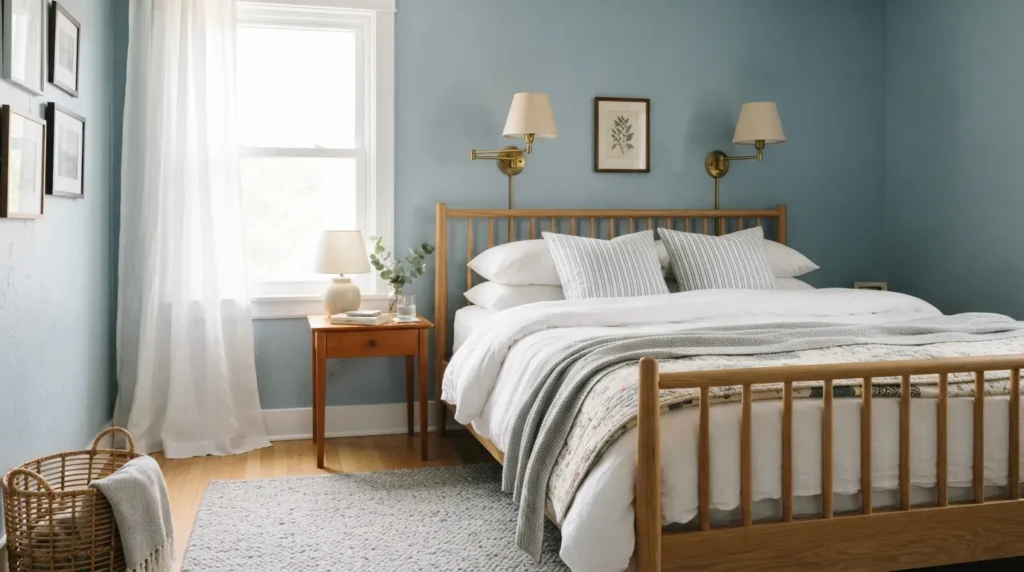
- Brings a cool, airy, sleep-friendly feeling
- Works with white bedding, warm wood, brass, and soft gray
- Great for coastal, cottage, classic, and transitional bedrooms
- Helps rooms feel brighter and visually lighter
- Looks polished with striped, floral, or solid textiles
Powder blue gives a bedroom a fresh and restful feeling without making it look childish when styled correctly. The key is choosing a muted, chalky blue rather than a bright baby blue. This kind of shade feels soft in daylight and soothing at night, especially when paired with warm lighting. In my experience, powder blue works beautifully in bedrooms that need a little color but still need to feel open, quiet, and easy to sleep in.
Use powder blue with crisp white sheets, warm wood furniture, woven shades, brass lamps, and cream curtains to keep the room mature. Add navy piping, soft floral pillows, or striped bedding if you want more detail. If your room faces north and already feels cool, balance the blue with warmer materials like oak, rattan, wool, or tan leather. Powder blue can make a compact bedroom feel lighter, cleaner, and more peaceful without relying on plain white walls.
4. Dusty Rose
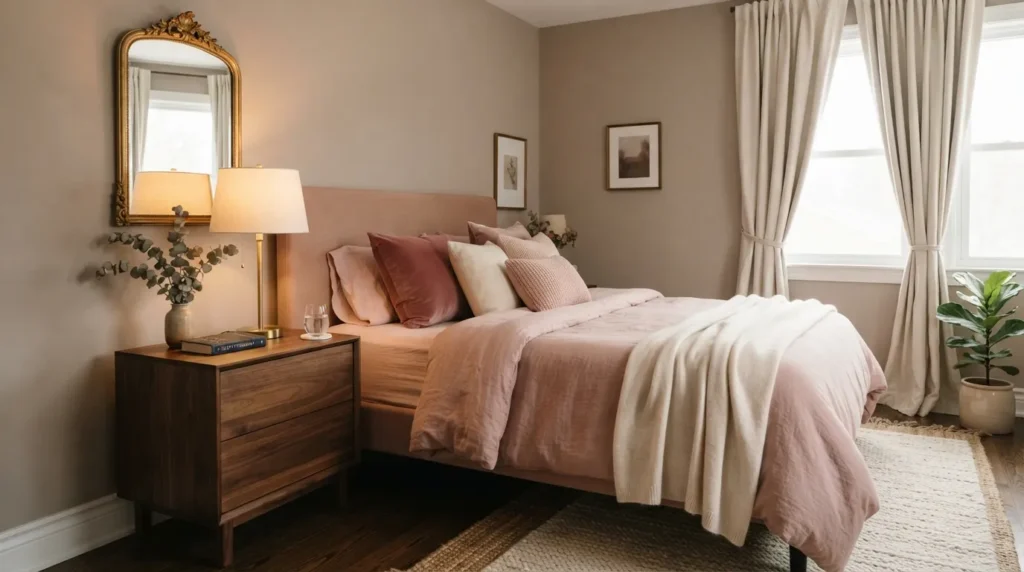
- Adds warmth without feeling too bright
- Works with cream, taupe, walnut, brass, rust, and soft white
- Beautiful for romantic, vintage, modern, and feminine rooms
- Looks refined when paired with natural textures
- Works through paint, bedding, pillows, curtains, or art
Dusty rose brings warmth and softness to a bedroom while still feeling grown-up. Unlike bright pink, dusty rose has muted undertones that make it easier to pair with neutrals, woods, and richer accent colors. This shade works well in bedrooms that need comfort, charm, and a little personality. I’ve seen this work beautifully in rooms with vintage mirrors, linen bedding, walnut nightstands, and warm brass lighting because the color feels romantic without becoming overly sweet.
To keep dusty rose polished, pair it with grounded materials. Cream bedding, taupe walls, aged wood, woven rugs, stone lamps, and matte black frames can balance the softness. If you want a deeper palette, add burgundy, cocoa, olive, or terracotta in small amounts. For renters, use dusty rose through a duvet, throw blanket, framed art, or curtain panels. This color can transform a plain bedroom into a warm, inviting retreat that feels personal, layered, and calming.
5. Clay Taupe
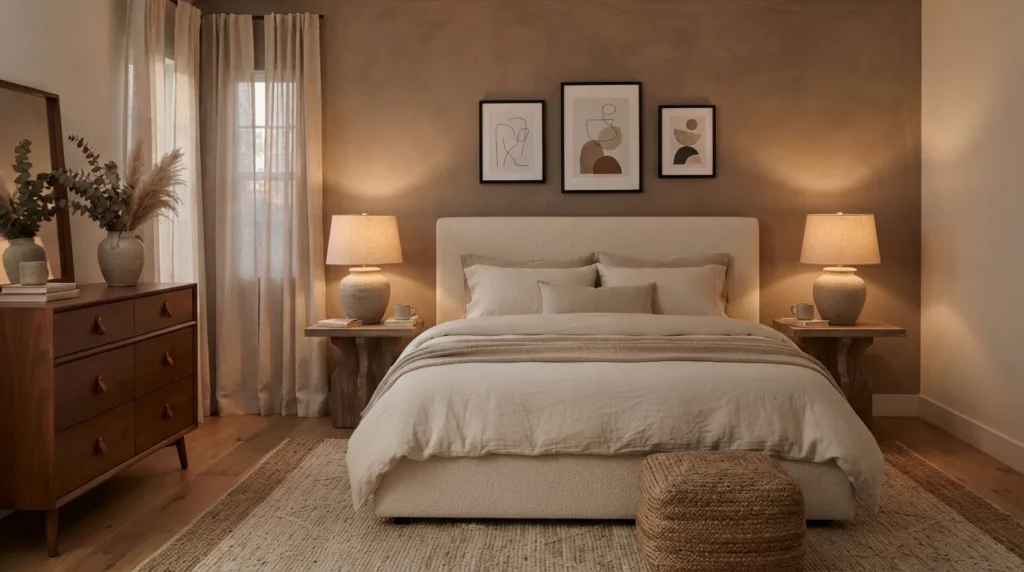
- Combines warmth, depth, and softness
- Works with stone, linen, cream, walnut, and black accents
- Feels more current than flat gray
- Creates a cozy neutral base for bedrooms
- Great for both modern and traditional rooms
Clay taupe is perfect when you want a neutral bedroom that still has personality. It sits between beige, gray, and earthy clay, which gives it more depth than plain cream. This color works especially well in bedrooms with warm wood, upholstered beds, wool rugs, and linen curtains. In my experience, clay taupe is a smart choice when a room feels too stark but you do not want a strong color on every wall.
Style clay taupe with layered bedding in cream, oatmeal, cocoa, or soft white. Add black or bronze accents if the room needs definition, or choose brass and oak for a warmer look. This shade also pairs well with textured walls, such as limewash-style paint or plaster finishes, because the undertone gives the surface more movement. Clay taupe feels cozy during winter, relaxed during summer, and flexible enough to support many furniture styles, making it a practical long-term bedroom color.
6. Olive Green
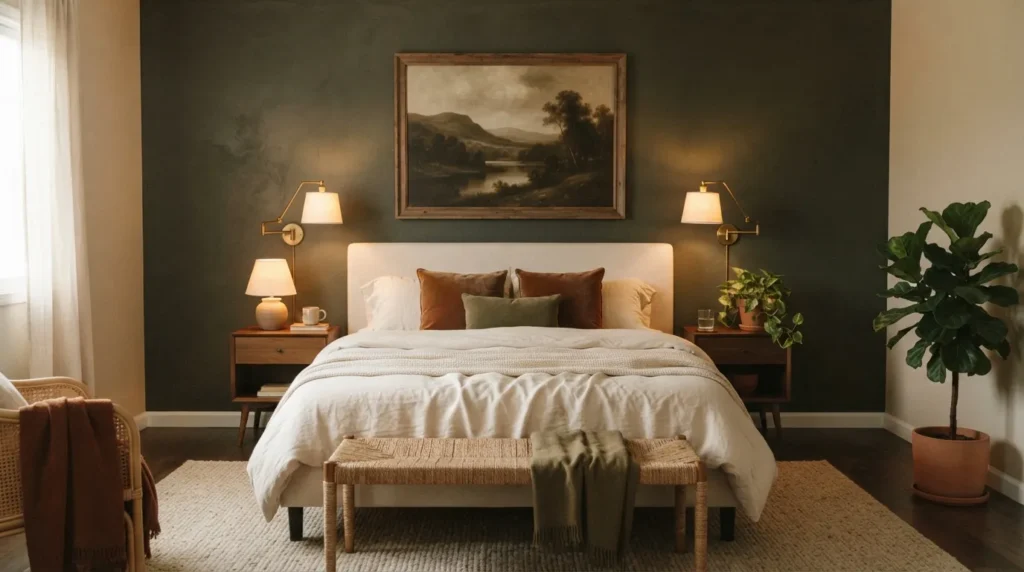
- Adds rich, grounded color without feeling too bright
- Works with cream, walnut, brass, black, tan, and rust
- Creates a cozy, nature-inspired bedroom mood
- Looks beautiful on accent walls, wardrobes, or bedding
- Pairs well with vintage and modern furniture
Olive green makes a bedroom feel grounded, warm, and quietly dramatic. It has more depth than sage but still feels connected to nature, which makes it easier to live with than many bold colors. Olive works beautifully behind a bed, on built-ins, on a dresser, or through bedding and curtains. I’ve noticed this shade is especially strong in rooms with wood furniture, brass lamps, vintage art, and cream textiles because it adds richness without making the room feel heavy.
Balance olive green with lighter surfaces so the room stays restful. Cream bedding, warm white walls, natural wood nightstands, woven baskets, and soft beige rugs help the shade feel calm. For a moodier look, add rust pillows, dark bronze hardware, or black frames. In smaller bedrooms, use olive as an accent instead of painting every wall. In larger rooms, it can create a cozy wrapped feeling. Olive green gives the bedroom depth, character, and a refined organic style.
7. Cream White
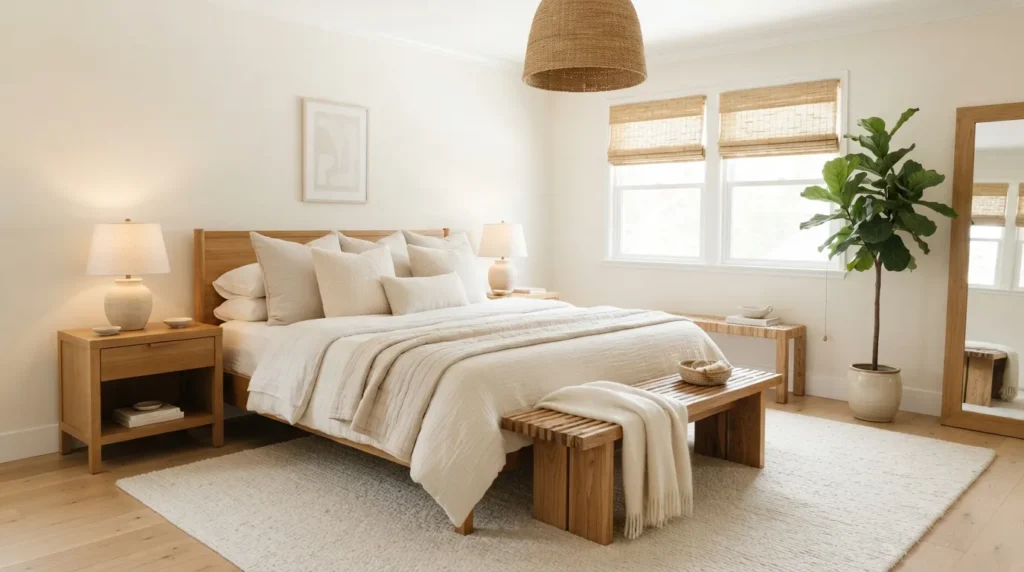
- Keeps the room bright, soft, and flexible
- Works with every wood tone and most accent colors
- Looks best with texture, not flat matching pieces
- Great for small bedrooms and rental spaces
- Easy to update with bedding, art, and rugs
Cream white is a softer alternative to stark white, making it ideal for bedrooms that need brightness without feeling cold. A creamy wall color can make a small room feel more open while still giving bedding and furniture a warm background. In my experience, cream works best when it has a slight warmth rather than a yellow cast. It should feel soft and clean, not overly buttery or dull. This makes the bedroom look fresh but still comfortable.
The secret to using cream white is texture. Pair it with linen bedding, a wool rug, woven shades, boucle-style pillows, a wood bench, ceramic lamps, and layered curtains. Without texture, cream rooms can look unfinished. With texture, they feel calm and expensive. Add contrast through black frames, walnut nightstands, olive pillows, or terracotta art if the room needs depth. Cream white is especially helpful for renters because it works with existing walls and lets furniture, textiles, and lighting carry the style.
8. Moody Burgundy
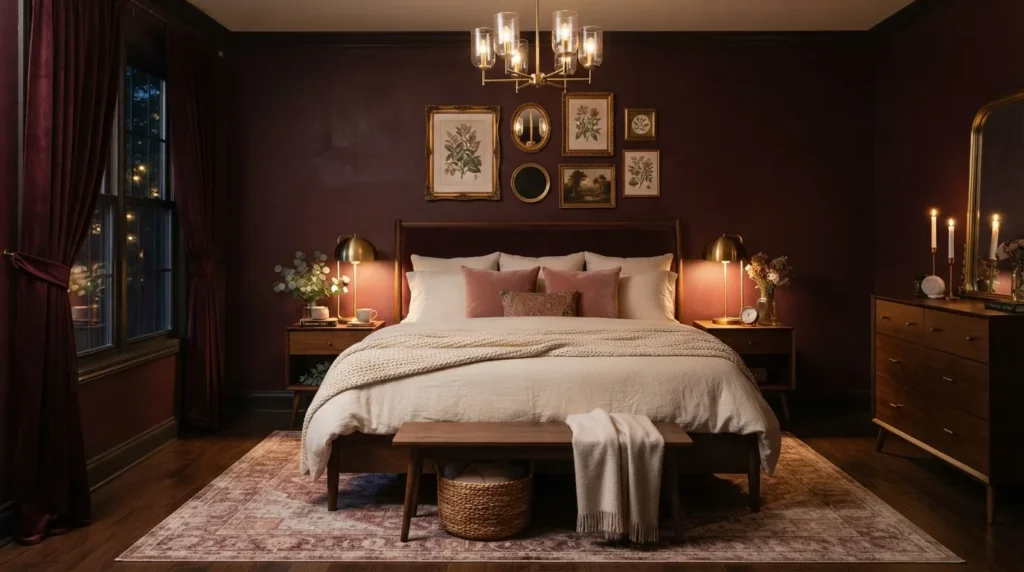
- Adds drama, warmth, and sophistication
- Works with cream, blush, walnut, brass, navy, and olive
- Great for accent walls, bedding, curtains, or artwork
- Makes large bedrooms feel more intimate
- Best balanced with soft lighting and lighter textiles
Moody burgundy is a strong bedroom color, but it can feel beautiful when used with restraint. It brings richness, warmth, and a slightly romantic feeling that works well in adult bedrooms, guest rooms, and vintage-inspired spaces. Burgundy can feel dramatic on a wall behind the bed or subtle through velvet pillows, artwork, or a quilt. Designers are increasingly embracing deeper bedroom shades like burgundy because they create comfort and sophistication without relying on plain neutrals. (Homes and Gardens)
To keep burgundy from feeling too heavy, balance it with cream bedding, warm wood, brass lamps, and soft rugs. Add blush, taupe, olive, or navy if you want a more layered palette. Avoid pairing it with overly shiny finishes unless you want a formal look. Matte paint, velvet, linen, and aged metal usually feel more relaxed. Burgundy works best when the lighting is warm and soft. The result is a bedroom that feels cozy, stylish, and memorable without looking harsh.
9. Smoky Blue
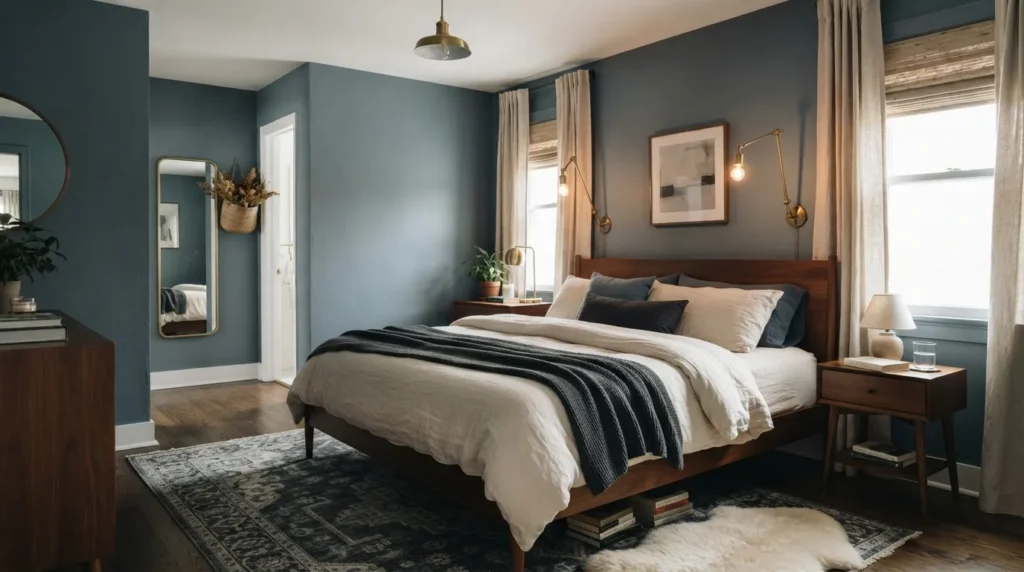
- Creates a calm, moody retreat
- Works with cream, walnut, brass, charcoal, and soft gray
- Feels deeper than powder blue but softer than navy
- Great for accent walls, full-room paint, or upholstered beds
- Looks elegant with warm lamps and textured bedding
Smoky blue is a beautiful choice when you want a calm bedroom with more depth than pale blue. It can lean slate, teal, denim, or stormy depending on the undertone, but the best versions feel muted and restful. This color is especially useful in bedrooms because it creates a quiet, retreat-like feeling. In my experience, smoky blue works well when paired with warm wood and cream textiles, which stop the room from feeling too cool.
Use smoky blue behind the bed, on all walls, or through a large upholstered headboard if you want a softer commitment. Pair it with brass sconces, walnut furniture, white or cream bedding, and a patterned rug for warmth. If the room is small, keep the ceiling and trim lighter to maintain openness. If the room is large, smoky blue can make it feel intimate and finished. This shade brings elegance, calm, and subtle drama without becoming too dark for daily life.
10. Terracotta Clay

- Adds earthy warmth and Mediterranean character
- Works with cream, olive, wood, black, brass, and woven textures
- Beautiful through bedding, painted accents, rugs, or art
- Makes plain bedrooms feel warmer and more expressive
- Great for sunny rooms and cozy guest spaces
Terracotta clay gives a bedroom warmth, character, and an earthy glow. It feels more grounded than orange and more relaxed than red, making it easier to use in a restful space. This shade works beautifully with cream walls, olive accents, wood furniture, woven shades, and black or brass details. Current interior color coverage continues to point toward earthy shades like terracotta and clay as part of warmer, nature-inspired palettes. (Homes and Gardens)
Use terracotta carefully if the bedroom is small or dark. Instead of painting every wall, try a clay-colored quilt, throw pillows, art print, rug, or accent chair. In sunny rooms, terracotta can feel cheerful and warm without becoming too bright. In north-facing rooms, balance it with cream and warm lighting. Add natural textures like jute, linen, ceramic, and oak to make the color feel organic. Terracotta clay turns a plain bedroom into a cozy, expressive space with a warm handcrafted mood.
11. Chocolate Brown

- Adds depth, comfort, and quiet luxury
- Works with cream, beige, blue, olive, brass, and walnut
- Beautiful through furniture, bedding, curtains, or accent walls
- Makes bedrooms feel grounded and sophisticated
- Best with soft contrast and layered lighting
Chocolate brown is returning because people want bedrooms that feel warm, grounded, and comforting. It can look elegant on an upholstered bed, velvet pillow, wood dresser, painted wall, or deep curtain panel. Unlike black, chocolate brown gives depth without feeling sharp. Unlike gray, it adds warmth. I’ve noticed this color works especially well in bedrooms that already have cream bedding, warm lighting, and natural textures because it makes the whole space feel richer.
Use chocolate brown as an anchor rather than covering every surface at once. A brown headboard, cocoa throw, dark wood nightstand, or framed art can bring the tone into the room gently. Pair it with cream, oatmeal, dusty blue, olive, or soft blush for balance. Add brass lamps or bronze hardware if you want a more polished look. Chocolate brown creates a restful, mature bedroom that feels cozy in winter, elegant year-round, and easy to soften with lighter bedding.