10 Living Room Trends Ideas
The main gathering space is becoming warmer, softer, and more personal than the cold showroom-style rooms that dominated for years. USA homeowners and apartment decorators are now looking for comfort, texture, flexible furniture, better lighting, natural materials, and pieces that feel collected instead of overly matched. Current 2026 design coverage points toward warm traditional details, textured fabrics, curved furniture, modular layouts, natural materials, layered lighting, and richer color palettes as major interior directions.
These ideas are made for real homes, not just perfect inspiration photos. You can use them in a small apartment, family room, open-plan house, rental, condo, or large sitting area. The goal is to make the space feel beautiful, comfortable, and useful every day. Each trend below includes practical styling advice, materials, layout ideas, and Pinterest-friendly visual direction so you can refresh the room with confidence.
1. Curved Seating
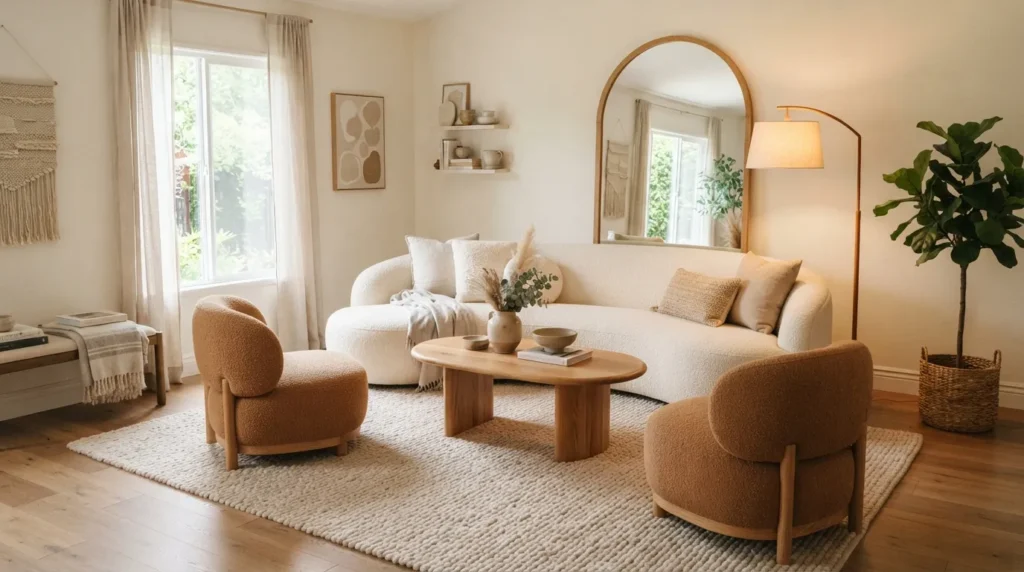
- Softens square rooms and straight furniture lines
- Works with rounded sofas, curved loveseats, swivel chairs, and barrel chairs
- Makes conversation areas feel warmer and more relaxed
- Pairs well with oval coffee tables, round rugs, and arched mirrors
- Best when balanced with simple side tables and clean walkways
Curved seating can make a room feel more welcoming before anyone even sits down. Sofas, loveseats, and accent chairs with rounded backs soften the hard lines created by walls, windows, consoles, and rectangular rugs. This trend works especially well in open-plan homes because curved furniture helps define a conversation zone without adding dividers. In my experience, a rounded chair or gently curved sofa often makes the whole layout feel easier, calmer, and more visually comfortable.
Start with one curved piece if you are not ready to replace the main sofa. A barrel chair beside a fireplace, swivel chair near a window, or curved loveseat in an apartment can bring the look without overwhelming the space. Keep enough clearance around the furniture so the shape can breathe. Pair curved seating with textured pillows, a soft throw, and a low oval table. The result feels relaxed, current, and cozy while still staying practical for daily lounging, guests, and family movie nights.
2. Warm Neutrals
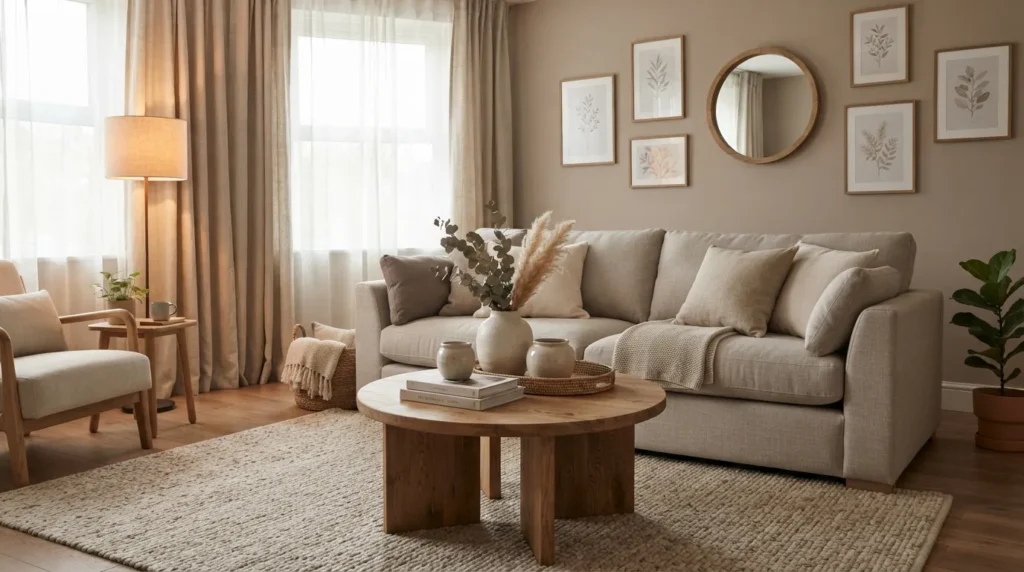
- Replaces cold gray with cream, taupe, oatmeal, mushroom, and sand
- Creates a calmer base for furniture and decor
- Works with wood, stone, linen, wool, leather, and brass
- Makes small rooms feel soft instead of stark
- Easy to update with seasonal pillows and art
Warm neutrals are popular because they make a space feel peaceful without looking plain. Instead of bright white walls and cool gray sofas, the new neutral palette leans into cream, oatmeal, mushroom, warm beige, soft taupe, clay, and sand. These colors create a flexible base that works with many styles, from modern farmhouse to transitional, coastal, organic modern, and quiet luxury. I’ve noticed that warm neutrals also photograph beautifully because they add depth without making the room feel dark.
To keep the palette from looking flat, mix textures instead of adding too many colors. Try linen curtains, a wool rug, boucle-style pillows, a wood coffee table, woven baskets, and ceramic lamps. Add contrast with black frames, bronze accents, or walnut furniture if the room needs structure. Keep undertones consistent so beige does not clash with cool gray or bright white. Warm neutrals make the room easier to live with, easier to style, and easier to refresh over time.
3. Layered Lighting
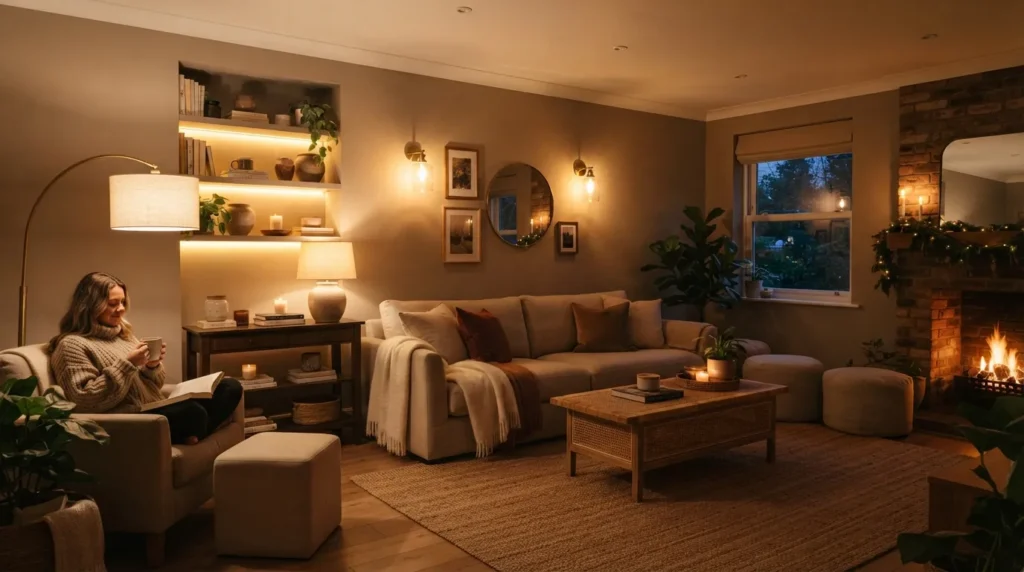
- Adds mood through lamps, sconces, pendants, and accent glow
- Reduces reliance on harsh overhead lights
- Helps the room shift from daytime use to evening relaxation
- Works with warm bulbs, dimmers, LED strips, and picture lights
- Makes textures and furniture finishes look richer
Layered lighting can completely change how a sitting area feels after sunset. One ceiling fixture rarely gives enough atmosphere, especially in rooms used for reading, hosting, watching TV, and relaxing. A better plan includes table lamps, floor lamps, wall sconces, shelf lighting, and maybe a pendant or picture light. That’s why many designers recommend lighting at different heights. It creates glow, shadow, and depth instead of one flat brightness across the entire room.
Use warm white bulbs for a softer effect, usually around 2700K to 3000K for cozy spaces. Place lamps near seating, add a floor lamp beside a reading chair, and use small accent lights on shelves or consoles. If you rent, plug-in sconces and rechargeable lamps can still create a designer look without electrical work. Dimmers are helpful when the room needs flexibility. Layered lighting makes the space more comfortable, more flattering, and more useful during every part of the day.
4. Textured Walls
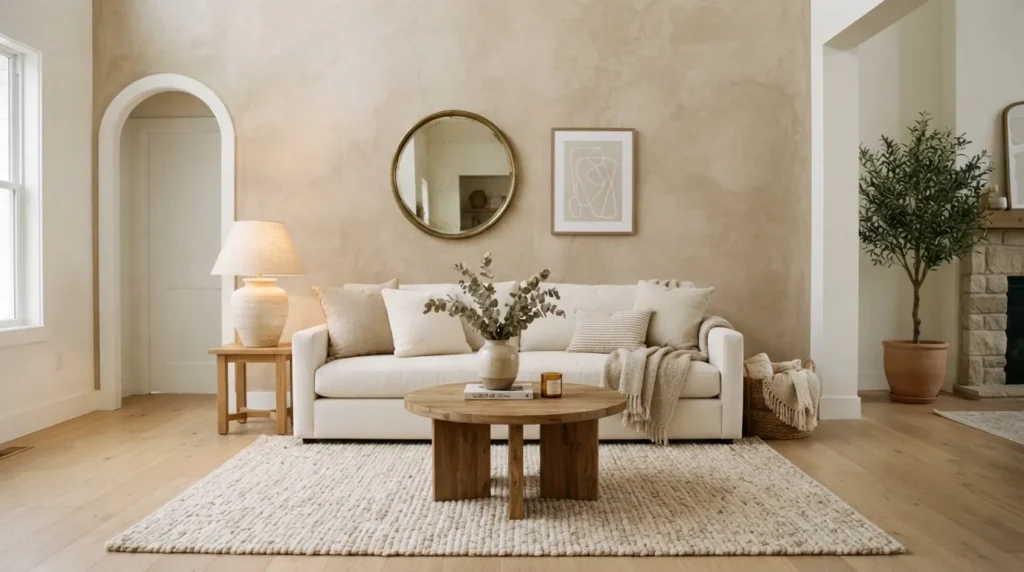
- Adds depth without relying on busy patterns
- Works with limewash, plaster-look paint, grasscloth, paneling, or textured wallpaper
- Gives plain walls a more custom appearance
- Pairs beautifully with simple furniture and soft textiles
- Great for accent walls, fireplace walls, or media walls
Textured walls are trending because people want rooms that feel handcrafted and layered. A smooth painted wall can look clean, but it may also feel flat when the furniture is simple. Limewash, Roman clay, plaster-look finishes, grasscloth wallpaper, fluted panels, beadboard, or peel-and-stick textured wallpaper can add quiet movement. In my experience, textured walls work best when the color stays soft, allowing the surface detail to create interest instead of relying on strong pattern.
Choose the application based on your home and budget. Homeowners may prefer plaster finishes or wood paneling, while renters can use removable wallpaper or temporary panels. A fireplace wall, TV wall, or sofa wall is usually a good place to start. Keep artwork minimal if the texture already has strong movement. Add warm lamps so the surface catches light gently. This trend can make a basic room feel more architectural, cozy, and polished without needing a major furniture overhaul.
5. Natural Materials
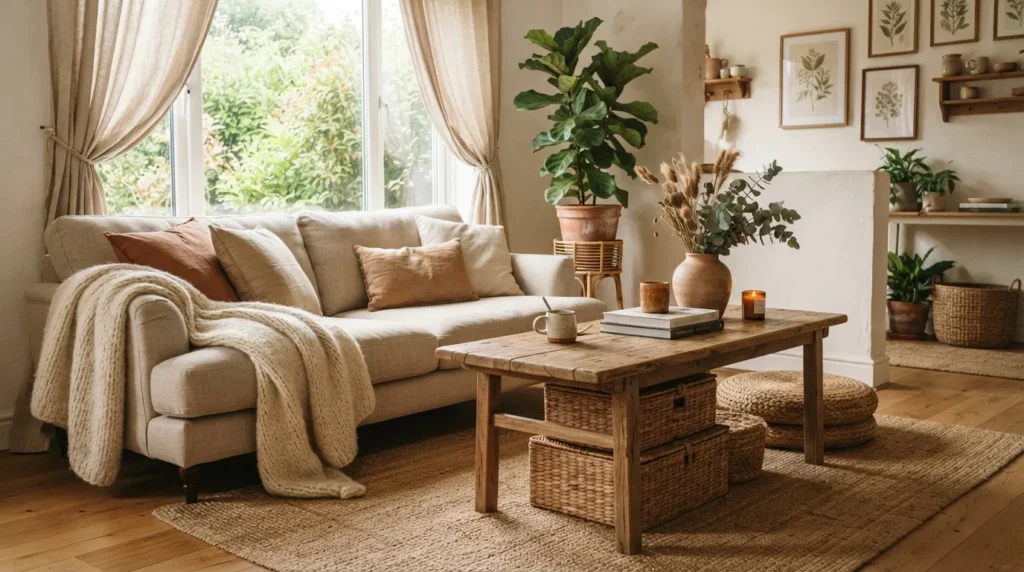
- Adds warmth through wood, rattan, stone, jute, linen, clay, and wool
- Balances technology, screens, and modern furniture
- Works with both neutral and colorful spaces
- Makes the room feel grounded and relaxed
- Easy to add through furniture, baskets, rugs, and decor
Natural materials are staying strong because they make a room feel grounded. Wood grain, stone texture, woven rattan, jute rugs, linen curtains, clay vases, wool throws, and cotton pillows bring softness that synthetic or glossy finishes often lack. Current interior trend coverage continues to highlight natural materials, tactile finishes, and organic textures as key directions for 2026 homes. These pieces also age better because slight variation makes them feel more authentic.
Start with one larger material anchor, such as a wood coffee table, jute rug, stone side table, or linen curtain panels. Then repeat smaller natural details across the room so the look feels connected. A woven tray, ceramic lamp, rattan basket, or wool pillow can help tie everything together. Avoid using every material at once, especially in smaller spaces. The goal is balance. Natural materials make the room feel warm, relaxed, and lived-in while still looking intentional enough for Pinterest inspiration.
6. Statement Rugs
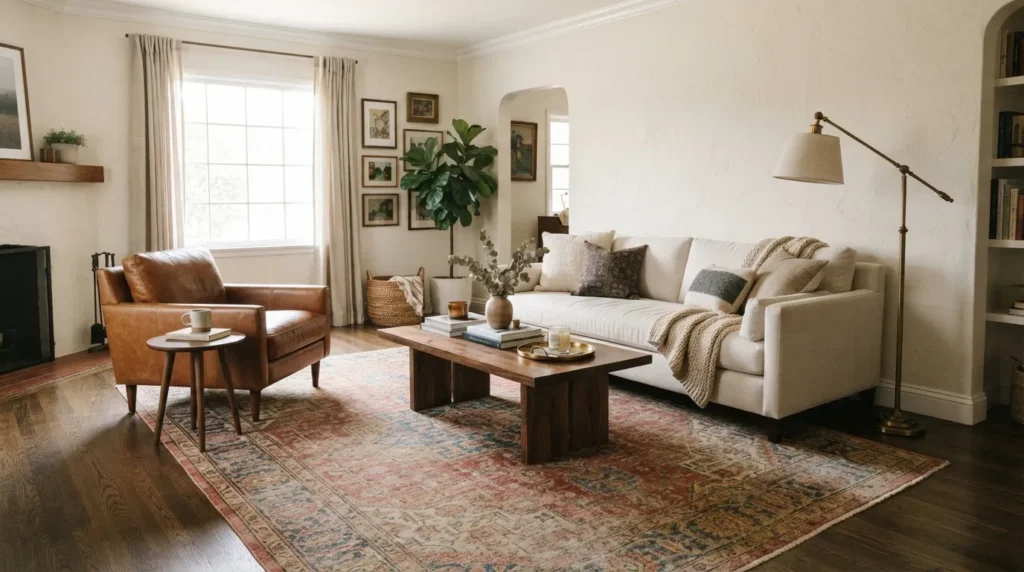
- Defines the seating area and anchors furniture
- Adds color, pattern, softness, and sound absorption
- Works with vintage styles, wool rugs, washable rugs, and natural fiber rugs
- Helps open-plan spaces feel more organized
- Best when sized large enough for the furniture layout
A statement rug can make the entire room feel pulled together. It creates a foundation for the furniture, adds softness underfoot, and introduces color or pattern without changing the walls. In open-plan homes, rugs are especially useful because they define the seating area from the kitchen, dining space, or entry. I’ve noticed that rooms often look unfinished when the rug is too small. A larger rug usually makes the furniture feel more connected and the layout more expensive.
Choose the rug based on lifestyle first. Washable rugs are helpful for pets, kids, and high-traffic areas. Wool feels durable and classic, while jute adds natural texture but may not feel soft enough for everyone. Vintage-inspired rugs hide wear beautifully and add character to newer furniture. Ideally, at least the front legs of the sofa and chairs should sit on the rug. A strong rug can guide your color palette, soften sound, and make the room feel finished without adding clutter.
7. Mixed Tables
- Adds depth through different shapes, heights, and materials
- Works with nesting tables, drink tables, ottomans, and sculptural side tables
- Makes the room feel collected instead of matched
- Supports real use for drinks, books, remotes, and lamps
- Best when finishes repeat elsewhere in the space
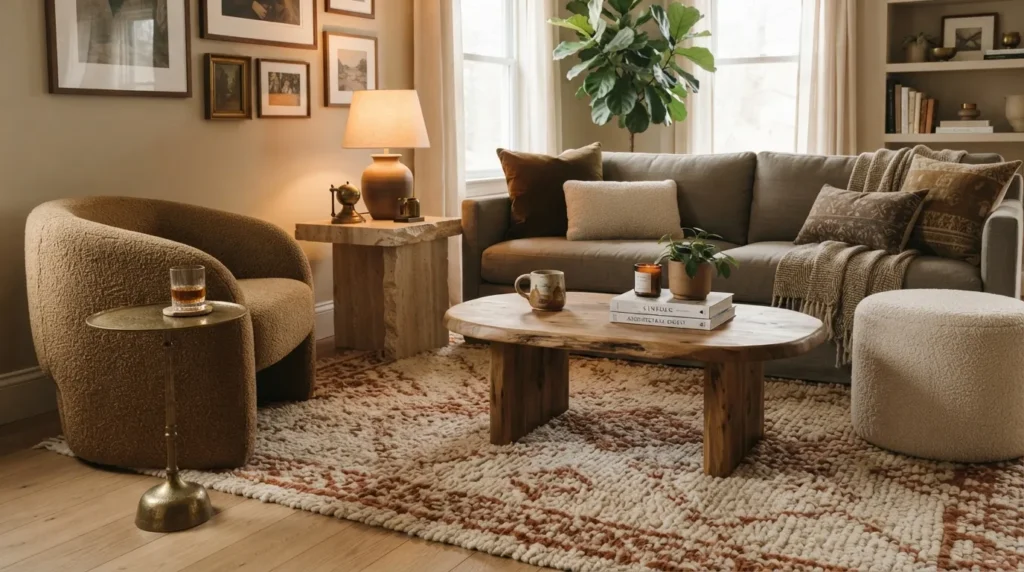
Mixed tables are replacing perfectly matched coffee-table-and-end-table sets. The new look feels more collected, flexible, and personal. Try pairing a wood coffee table with a stone side table, a round drink table with a rectangular console, or a soft ottoman with a slim metal table. This creates visual interest while also making the seating area more useful. In my experience, mixed tables work best when they share at least one connection, such as color, finish, shape, or style.
Think about how people actually use the room. Every seat should have a place nearby for a drink, book, phone, or lamp. Small drink tables are useful beside accent chairs, while nesting tables can move around during guests or family nights. If the room has many straight lines, choose one round or oval table to soften the layout. If the space feels too soft, add a darker wood or metal piece for structure. Mixed tables make the room feel layered, practical, and thoughtfully styled.
8. Personal Displays
- Adds meaning through books, art, photos, objects, and collections
- Works on shelves, consoles, mantels, gallery walls, and coffee tables
- Makes the room feel lived-in rather than staged
- Best with clean spacing and a focused color palette
- Easy to update seasonally or as your style changes
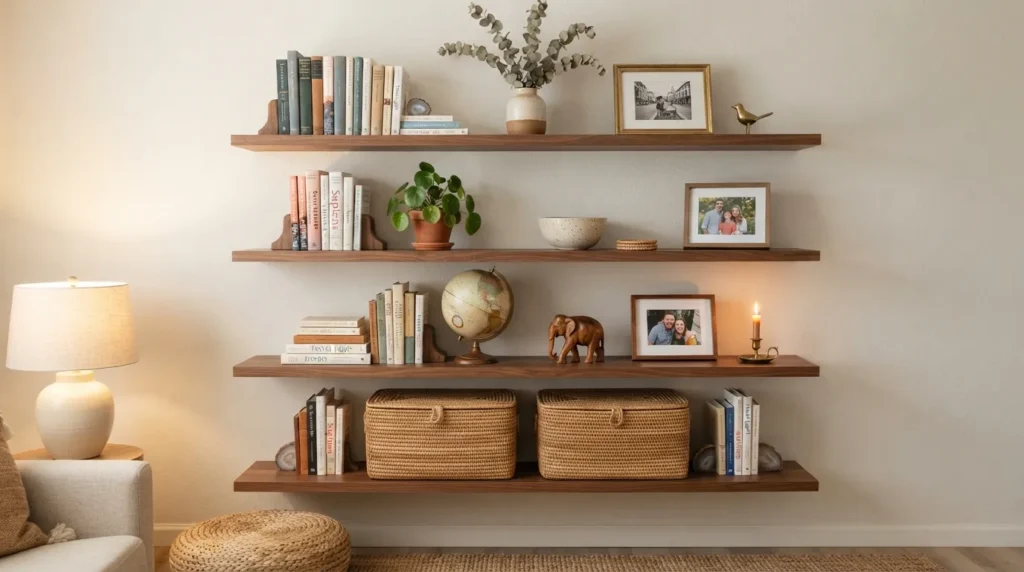
Personal displays are becoming more important because people want their homes to feel real. Instead of filling shelves with random decorative objects, use pieces that reflect your life. Books, framed photos, travel finds, handmade pottery, family heirlooms, art prints, vintage boxes, and collected objects can bring warmth to the room. I’ve seen this work well in many homes because meaningful items make a space feel finished without feeling generic or overly styled.
The key is editing. Too many small objects can look messy, especially on open shelves or coffee tables. Group items in threes, vary height, and leave breathing room between pieces. Use trays to contain small objects and baskets to hide everyday clutter. Keep colors connected to the room’s palette so personal pieces still feel cohesive. A shelf can hold books and pottery, while a console can display art and a lamp. Personal displays make the room memorable, layered, and emotionally connected.
9. Flexible Layouts
- Supports relaxing, hosting, working, reading, and family time
- Works with modular sofas, swivel chairs, ottomans, and movable tables
- Makes small or open-plan rooms easier to use
- Helps furniture adapt to changing routines
- Best when traffic paths stay clear and comfortable
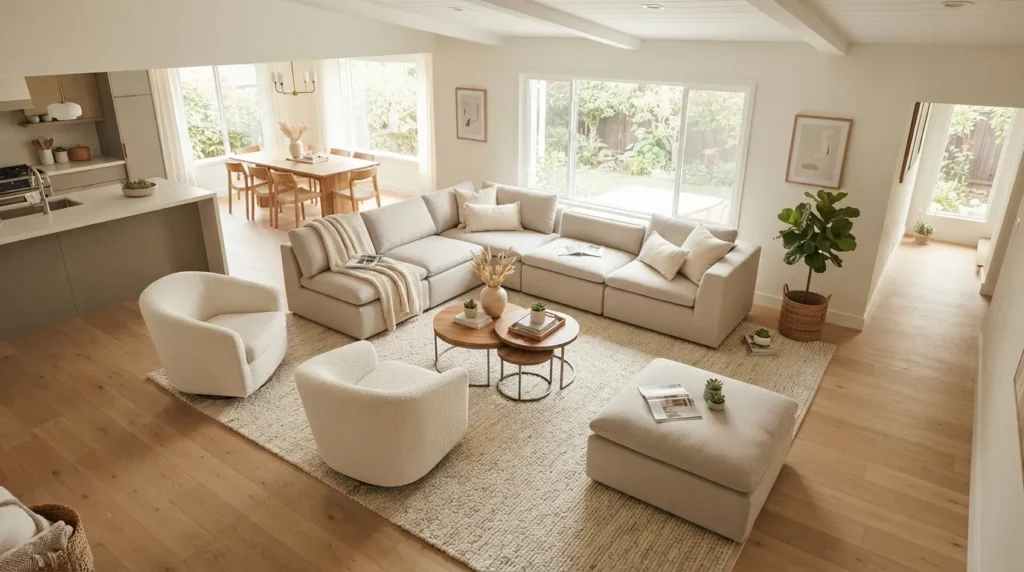
Flexible layouts are becoming a major design priority because rooms now serve more than one purpose. The same space might be used for relaxing, hosting, working, exercising, watching movies, helping kids with homework, or reading alone. Modular sofas, swivel chairs, ottomans, lightweight side tables, and storage benches make it easier to shift the room as needed. Current design coverage points to adaptable furniture and flexible layouts as important directions for modern interiors.
Start by identifying the room’s main activities. If conversation matters, pull seating closer together. If TV watching is important, angle seats toward the screen without making the room feel like a theater. Swivel chairs are especially helpful because they can face different zones. Use ottomans instead of bulky recliners when space is limited. Keep walkways open, especially between doorways, kitchens, and seating. A flexible layout helps the room feel less rigid and more responsive to real life.
10. Moody Accents
- Adds depth through darker colors and richer finishes
- Works with olive, cocoa, rust, burgundy, navy, charcoal, and espresso
- Pairs well with warm neutrals and natural textures
- Creates contrast without making the room feel heavy
- Best used through pillows, art, paint, rugs, or accent chairs
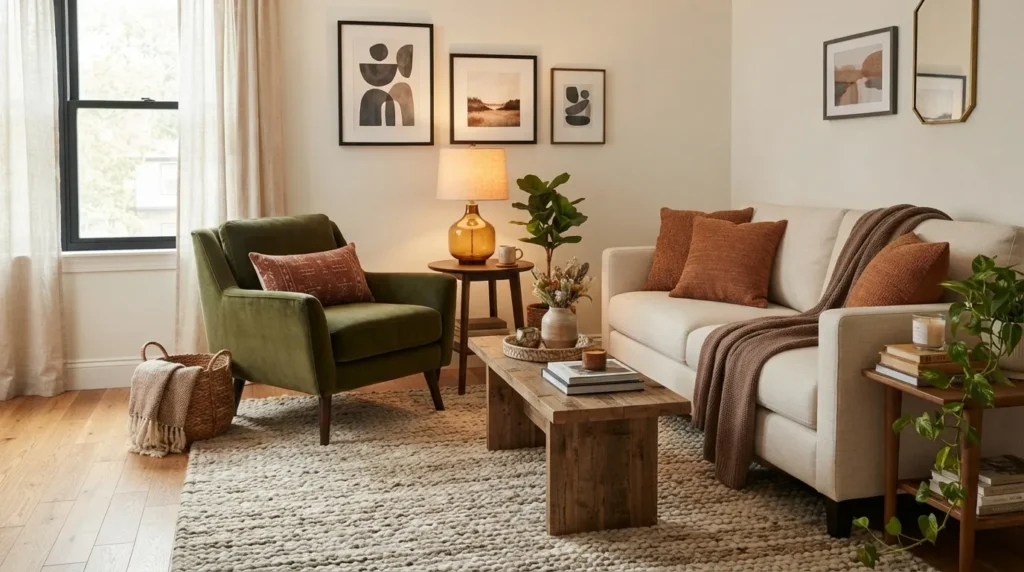
Moody accents bring richness to a room without requiring a dark full-room makeover. Deep olive pillows, cocoa curtains, rust artwork, burgundy throws, navy chairs, charcoal walls, or espresso wood can create depth against warm neutral furniture. This trend works because it adds contrast and mood while still feeling comfortable. In my experience, deeper accents are especially useful when a room looks too pale, flat, or unfinished. They give the eye something stronger to land on.
Use moody color in controlled layers. A dark accent chair, rich patterned rug, framed artwork, or painted cabinet can be enough. If the room is small, balance deeper colors with cream walls, natural light, and warm lamps. If the room is large, you can go bolder with curtains, a painted fireplace wall, or a darker sofa. Repeat the accent color at least twice so it feels intentional. Moody details make the living room feel mature, cozy, and visually memorable without losing comfort.