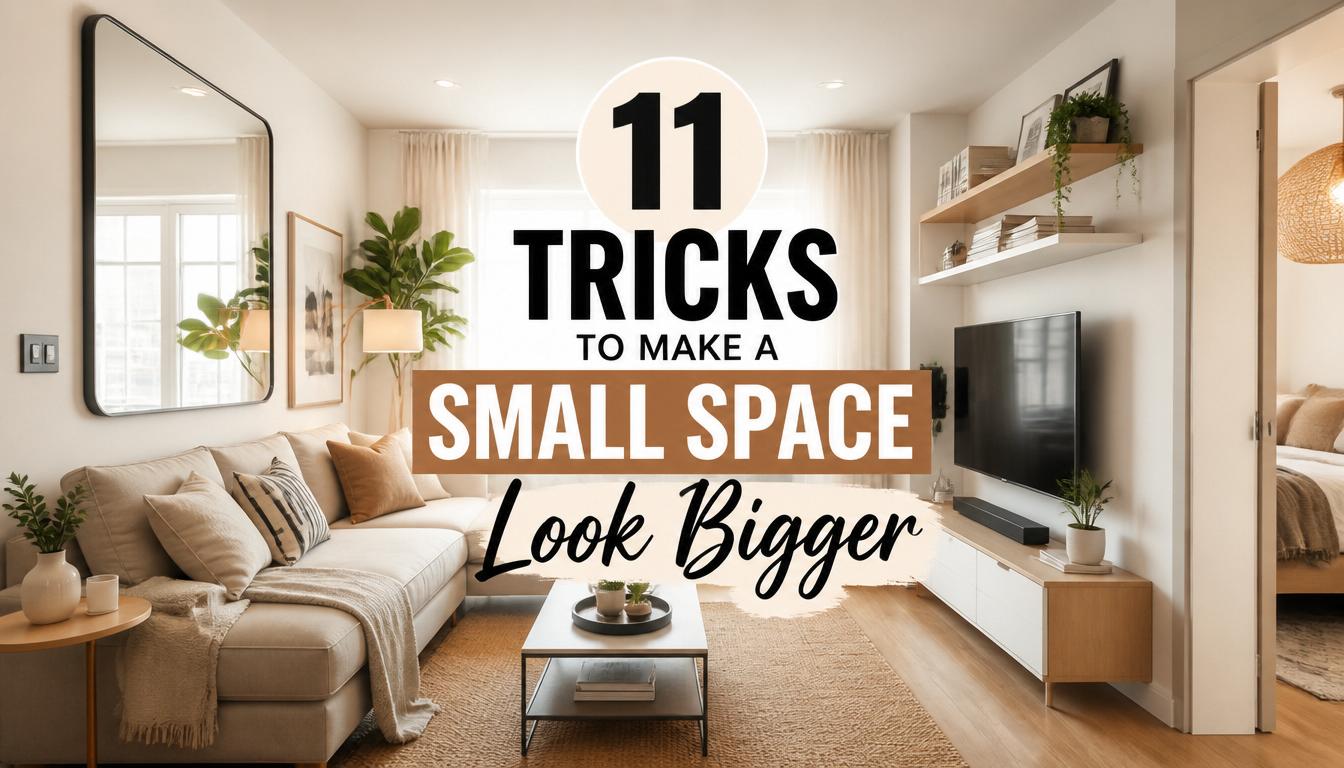
11 Tricks to Make a Small Space Look Bigger Ideas
Living in a smaller home does not mean you have to sacrifice comfort, beauty, or style. In many USA apartments, condos, townhomes, and compact suburban houses, limited square footage is becoming increasingly common. The good news is that smart design choices can completely transform the way a room feels without requiring expensive renovations or major construction. Small spaces can appear brighter, taller, cleaner, and far more open when the right layout and decorating techniques are used thoughtfully.
Many homeowners focus only on furniture size, but visual balance, lighting, texture, color flow, and storage placement play equally important roles. In my experience, even tiny adjustments can dramatically improve how spacious a room feels. That is why many designers recommend combining practical organization with visual styling methods instead of relying on only one design trick.
This guide shares practical ideas that work beautifully in real homes across the USA. These space-enhancing concepts are easy to apply in bedrooms, apartments, kitchens, studios, bathrooms, and living rooms. Whether you are decorating your first apartment or refreshing a compact family home, these ideas will help create a more airy, welcoming, and visually open environment while still keeping the space cozy and functional.
1. Light Wall Colors
Bullet Points
- Reflects natural light throughout the room
- Makes ceilings and corners feel softer
- Creates a clean and open visual effect
- Helps furniture blend more naturally
- Works well in apartments and small homes
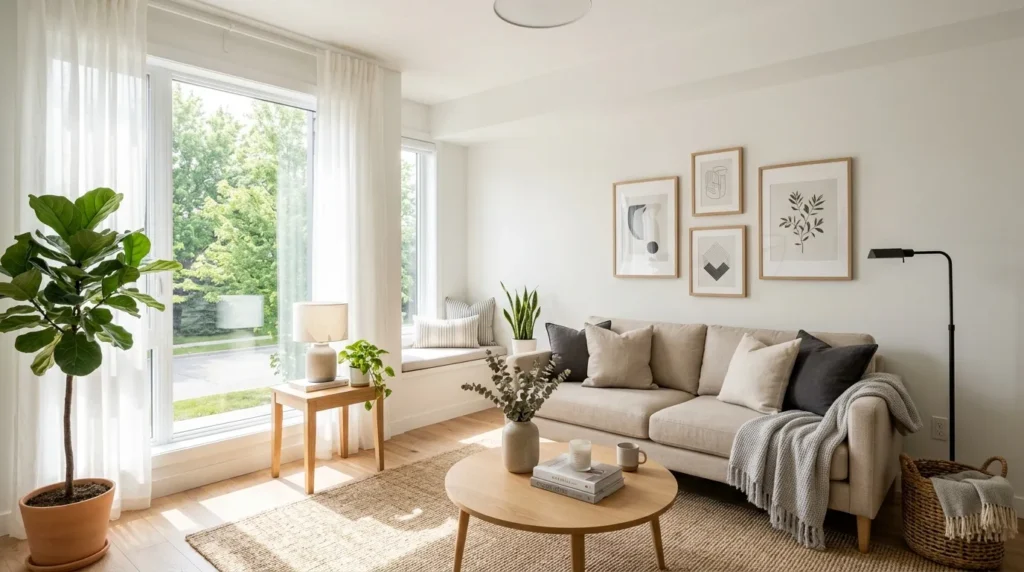
A brighter wall palette can instantly change how large a room feels without altering the actual layout. Soft whites, warm beige tones, pale gray shades, and creamy neutrals reflect more light compared to dark paint colors. This reflection helps walls visually recede, creating a more open atmosphere throughout the room. I’ve noticed this works especially well in smaller USA apartments where natural sunlight may only enter from one direction. Light-colored walls also reduce harsh visual boundaries, helping compact rooms feel smoother and less crowded while supporting almost every decorating style from modern farmhouse to minimalist interiors.
Another reason this approach works so effectively is because it creates better visual continuity between furniture, flooring, and decor pieces. Rooms feel calmer when colors flow naturally instead of competing for attention. Matte finishes often work better than glossy paint because they soften wall imperfections while maintaining brightness. Many homeowners also combine soft neutral walls with sheer curtains and light wood furniture to create an even airier appearance. This combination makes everyday living feel less cramped and more relaxing. Even very small bedrooms and studio apartments can appear significantly more spacious with this simple design adjustment.
2. Floating Shelves
Bullet Points
- Frees up visible floor space
- Keeps storage organized and elevated
- Adds decorative personality without clutter
- Creates cleaner wall structure
- Helps narrow rooms feel more open
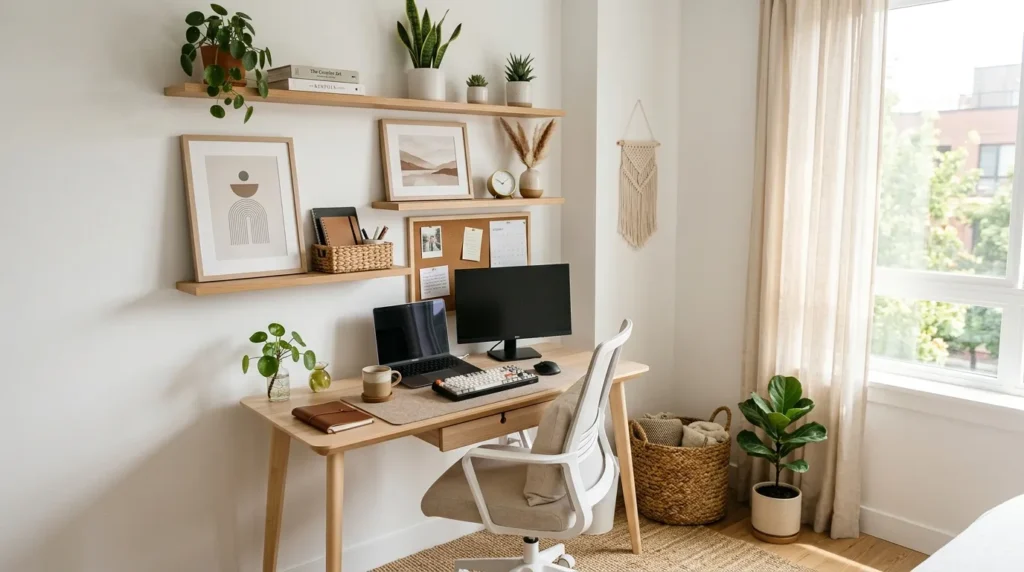
Wall-mounted shelving can dramatically improve the appearance of a compact room while still offering useful storage. Traditional bookcases often feel bulky because they occupy valuable floor area and visually interrupt the room’s layout. Floating shelves solve that problem by drawing attention upward and keeping surfaces lighter and cleaner. In my experience, this design choice works especially well in small living rooms, kitchens, and home offices where every inch matters. Floating shelves also allow homeowners to display decor selectively instead of overcrowding the room with oversized storage furniture that can quickly make compact spaces feel overwhelming and visually heavy.
Another advantage of elevated shelving is flexibility. Homeowners can customize shelf placement depending on ceiling height, furniture arrangement, or storage needs. Light wood, white finishes, and slim metal brackets typically create the most open appearance. Decorative baskets, books, framed artwork, and small indoor plants look stylish while still maintaining organization. I’ve seen this work well in many homes where people want storage without sacrificing visual breathing room. Leaving empty space between displayed objects is equally important because overcrowded shelving can create visual noise. Balanced styling helps walls feel intentional, airy, and modern while improving overall room functionality.
3. Large Mirrors
Bullet Points
- Reflects sunlight around the room
- Adds visual depth instantly
- Makes narrow walls appear wider
- Enhances brightness naturally
- Creates elegant focal points
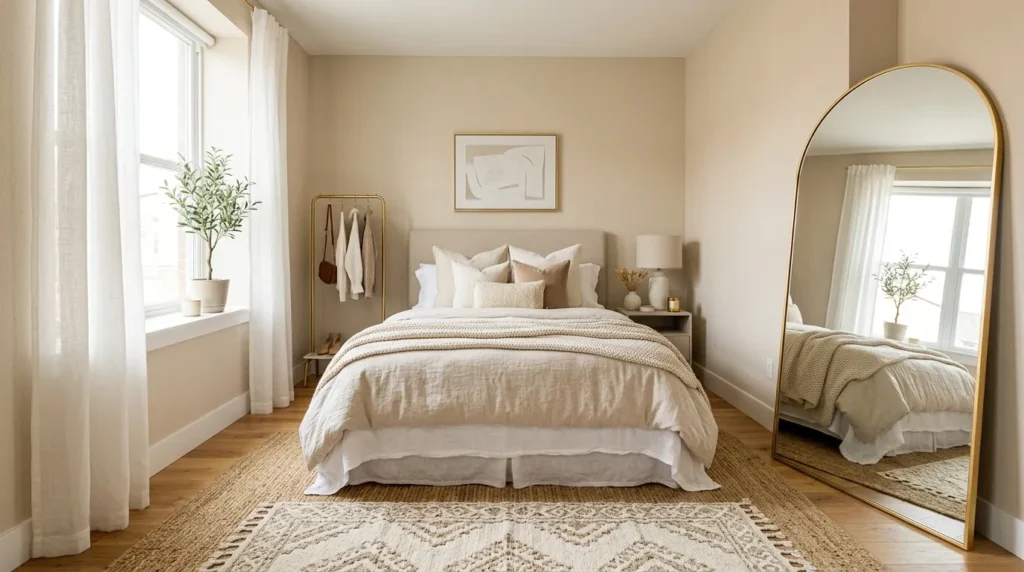
Mirrors are one of the most effective ways to visually expand a compact space because they reflect both light and surrounding details. A large mirror positioned across from a window can double the appearance of natural brightness during the day. This reflection creates the illusion of additional square footage while making darker corners feel less enclosed. I’ve noticed oversized mirrors work especially well in small dining rooms, entryways, and bedrooms where walls can otherwise feel tight or boxed in. Thin-framed mirrors often create the cleanest result because heavy frames may add visual weight that competes with the openness you are trying to achieve.
Placement matters just as much as mirror size. Leaning a tall mirror against the wall can make ceilings appear higher, while horizontal mirrors can visually widen narrow rooms. Many designers recommend placing mirrors where they reflect attractive elements like windows, lamps, or styled shelves rather than cluttered areas. This technique enhances the room’s strongest features while improving overall balance. Glass, metallic finishes, and mirrored decor accents can also support the same spacious effect throughout the home. When used carefully, reflective surfaces create a brighter environment that feels sophisticated, open, and welcoming without requiring major decorating changes or expensive remodeling projects.
4. Hidden Storage
Bullet Points
- Reduces visible clutter quickly
- Keeps essentials organized neatly
- Improves functionality in compact homes
- Creates cleaner room layouts
- Maximizes underused furniture space
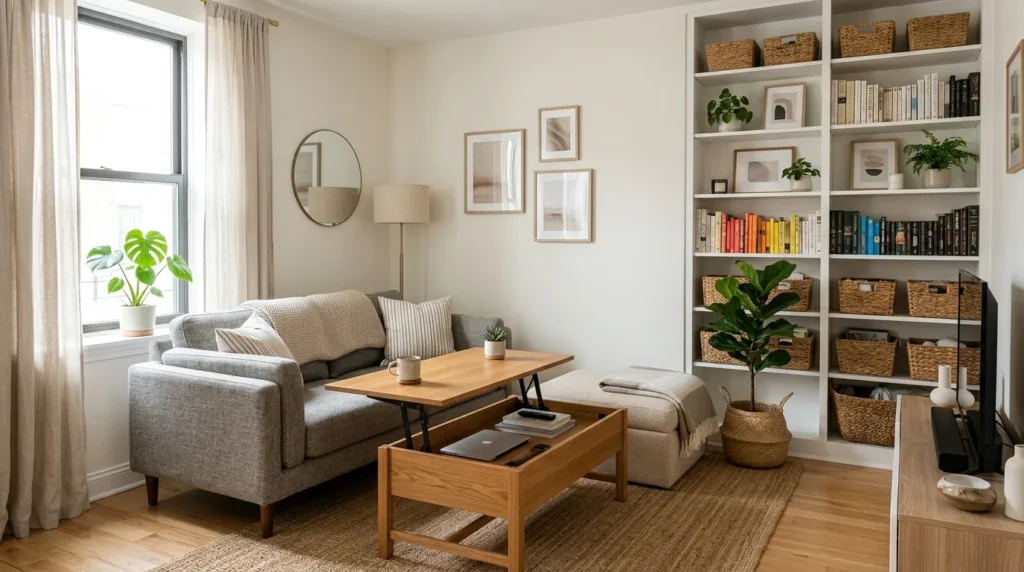
Clutter is one of the fastest ways to make a small room feel even tighter and more stressful. Hidden storage solutions help maintain a cleaner appearance while still allowing homeowners to keep everyday items nearby. Storage ottomans, under-bed drawers, lift-top coffee tables, and built-in benches all provide practical ways to organize belongings discreetly. In my experience, concealed storage creates an immediate sense of calm because surfaces remain visually open and less crowded. This approach works especially well in smaller USA homes where multipurpose furniture is often necessary to support both storage and daily living without overwhelming the room.
The best hidden storage ideas combine practicality with seamless design. Furniture pieces should feel intentional instead of oversized or bulky. Neutral fabrics, slim silhouettes, and low-profile storage furniture often maintain the most spacious appearance. I’ve seen this work well in many apartments where residents use storage benches beneath windows or compact sectional sofas with hidden compartments underneath. Even small organizational habits make a noticeable difference over time. Keeping chargers, blankets, paperwork, and seasonal items out of sight helps rooms feel more polished and breathable. A visually clean space naturally appears larger because the eye moves smoothly through the room without distraction.
5. Vertical Curtains
Bullet Points
- Makes ceilings appear taller
- Draws attention upward naturally
- Softens windows beautifully
- Adds elegance without bulk
- Enhances natural lighting flow
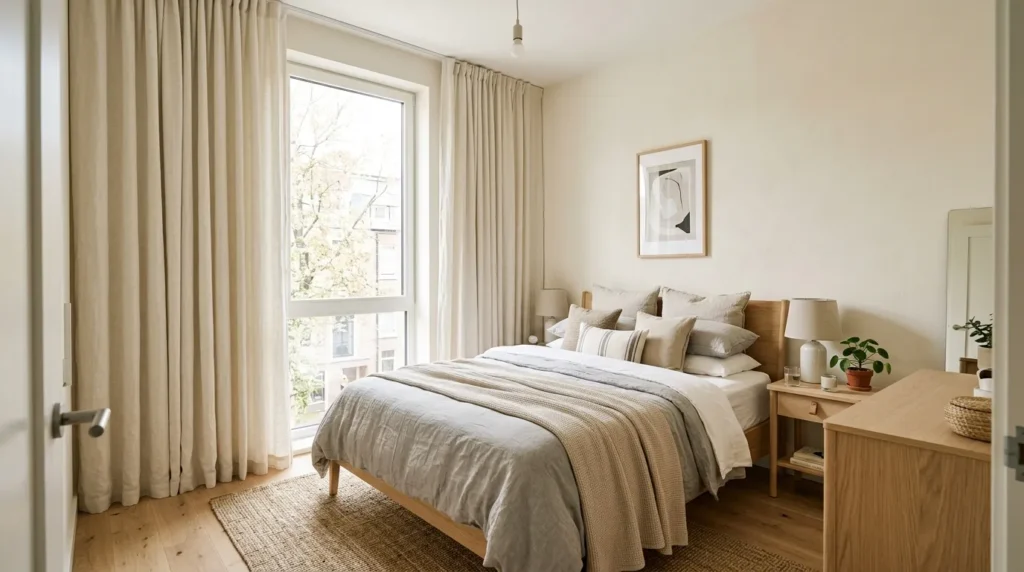
Curtain placement can completely change the proportions of a room when done correctly. Many homeowners hang curtains directly above windows, but mounting curtain rods closer to the ceiling creates the illusion of additional height. This simple adjustment naturally draws the eye upward, making compact spaces feel taller and more refined. Long flowing curtains also soften harsh wall lines and create a more finished appearance throughout the room. I’ve noticed lightweight fabrics such as linen blends, cotton panels, and sheer materials work especially well because they maintain brightness while still adding warmth and texture to the overall design.
Floor-length curtains typically create the best visual effect because shorter panels can make walls appear cut off or compressed. Neutral shades like soft white, sand, warm gray, and pale taupe often blend beautifully with light-colored walls while preserving openness. That’s why many designers recommend avoiding heavy blackout drapes in smaller rooms unless complete darkness is necessary. Natural light remains one of the strongest tools for visually expanding a space. When sunlight filters gently through airy curtains, rooms feel more inviting, balanced, and comfortable. Even compact bedrooms and apartments can gain a noticeably more spacious atmosphere through smarter window styling choices.
6. Minimal Furniture
Bullet Points
- Prevents overcrowded layouts
- Improves walking space and flow
- Keeps rooms visually balanced
- Supports cleaner decorating style
- Makes compact homes feel calmer
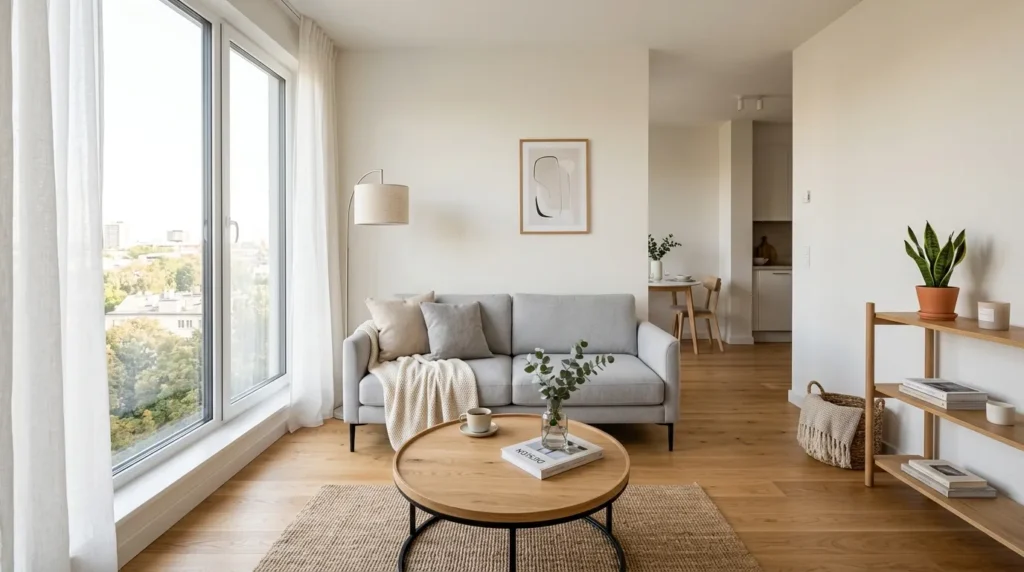
Too much furniture can overwhelm even a moderately sized room, making movement feel restricted and uncomfortable. Choosing fewer but more functional furniture pieces helps maintain better balance throughout the home. In smaller spaces, every item should serve a purpose while contributing positively to the overall layout. I’ve noticed that streamlined sofas, compact dining tables, and open-leg furniture create a much lighter appearance compared to bulky traditional designs. Furniture with visible legs allows more floor area to remain exposed, which tricks the eye into seeing additional openness and creates a cleaner visual flow from one area to another.
Thoughtful furniture spacing matters just as much as furniture size. Leaving small gaps between walls and furnishings prevents rooms from feeling tightly packed. Many homeowners assume they need tiny furniture for small spaces, but oversized pieces can sometimes work if used sparingly and styled correctly. The goal is balance rather than overcrowding. I’ve seen this work well in many homes where one properly scaled sectional replaces several smaller chairs and tables. Minimal furniture arrangements also make cleaning easier and improve everyday comfort. Rooms instantly feel more breathable, modern, and peaceful when unnecessary items are removed from the layout entirely.
7. Glass Furniture
Bullet Points
- Keeps the room visually open
- Reflects natural and artificial light
- Reduces heavy furniture appearance
- Works well in dining and living areas
- Adds modern elegance to compact homes
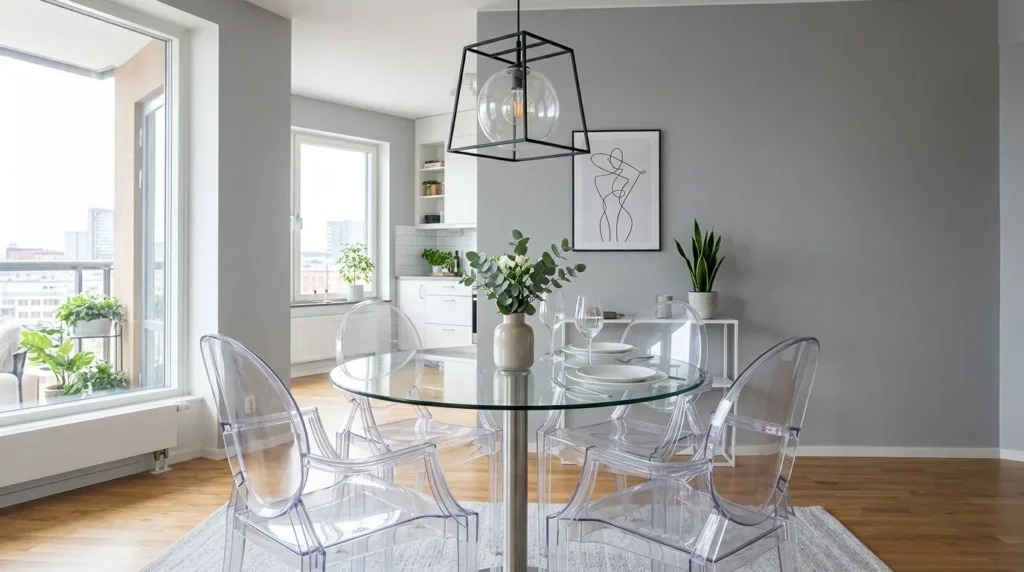
Heavy furniture can quickly make a compact room feel crowded and visually closed in. Glass furniture helps solve this problem because transparent surfaces allow the eye to move freely through the space without interruption. Coffee tables, dining tables, and side tables made from glass create a lighter appearance while still remaining functional for daily use. In my experience, this works especially well in apartments and smaller USA homes where maintaining visual openness is important. Glass also reflects light softly around the room, helping compact interiors feel brighter, cleaner, and more spacious without requiring major decorative changes.
Another reason glass furniture works beautifully in small spaces is its ability to blend naturally with different decorating styles. Whether the home has modern, minimalist, coastal, or transitional decor, glass pieces rarely feel visually overpowering. Pairing transparent furniture with slim metal or light wood frames keeps the room balanced and elegant. I’ve seen this work well in many homes where bulky wood furniture previously made the layout feel cramped and heavy. Keeping surrounding decor simple further enhances the spacious effect. The overall result feels sophisticated, airy, and practical while preserving valuable visual breathing room throughout the home.
8. Layered Lighting
Bullet Points
- Brightens dark corners effectively
- Creates depth and warmth
- Makes rooms feel larger at night
- Improves overall room balance
- Enhances comfort and atmosphere
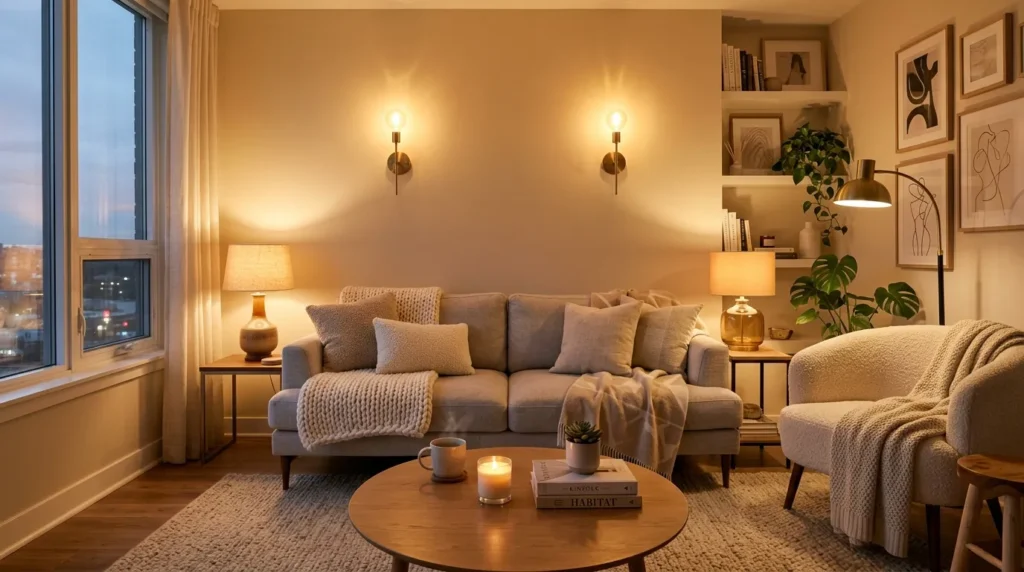
Lighting plays a major role in how spacious a room feels, especially during evenings when natural sunlight disappears. A single overhead light often creates harsh shadows that make small rooms appear flat and confined. Layered lighting solves this issue by combining ceiling fixtures, table lamps, wall sconces, and floor lighting to distribute brightness evenly throughout the space. I’ve noticed this creates a softer and more welcoming atmosphere in compact homes. Warm lighting placed at different heights also adds visual depth, helping walls and corners feel more open instead of dark and compressed during nighttime hours.
Thoughtful lighting placement can completely transform the mood and appearance of a room without requiring expensive renovations. Small table lamps on side tables, under-shelf lighting, and warm LED bulbs all contribute to a balanced environment. That’s why many designers recommend avoiding overly cool white lighting in smaller interiors because it can feel sterile and uncomfortable. In my experience, layered lighting works especially well in studio apartments and compact living rooms where every design choice affects the room’s openness. A properly illuminated space naturally feels larger, calmer, and more inviting while improving both functionality and visual comfort.
9. Open Leg Furniture
Bullet Points
- Reveals more visible floor space
- Creates airy room proportions
- Improves visual movement throughout rooms
- Prevents bulky furniture appearance
- Supports modern compact layouts
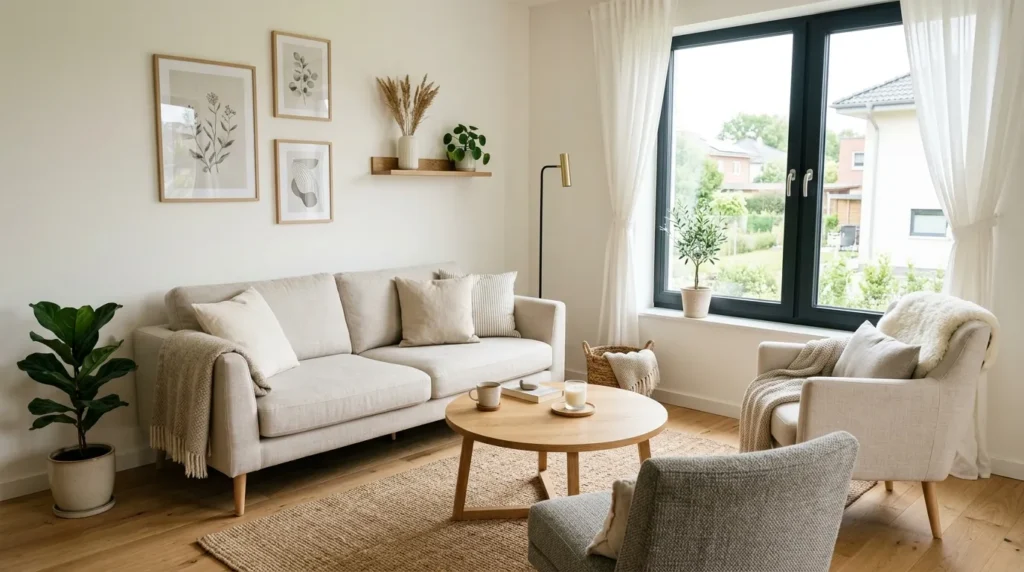
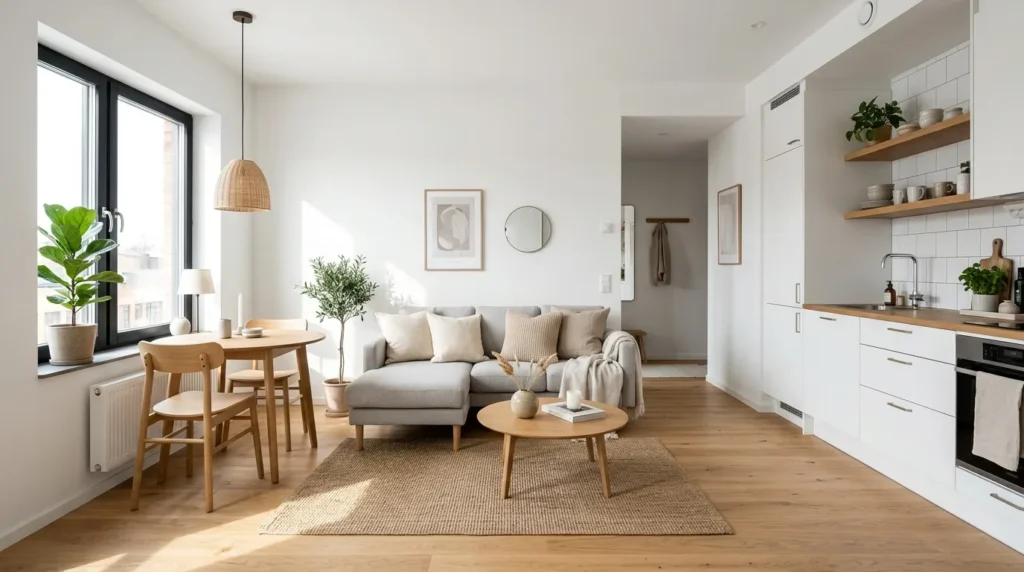
Furniture with exposed legs creates a surprisingly powerful visual effect in smaller rooms because it allows more flooring to remain visible underneath. This open space helps the eye travel smoothly across the room, making the overall layout appear larger and less crowded. Sofas, chairs, beds, and cabinets with elevated legs often feel much lighter than furniture that sits directly on the floor. I’ve noticed this approach works especially well in modern apartments and smaller family homes where maintaining openness is important. Slim furniture frames combined with raised designs create a cleaner and more breathable atmosphere throughout the room.
Another advantage of open-leg furniture is its versatility across different decorating styles. Mid-century modern, Scandinavian, and contemporary interiors all use this design technique effectively because it balances comfort with visual simplicity. Light wood finishes, black metal legs, and neutral upholstery often create the best results in compact spaces. I’ve seen this work well in many homes where replacing only one bulky sofa immediately improved the room’s flow and appearance. Open-leg furniture also makes cleaning easier since robotic vacuums and brooms can move underneath effortlessly. The entire room feels lighter, brighter, and significantly more functional after this simple furniture upgrade.
10. Clear Pathways
Bullet Points
- Improves movement through the room
- Prevents cramped furniture layouts
- Makes spaces feel more organized
- Enhances openness instantly
- Supports practical daily living
A cluttered layout can make even beautifully decorated rooms feel stressful and uncomfortable. Clear pathways create better movement throughout the home while helping small spaces feel naturally more open. Furniture should never block entrances, walkways, or windows because restricted movement immediately makes a room feel tighter. In my experience, leaving enough walking space around major furniture pieces improves both comfort and visual balance. Open traffic flow also allows natural light to travel more freely across the room. This simple design principle works especially well in compact apartments where every inch of movement space affects the room’s functionality.
Rearranging furniture often creates dramatic improvements without spending any money at all. Many homeowners place too many small tables, baskets, or decorative accents near pathways, unintentionally overcrowding the layout. That’s why many designers recommend prioritizing functionality before adding extra decor pieces. I’ve seen this work well in many homes where simply shifting a sofa or removing one chair completely transformed the room’s openness. Maintaining visible floor space between furniture pieces creates a calmer and more breathable environment. Rooms instantly feel cleaner, larger, and easier to enjoy when pathways remain open and visually uninterrupted throughout the entire space.
11. Unified Palette
Bullet Points
- Creates smoother visual flow
- Prevents harsh color interruptions
- Makes rooms feel cohesive
- Supports brighter room appearance
- Enhances calm and airy atmosphere
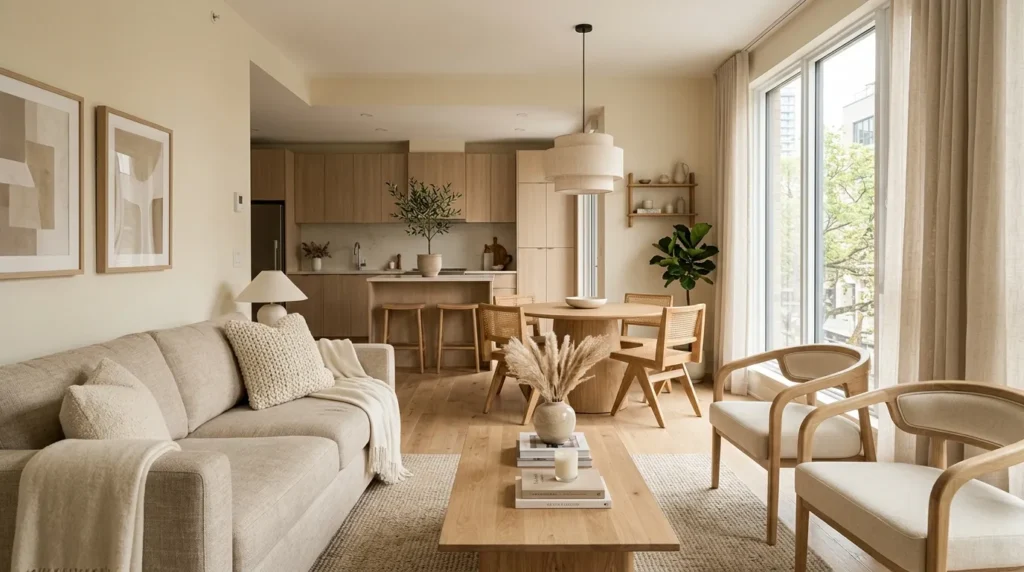
Using too many contrasting colors inside a small room can visually divide the space and make it feel busy or disconnected. A unified color palette creates smoother transitions between walls, furniture, decor, and textiles, helping the room feel larger and more cohesive. Soft neutrals, warm whites, sandy tones, muted grays, and earthy textures often work beautifully together without overwhelming compact interiors. I’ve noticed this technique is especially effective in open-concept apartments where connected spaces benefit from consistent visual harmony. Matching tones help the eye move naturally through the room instead of stopping abruptly at strong color contrasts.
A cohesive palette does not mean the room has to feel boring or plain. Texture, layering, and subtle tonal differences can still add warmth and personality while maintaining openness. Linen fabrics, woven baskets, natural wood accents, and soft patterned textiles all contribute depth without disrupting visual balance. In my experience, homeowners often notice their rooms instantly feel calmer after simplifying the overall color scheme. I’ve seen this work well in many homes where reducing bold color contrasts created a far more elegant and spacious atmosphere. The result feels polished, comfortable, timeless, and perfectly suited for smaller living environments.