Top 10 Stylish Ideas: Do Modern Yard Design
Introduction
A beautiful yard does more than make your home look attractive from the outside. It creates a place where you can relax, host friends, enjoy family meals, grow plants, and make everyday life feel a little more refreshing. For many USA homeowners, the challenge is designing an outdoor space that looks stylish but still works for real weather, real budgets, pets, kids, and busy schedules.
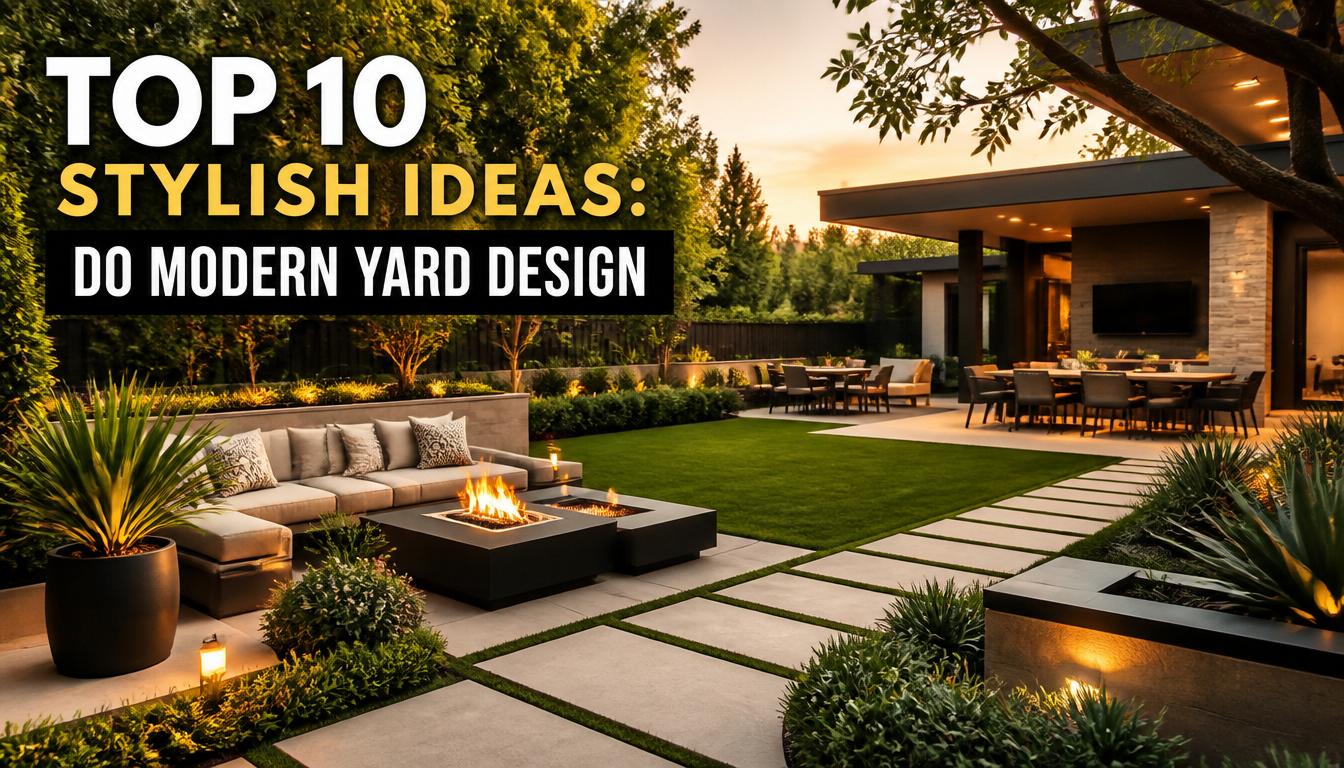
A strong Modern Yard Design is not about filling every corner with expensive features. It is about clean lines, useful zones, easy-care materials, good lighting, and smart greenery. When the layout feels intentional, even a small backyard can look high-end and comfortable.
This guide shares ten practical yard ideas that feel polished, Pinterest-friendly, and realistic. Each one focuses on visual impact, daily function, and materials that can work in suburban homes, townhouses, compact backyards, and larger outdoor spaces.
1. Clean Lawn Zones
- Creates a neat green area with a clear purpose.
- Works well for play spaces, pet areas, and open garden views.
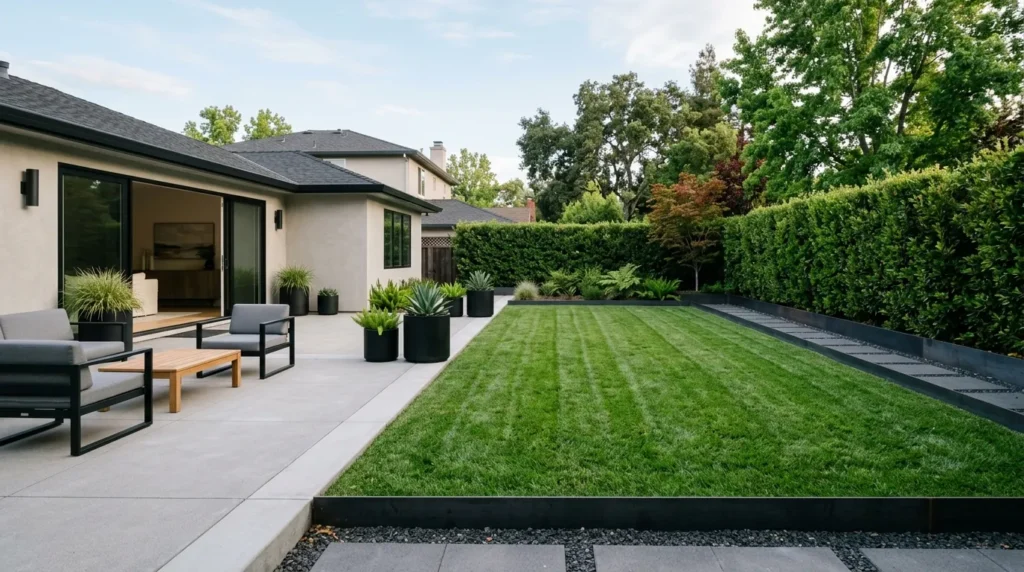
- Uses edging, trimmed grass, planters, and defined borders.
- Makes the yard feel organized instead of unfinished.
- Keeps the layout simple, fresh, and easy to maintain.
A clean lawn zone makes a yard feel organized before any furniture or decor is added. Instead of leaving grass as one open, undefined space, shape it into a clear visual area that supports how you actually live outside. This could be a soft play area, a quiet reading patch, or a green break between patio surfaces. In my experience, yards look more expensive when grass has a purpose. Keep the edges sharp, repeat simple materials, and use the lawn as a calm center that balances harder surfaces beautifully with outdoor comfort.
The transformation comes from treating grass like a design element, not leftover space. Use metal edging, stone borders, or narrow concrete strips to frame the lawn neatly. Keep outdoor furniture slightly off the grass if you want easier mowing and cleaner lines. For smaller USA yards, a rectangular or square lawn often looks more modern than an irregular shape. Add planters along one side for height and leave enough open space for walking, pets, or kids. The result feels polished, practical, and easy to maintain through every season with very little extra styling.
2. Paver Grid Patio
- Adds clean geometry to the outdoor layout.
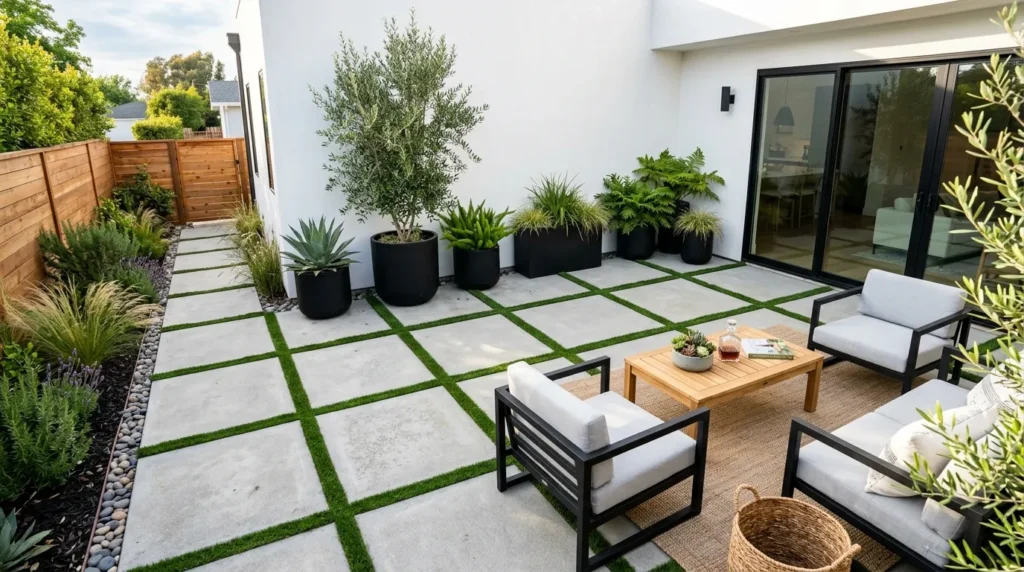
- Works with concrete, porcelain, stone, grass, or gravel joints.
- Makes walkways, dining areas, and lounges feel planned.
- Creates a high-end look without too much decoration.
- Helps guide movement through the yard naturally.
A paver grid adds instant structure because it turns the ground into a clean geometric pattern. Large concrete, porcelain, or stone pavers feel modern, while narrow grass or gravel joints keep the look from becoming too flat. This idea works well for backyards, side yards, and front yard seating areas where you want a strong layout without too much decoration. I’ve noticed that simple paver patterns often make outdoor spaces look larger because the straight lines guide the eye across the yard and toward each destination with purpose from every main viewing angle.
For the best result, choose pavers large enough to feel intentional and place them with even spacing. Grass joints create a softer look, while gravel joints are easier in dry climates or shaded spots. Use a level base so the pavers feel safe underfoot and do not wobble over time. A paver grid can support a dining table, lounge chairs, or a walkway from the house to the garden. Keep furniture minimal so the pattern remains visible and becomes part of the yard’s style all day without competing with plantings or furniture.
3. Gravel Garden Edge
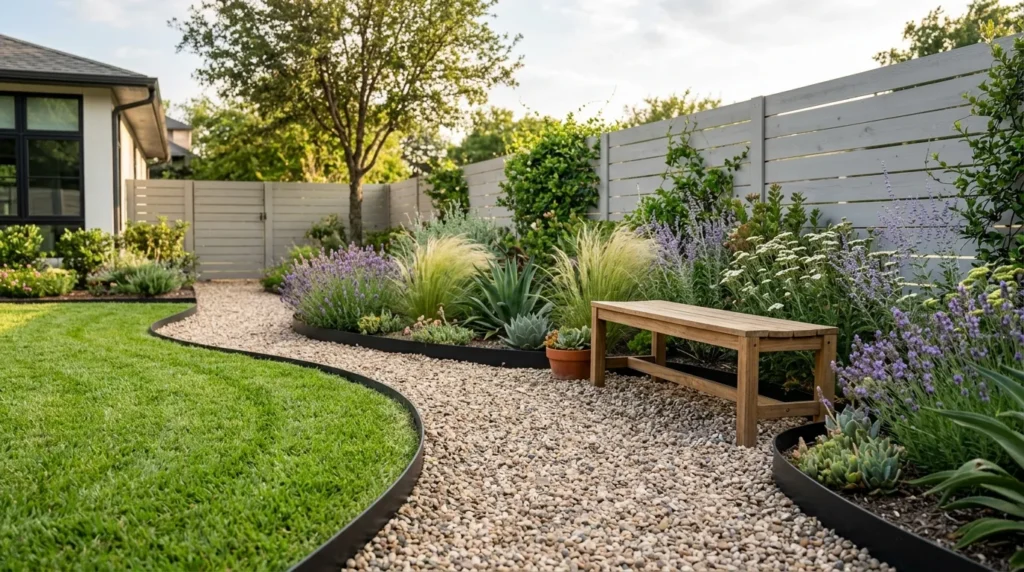
- Adds texture, drainage, and a clean border.
- Works around patios, fences, beds, and pathways.
- Uses pea gravel, crushed stone, or decomposed granite.
- Helps separate lawn, planting, and hardscape zones.
- Makes the yard easier to maintain and style.
A gravel garden edge gives a yard texture, drainage, and a polished border without needing heavy landscaping. It works especially well around patios, fences, pathways, raised beds, and seating zones. Gravel softens the transition between lawn, concrete, and planting areas while keeping weeds and mud easier to control. That’s why many designers recommend gravel when homeowners want a low-maintenance outdoor finish. Choose pea gravel for a softer look, crushed stone for a cleaner modern edge, or decomposed granite for a warmer natural tone that blends with plants around both green and hard surfaces.
This idea is practical because it separates materials and makes the yard easier to care for. Use edging to keep gravel from spreading into grass or mulch, then add landscape fabric underneath if needed. A narrow gravel band can frame a patio, highlight a fire pit, or create a clean strip beside a fence. Pair it with drought-tolerant plants, black planters, or wood furniture for contrast. The result feels finished and intentional, but still relaxed enough for everyday outdoor living, weekend hosting, and simple seasonal updates at home without feeling overly designed or formal.
4. Raised Planter Walls
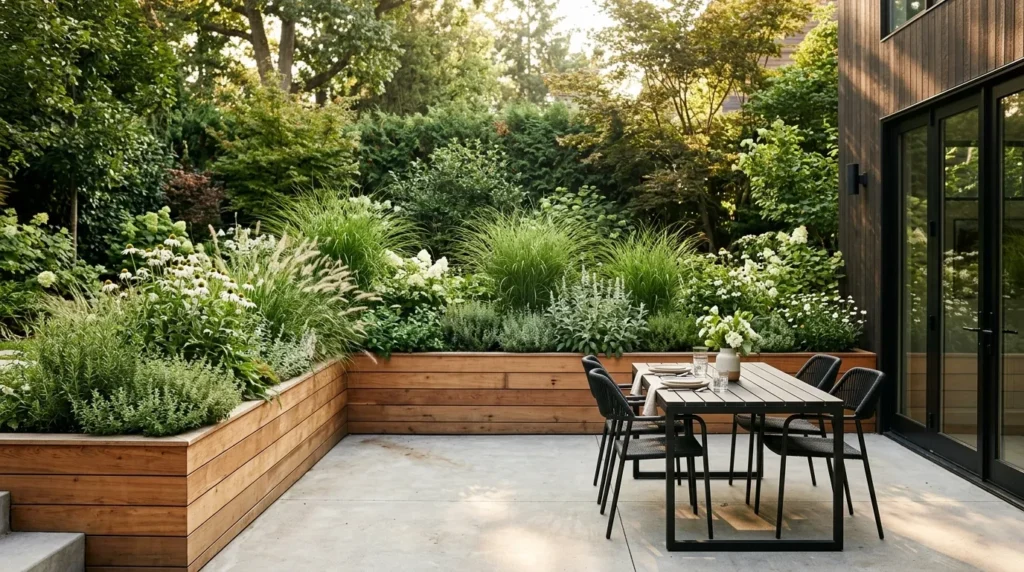
- Adds height, privacy, and a structured garden feel.
- Works along fences, patios, and narrow side yards.
- Uses wood, metal, concrete-look, or composite planters.
- Helps organize herbs, flowers, shrubs, and grasses.
- Creates greenery without crowding the center of the yard.
Raised planter walls create height, privacy, and structure in a yard that might otherwise feel flat. They work beautifully along fences, patios, dining corners, and narrow side yards because they bring greenery closer to eye level. Wood boxes feel warm, concrete planters feel architectural, and black metal planters give a crisp modern finish. In my experience, raised planters are especially helpful in smaller yards because they add garden impact without taking over the center of the space. They also make planting easier to reach and maintain through the season with less bending and mess.
The best layout depends on what you want the planters to do. Use tall grasses or shrubs for privacy, herbs near dining areas, or seasonal flowers where you want color. Make sure the planters drain properly, especially in areas with heavy rain or freeze-thaw weather. If the yard is narrow, run one long planter along the fence instead of using many small pots. This creates a cleaner line and less visual clutter. The yard feels greener, more private, and more designed without major construction or complicated upkeep for busy homeowners.
5. Outdoor Lounge Area
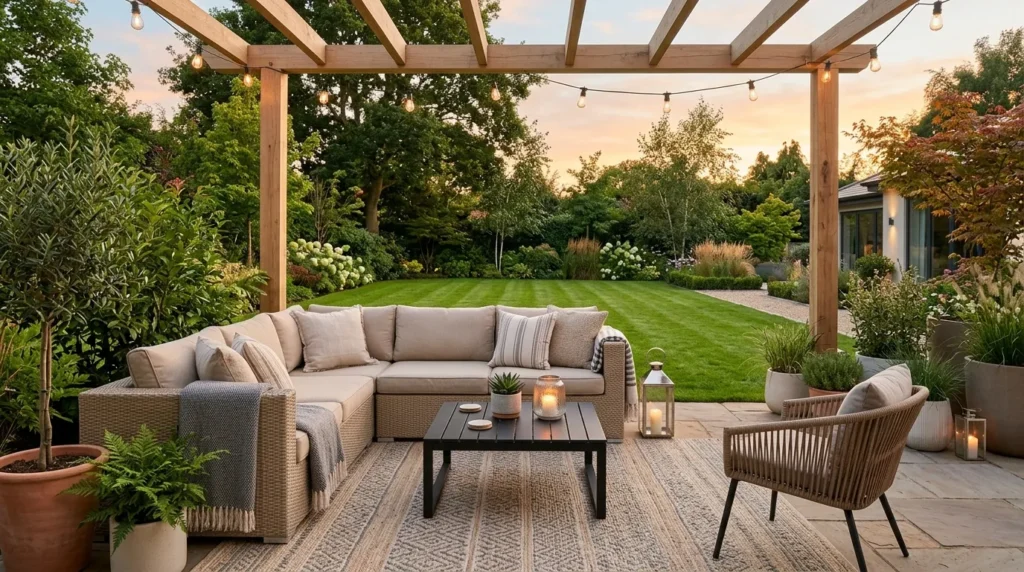
- Creates a comfortable place for relaxing and hosting.
- Works with sectionals, lounge chairs, rugs, and low tables.
- Defines the yard like an outdoor living room.
- Adds comfort with cushions, lanterns, and planters.
- Makes the space more useful for everyday life.
An outdoor lounge area makes the yard feel like an extension of the home. Instead of scattering chairs around the space, create one clear seating zone with a sofa, chairs, coffee table, rug, and side tables. This works for patios, decks, turf areas, and even gravel bases. I’ve seen this work well in many homes because people use outdoor spaces more often when the seating feels comfortable and easy to access. The layout should invite conversation, not just fill empty space with furniture or oversized decor that distracts from the view.
Start with weather-resistant furniture that fits the yard scale. A sectional works well in larger backyards, while two lounge chairs and a small table may be better for compact spaces. Add an outdoor rug to define the zone, then include cushions, lanterns, and planters for softness. Keep walkways open between the house, grill, garden, and seating. If the yard gets strong sun, add an umbrella, pergola, or shade sail. The finished lounge feels relaxed, useful, and stylish enough for everyday evenings or weekend guests for daily use.
6. Minimal Fire Corner
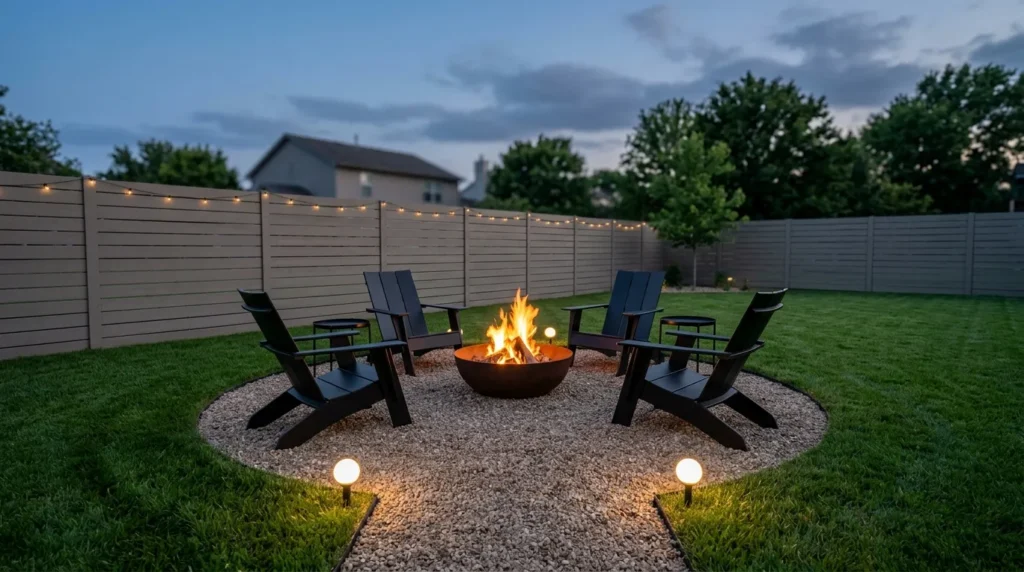
- Adds warmth and a clear evening gathering spot.
- Works with gravel, stone, concrete, or paver bases.
- Needs safe spacing from fences, trees, and furniture.
- Looks stylish with simple chairs and side tables.
- Makes the yard usable during cooler nights.
A minimal fire corner creates a natural gathering point without overwhelming the yard. The key is keeping the layout simple, safe, and balanced with the rest of the outdoor space. Use a stone, gravel, concrete, or paver base under the fire feature, then arrange chairs with enough distance for comfort. This idea works well in suburban backyards because it gives the yard a clear evening purpose. A fire area can feel cozy and upscale even when the surrounding design is very simple and low maintenance for gatherings after sunset.
Choose a fire bowl, propane fire table, or built-in feature based on your space, budget, and local rules. Always follow manufacturer instructions and keep the fire away from fences, trees, furniture cushions, and structures. Adirondack chairs give a casual look, while black metal or woven chairs feel more modern. Add small side tables so guests have somewhere to place drinks. Low pathway lights or lanterns help the area feel finished after sunset. The result is warm, practical, and perfect for cool nights outside with family and close friends around the fire pit.
7. Dining Patio Space
- Creates a dedicated outdoor meal area.
- Works near kitchens, grills, pergolas, and garden views.
- Uses pavers, deck tiles, gravel, concrete, or turf.
- Adds comfort with lighting, shade, and durable seating.
- Makes hosting easier and more enjoyable.
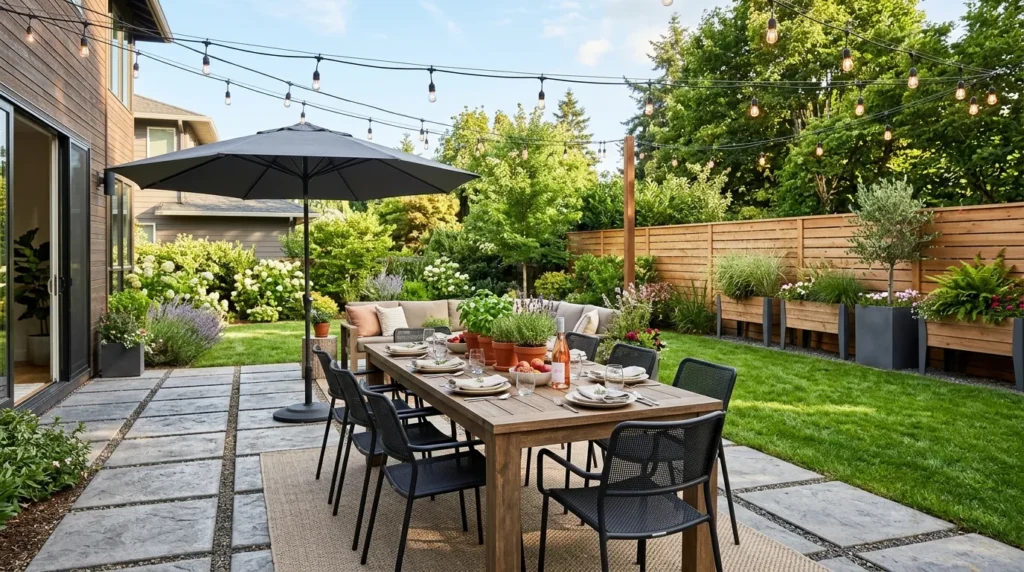
A modern dining patio gives the yard a clear purpose for meals, parties, and relaxed family time. The most successful setups feel close enough to the kitchen for convenience but separate enough to feel like a special outdoor zone. Use concrete, pavers, deck tiles, gravel, or turf as the base depending on your yard and budget. I’ve noticed that dining areas look more finished when they have a defined floor surface, overhead light, and planters nearby. These details make eating outside feel effortless and inviting for guests in every season.
Choose a table shape that fits the space and allows chairs to slide out easily. Round tables soften small patios, while rectangular tables work better for larger families and long yards. Add an umbrella, pergola, or shade sail if the area gets strong afternoon sun. For evening use, string lights or battery lanterns make the table feel warm and inviting. Keep materials weather-friendly, such as powder-coated metal, teak, resin wicker, or composite wood. The space becomes useful for weeknight dinners, cookouts, birthdays, and casual brunches throughout the warmer months and outdoor celebrations.
8. Pathway Light Lines
- Improves safety while adding a high-end evening glow.
- Works along walkways, borders, steps, and garden beds.
- Uses solar lights, low-voltage fixtures, or LED strips.
- Helps guide guests through the yard after dark.
- Makes the outdoor space feel finished at night.
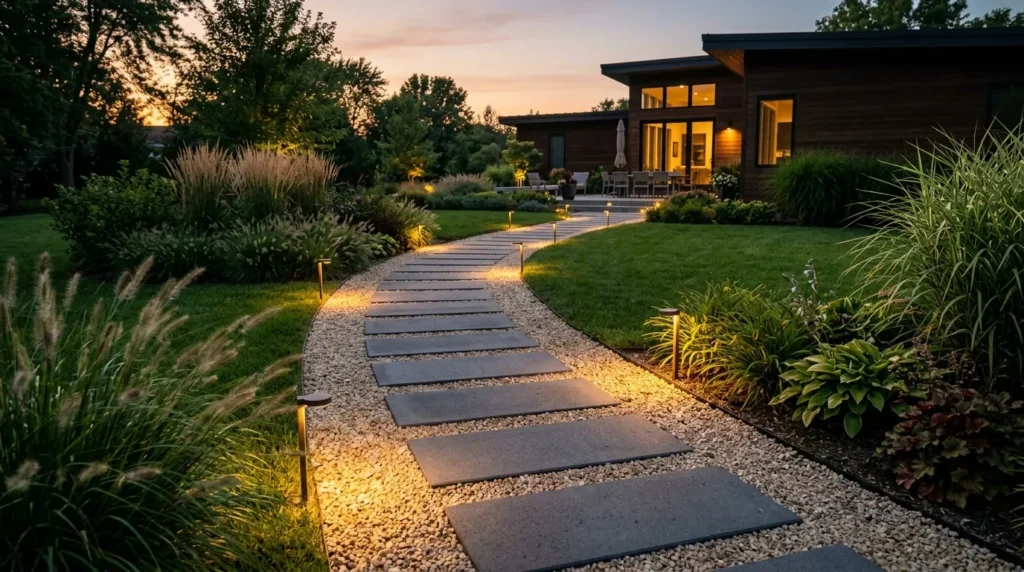
Pathway lighting lines can make a yard look high-end while improving safety after dark. Instead of placing lights randomly, use them to trace walkways, garden borders, steps, and patio edges. This creates a clean rhythm that guides people through the outdoor space. Warm white lighting usually feels softer and more inviting than cool blue light. That’s why many designers recommend lighting layers rather than one bright floodlight. A few well-placed fixtures can completely change how the yard feels at night and improve outdoor movement near steps, seating, and gardens.
Use low-voltage path lights, solar stakes, step lights, or LED strips depending on the layout. Place lights where people walk, turn, or step down, but avoid overlighting every inch. Highlight trees, planters, or textured walls with subtle uplights for extra depth. Choose black, bronze, or stainless finishes that match your furniture and hardware. For USA homes with outdoor entertaining spaces, lighting extends usability into the evening and makes guests feel more comfortable. The finished yard looks polished, safe, and welcoming after sunset every night without feeling too bright.
9. Water Feature Accent
- Adds movement, sound, and a peaceful focal point.
- Works with fountains, water bowls, wall features, or rills.
- Softens hard surfaces like concrete, gravel, and stone.
- Pairs well with grasses, planters, and modern seating.
- Helps the yard feel calm and spa-inspired.
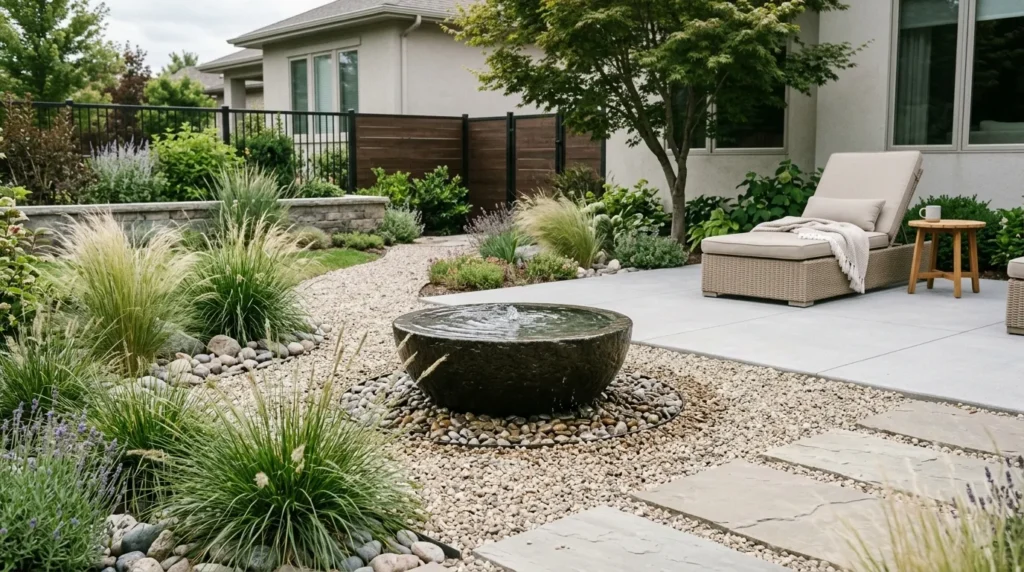
A water feature accent adds calm movement and sound to a yard without needing a large pond. A simple fountain, water bowl, wall feature, or narrow rill can create a relaxing focal point near a patio or garden corner. This idea works especially well when the yard has hard surfaces, because the sound of water softens the atmosphere. In my experience, even a small fountain can make an outdoor space feel more peaceful and expensive when it is placed thoughtfully near seating or greenery during quiet afternoons.
Choose a size that fits the yard and does not overpower nearby seating. A modern bowl fountain works well in small patios, while a wall-mounted water feature saves floor space. Make sure there is access to power if needed, and consider maintenance before choosing the design. Surround the feature with gravel, stone, ornamental grasses, or low planters for a finished look. Keep the style simple so it feels clean rather than themed. The result is a calming detail that adds texture, sound, and visual interest without adding clutter in the main seating area.
10. Privacy Green Screen
- Creates a softer boundary than a plain fence.
- Works with hedges, trellises, tall planters, and climbing plants.
- Helps block neighbors, roads, and nearby windows.
- Adds vertical greenery to make the yard feel taller.
- Improves comfort for lounging, dining, and hosting.
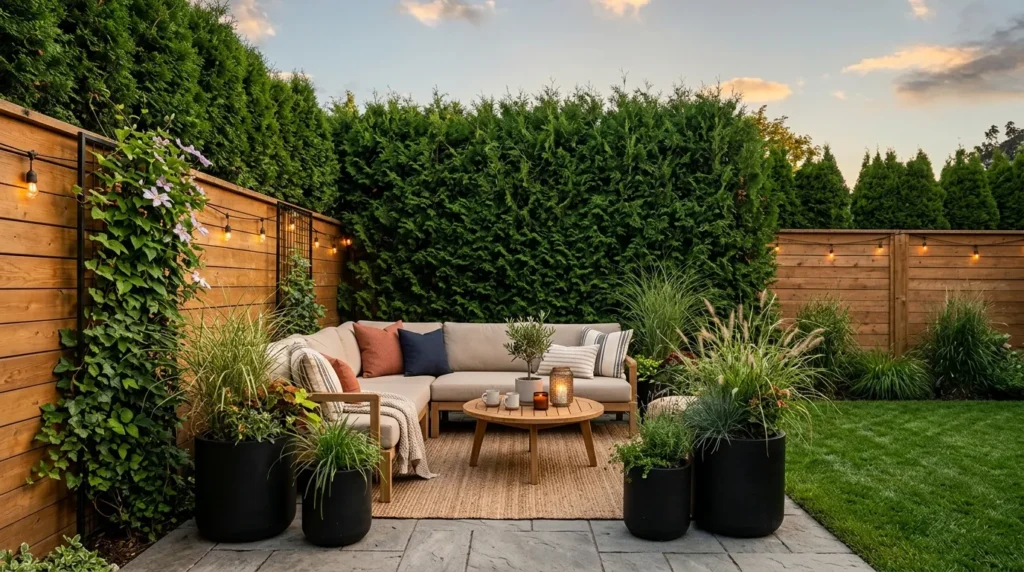
A privacy green screen makes a yard feel more comfortable, especially when neighbors, streets, or nearby windows are close. Instead of relying only on a plain fence, use plants, trellises, hedges, bamboo, or tall planters to create a softer boundary. This approach works well because it adds privacy and beauty at the same time. The greenery also helps outdoor seating feel more protected. A strong Modern Yard Design often uses vertical planting to make the space feel taller, calmer, and more complete for daily use and more enjoyable.
For the cleanest result, choose plants that match your climate, sun exposure, and maintenance level. Arborvitae, boxwood, privet, ornamental grasses, climbing jasmine, and bamboo-style screens can all work depending on the region and local rules. Use tall planters if you cannot plant directly in the ground. Add a trellis behind a bench or dining area to create a more private backdrop. The yard becomes easier to enjoy, especially for morning coffee, family dinners, reading, or hosting friends without feeling too exposed to nearby homes or passing foot traffic.