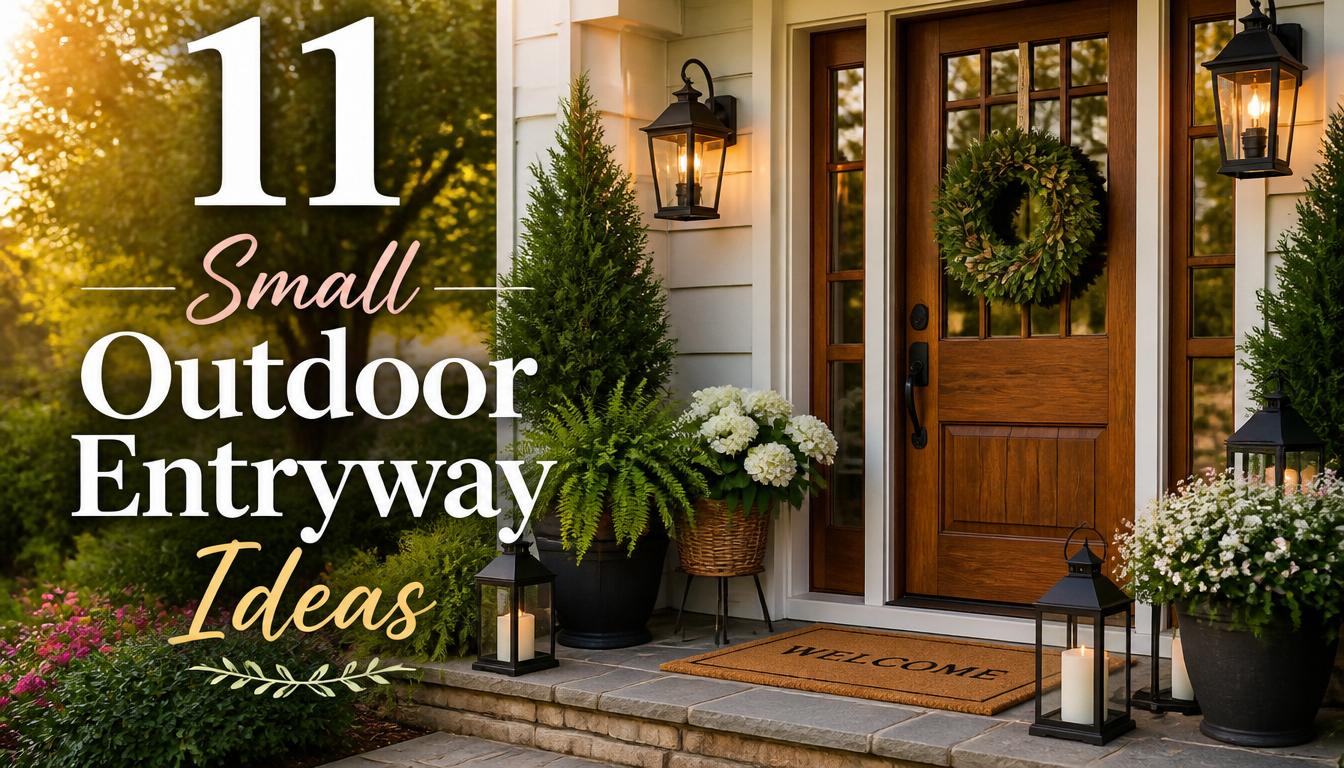
11 Small Outdoor Entryway Ideas
A beautiful exterior entry does not need a huge porch, wide steps, or a designer budget to feel welcoming. In many USA homes, the front entrance is compact, exposed to weather, or squeezed between siding, railings, landscaping, and a narrow walkway. Still, that small space carries a big responsibility. It greets guests, adds curb appeal, handles packages, catches dirt, and gives the first hint of your home’s personality before anyone reaches the door.
The best Small Outdoor Entryway designs focus on smart scale, durable materials, and warm visual details. A layered mat, one good planter, better lighting, or a fresh door color can change the whole mood without crowding the path. The goal is not to overdecorate. It is to choose pieces that look intentional, survive real weather, and make everyday arrivals feel easier, cleaner, and more inviting.
These ideas work for townhomes, ranch houses, cottages, apartments, duplexes, narrow stoops, and small covered porches. Each one is practical enough for real life but styled enough to inspire Pinterest saves. Use the ideas that fit your space, climate, budget, and routine. Even one thoughtful update can make a compact entrance feel polished, welcoming, and cared for.
1. Layered Doormats
Bullet Points
- Adds pattern, texture, and personality without taking up extra space.
- Helps define the doorway on a small stoop or narrow porch.
- Works with coir mats, outdoor rugs, rubber mats, and washable layers.
- Easy to refresh for seasons, holidays, or simple curb appeal updates.
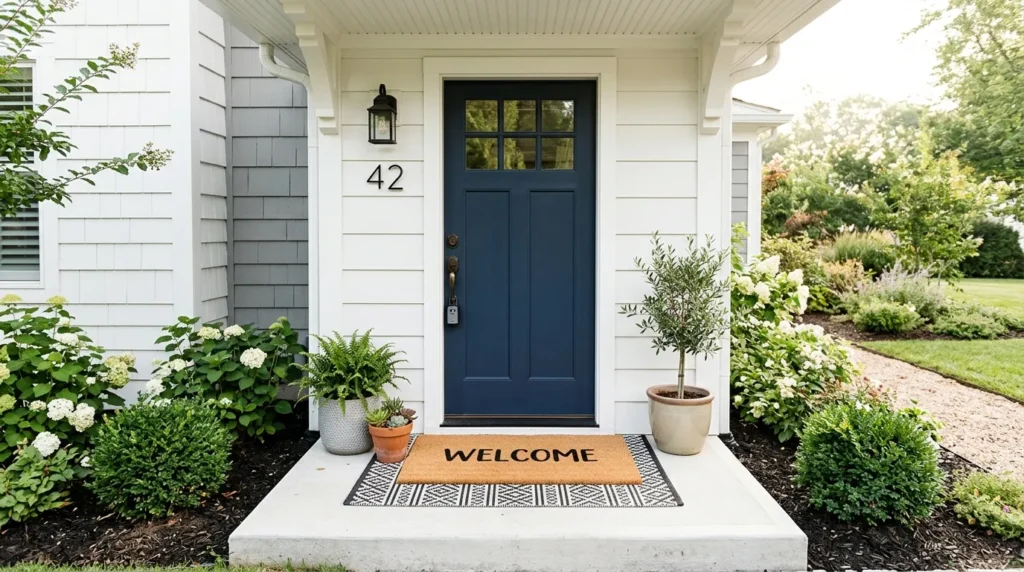
Layered doormats instantly make a tiny entry feel styled instead of unfinished. Start with a larger outdoor rug as the base, then place a durable coir or rubber doormat on top for daily function. The larger layer should extend beyond the top mat enough to show pattern, but not so far that it becomes a tripping hazard. In my experience, black-and-white checks, muted stripes, natural woven textures, and simple plaids work beautifully because they add visual interest without fighting the door color or siding.
This idea is practical because it controls dirt while creating a clear focal point. Choose flat, weather-safe materials that dry quickly and stay stable in wind or rain. If your entrance is uncovered, avoid thick rugs that hold water or curl at the edges. A layered mat setup also makes seasonal styling easy. Swap the top mat for fall, winter, spring, or summer while keeping the base rug neutral. The entry looks refreshed with very little effort, and guests immediately feel the space has been considered.
2. Slim Planters
Bullet Points
- Adds greenery without blocking the walkway or door swing.
- Works well beside steps, narrow porches, and apartment entries.
- Can hold evergreens, grasses, flowers, herbs, or seasonal stems.
- Looks best in matching or coordinated containers.
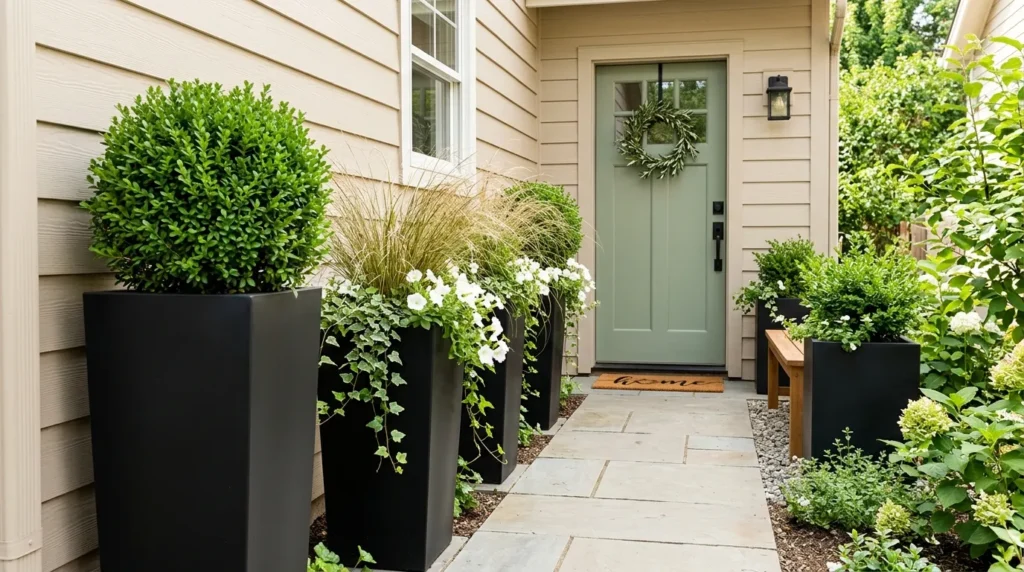
Slim planters bring life to a compact exterior entry without overwhelming the floor space. Tall, narrow containers are especially helpful because they add height and color while leaving the walking path open. Place one planter beside the door, or use a matching pair if the entry has enough width. Choose resin, ceramic, fiberglass, metal, or concrete-look pots depending on your weather exposure. I’ve noticed that fewer larger planters usually look cleaner than several tiny pots scattered around a small doorway, especially when viewed from the curb.
The best planting choices depend on sunlight and climate. Boxwood, dwarf evergreens, ornamental grasses, lavender, petunias, ferns, and seasonal mums can all work when matched to the right conditions. Add pot feet or saucers where needed to protect decking, concrete, or painted steps. For a polished look, repeat one container color and vary plant texture instead of using mismatched pots. Slim planters soften hard surfaces like brick, siding, and concrete, making the entrance feel fresher, greener, and more welcoming without creating clutter or maintenance stress.
3. Painted Door
Bullet Points
- Creates a strong focal point without adding bulky decor.
- Works beautifully for cottages, townhomes, ranch houses, and brick homes.
- Can be bold, soft, classic, or seasonal depending on the color.
- Pairs well with simple mats, planters, lighting, and hardware.
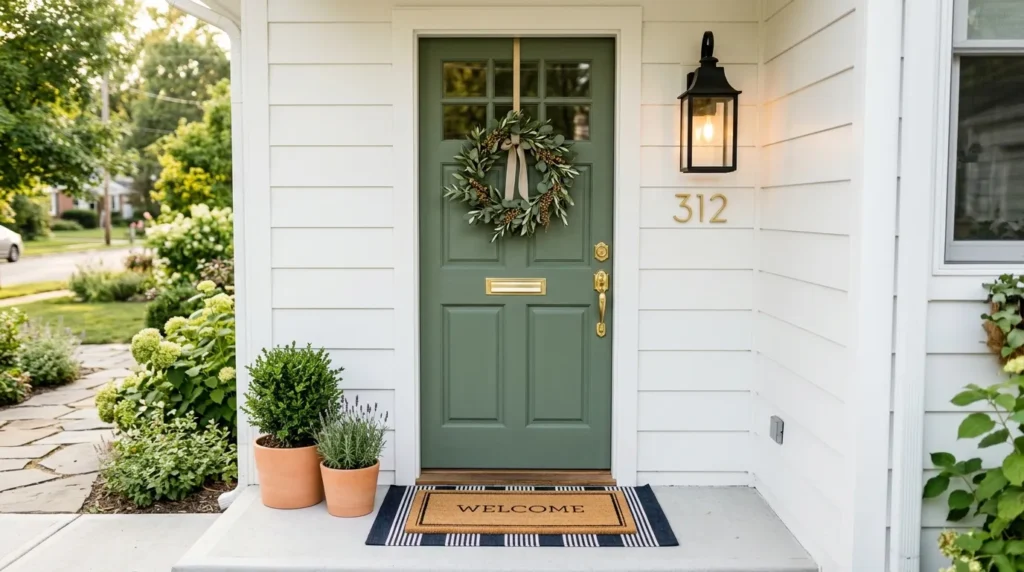
A painted front door can completely change the feeling of a small entry. When there is not much room for furniture or large decorations, color becomes the design feature. Soft sage, navy, charcoal, terracotta, black, dusty blue, deep green, or warm cream can all give the entrance personality. Test paint samples outside before committing, because sunlight, shade, brick, siding, and landscaping can change how a color appears. That’s why many designers recommend viewing exterior colors at different times of day before painting.
The transformation feels bigger than the project itself. A fresh door color makes old hardware look sharper, mats look more intentional, and planters feel more connected. Use exterior-grade paint, primer, painter’s tape, a smooth roller, and an angled brush for clean edges. If painting is not allowed because of HOA or rental rules, use removable accents like a wreath, updated door knocker, or magnetic hardware details. A strong door creates curb appeal without taking up floor space, which is exactly what a compact entry needs.
4. Wall Lanterns
Bullet Points
- Improves safety, visibility, and evening curb appeal.
- Adds warmth without using floor space.
- Works with modern, farmhouse, cottage, coastal, and traditional exteriors.
- Can be hardwired, solar, battery-operated, or rechargeable.
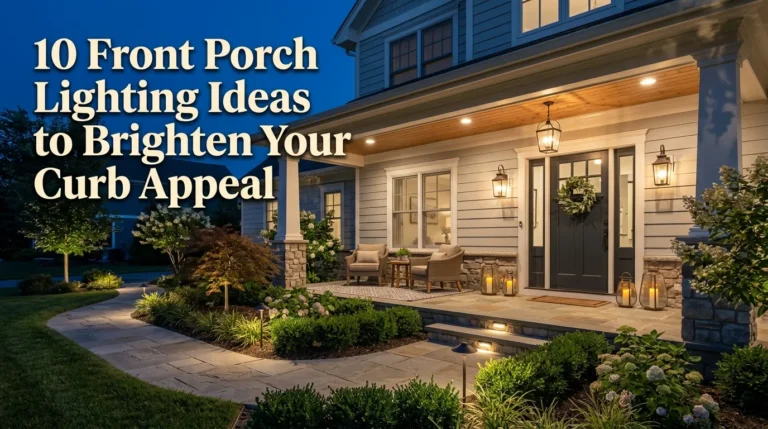
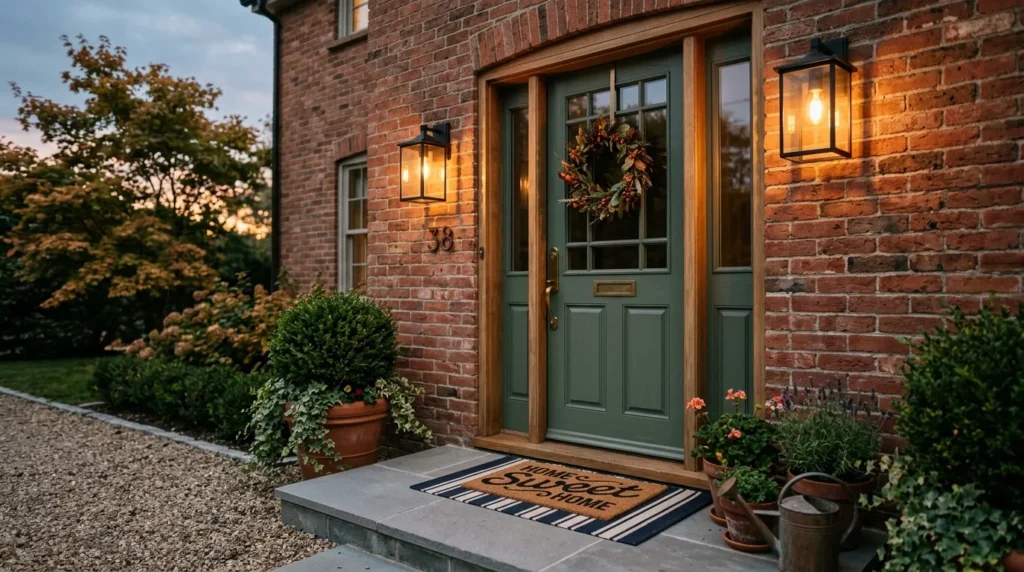
Wall lanterns make a small exterior entry feel safer, warmer, and more finished after sunset. Lighting is one of the most important upgrades because it helps guests find the door, improves visibility around steps, and highlights the details you already have. Choose a fixture that fits the scale of your entry and does not stick out too far into the walking path. Matte black, aged brass, bronze, brushed nickel, and galvanized finishes work with many home styles, from farmhouse to modern suburban exteriors.
The right bulb temperature makes a big difference. Warm white light usually feels more inviting than cool blue light, especially against brick, wood, cream siding, or painted doors. If hardwiring is not possible, consider solar sconces, rechargeable lanterns, or battery-operated fixtures designed for outdoor use. Keep glass panels clean and replace dim bulbs quickly so the entry always feels cared for. Good lighting adds practical safety and visual softness, turning even a narrow stoop into a welcoming place during evening arrivals.
5. Vertical Greenery
Bullet Points
- Saves floor space while still adding plants and texture.
- Works with wall planters, trellises, railing boxes, or ladder stands.
- Ideal for townhomes, apartments, duplexes, and narrow stoops.
- Adds height and frames the doorway beautifully.
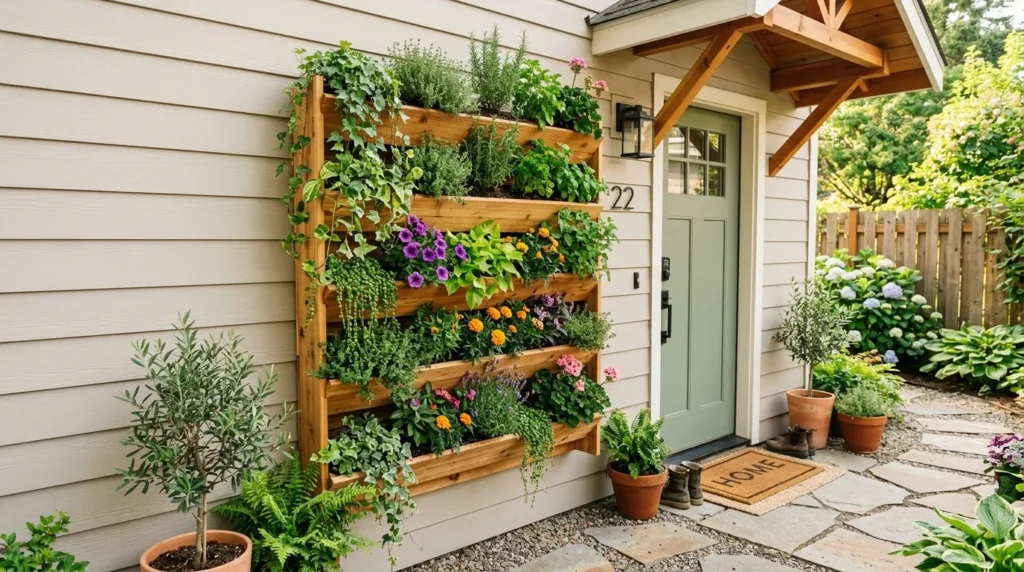
Vertical greenery is perfect when the entry has almost no room for pots. Instead of spreading plants across the floor, move them upward with a wall planter, trellis, narrow ladder shelf, or railing box. This creates the feeling of a garden while keeping the walkway clear for guests, deliveries, and daily movement. Choose one vertical feature rather than several competing pieces. In my experience, a single well-placed planter wall looks more polished than a cluster of small containers squeezed around the door.
This idea works especially well with trailing vines, herbs, compact flowers, succulents, or seasonal greenery. Use cedar, powder-coated metal, resin, or weather-treated wood so the structure can handle outdoor conditions. Make sure wall-mounted pieces are secured properly and do not trap moisture against siding. A vertical planter also helps frame the door, drawing the eye upward and making the entry feel taller. It adds color, texture, and softness without sacrificing the practical space every small entrance needs for real daily use.
6. Compact Bench
Bullet Points
- Adds seating and structure to a small porch or covered entry.
- Gives guests a place to pause, set bags, or remove shoes.
- Works best with narrow, backless, folding, or wall-hugging styles.
- Can include a cushion, basket, or small storage space underneath.
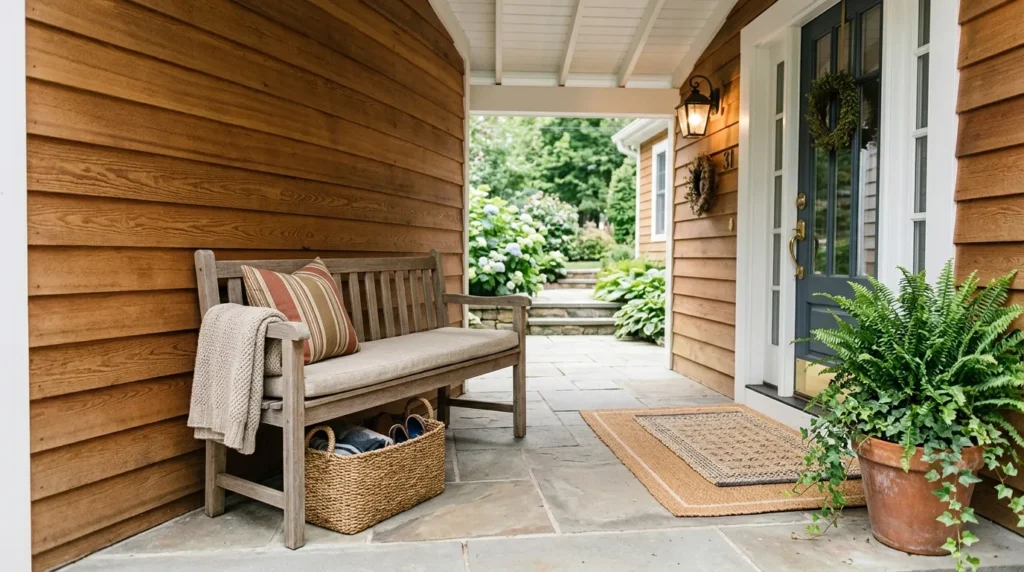
A compact bench makes a tiny exterior entry feel more usable and welcoming. Even a narrow bench can provide a place to set down groceries, tie shoes, or pause with a cup of coffee. Choose a shallow design that sits close to the wall and does not block the door swing. Backless benches, folding benches, and slim wood styles are usually better for tight spaces than deep patio seating. The scale should feel helpful, not squeezed, so measure carefully before buying.
The styling should stay simple because the bench still needs to function. Add one outdoor cushion, a small weather-safe pillow, or a basket underneath for garden gloves, dog leashes, or porch essentials. Teak, acacia, metal, resin, and painted wood can all work depending on sun and rain exposure. If the entry is uncovered, use quick-dry fabrics and avoid cushions that hold moisture. A compact bench gives the entrance a lived-in feeling while keeping the layout practical, open, and easy to maintainz
7. House Numbers
Bullet Points
- Improves curb appeal and makes the home easier to identify.
- Helps guests, delivery drivers, and emergency services find the door.
- Works with metal numbers, plaques, tiles, posts, or mailbox accents.
- Looks best when placed clearly and sized for street visibility.
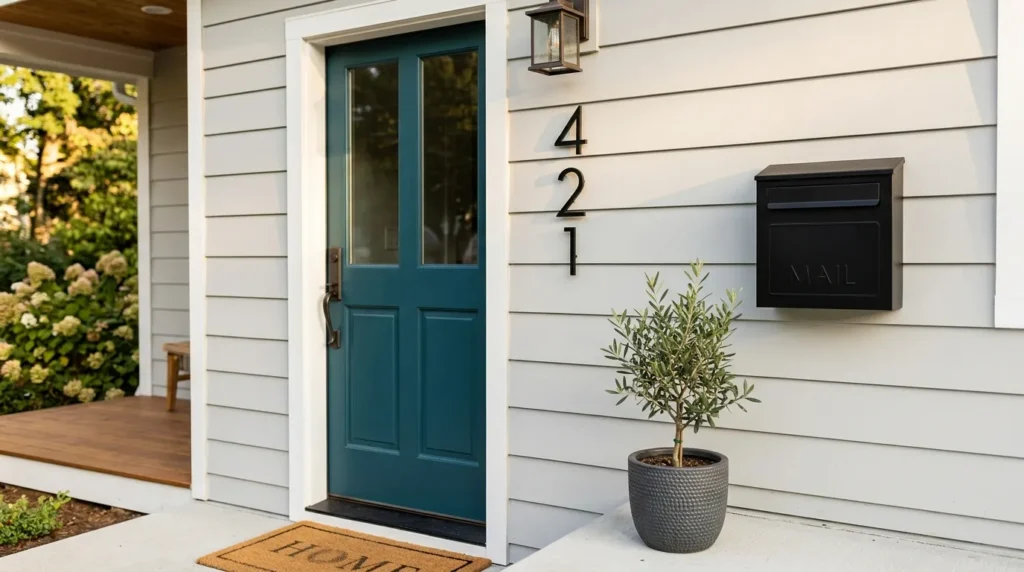
Updated house numbers are a small detail with a surprisingly strong impact. They make the entry feel cleaner, more custom, and easier to find from the street. Choose numbers that are readable from the curb, especially if your home receives frequent deliveries or sits back from the sidewalk. Modern black metal, brass, brushed nickel, ceramic tiles, wood-backed plaques, and vertical number signs can all work beautifully. The style should match the home’s architecture, but visibility should always come first.
Placement matters as much as the number design. Avoid hiding house numbers behind wreaths, tall plants, railings, or screen doors. A narrow wall beside the door may suit vertical numbers, while a wider entry can handle a horizontal plaque. Use exterior screws, anchors, or weather-rated adhesive depending on siding material. This update gives the entrance a sharper, more intentional look while improving everyday function. It is one of the easiest ways to make a small doorway feel polished without adding decor that takes up space.
8. Seasonal Wreath
Bullet Points
- Adds charm without using porch floor space.
- Easy to change for spring, summer, fall, winter, and holidays.
- Works with greenery, florals, ribbon, pine, berries, or grapevine bases.
- Helps connect the door color with the rest of the entry palette.
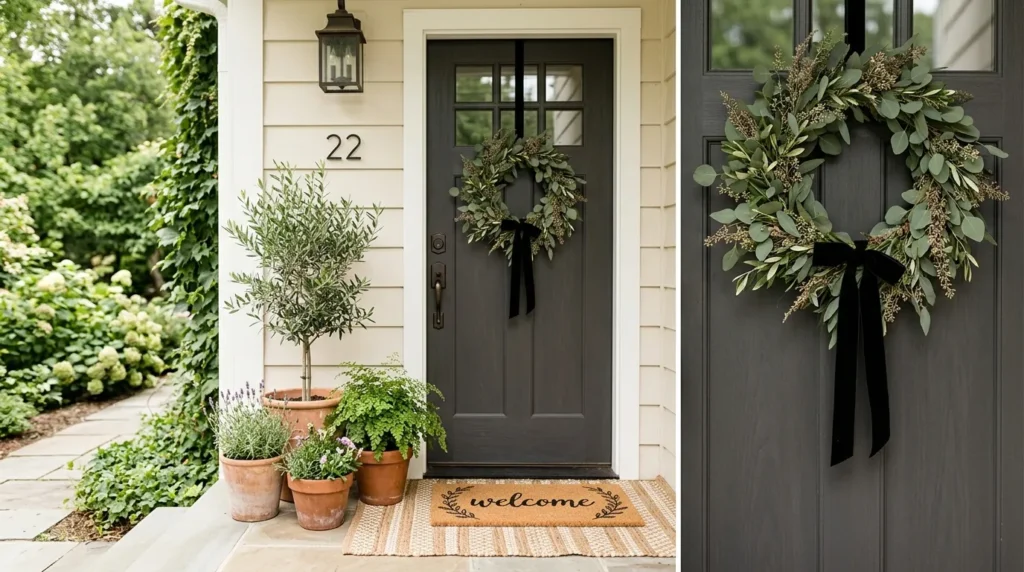
A seasonal wreath brings personality to the door without crowding the entrance. This is especially helpful when the porch is too small for extra furniture, signs, or large planters. Choose a wreath that fits the door scale and leaves breathing room around the edges. Oversized wreaths may photograph well, but they can look bulky on narrow doors. Eucalyptus, lavender, pine, berries, dried grasses, faux florals, ribbon, and grapevine bases all create different moods while keeping the entry visually soft.
The best wreaths connect with the rest of the exterior palette. If your mat has black accents, use a black ribbon. If your planters are terracotta, choose warm stems or muted greenery. Use an outdoor-safe hook, magnetic hanger, or over-the-door hanger that will not damage the finish. Store wreaths carefully so they keep their shape between seasons. This simple vertical accent makes the entry feel fresh and cared for, while still leaving the floor clear for packages, guests, pets, and everyday traffic.
9. Mini Side Table
Bullet Points
- Adds a useful surface for plants, lanterns, coffee, or small decor.
- Works beside a chair, bench, railing, or front door corner.
- Best in round, narrow, pedestal, or foldable styles.
- Makes the entry feel more like a finished outdoor room.
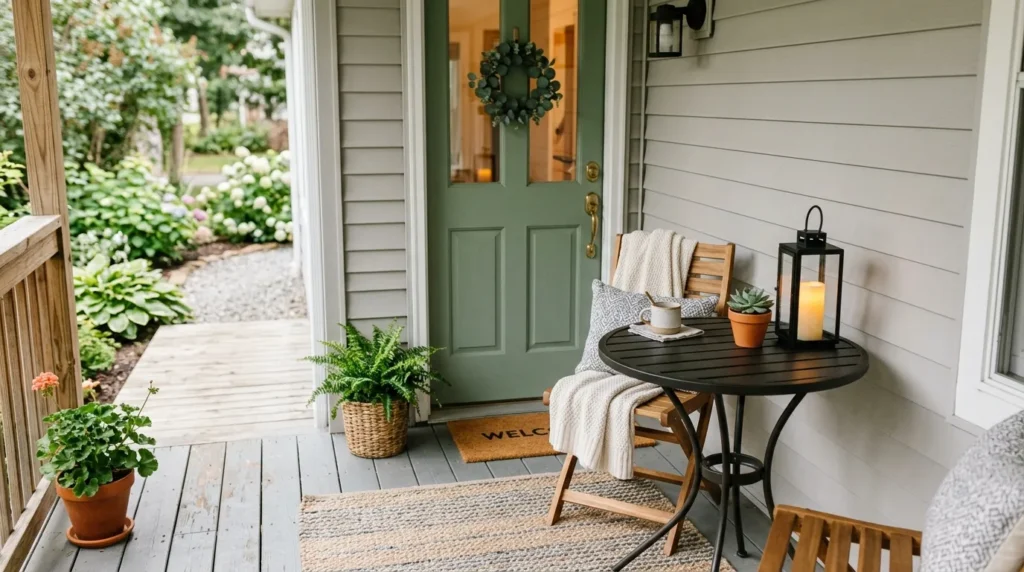
A mini side table gives a compact entry a useful surface without making it feel crowded. Think of it as a small landing place for a lantern, potted plant, coffee cup, or seasonal accent. Round, pedestal, folding, and narrow metal tables usually work best because they tuck into corners and leave the walkway open. Avoid bulky patio tables that interrupt movement near the door. I’ve seen this work well on small covered porches where one table instantly makes the space feel more finished.
Style the table with restraint so it remains practical. One lantern, one small plant, or one decorative bowl is usually enough. If the area is uncovered, choose metal, resin, teak, concrete-look, or powder-coated materials that can handle weather. A foldable table is a smart choice for renters or homeowners who need to move items during storms. This simple piece creates an outdoor-room feeling without requiring a large porch. It adds charm, function, and a place for small seasonal details that feel intentional.
10. Privacy Screen
Bullet Points
- Softens views from sidewalks, driveways, or neighboring doors.
- Works with trellises, wood slats, railing panels, or tall planters.
- Adds comfort without making the entrance feel closed off.
- Can support climbing plants, grasses, or decorative outdoor panels.
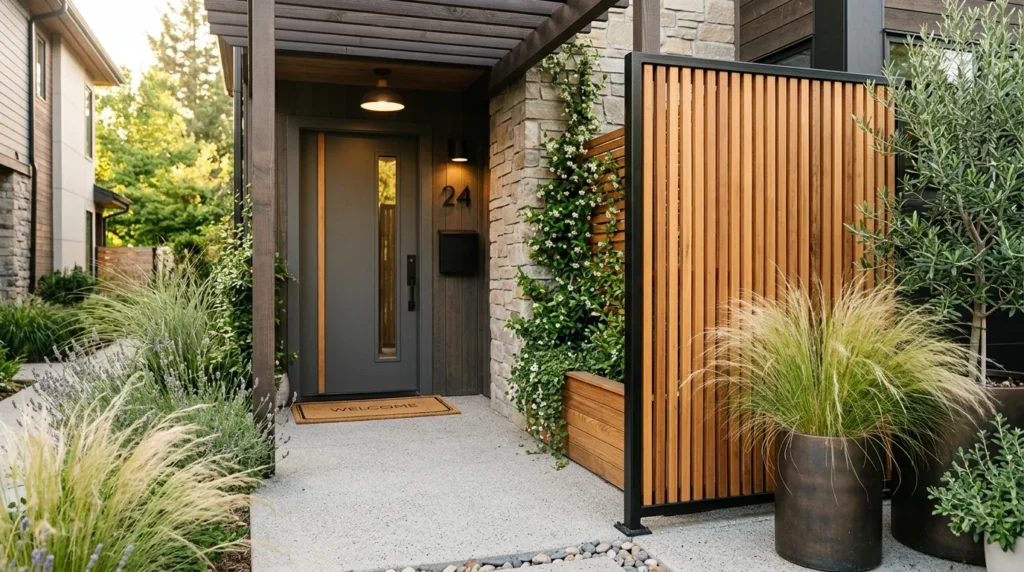
A privacy screen can make a close-to-the-street entry feel calmer and more comfortable. Many townhomes, duplexes, and neighborhood houses have front doors near sidewalks, driveways, or neighboring porches. A slim screen, trellis, planter wall, or wood slat panel creates a gentle boundary without blocking the entrance completely. The goal is to soften sightlines, not create a wall. Open patterns, natural textures, and greenery usually feel more welcoming than solid panels in a small exterior space.
This idea works best when the screen also adds beauty. A black metal trellis feels classic, a cedar slat panel feels modern, and tall planters with grasses feel soft and garden-inspired. Add climbing jasmine, clematis, ivy alternatives, or seasonal vines if your climate allows. Make sure the screen is stable, wind-safe, and allowed by HOA or rental rules. A privacy detail gives the entry a cozier feeling while still keeping it bright, breathable, and connected to the rest of the home’s curb appeal.
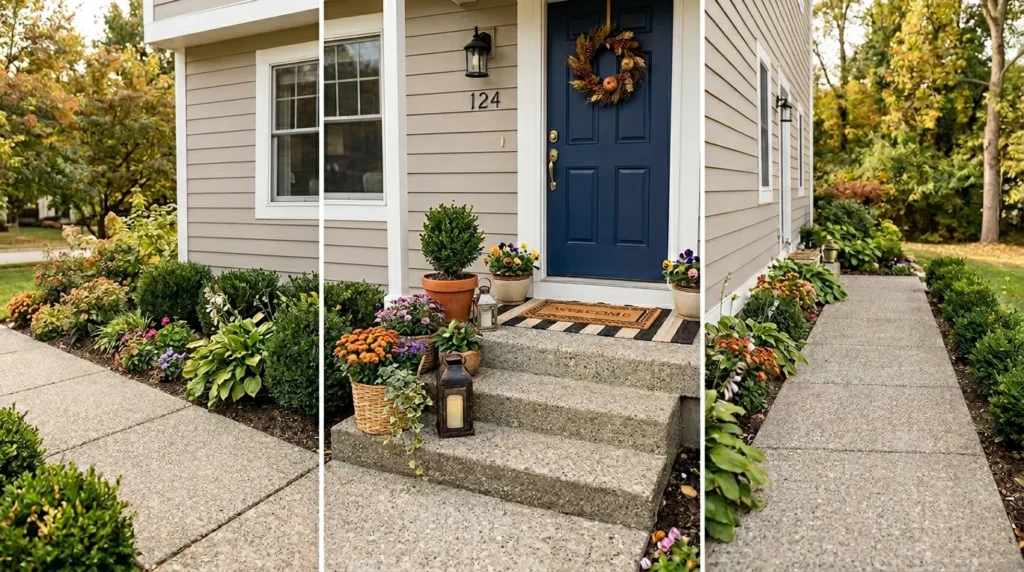
11. Step Styling
Bullet Points
- Makes porch steps look intentional instead of plain or empty.
- Works with staggered planters, lanterns, mats, or seasonal accents.
- Adds visual movement without crowding the actual doorway.
- Best when one side remains clear for safe walking.
Styled steps can make a small entrance feel fuller without crowding the doorway itself. If your porch has one, two, or three steps, use them as gentle display levels for planters, lanterns, or seasonal accents. Keep decor to one side so the walking path stays safe and comfortable. A staggered arrangement usually looks better than placing everything in a straight line. Use different heights, such as a tall planter, a medium pot, and a small lantern, to create a natural visual rhythm.
This idea is especially useful for homes with very narrow landing space at the top. By decorating the steps instead of the doorway, you add curb appeal while preserving function. Choose heavy planters or weighted lanterns if the area gets wind. In winter, avoid placing items where snow, ice, or salt will create hazards. Step styling can change with the seasons using mums, pumpkins, evergreens, flowers, or simple lanterns. The entrance feels layered, welcoming, and photo-ready while still staying practical for daily use.