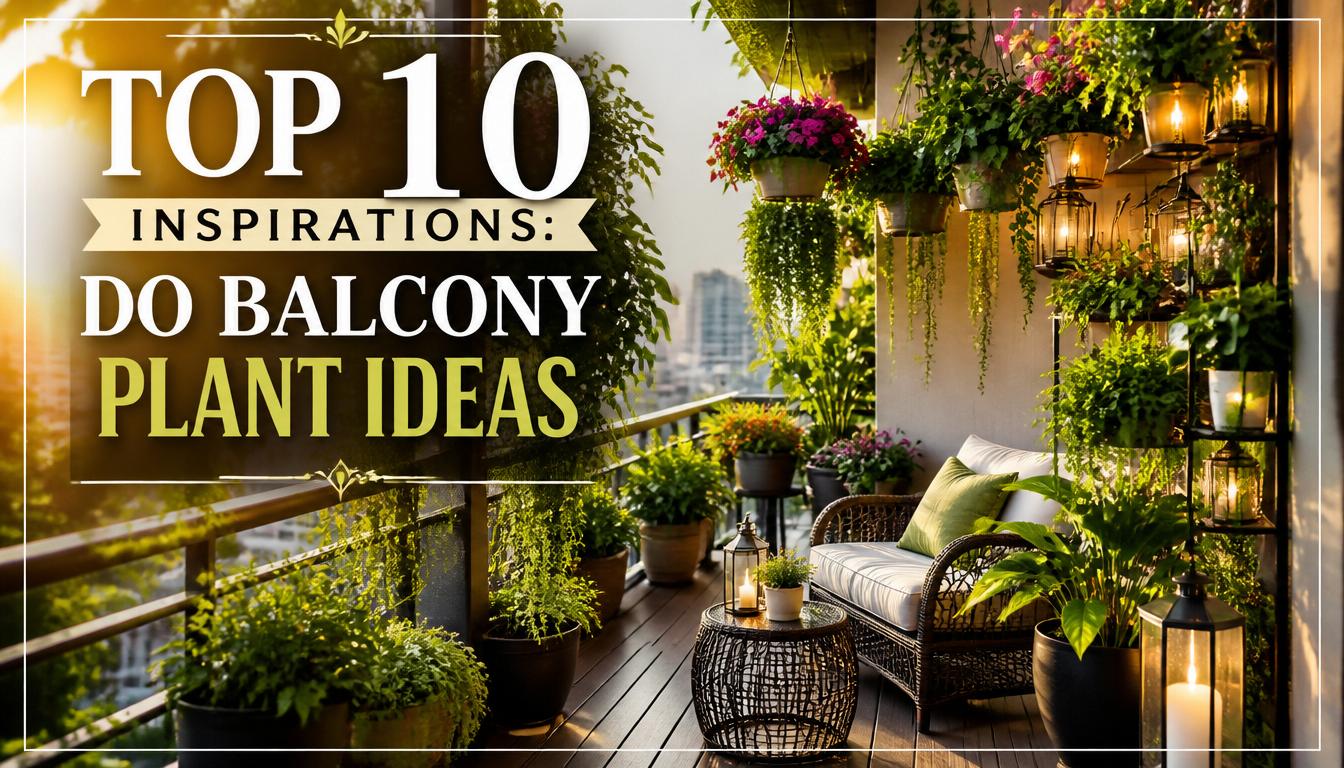
Top 10 Inspirations: Do Balcony Plant Ideas
Introduction
Balconies are often overlooked as potential green spaces, but with the right plant ideas, they can become a personal retreat, a colorful view, and a relaxing urban oasis. In many U.S. apartments, space is limited, and outdoor areas may feel bare, so introducing greenery is not only visually appealing but also supports wellness and fresh air. Plants soften hard surfaces, provide privacy, and make small balconies feel bigger than they are.
These Inspirations: Do Balcony plant ideas focus on creating a balanced, stylish, and practical setup for any balcony size. You’ll find vertical gardens, hanging baskets, potted arrangements, colorful flowers, and low-maintenance greenery that suits busy lifestyles, all while being Pinterest-ready and visually inspiring.
1. Vertical Planter Wall
- Maximizes vertical space for small balconies.
- Works with modular planters, trellises, and wall-mounted pots.
- Creates privacy and lush greenery without cluttering the floor.
- Ideal for herbs, flowers, and trailing plants.
- Adds a modern, structured aesthetic.
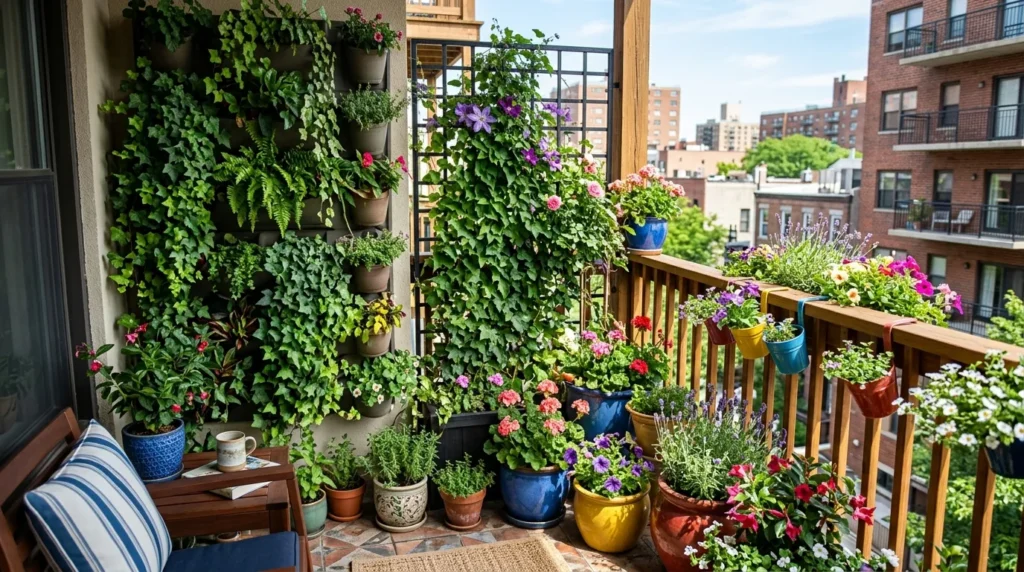
A vertical planter wall transforms a narrow balcony into a green sanctuary without occupying floor space. This approach allows plants to cascade downward or grow upward, creating a dynamic, layered look. In my experience, these walls are perfect for small urban apartments where every square foot counts. Modular planters and trellises let you customize the arrangement by height, color, and texture. The design also supports herbs or flowers close to eye level, making them accessible for use in cooking or for visual enjoyment.
The transformation is dramatic: a bare wall becomes a living feature, adding depth, vibrancy, and privacy. Choose lightweight planters if the balcony has weight restrictions, and ensure proper drainage to prevent water pooling. Use climbing vines, flowering plants, or trailing ivy to achieve variety. The vertical arrangement creates a modern focal point that is visually appealing, functional, and easy to maintain with minimal floor clutter.
2. Hanging Basket Cluster
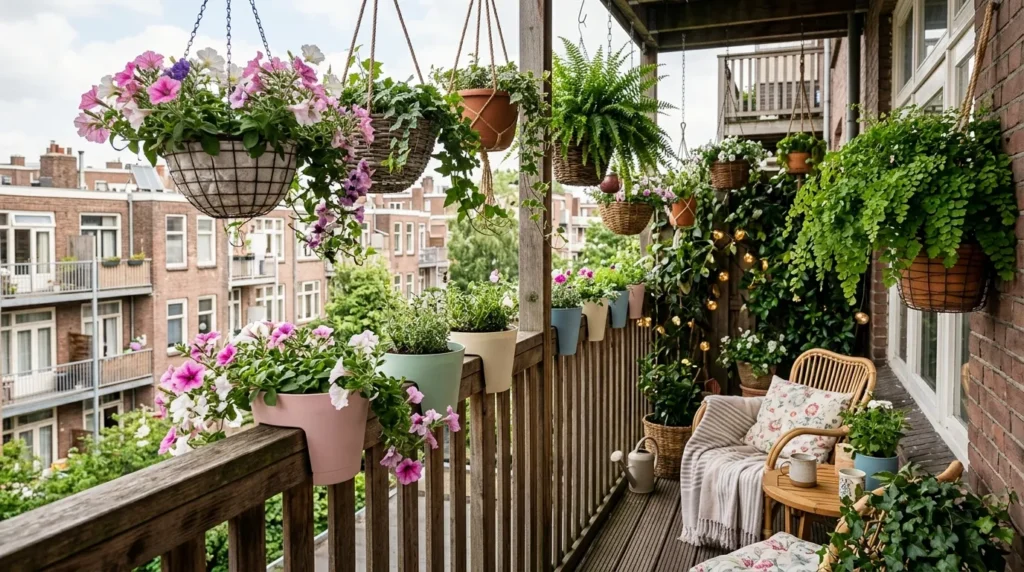
- Adds greenery overhead without taking floor space.
- Works with metal hooks, ceiling rails, or railing mounts.
- Ideal for trailing flowers, ferns, or herbs.
- Creates a layered, dynamic garden look.
- Enhances airflow and sunlight exposure for plants.
Hanging basket clusters elevate balcony plant design by introducing vertical interest and lush greenery overhead. They are perfect for small balconies where floor space is limited. I’ve noticed that grouping baskets at different heights creates a sense of fullness and movement. Use lightweight metal hooks or railing mounts to safely support each basket. Trailing plants like ivy, petunias, or ferns add softness and color, while herbs like basil or mint bring practical use. The visual layering mimics a mini garden canopy, creating a serene and Pinterest-worthy atmosphere.
The practical benefit is that you can keep plants above seating areas, tables, or walkways without crowding the floor. Position plants where they receive adequate sunlight, and group them in clusters for impact. Lightweight baskets with coco liners or self-watering inserts reduce maintenance. A mix of flowering and green foliage adds depth and color contrast. With this setup, your balcony feels vibrant, lively, and organized, while still functional for daily use, coffee breaks, or evening relaxation.
3. Potted Herb Corner
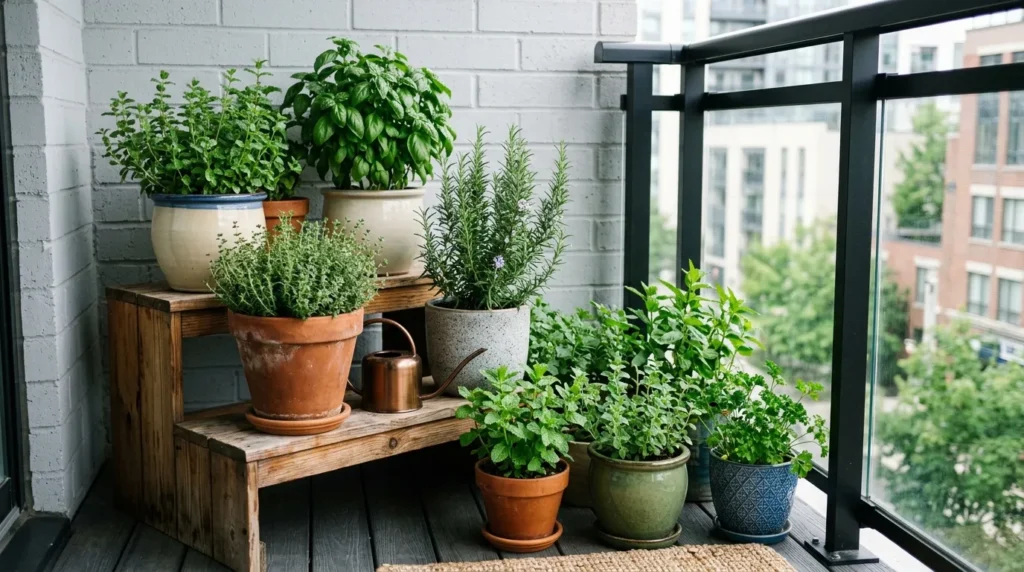
- Provides fresh herbs for cooking.
- Works with small pots, tiered stands, or window boxes.
- Uses basil, thyme, rosemary, mint, or parsley.
- Combines functionality with greenery aesthetics.
- Keeps plants within reach of your kitchen or grill.
A potted herb corner turns your balcony into both a culinary and visual delight. Fresh herbs are perfect for apartment living, adding fragrance, color, and practical use. In my experience, placing herbs together in a corner or on tiered shelves maximizes sunlight exposure while keeping the space organized. Small pots, ceramic containers, or tiered plant stands allow you to fit several herbs without crowding the balcony floor. The greenery adds a natural touch and makes the balcony feel alive, fresh, and purposeful.
The transformation lies in functionality and visual appeal. Grouping herbs makes harvesting easy, and arranging them by height adds dimension. Ensure proper drainage to prevent root rot, and rotate pots periodically for even sunlight. Using a mix of flowering herbs, like thyme with tiny blooms, or aromatic herbs like rosemary, enhances the sensory experience. This corner becomes a mini kitchen garden, elevating balcony style while serving practical cooking needs and creating a lush, layered visual impression.
4. Colorful Flower Boxes
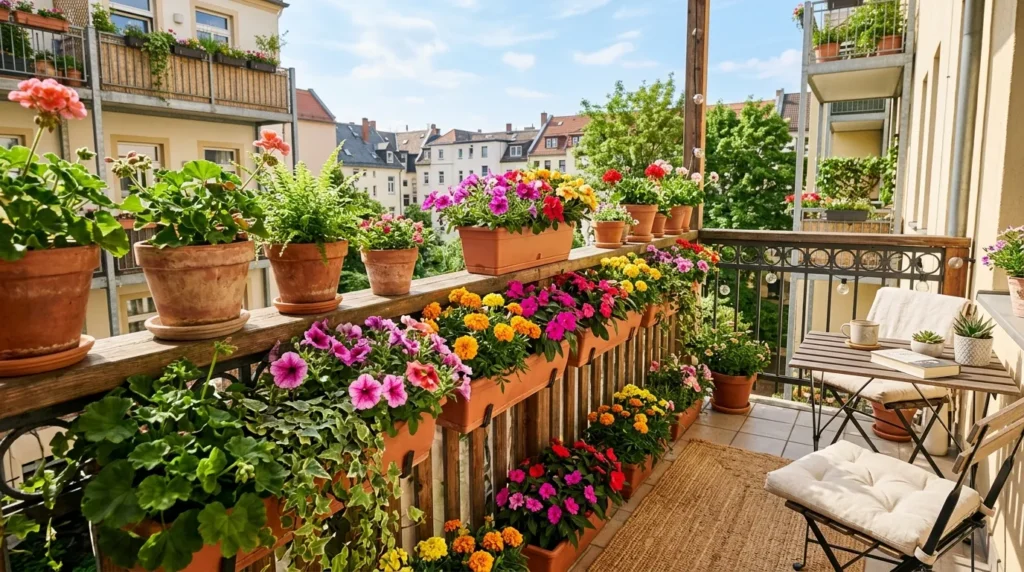
- Introduces vibrant hues and seasonal blooms.
- Works with railing-mounted boxes or floor planters.
- Ideal for petunias, geraniums, marigolds, or impatiens.
- Adds a cheerful focal point for urban balconies.
- Enhances curb appeal and Pinterest-style aesthetics.
Colorful flower boxes bring energy and charm to any balcony space. They can be mounted along railings or placed on the floor for a cascading effect. Flowers with bright, contrasting colors make the balcony pop against neutral building exteriors. I’ve seen this approach brighten small spaces instantly and make balconies feel larger, as the eye focuses on the lively blooms. Select plants according to sun exposure—full sun, partial sun, or shade—to ensure year-round vitality.
This design transforms your balcony into a cheerful outdoor room. Position flower boxes at eye level for maximum visual impact, and combine plants with different textures and heights for depth. Incorporate trailing plants that drape over railings to soften edges. Regular watering, deadheading, and fertilizing maintain peak bloom. The result is a curated, colorful, Pinterest-ready display that provides pleasure, privacy, and visual interest while complementing other balcony décor like seating or lighting.
5. Mini Succulent Garden
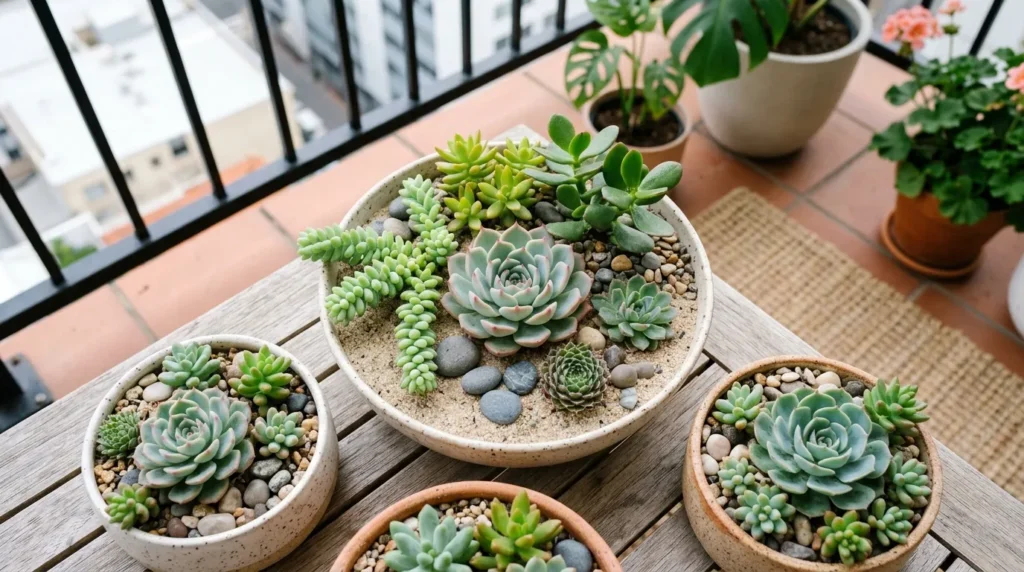
- Low-maintenance greenery perfect for busy lifestyles.
- Works in shallow containers, vertical frames, or terrariums.
- Uses echeveria, jade plants, sedums, or aloe.
- Adds texture and modern simplicity.
- Ideal for small balconies with limited sunlight.
A mini succulent garden adds texture, color, and a modern minimalist vibe to a balcony. Succulents thrive in small containers and require little water, making them perfect for busy city dwellers. I’ve noticed that grouping different succulent varieties together creates a layered visual effect that feels lush without overwhelming the space. Shallow containers, vertical frames, or terrariums allow you to fit many plants in small areas while maintaining style and accessibility.
This setup transforms a bare balcony corner into a modern, curated plant display. Arrange succulents by size, color, or shape for visual rhythm, and ensure containers have proper drainage. Add small decorative stones, sand, or moss for contrast. This approach keeps the balcony tidy, reduces maintenance, and provides a focal point that feels structured yet lively. Succulent arrangements also photograph beautifully for Pinterest, making your balcony feel stylish and intentional with minimal effort.
6. Hanging Herb Rail
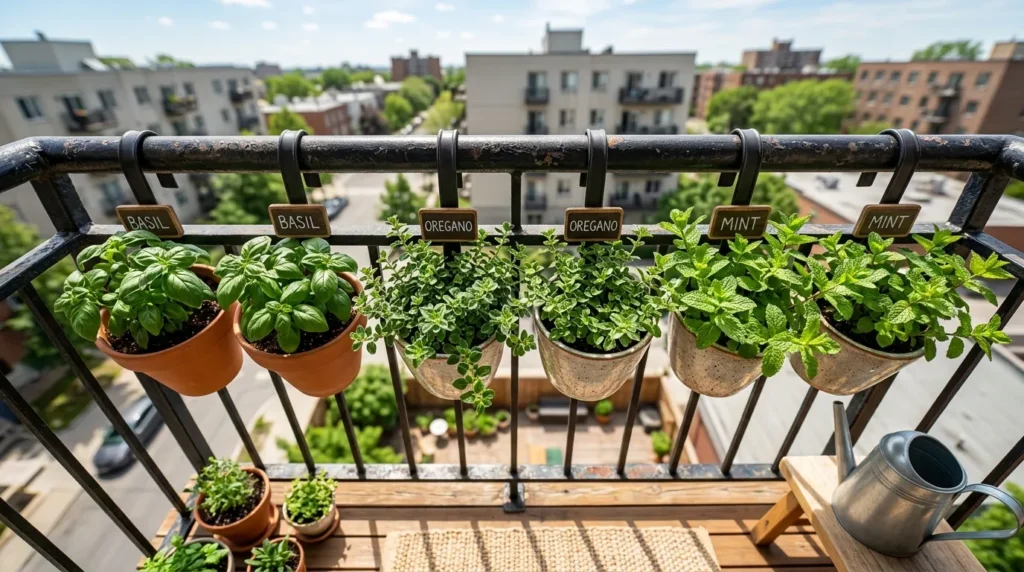
- Maximizes railing space for culinary and decorative plants.
- Works with clip-on pots, pocket planters, or self-watering inserts.
- Ideal for thyme, basil, oregano, or small flowers.
- Keeps herbs within reach and visually organized.
- Adds functional greenery to narrow balconies.
A hanging herb rail turns balcony railings into productive, visually appealing planting zones. This approach is especially useful for narrow urban balconies where floor space is scarce. By clipping pots or installing pocket planters along the railing, herbs and small flowers can thrive without taking up valuable walking or seating space. I’ve found that this technique also improves accessibility, making herbs easy to harvest while creating a clean, modern aesthetic. Plants appear elevated, organized, and visually cohesive.
This design enhances both function and style. Choose lightweight pots and secure mounting systems to handle wind. Arrange plants in graduated heights or color patterns for impact. Combine herbs for cooking with small flowering plants for added charm. With proper sunlight and occasional watering, the railing transforms into a living feature, offering greenery at eye level, freeing the balcony floor, and making the space feel curated and Pinterest-ready.
7. Tiered Planter Stand
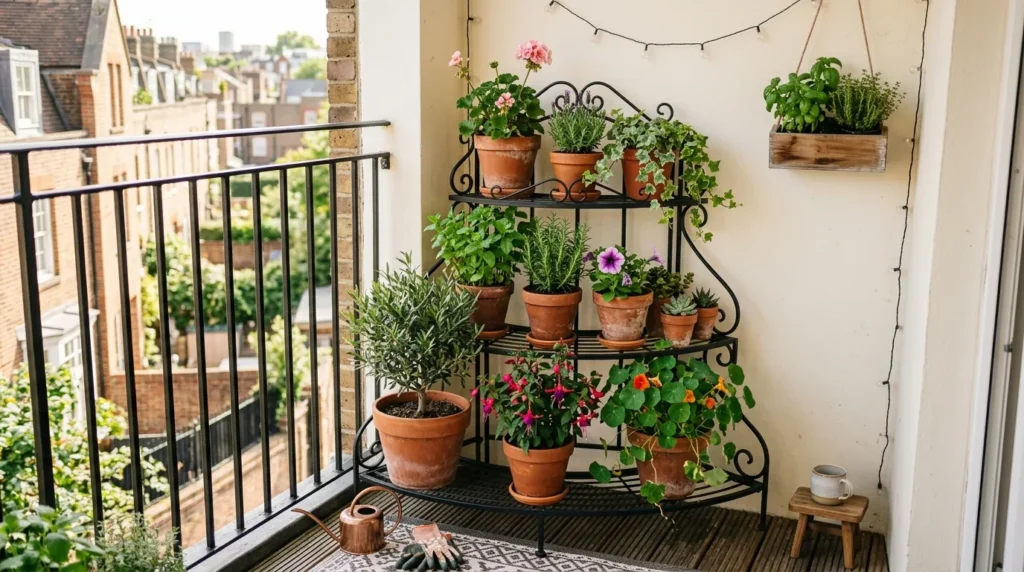
- Adds height and dimension with compact floor space.
- Works with metal, wooden, or plastic tiered shelves.
- Supports herbs, flowers, or small shrubs.
- Creates a visual focal point and gardening organization.
- Ideal for small or narrow balconies.
A tiered planter stand provides a vertical solution for planting when floor space is limited. It allows multiple plants to be displayed in a compact footprint, adding height, depth, and dimension to a balcony. In my experience, this type of arrangement draws the eye upward, creating visual interest while keeping plants organized. Tiered stands work with herbs, succulents, flowers, or small shrubs and can be placed in corners, along railings, or near seating zones to define the balcony space.
The transformation comes from layering textures and colors vertically. Stack plants from shortest to tallest, using contrasting pot colors or finishes for style. Ensure proper drainage in each tier and avoid overloading the stand. With this setup, a small balcony feels fuller and more dynamic without cluttering the floor. Tiered arrangements also create a mini garden room effect, enhancing privacy, accessibility, and a curated Pinterest-friendly balcony atmosphere.
8. Climbing Vine Trellis
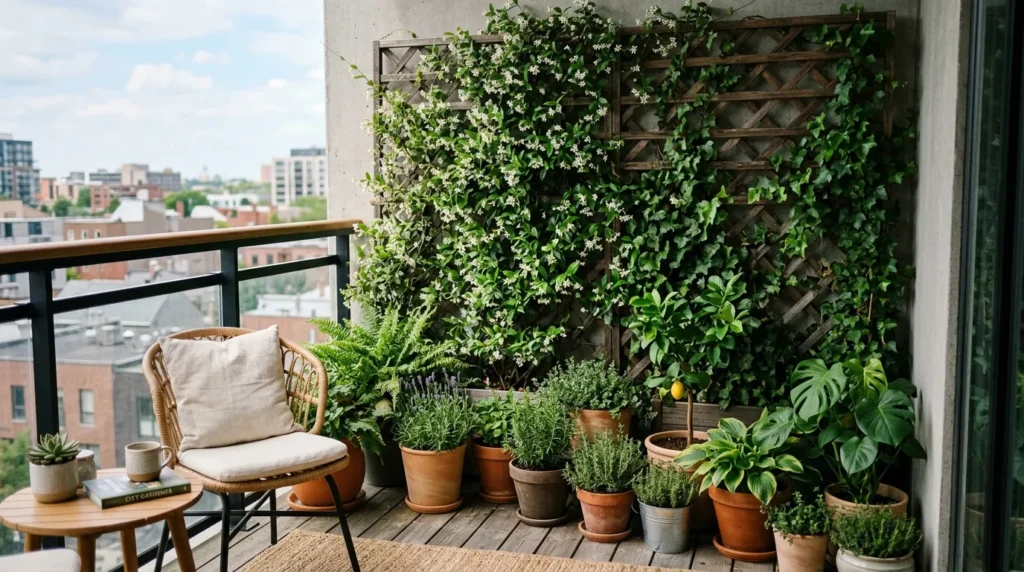
- Adds height, privacy, and green coverage.
- Works with metal or wooden trellises.
- Ideal for morning glory, ivy, jasmine, or clematis.
- Softens railings and building edges.
- Creates a natural living screen.
Climbing vine trellises turn vertical surfaces into lush green features, making balconies feel private, cozy, and visually rich. I’ve noticed that vines soften railing edges, obscure nearby buildings, and add movement as they grow. Wooden or metal trellises can support flowering vines, aromatic plants, or leafy greenery. This approach works well for apartments where privacy and visual separation are desired, and it also contributes to a Pinterest-ready layered aesthetic. The vertical dimension makes a balcony feel larger and more connected to nature.
To implement, attach a trellis securely to railings or walls. Choose vines based on sunlight, maintenance ability, and desired bloom or foliage patterns. Pair with potted plants at the base for continuity and soil health. Regular pruning helps maintain shape and density. The balcony transforms into a serene urban garden with layered textures and privacy, making it feel more like a natural extension of the living space rather than a bare outdoor box.
9. Mini Herb Spiral
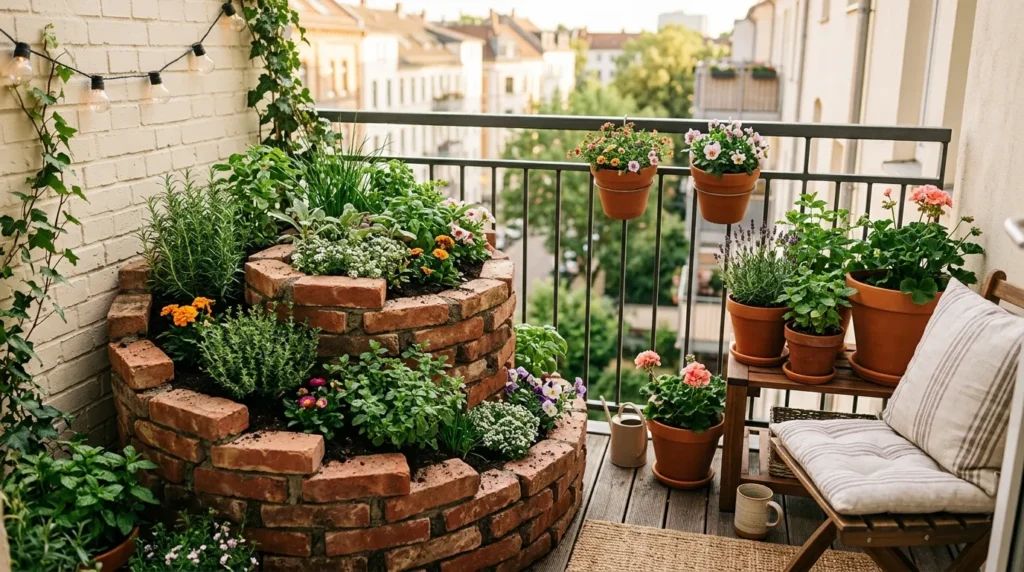
- Combines design and functionality in a compact footprint.
- Works with spiraled soil structure or stacked planters.
- Ideal for small herbs, flowers, or decorative greenery.
- Adds visual interest and easy harvesting access.
- Perfect for small balconies or urban garden enthusiasts.
A mini herb spiral adds a sculptural, practical element to balcony gardening. The spiral shape increases planting space by stacking plants at different heights, allowing each herb or flower access to light and air. This Modern Idea is perfect for small spaces where traditional rows of pots are impractical. In my experience, herb spirals also make harvesting easier, as taller plants at the center and smaller ones at the edges create a natural workflow while adding visual depth.
For the best results, use lightweight soil or artificial drainage layers, and choose compact herbs or flowering plants suited to balcony conditions. Maintain even sunlight exposure by rotating the spiral if necessary. This setup transforms a corner or small table into a dynamic, functional, and eye-catching planting feature. The spiral layout creates a natural focal point, balancing practicality with Pinterest-worthy visual appeal while keeping plants healthy and accessible.
10. Multi-Level Rail Garden
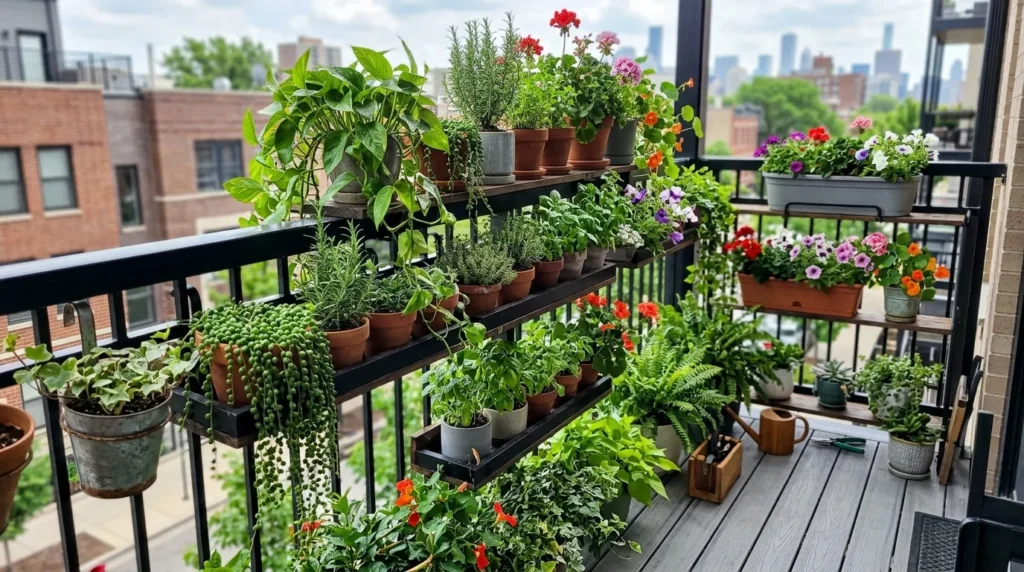
- Maximizes railing and corner spaces.
- Works with staggered shelves, hanging pots, or vertical holders.
- Ideal for flowers, herbs, and decorative plants.
- Keeps balcony floor space free while adding visual density.
- Enhances layering and depth in a small outdoor space.
A multi-level rail garden makes full use of balcony railings for a lush and functional planting area. By staggering shelves, hanging pots, or vertical holders, you create height, dimension, and privacy without crowding the balcony floor. This approach works especially well in urban apartments or condos where every inch counts. In my experience, a layered rail garden also makes the space feel more immersive, drawing the eye upward and enhancing greenery density while keeping maintenance simple.
Arrange plants with taller, cascading varieties on top levels and shorter herbs or flowers below for visual harmony. Use lightweight containers and secure mounting systems. This setup allows easy watering and pruning access while maintaining balance. The balcony transforms into a structured, vibrant garden oasis with greenery at multiple levels, a Pinterest-ready aesthetic, and maximum usability for urban dwellers seeking fresh air and natural beauty.