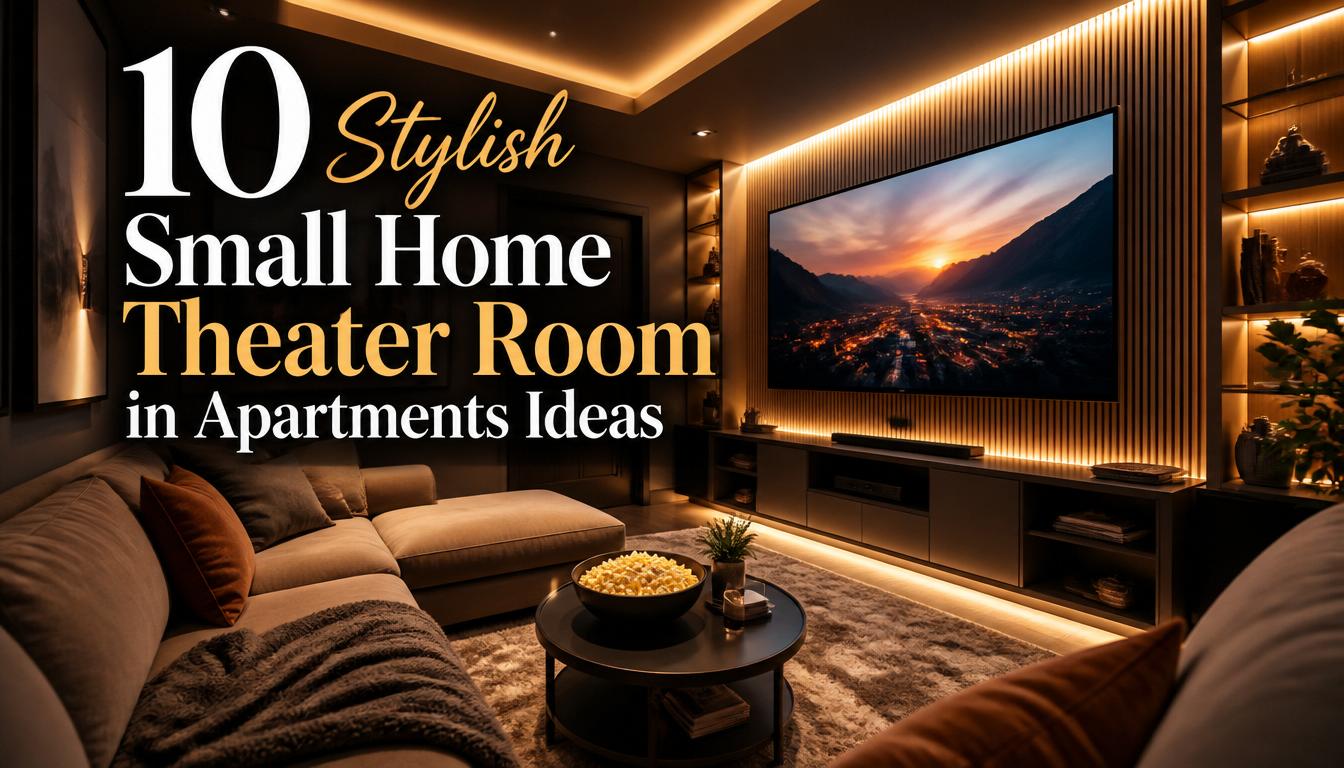
10 Stylish Small Home Theater Room in Apartments Ideas
Introduction
Apartment living does not mean giving up the feeling of a cozy movie room. You may not have a basement, a spare media room, or space for oversized recliners, but you can still create a viewing corner that feels comfortable, polished, and personal. The key is choosing furniture, lighting, storage, and sound-friendly decor that fits the scale of your space instead of fighting it.
A stylish small home theater setup in an apartment needs to do several things at once. It should feel inviting for movie nights, stay practical for everyday living, avoid disturbing neighbors, and look good even when the screen is off. That means soft textiles, compact seating, smart wall use, hidden cords, layered lighting, and renter-friendly choices matter more than a huge screen or expensive built-ins.
These ideas are made for real apartments across the USA, from studio layouts and city rentals to small condos and shared spaces. Each section gives practical styling tips, materials, layout advice, and visual details that can help you turn a simple living room corner, bedroom wall, or den into a cozy movie zone without overwhelming the apartment.
1. Compact Seating
- Choose a loveseat, apartment sofa, chaise, or modular seat with slim arms
- Use ottomans instead of bulky recliners for flexible lounging
- Pick performance fabric, microfiber, leather-look upholstery, or washable covers
- Keep walking paths open so the room still works every day
- Add one soft throw and supportive pillows for movie-night comfort
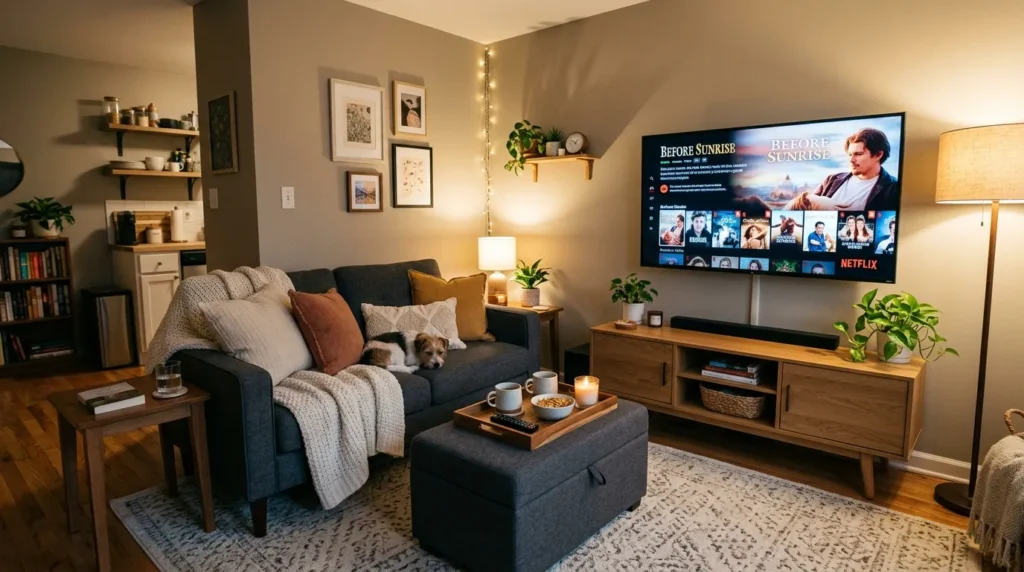
Compact seating makes the biggest difference in an apartment movie setup because comfort matters more than size. A deep loveseat, slim sectional, chaise sofa, or two lounge chairs can create a cozy viewing zone without swallowing the whole room. In my experience, apartment-scale furniture looks best when the arms are narrow, the legs are visible, and the seat depth feels generous. This keeps the layout comfortable while preventing the space from feeling heavy, blocked, or hard to move through.
The best seating choice should support both movie nights and normal apartment life. A storage ottoman can hold blankets, remotes, or gaming controllers while doubling as a footrest. A modular sofa lets you shift pieces when guests come over. If the room is very small, skip matching bulky chairs and add floor cushions instead. Keep upholstery colors grounded, such as charcoal, tan, olive, cream, or navy. The result feels relaxed, useful, and scaled for apartment living without losing that cozy cinema feeling.
2. Dark Accent
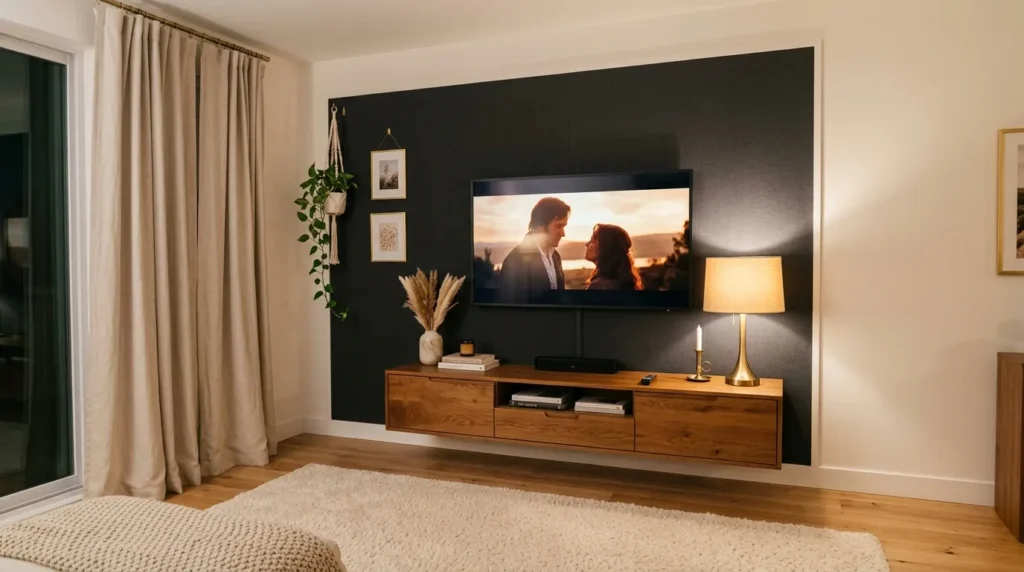
- Paint or decorate only one wall to reduce glare
- Use peel-and-stick wallpaper or removable panels for rentals
- Try charcoal, deep navy, espresso, forest green, or soft black
- Keep the surrounding walls lighter if the apartment is small
- Pair dark tones with warm lamps and textured textiles
A dark accent wall can make a small viewing area feel more immersive without turning the whole apartment into a cave. The wall behind the TV or projector screen is usually the best place to add depth because darker colors reduce visual distraction around the screen. That’s why many designers recommend deeper tones for media corners. If painting is not allowed, removable wallpaper, fabric panels, temporary wall decals, or peel-and-stick wood-look panels can create a similar effect.
Balance is important in apartments because natural light and square footage are often limited. Keep nearby walls warm white, beige, or soft gray if the room already feels tight. Add a wood console, cream rug, brass lamp, or textured curtains to soften the darker backdrop. Matte finishes work better than shiny ones because they reduce glare. This update makes the screen area feel intentional, polished, and cinematic while still staying practical for renters or anyone who prefers easy-to-change decor.
3. Wall Mounted
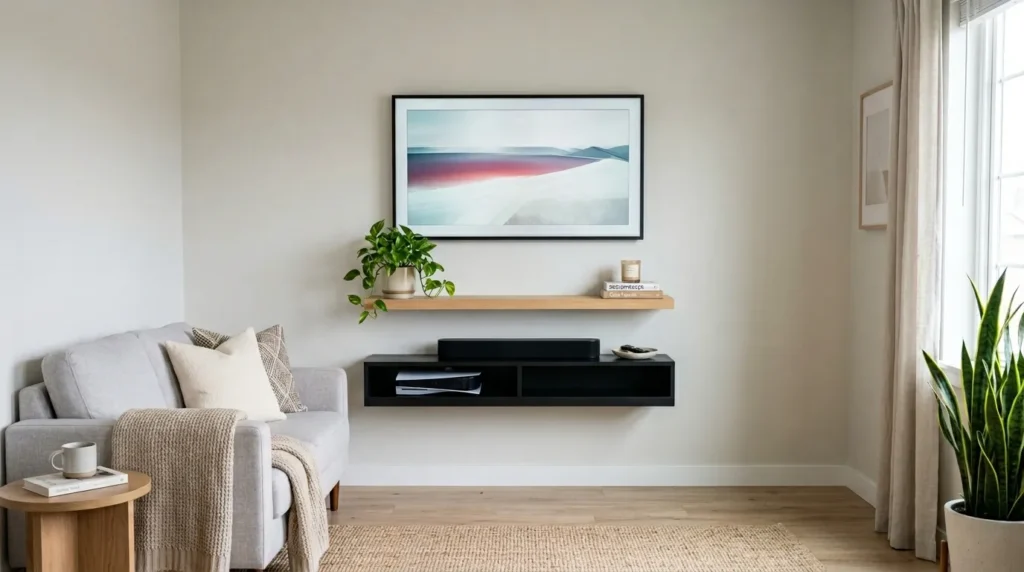
- Mount the TV to free up surface space
- Use a slim console, floating shelf, or media ledge underneath
- Hide cords with paintable covers or cable channels
- Keep decor around the screen minimal and low-glare
- Works well in studios, bedrooms, and narrow living rooms
Wall mounting can instantly make an apartment media area feel cleaner and more spacious. A TV sitting on a bulky stand often takes up valuable floor and surface space, while a mounted screen frees the area underneath for a slim console or floating shelf. In my experience, this works especially well in narrow living rooms where every inch between the sofa and wall matters. The screen feels lighter, the floor feels more open, and the room becomes easier to clean.
Cord management is what makes this idea look finished. Use paintable cord covers, cable clips, or a low-profile media cabinet to hide wires, streaming devices, and gaming accessories. If drilling is restricted, check your lease before mounting and consider a renter-safe TV stand with a built-in mount. Keep artwork and decor around the screen simple so your eyes stay focused during movies. A neat wall-mounted setup gives the apartment a more modern, organized, and intentional entertainment zone.
4. Soft Lighting
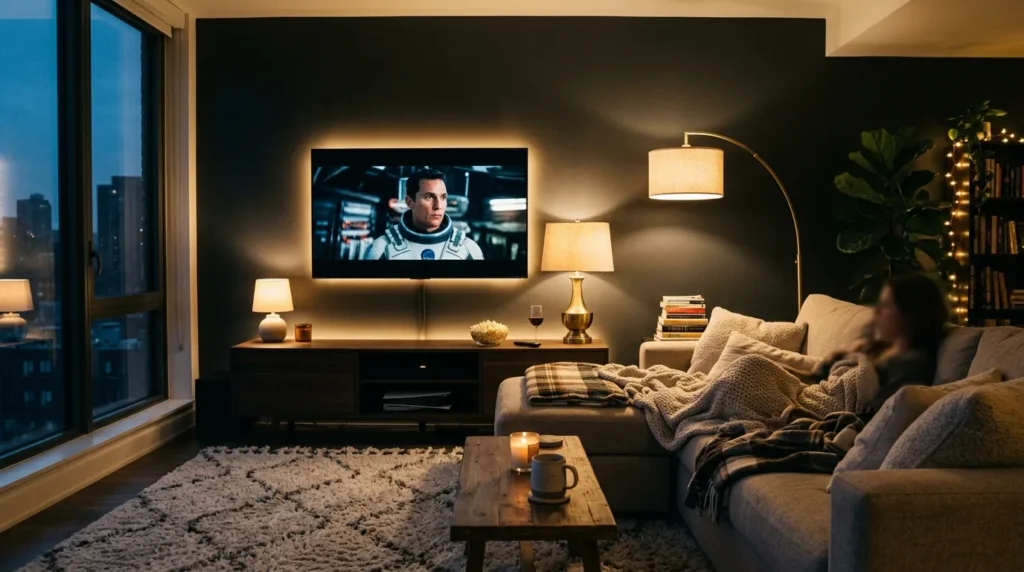
- Replace harsh overhead lighting with warm layered light
- Use table lamps, floor lamps, LED strips, or plug-in sconces
- Add dimmable bulbs for better movie-night control
- Keep lights off the screen to avoid glare
- Choose warm white bulbs for a cozy cinema mood
Soft lighting can completely change the mood of a small movie area. Apartment ceiling lights are often too bright, too cool, or poorly placed, which can make a viewing space feel flat and uncomfortable. Use warm table lamps, floor lamps, LED strip lights, plug-in sconces, or rechargeable lamps instead. I’ve noticed that layered lighting makes even basic apartments feel more expensive because the room gets depth, shadow, and atmosphere instead of one harsh overhead glow.
Place lights where they support movement and comfort without reflecting on the screen. A floor lamp behind the sofa, LED strips behind a console, or a small lamp on a side table can create enough glow for snacks and conversation. Dimmable bulbs are worth using because they let the room shift from daily living to movie mode. Avoid cool blue bulbs because they can feel sterile. Warm, controlled lighting makes the apartment feel calmer, cozier, and more cinematic after sunset.
5. Sound Softening
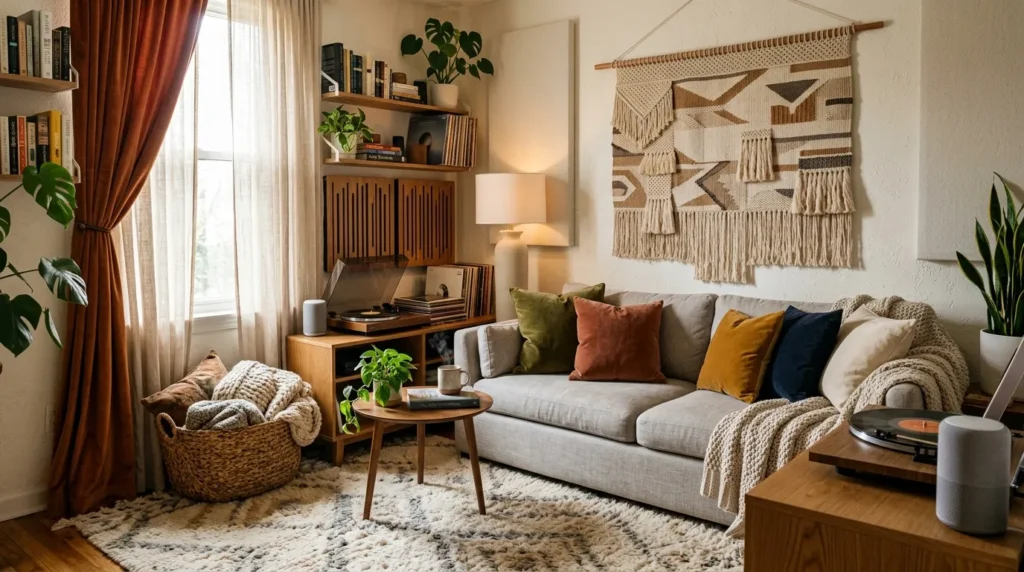
- Use rugs, curtains, pillows, and fabric panels to reduce echo
- Add thick textiles instead of permanent acoustic construction
- Choose soft wall hangings, upholstered furniture, and blanket baskets
- Helps keep sound warmer and less sharp
- Useful for apartments with neighbors nearby
Sound softening is essential in apartments because hard surfaces can make audio feel sharp and echoey. Bare floors, thin walls, glass windows, and empty corners can bounce sound around the room, making movies feel louder but less clear. A large rug, thick curtains, upholstered seating, pillows, throws, and fabric wall panels can help absorb some of that harshness. In my experience, soft materials make a small viewing area feel more comfortable even before you notice the sound improvement.
This does not mean you need professional acoustic construction. Start with a rug under the seating area, then add curtains over windows and a basket of blankets near the sofa. If the wall behind your seating feels bare, use a textile wall hanging or renter-friendly fabric panels. Keep speakers at a reasonable level, especially at night, and consider headphones for late viewing. These simple layers make the space feel warmer, quieter, and more respectful of apartment living while still improving the movie experience.
6. Hidden Storage
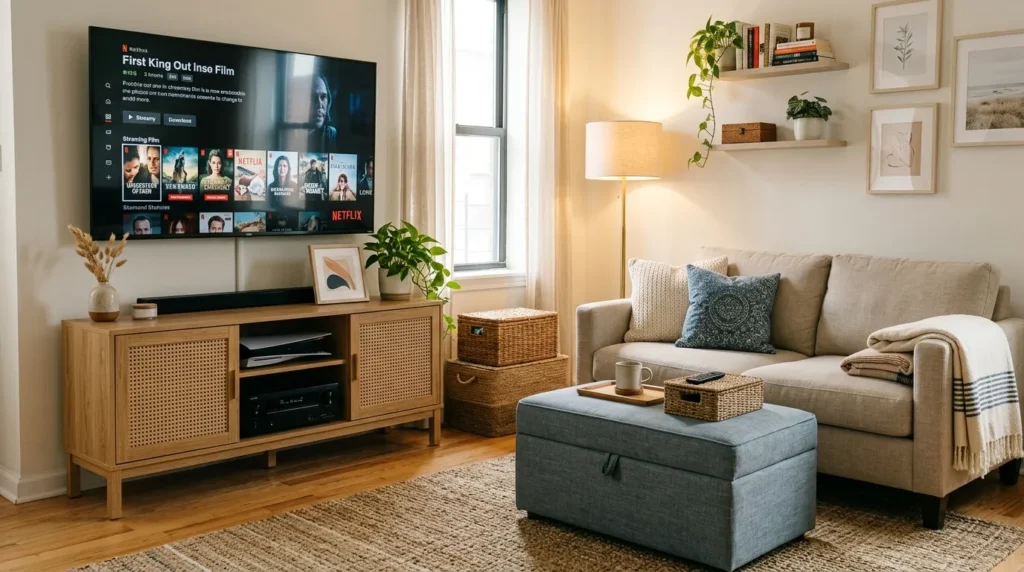
- Use closed cabinets, storage ottomans, baskets, or media benches
- Hide remotes, cords, games, blankets, and headphones
- Choose furniture that looks clean when everything is closed
- Keep snack supplies contained in bins or drawers
- Helps the room stay stylish between movie nights
Hidden storage keeps a small apartment theater area from looking messy between uses. Movie zones collect remotes, chargers, headphones, game controllers, blankets, snacks, batteries, and streaming accessories faster than most people expect. If everything sits out, the room starts feeling cluttered even when the furniture is beautiful. That is why closed storage matters so much in compact spaces. A slim media cabinet, storage ottoman, lidded basket, or side table with drawers can make the room feel calmer immediately.
Plan storage around real routines. Keep remotes and controllers in one drawer, blankets in an ottoman, cords in a cable box, and snacks in a small basket. If the setup is in a studio apartment, use furniture that blends with your main decor so the entertainment zone does not dominate the whole room. Choose warm wood, black metal, cane fronts, or painted cabinets based on your style. This keeps the apartment functional, clean, and ready for guests without constant visual clutter.
7. Projector Corner
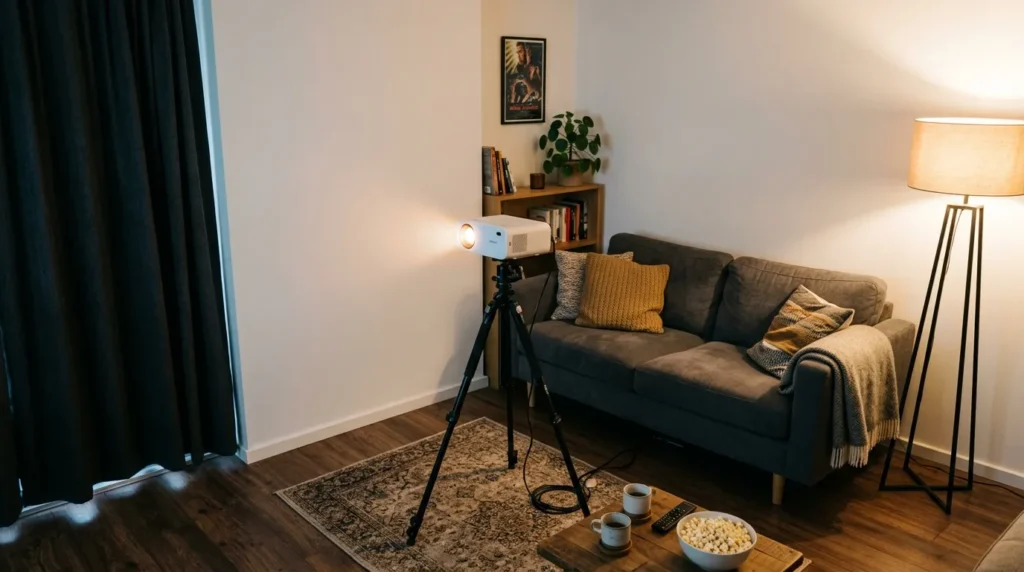
- Works when a large TV feels too bulky
- Use a small projector, blank wall, pull-down screen, or portable screen
- Great for bedrooms, studios, and multipurpose rooms
- Store the projector when not in use
- Keep the wall simple for a cleaner picture
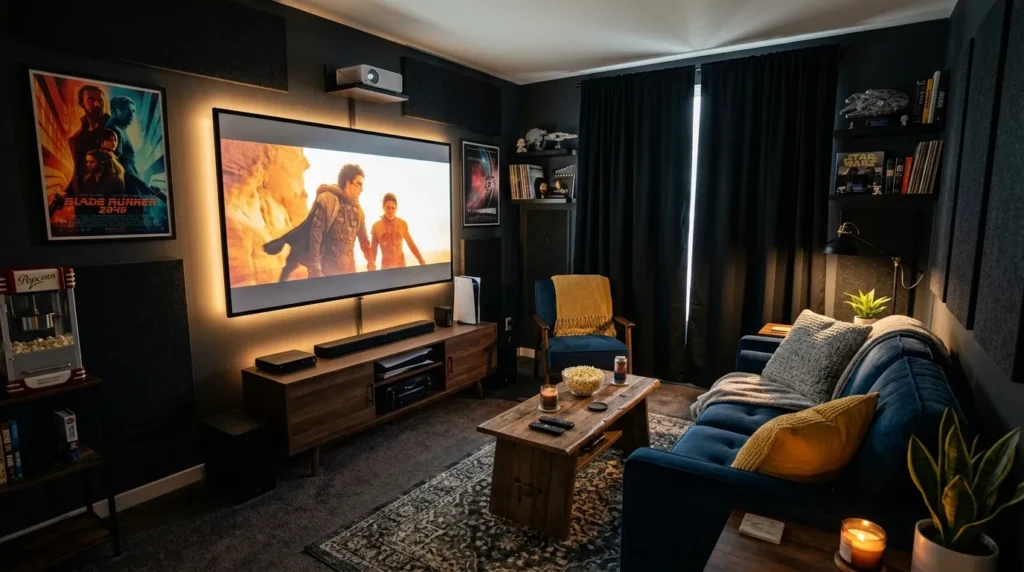
A projector corner can give an apartment a movie-night feeling without requiring a giant screen to stay visible all day. Compact projectors are useful for renters because they can sit on a shelf, side table, cart, or tripod and be stored when not needed. This works especially well in bedrooms, studio apartments, and multipurpose living rooms where a large TV might feel too dominant. I’ve seen this work well in many small apartments because the room can return to normal after the movie ends.
The setup works best when the projection wall is simple and uncluttered. A plain white or light neutral wall can work, but a pull-down screen gives a sharper look if you have space. Keep the projector level and test the distance before buying furniture around it. Use blackout curtains to improve picture quality during the day. Add a small speaker if the projector sound feels weak, but keep volume neighbor-friendly. This setup feels flexible, cinematic, and smart for apartment living.
8. Snack Cart
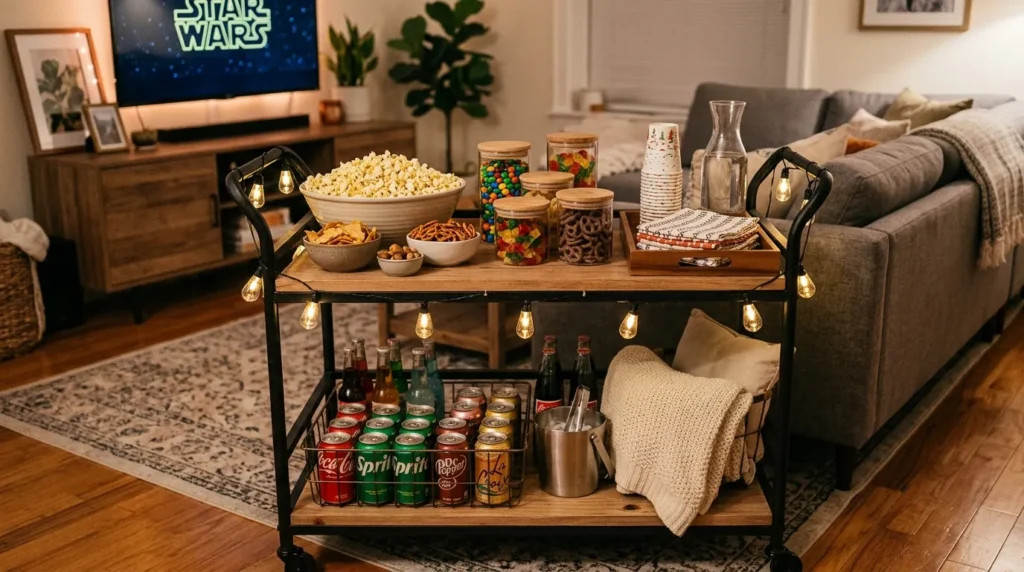
- Adds movie-night convenience without built-ins
- Works with rolling carts, bar carts, slim cabinets, or trays
- Stores popcorn, candy, napkins, drinks, and bowls
- Can move between kitchen, sofa, and dining area
- Keeps snacks organized instead of scattered
A snack cart makes a small movie area feel more fun and practical without taking up permanent counter space. A rolling cart or slim bar cart can hold popcorn bowls, candy jars, napkins, drinks, straws, and small serving trays. It is especially useful in apartments where the kitchen and living area share one compact layout. In my experience, a cart works best when it is styled neatly and does not become general overflow storage for random household items.
Give each shelf a clear purpose. Place serving bowls and napkins on top, snacks in jars or baskets in the middle, and backup items or drink cans on the lower shelf. Choose a cart finish that matches the room, such as black metal, brass, white, or warm wood. If you do not have room for a cart, use a handled tray that can move from kitchen to coffee table. A snack station adds charm, convenience, and a cozy hosting detail without crowding the apartment.
9. Curtain Layers
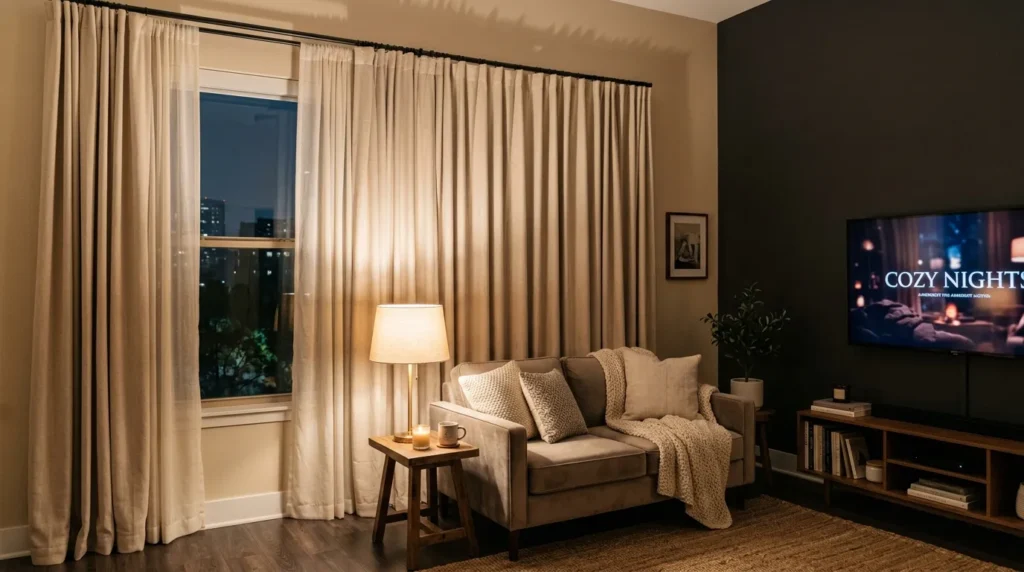
- Blocks light for better screen visibility
- Adds softness, warmth, and sound control
- Works with blackout curtains, sheers, or woven shades
- Makes the apartment feel more finished
- Helps hide plain blinds or awkward window frames
Curtain layers are one of the most useful upgrades for an apartment movie room because they improve both style and function. Many rentals come with basic blinds that look cold and do little to soften the room. Adding curtains can reduce glare, improve privacy, soften sound, and make the space feel more finished. For a stylish small home theater corner, blackout curtains are especially helpful because they support daytime viewing and create a deeper evening mood.
Hang curtains higher and wider than the window frame to make the room feel taller. Use sheers for daytime softness and blackout panels for movie nights if the window gets strong light. Choose linen-look fabric, velvet, cotton, or textured polyester depending on your budget and care needs. If drilling is not allowed, look for tension rods or no-drill brackets that can support the fabric weight. The room will feel softer, warmer, and more intentional, even when you are not watching anything.
10. Movie Wall
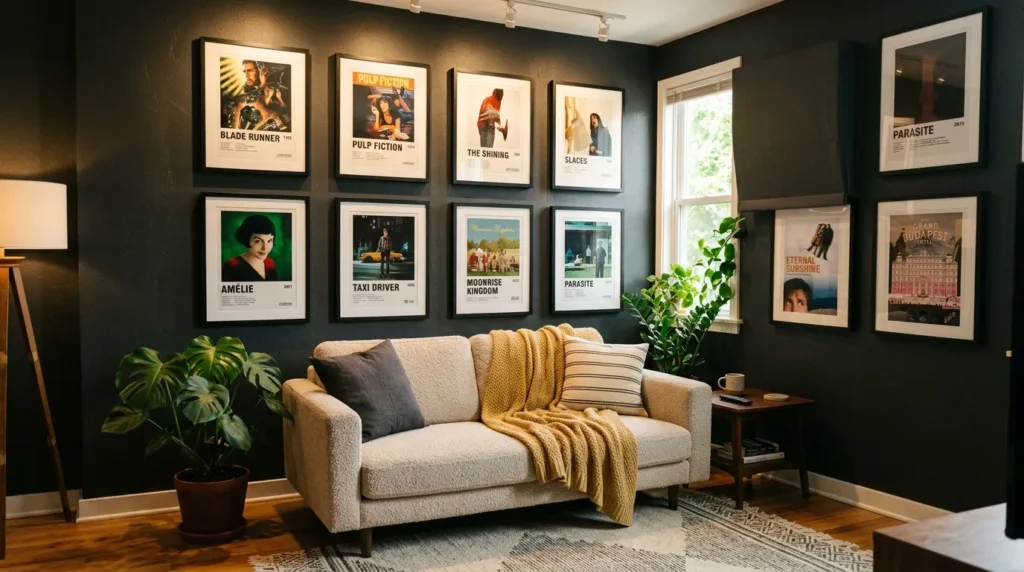
- Adds personality without cluttering the screen area
- Works with framed posters, small shelves, quote prints, or album-style art
- Best placed on side walls or behind seating
- Makes the space feel personal and styled
- Keeps the main viewing wall calm and distraction-free
A movie wall brings personality into the apartment without needing bulky decor. Framed posters, minimalist film prints, black-and-white stills, small shelves, or quote art can make the entertainment area feel more personal. The key is placement. Keep the wall around the screen simple, then use a side wall, hallway, or space behind the sofa for movie-inspired art. In my experience, this keeps the viewing experience clean while still giving the room character.
Choose frames and colors that match the apartment rather than using random prints in different sizes. Black frames feel classic, wood frames feel warm, and brass frames add a more polished touch. Three medium prints often look cleaner than many tiny posters. Use removable hanging strips if you rent, and test placement with paper templates first. A movie wall makes the space feel curated, fun, and personal. It also gives guests something interesting to notice when the screen is off.