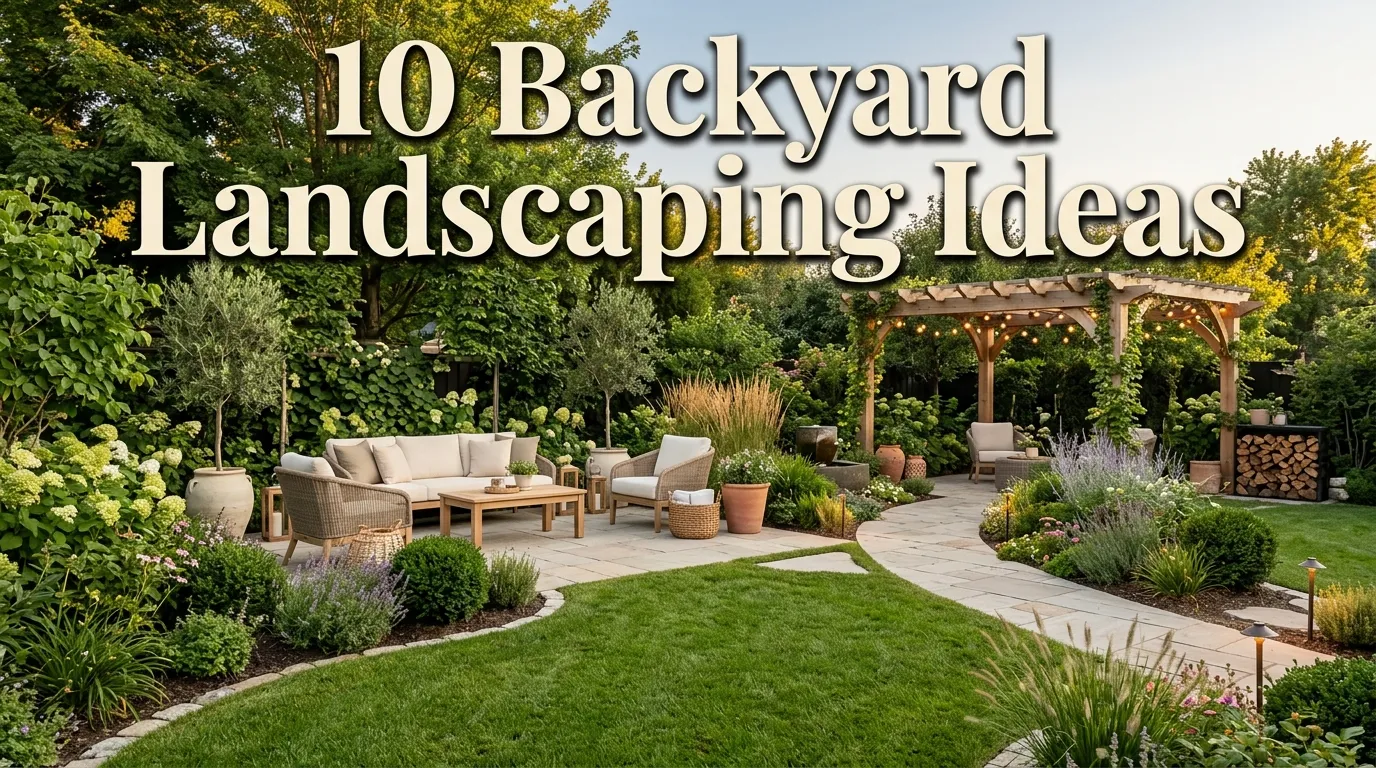
10 Backyard Landscaping Ideas
A backyard doesn’t have to be enormous, professionally designed, or filled with expensive materials to feel beautiful. The most inviting outdoor spaces usually come from a thoughtful combination of plants, comfortable areas, practical pathways, and details that make the yard feel connected to the home.
If your backyard currently feels unfinished, you may be wondering where to begin. Should you add a patio? Plant a garden? Create a fire pit? Add privacy? Improve the lawn? The possibilities can quickly become overwhelming.
In my experience, the best approach is to think about how you actually want to use the backyard first, then build the landscape around that purpose. A family who loves outdoor dinners needs a different layout from someone who wants a quiet garden retreat. A small suburban yard benefits from different choices than a large property.
The good news is that landscaping doesn’t have to happen all at once. You can start with one focal area, improve the planting around it, and gradually add the details that make the space feel finished.
The ideas below focus on approachable backyard designs that work for a variety of American homes and lifestyles. You’ll find options for entertaining, relaxing, adding privacy, creating garden interest, improving curb-to-backyard flow, and making ordinary outdoor spaces feel much more intentional.
Whether you’re planning a complete backyard makeover or simply want to make your existing yard more inviting, these ideas can help you create an outdoor space that feels beautiful without becoming difficult to maintain.
Table of Contents
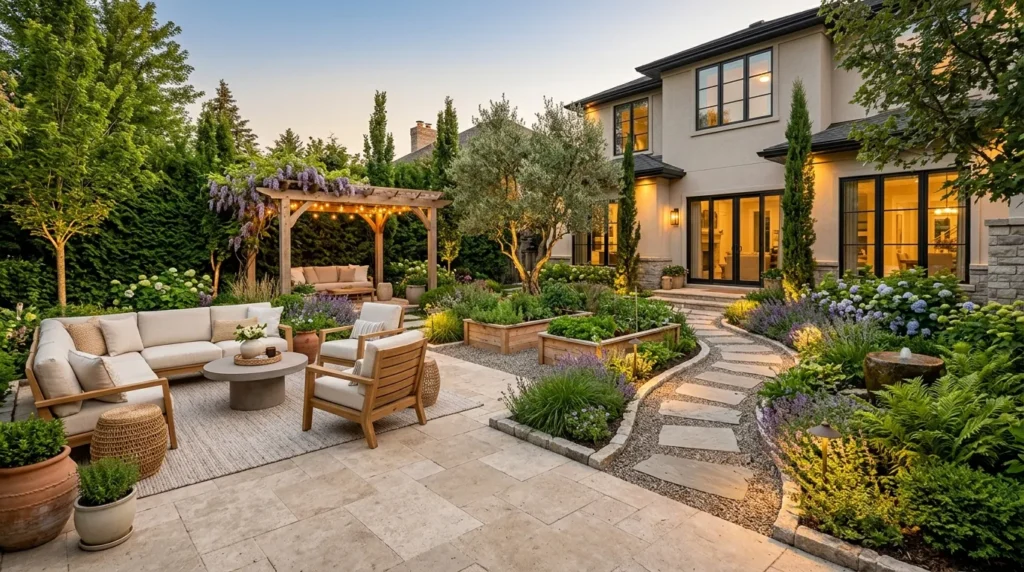
1. Layered Planting Beds
Create depth with a mix of shrubs, perennials, ornamental grasses, and seasonal color.
2. Outdoor Living Zone
Turn part of the yard into a comfortable extension of your home’s living space.
3. Curved Garden Paths
Use gently curving walkways to make the backyard feel more natural and visually interesting.
4. Low-Maintenance Plants
Build a beautiful landscape around plants suited to your climate and everyday routine.
5. Backyard Privacy
Use plants, fencing, screens, and strategic planting to create a more secluded retreat.
6. Natural Stone Accents
Introduce stone through pathways, borders, seating areas, and decorative features.
7. Cozy Fire Feature
Create a welcoming gathering spot with a thoughtfully designed fire pit or outdoor fireplace.
8. Vertical Garden Layers
Use walls, fences, trellises, and tall plants to make the most of vertical space.
9. Defined Lawn Areas
Give open grass a clear purpose by surrounding it with intentional planting and functional zones.
10. Evening Lighting
Use warm outdoor lighting to make the backyard inviting after sunset.
1. Layered Planting Beds
Quick Benefits
- Adds depth and dimension
- Creates a polished landscape
- Provides seasonal interest
- Softens hard structures
- Can be customized to your climate
Why It Works
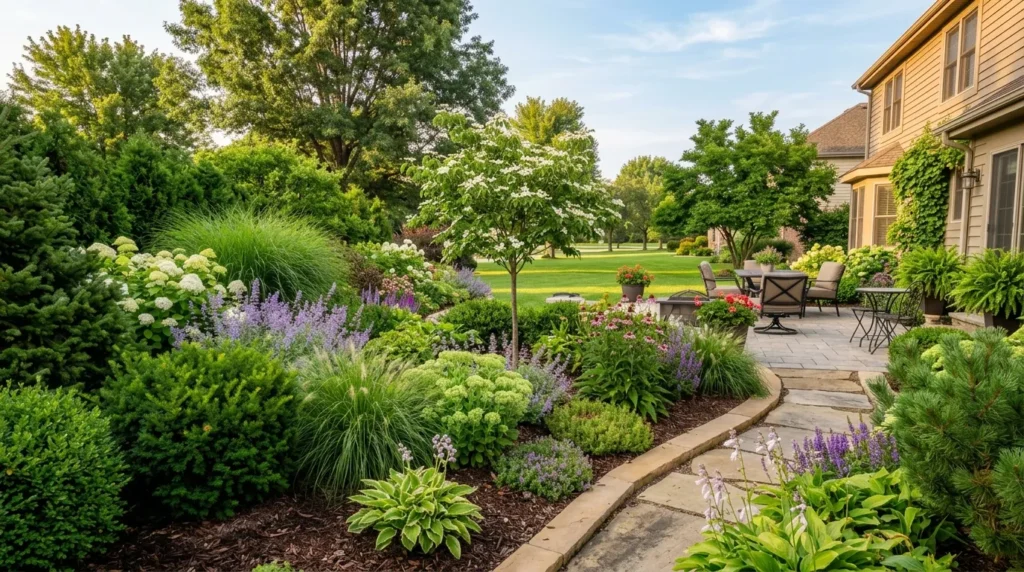
A backyard can look surprisingly flat when every plant is the same height. Layered planting solves that problem by creating a gradual transition from low-growing plants to medium shrubs and taller focal plants.
The technique also makes garden beds feel fuller without necessarily requiring dozens of individual plants. The eye naturally moves through different heights, colors, and textures, which gives the landscape a more established appearance.
One thing that works especially well is repeating a few plants throughout different areas rather than choosing completely different species for every bed. Repetition creates visual continuity and helps separate planting from random plant collecting.
How To Style It
Begin with the tallest elements toward the back of a bed or along a fence. Depending on your climate, these might include small ornamental trees, evergreen shrubs, or taller grasses.
Place medium-height shrubs and perennials in front of them, then finish the edge with low-growing plants or groundcovers.
For a sophisticated look, keep the color palette relatively controlled. Soft greens with white, lavender, blush, or blue flowers can create a relaxed appearance, while warm-toned flowers can make a sunny backyard feel more energetic.
Use mulch or another suitable groundcover between plants to give the beds a finished appearance and help retain soil moisture.
2. Outdoor Living Zone
Quick Benefits
- Extends usable living space
- Creates a natural gathering area
- Works for entertaining
- Gives furniture a defined location
- Makes the backyard feel purposeful
Why It Works
One of the easiest ways to improve a backyard is to stop thinking of it as one large empty area.
Instead, divide it into functional zones.
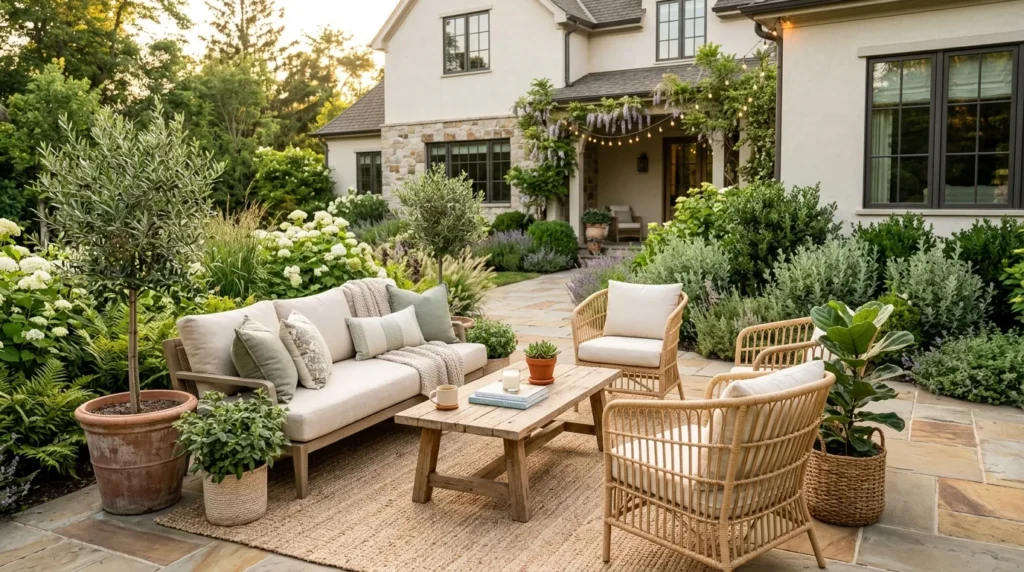
An outdoor living area can become the visual and practical center of the yard. Even a modest patio with comfortable seating can make the entire backyard feel more intentional.
I’ve noticed that outdoor spaces are used much more often when the seating area is convenient to the house and doesn’t feel like an afterthought. The closer the setup feels to an outdoor room, the easier it becomes to use for morning coffee, casual dinners, or weekend gatherings.
How To Style It
Choose the function before choosing furniture.
For dining, create space for a table and chairs with enough room to move around them comfortably. For lounging, prioritize comfortable seating, a coffee table, and possibly an outdoor rug.
Use materials appropriate for your local weather conditions. Powder-coated metal, treated wood, weather-resistant wicker, and outdoor-rated fabrics can all work depending on the look you’re after.
Add potted plants around the edges rather than filling the walking area.
For a more finished appearance, connect the living zone visually to the house using colors that echo your interior decor.
3. Curved Garden Paths
Quick Benefits
- Adds movement
- Creates visual depth
- Connects different garden areas
- Makes larger yards interesting
- Softens rigid layouts
Why It Works
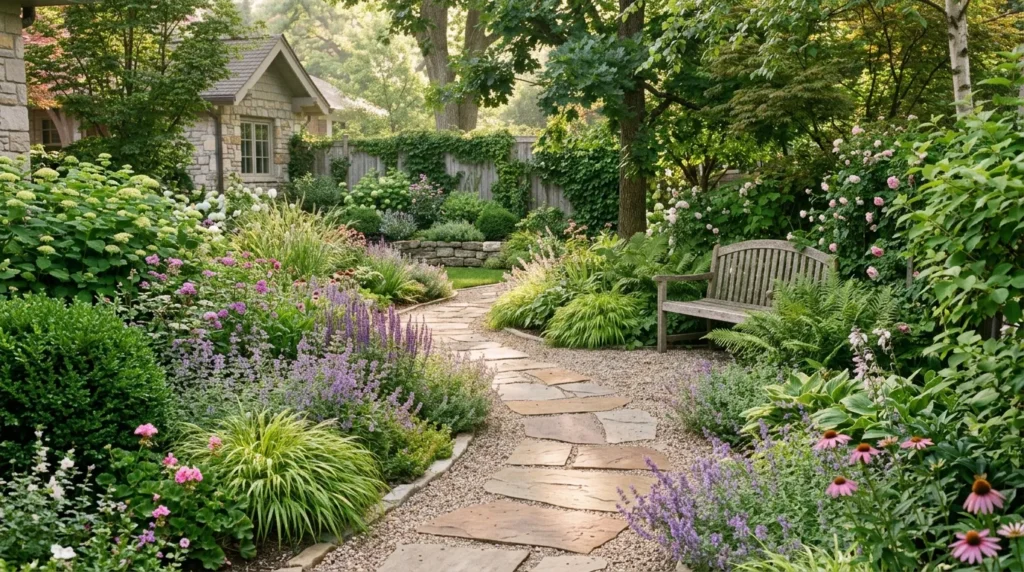
Straight paths are practical, but curved pathways can make a backyard feel more relaxed and garden-like.
A gentle curve encourages the eye to travel through the landscape instead of seeing the entire yard immediately. This can be especially effective in larger backyards where a straight line might make the space feel overly open.
Curved paths also create opportunities for small planting moments. A bend can reveal a flowering shrub, bench, fountain, or garden bed that isn’t visible from the starting point.
The trick is to use curves intentionally rather than creating a winding path simply for decoration.
How To Style It
Start by identifying the destinations you want the path to connect.
This could be the patio, garden shed, vegetable garden, fire pit, or a quiet seating area.
Use materials that complement your home’s architecture. Gravel can create a casual cottage feel, while natural stone or pavers can look more structured.
Keep the pathway wide enough for comfortable walking and maintenance.
Plant softer vegetation along the edges to prevent the path from looking too rigid. Ornamental grasses, low shrubs, and flowering perennials can create a beautiful transition between the walkway and planting beds.
4. Low-Maintenance Plants
Quick Benefits
- Reduces routine maintenance
- Can support a healthier landscape
- Provides long-term structure
- Works for busy homeowners
- Can save water in suitable conditions
Why It Works
A beautiful backyard loses some of its appeal when maintaining it becomes a second job.
That is why plant selection matters just as much as plant appearance.
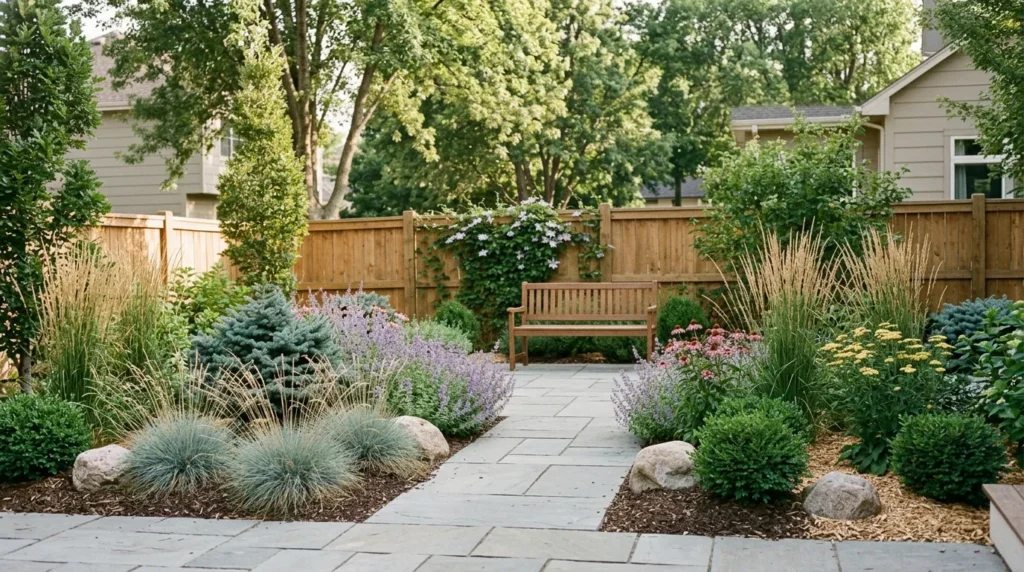
The best plants for your landscape aren’t necessarily the ones that look best in a magazine photograph. They’re the ones that are appropriate for your USDA hardiness zone, soil, available sunlight, moisture conditions, and maintenance preferences.
A mistake many homeowners make is choosing plants based only on appearance. A plant that needs more water or shade than your yard provides will always be difficult to maintain.
How To Style It
Start by observing your yard.
Identify areas with full sun, partial shade, and deeper shade. Notice where water collects after rain and where soil dries quickly.
Then choose plants that naturally suit those conditions.
Native and well-adapted plants can be particularly useful because they may require less intervention once established, although suitability varies by location.
Mix evergreen structure with seasonal plants so the yard doesn’t look empty after flowering ends.
Group plants with similar water requirements together. This makes irrigation easier and prevents some plants from being overwatered simply because they share a watering zone with thirstier varieties.
5. Backyard Privacy
Quick Benefits
- Creates a more secluded atmosphere
- Makes outdoor spaces feel comfortable
- Blocks unwanted views
- Adds greenery or architectural interest
- Can improve the feeling of a small yard
Why It Works
Privacy can completely change how a backyard feels.
Even a beautiful patio may not feel relaxing if it sits directly in view of neighboring homes.
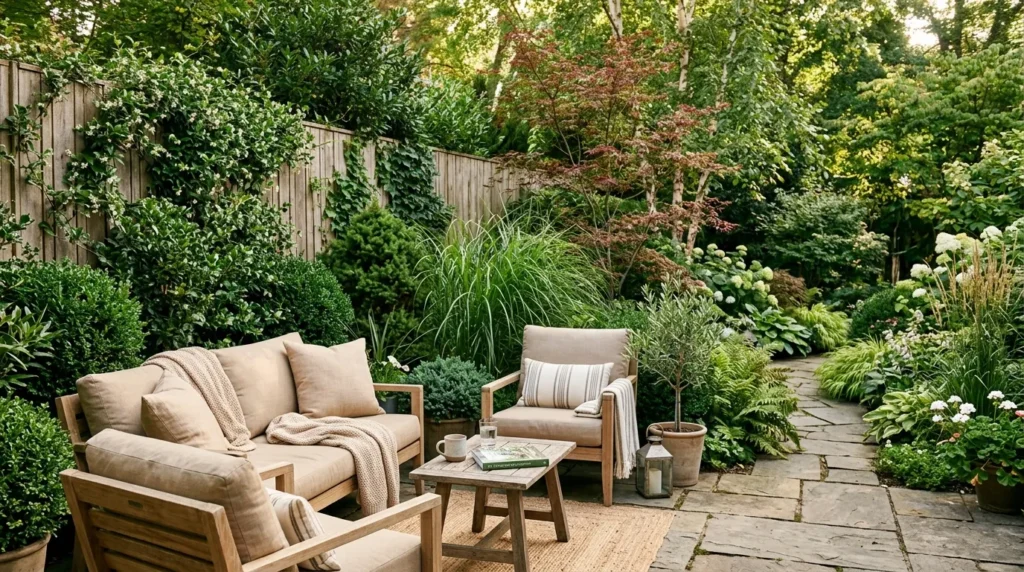
The solution doesn’t always have to be a tall solid fence. Layered privacy can look much more natural.
Evergreen shrubs, ornamental trees, trellises, fencing, and strategically positioned screens can work together to block specific sightlines without making the entire yard feel enclosed.
How To Style It
First identify exactly where privacy is needed.
You may not need to screen the whole property. Perhaps the patio needs privacy while the lawn can remain open.
Use tall evergreen plants where year-round screening is important and deciduous plants where seasonal foliage is sufficient.
A trellis with climbing plants can soften an existing fence.
For patios, decorative outdoor screens can create a more immediate solution.
Keep mature plant size in mind when planning. A small nursery plant may eventually become much larger than expected.
6. Natural Stone Accents
Quick Benefits
- Adds natural texture
- Creates visual structure
- Complements plants
- Can define garden areas
- Works with many architectural styles
Why It Works
Stone introduces a sense of permanence to a landscape.
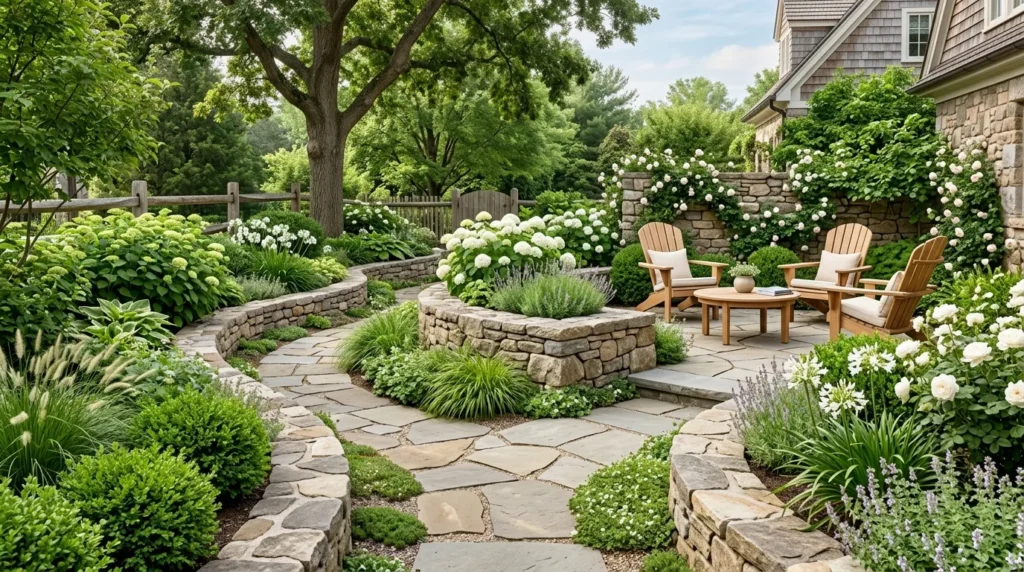
While flowers and foliage change throughout the year, stone paths, edging, walls, and seating features provide consistent structure.
Natural stone also works beautifully with greenery because the contrast between hard mineral surfaces and organic plants creates visual balance.
You don’t need to cover the entire backyard with stone. Small, deliberate applications often have a greater impact.
How To Style It
Use stone to define transitions.
A stone border can separate a planting bed from lawn. Flat stones can create a simple path. Larger stones can become focal points among grasses and shrubs.
Match the stone’s general character to your home. A traditional brick house might pair beautifully with warm-toned stone, while a modern home may suit cleaner gray or neutral materials.
Avoid using too many unrelated stone colors.
Repeating one stone material in several areas helps the backyard feel cohesive.
7. Cozy Fire Feature
Quick Benefits
- Creates a gathering point
- Extends outdoor entertaining
- Adds warmth and ambiance
- Gives the yard a focal point
- Works across multiple seasons
Why It Works
A fire feature naturally attracts people.
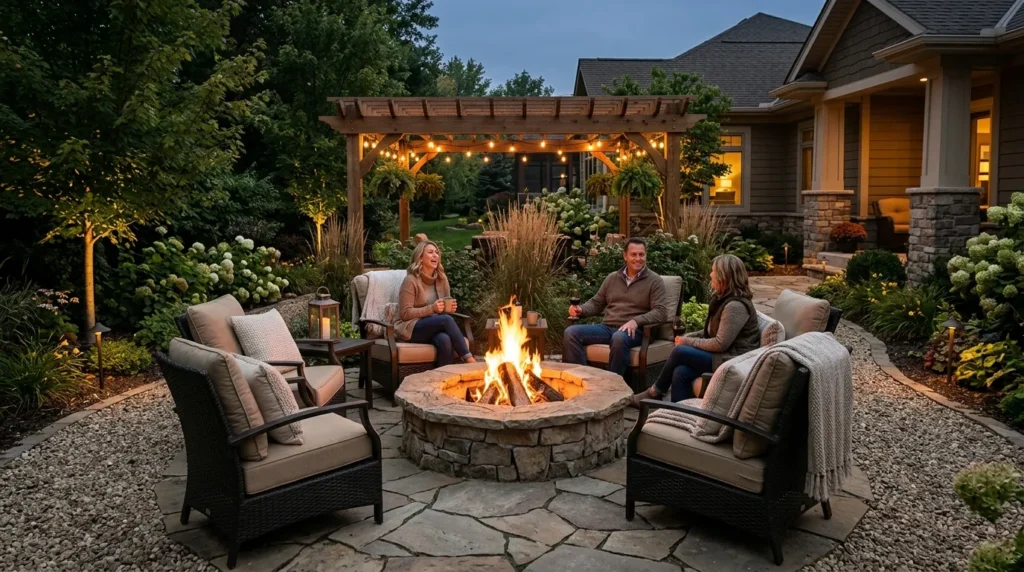
Instead of scattering outdoor chairs around the backyard, placing seating around a central feature gives the area a clear purpose.
A fire pit can also create a stronger evening atmosphere, making the backyard useful after the sun goes down.
Safety and local regulations should always come first. Fire features need proper placement, clearance, fuel considerations, and compliance with applicable local rules.
How To Style It
Think about the fire feature as the center of a small outdoor room.
Arrange seating at a comfortable and safe distance around it.
Use gravel, stone, pavers, or another suitable noncombustible surface depending on the design and local requirements.
Keep planting appropriately separated from the fire area.
For a more finished appearance, repeat the surrounding materials in nearby paths or garden borders.
Add weather-resistant cushions and simple side tables to make the area more comfortable.
8. Vertical Garden Layers
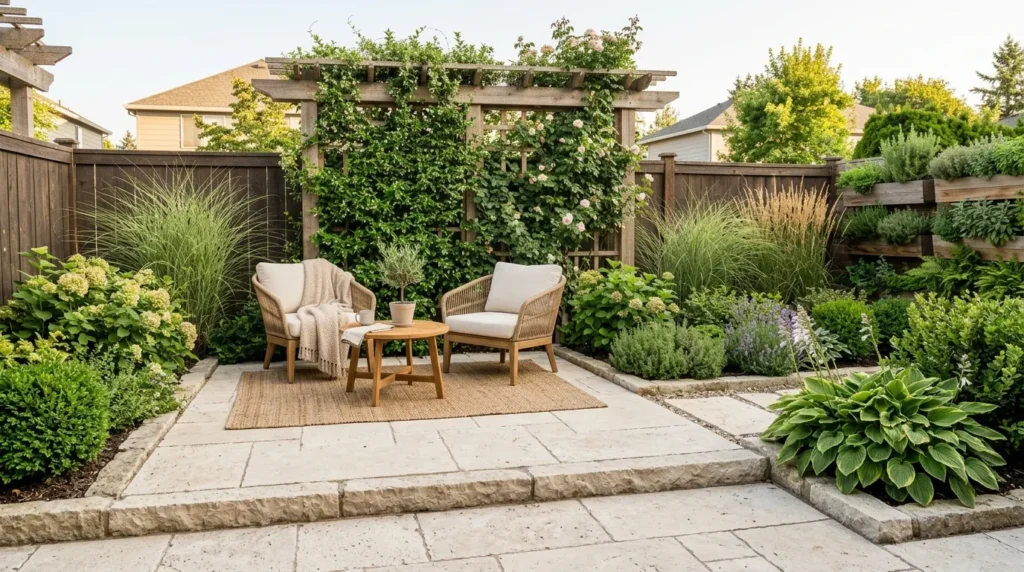
Quick Benefits
- Uses vertical space
- Adds height
- Creates privacy
- Works in compact yards
- Makes plain walls more interesting
Why It Works
Many homeowners concentrate entirely on the ground plane and forget how much potential exists above it.
Fences, walls, pergolas, trellises, and other vertical structures can become part of the landscape rather than simply defining its boundaries.
Vertical planting also helps small yards feel layered without consuming much ground area.
This approach is especially useful for narrow backyards, patios, and urban properties.
How To Style It
Use climbing plants on suitable trellises or pergolas.
Add wall-mounted planters where appropriate.
Tall ornamental grasses can create vertical movement without requiring a structure.
For edible gardening, vertical supports can be useful for appropriate climbing crops.
Keep the arrangement balanced. Too many different vertical elements can make a small yard feel busy.
One strong trellis or planted wall can often have more impact than several unrelated installations.
9. Defined Lawn Areas
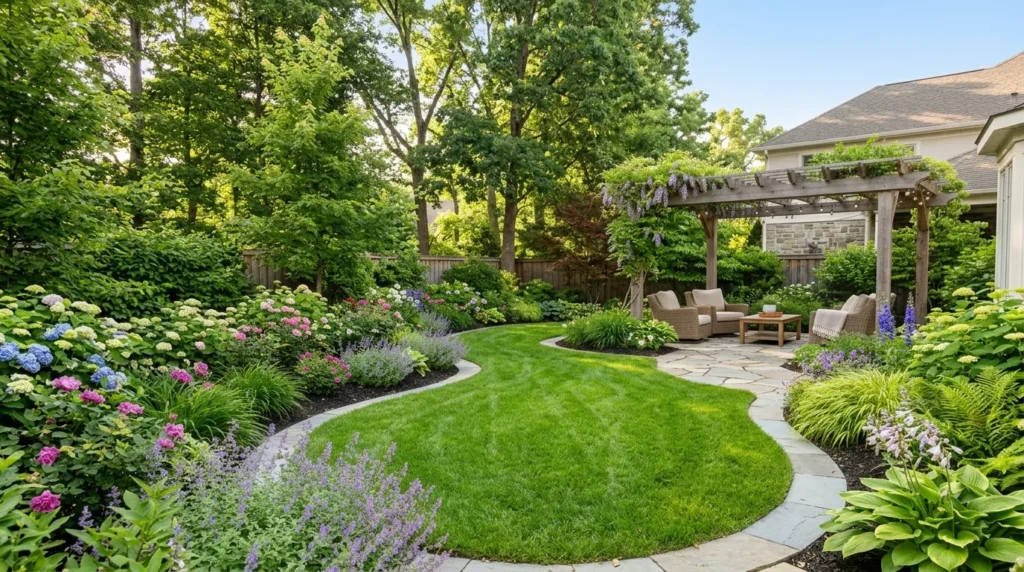
Quick Benefits
- Gives open space a purpose
- Creates a cleaner layout
- Makes gardens easier to maintain
- Balances planted areas
- Works well for families
Why It Works
A lawn doesn’t have to cover the entire backyard to be useful.
In fact, defining a smaller lawn area can make the landscape feel more intentional while leaving room for planting beds, patios, paths, and gathering spaces.
A mistake many homeowners make is treating every open section of the yard as lawn simply because that’s what was there originally.
Think about what you actually use.
If children need open play space, preserve it. If the lawn is rarely used, some of it could potentially become a garden or outdoor living zone.
How To Style It
Create a clean boundary between lawn and planting.
Curved beds can create a softer garden appearance, while straight edges work well with contemporary architecture.
Use consistent edging where needed.
Keep the lawn large enough to serve its purpose without allowing it to dominate the entire landscape.
Surrounding grass with layered planting can make even a modest lawn feel like part of a professionally planned backyard.
10. Evening Lighting
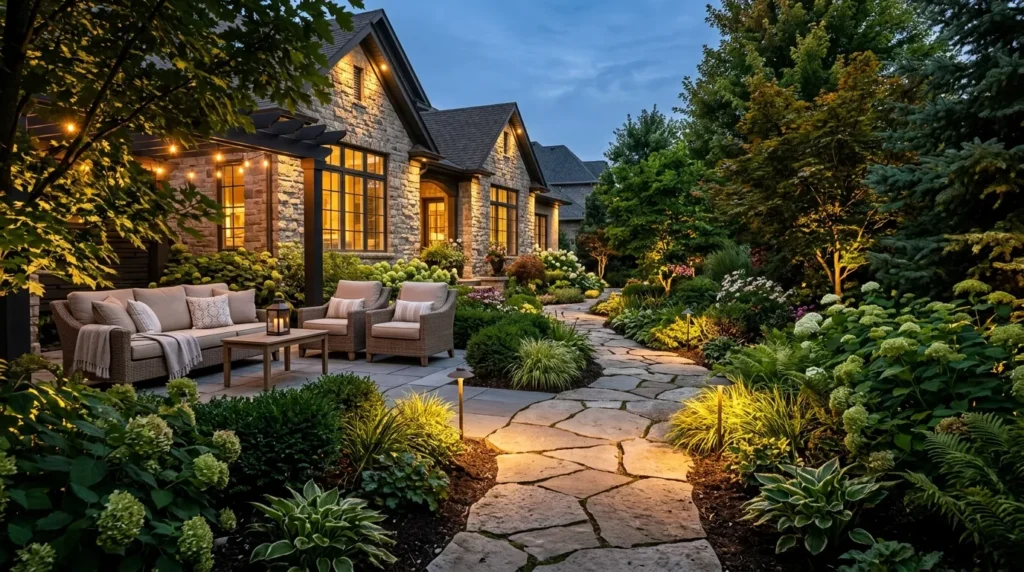
Quick Benefits
- Extends backyard usability
- Highlights landscape features
- Improves nighttime atmosphere
- Adds visual depth
- Makes entertaining more inviting
Why It Works
A backyard shouldn’t disappear visually as soon as the sun goes down.
Thoughtful lighting allows trees, pathways, patios, and planting beds to remain part of the experience after dark.
The goal isn’t to make the entire yard bright.
In fact, overly bright lighting can make an outdoor space feel harsh and reduce the cozy atmosphere you’re trying to create.
How To Style It
Use different types of lighting for different purposes.
Path lights can help define walkways.
Low landscape lights can highlight attractive plants or architectural details.
String lights can create a relaxed entertaining atmosphere when installed appropriately.
Warm-toned lighting generally works well for cozy residential outdoor spaces.
Place lights selectively instead of illuminating every corner.
The best result often comes from a mixture of light and shadow.
How To Plan a Backyard Landscape
Before purchasing plants or materials, spend some time observing the backyard.
Start with a simple sketch.
Mark:
- The house
- Existing trees
- Fences
- Patios
- Utility areas
- Sunny areas
- Shady areas
- Drainage concerns
- Existing pathways
- Views you want to preserve
- Views you want to screen
Then decide what the backyard needs to do for you.
Do you want a place for family dinners?
A garden for flowers?
A play area?
A quiet retreat?
A fire pit?
A vegetable garden?
You can have multiple functions, but defining priorities makes the layout much easier.
How To Create a Cohesive Backyard
A backyard can contain many different features without looking chaotic.
The secret is repetition.
Repeat a few elements throughout the space.
For example:
Natural wood + warm stone + soft green foliage
or
Gray pavers + white flowers + dark green shrubs
or
Warm brick + terracotta + evergreen plants
You can repeat materials, colors, plant forms, or architectural details.
This creates a visual thread that connects different zones.
Best Backyard Landscaping for Small Yards
Small yards benefit from restraint.
Instead of trying to fit everything into one space, choose a few features that matter most.
A small backyard might include:
- A compact patio
- A narrow planting bed
- One privacy screen
- A small lawn
- A vertical garden
- A compact seating area
Use vertical space whenever possible.
Keep pathways simple.
Choose appropriately sized furniture.
Avoid planting too many varieties in tiny beds because the garden can quickly look crowded.
A limited palette often makes a small yard feel larger.
Backyard Landscaping for Entertaining
If entertaining is your priority, start with the seating and circulation.
Guests should be able to move easily between the house, seating, dining area, and other features.
Keep frequently used surfaces close to seating.
An outdoor dining table should have adequate room around the chairs.
If you have a grill or outdoor kitchen, think about how food moves from preparation to serving.
Add shade where appropriate.
A pergola, umbrella, covered patio, or mature tree can make a significant difference during hot weather.
Then layer the atmosphere with plants, textiles, lighting, and small decorative details.
How To Make Landscaping Look Expensive
You don’t necessarily need expensive materials.
Professional-looking landscapes often have a few characteristics in common.
Repeat Materials
Using the same stone or wood in multiple locations creates cohesion.
Create Clear Edges
Well-defined transitions between lawn, beds, and pathways make the landscape look maintained.
Use Groups of Plants
Planting in clusters usually creates more impact than scattering individual plants everywhere.
Give Plants Room
Overcrowded beds can quickly become difficult to maintain.
Add One Focal Point
A beautiful tree, fountain, fire feature, sculpture, or seating area can anchor the design.
Keep the Palette Controlled
Too many colors and materials can make a backyard look fragmented.
Low-Cost Backyard Landscaping Ideas
If you’re working with a limited budget, prioritize changes that have a large visual impact.
Start with cleanup and pruning.
Then define existing beds.
Add mulch where appropriate.
Rearrange existing plants.
Divide suitable perennials.
Refresh tired containers.
Create a simple seating area.
Add a few strategic lights.
Paint or refresh suitable outdoor structures.
You can also work in phases rather than attempting the entire yard in one season.
A well-planned small improvement often looks better than an unfinished large project.
Backyard Landscaping Mistakes To Avoid
Planting Without Checking Mature Size
Always consider how large a plant will become.
Ignoring Drainage
Poor drainage can damage plants and structures.
Choosing Plants for Looks Alone
Sun, soil, water, and climate matter.
Creating Too Many Focal Points
The eye needs somewhere to settle.
Forgetting Maintenance Access
Leave room to prune, mow, water, and repair.
Overbuilding the Patio
Outdoor living areas should fit the actual way you use the yard.
Installing Lighting Everywhere
Too much light can reduce atmosphere and may create unwanted glare.
FAQ
What is the easiest way to improve a backyard landscape?
Start with cleanup, defined planting beds, fresh mulch where appropriate, and a clear focal point. You can then add seating, pathways, plants, lighting, or privacy features gradually.
How can I make my backyard look expensive?
Use repetition, clear edges, grouped plants, cohesive materials, and one or two strong focal points. A restrained design often looks more sophisticated than a yard filled with unrelated features.
What plants are best for low-maintenance landscaping?
The best choices depend on your USDA hardiness zone, soil, sunlight, rainfall, and available irrigation. Native and well-adapted plants are often good starting points because they are suited to local conditions.
How do I make a small backyard look bigger?
Use a limited color palette, vertical planting, appropriately scaled furniture, defined zones, and pathways that lead the eye through the space. Avoid overcrowding the ground plane.
How can I add privacy to my backyard naturally?
Layer evergreen shrubs, trees, ornamental grasses, and climbing plants with fences or trellises where appropriate. Focus on blocking specific sightlines instead of enclosing the entire yard.
What is the best material for a backyard path?
There isn’t one universal best material. Gravel, concrete pavers, brick, and natural stone can all work depending on your climate, budget, drainage needs, maintenance preferences, and home’s architectural style.
How do I make my backyard usable at night?
Add strategically placed outdoor lighting around pathways, seating areas, trees, and architectural features. Warm, layered illumination can create atmosphere without flooding the entire yard with bright light.
Conclusion
A beautiful backyard doesn’t happen because every inch is filled with plants and expensive features.
It happens because the space has purpose and structure.
Start by deciding how you want to use the yard. Then create zones around those activities. Add layered planting for depth, paths for movement, natural materials for texture, and comfortable outdoor spaces for everyday living.
If privacy is important, build it into the landscape. If entertaining is your priority, make the seating and circulation work first. If maintenance is a concern, choose plants based on your actual growing conditions rather than appearance alone.
And remember that landscaping can happen gradually.
You don’t need to complete everything in one weekend. Start with the area that will make the biggest difference, live with it for a while, and then build from there.
The most successful 10 Backyard landscaping ideas are ultimately the ones that make your outdoor space easier to enjoy, easier to maintain, and more connected to the way you live.
Pick one idea that fits your yard today, then let the landscape evolve naturally over time.
Related Articles
- 10 Backyard Landscape Design Ideas for Outdoor Entertaining
- 10 Garden Decor Ideas That Add Natural Beauty
- 10 DIY Garden Projects for Outdoor Entertaining
- 10 DIY Fire Pit Ideas for Backyard Makeovers
- 10 Small Balcony Ideas with Vertical Gardens