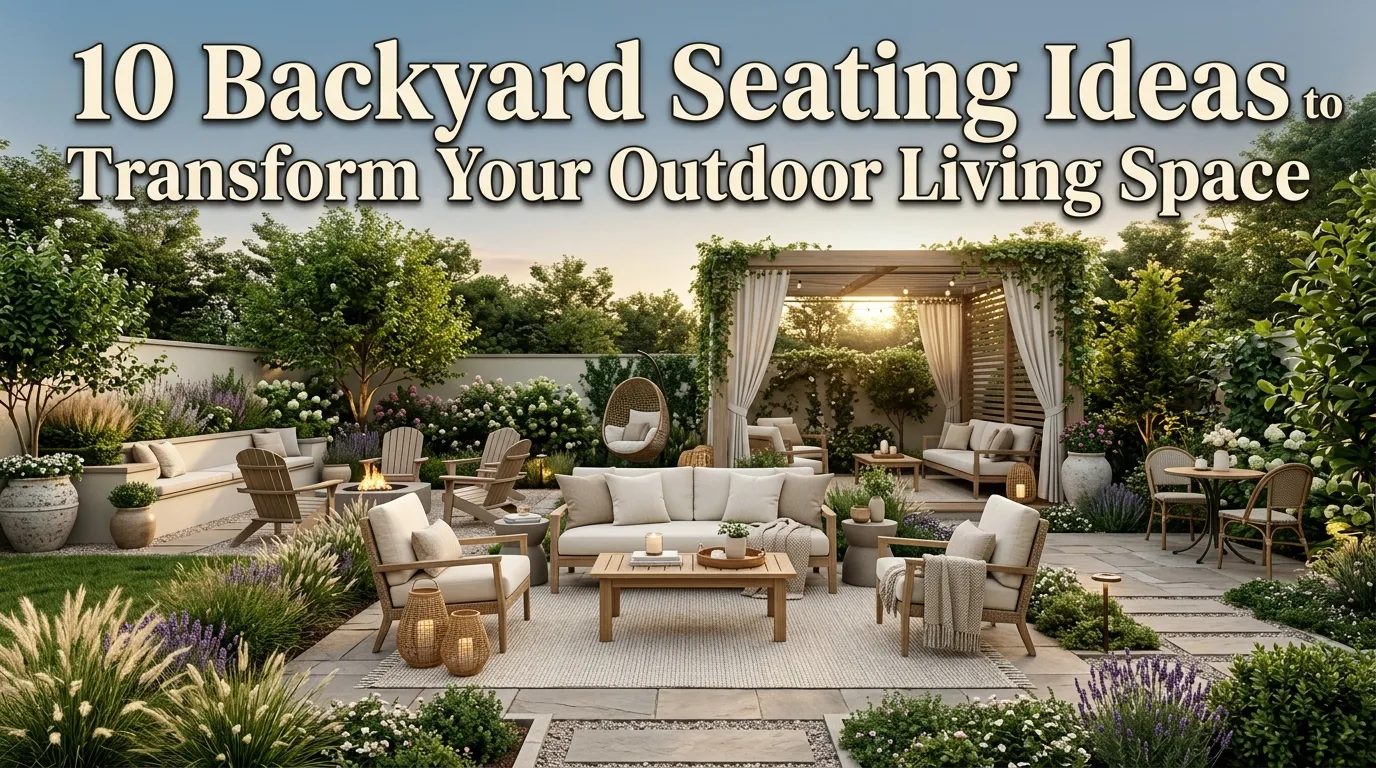
10 Backyard Seating Ideas to Transform Your Outdoor Living Space
If you’ve ever hosted a backyard gathering and watched half your guests end up standing awkwardly near the door because there simply wasn’t enough comfortable seating, you already know how much seating shapes the way a yard actually gets used. A beautiful patio or well-planted garden bed only goes so far if there’s nowhere inviting to sit down and stay a while.
In my experience, seating is one of the most overlooked parts of backyard design. Homeowners spend real money on landscaping, decking, and pool features, then finish the space with a mismatched patio set that was never sized or arranged for how the yard actually gets used. A mistake many homeowners make is treating seating as an afterthought purchase rather than a planned part of the layout, which is why so many backyards end up with furniture pushed against a fence instead of arranged to encourage conversation and lingering.
This guide covers ten backyard seating ideas that consistently work, whether you’re designing around a fire pit, a pool, a garden, or simply an open lawn that needs more purpose. I’ve noticed that the yards people actually spend time in almost always have layered seating — a mix of casual and formal spots — rather than one single seating area trying to do everything at once.
You don’t need to redo your entire yard to see a difference. Start with the idea that solves your biggest current gap, whether that’s not enough seats for guests, no cozy spot to relax alone, or furniture that simply doesn’t fit the space the way it should. By the end of this article, you’ll have a clear sense of which seating style fits your yard, your climate, and how you actually like to spend time outside.
Table of Contents
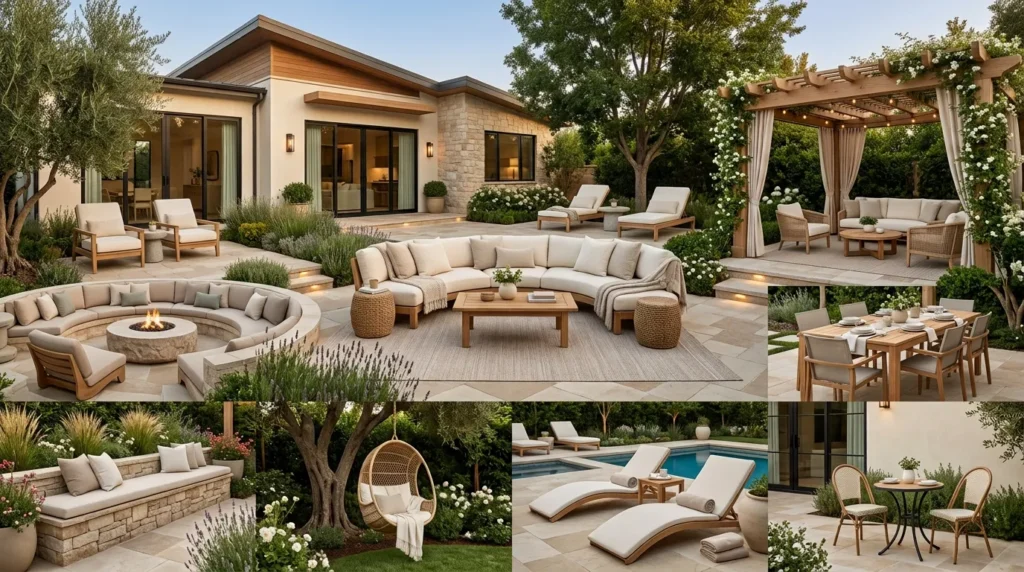
- Built-In Bench Seating — Maximize space with seating built directly into decks or walls.
- Cozy Fire Pit Circle — Create a natural gathering point with seating arranged around fire.
- Hanging Swing Chairs — Add a relaxed, playful seating option with visual movement.
- Sectional Sofa Layouts — Bring indoor-style comfort and flexibility to outdoor spaces.
- Rustic Wooden Benches — Use durable, classic seating that suits nearly any style.
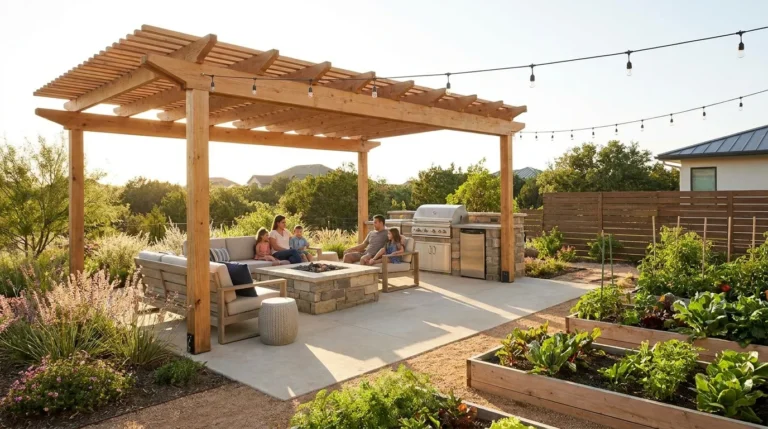
- Shaded Pergola Seating — Combine comfortable seating with structural shade overhead.
- Modular Outdoor Sectionals — Rearrange seating easily to fit different gatherings.
- Hammock Relaxation Corner — Carve out a quiet, low-effort spot to unwind.
- Multi-Level Deck Seating — Use elevation changes to define distinct seating zones.
- Layered Cushions And Textiles — Add comfort and personality with soft outdoor fabrics.
1. Built-In Bench Seating
Quick Benefits
- Saves space compared to freestanding furniture
- Creates a clean, custom-built look
- Doubles as storage in many designs
- Works well along deck or patio edges
- Reduces clutter from extra furniture pieces
Why It Works
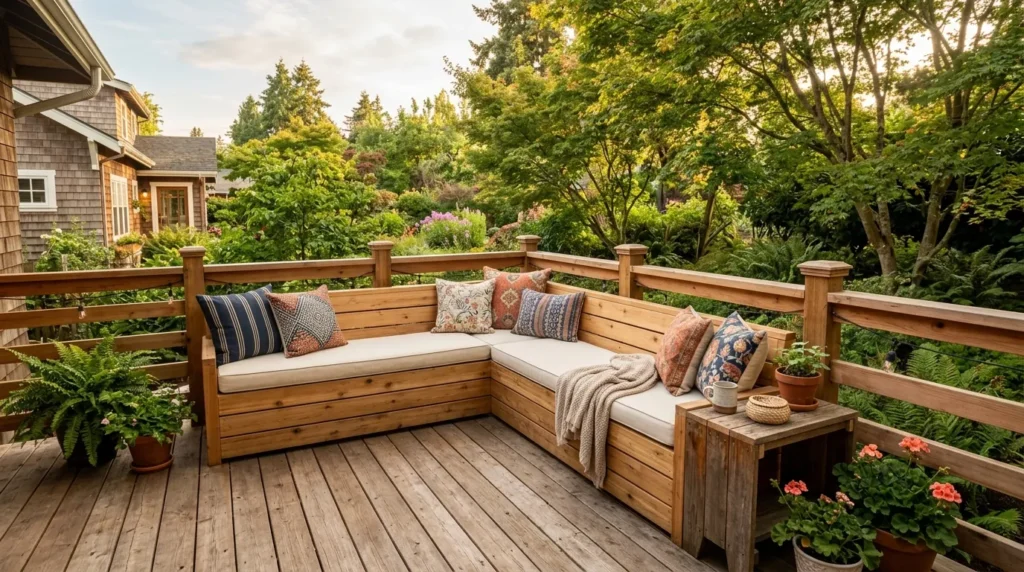
Built-in benches solve a problem that freestanding furniture often can’t: they make use of space that would otherwise sit empty, like the perimeter of a deck or the edge of a raised patio. In my experience, built-in seating is what makes a small backyard feel intentionally designed rather than cramped, since the bench becomes part of the architecture instead of one more object competing for space. It also tends to hold up better over time than lightweight furniture, especially when built from the same decking or stone material as the surrounding hardscape, giving the whole area a cohesive, custom feel.
How To Style It
Build benches along at least one straight edge of your deck or patio, ideally somewhere that doesn’t block a main walking path. Cedar, teak, or composite decking material are popular choices since they hold up to weather without much upkeep. Adding a hinged seat creates built-in storage for cushions or pool toys, which is especially useful in smaller yards. Top the bench with weather-resistant cushions in a durable outdoor fabric, and consider a low back rest angled slightly for comfort rather than a straight vertical one.
2. Cozy Fire Pit Circle
Quick Benefits
- Naturally draws people together in conversation
- Extends outdoor use into cooler months
- Creates a strong visual focal point
- Works with a wide range of seating styles
- Adds warmth and ambiance after dark
Why It Works
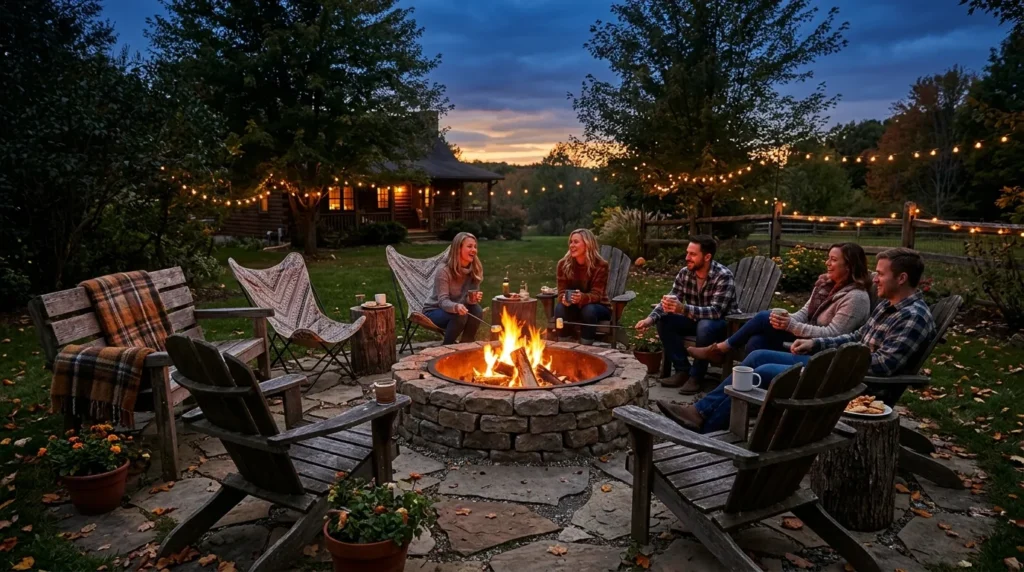
One thing that works especially well is arranging seating in a loose circle or semicircle around a fire pit, because it does something most other layouts don’t — it removes the need for a “front” of the seating area. Everyone faces the same central point, which naturally encourages conversation instead of side conversations splitting off. I’ve seen this idea transform spaces that previously felt purposeless after sunset, since a fire pit circle gives people a reason to stay outside well into the evening, even once the temperature starts to drop.
How To Style It
Keep seating roughly 7 to 9 feet from the center of the fire pit for comfortable heat without feeling crowded. A mix of low-slung chairs, a bench or two, and a couple of stools gives flexibility for different group sizes. Choose furniture that’s easy to pull closer or push back, since a fire pit gathering often shifts in size throughout the evening. Gravel, pavers, or a stamped concrete pad underneath keeps the area stable and reduces fire risk compared to leaving bare grass or mulch nearby.
3. Hanging Swing Chairs
Quick Benefits
- Adds a playful, relaxed visual element
- Works well in smaller or awkward corners
- Creates gentle movement in the space
- Doesn’t require a large footprint
- Appeals to both kids and adults
Why It Works
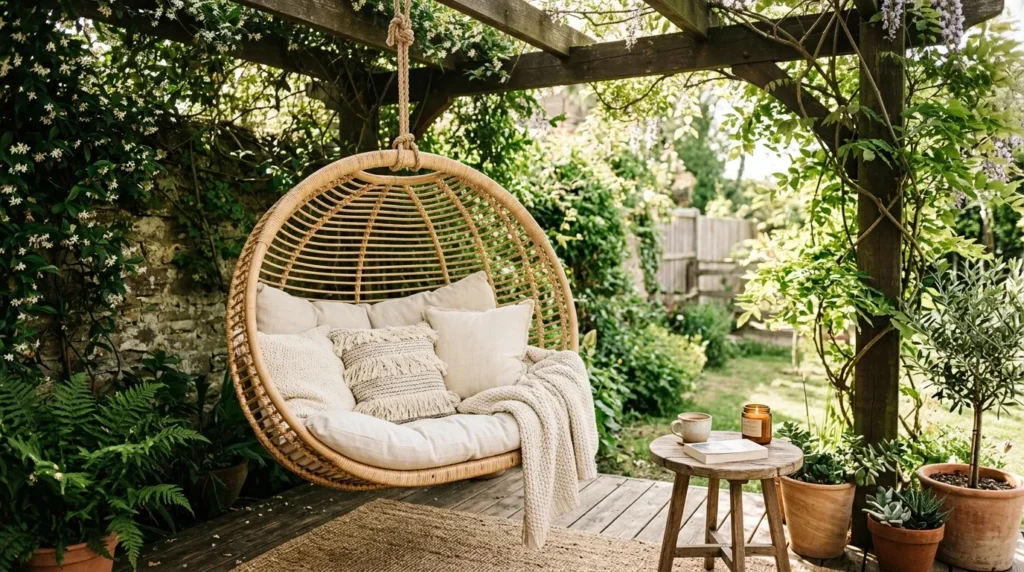
A hanging swing chair does something a normal chair can’t: it introduces motion into an otherwise static space. That’s why many designers recommend at least one hanging or suspended seat in a backyard redesign, even a small one, since it tends to become the spot people gravitate toward first. In my experience, swing chairs also work particularly well in corners or awkward nooks that are hard to furnish with standard seating, turning what would otherwise be a wasted patch of yard into one of the most-used spots in the space.
How To Style It
Hang swing chairs from a sturdy pergola beam, a dedicated A-frame stand, or a thick tree branch rated for the weight. Rattan or macrame styles suit a boho or cottage look, while a simple canvas sling fits more modern yards. Add a small side table or a low stool nearby so the swing doesn’t feel isolated from the rest of the seating layout. Weatherproof cushions are worth the investment here, since swing chair cushions tend to see heavier wear from constant sun exposure and movement.
4. Sectional Sofa Layouts
Quick Benefits
- Brings indoor-level comfort outdoors
- Ideal for larger gatherings and lounging
- Creates a defined living room feel
- Works well anchored under a covered area
- Offers flexible seating and reclining options
Why It Works
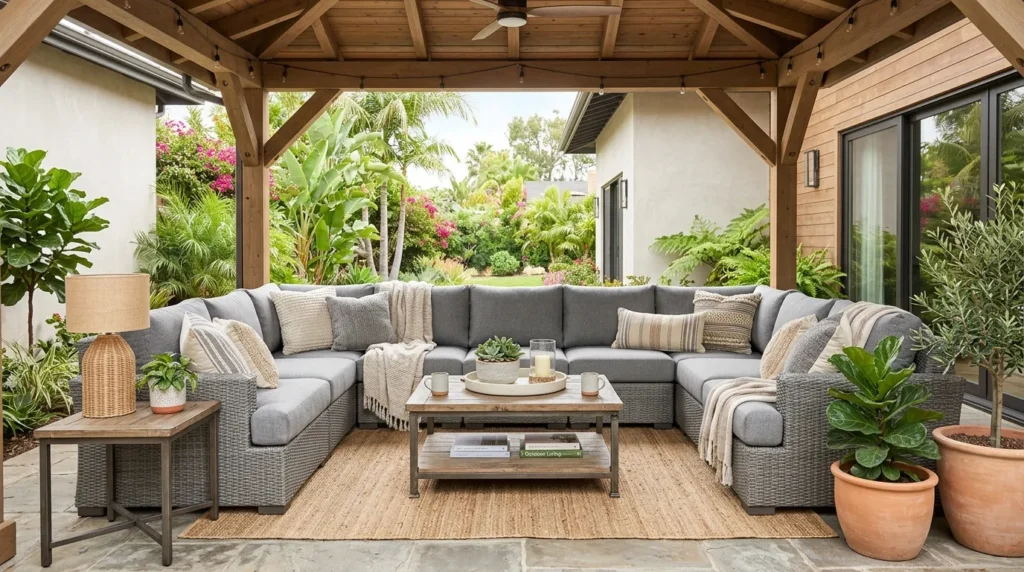
If you’re anything like me, you’ve noticed that outdoor sectionals have become one of the most popular backyard upgrades in recent years, and it’s easy to see why. A well-placed sectional creates the same sense of a defined “room” that a sofa does indoors, giving the yard an anchor point that feels finished rather than scattered. Sectionals also handle a wider range of uses than individual chairs — stretched out alone with a book, or filled with guests during a gathering — which makes them one of the more versatile seating investments you can make.
How To Style It
Position a sectional under some form of cover, whether that’s a pergola, umbrella, or covered patio, since deep-cushioned outdoor sectionals hold moisture longer than slatted furniture if left fully exposed to rain. Choose quick-dry foam cushions with removable, washable covers for easier long-term maintenance. Anchor the layout with a coffee table or ottoman at the center, and leave enough clearance (at least 3 feet) around the perimeter for easy walking access. Neutral cushion colors tend to age better visually than bold patterns, which can look dated within a few seasons.
5. Rustic Wooden Benches
Quick Benefits
- Fits nearly any backyard style
- Highly durable with proper wood treatment
- More affordable than upholstered furniture
- Easy to move or reposition
- Adds natural texture and warmth
Why It Works
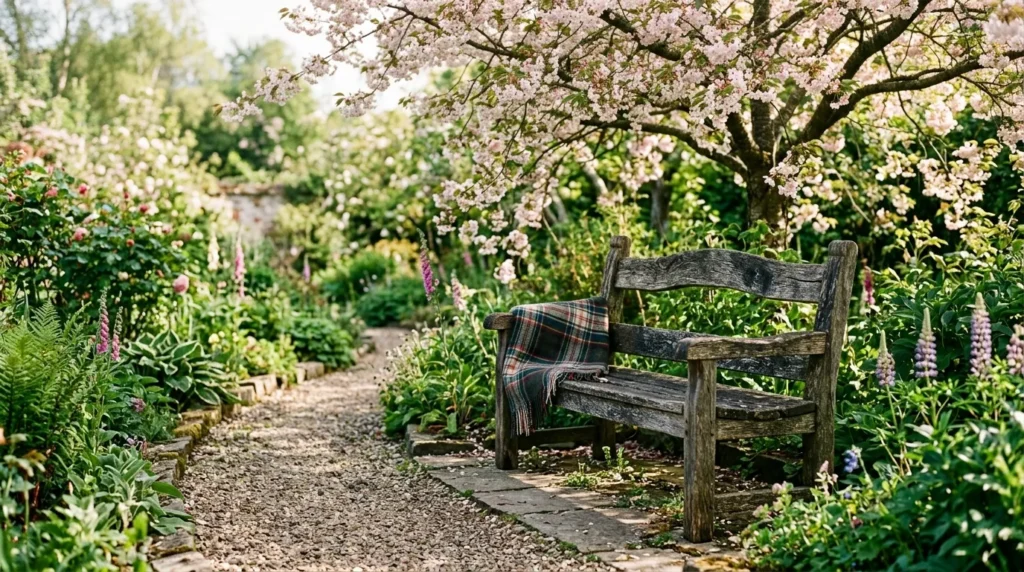
Wooden benches are one of the oldest forms of outdoor seating for a reason — they’re simple, durable, and flexible enough to fit almost any design style, from farmhouse to modern minimalist. A mistake many homeowners make is assuming benches are only useful as extra seating, when in reality a well-placed bench can serve as a design anchor on its own, especially along a garden path or beneath a shade tree. Because benches don’t require cushions or upholstery to look finished, they’re also one of the lowest-maintenance seating options on this list.
How To Style It
Choose naturally rot-resistant wood like teak, cedar, or eucalyptus, or a pressure-treated pine if you’re working with a tighter budget. Position benches at natural pause points in the yard — along a path, beneath a tree, or facing a garden bed — rather than lining them up along a fence. A simple wood stain in a warm tone tends to weather more gracefully than paint, which can chip and require more upkeep. Adding a single outdoor cushion or a folded blanket softens the look without sacrificing the low-maintenance appeal.
6. Shaded Pergola Seating
Quick Benefits
- Protects seating from direct sun and light rain
- Defines a clear outdoor living zone
- Adds architectural structure to the yard
- Extends comfortable seating hours during the day
- Pairs well with string lights and drapery
Why It Works
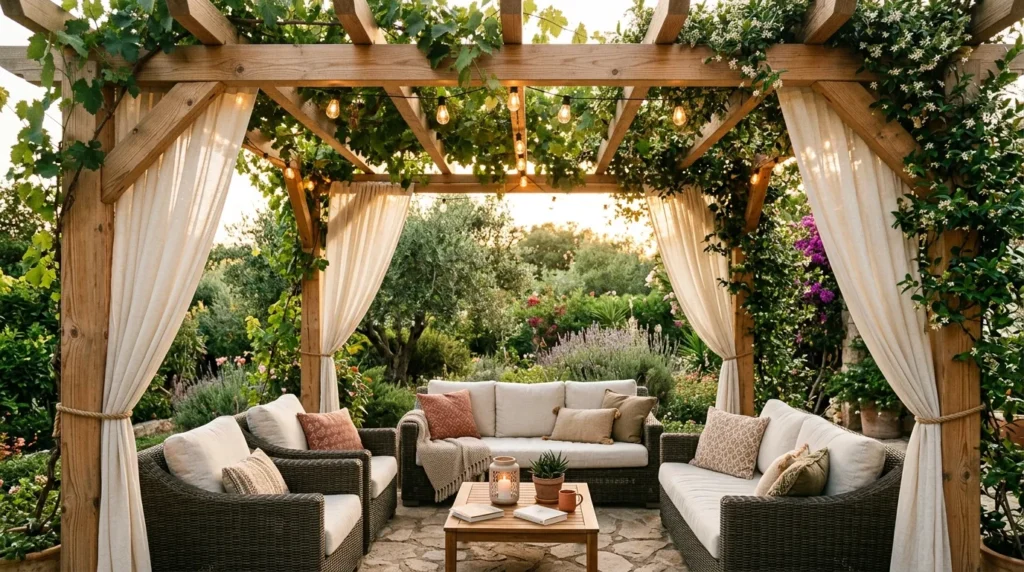
Seating placed in full, unbroken sun tends to get used far less than seating with even partial shade, especially during peak afternoon hours. A pergola solves that problem while also giving the yard a clear architectural anchor. In my experience, a pergola over a seating area does double duty — practically, it extends the hours the space is comfortable to use, and visually, it gives the eye a defined structure to rest on instead of an open expanse of yard. Pergolas also make it easy to add finishing touches like string lights or hanging drapery that are harder to incorporate into open seating areas.
How To Style It
Size the pergola to comfortably cover your full seating arrangement with a few feet of buffer on each side, rather than building it to the exact dimensions of the furniture. A retractable canopy or louvered roof adds flexibility for changing weather, while a fixed lattice roof paired with climbing vines creates a softer, more natural look over time. String lights woven along the beams add ambiance for evening use, and lightweight outdoor curtains on the sides can be tied back for airflow or closed for extra shade and privacy.
7. Modular Outdoor Sectionals
Quick Benefits
- Easily rearranged for different group sizes
- Adapts to seasonal or event-based needs
- Maximizes flexibility in smaller yards
- Simplifies storage during off-seasons
- Works for both daily use and entertaining
Why It Works
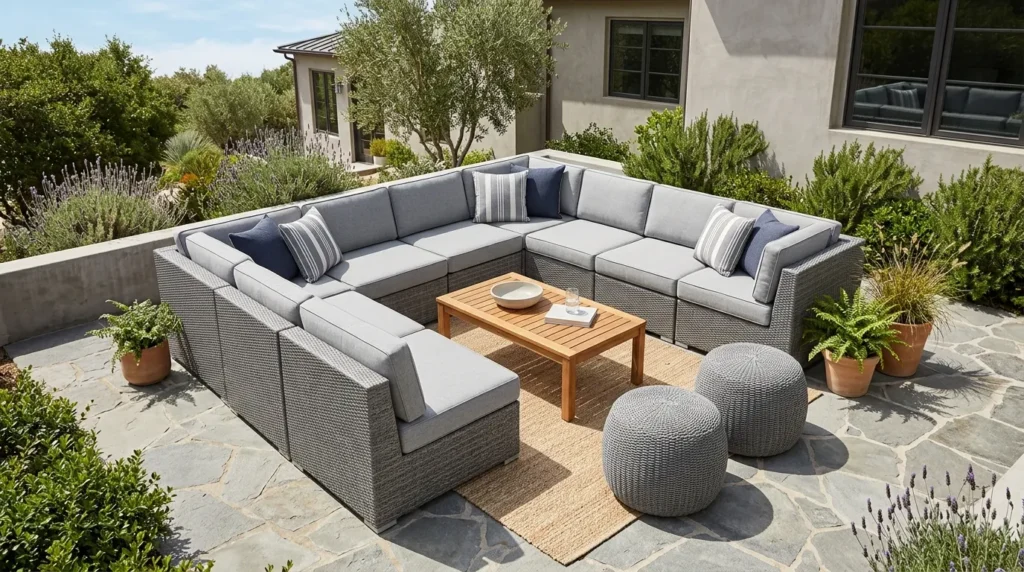
Modular seating — individual pieces that can be combined, separated, or reconfigured — solves a problem that fixed furniture arrangements can’t: backyards get used differently depending on the day. One simple trick I always suggest is choosing modular pieces over a single fixed sectional whenever the yard doubles as both a quiet everyday space and an occasional entertaining space, since the same furniture can shift from an intimate two-seat arrangement to a large connected layout for a party without buying separate furniture sets for each scenario.
How To Style It
Look for modular pieces with matching connector systems so sections click or lock together securely rather than shifting when people sit down. Keep a few ottomans or poufs on hand that can serve as extra seats, footrests, or small side tables depending on the layout. Store modular cushions in a weatherproof deck box during off-seasons or heavy storms to extend their lifespan significantly. Because modular sets are rearranged often, choose a durable frame material like powder-coated aluminum that won’t scratch or wear from repeated repositioning.
8. Hammock Relaxation Corner
Quick Benefits
- Creates a dedicated spot for quiet relaxation
- Requires minimal space and structure
- Adds a laid-back, vacation-style mood
- Affordable compared to most furniture options
- Works well tucked between trees or posts
Why It Works
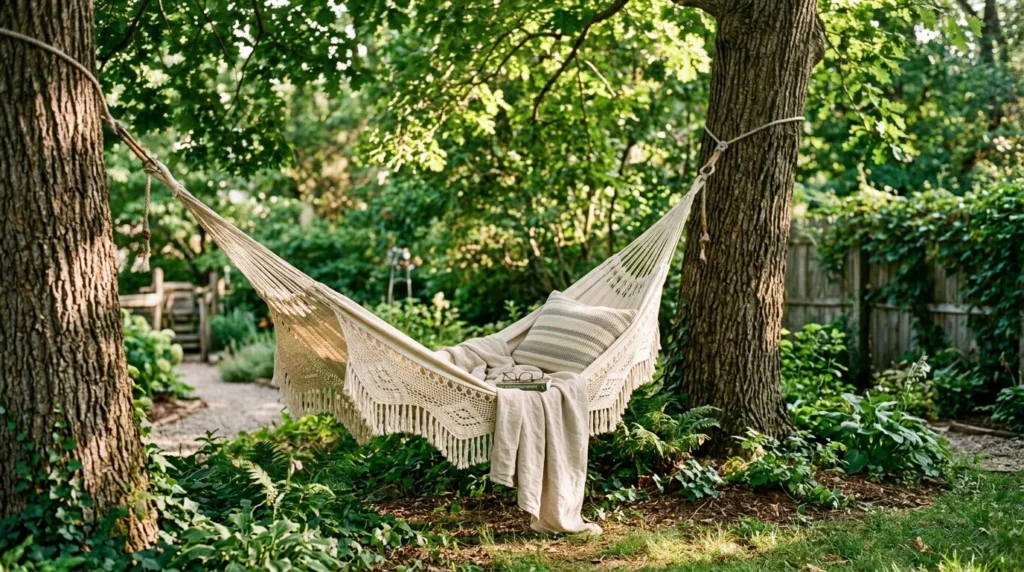
Not every seating spot in a backyard needs to accommodate a group. A hammock corner gives the yard a single-person retreat, which I’ve noticed is something a lot of backyard designs skip entirely in favor of group-focused seating. That’s why many designers recommend tucking at least one hammock or single lounger into a quieter corner of the yard, away from the main gathering areas, so there’s always a low-effort spot to disappear into with a book or a nap without needing to plan around anyone else’s schedule.
How To Style It
If you have two mature trees spaced 12 to 15 feet apart, a classic rope or fabric hammock hung between them is the simplest option. Without suitable trees, a freestanding hammock stand works just as well and can be repositioned as needed. Choose quick-dry, weather-resistant fabric over traditional cotton rope styles if the hammock will stay outside year-round. Position it in a partially shaded spot if possible, since full sun exposure both fades the fabric faster and makes the hammock uncomfortably hot to use midday.
9. Multi-Level Deck Seating
Quick Benefits
- Creates distinct zones within one connected space
- Adds visual interest through elevation changes
- Works well for yards with natural slopes
- Separates quiet and social areas naturally
- Increases usable seating without expanding footprint
Why It Works
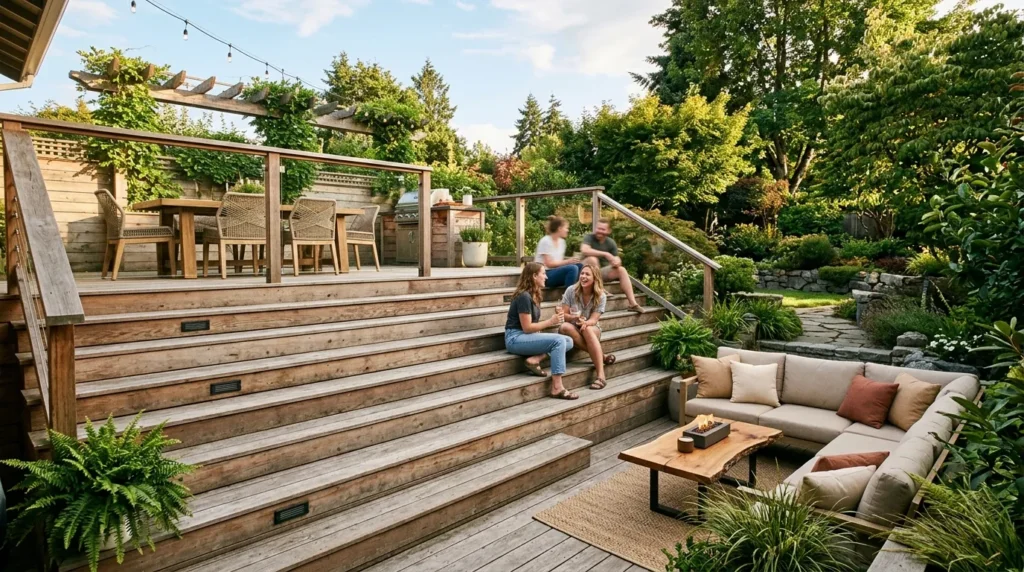
Multi-level seating uses changes in elevation — a raised platform, a sunken lounge area, or simple tiered steps — to naturally divide a yard into different zones without needing walls or fences to do it. In my experience, this approach works especially well on yards with a natural slope that would otherwise be difficult to landscape, turning what could be a wasted grade change into one of the most visually interesting parts of the yard. It also solves a practical layout problem: multiple seating areas can exist close together without feeling like they’re competing for the same space.
How To Style It
Use a raised deck platform for your main seating and dining area, then step down to a slightly lower patio or lounge zone for a more casual secondary space. Wide, shallow steps (rather than narrow, steep ones) double as informal extra seating during larger gatherings. Retaining walls between levels can be built at bench height and topped with a cushion to serve double duty as both structure and seating. Keep sightlines open between levels so the different zones still feel connected rather than isolated from each other.
10. Layered Cushions And Textiles
Quick Benefits
- Adds comfort without new furniture purchases
- Instantly updates the look of existing seating
- Allows for easy seasonal style changes
- Softens hard materials like metal or wood
- Reflects personal style and color preferences
Why It Works
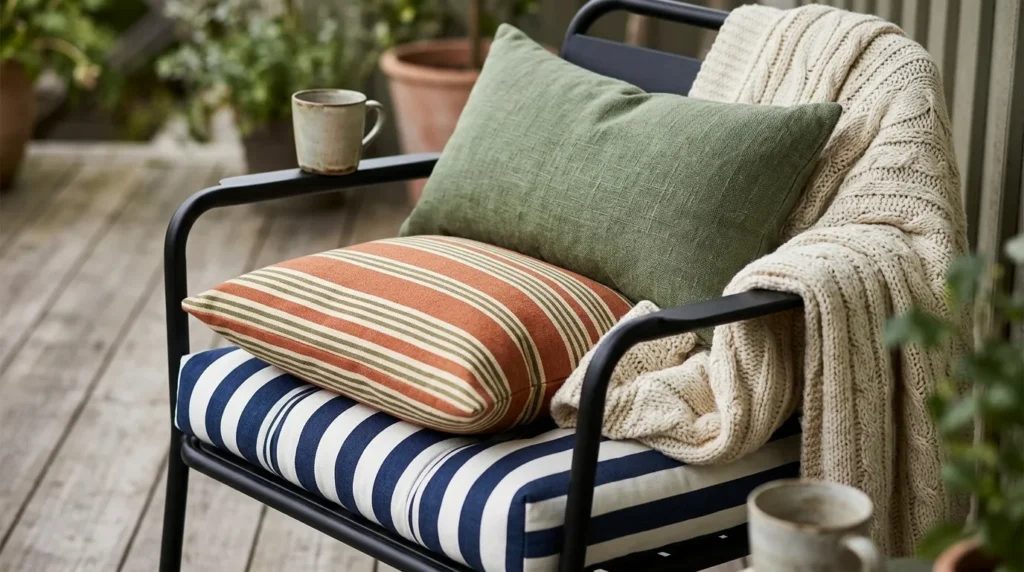
Sometimes the fastest way to improve backyard seating isn’t new furniture at all — it’s what covers the furniture already there. A mistake many homeowners make is assuming outdoor cushions and textiles are purely decorative, when in reality layered cushions, throw pillows, and outdoor blankets do real work softening hard materials like metal frames or bare wood, making seating noticeably more comfortable and inviting. This is also one of the most budget-friendly ideas on this list, since it can refresh the entire look of a seating area for a fraction of the cost of replacing furniture.
How To Style It
Mix cushion sizes and a few complementary patterns rather than matching everything exactly, which tends to look more curated and less like a matched furniture set. Choose solution-dyed acrylic fabrics like Sunbrella for anything that will stay outside regularly, since they resist fading and mildew far better than standard indoor fabric. Layer a folded outdoor blanket over the arm of a chair or the back of a bench for texture and an easy seasonal color update. Store cushions in a deck box or bring them indoors during extended wet weather to extend their lifespan.
Frequently Asked Questions
What is the most comfortable type of backyard seating?
Deep-seated sectionals and lounge chairs with thick, quick-dry foam cushions tend to offer the most comfort for extended outdoor use. Adding a footrest or ottoman increases comfort further. Ultimately, comfort also depends on shade and airflow, since even comfortable furniture feels less inviting in direct, unbroken sun.
How do I create backyard seating on a budget?
Start with rustic wooden benches or simple Adirondack chairs, which are among the most affordable seating options. Layering cushions and outdoor textiles onto existing furniture is another low-cost way to improve comfort and style without buying anything new.
What is the best material for outdoor seating furniture?
Teak, eucalyptus, and powder-coated aluminum are popular for their durability and low maintenance needs. For cushions and fabric, solution-dyed acrylic materials like Sunbrella resist fading, mildew, and moisture significantly better than standard indoor fabrics.
How much seating do I need for a backyard?
A general guideline is planning for at least the number of people who regularly use the space, plus a few extra seats for guests. Modular or stackable seating is a practical solution for yards that need to flex between everyday use and larger gatherings.
Can outdoor seating stay outside year-round?
Many materials, like teak, aluminum, and solution-dyed fabrics, are built to handle year-round outdoor exposure. However, cushions and softer textiles generally last longer if stored indoors or in a weatherproof deck box during extended wet or freezing weather.
How do I arrange seating around a fire pit?
Keep seating roughly 7 to 9 feet from the fire pit’s center for comfortable heat without crowding. A mix of chairs, benches, and stools arranged in a loose circle works better than a rigid symmetrical layout, since it’s easier to adjust as group size changes.
What seating works best in a small backyard?
Built-in benches, hanging swing chairs, and modular pieces tend to work best in smaller yards since they either save space or can be reconfigured as needed. Choosing multi-functional pieces, like a bench with hidden storage, also helps a small space work harder.
Final Thoughts
The right backyard seating does more than give people a place to sit — it shapes how the entire space gets used, from quiet mornings alone to full gatherings with friends. Layering different seating styles, like a fire pit circle for socializing and a hammock corner for solitude, tends to create a far more usable yard than relying on a single furniture set to do everything.
You don’t need to furnish the whole yard at once to feel the difference. Start with one or two ideas and gradually build a space that reflects your style and supports everyday comfort — the kind of backyard people actually want to sit in, not just walk through.
Related Articles
- Cozy Backyard Fire Pit Ideas
- Small Backyard Layout Ideas
- Modern Outdoor Living Spaces
- Budget-Friendly Patio Makeover Ideas
- DIY Backyard Lighting Projects