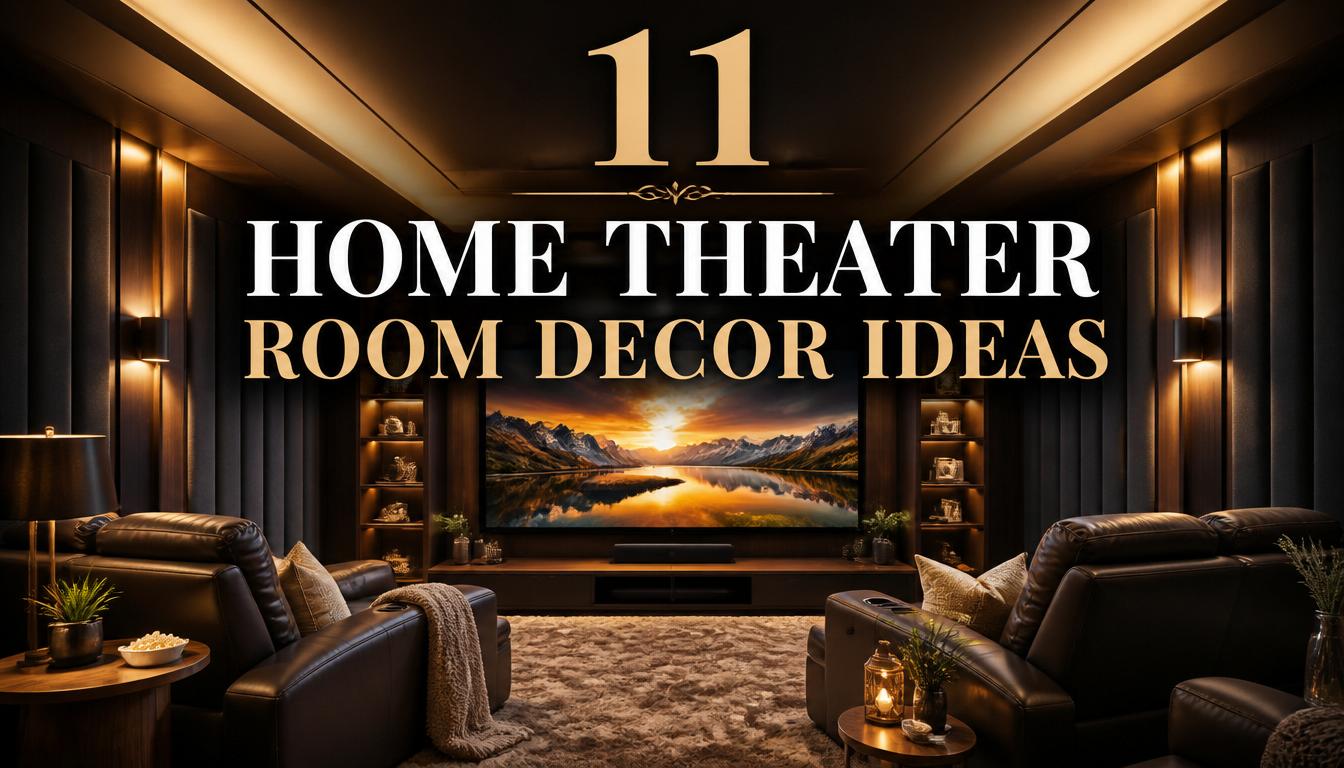
11 Home Theater Room Decor Ideas
A movie room should feel different from the rest of the house the moment you walk in. It should feel darker, softer, quieter, cozier, and more intentional than a standard living room. Whether you have a basement, bonus room, spare bedroom, loft, garage conversion, or apartment media corner, the right decor can make the space feel like a real escape.
A good home theater is not only about the biggest screen or loudest speakers. The room needs comfortable seating, controlled lighting, smart storage, sound-friendly textures, easy snack access, and decor that supports the movie experience. If the room feels cluttered, too bright, echoey, or uncomfortable, even expensive equipment will not feel as enjoyable.
These ideas are designed for real USA homes, from small family media rooms to more polished cinema-style setups. You can use one idea for a quick refresh or combine several for a complete room makeover. Each section includes practical design guidance, materials, styling logic, and visual tips that work beautifully for Pinterest while still making movie nights easier and more comfortable.
1. Deep Seating
- Adds comfort for long movies, sports, and family nights
- Works with sectionals, recliners, chaise sofas, and modular seating
- Makes the room feel cozy, relaxed, and built for lounging
- Helps define the main viewing zone around the screen
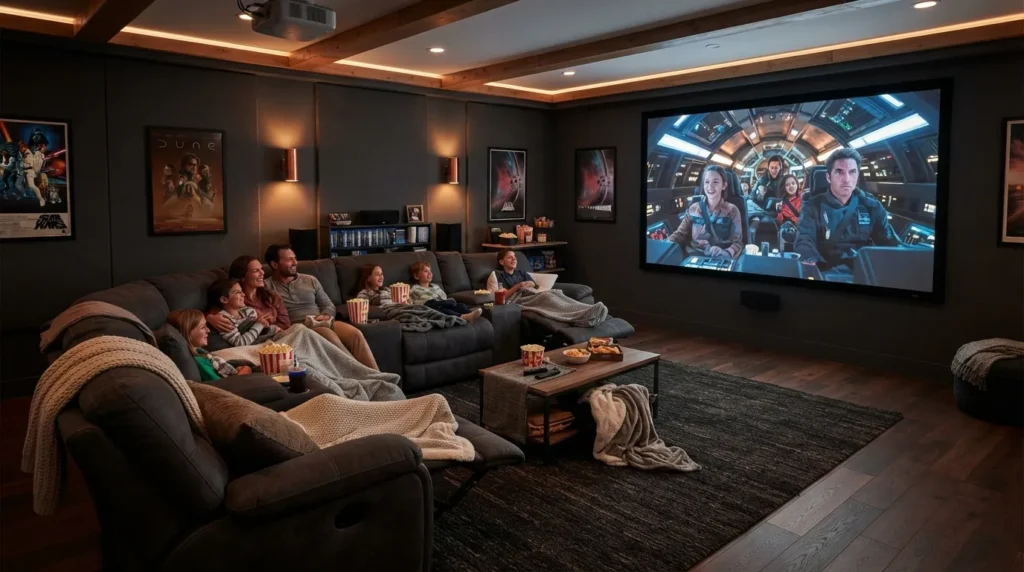
Deep seating is the foundation of a great movie room because comfort decides how often the space gets used. A beautiful room will sit empty if the sofa feels stiff or the chairs are too upright for long viewing. Choose plush sectionals, reclining chairs, chaise sofas, or modular pieces that allow people to stretch out. In my experience, performance fabric is a smart choice for family rooms because it handles snacks, pets, kids, and regular weekend use better than delicate upholstery.
The layout should support the screen, speakers, and walking paths. Place the main seating directly across from the screen when possible, then add side chairs, ottomans, or floor cushions for extra guests. Avoid pushing every seat against the wall if it makes the viewing angle uncomfortable. Add cup holders, soft arm pillows, and small side tables within reach. The room should feel easy to settle into, not overly formal. When seating feels generous and practical, movie nights become more relaxed, social, and enjoyable.
2. Dark Walls
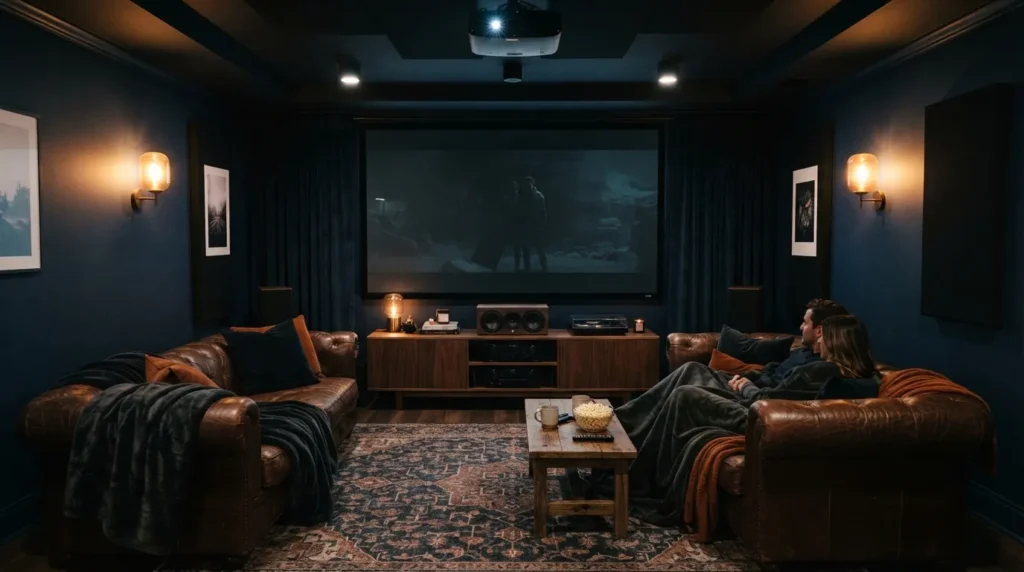
- Reduces glare from screens and projectors
- Creates a dramatic cinema-style atmosphere
- Works with charcoal, navy, espresso, black, forest green, or deep burgundy
- Makes lighting, posters, and seating feel more intentional
Dark walls can make a media room feel instantly more immersive. Light walls reflect screen glow, overhead light, and projector brightness, which can distract from the viewing experience. Deeper colors like charcoal, navy, espresso, black, deep green, or muted burgundy help the screen stand out and give the room a cozy theater feeling. That’s why many designers recommend darker wall colors for dedicated viewing spaces. The color does not have to feel cold when it is paired with warm lighting and soft textures.
Balance the dark paint with materials that add comfort. Use velvet pillows, wool rugs, leather seating, wood shelves, brass lamps, or textured curtains so the room feels layered instead of flat. If painting every wall feels too bold, start with the screen wall or the wall behind the seating. Matte or eggshell finishes usually look better than glossy paint because they reduce reflection. The result feels polished, dramatic, and much more focused for movies, gaming, streaming, and evening relaxation.
3. Layered Lighting
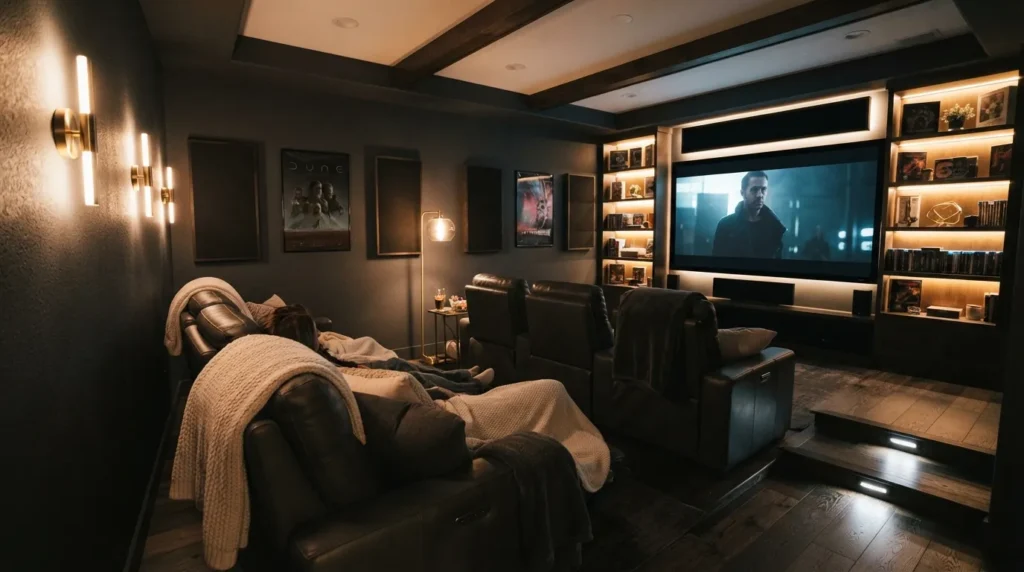
- Creates mood without harsh overhead brightness
- Works with sconces, LED strips, lamps, step lights, and dimmers
- Helps guests move safely during movies
- Makes the room feel warm, cinematic, and flexible
Layered lighting makes a movie room feel more expensive because it gives you control over the mood. A single ceiling light is usually too harsh for watching films and too flat for cozy evenings. Use dimmable sconces, LED strips, floor lamps, table lamps, step lights, or backlighting around shelves and screens. In my experience, warm lighting works best because it softens dark walls and makes the seating area feel inviting without creating glare on the screen.
Plan lighting around real use. You need brighter light for cleaning, medium light for snacks and conversation, and low light during movies. Place lights along walls, behind furniture, under shelves, or near walkways instead of pointing them at the screen. Smart bulbs or dimmers make adjustments easier. Avoid cool blue bulbs because they can make the room feel sterile. With proper layers, the space feels comfortable before the movie starts, safe during breaks, and atmospheric when the lights go down.
4. Acoustic Panels
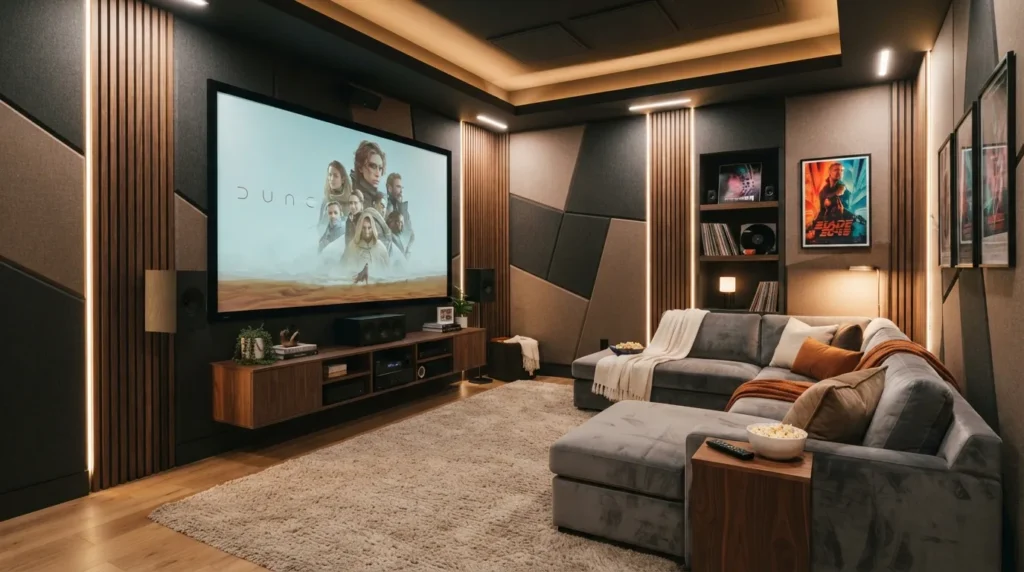
- Helps reduce echo and harsh sound
- Adds texture to plain walls
- Works with fabric panels, wood slats, felt tiles, and upholstered squares
- Makes the room sound better and look more finished
Acoustic panels are one of the most practical decor upgrades for a media room because sound quality depends on the room, not only the speakers. Hard surfaces like drywall, tile, glass, and bare floors can create echo and sharp audio. Fabric panels, felt tiles, wood slat panels, upholstered squares, and thick wall hangings can help soften sound while adding visual texture. I’ve noticed that rooms feel more comfortable when sound is less harsh, especially during action movies, sports, and gaming sessions.
The panels should look like part of the design, not random technical pieces. Place them behind seating, on side walls, or near reflection points where sound bounces. Choose colors that match the room, such as charcoal, taupe, navy, black, or warm gray. Wood slat panels can feel modern and architectural, while fabric panels feel softer and more traditional. Add a rug and curtains for extra sound control. This upgrade improves comfort, reduces echo, and makes the room feel more thoughtfully designed.
5. Snack Station
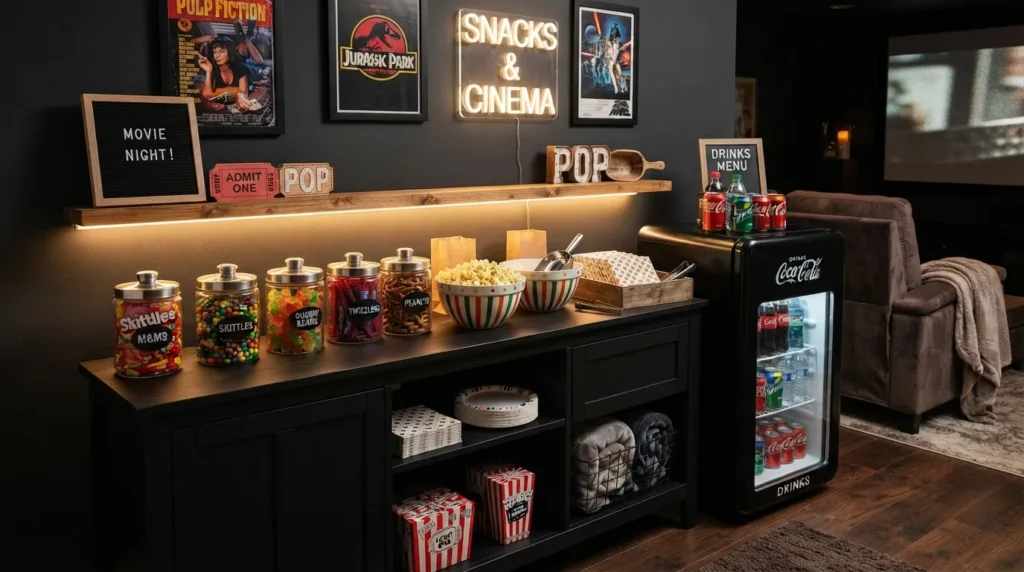
- Keeps drinks, popcorn, candy, and napkins easy to reach
- Works with carts, cabinets, mini fridges, trays, and baskets
- Helps prevent clutter around seating
- Adds a fun, family-friendly movie night feature
A snack station makes a movie room feel complete because it supports the way people actually use the space. Instead of running back to the kitchen during every movie, create a small zone for popcorn, candy, drinks, napkins, straws, and serving bowls. This can be a rolling cart, console cabinet, small bar, built-in shelf, or tray on a sideboard. In my experience, snack stations work best when they are organized and contained, rather than packed with too many visible packages.
Style the station so it feels fun but still tidy. Use glass jars for candy, baskets for packaged snacks, a tray for napkins, and a small bin for popcorn seasoning. If you add a mini fridge, leave enough ventilation space and keep cords hidden safely. A dark cabinet with warm lighting can look upscale, while a cart works well for smaller spaces. The goal is convenience without mess. A good snack area makes hosting easier and gives the room a cozy, cinema-inspired detail.
6. Screen Wall
- Creates a strong focal point for the room
- Works with mounted TVs, projectors, media consoles, panels, or built-ins
- Hides cords and visual clutter
- Makes the viewing area look clean and intentional
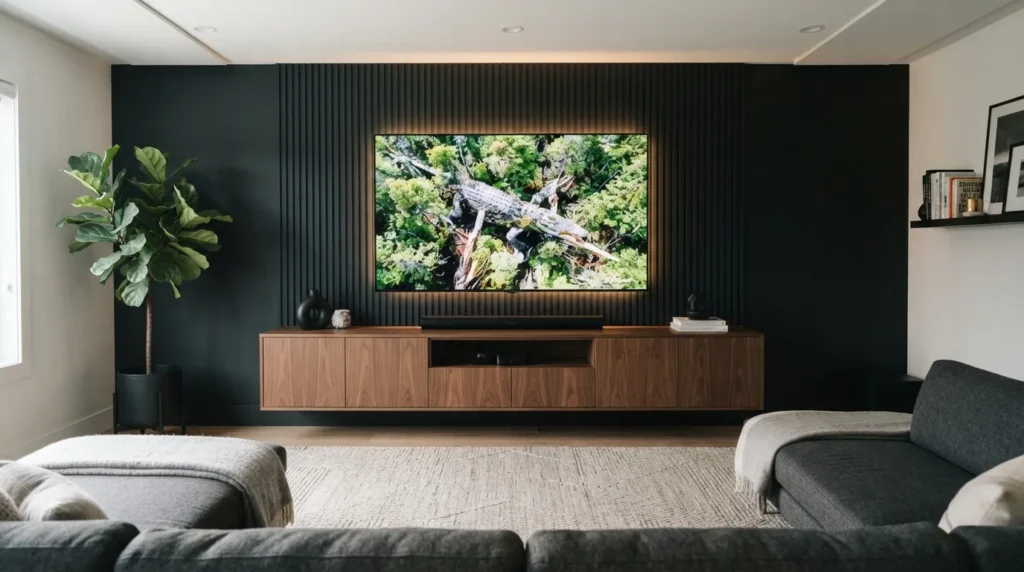
The screen wall sets the tone for the whole media room because every seat faces it. A clean wall with hidden cords, balanced furniture, and simple styling makes the room feel more polished. Use a mounted TV, projector screen, media console, floating cabinet, wood paneling, or built-ins depending on the space and budget. The best home theater setups keep attention on the screen while hiding messy cables, remotes, devices, and game systems as much as possible.
Keep the wall simple enough for comfortable viewing. Avoid shiny frames, busy gallery walls, or bright decor directly around the screen because they can distract the eye. Dark paint, matte paneling, floating shelves, or low cabinets can create a clean frame. Use cord covers, cable channels, or in-wall solutions where allowed. Add closed storage below for controllers, blankets, and tech accessories. A well-planned screen wall makes the room look finished, improves focus, and gives the whole space a more professional feel.
7. Cozy Textiles
- Adds warmth, softness, and sound absorption
- Works with rugs, curtains, throws, pillows, and upholstered pieces
- Makes the room feel more inviting
- Helps balance dark paint and tech equipment
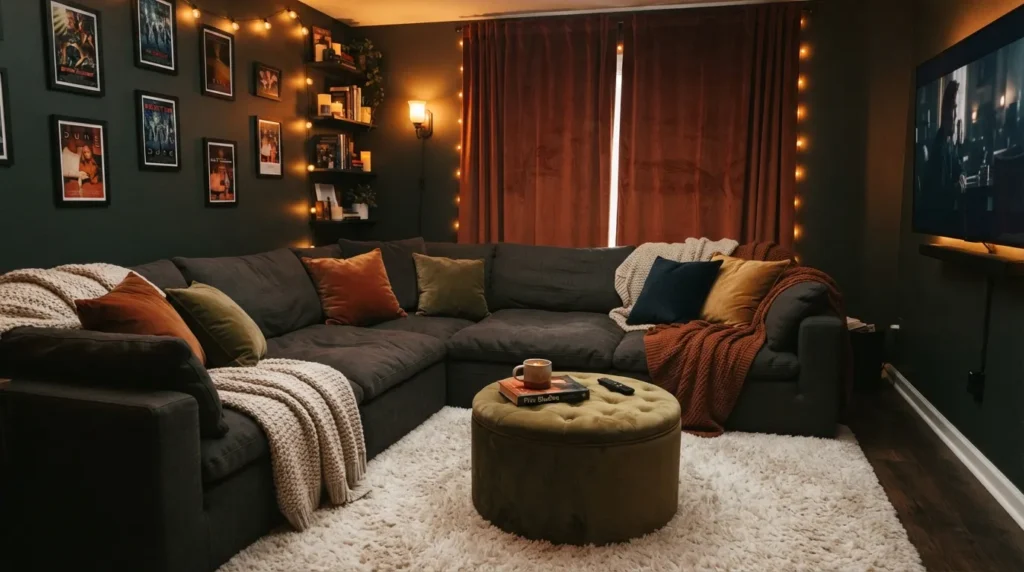
Cozy textiles make a movie room feel comfortable instead of cold or overly technical. Screens, speakers, consoles, and dark walls can look sleek, but the room needs softness to feel inviting. Add a thick area rug, blackout curtains, plush throws, velvet pillows, wool blankets, or upholstered ottomans. These materials add comfort while also helping reduce echo. I’ve seen this work well in many homes because textiles can soften both the look and the sound of a media space.
Choose fabrics that can handle real use. Washable throws, performance pillow covers, durable rugs, and easy-clean upholstery are smart for family rooms. Place a basket near the seating for blankets, and keep extra pillows from blocking walkways. Heavy curtains can darken the room and improve the viewing mood, especially in spaces with windows. Use texture more than bright color if you want a sophisticated feel. This layer makes the room warmer, quieter, and more comfortable for long movie nights.
8. Movie Posters
- Adds personality without taking over the room
- Works with framed prints, vintage posters, quote art, or gallery walls
- Creates a classic cinema-inspired mood
- Helps personalize the space for family favorites
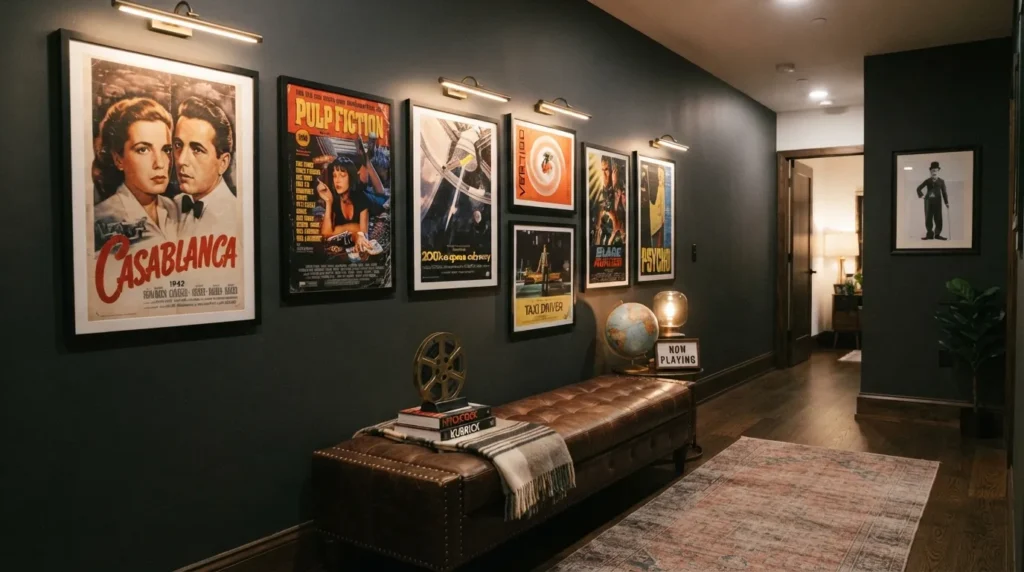
Movie posters can make a media room feel personal, but they look best when displayed with intention. Instead of taping random prints to the wall, use matching frames, even spacing, and a clear color story. Vintage posters, black-and-white film stills, minimalist movie art, or framed quotes can all work depending on the room style. In my experience, a few larger framed pieces usually look better than many small posters because they feel cleaner and more grown-up.
Place posters where they support the room without distracting from the screen. Side walls, the back wall, stair landings, or snack station areas are good options. Avoid bright glossy posters right beside the screen because reflections can become annoying during movies. Use black, wood, brass, or matte frames to match the decor. For family spaces, let everyone choose one favorite film print for a personal touch. The finished wall feels fun, nostalgic, and stylish while still keeping the viewing area calm.
9. Hidden Storage
- Keeps remotes, games, blankets, and tech items organized
- Works with ottomans, cabinets, benches, baskets, and media consoles
- Helps the room look clean between movie nights
- Makes small media rooms more functional
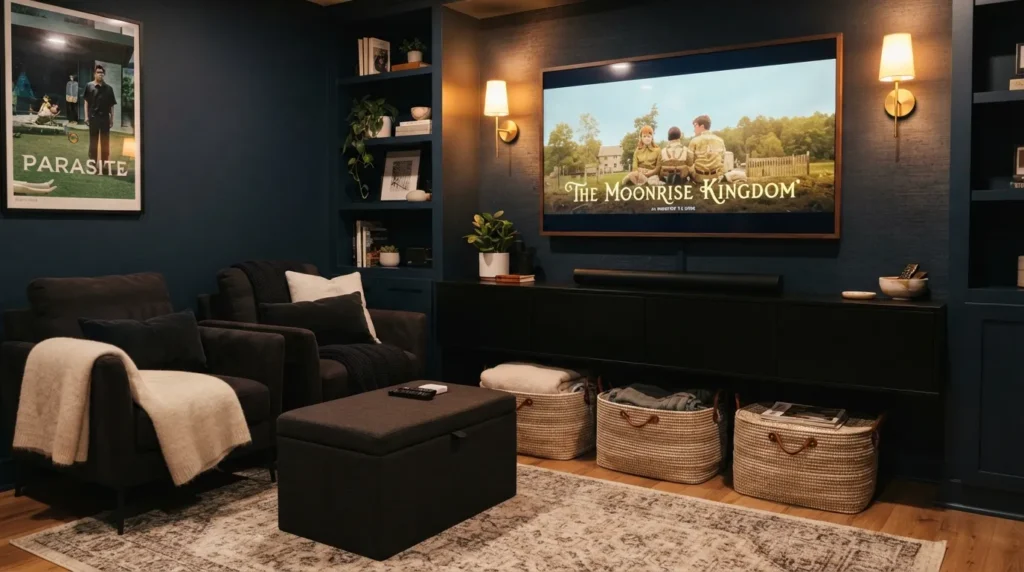
Hidden storage keeps a movie room from turning into a cluttered pile of remotes, blankets, chargers, game controllers, and snack wrappers. Closed cabinets, storage ottomans, lidded baskets, benches, and media consoles can hide everyday items while keeping them close. This is especially important in multipurpose rooms where the space may also be used for gaming, sleepovers, workouts, or family hangouts. A room feels more relaxing when everything has a simple place to return after use.
Plan storage by category before buying furniture. Keep remotes and batteries in one drawer, blankets in an ottoman, games in a cabinet, and cleaning wipes near the snack area. Use labels inside cabinets if multiple people use the room. Choose furniture that looks good closed, not only when styled open. Soft-close doors, deep drawers, and cable-friendly backs can make daily use easier. Hidden storage helps the room stay polished, reduces visual stress, and makes cleanup faster after movie nights.
10. Tiered Layout
- Improves screen visibility for larger groups
- Works with risers, platforms, back-row seating, or floor cushions
- Adds a real cinema-room feeling
- Helps basements and bonus rooms feel more custom
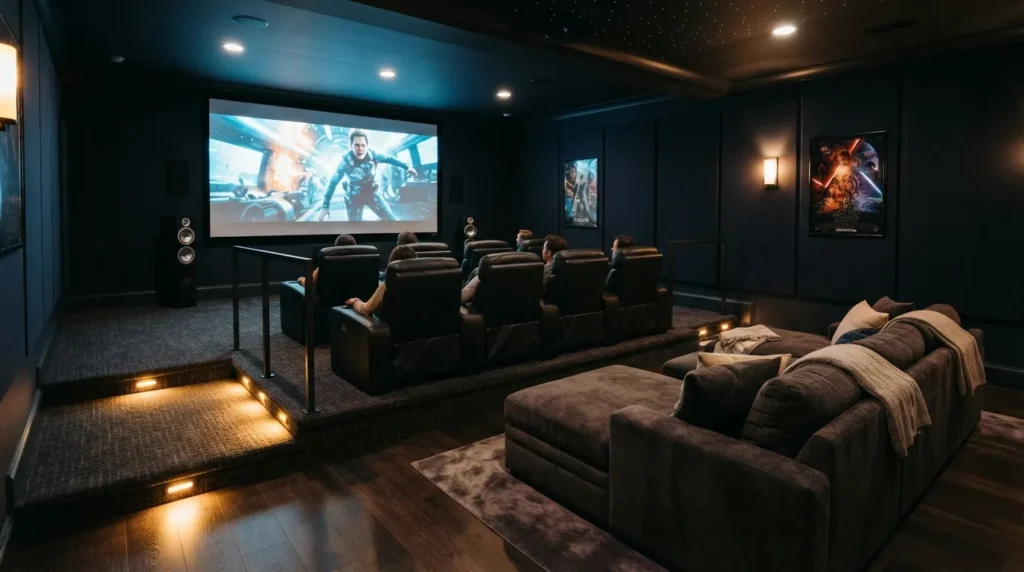
A tiered layout makes a media room feel more like a private cinema because it improves sightlines. When all seats sit at the same height, people in the back may struggle to see over the front row. A riser, platform, raised back row, or lower front lounge area can solve that problem. This idea works especially well in basements, bonus rooms, and larger family rooms. That’s why many designers consider viewing height early when planning a dedicated movie space.
Safety and comfort matter as much as the look. Platforms should be sturdy, properly built, and easy to step onto in low light. Add step lighting, carpet, or non-slip surfaces to reduce tripping. If a built riser is not possible, use lower seating in front and taller recliners behind. Floor cushions or poufs can also create a flexible front row for kids. A tiered layout helps everyone see better, gives the room structure, and makes the space feel more custom.
11. Smart Controls
- Makes lighting, sound, and temperature easier to manage
- Works with smart remotes, bulbs, plugs, thermostats, and voice control
- Reduces interruption once the movie starts
- Keeps the room feeling modern and convenient
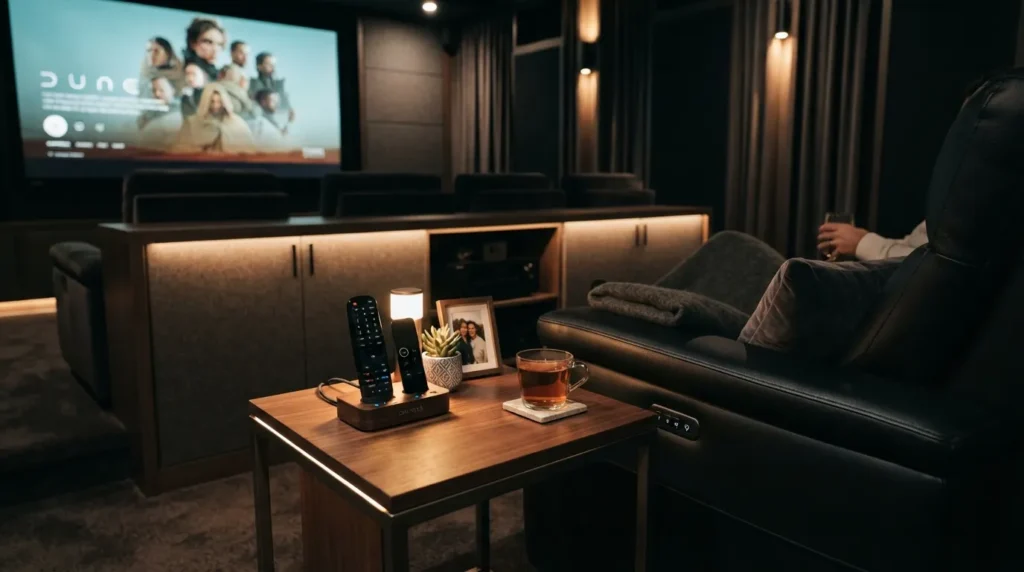
Smart controls can make a viewing room feel smoother because you can adjust the mood without getting up repeatedly. Smart bulbs, dimmers, plugs, thermostats, remotes, and voice control can manage lighting, sound, fans, and even blackout shades depending on your setup. This is especially helpful when the room has multiple lighting layers or devices. In my experience, convenience matters more than complicated features. The best system is the one your family can actually use without frustration.
Start simple with lighting scenes. Create one setting for cleaning, one for previews, and one for movie watching. Add smart plugs for lamps, a universal remote for devices, or a smart thermostat if the room gets warm during long viewing sessions. Keep controls organized in one drawer or charging dock so they do not disappear between cushions. Smart updates make the room feel modern, reduce interruptions, and help every movie night start with less effort and more comfort.