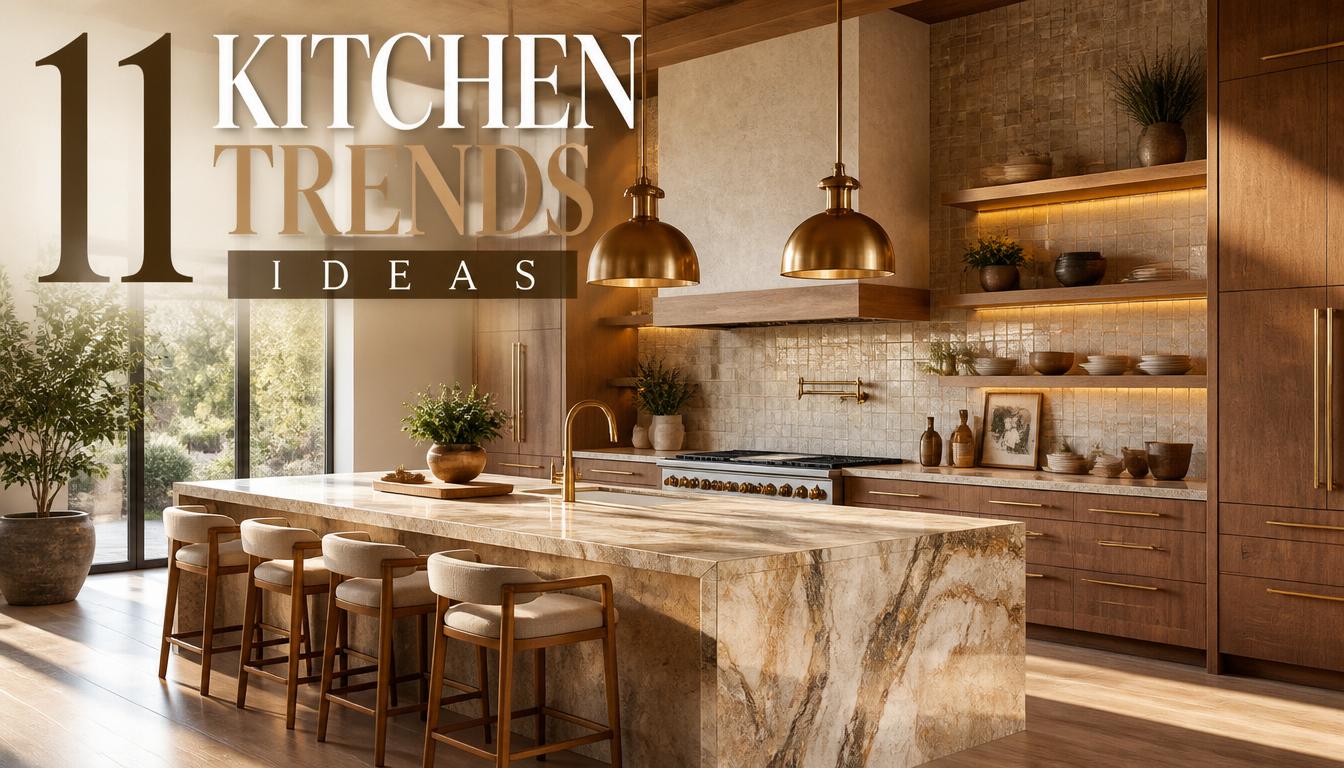
11 Kitchen Trends Ideas
Introduction
Kitchens are becoming warmer, smarter, more personal, and much easier to live in. For USA homeowners, renters, renovators, and Pinterest planners, the new direction is less about copying a showroom and more about designing a cooking space that supports real routines. People want better storage, warmer materials, easier cleanup, flexible islands, coffee stations, hidden appliances, better lighting, and surfaces that look beautiful without constant maintenance.
The National Kitchen & Bath Association’s 2026 report, based on feedback from 634 industry professionals across North America, highlights kitchens moving toward more intelligent, personalized, and wellness-focused spaces over the next few years. It also notes that neutrals remain highly popular, with greens and blues close behind. Real Simple’s coverage of the NKBA report also points to transitional style, white oak cabinetry, quartz countertops, solid-surface backsplashes, matte finishes, and multifunctional features such as beverage bars and coffee stations.
The ideas below are practical enough for everyday cooking but styled enough for Pinterest inspiration. Use them for a full remodel, a weekend refresh, a small apartment upgrade, or a long-term design mood board.
1. Warm Wood
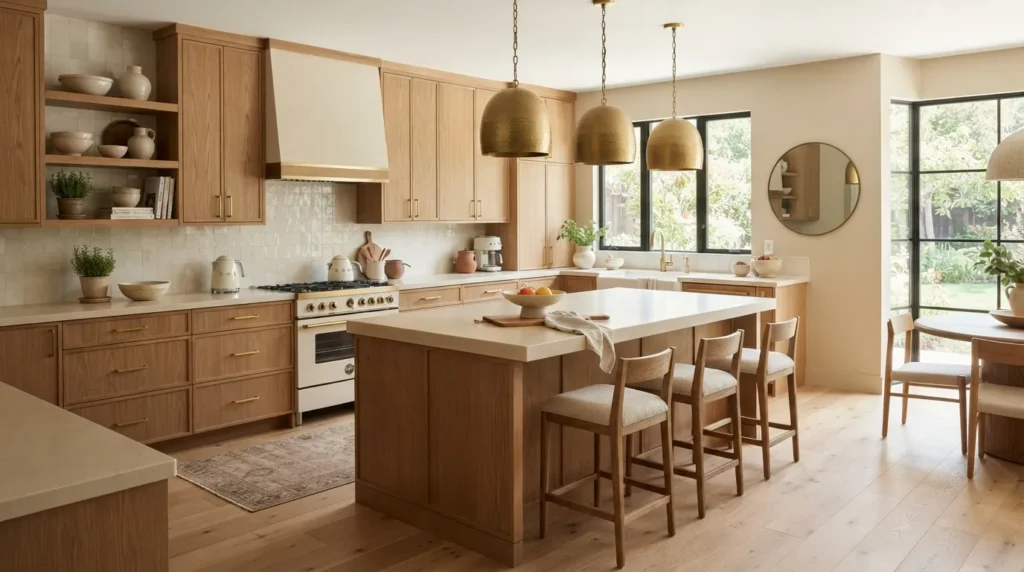
- Adds natural warmth without making the kitchen feel heavy
- Works with white oak, walnut, maple, ash, and honey-toned finishes
- Pairs beautifully with stone counters, matte hardware, and soft neutrals
- Helps balance stainless steel, tile, and modern appliances
- Creates a timeless base for both classic and modern kitchens
Warm wood makes a kitchen feel inviting before you add a single decorative object. After years of bright white cabinets and cool gray finishes, wood brings back depth, grain, and natural variation. White oak, walnut, maple, and honey-toned stains work especially well because they soften hard surfaces like quartz, tile, glass, and stainless steel. In my experience, wood cabinetry looks best when the finish feels natural instead of overly orange or glossy. A matte or satin finish usually feels calmer and more current.
You do not need to replace every cabinet to use this idea. Try wood floating shelves, a butcher-block prep zone, a wood island, oak stools, a walnut range hood, or a freestanding hutch. If your kitchen is small, use wood as an accent so the room stays open. Pair warm wood with cream walls, stone-look counters, aged brass, matte black, or soft green details. The result feels grounded, comfortable, and less sterile while still looking polished enough for a modern home.
2. Hidden Storage
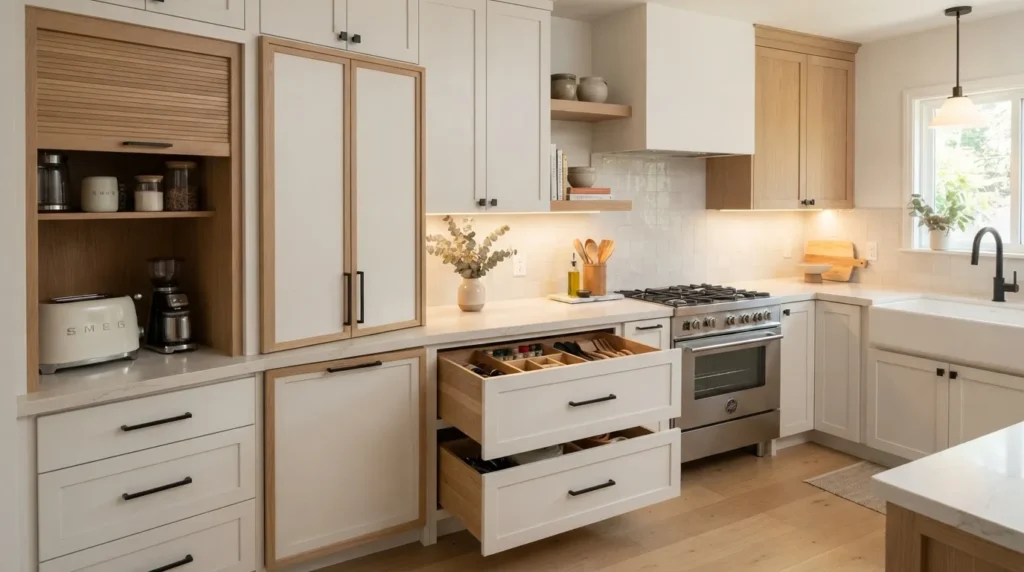
- Keeps countertops clearer and easier to clean
- Works with appliance garages, pull-out shelves, deep drawers, and pantry cabinets
- Helps small kitchens feel bigger and calmer
- Reduces visual clutter from cords, containers, and daily tools
- Supports cooking routines without sacrificing style
Hidden storage is one of the most useful upgrades because kitchens collect clutter quickly. Coffee makers, toasters, blenders, cutting boards, spices, snacks, paper towels, and charging cords can make even a beautiful space look messy. Appliance garages, deep drawers, pull-out pantries, tray dividers, toe-kick drawers, and concealed recycling centers help everything land in a smarter place. I’ve noticed that people enjoy their kitchens more when the daily mess has a planned home instead of spreading across every counter.
Start by studying what creates clutter in your current layout. If small appliances stay out because they are hard to access, an appliance garage may help. If pans are stacked awkwardly, deep drawers with dividers can make cooking easier. If snacks overflow, a pull-out pantry or labeled bins may solve the problem. Storage should match real habits, not just look pretty in a photo. When the right items are hidden but still reachable, the kitchen feels calmer, cleaner, and far more functional every day.
3. Statement Stone
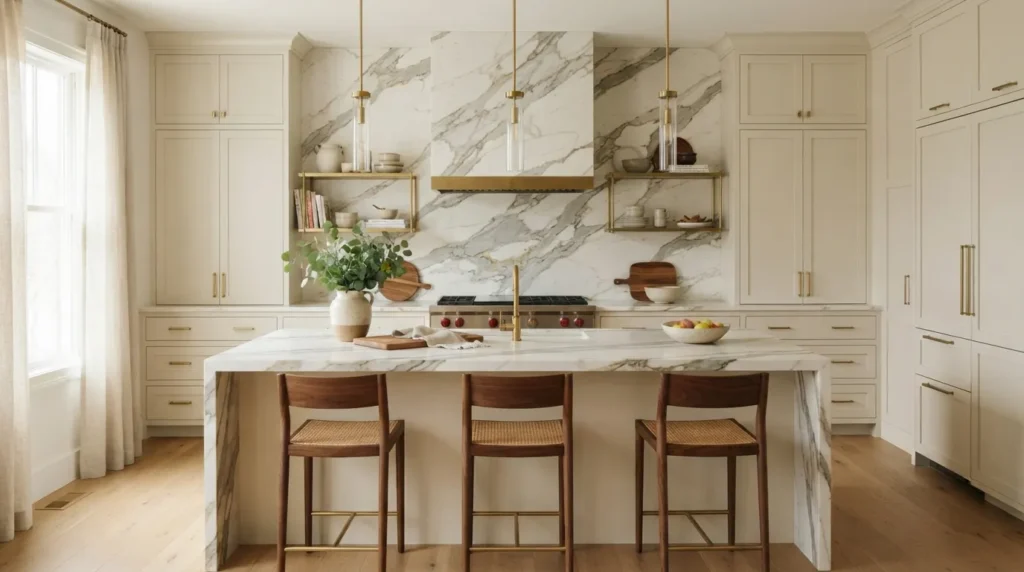
- Creates a strong focal point through counters or backsplashes
- Works with quartz, quartzite, porcelain slabs, marble-look surfaces, or natural stone
- Adds movement through veining, color, and texture
- Looks polished with simple cabinetry and minimal hardware
- Can be used on islands, full-height backsplashes, or coffee bars
Statement stone gives a kitchen a strong designer look without needing too many extra details. A dramatic quartz island, quartzite backsplash, porcelain slab wall, or marble-look counter can become the visual anchor of the room. The beauty is in the movement, veining, and scale. Instead of adding small patterns everywhere, one large surface creates impact with fewer seams and less visual clutter. That’s why many designers recommend letting the stone lead when the rest of the kitchen is simple.
Choose the stone based on how you actually use the kitchen. Quartz is usually easier to maintain, while natural stone may need sealing and more careful cleaning. Porcelain slabs can create a sleek look on backsplashes and vertical surfaces. If your kitchen is small, use statement stone in one zone, such as behind the range or on a compact island. Pair bold veining with quiet cabinets, plain walls, and simple lighting. This creates a high-end look that still feels practical and livable.
4. Soft Color
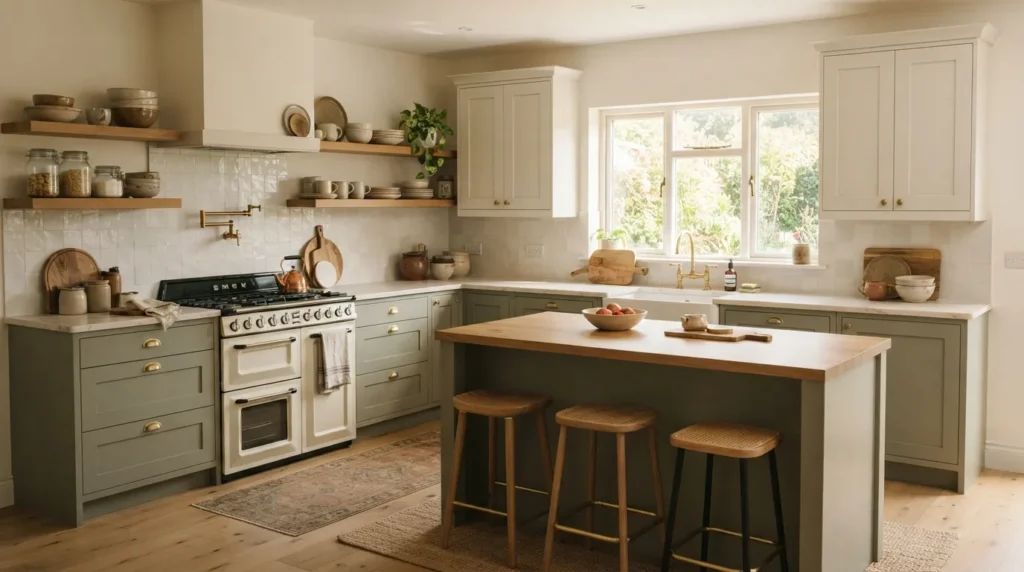
- Adds personality without overwhelming the room
- Works with sage, olive, clay, mushroom, muted blue, taupe, and cream
- Beautiful on islands, lower cabinets, backsplashes, or pantry doors
- Warms up plain white kitchens without a full remodel
- Creates a calmer mood than bright, saturated color
Soft color is becoming a favorite kitchen direction because it feels personal but still easy to live with. Instead of bold shades that can tire quickly, muted colors add depth in a quieter way. Sage green, olive, clay, mushroom, dusty blue, warm taupe, cream, and soft terracotta can make a kitchen feel relaxed and current. In my experience, color works best when it connects to the rest of the home, especially if the kitchen opens into a dining or living area.
Use color where it can add impact without taking over. Paint an island, choose colored lower cabinets, add a muted tile backsplash, or style open shelves with pottery in earthy tones. If you rent, use removable wallpaper, peel-and-stick backsplash panels, rugs, curtains, or countertop accessories instead of permanent paint. Balance color with natural wood, white walls, stone surfaces, and warm lighting. Soft color gives the kitchen personality while keeping the room calm, welcoming, and flexible for future updates.
5. Layered Lighting
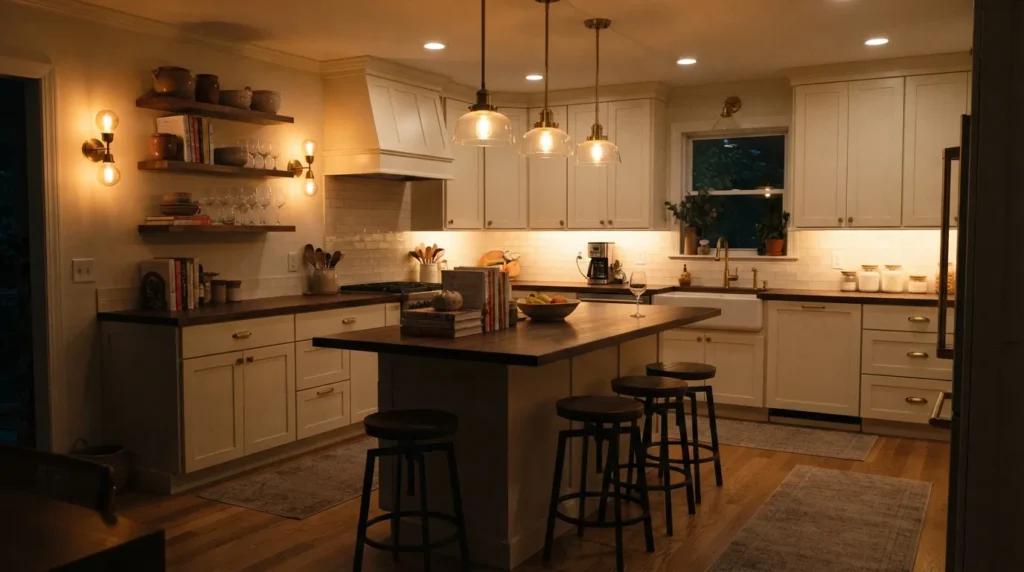
- Improves cooking, cleaning, dining, and evening atmosphere
- Works with pendants, sconces, recessed lights, under-cabinet strips, and lamps
- Helps avoid harsh overhead-only lighting
- Makes islands, shelves, counters, and dining nooks feel more intentional
- Adds warmth during mornings and evenings
Layered lighting can change how a kitchen feels at every hour of the day. One ceiling fixture rarely supports cooking, cleaning, homework, hosting, and late-night snacks equally well. A better plan includes task lighting under cabinets, ambient lighting overhead, pendants above the island, sconces near shelves, and accent lights for display areas. In my experience, the kitchens that feel most expensive usually have lighting at more than one height, not just brighter bulbs.
Use warm white bulbs where possible, especially in open kitchens connected to living rooms. Under-cabinet lighting helps with chopping and prep, while pendants create a visual center over an island or breakfast bar. Sconces can soften a wall near open shelves or a coffee station. If you cannot hardwire new fixtures, try plug-in sconces, rechargeable lamps, or adhesive LED strips. Good lighting improves safety, function, and mood. It also makes finishes like stone, tile, wood, and hardware look richer.
6. Curved Details
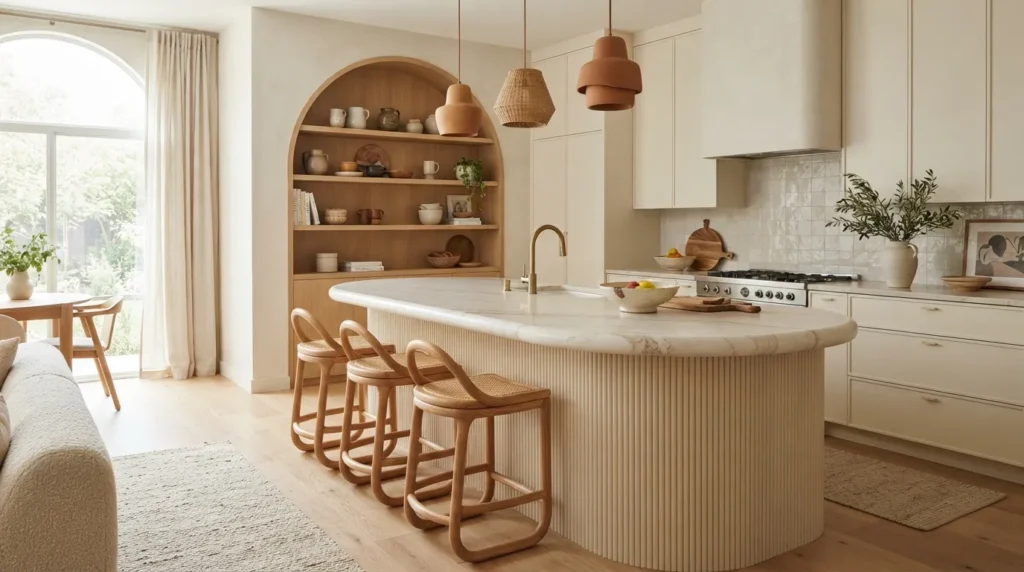
- Softens boxy cabinets, islands, and straight kitchen lines
- Works with rounded islands, arched shelves, curved stools, and softened corners
- Adds movement without making the room feel busy
- Helps modern kitchens feel warmer and more inviting
- Useful for family-friendly layouts with smoother edges
Curved details bring softness into a room that is usually full of straight lines. Cabinets, counters, appliances, tile, and flooring often create a grid, so rounded forms help the kitchen feel more relaxed. A curved island edge, arched open shelf, rounded range hood, circular pendant, or curved-back stool can add visual movement without clutter. I’ve seen this work well in many homes because the curve catches the eye gently rather than shouting for attention.
This idea works best when used with restraint. One strong curved element can be enough. A rounded island feels sculptural in a larger kitchen, while arched shelves or curved stools work better in smaller spaces. If you are remodeling, softened counter edges can also improve comfort in busy family kitchens. Pair curves with natural materials, matte finishes, and warm lighting so the space feels cohesive. Curved details make the kitchen feel less rigid, more welcoming, and easier to connect with surrounding rooms.
7. Coffee Station
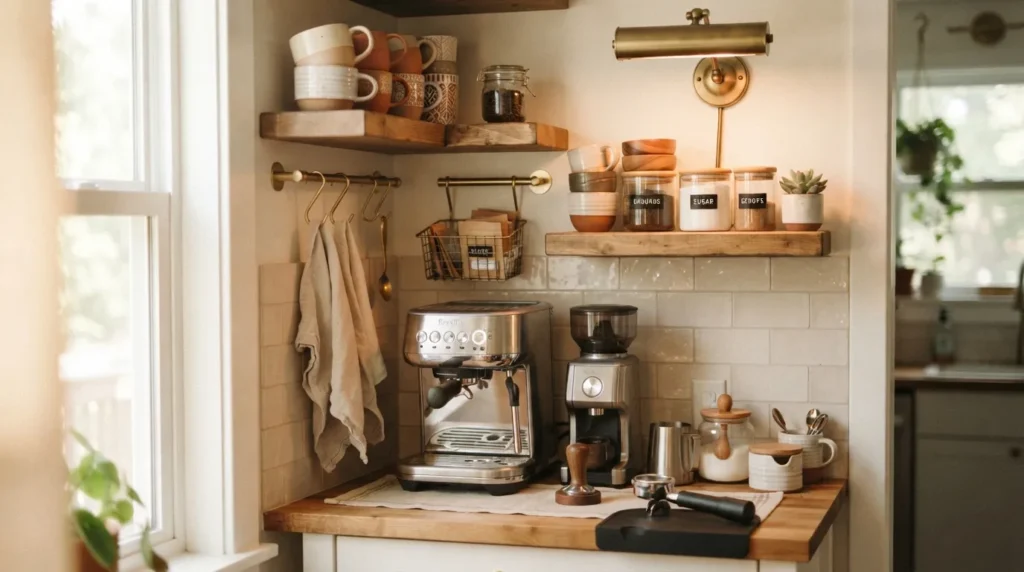
- Creates a dedicated morning routine zone
- Works with espresso machines, drip coffee makers, mugs, syrups, and storage jars
- Keeps drink supplies away from main prep areas
- Great for kitchens, pantries, dining nooks, and small apartments
- Can be styled with trays, shelves, lighting, and compact cabinets
A coffee station makes the kitchen feel more personal because it supports a daily ritual. Instead of spreading mugs, pods, filters, sugar, tea bags, and machines across multiple cabinets, this idea gathers everything in one attractive zone. It can be a built-in beverage bar, a pantry shelf, a counter corner, a rolling cart, or a small cabinet near the dining area. In my experience, even a compact setup feels special when the supplies are organized and easy to reach.
Think about how you move in the morning. Place mugs above or beside the machine, keep spoons nearby, and store extra coffee in jars or bins. Add a tray to define the station and make cleaning easier. If you have space, include a small lamp, floating shelf, or tile accent behind the area. For apartments, use a freestanding cabinet that can move with you later. A good coffee station clears the main counters while making everyday mornings feel smoother, warmer, and more enjoyable.
8. Mixed Metals
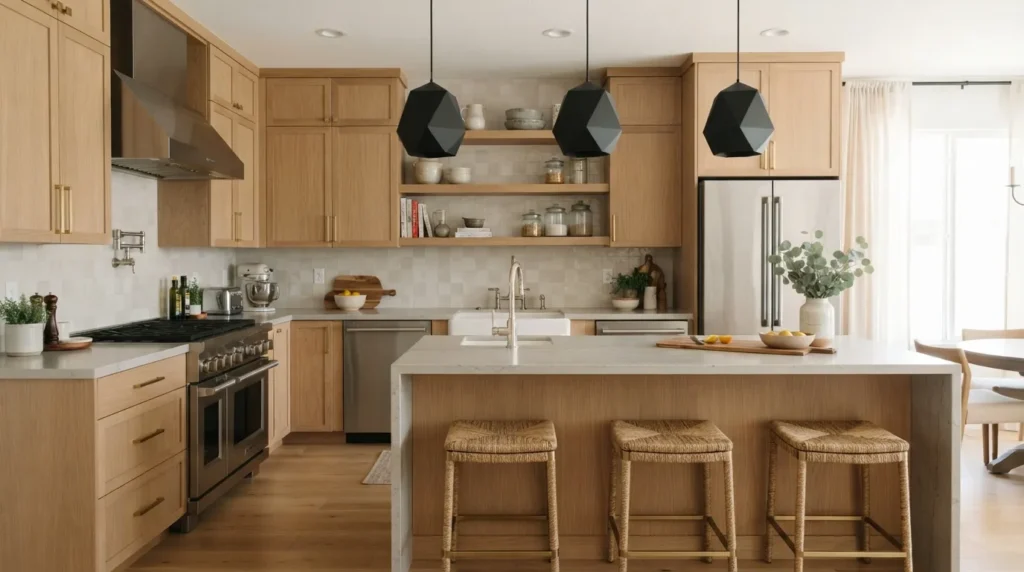
- Adds depth through finishes like brass, black, nickel, chrome, and bronze
- Works on faucets, cabinet hardware, lighting, and bar stools
- Prevents the kitchen from feeling overly matched
- Looks best when each finish repeats at least once
- Helps combine old and new design elements
Mixed metals make a kitchen feel collected instead of flat. A room with only one finish can look clean, but sometimes it feels too predictable. Combining brass with matte black, polished nickel with bronze, or stainless steel with warm hardware can add depth. The key is repetition. If a brass faucet is the only warm metal in the room, it may look accidental. Add brass pendants, cabinet pulls, or a small rail to make the choice feel intentional.
Keep the mix simple in small kitchens. Two metal finishes are usually enough, while larger kitchens can sometimes handle three. Let appliances count as one finish, especially if they are stainless steel. Choose one dominant finish for hardware, then add another through lighting or faucets. Avoid mixing too many shiny finishes unless the style is intentionally vintage or eclectic. When balanced well, mixed metals help the kitchen feel layered, personal, and less like every element came from one matching set.
9. Open Display
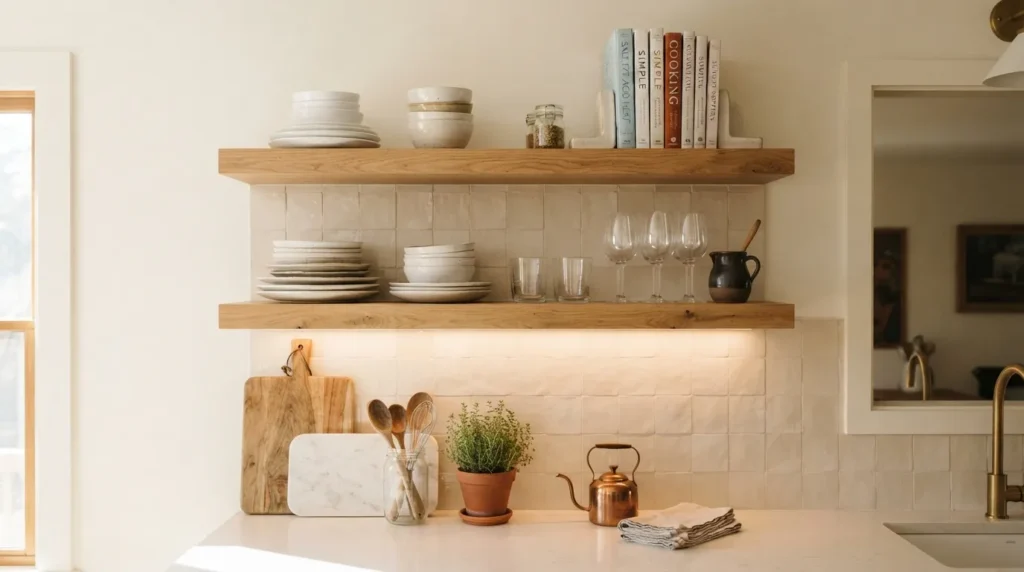
- Adds personality through dishes, ceramics, cookbooks, and glassware
- Works with floating shelves, glass cabinets, rails, and hutches
- Breaks up heavy walls of closed cabinetry
- Best when styled with useful items, not random clutter
- Gives small kitchens a lighter visual feel
Open display is still useful when it is handled carefully. The goal is not to expose every dish or create dusty clutter. Instead, use open shelves, glass-front cabinets, rails, or a freestanding hutch to display your best everyday pieces. Ceramic bowls, stacked plates, glassware, cookbooks, cutting boards, and small art can make a kitchen feel warmer and more personal. I’ve noticed that open display works best when the items are both beautiful and useful.
Choose one display area rather than opening up the whole kitchen. A pair of shelves near a coffee station, a glass cabinet beside the sink, or a rail for copper pans can add charm without overwhelming the room. Keep colors connected so the display feels calm. Mix heights and textures, but leave breathing room between objects. Store less attractive items behind closed doors. Open display adds personality, but it should still support daily routines. When styled well, it makes the kitchen feel lived-in and welcoming.
10. Smart Appliances
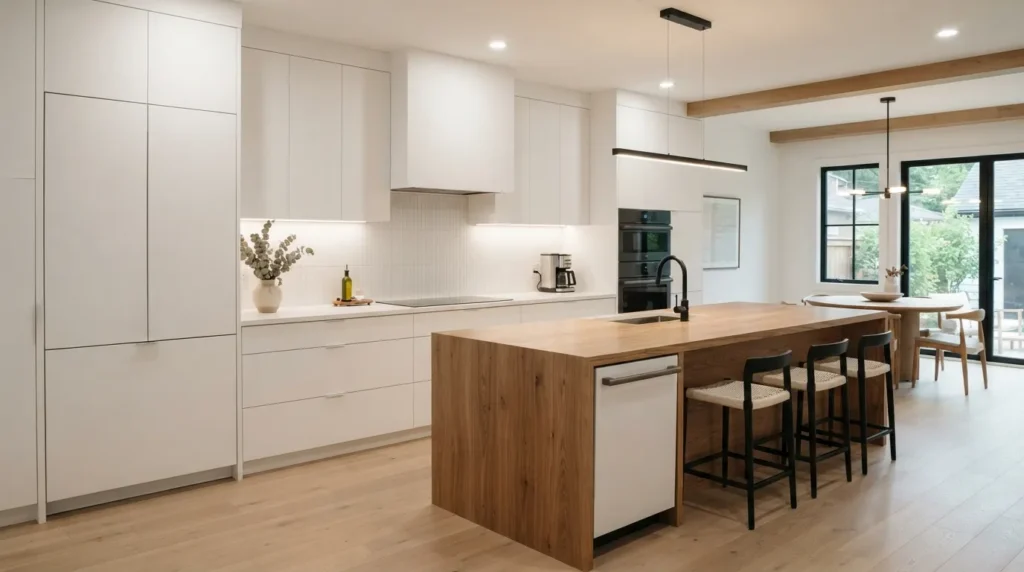
- Improves convenience through better controls and energy-aware features
- Works with ovens, refrigerators, dishwashers, cooktops, vents, and coffee machines
- Best when technology supports real habits instead of adding complexity
- Helps streamline cooking, cleaning, and grocery planning
- Looks cleaner when appliances are integrated or panel-ready
Smart appliances are becoming more practical when they solve everyday problems. The best versions do not feel flashy. They help with preheating, timers, temperature control, ventilation, energy use, grocery tracking, or quiet dishwashing. A smart oven can support busy weeknight cooking, while a connected refrigerator may help larger households stay organized. In my experience, the most successful tech upgrades are the ones people actually use after the first month, not features that sound impressive but complicate the routine.
Before investing, think about the pain point you want to fix. If dishes pile up, prioritize a quieter, more efficient dishwasher. If cooking feels rushed, an oven with reliable presets may help. If air quality is a concern, pay attention to ventilation and cooktop choices. Panel-ready or built-in appliances can make technology look calmer because they blend into cabinetry. Smart appliances should support comfort, safety, and workflow while keeping the kitchen visually clean and easy to operate.
11. Social Islands
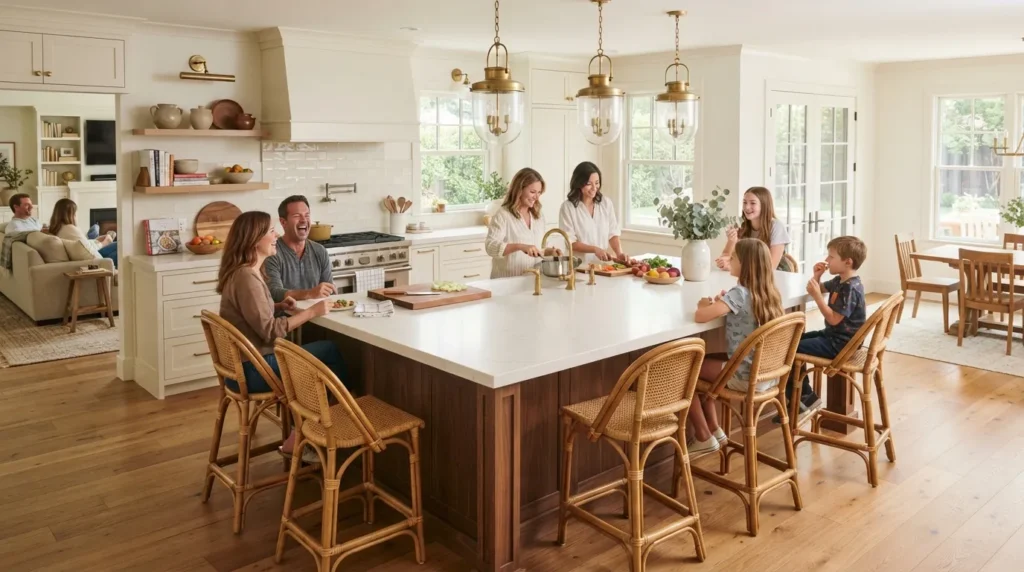
- Creates space for prep, dining, homework, and conversation
- Works with seating, storage, outlets, sinks, and extra counter space
- Helps kitchens connect with family rooms and dining areas
- Useful for hosting, everyday meals, and multitasking
- Best with clear walkways and comfortable stool spacing
Social islands are popular because kitchens are no longer used only for cooking. People gather, eat, work, help with homework, serve snacks, and talk while meals are being prepared. A well-designed island supports those moments without blocking the cook. Seating on one or two sides can make conversation easier, while storage underneath keeps the room practical. In my experience, the best islands are planned around movement first and style second. Walkways matter more than a dramatic shape.
Measure carefully before adding or enlarging an island. There should be enough clearance for drawers, appliances, stools, and foot traffic. Add outlets if local code and layout allow, especially if the island supports laptops or small appliances. Choose durable counters that can handle spills, meals, and daily use. Pendant lights can define the island visually, while stools add personality through wood, leather, metal, or woven seats. A social island can become the heart of the kitchen when it supports real life beautifully.