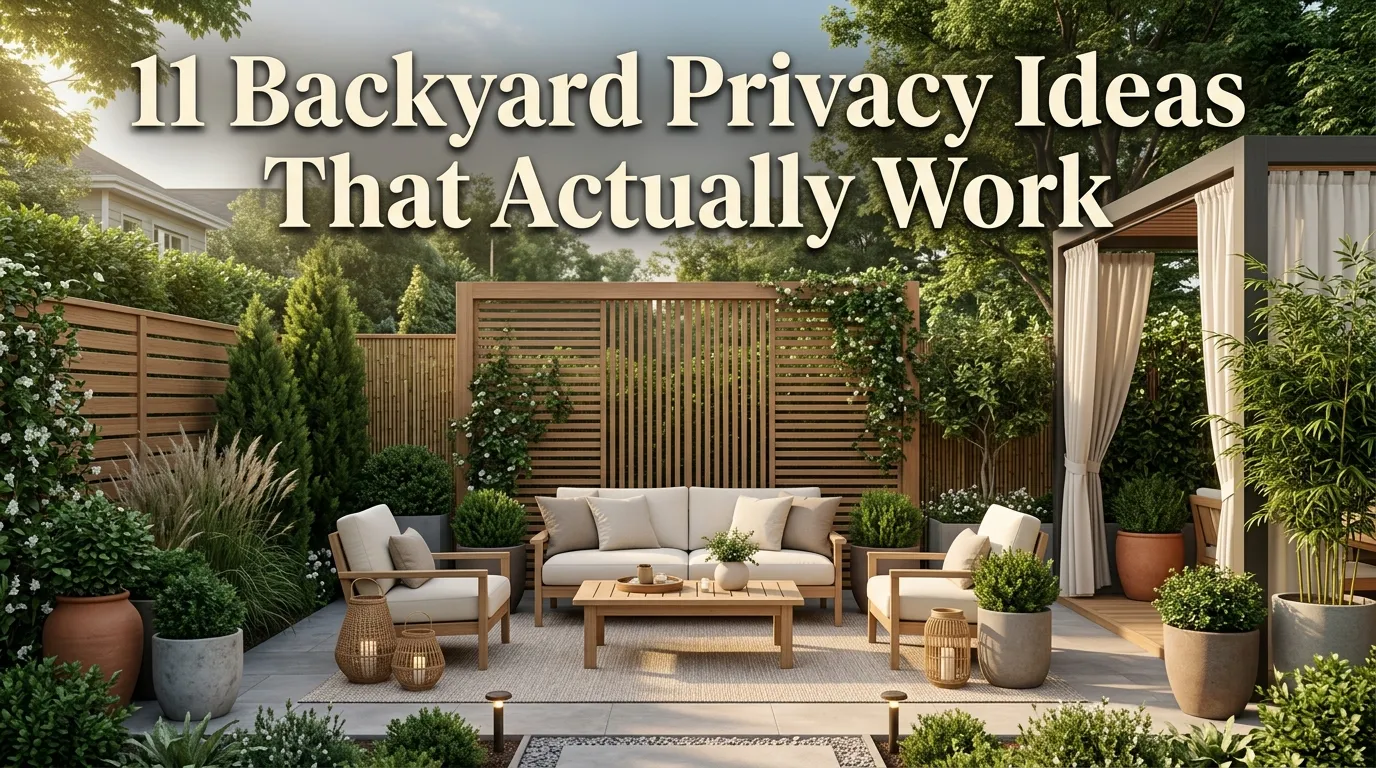
11 Backyard Privacy Ideas That Actually Work
There’s a particular kind of relief that comes from stepping into your backyard and not feeling like you’re on display. In my experience, privacy is one of those things homeowners don’t think much about until they’re sitting on their patio and realize every neighbor, passerby, and second-story window has a clear line of sight straight into their evening.
If you’re anything like me, you’ve probably looked at a dozen Pinterest boards of dreamy, enclosed backyards and wondered how much of that is realistic for a normal-sized lot. The good news is that backyard privacy doesn’t require a massive budget or a total landscape overhaul. Some of the most effective solutions are surprisingly simple — a well-placed planter, a slatted screen, a section of fast-growing hedge.
A mistake many homeowners make is assuming privacy only comes from a tall fence. In reality, the most livable backyards usually combine a few different strategies — height, layering, and strategic placement — rather than relying on one solid barrier. A fence blocks a view, but it doesn’t necessarily make a space feel calm or intentional. Landscaping, structures, and thoughtful layout do that work.
I’ve noticed that the yards people save most often on Pinterest for “privacy” searches aren’t walled-off fortresses. They’re spaces that feel enclosed and intimate without feeling closed in — using greenery, texture, and smart sightlines instead of just height alone.
In this guide, I’m covering eleven backyard privacy ideas that range from fast, renter-friendly solutions to more permanent landscaping investments. Each one includes practical styling advice so you can actually picture how it would work in your own space, not just admire it in a photo. By the end, you’ll have a clear sense of which approach fits your yard, your timeline, and your budget.
Table of Contents
- Layered Hedge Border A living wall of greenery that grows more effective every season.
- Vertical Slat Privacy Screen A modern, budget-friendly structure for targeted screening.
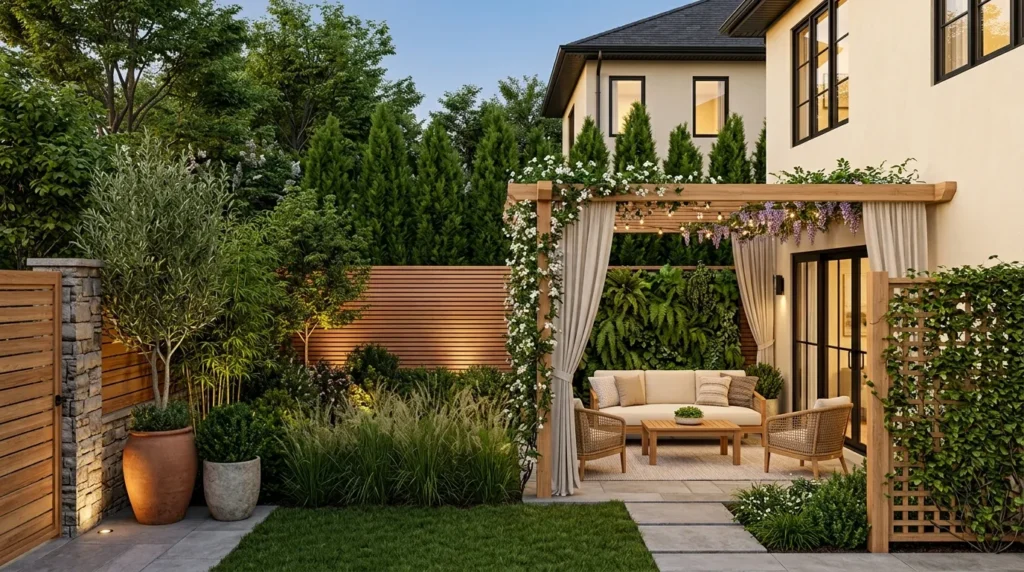
- Pergola With Climbing Vines A shaded structure that doubles as a natural privacy filter.
- Bamboo Privacy Fence A fast-growing, dense screening option with a natural look.
- Tall Potted Privacy Planters A flexible, movable solution ideal for renters.
- Lattice Fence With Climbers A classic structure softened by flowering vines.
- Outdoor Curtain Panels A soft, textile-based way to section off a space.
- Raised Garden Bed Screening A dual-purpose barrier that also grows food or flowers.
- Privacy Trellis Wall A vertical garden feature built for narrow side yards.
- Evergreen Tree Windbreak A long-term, four-season privacy investment.
- Corner Pergola Retreat An enclosed nook designed for a private seating pocket.
1. Layered Hedge Border
Quick Benefits
- Grows denser and more effective every year
- Softens hard fence lines naturally
- Attracts birds and pollinators
- Works along property lines or patio edges
- Improves with almost no ongoing cost
Why It Works
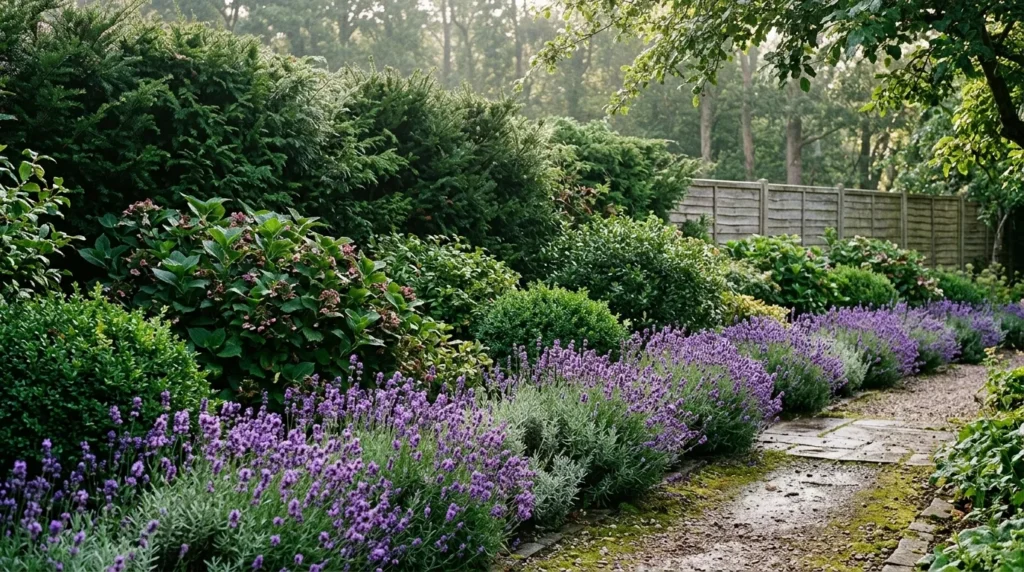
A layered hedge border is one of the most reliable long-term backyard privacy ideas because it improves over time instead of degrading like a wood fence eventually does. In my experience, mixing two or three shrub heights — a tall backdrop layer, a mid-height filler, and a low front edge — creates a fuller, more natural-looking screen than a single row of identical plants. That’s why many designers recommend layering rather than relying on one hedge type alone. It also softens the look of an existing chain-link or wood fence, turning a purely functional boundary into something that actually adds to the landscape.
How To Style It
Choose a fast-growing evergreen like arborvitae or Leyland cypress for the back layer, a mid-height shrub such as boxwood or viburnum in the middle, and a low flowering border like hydrangea or lavender in front. Stagger the planting rather than placing everything in a straight line, which creates depth and a fuller look faster. One simple trick I always suggest is planting slightly closer together than the tag recommends for privacy purposes specifically — you can always thin later, but a sparse hedge takes years longer to close in.
2. Vertical Slat Privacy Screen
Quick Benefits
- Modern, clean aesthetic
- Faster to install than a full fence
- Allows airflow while blocking sightlines
- Customizable height and spacing
- Works well on decks and patios
Why It Works
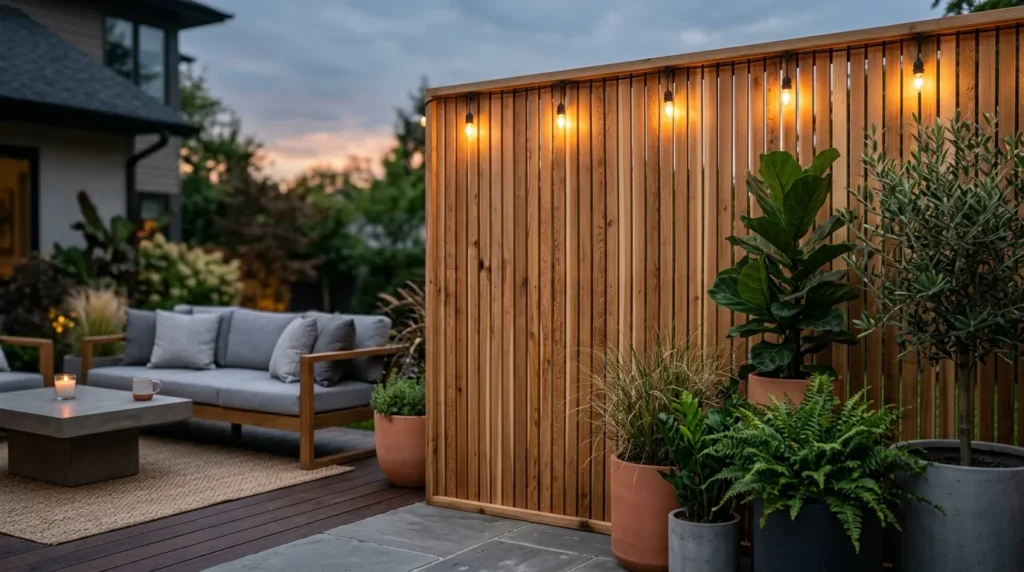
A vertical slat screen has become one of the most Pinterest-popular backyard privacy ideas because it manages to feel both modern and functional at the same time. Unlike a solid fence panel, the gaps between slats allow air and dappled light through, which keeps a patio from feeling boxed in even while blocking direct sightlines from neighbors. I’ve seen this idea transform awkward side-yard gaps and small patios that felt too exposed for outdoor furniture into genuinely usable spaces. It’s also one of the more budget-flexible options, since it can be built as a small targeted screen rather than a full-yard structure.
How To Style It
Use cedar, thermally modified wood, or matte black metal slats spaced about one to two inches apart for the best balance of privacy and airflow. Mount the screen in a freestanding frame if you’re renting, or attach it directly to an existing fence or deck post for a more permanent installation. Pair it with tall potted plants at the base to soften the hard lines, and consider adding string lights along the top edge for evening ambiance. This works especially well as a targeted screen next to a hot tub, dining area, or lounge chair rather than enclosing an entire yard.
3. Pergola With Climbing Vines
Quick Benefits
- Provides shade and privacy at once
- Creates a defined outdoor room
- Improves in beauty as vines mature
- Adds architectural interest to the yard
- Works for both overhead and side screening
Why It Works
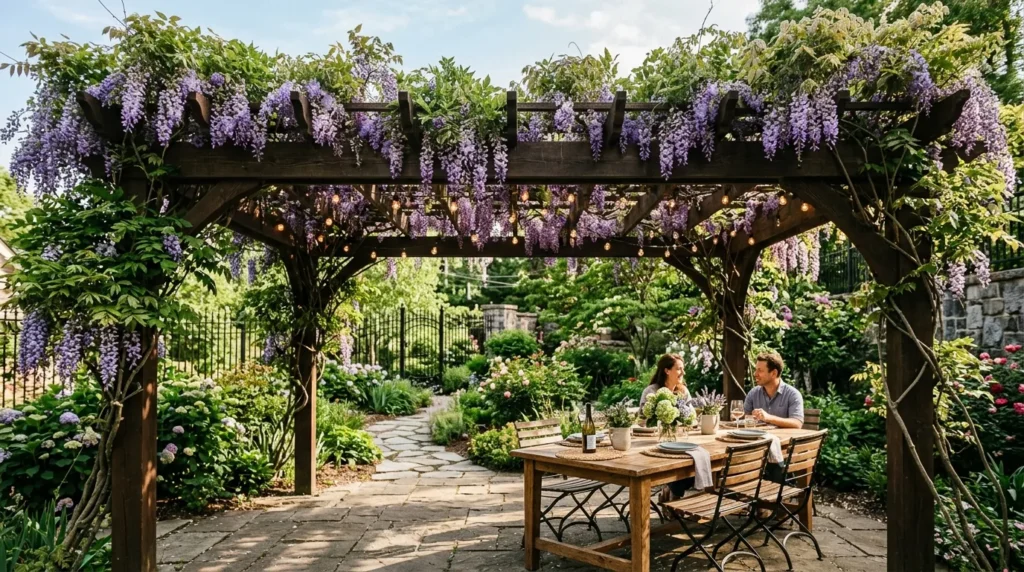
A pergola covered in climbing vines solves two problems simultaneously: overhead sun exposure and the feeling of being visible from upper-story windows nearby. That’s why many designers recommend this combination for yards near multi-story homes, where the biggest privacy concern often comes from above rather than from the side. One thing that works especially well is training vines along the top and one or two sides of the structure, which creates a partially enclosed room effect without the heaviness of a fully walled patio cover.
How To Style It
Choose a fast-growing climber like wisteria, clematis, or climbing hydrangea for the overhead structure, and give it a season or two to fill in before expecting full coverage. Add lattice panels or cable wire along one or two sides of the pergola for vines to climb higher, creating vertical screening in addition to overhead shade. Furnish underneath with a dining set or lounge seating, and hang string lights through the beams for evening use. A mistake many homeowners make is choosing an overly aggressive climbing species for a small structure — check mature size before planting so the vine doesn’t overwhelm the frame.
4. Bamboo Privacy Fence
Quick Benefits
- Extremely fast growth rate
- Creates dense, tropical-feeling screening
- Available in living or panel form
- Works well in narrow spaces
- Naturally muffles outside noise
Why It Works
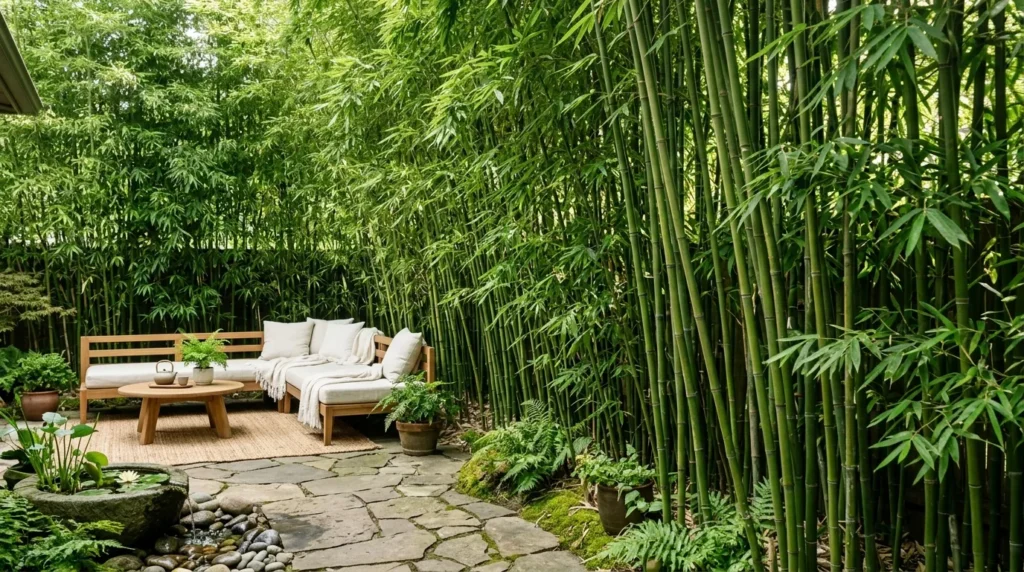
Bamboo is one of the fastest ways to achieve serious height and density in a backyard privacy screen, which is exactly why it shows up so often in before-and-after transformation photos. In my experience, clumping bamboo varieties in particular offer an excellent balance of speed and control, filling in a screen within one or two growing seasons without the aggressive spreading associated with running bamboo types. Beyond blocking sightlines, the dense foliage also helps soften street noise, which is a benefit that’s easy to overlook until you actually live with it.
How To Style It
Choose a clumping variety such as Bambusa multiplex rather than running bamboo, which can spread uncontrollably without a root barrier. Plant in a row along the property line with rhizome barriers installed at planting time if there’s any concern about spread. For a faster fix, bamboo fence panels made from bundled canes offer the same visual texture without the maintenance of living plants. Either option pairs beautifully with a tropical or Zen-inspired backyard style, and works especially well alongside a patio, hot tub, or meditation corner.
5. Tall Potted Privacy Planters
Quick Benefits
- Fully movable and renter-friendly
- No permanent installation required
- Can be rearranged seasonally
- Works on patios, decks, and balconies
- Adds greenery without ground planting
Why It Works
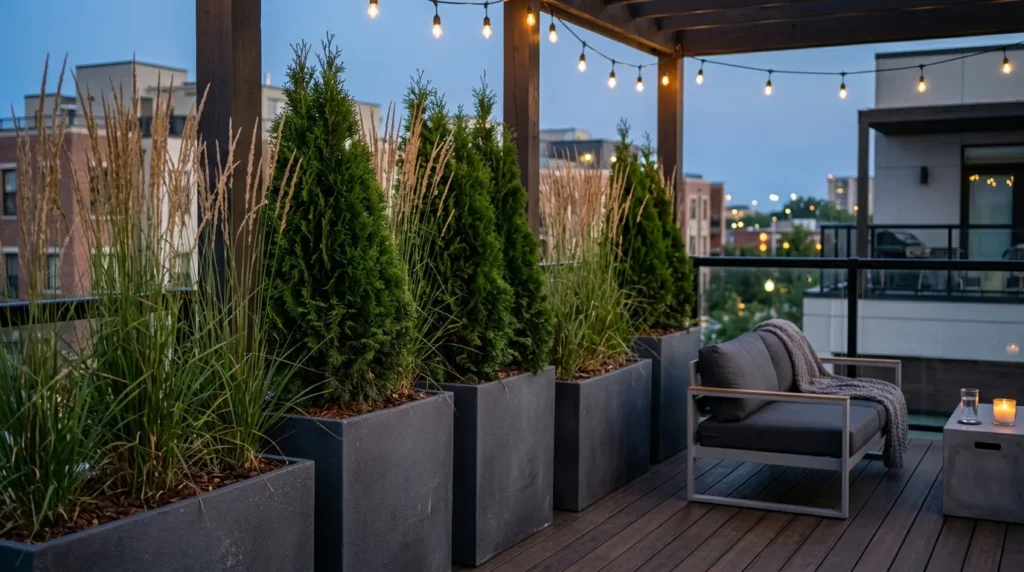
Tall potted planters are one of the most flexible backyard privacy ideas because they solve the problem without requiring any permanent changes to the property — which makes them ideal for renters or anyone who isn’t ready to commit to in-ground landscaping. I’ve noticed this is often the first privacy solution people try, and for good reason: a few large planters filled with tall, dense greenery can block a sightline within weeks rather than the years a hedge might take to fill in. It’s also one of the only options on this list that can be rearranged entirely if your needs change.
How To Style It
Use large, weatherproof planters — fiberglass or resin hold up better than terracotta in most climates — and fill them with tall, upright plants like clumping bamboo, arborvitae, or ornamental grasses. Group two or three planters together at the specific sightline you’re trying to block rather than spacing them evenly around the whole patio, which concentrates the screening where it’s actually needed. One simple trick I always suggest is choosing plants that are already near your target height at purchase, since privacy planters need to work right away rather than after years of growth.
6. Lattice Fence With Climbers
Quick Benefits
- Classic, timeless structure
- Becomes fuller and greener each season
- Filters light rather than blocking completely
- Works well as a fence topper or standalone
- Pairs beautifully with cottage-style yards
Why It Works
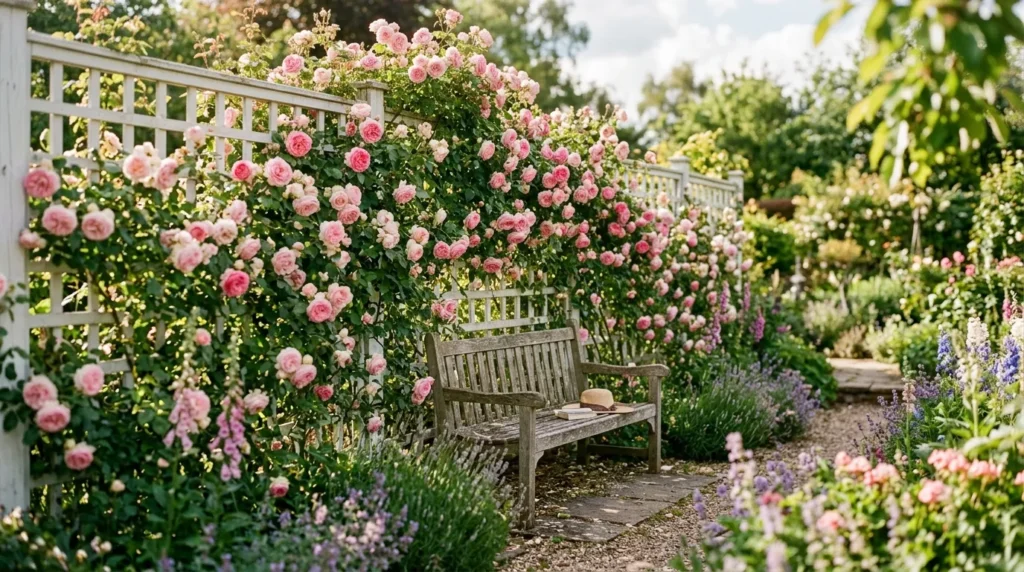
A lattice fence softened with climbing flowers is one of the more romantic backyard privacy ideas, and it tends to perform especially well on Pinterest boards focused on cottage or garden-style outdoor spaces. Unlike a solid fence, the open lattice pattern filters light and airflow while the climbing plants fill in the gaps, which creates privacy that feels organic rather than imposed. That’s why many designers recommend it as a fence topper for yards that already have a shorter privacy fence but need a few extra feet of screening from second-story sightlines.
How To Style It
Install lattice panels either as a standalone fence section or as a topper on an existing shorter fence, and train climbing roses, clematis, morning glory, or sweet peas up the structure depending on your climate. White or natural wood lattice tends to photograph best against greenery, though a dark stained finish can look more modern paired with the right plant selection. Add a garden bench or small seating nook nearby to make the most of the finished, enclosed feeling once the climbers fill in.
7. Outdoor Curtain Panels
Quick Benefits
- Soft, resort-style aesthetic
- Easy to open and close as needed
- Adds movement and texture to a patio
- Budget-friendly compared to structural builds
- Works well under a pergola or patio cover
Why It Works
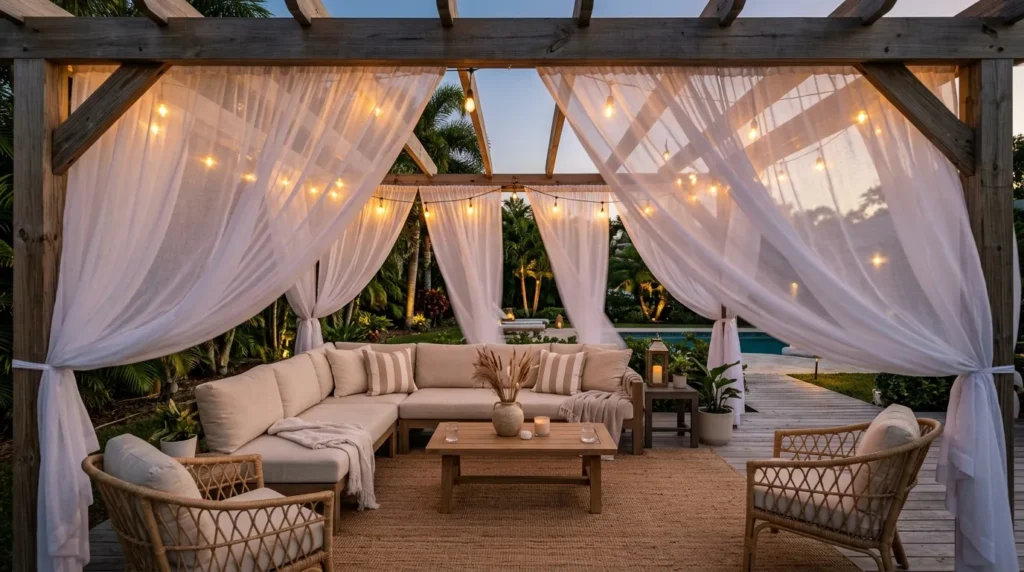
Outdoor curtain panels bring a hotel-lounge feel to a backyard while solving a very practical privacy problem — the ability to open or close a sightline depending on who’s around. I’ve seen this idea transform a plain covered patio into a space that feels like a private cabana, simply by adding movement and softness that hard materials can’t provide. One thing that works especially well is using curtains as a secondary, flexible layer alongside a permanent structure like a pergola, rather than as the sole privacy solution.
How To Style It
Choose outdoor-rated fabric in a solution-dyed acrylic, which resists fading and mildew far better than standard curtain fabric. Hang panels from a pergola frame, tension wire, or a dedicated curtain rod along one side of the patio, and use tiebacks to control how open or closed the space feels throughout the day. Neutral tones like white, cream, and natural linen tend to photograph best, though a subtle stripe or textured weave adds visual interest without overwhelming the space. This works especially well combined with string lights woven along the same structure.
8. Raised Garden Bed Screening
Quick Benefits
- Dual-purpose privacy and food production
- Adds height at the perimeter of a yard
- Works well along fence lines
- Customizable plant selection by season
- Appeals to gardeners and DIYers alike
Why It Works
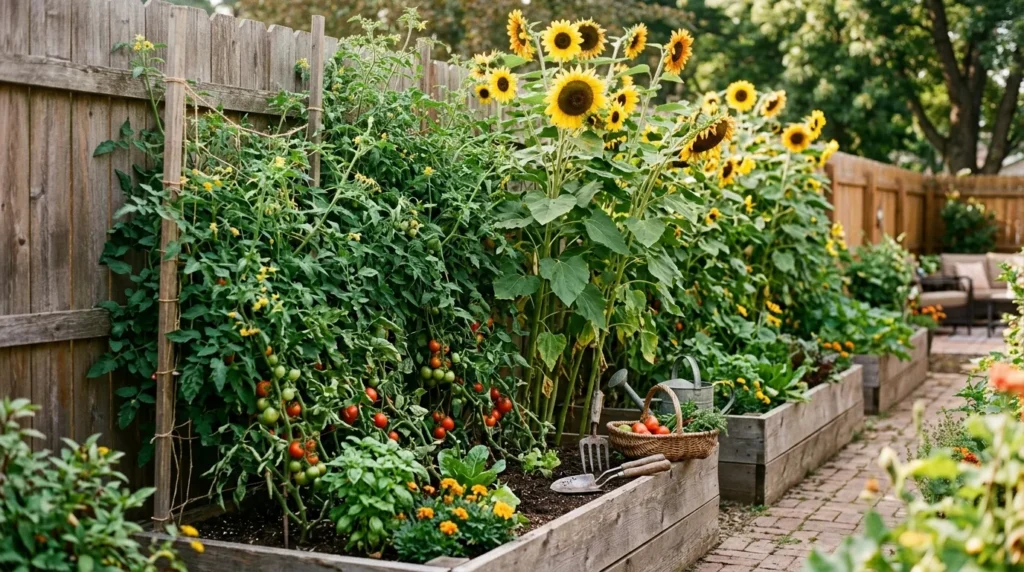
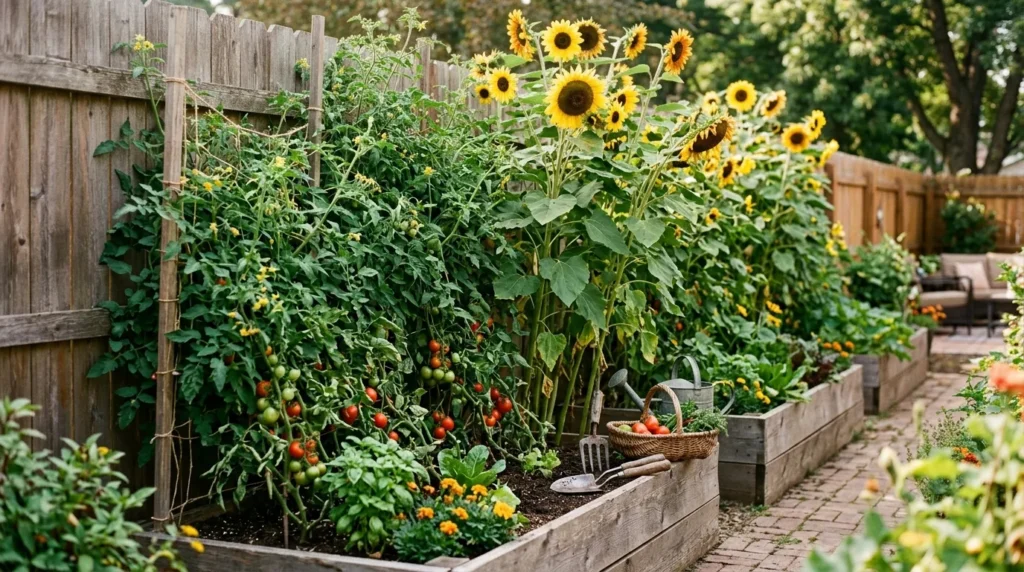
Raised garden beds planted with tall crops or flowers are a practical, dual-purpose take on backyard privacy ideas — the structure itself adds a bit of height, and the plants growing in it do the rest of the screening work. A mistake many homeowners make is treating privacy landscaping and vegetable gardening as two separate projects, when in reality a row of sunflowers, corn, or trellised beans along a fence line can accomplish both at once. This approach tends to appeal especially to homeowners who want their privacy solution to also be productive.
How To Style It
Build raised beds along the section of yard that needs the most screening, and fill them with tall-growing plants like sunflowers, trellised tomatoes, pole beans, or ornamental grasses depending on the season. Cedar or composite raised bed kits are the easiest to install without specialized skills, and adding a simple trellis panel to the back of the bed gives climbing plants a structure to fill in quickly. This idea works especially well along a side yard or back fence line where a dedicated garden bed wouldn’t otherwise fit into the main layout.
9. Privacy Trellis Wall
Quick Benefits
- Ideal for narrow side yards
- Adds vertical greenery without ground space
- Customizable panel size and material
- Works freestanding or fence-mounted
- Fast visual impact with the right climbers
Why It Works
A trellis wall is one of the most space-efficient backyard privacy ideas, which makes it especially useful for narrow side yards or tight urban lots where a full hedge or fence simply isn’t an option. In my experience, this is the solution people reach for once they realize how much unused vertical space exists along the side of a house or garage. A well-placed trellis can block a direct sightline into a window or patio using a fraction of the footprint a planting bed would require.
How To Style It
Choose a cedar or metal trellis panel sized to the specific gap you’re screening, and mount it freestanding in a planter or directly against an existing fence or wall. Fast climbers like clematis, jasmine, or climbing hydrangea will fill the panel within a season or two, though a faux greenery panel is a reasonable shortcut for an instant fix while plants establish. One simple trick I always suggest is angling the trellis slightly rather than mounting it perfectly flat, which can block a sightline more effectively depending on the exact angle of the view you’re trying to screen.
10. Evergreen Tree Windbreak
Quick Benefits
- Provides privacy in every season
- Doubles as a windbreak and noise buffer
- Long-term investment in property value
- Low maintenance once established
- Creates natural, mature-looking screening
Why It Works
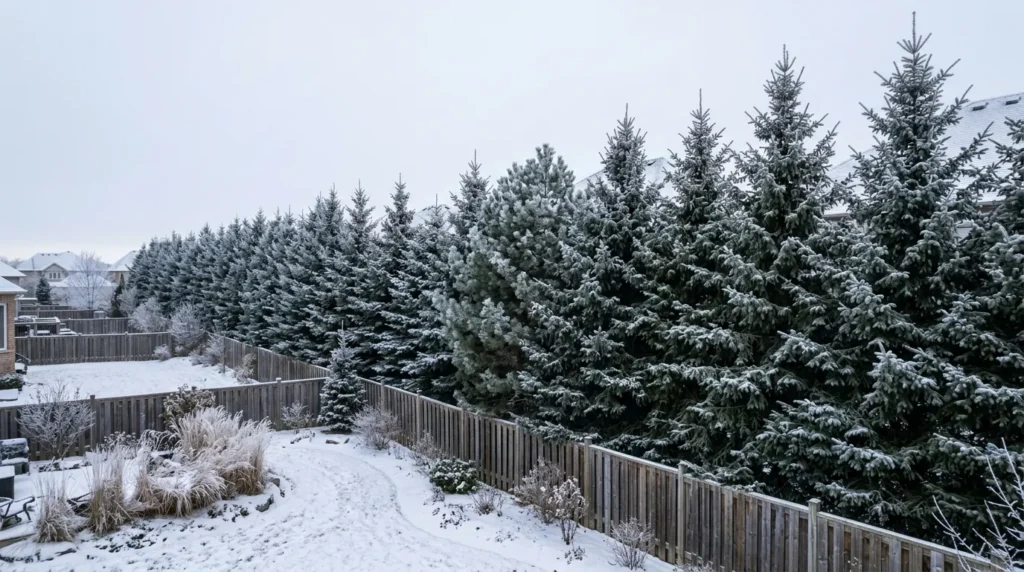
An evergreen windbreak is the closest thing to a permanent solution on this list, since unlike deciduous trees or seasonal plantings, it maintains full coverage through winter as well as summer. That’s why many designers recommend evergreens specifically for yards backing up to a busy street, a neighbor’s second story, or an exposed property line where year-round privacy actually matters. Beyond blocking sightlines, a row of mature evergreens also functions as a genuine windbreak, which can noticeably improve how comfortable a patio feels on breezy days.
How To Style It
Choose a variety suited to your climate and mature size — arborvitae, Leyland cypress, and Norway spruce are common choices depending on region — and plant in a staggered double row for the fullest coverage. Space trees according to their mature spread rather than their current nursery size to avoid overcrowding down the line. This is a longer-term investment than most ideas on this list, so it pairs well with a faster interim solution, like potted planters or a slat screen, while the trees mature over the following several seasons.
11. Corner Pergola Retreat
Quick Benefits
- Creates a defined private nook
- Combines shade, structure, and greenery
- Ideal for small or awkward yard corners
- Doubles as a reading or lounge spot
- High visual impact in a compact footprint
Why It Works
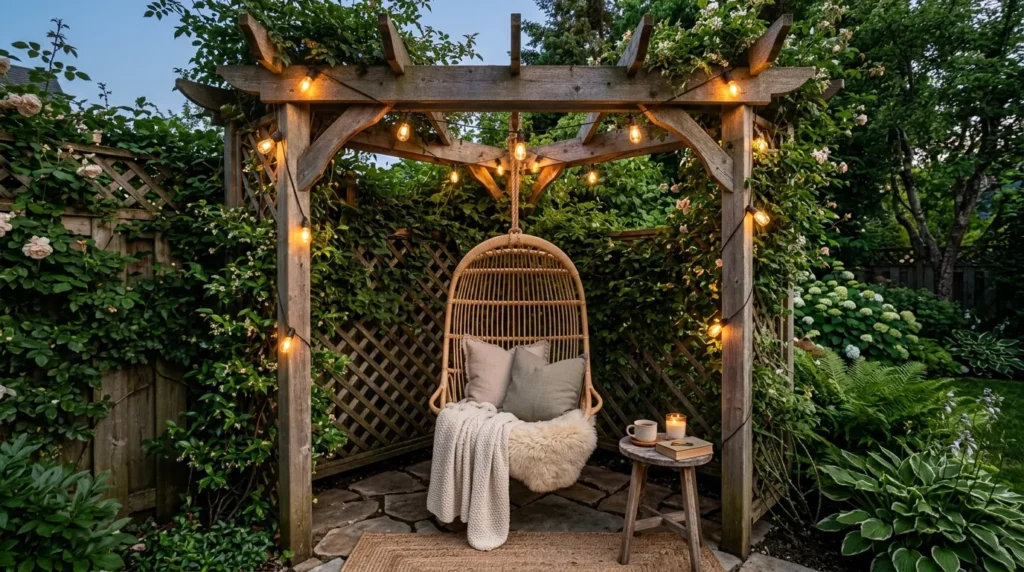
A corner pergola retreat takes an often-underused part of the yard — the back corner — and turns it into the most private spot on the property. I’ve noticed that corners naturally lend themselves to enclosure, since two sides are often already partially screened by existing fence lines, meaning less structure is needed to create a fully private feel. This idea works especially well for smaller yards, where a full-width privacy solution isn’t practical but a smaller, dedicated retreat easily fits.
How To Style It
Build or install a small pergola in the yard’s back corner, and use lattice panels, tall planters, or climbing vines on the two open sides to complete the enclosure. Furnish the space with a single lounge chair, a small bistro set, or a hanging chair to keep the scale appropriate for a cozy retreat rather than a full entertaining area. Add a small side table, an outdoor rug, and soft lighting to make the space feel finished. This idea pairs particularly well with the vertical slat screen or lattice fence ideas above for a fully enclosed, layered look.
Frequently Asked Questions
What is the fastest way to add backyard privacy? Tall potted planters and vertical slat screens are the fastest solutions, since both can be installed in a single weekend and provide immediate screening. Living options like hedges and bamboo take longer but improve over time.
What is the cheapest backyard privacy idea? Outdoor curtain panels and potted planters tend to be the most budget-friendly, especially compared to fencing or structural builds. A simple lattice panel with fast-growing climbers is also an affordable middle-ground option.
Can I add privacy screening without a fence permit? In many areas, freestanding screens, potted planters, and trellis panels don’t require a permit the way a permanent fence does, but rules vary by city. It’s worth checking local regulations before installing anything structural or over a certain height.
What plants grow fastest for backyard privacy? Clumping bamboo, Leyland cypress, and fast climbers like clematis or morning glory are among the quickest options for filling in a privacy screen. Growth speed depends heavily on climate, sunlight, and soil conditions.
How tall should a backyard privacy screen be? Most standing sightline privacy is achieved around 6 to 8 feet, though second-story window concerns may require taller trees or structures. The right height depends on what specifically you’re trying to block.
Do privacy hedges block noise as well as sightlines? Dense evergreen hedges and bamboo can noticeably reduce perceived noise, though they won’t eliminate it completely the way a solid wall might. The layered foliage helps diffuse and absorb sound rather than blocking it outright.
What’s the best backyard privacy idea for renters? Potted planters, outdoor curtain panels, and freestanding slat screens are ideal for renters since none require permanent installation or landscaping changes. All three can also be taken along when you move.
Final Thoughts
The most private backyards rarely rely on a single solution — they layer greenery, structure, and smart placement to create a space that feels enclosed without feeling closed off. Whether you’re working with a fast fix like potted planters or investing in a long-term hedge or tree line, the goal is the same: a yard that feels like your own, even with neighbors close by.
Start with one or two ideas and gradually build a space that reflects your style and supports everyday comfort. Often the most effective approach combines a quick solution for immediate relief with a slower-growing option that keeps improving for years to come.
Related Articles
- Small Backyard Layout Ideas
- Cozy Patio Decorating Tips
- Backyard Fire Pit Ideas
- DIY Fence Topper Ideas
- Low-Maintenance Landscaping for Small Yards