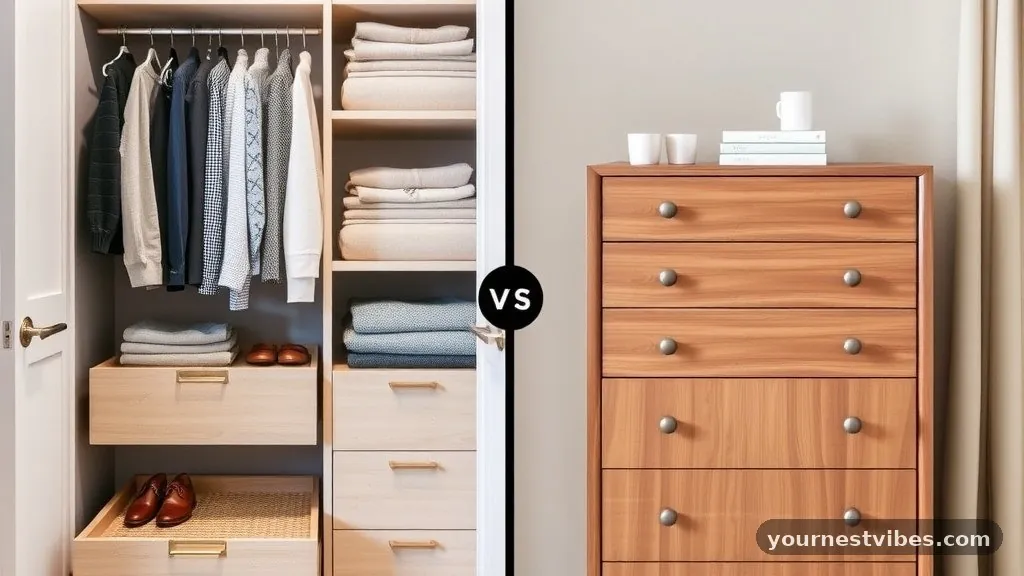
Built-In Closet Drawers vs Freestanding Dresser: Cost & Space Comparison
Deciding between built-in closet drawers and a freestanding dresser requires balancing your immediate budget against the long-term value of your bedroom storage. While custom installations maximize vertical space and provide a seamless aesthetic, standalone furniture offers portability and lower upfront costs. Understanding how built-in closet drawers vs freestanding dresser: cost & space comparison dynamics play out will help you determine which option fits your lifestyle.
This article breaks down the financial and spatial trade-offs so you can choose the best storage solution for your home.
The Financial Verdict 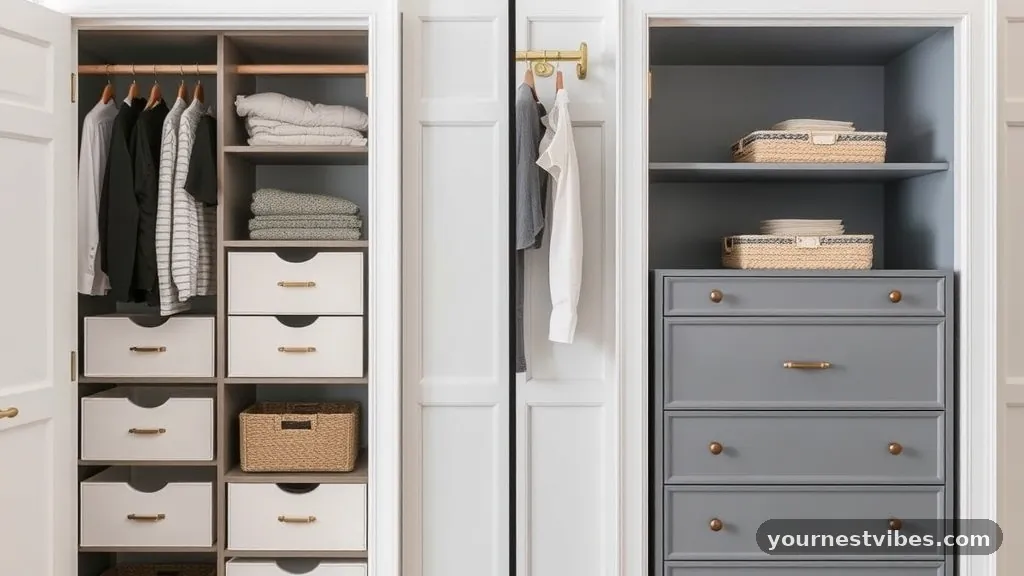
If you are looking for the most cost-effective solution, a freestanding dresser is almost always the winner. You can purchase a quality dresser for as little as $200 to $600, whereas a custom built-in drawer system typically starts at $1,500 and can easily climb to $5,000 or more depending on materials.
Built-in units require professional labor, specialized hardware, and custom-cut shelving, which significantly inflates the price tag. Conversely, a dresser is a mass-produced item that arrives ready to assemble or fully finished, removing the need for contractor fees.
However, consider the long-term ROI of built-in systems. A professional closet installation often acts as a permanent home improvement that adds value to your property, whereas a dresser is considered personal property that you might leave behind or discard. If you plan to stay in your home for five years or more, the higher initial cost of built-in storage may be offset by the increased efficiency and home equity.
For renters or those who move frequently, the portability of a dresser makes it the superior financial choice.
Maximizing Your Floor Space 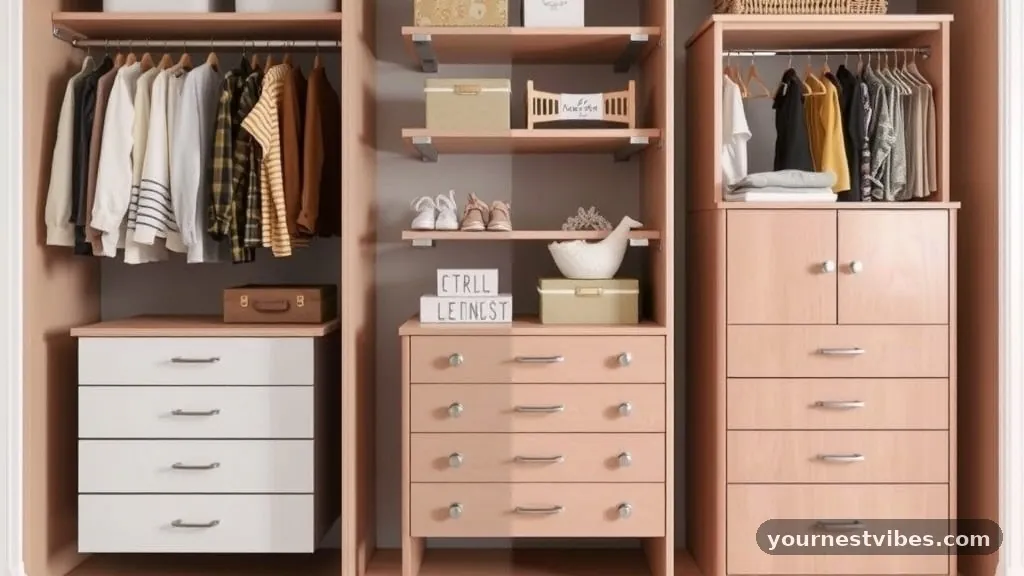
The primary advantage of built-in closet drawers is their ability to reclaim floor space. Because these systems are integrated directly into your wall, they effectively turn dead space into functional storage.
A freestanding dresser, by contrast, creates a physical footprint that occupies valuable square footage in your bedroom. If you have a small room, the dresser might block traffic paths or limit your layout options.
Built-ins also utilize vertical space that dressers often waste. While a standard dresser is limited by its height and width, a closet system can extend from floor to ceiling. This allows you to stack seasonal clothing, extra linens, and accessories in areas that would otherwise be empty.
By moving your storage inside the closet, you leave the rest of your bedroom open for a bed, nightstands, and walking paths.
Flexibility and Portability Factors
Freestanding furniture is inherently flexible, allowing you to rearrange your bedroom whenever you desire. If you decide to change your decor or move to a new house, you can take your dresser with you without any effort.
This mobility is a major benefit for people who rent their homes or those who simply enjoy updating their living spaces periodically. You are not locked into a specific configuration, which is a major drawback of custom cabinetry.
Built-in drawers, however, are essentially permanent fixtures. Once installed, they are difficult to remove without damaging the walls or the cabinetry itself. This lack of flexibility means you must be certain about your long-term storage needs before committing to the installation.
If your organizational requirements change, you might find yourself stuck with a layout that no longer serves your wardrobe.
Construction and Material Quality 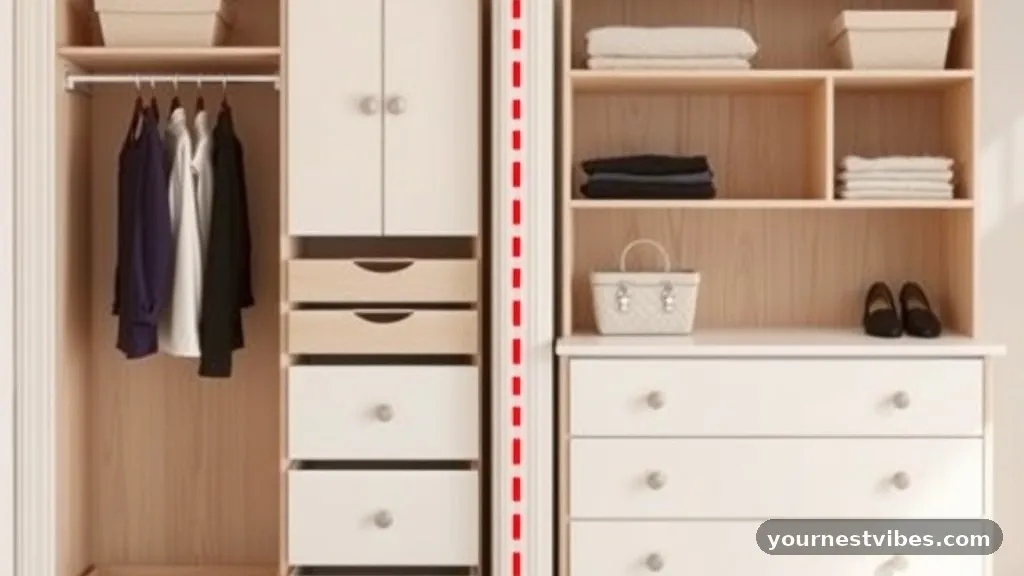
When comparing the two, you must consider the quality of materials used in each storage type. High-end built-in systems are often crafted from solid wood, furniture-grade plywood, or high-density fiberboard (HDF) with durable laminate finishes.
Because they are custom-fitted, they are designed to handle heavy loads without sagging or warping. Professional installers ensure that every drawer slide and hinge is perfectly aligned for smooth operation.
Freestanding dressers vary wildly in quality, ranging from cheap particleboard pieces to heirloom-quality solid wood. Lower-cost dressers often rely on plastic glides and thin backings that can fail after a few years of heavy use. You can find excellent, durable dressers, but they often come with a price tag that approaches the cost of mid-range built-ins.
Always check the drawer construction—dovetail joints and ball-bearing slides are indicators of a piece that will last.
The Visual Impact on Your Room 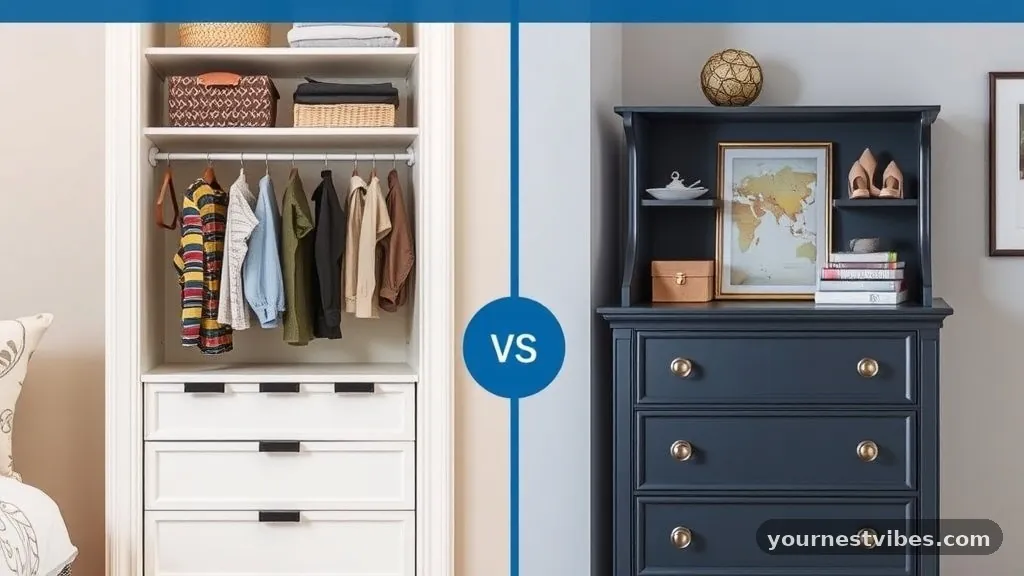
A well-designed built-in system creates a clean, minimalist look that makes a room feel larger. By hiding your clothes and accessories behind cohesive cabinet doors or matching drawer fronts, you eliminate visual clutter.
This is particularly effective in smaller rooms where too much furniture can make the space feel cramped and disorganized. Custom systems can also be painted or finished to match your wall color, making them disappear into the architecture.
Freestanding dressers serve as design statements, but they can make a bedroom feel crowded if the piece is too large or bulky. If you choose a dresser, you must consider how its style, color, and hardware complement your existing bed and nightstands.
While a beautiful dresser can act as a centerpiece, it also adds to the overall “busyness” of the room. Achieving a serene, hotel-like aesthetic is almost always easier with integrated storage solutions.
Storage Efficiency Comparisons
To understand how your storage needs align with these options, refer to the following comparison of typical features.
| Feature | Built-In Drawers | Freestanding Dresser |
|---|---|---|
| Space Utilization | High (Vertical & Wall-to-Wall) | Low (Limited to footprint) |
| Cost Range | $1,500 – $5,000+ | $200 – $1,500+ |
| Installation | Professional Required | DIY or Pre-assembled |
| Portability | None (Fixed) | High (Movable) |
| Customization | Fully Tailored | Limited to Selection |
Organizing Your Wardrobe
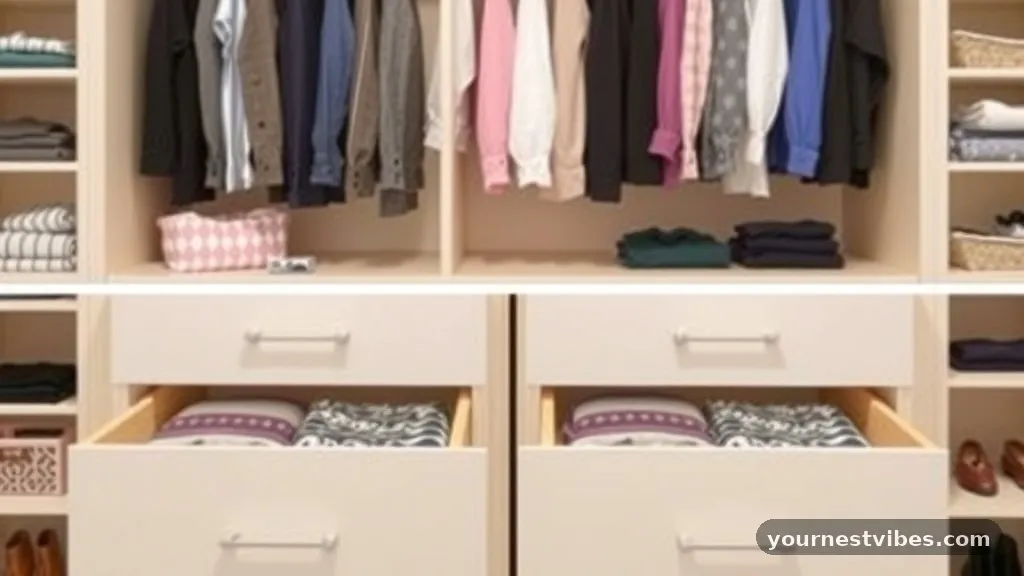
Both systems require effective organization to be truly useful, but they offer different tools for the job. Built-in closet systems often include specialized accessories like pull-out hampers, jewelry trays, velvet-lined drawers, and integrated lighting. These features are designed to maximize every inch of the closet, ensuring that every item has a dedicated home. You can tailor these organizers to fit your specific collection of items, from shoes to delicate accessories.
Dressers are more basic in their internal configuration. Most offer standard drawer sizes, which may not be ideal for all your clothing types.
You will likely need to purchase drawer dividers or bins to keep smaller items from shifting around. While you can find dressers with specialized compartments, they are rarely as versatile as a custom-built system designed specifically for your inventory.
Key Considerations Before You Buy
Before making a final choice, consider these critical factors that influence the long-term success of your storage strategy.
- Available Wall Space: Measure your closet interior versus the available wall space in your bedroom to see where you can actually fit the storage.
- Wardrobe Volume: Take an inventory of your clothes to determine if you need deep drawers for sweaters or shallow drawers for accessories.
- Budget Constraints: Factor in the cost of installation for built-ins, which can sometimes double the price of the materials.
- Future Plans: If you are planning to sell your home soon, the ROI of built-in storage is generally higher than that of buying new furniture.
- Room Layout: Consider traffic flow; a dresser should never obstruct a doorway or a natural walking path.
Addressing Common Questions
Can I install built-in drawers myself to save money?
Yes, you can purchase modular closet kits from retailers like The Container Store to perform a DIY installation. While this is cheaper than hiring a custom contractor, it requires basic carpentry skills and the right tools to ensure the unit is safely anchored to the wall studs.
Do dressers offer enough storage for a full wardrobe?
A dresser is usually sufficient for undergarments, t-shirts, and jeans, but it rarely replaces the need for hanging space. If you lack a closet, a dresser alone will not be enough to store suits, dresses, or coats, meaning you will still need a hanging rod or an armoire.
How do I know if my wall can support built-in drawers?
Most standard residential walls are built with wood studs spaced 16 inches apart, which is sufficient for supporting built-in units. If you have lath and plaster walls or metal studs, you may need specialized hardware or a professional installer to ensure the system is secure.
Is it better to have one large dresser or two smaller ones?
Two smaller dressers often provide more flexibility in room layout and can be easier to move. However, one large dresser usually offers more total storage capacity per square foot because it eliminates the need for extra side panels and frame spacing.
Do built-in closets increase home resale value?
Yes, high-quality, professional-grade closet systems are considered a desirable feature by potential buyers. They signal that the home has been well-maintained and provides ample, organized storage, which is a major selling point in modern real estate listings.
Final Thoughts
Choosing between built-in closet drawers and a freestanding dresser depends entirely on your current living situation and your long-term goals. If you value flexibility, portability, and lower upfront costs, a high-quality dresser is a reliable and stylish choice that serves most people well. However, if you are looking to maximize your space and create a permanent, organized, and high-end feel in your bedroom, built-in systems are worth the investment.
Assess your available square footage and your budget before making a final decision. Remember that a well-organized closet can drastically reduce daily stress, regardless of the method you choose.
Whether you opt for the custom appeal of built-ins or the classic convenience of a dresser, focus on selecting materials that will stand the test of time. Take your time to measure your space accurately, and you will find the right storage solution for your home.