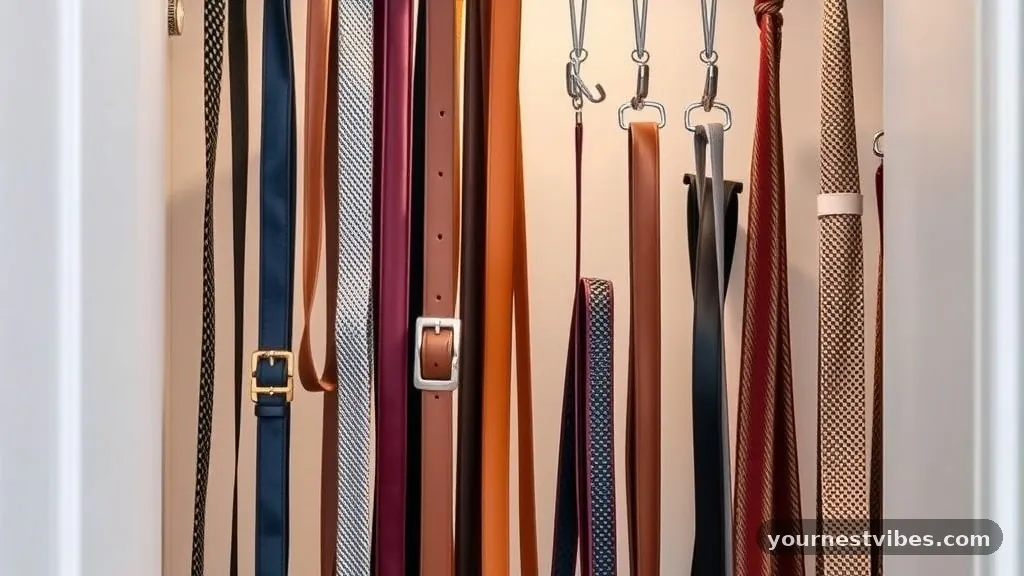
Where to Hang Belts and Ties in a Small Reach-In Wardrobe
Finding the ideal way to hang belts and ties in a small reach-in wardrobe often feels like a puzzle where the pieces never quite fit. You are dealing with limited linear rod space, narrow shelf depth, and the constant need to prevent accessories from tangling or losing their shape. Fortunately, the solution lies in utilizing vertical surfaces and specialized hardware that maximizes every square inch of your storage area.
By moving beyond standard coat hangers, you can transform a cramped closet into a highly efficient space that keeps your items visible and accessible. This approach ensures your daily routine is smoother while protecting the longevity of your leather goods and silk ties.
The most effective way to hang belts and ties in a small reach-in wardrobe is by mounting hardware directly to the inside of the closet door or the side panels of the cabinet. Door-mounted racks allow you to reclaim valuable rod space that would otherwise be occupied by bulky accessories.
If the door isn’t an option, slim, vertical belt organizers that hook onto the main closet rod provide a narrow footprint that keeps your items neatly aligned. For ties, a dedicated tie rack with individual clips or sliding arms is the gold standard for preventing wrinkles and ensuring you can see your entire collection at a glance.
Maximizing Door Surface Area
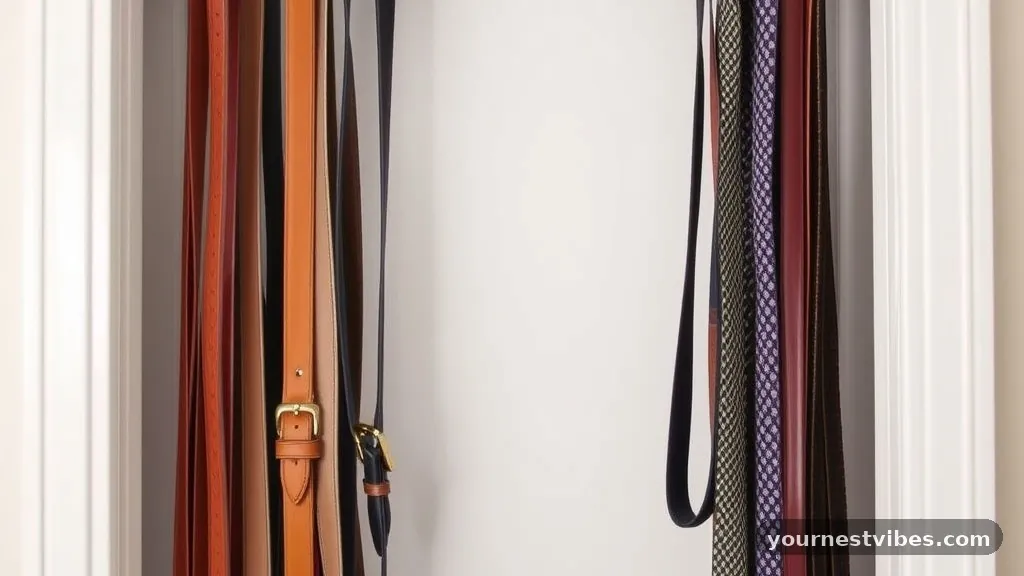
The inside of your closet door is often the most overlooked piece of real estate in a small storage setup. By installing hardware here, you effectively move your accessories out of the main garment area without sacrificing accessibility.
Over-the-door organizers are simple to install, requiring no drilling if you opt for versions that hook over the top edge. These units typically feature multiple hooks or tiers, allowing you to hang several belts and ties in one vertical column.
When choosing a door-mounted solution, look for thin-profile hooks that won’t interfere with the door closing properly. If you have a particularly tight fit, consider adhesive-backed hooks or magnetic strips.
These can be placed strategically to fit the specific length of your belt collection. You can also mount a lightweight wooden rack with brass hooks to add a touch of style while keeping your items secure.
Utilizing Vertical Rod Space
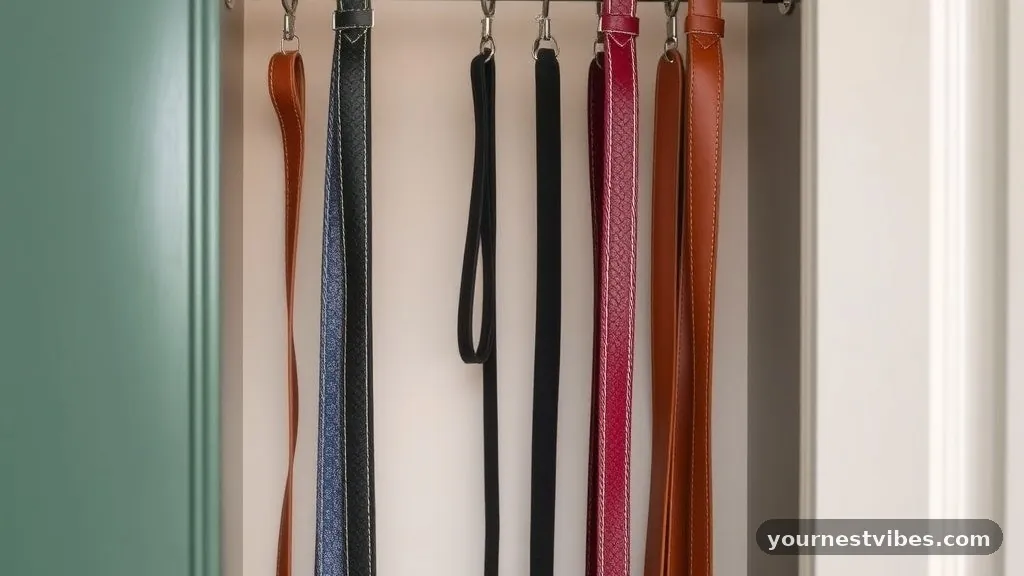
When door space is unavailable, you must turn to the interior of the wardrobe itself. Specialized belt organizers that hang from the closet rod are designed to be extremely slim, often taking up less than two inches of lateral space.
These hangers usually feature a series of hooks or a rotating head that allows you to scan your collection easily. By grouping your accessories on a single slim hanger, you save the rod for your shirts and jackets.
Consider the weight of your items when selecting these hangers. Heavy leather belts require sturdy metal hooks, while silk ties can be managed with lightweight plastic or velvet-covered options.
Ensure the hanger allows for easy removal of a single item without disturbing the rest of the collection. A rotating hook is especially helpful in a deep wardrobe, as it lets you pull the entire rack into the light for a better view.
The Benefits of Specialized Racks
Dedicated belt racks and tie organizers provide a level of structure that generic hooks simply cannot match. A proper belt rack keeps the buckles visible and prevents the leather from bending or creasing at awkward angles.
Similarly, a tie rack with individual slots prevents your ties from sliding off and piling up on the floor. These organizers are specifically engineered to keep your accessories in their best shape over time.
Investing in these tools pays off by reducing the time you spend searching for a matching accessory each morning. When every item has a designated slot, you are more likely to return it to the correct place immediately after use.
This habit prevents the clutter that often plagues small closets. Many high-quality organizers are made from cedar or cedar-lined materials, which can also help keep your accessories smelling fresh.
Comparing Storage Methods
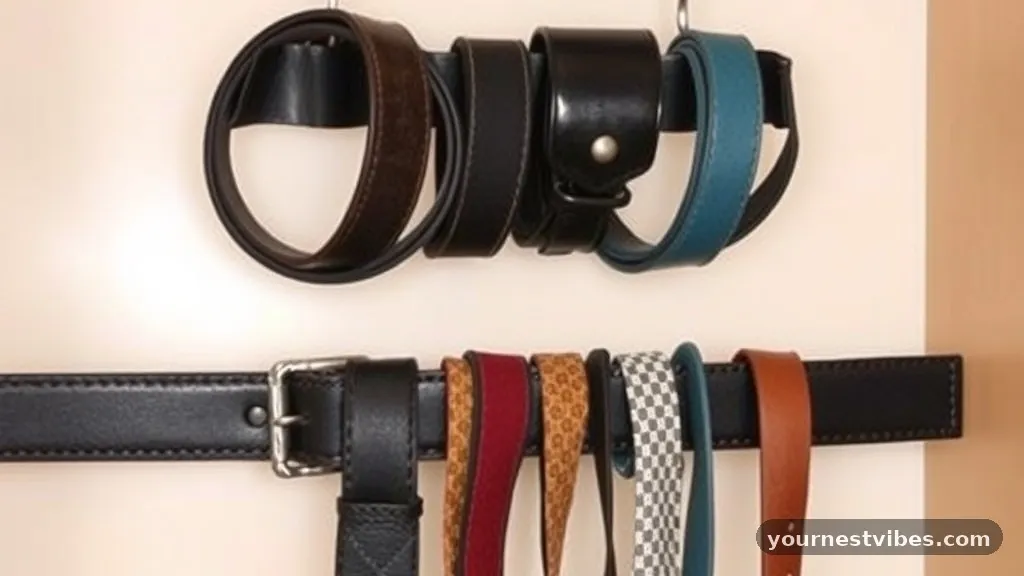
Choosing the right storage method depends on your specific collection size and the physical constraints of your closet. The following table provides a quick comparison of the most common ways to manage your accessories within a limited footprint.
| Storage Method | Space Efficiency | Best For | Ease of Access |
|---|---|---|---|
| Door-Mounted Hooks | High | Belts and lightweight ties | Excellent |
| Vertical Rod Hangers | Medium | Large belt collections | Good |
| Drawer Dividers | Low | Rolled ties and small belts | Moderate |
| Wall-Mounted Racks | High | Deep closets with side walls | Excellent |
Managing Accessories in Drawers
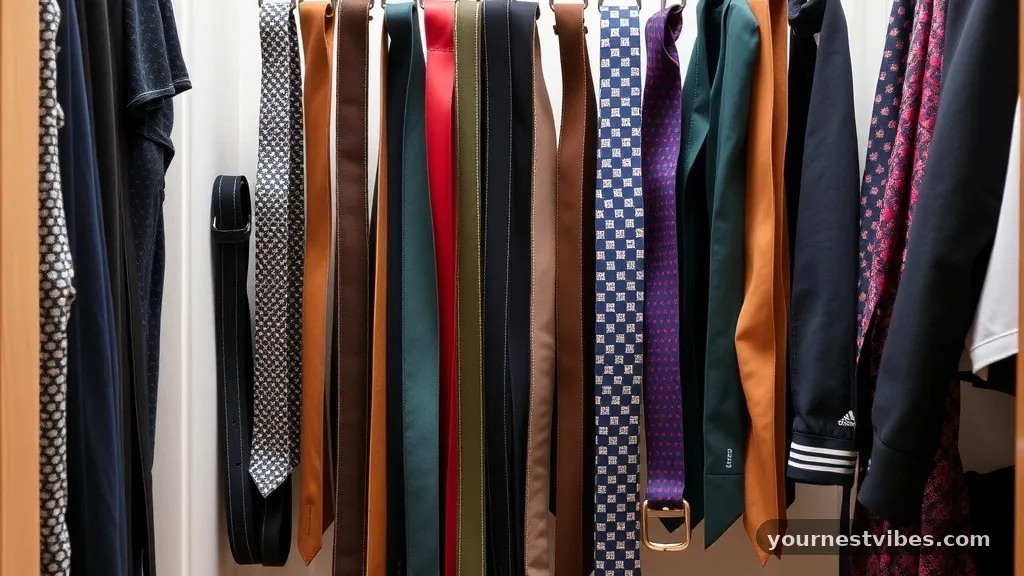
If you prefer not to hang your accessories, drawers are a viable alternative, provided you use the right organizational tools. Drawer dividers create individual compartments that stop belts and ties from becoming a tangled mess.
For ties, rolling them rather than folding them is the best way to prevent permanent creases. You can use small boxes or felt-lined trays to keep these items separated and protected from dust.
When using drawers, it is important to measure the internal dimensions accurately. Most standard dresser drawers are too wide for a single row of accessories, so dividers are essential to keep items from shifting when the drawer is pulled open.
This method is particularly effective for people who have a smaller collection and want to keep their wardrobe rods completely clear for clothing. It also protects delicate silk fabrics from the friction of hangers.
Maintaining Accessory Longevity
Proper storage is about more than just clearing space; it is about protecting your investment. Leather belts, in particular, should never be stored in direct sunlight or damp environments, as these conditions can lead to cracking or mildew.
Hanging them vertically allows the leather to breathe and prevents the heavy buckle from pulling the strap out of shape. Ties should be stored in a way that allows them to hang freely or rest in a loose roll to relax the fabric.
Regular maintenance, such as wiping down leather and steaming ties, is much easier when your storage system is organized. If you can see every item clearly, you are more likely to notice if a belt needs a quick polish or if a tie has a small stain.
Establishing a routine of checking your accessories during your weekly closet organization helps maintain your wardrobe in top condition. For further advice on managing your clothing, you can refer to expert closet organization tips to refine your space.
Essential Organization Strategies
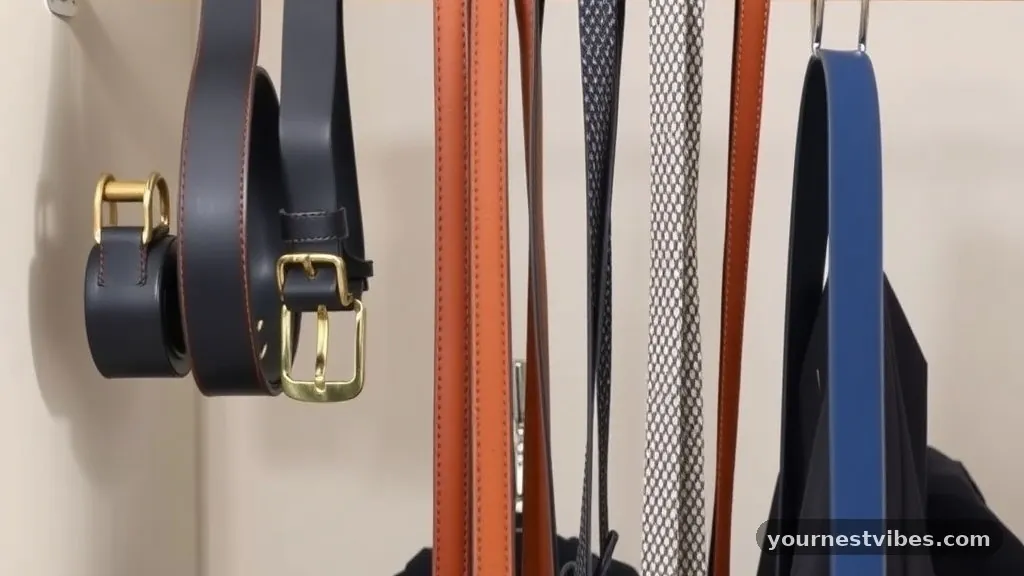
To keep your small reach-in wardrobe functioning at its best, consider these tactical steps for long-term organization.
- Group items by color or frequency of use to save time during your morning routine.
- Install LED motion-sensor lights to illuminate dark corners where accessories might be hidden.
- Use thin, non-slip hangers for clothing so you have more room to maneuver your belt racks.
- Periodically clear out accessories you no longer wear to prevent the storage area from becoming overcrowded.
- Label the back of hooks or compartments if you have a very large collection to ensure everything returns to its home.
These simple habits ensure that your storage system remains sustainable. When you prioritize accessibility, you find that even a very small closet can hold a surprising amount of gear without feeling cluttered.
Frequently Asked Questions
Is it better to roll or hang ties?
Hanging ties is generally superior if you have the vertical space, as it allows gravity to naturally remove wrinkles. However, if you are short on space or have delicate knit ties, rolling them and placing them in a drawer is a great way to prevent stretching.
How do I prevent belts from falling off hooks?
Look for hooks with a slight upward curve or a rubberized, non-slip coating. If your existing hooks are too straight, you can add a small piece of adhesive felt or a rubber band to the end to create a makeshift stopper.
Can I store belts and ties together?
Yes, you can store them together, provided they have separate designated spots. Mixing them in a single pile will lead to tangles, but using a dual-purpose rack with dedicated hooks for each type of accessory works perfectly for small closets.
What is the best way to store a large belt collection in a small space?
The best method for a large collection is a rotating belt rack that hangs from the closet rod. This allows you to store 20 or more belts in a space only a few inches wide, keeping them all accessible while maintaining their shape.
Should I store accessories in the closet or a dresser?
It depends on your preference, but storing accessories in the closet is usually more efficient because it keeps your entire outfit in one location. This makes it much easier to coordinate your look and ensures you don’t forget about items tucked away in a separate piece of furniture.
Ensuring Lasting Order
Successfully managing a limited wardrobe requires a shift in how you view your storage space. By treating the inside of doors, side panels, and vertical rod space as premium real estate, you can accommodate a significant number of items without sacrificing functionality.
The key to knowing where to hang belts and ties in a small reach-in wardrobe is consistency; once you have installed your chosen system, stick to the routine of returning items to their place. This prevents the inevitable accumulation of clutter that happens when accessories are left on shelves or piled on the floor.
Your closet should be a tool that simplifies your day, not a source of frustration. By investing in a few specialized organizers and keeping your collection pruned, you create a space that feels larger and more functional. If you find your current setup is still feeling cramped, try rotating your seasonal accessories into a small storage box on a high shelf.
Keeping only the items you use regularly in your primary reach-in space will make a world of difference. Please feel free to share your own favorite organization tricks or ask about specific hardware recommendations if you need further help refining your closet layout.